West Virginia Letter from Tenant to Landlord containing Notice to landlord to withdraw improper rent increase due to violation of rent control ordinance
What is this form?
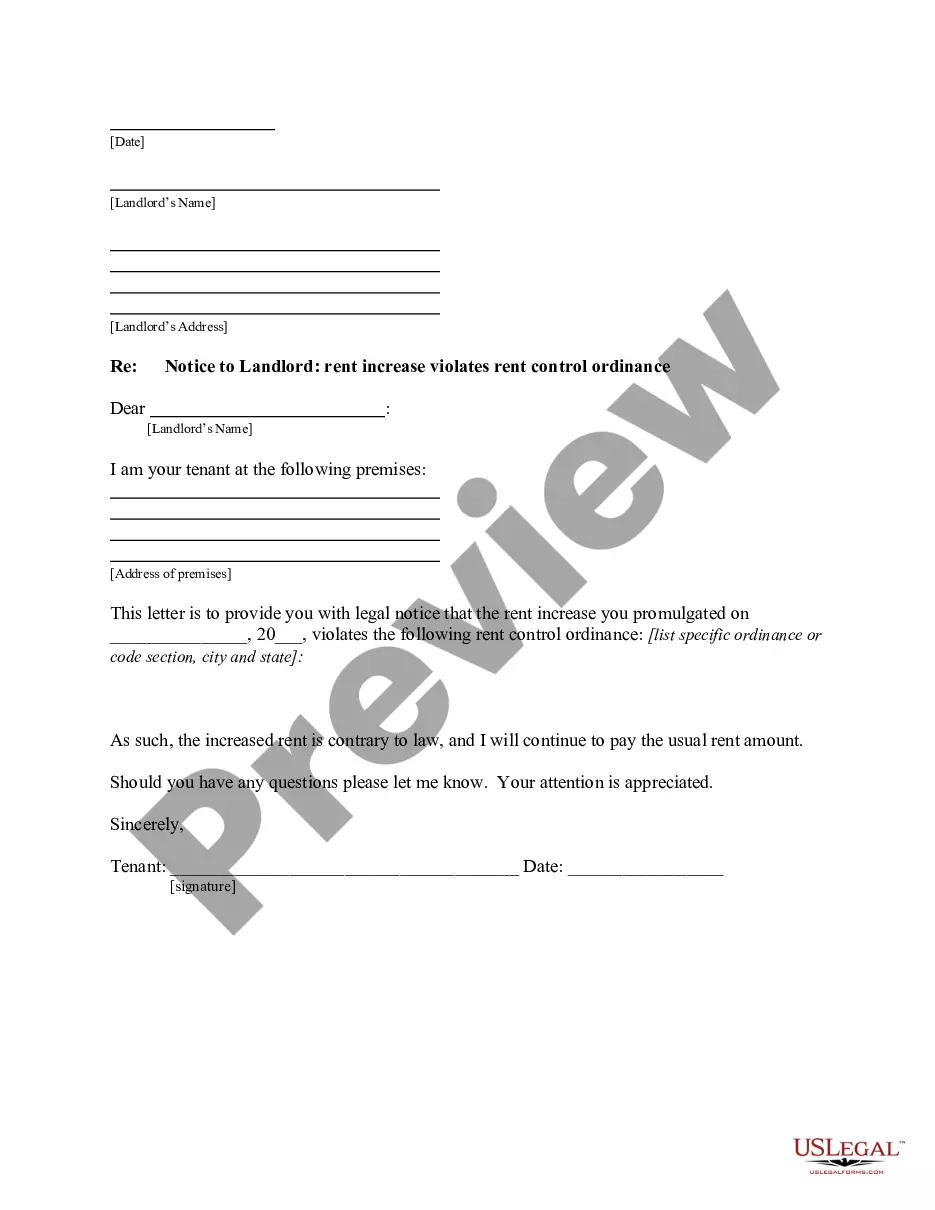
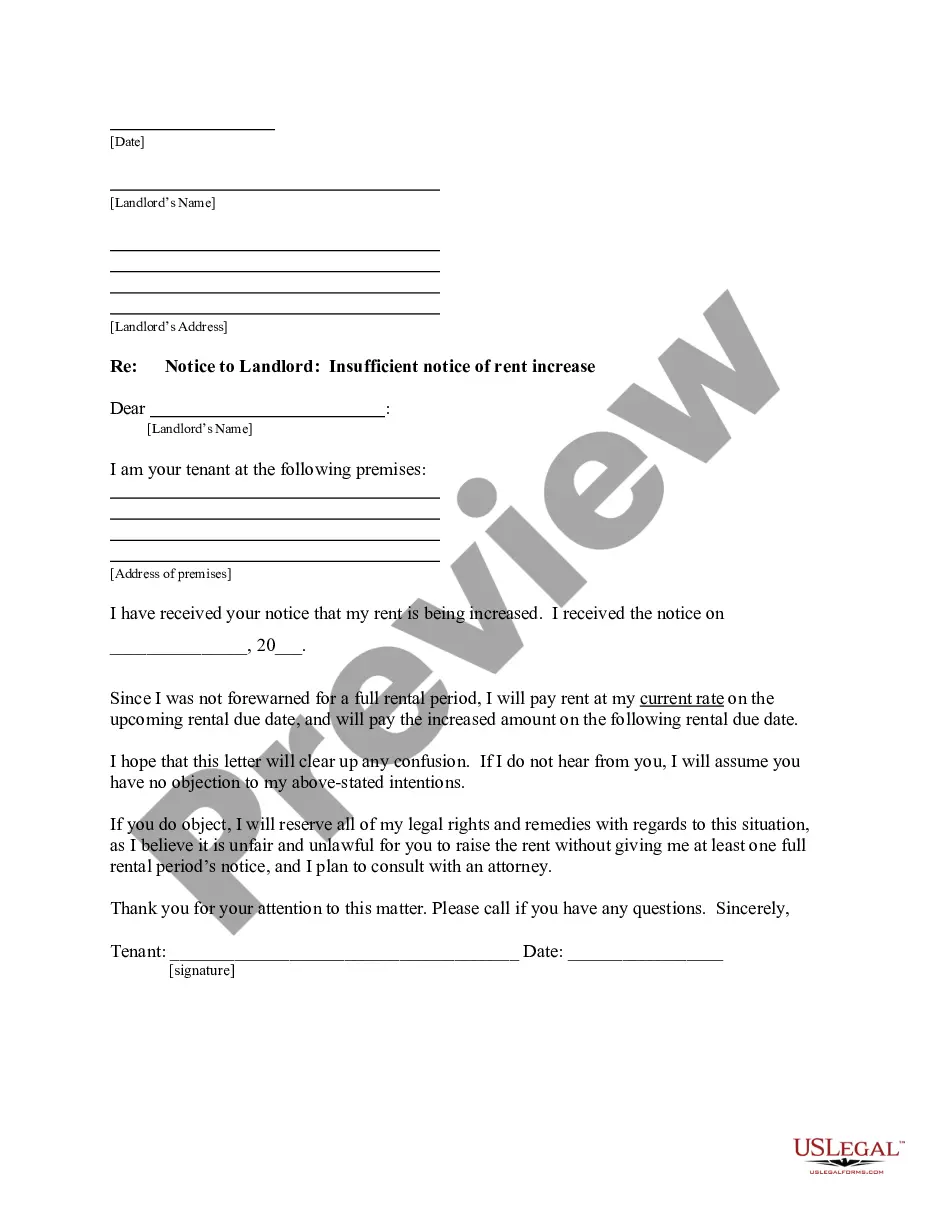
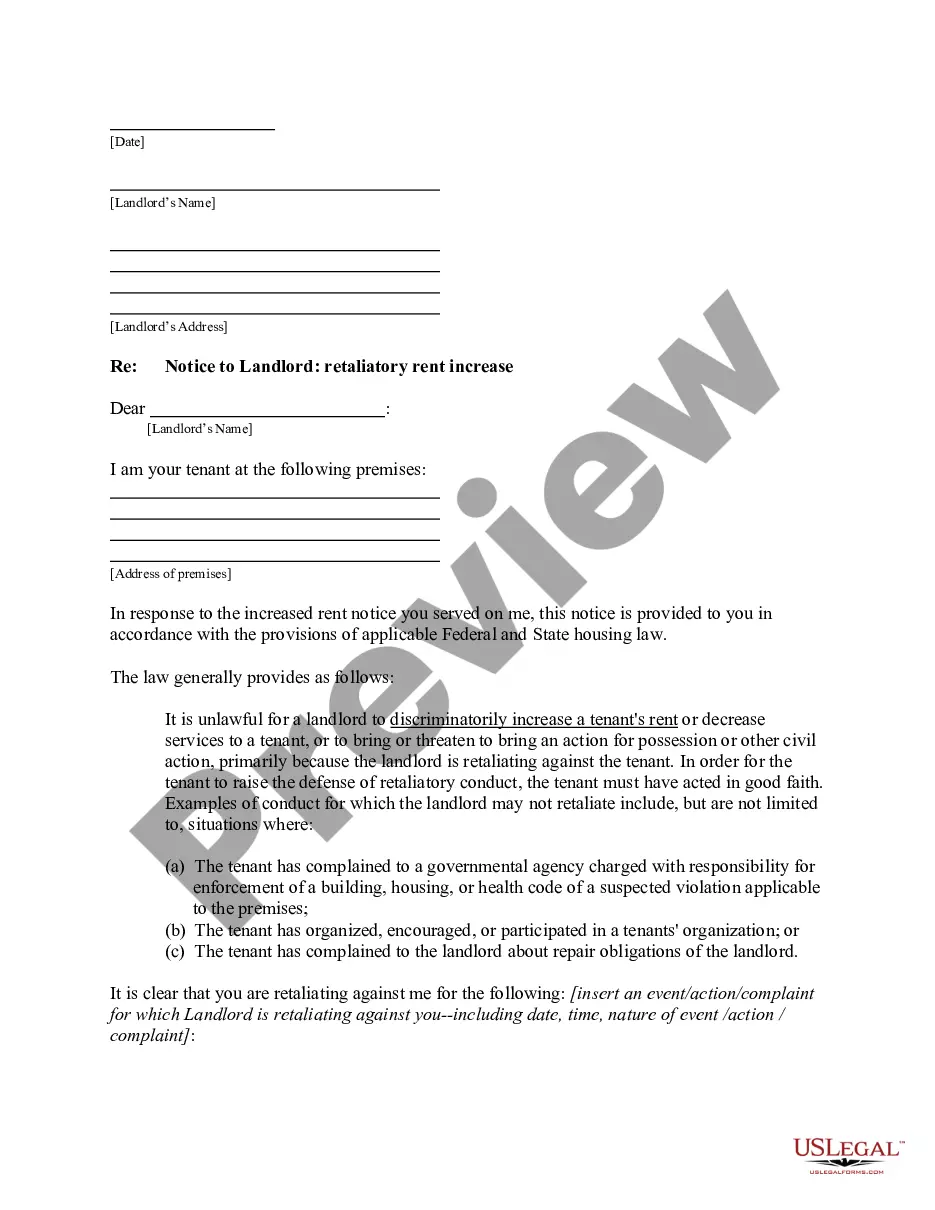
This form is a letter from a tenant to a landlord that serves as a notice regarding an improper increase in rent due to a violation of a rent control ordinance. The purpose of this letter is to inform the landlord that the rent increase may be unlawful and to formally request the withdrawal of said increase. This form differs from generic tenant letters as it specifically addresses issues related to rent control regulations, making it essential for tenants concerned about excessive rent hikes.
What’s included in this form
- Identification of the tenant and landlord
- Explanation of the improper rent increase
- Reference to the applicable rent control ordinance
- A formal request to withdraw the rent increase
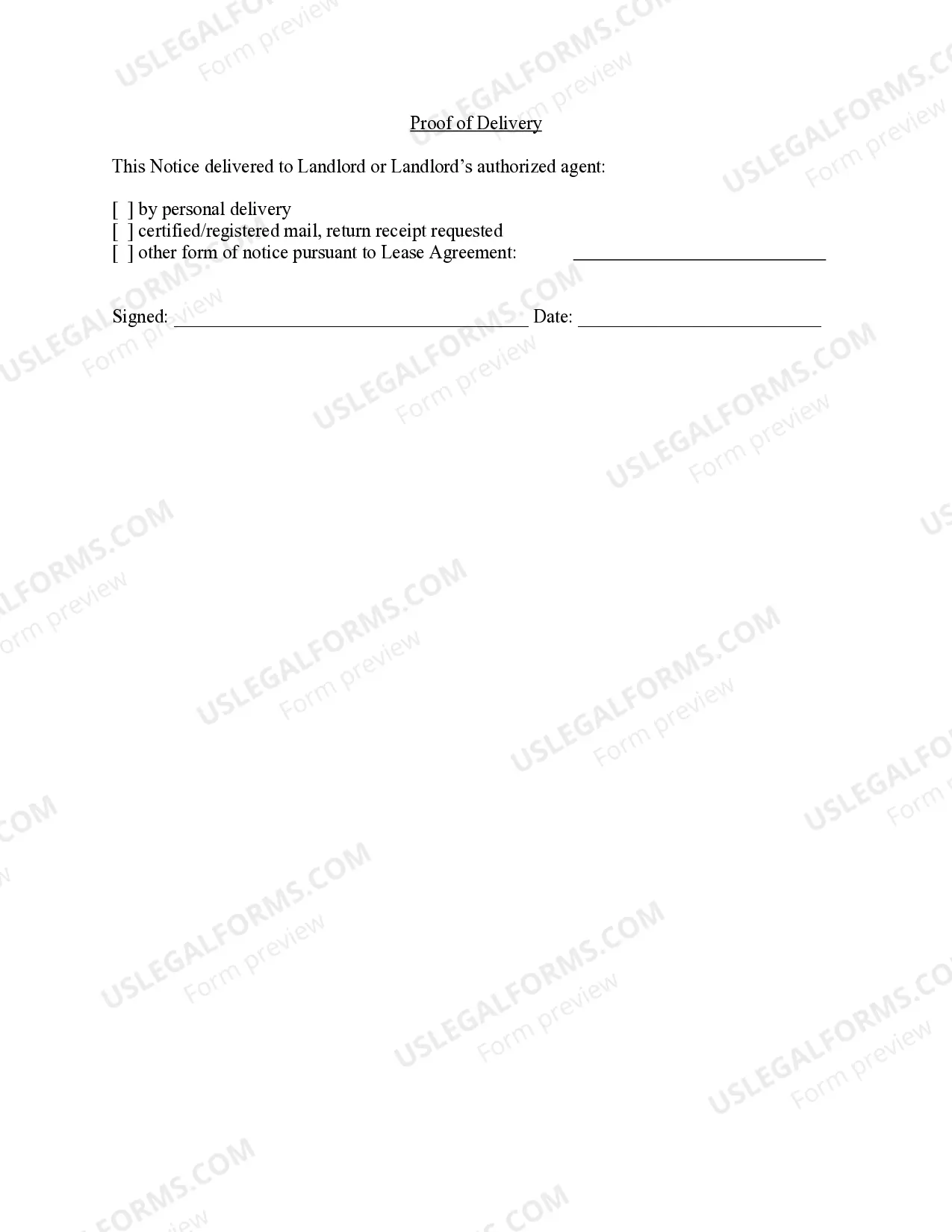
- Proof of delivery method for the notice
Situations where this form applies
This form should be used when a tenant has received a rent increase that they believe violates local rent control laws. It is particularly useful when the landlord has not provided adequate justification for the increase or when the increase exceeds the limits set by local ordinances. Using this letter can help the tenant formally communicate their concerns and potentially resolve the issue before resorting to legal action.
Who this form is for
- Tenants who have received a rent increase notice
- Individuals living in areas with rent control regulations
- Renters who believe their rights are being violated regarding rent adjustments
Steps to complete this form
- Identify the parties: Fill in the names and addresses of the tenant and landlord.
- Specify the property: Include the address of the rental property in question.
- Detail the rent increase: Clearly state the percentage or amount of the unauthorized increase.
- Reference the ordinance: Mention the specific rent control ordinance that is being violated.
- Sign and date the letter: Ensure the tenantâs signature is included along with the date of the notice.
- Choose proof of delivery: Indicate how the notice will be delivered to the landlord.
Is notarization required?
Notarization is generally not required for this form. However, certain states or situations might demand it. You can complete notarization online through US Legal Forms, powered by Notarize, using a verified video call available anytime.
Get your form ready online
Our built-in tools help you complete, sign, share, and store your documents in one place.
Make edits, fill in missing information, and update formatting in US Legal Forms—just like you would in MS Word.
Download a copy, print it, send it by email, or mail it via USPS—whatever works best for your next step.
Sign and collect signatures with our SignNow integration. Send to multiple recipients, set reminders, and more. Go Premium to unlock E-Sign.
If this form requires notarization, complete it online through a secure video call—no need to meet a notary in person or wait for an appointment.
We protect your documents and personal data by following strict security and privacy standards.
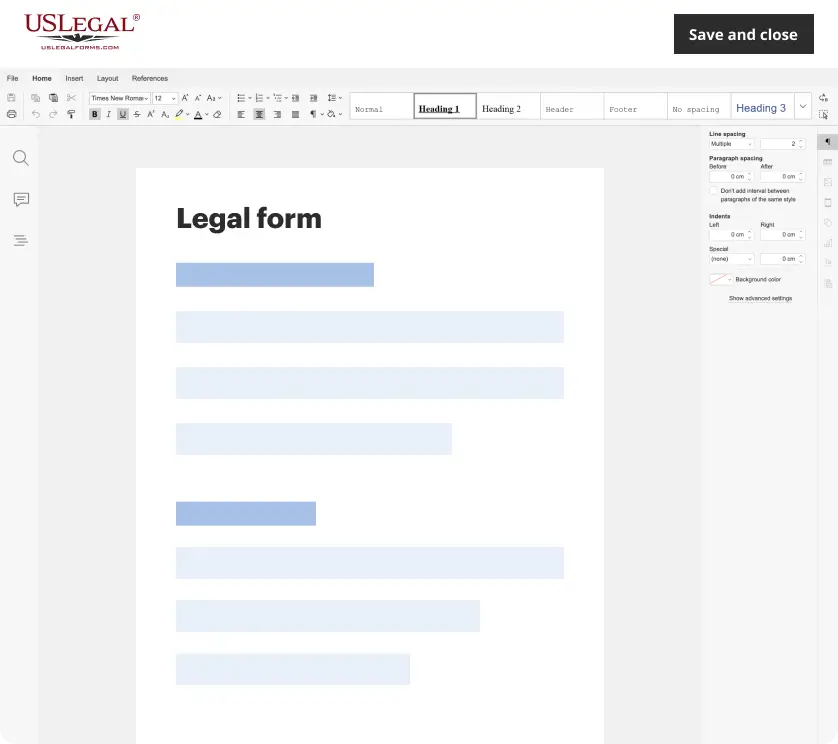
Make edits, fill in missing information, and update formatting in US Legal Forms—just like you would in MS Word.
Download a copy, print it, send it by email, or mail it via USPS—whatever works best for your next step.
Sign and collect signatures with our SignNow integration. Send to multiple recipients, set reminders, and more. Go Premium to unlock E-Sign.

If this form requires notarization, complete it online through a secure video call—no need to meet a notary in person or wait for an appointment.
We protect your documents and personal data by following strict security and privacy standards.
Mistakes to watch out for
- Failing to identify the specific rent control ordinance.
- Not signing or dating the letter properly.
- Neglecting to keep a copy for personal records.
- Using vague language instead of specific details regarding the rent increase.
Benefits of using this form online
- Convenience of downloading and completing the form at your own pace.
- Editable templates that allow for easy customization to fit individual circumstances.
- Access to forms drafted by licensed attorneys, ensuring legal compliance.
Legal use & context
- This letter notifies the landlord of potential violations and initiates communication.
- Using this form helps establish a formal record of actions taken by the tenant.
- Understanding local laws regarding rent increases is crucial for effective use.
Key takeaways
- Utilize this letter if you face an improper rent increase.
- Include all necessary information for effective communication.
- Stay informed about local rent control laws to protect your rights.
Looking for another form?
Form popularity
FAQ
West Virginia Eviction Process Timeline Initial Notice Period 30-90 days, but only required for no lease/end of lease evictions. Issuance/Service of Summons and Complaint Within 10 days before the hearing; but if not served within 120 days, the eviction case may be dismissed.
This notice will inform the tenant that the tenant has 21 days to either remedy the violation or move out of the rental unit. If the tenant does not remedy the violation or move, then the landlord can file an eviction lawsuit against the tenant at the end of the 30 days. (Va. Code Ann.
Showing the premises to prospective tenants 'reasonable' notice / number of times. The law does not say what 'reasonable' means.If you refuse access, the landlord/agent can apply to the Tribunal for an order that authorises them or any other person to enter the premises.
While tenants cannot unreasonably deny access to a landlord, landlords must also follow all of the state and local rules regarding access to tenants' apartments. Roughly half of states have rules governing landlord entry into tenants' apartments.
Every tenant has a right to enjoy peaceful possession of the property without any disturbance or encumbrance from anyone including the owner. At no point of time under your tenancy can your landlord ask you to evict or leave the premises without assigning a valid reason.
If the tenant refuses, you are permitted to send them a notice to agree or quit the property. The tenant refusing you access constitutes a breach in the lease agreement, so they could be evicted if they continue to deny access.
Apply to the Tribunal for orders: to stop the landlord/agent entering the premises. (Apply within 3 months after you become aware of the landlord's/agent's breach.) report trespass to the police. complain to NSW Fair Trading.
State law prohibits landlords from entering rental housing without either the consent of the tenant or providing reasonable notice in advance, unless circumstances require the landlord to perform emergency repairs.
A landlord who wants to evict a tenant must have a good reason (legal cause) to do so. West Virginia defines legal cause as failing to pay rent, violating the lease or rental agreement, or damaging the rental unit. To evict the tenant for one of these reasons, the landlord must first terminate the tenancy.