Wisconsin Letter from Tenant to Landlord about Fair Housing Reduction or Denial of services to Family with Children
What this document covers
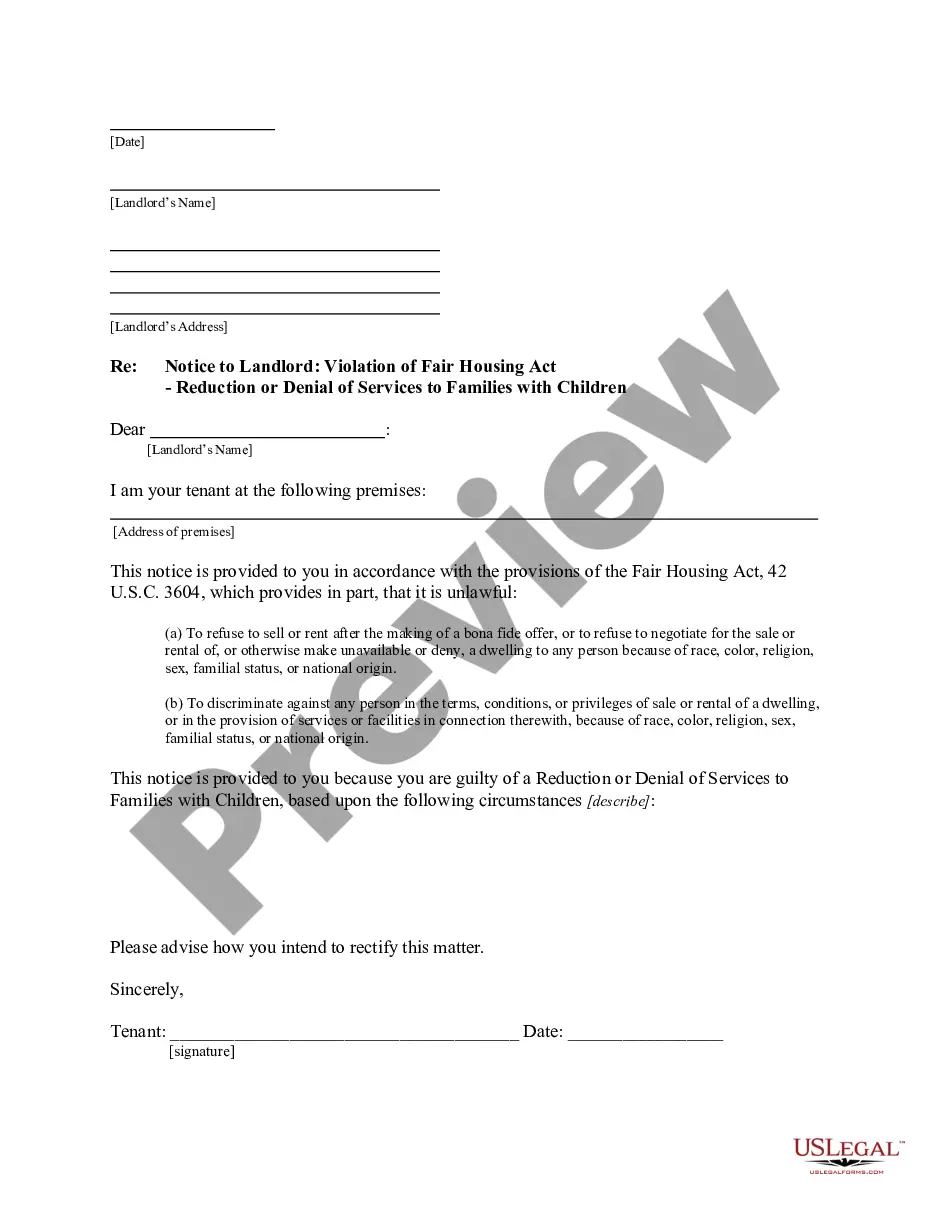
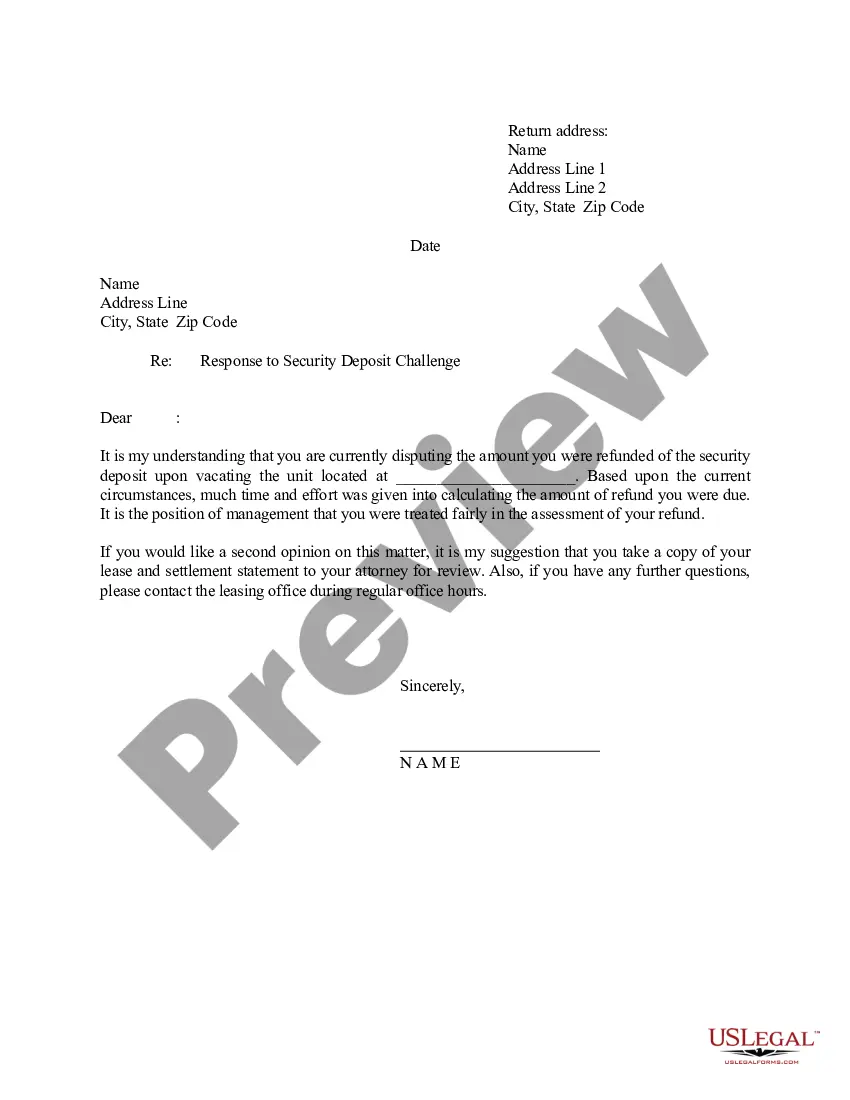
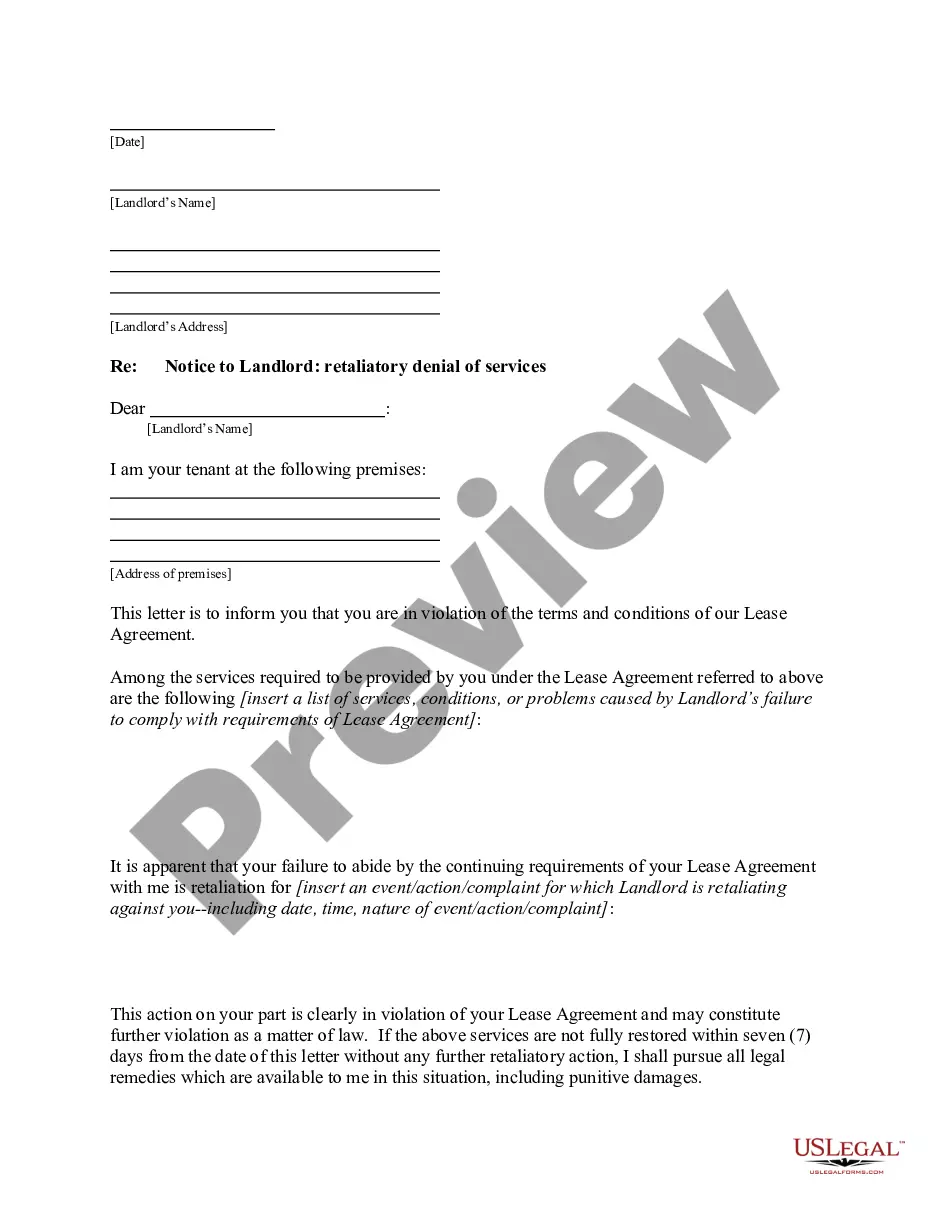
This form is a formal letter from a tenant to a landlord regarding a violation of the Fair Housing Act, specifically related to the reduction or denial of housing services to families with children. It serves as an official notice to the landlord, highlighting the tenant's rights under the law while providing an opportunity to rectify the situation. This letter differs from general complaint letters as it references specific legal protections against discrimination based on familial status.
Main sections of this form
- Identification of the landlord and tenant
- Specific language detailing the violation of the Fair Housing Act
- A description of the circumstances leading to the alleged reduction or denial of services
- A request for corrective action or resolution
- Signature and date for formal documentation

Common use cases
This form should be used when a tenant believes that their landlord has unfairly reduced or denied housing services to families with children. Situations may include restricting access to amenities, refusing to rent units, or imposing different terms on families with children compared to other tenants. It is essential to send this notice to document the issue and inform the landlord of the legal implications of their actions.
Who needs this form
- Tenants who are facing discrimination in housing due to having children
- Families who believe their rights under the Fair Housing Act have been violated
- Individuals seeking to formally address issues with their landlord regarding housing services
How to prepare this document
- Identify the parties involved â include the names and addresses of both the tenant and landlord.
- Clearly state the nature of the violation â describe how services have been reduced or denied to families with children.
- List specific examples of the violations â provide circumstances that demonstrate discrimination.
- Request a resolution â specify what corrective action you expect from the landlord.
- Sign and date the letter for formal acknowledgment.
Does this document require notarization?
This form does not typically require notarization unless specified by local law. It is advisable to check local requirements to ensure compliance. Always keep a copy for your records after sending the notice to your landlord.
Get your form ready online
Our built-in tools help you complete, sign, share, and store your documents in one place.
Make edits, fill in missing information, and update formatting in US Legal Forms—just like you would in MS Word.
Download a copy, print it, send it by email, or mail it via USPS—whatever works best for your next step.
Sign and collect signatures with our SignNow integration. Send to multiple recipients, set reminders, and more. Go Premium to unlock E-Sign.
If this form requires notarization, complete it online through a secure video call—no need to meet a notary in person or wait for an appointment.
We protect your documents and personal data by following strict security and privacy standards.

Make edits, fill in missing information, and update formatting in US Legal Forms—just like you would in MS Word.

Download a copy, print it, send it by email, or mail it via USPS—whatever works best for your next step.

Sign and collect signatures with our SignNow integration. Send to multiple recipients, set reminders, and more. Go Premium to unlock E-Sign.

If this form requires notarization, complete it online through a secure video call—no need to meet a notary in person or wait for an appointment.

We protect your documents and personal data by following strict security and privacy standards.
Common mistakes
- Failing to include specific examples of the denial or reduction of services.
- Not being clear about the requested resolutions or actions from the landlord.
- Neglecting to keep a copy of the letter for personal records.
- Using inappropriate or vague language that does not clearly outline the issue.
Advantages of online completion
- Convenience of downloading and completing the form at your own pace.
- Access to professionally drafted language that meets legal standards.
- Ability to customize the form to fit your specific situation quickly.
- Reliability of using a template that is updated to reflect current laws and regulations.
Legal use & context
- This form serves as a formal notice of alleged discrimination under the Fair Housing Act.
- It establishes a written record of communication between tenant and landlord.
- Should further action be necessary, this document can support claims in legal contexts.
What to keep in mind
- Use this form to formally address violations of the Fair Housing Act.
- Provide clear and specific information about the alleged discrimination.
- Document all communication to protect your rights as a tenant.
Looking for another form?

Form popularity
FAQ
It's fair to be angry and scaredthe direct federal fines for violations of the Fair Housing Act are usually $17,000 per violation; total settlements on race, familial status, age and sex discrimination cases often reach well into the six figuresbut those overwhelming emotions are why you should go straight to your
Under California law, it is unlawful for a landlord, managing agent, real estate broker, or salesperson to discriminate against a person or harass a person because of the person's race, color, religion, sex (including gender and perception of gender), sexual orientation, marital status, national origin, ancestry,
Examples of familial status discrimination include: Refusing to rent to families with children. Evicting families once a child joins the family through, e.g., birth, adoption, custody. Requiring families with children to live on specific floors or in specific buildings or areas.
Which family is NOT protected under the familial status provisions of the Fair Housing Act? The answer is a 55-year-old father, 40-year-old mother, and 17-year-old son who want to purchase a home in an age-restricted adults-only community.
Under the FHA, familial status discrimination occurs when a landlord, property manager, real estate agent, or property owner treats someone differently because they have a family with one or more individuals who are under 18 years of age.
What does "familial status" mean? Familial status means the makeup of your family. The FHA prohibits discrimination on this basis including: children under the age of 18 living with parents/guardians, pregnant women, and people seeking custody of children under 18.
HUD Settles Disability Discrimination Fair Housing Act Case For $80,000.
Punitive damages are appropriate in a federal civil rights action "when the defendant's conduct is shown to be motivated by evil motive or intent, or when it involves reckless or callous indifference to the federally protected rights of others." Smith v.
The Fair Housing Act (FHA) outlaws discrimination against tenants based on certain personal characteristics, commonly known as protected classes. The FHA added familial status as a protected class in 1989 to make sure that families with children aren't treated differently when renting.