Wisconsin Quitclaim Deed from Corporation to Individual
Understanding this form
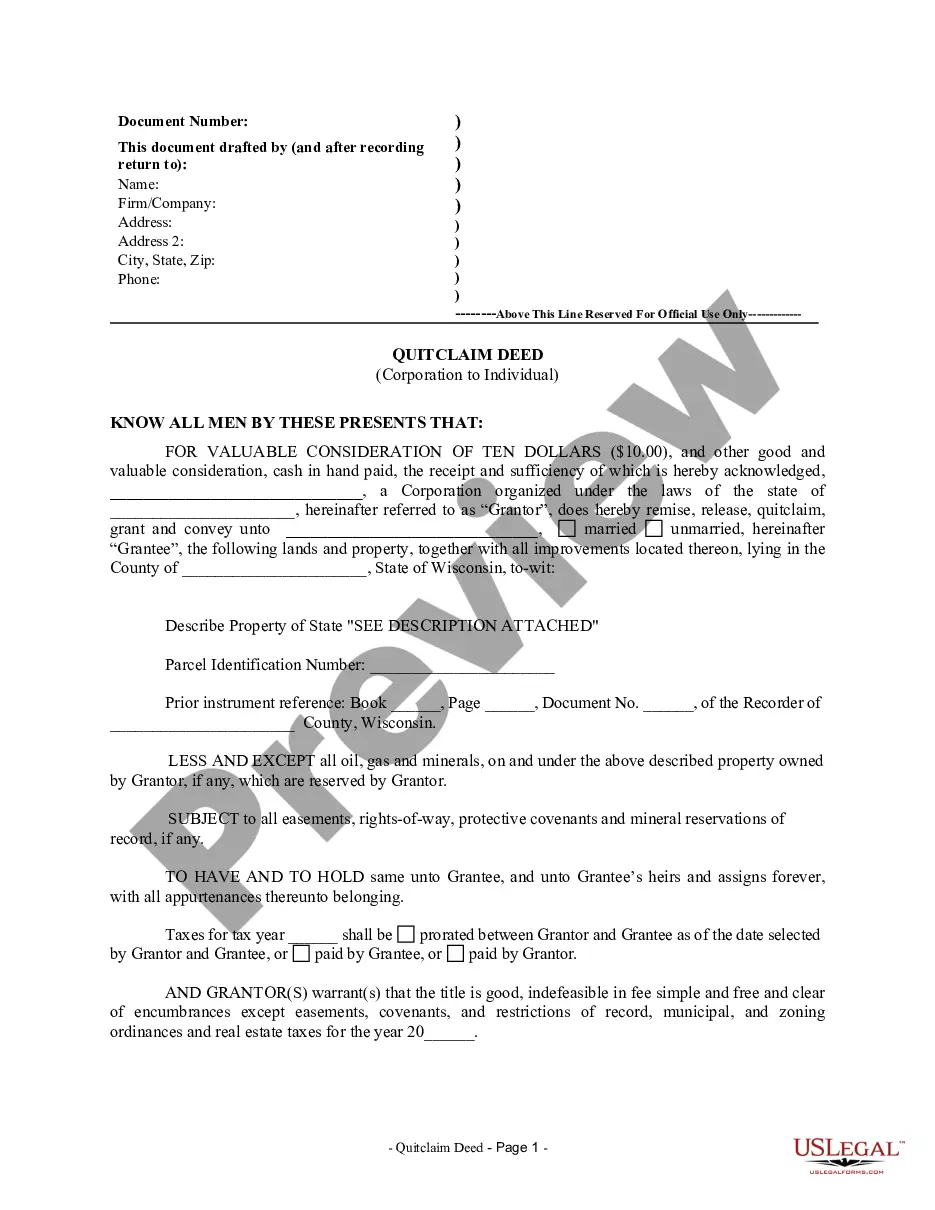
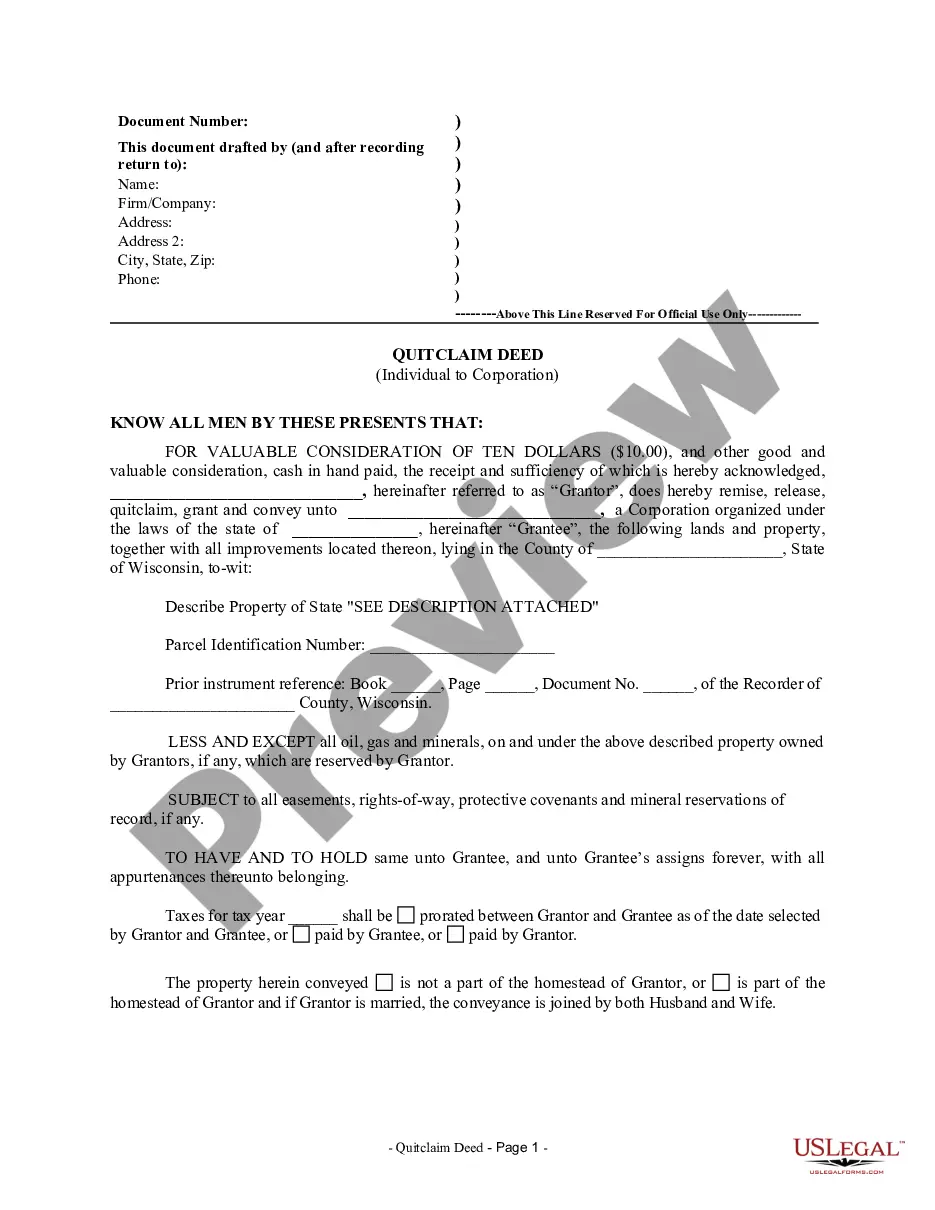
The Quitclaim Deed from Corporation to Individual is a legal document in which a corporation (the Grantor) transfers its property ownership to an individual (the Grantee). This type of deed is specifically designed to convey property without any warranties about the title, making it different from more complex deed types. The Grantor is effectively relinquishing any claim to the property, except for reserved rights, such as oil, gas, and mineral interests.
Key components of this form
- Identification of the parties: names of the Grantor (corporation) and Grantee (individual).
- Description of the property being transferred, including Parcel Identification Number and prior instrument reference.
- Reservation clause for oil, gas, and minerals, outlining what the Grantor retains ownership of.
- Tax obligations for the property, specifying how taxes will be handled in the year of transfer.
- Warranties by the Grantor regarding title and encumbrances.
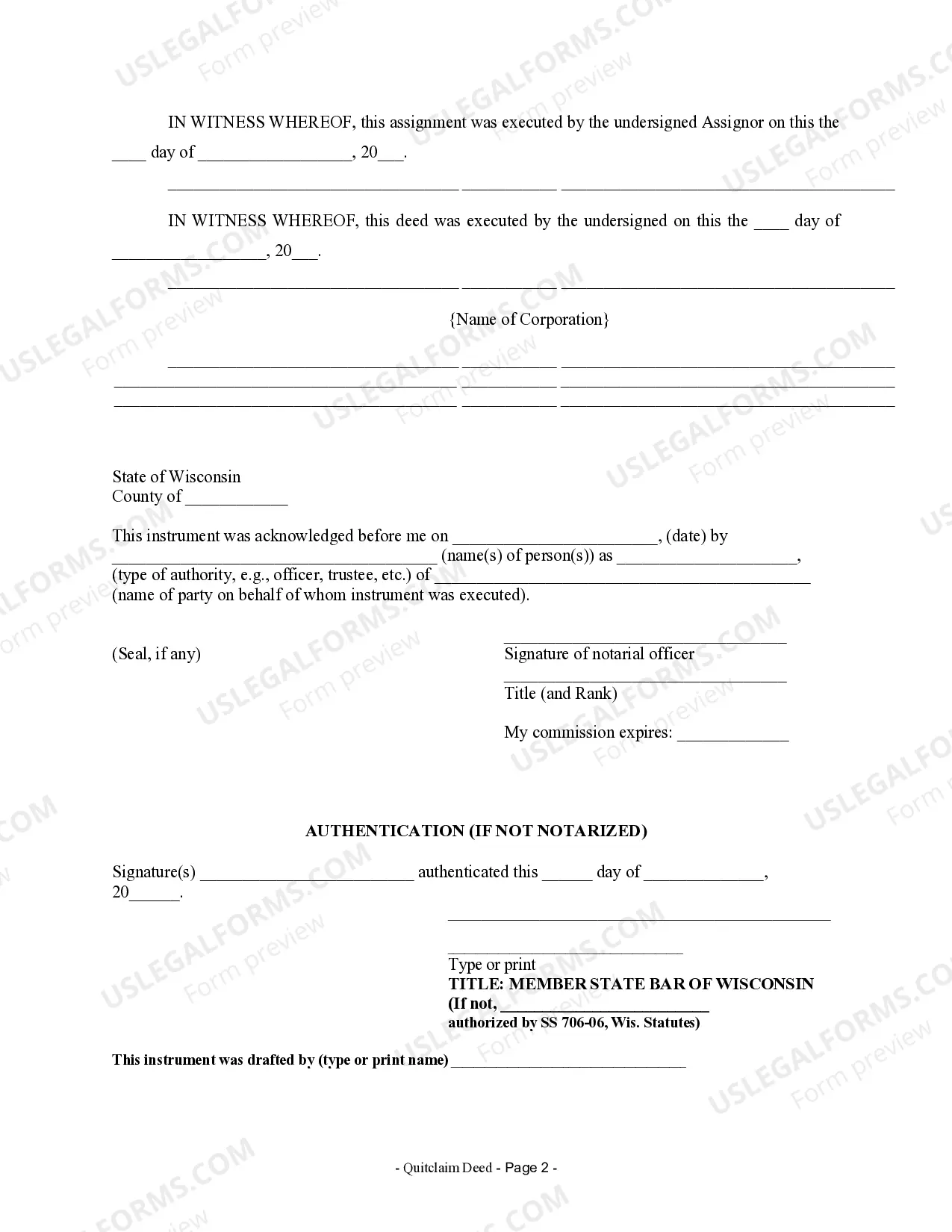
- Signature and acknowledgment sections for the Grantor and a notary, if applicable.



When to use this document
This form is used when a corporation wishes to transfer its real estate property to an individual. It may be necessary in situations like corporate restructuring, liquidation of assets, or informal family transactions where clear title is not being promised. It is also applicable when the Grantor wants to quickly transfer property without the complications of a warranty deed.
Who can use this document
This Quitclaim Deed is intended for:
- Corporations looking to transfer real estate to individuals.
- Individuals receiving property from a corporate entity.
- Legal professionals involved in corporate asset management or real estate transactions.
- Individuals with limited legal experience seeking a straightforward property transfer solution.
Steps to complete this form
- Identify the parties involved: enter the corporation's name as Grantor and the individual's name as Grantee.
- Specify the property: provide a detailed description along with the Parcel Identification Number.
- Fill in the reservation clause: detail any rights the Grantor is retaining, such as mineral rights.
- Complete the tax agreement: indicate how property taxes will be handled for the year of transfer.
- Ensure signatures: both the Grantor and a notary should sign and date the document where required.
Does this form need to be notarized?
This document requires notarization to meet legal standards. US Legal Forms provides secure online notarization powered by Notarize, allowing you to complete the process through a verified video call, available 24/7.
Get your form ready online
Our built-in tools help you complete, sign, share, and store your documents in one place.
Make edits, fill in missing information, and update formatting in US Legal Forms—just like you would in MS Word.
Download a copy, print it, send it by email, or mail it via USPS—whatever works best for your next step.
Sign and collect signatures with our SignNow integration. Send to multiple recipients, set reminders, and more. Go Premium to unlock E-Sign.
If this form requires notarization, complete it online through a secure video call—no need to meet a notary in person or wait for an appointment.
We protect your documents and personal data by following strict security and privacy standards.

Make edits, fill in missing information, and update formatting in US Legal Forms—just like you would in MS Word.

Download a copy, print it, send it by email, or mail it via USPS—whatever works best for your next step.

Sign and collect signatures with our SignNow integration. Send to multiple recipients, set reminders, and more. Go Premium to unlock E-Sign.

If this form requires notarization, complete it online through a secure video call—no need to meet a notary in person or wait for an appointment.

We protect your documents and personal data by following strict security and privacy standards.
Common mistakes to avoid
- Failing to include a complete property description or Parcel Identification Number.
- Not properly executing the deed in front of a notary when required.
- Overlooking tax obligations, which can lead to disputes later.
- Leaving out the reservation clause, which can cause legal complications regarding retained rights.
Advantages of online completion
- Convenience: download and complete the form at your own pace.
- Editability: easily make changes before finalizing the document.
- Reliability: forms drafted by licensed attorneys ensure legal compliance.
- Accessibility: available anytime, without the need for in-person visits to legal offices.
Looking for another form?
Form popularity
FAQ
A quitclaim deed will remove the out-spouse (or departing spouse) from the title to the property, effectively relinquishing their equity or ownership in the home. The execution of a quitclaim deed is typically a requirement of a divorce settlement in order to complete the division of assets.
The good news is that, though it may not be an attractive option to many buyers, you can still sell the property normally. The title will still have been transferred to you. The quitclaim deed affects ownership and the name on the deed, but it does not affect the name on the mortgage.
A Quitclaim Deed must be notarized by a notary public or attorney in order to be valid.Consideration in a Quitclaim Deed is what the Grantee will pay to the Grantor for the interest in the property.
The quitclaim deed only transfers the type of title you own. Deed transfers of any kind impact only the ownership and do not change or affect any mortgage on the property.
Usually, taking off names from the deed must be agreed upon by the parties/owners involved. If in case that you don't have a consent from the person whose name is to be removed, it could be a more complex situation. You'd need to get a legal advice on this and consult a lawyer.
You can actually draw up a quitclaim deed on your own without a lawyer, though you should visit a notary public and get the form notarized. As with the creation of other legal documents, like a last will and testament, you may be able to find a quitclaim deed form online that you can easily fill out.
Based on that interpretation, it shouldn't ruin your credit if you signed over the condo with a quitclaim deed. Most sellers who do this sort of financing don't report to the credit bureaus unless they do a lot of buying and selling of properties to people who can't qualify for mortgages on their own.
A quitclaim deed is a poor way to give legal ownership of a property back to a previous owner -- or to transfer it to anyone except those close to you -- because there is no guarantee that your ownership interest is valid and uncontested. The other party likely will insist on a grant deed or a warranty deed.
Using a quitclaim bill of sale can have benefits for both seller and buyer. A seller is able to sell the property without having to ensure the title is clear. They sell it without guarantees, so if, for example, there is a lien against the property, that lien passes with the property to the buyer.
A quitclaim deed is often used if the grantor is not sure of the status of the title (whether it contains any defects) or if the grantor wants no liability under the title covenants.