Washington Warning Notice Due to Complaint from Neighbors
What this document covers
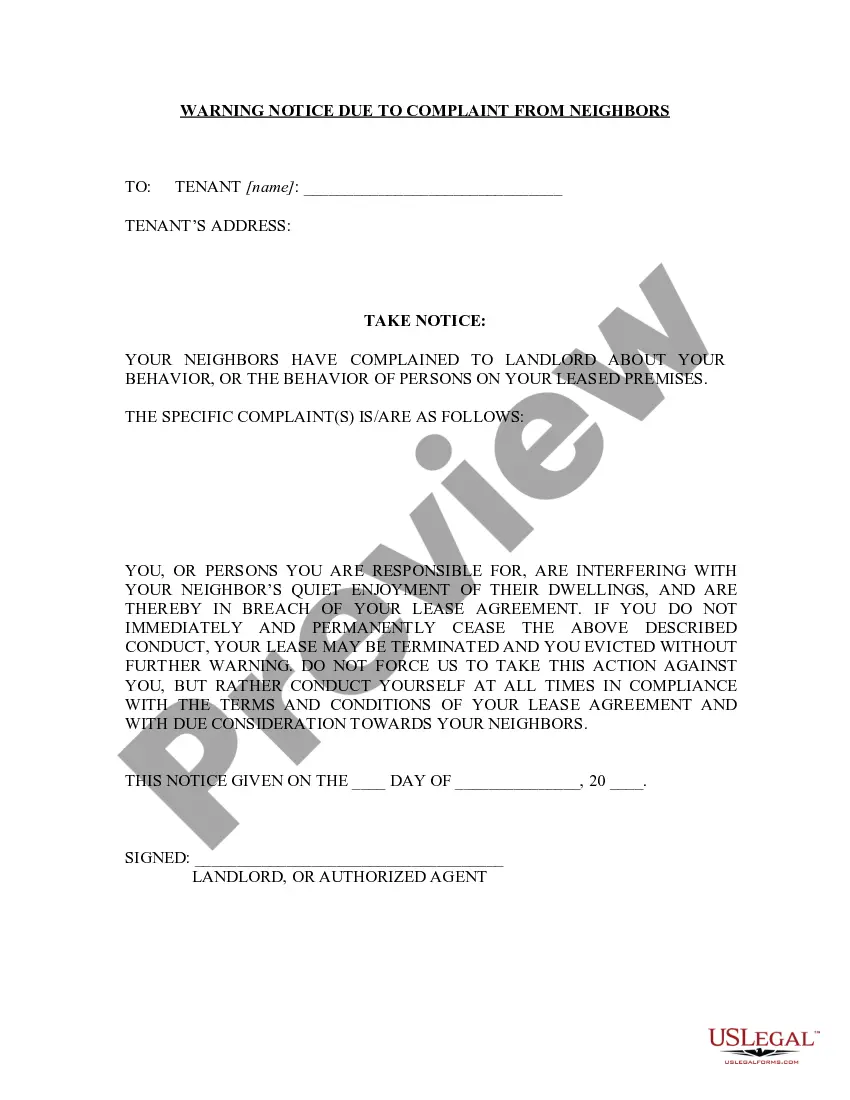
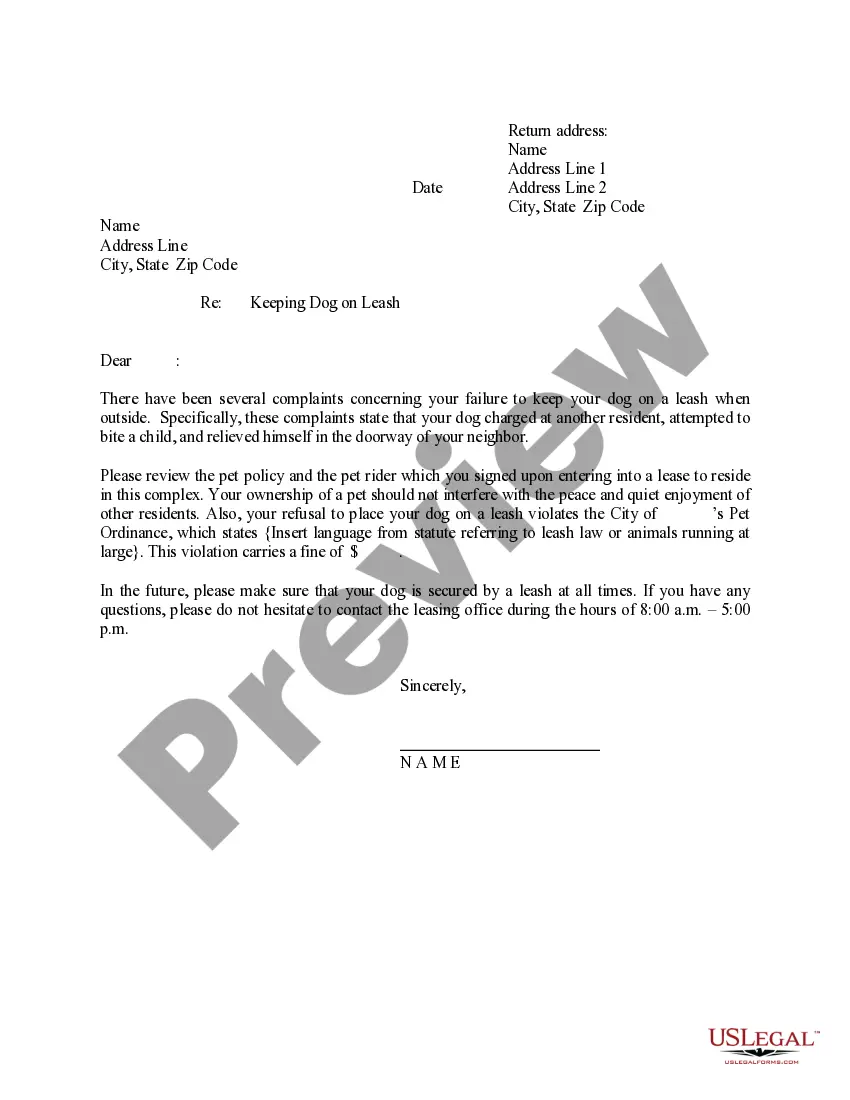
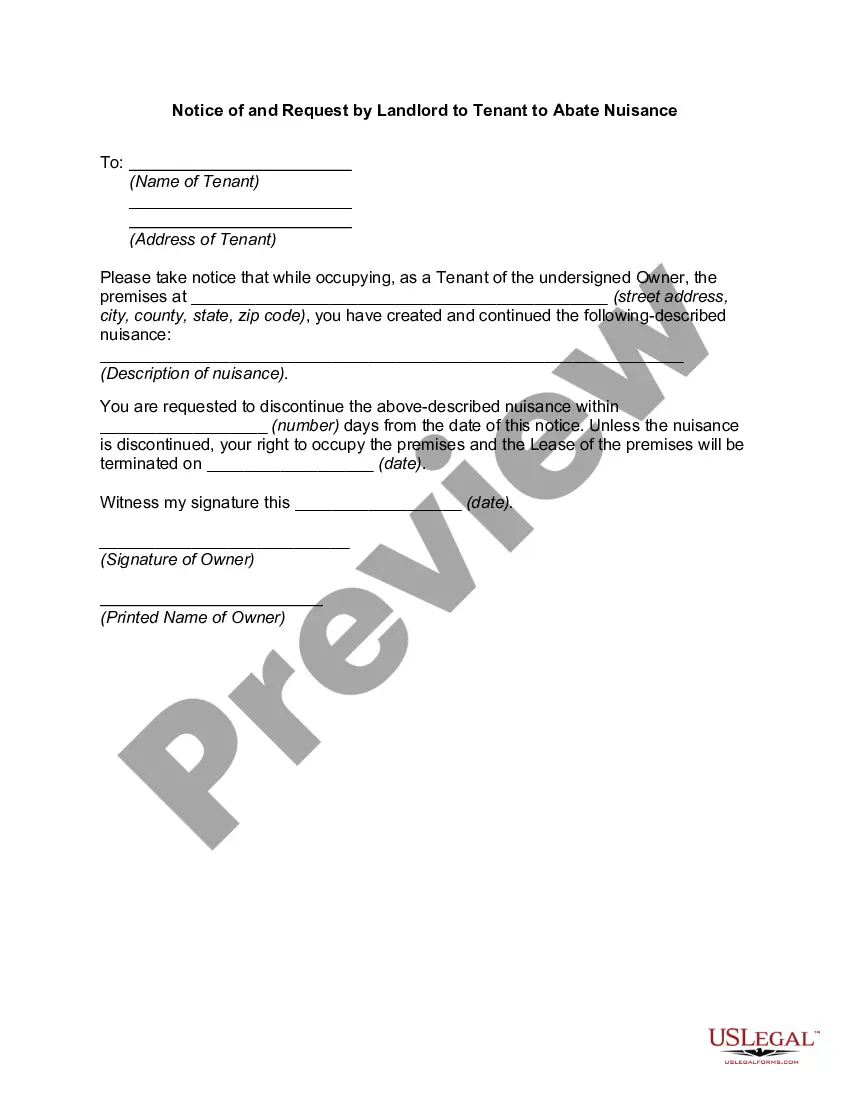
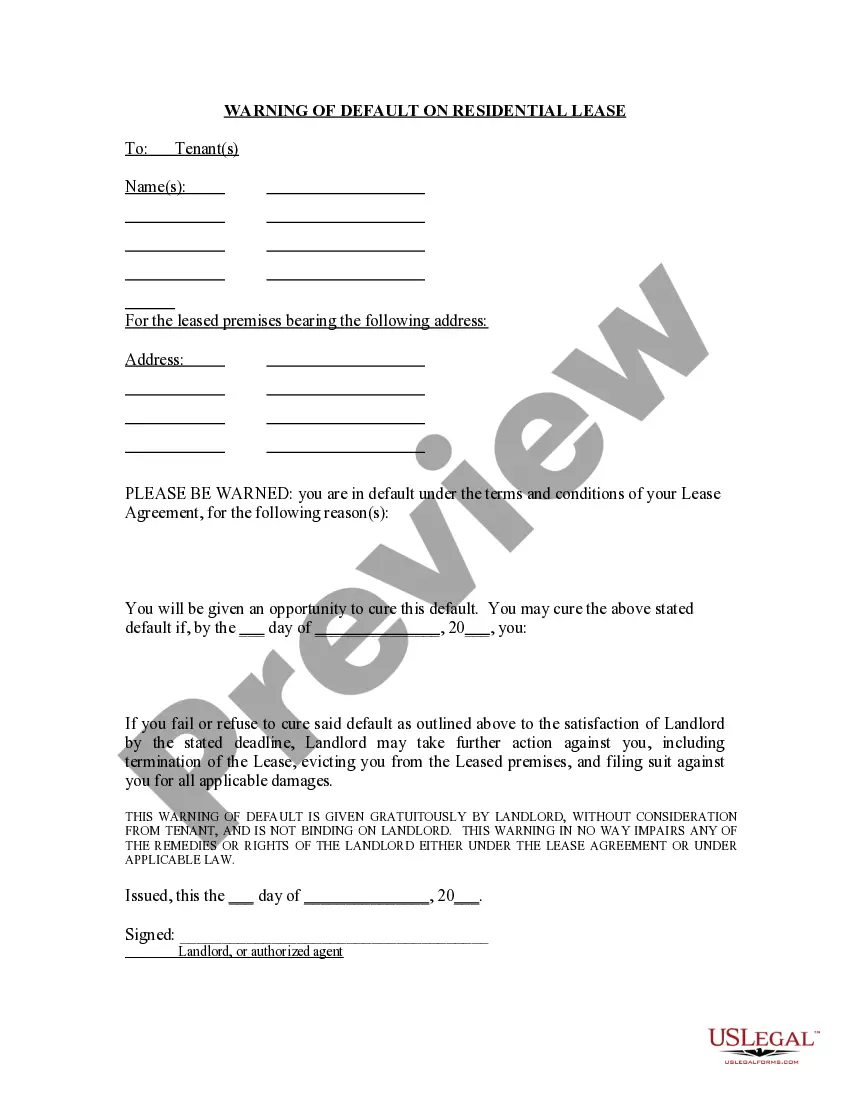
A Warning Notice Due to Complaint from Neighbors is a legal document that alerts a tenant about complaints from neighbors regarding disruptive behavior. This notice serves as a formal request to stop the problematic conduct, thereby allowing the tenant the opportunity to avoid eviction. Unlike other tenant notices, this form specifically addresses neighbor complaints, focusing on maintaining peaceful enjoyment of the property for all residents.
What’s included in this form
- Date of issuance: The specific date the notice is given.
- Landlord or agent signature: Confirmation of the notice by the landlord or authorized representative.
- Identification of the tenant: Names and relevant details of the tenant receiving the notice.
- Description of complaint: A summary of the specific behavior leading to the warning.
- Instructions for tenant: Clear directions to cease the bothersome conduct.
Situations where this form applies
This form should be used when a landlord receives complaints from neighbors about a tenant's behavior that is disturbing the peace. Scenarios may include loud parties, disruptive conduct, or other actions that violate the expectations of a quiet living environment. Issuing this notice allows landlords to address issues formally and provide tenants with the chance to correct their behavior before considering eviction.
Who needs this form
- Landlords seeking to formally notify tenants of complaints from neighbors.
- Property managers acting on behalf of property owners dealing with disruptive tenant behavior.
- Tenants who receive such complaints and wish to understand the implications and required actions.
Completing this form step by step
- Identify the parties: Fill in the names of the landlord or authorized agent and the tenant.
- Specify the date: Enter the date when this notice is issued.
- Enter the details of the complaint: Clearly outline the nature of the issues being raised by neighbors.
- Sign the notice: The landlord or authorized agent must sign to validate the notice.
- Deliver the notice: Ensure the tenant receives the notice in compliance with state regulations.
Does this document require notarization?
This form does not typically require notarization unless specified by local law. It is recommended to check local regulations to confirm if notarization is necessary for your specific situation.
Get your form ready online
Our built-in tools help you complete, sign, share, and store your documents in one place.
Make edits, fill in missing information, and update formatting in US Legal Forms—just like you would in MS Word.
Download a copy, print it, send it by email, or mail it via USPS—whatever works best for your next step.
Sign and collect signatures with our SignNow integration. Send to multiple recipients, set reminders, and more. Go Premium to unlock E-Sign.
If this form requires notarization, complete it online through a secure video call—no need to meet a notary in person or wait for an appointment.
We protect your documents and personal data by following strict security and privacy standards.

Make edits, fill in missing information, and update formatting in US Legal Forms—just like you would in MS Word.

Download a copy, print it, send it by email, or mail it via USPS—whatever works best for your next step.

Sign and collect signatures with our SignNow integration. Send to multiple recipients, set reminders, and more. Go Premium to unlock E-Sign.

If this form requires notarization, complete it online through a secure video call—no need to meet a notary in person or wait for an appointment.

We protect your documents and personal data by following strict security and privacy standards.
Common mistakes to avoid
- Failing to include the date of issuance.
- Not providing a clear description of the tenant's behavior causing the complaints.
- Omitting the signature of the landlord or authorized agent.
Why complete this form online
- Convenience: Easily download and print the form at your convenience.
- Editability: Customize the template to fit specific circumstances without hassle.
- Reliability: Forms are drafted by licensed attorneys, ensuring legality and effectiveness.
Looking for another form?

Form popularity
FAQ
Don't respond with anger. Although you may be instantly (and perhaps justifiably) irritated when your neighbor complains, don't let your anger get the best of you. Ask if you can talk face-to-face. Listen. Work toward a solution.
Neighbor harassment can take many forms, including: Derogatory or offensive comments about sexual orientation, your nation of origin, or other discriminatory factors. Calling law enforcement on you repeatedly or for small things. Repeatedly playing loud music during city "quiet hours" or after you have asked them to
Get Legal Help Apartment neighbors complain about each other. But when it goes too far, you may have legal options. If your neighbor has falsely accused you of something, and your landlord is treating you unfairly as a result, contact an attorney experienced in landlord/tenant law.
Be professional. Use professional letterhead and be sure to sign in ink. Express your dissatisfaction clearly, with facts, dates, and details (including copies of receipts and so on) to help substantiate your claim. Be sincere. Be prompt. Don't expect compensation every time.
If your neighbour has complained about noise that you are making, your first step is to talk to them to try and resolve the problem. If they have made a complaint you may have been issued with a warning, direction, order or notice from your local council or the police.
Keep a record of what you say and how they reply. Get proof the best option is to take a photo or video of the object of complaint in case they claim something else happened. You can always try to reach a compromise.
Overview. Talk to your neighbour. Contact your neighbour's landlord. Use a mediation service. Complain about noise to the council. High hedges, trees and boundaries. Call the police. Take action through the courts.
Explain that you are making a complaint. Relate what the complaint is actually about and make sure to include the specific details about the complaint, especially an account of the event. Inform the management of what you wish to be done regarding the complaint that you are making. End on a positive tone.
Write the letter in a polite manner. Always introduce yourself first at the left of the letter. Never forget to mention the date of writing the letter. The letter of receiver or recipient should be properly mentioned along with Pincode. Mention the purpose of writing a letter in the subject line.