Justification (Necessity)
Understanding this form
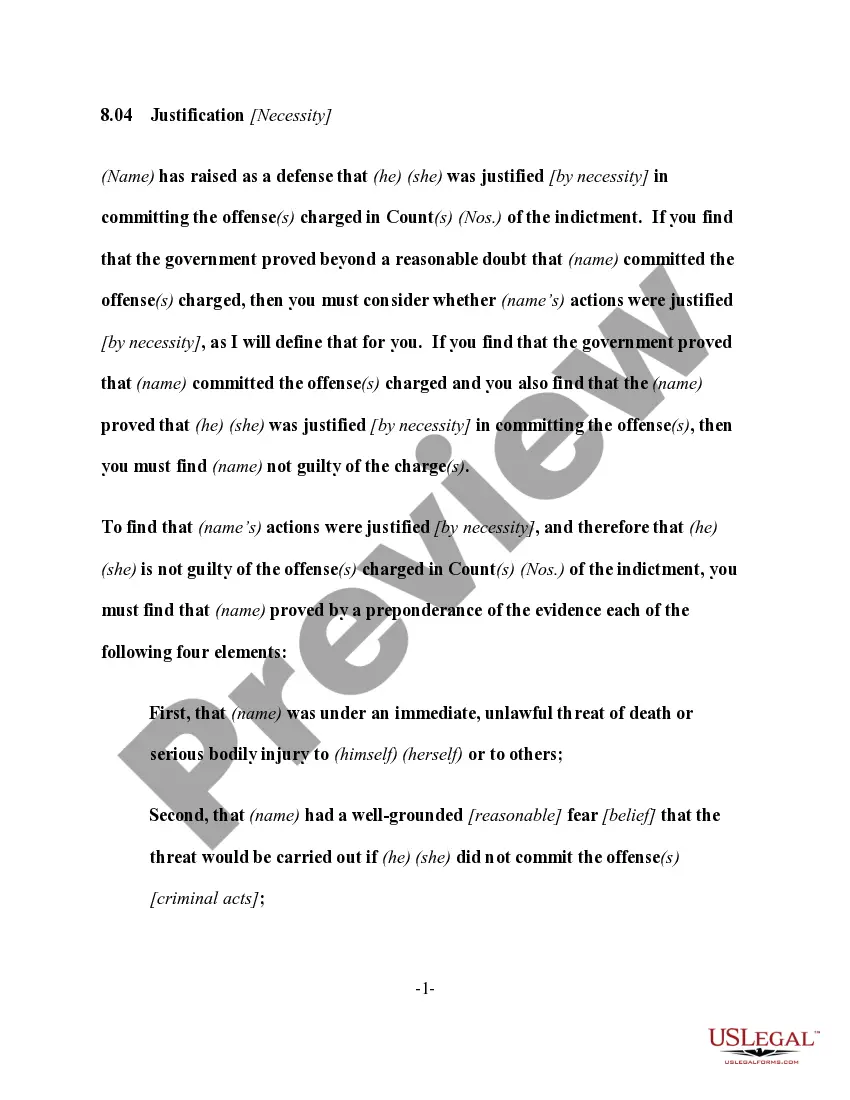
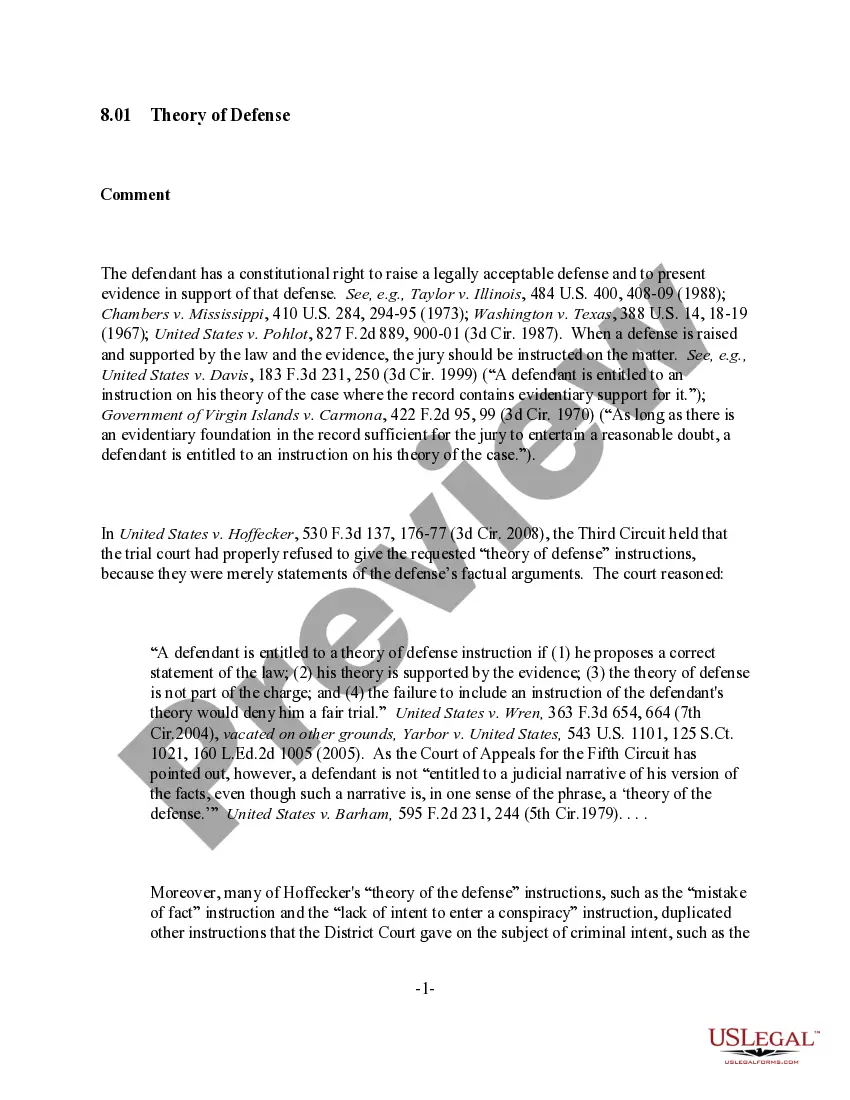
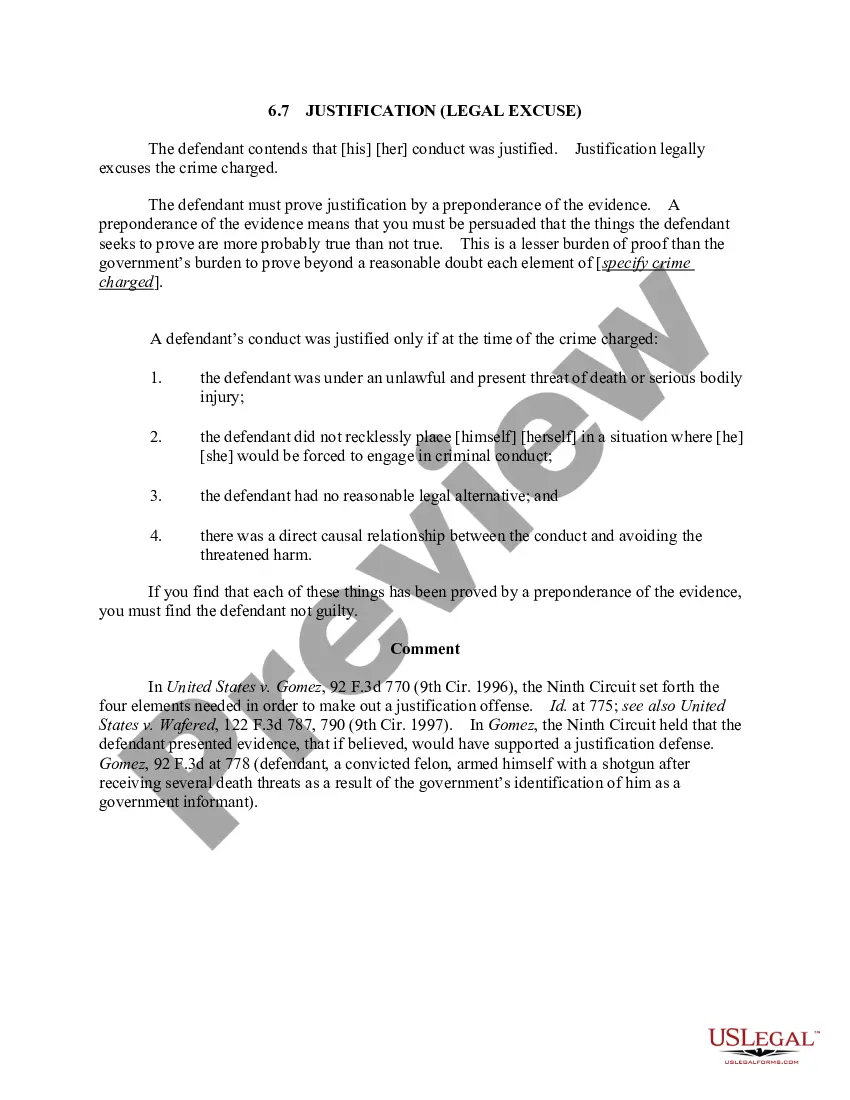
The Justification (Necessity) form provides a legal framework for defendants arguing that their illegal actions were justified due to an immediate threat. This defense differs from other legal defenses by focusing specifically on the necessity of committing a crime to avert greater harm. If successful, this form can result in a verdict of not guilty based on the circumstances that compelled the defendant's actions.
What’s included in this form
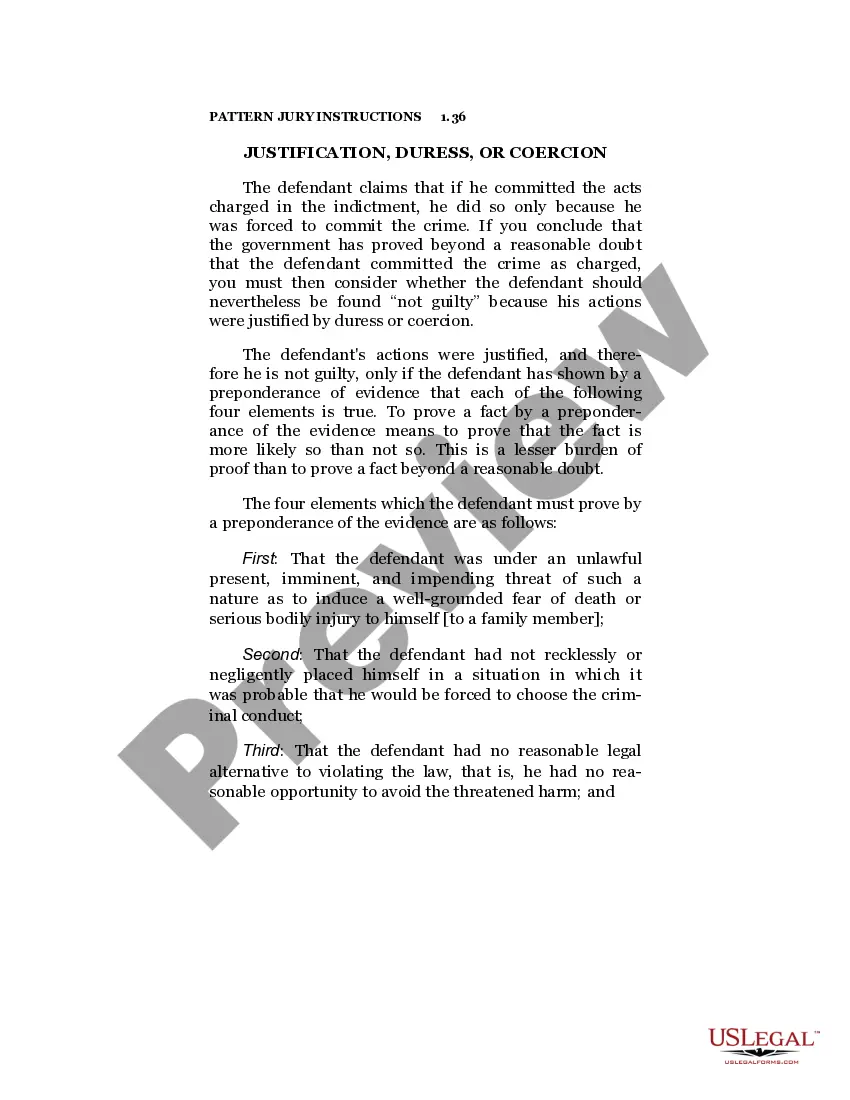
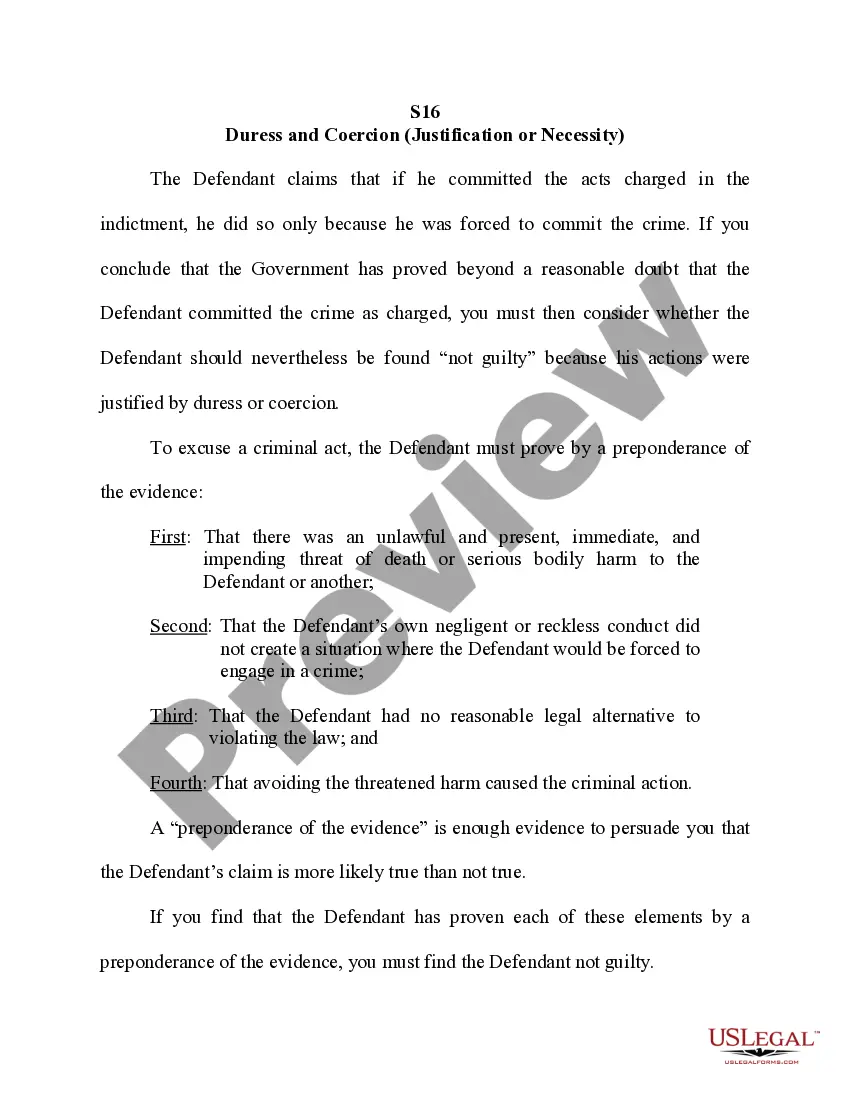
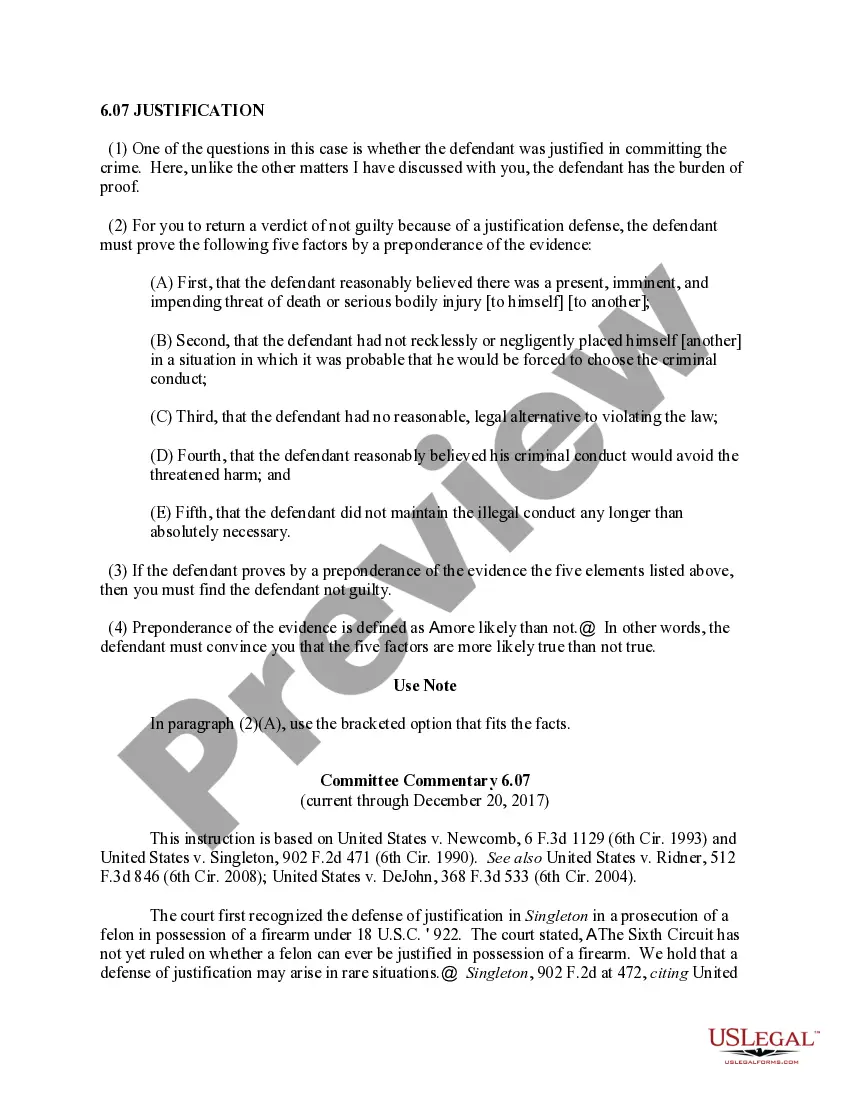
- Immediate threat of death or serious injury: Establishes the basis for the necessity defense.
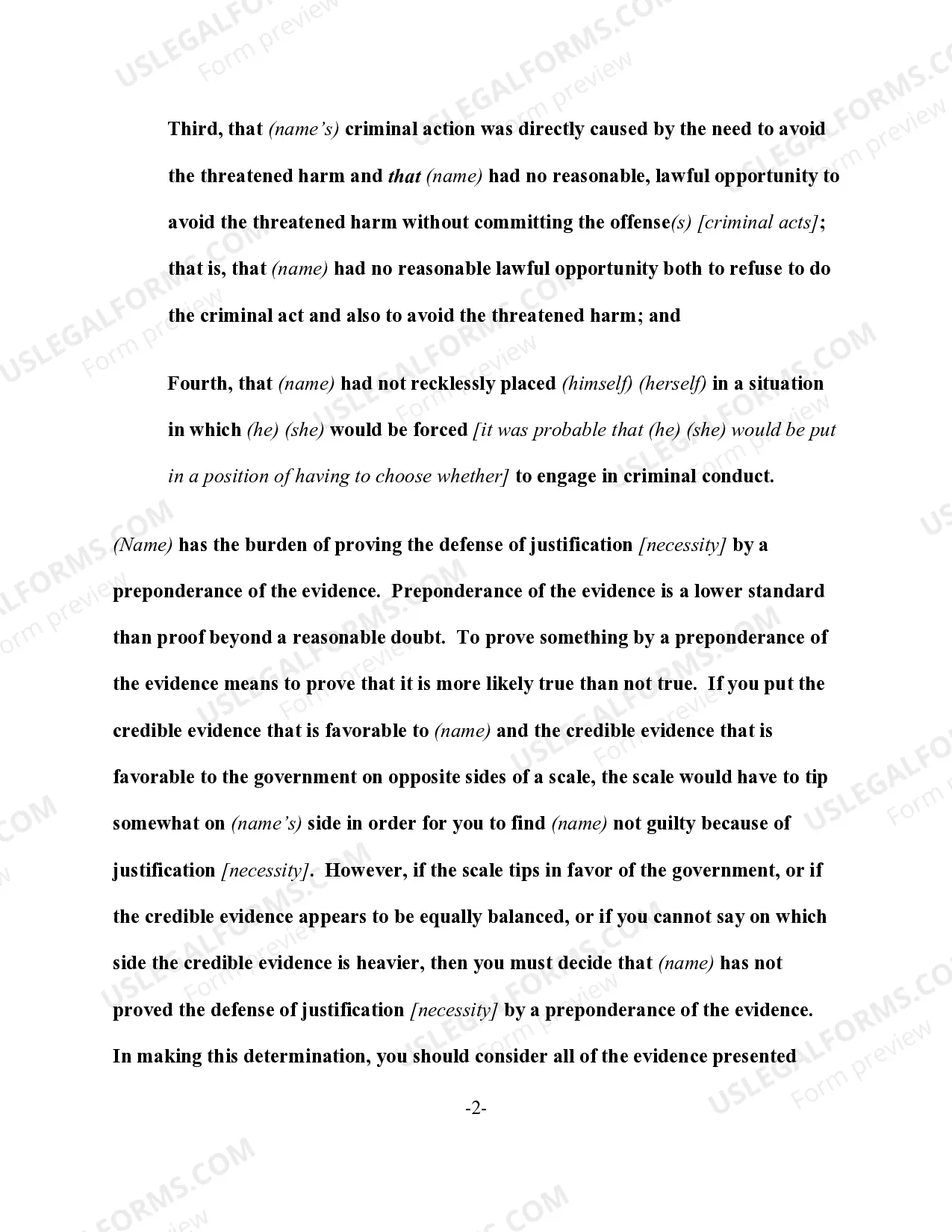
- Reasonable belief in the threat: Requires demonstrating that the fear of harm was well-founded.
- Direct causation: Connects the criminal action directly to the threatened harm.
- Lack of lawful alternatives: Indicates no other means were available to avoid danger.
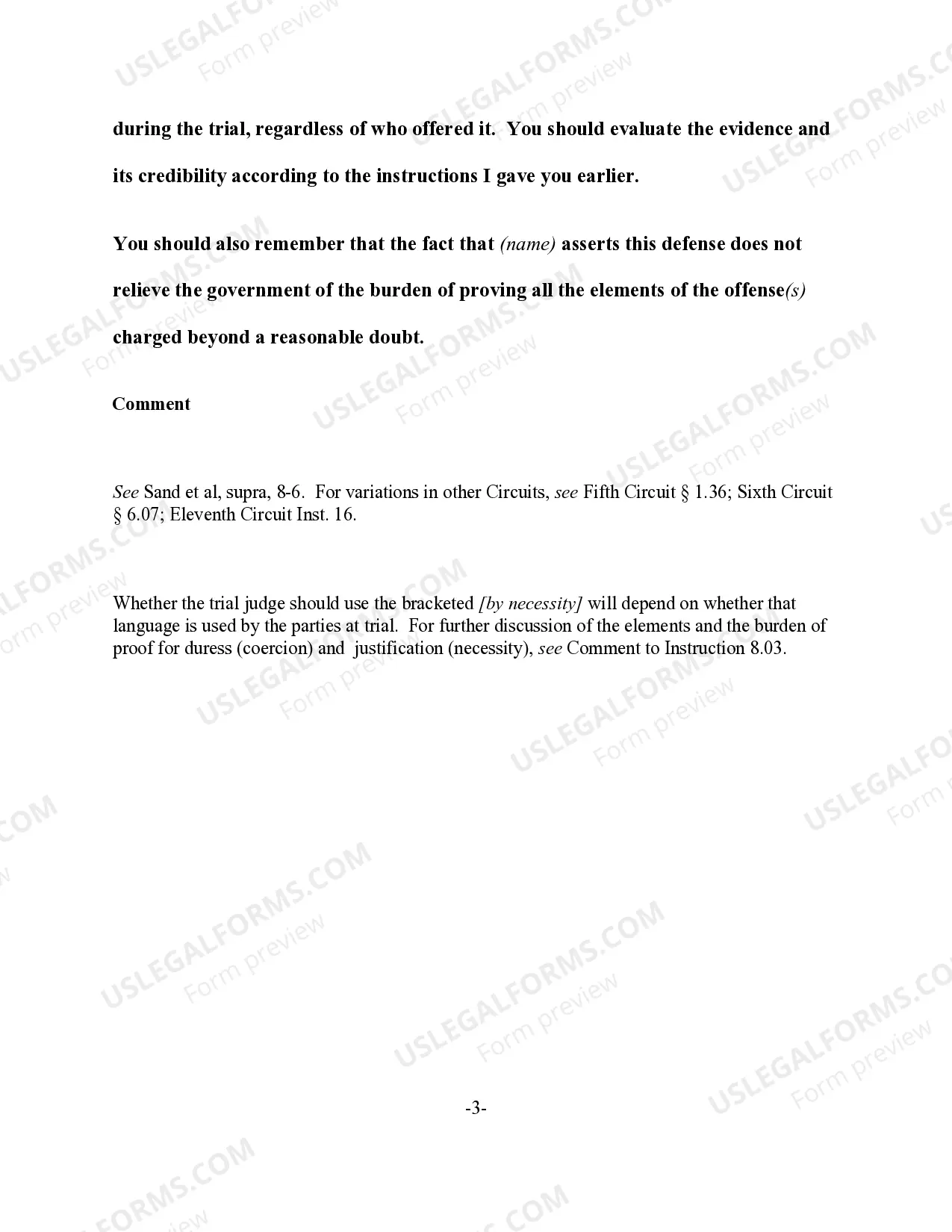
- Responsibility for proof: Clarifies that the defendant must prove the defense by a preponderance of evidence.

Common use cases
This form is necessary in situations where a defendant faces charges but believes they acted out of necessity to prevent imminent harm. Examples may include acting to protect oneself or others from serious injury or death during an emergency situation. It can be applicable in various criminal cases where the defendantâs actions can be justified under duress due to an immediate threat.
Who needs this form
- Defendants in a criminal trial claiming necessity as a defense.
- Individuals facing charges related to immediate threats.
- Legal representatives preparing a defense strategy for their clients.
Completing this form step by step
- Identify the defendant: Clearly state the name of the individual raising the necessity defense.
- Outline the charges: Specify the offense(s) the defendant has been charged with.
- Present evidence: Gather and document the evidence supporting the claim of necessity, ensuring to address all four elements outlined.
- Submit with claims: File this form with the court during the trial process as a part of the defense strategy.
- Prepare for questions: Be ready to address and support the necessity claim during the court proceedings.
Is notarization required?
This form does not typically require notarization to be legally valid. However, some jurisdictions or document types may still require it. US Legal Forms provides secure online notarization powered by Notarize, available 24/7 for added convenience.
Get your form ready online
Our built-in tools help you complete, sign, share, and store your documents in one place.
Make edits, fill in missing information, and update formatting in US Legal Forms—just like you would in MS Word.
Download a copy, print it, send it by email, or mail it via USPS—whatever works best for your next step.
Sign and collect signatures with our SignNow integration. Send to multiple recipients, set reminders, and more. Go Premium to unlock E-Sign.
If this form requires notarization, complete it online through a secure video call—no need to meet a notary in person or wait for an appointment.
We protect your documents and personal data by following strict security and privacy standards.

Make edits, fill in missing information, and update formatting in US Legal Forms—just like you would in MS Word.

Download a copy, print it, send it by email, or mail it via USPS—whatever works best for your next step.

Sign and collect signatures with our SignNow integration. Send to multiple recipients, set reminders, and more. Go Premium to unlock E-Sign.

If this form requires notarization, complete it online through a secure video call—no need to meet a notary in person or wait for an appointment.

We protect your documents and personal data by following strict security and privacy standards.
Mistakes to watch out for
- Failing to demonstrate all four elements required for the necessity defense.
- Underestimating the burden of proof required to show justification.
- Not providing sufficient evidence or documentation to support the claim.
- Neglecting to reference specific state laws regarding necessity defenses.
Why use this form online
- Convenience of downloading and completing the form at your own pace.
- Access to templates created by licensed attorneys to ensure legal compliance.
- Ability to easily update and edit the form for individual circumstances.
Legal use & context
- The necessity defense is recognized in most jurisdictions but may vary significantly in application.
- Legal parameters for what constitutes an immediate threat can differ by state.
- Successful claims lead to acquittal based on justifiable circumstances rather than the legality of the action.
Looking for another form?
Form popularity
FAQ
The defense of necessity may apply when an individual commits a criminal act during an emergency situation in order to prevent a greater harm from happening. In such circumstances, our legal system typically excuses the individual's criminal act because it was justified, or finds that no criminal act has occurred.
Foundationalism ? Basic beliefs justify other, non-basic beliefs. Epistemic coherentism ? Beliefs are justified if they cohere with other beliefs a person holds, each belief is justified if it coheres with the overall system of beliefs. Infinitism ? Beliefs are justified by infinite chains of reasons.
The first, is that the defendant must reasonably believe there is an actual imminent threat. The second element, is that the defendant had no other reasonable alternatives to avoid the harm. The third element for necessity, is that the harm avoided must be greater than the harm caused by committing the crime.
Necessity is generally held to be a justification, while duress is considered an excuse. A person acting under necessity chooses to act in a way that the law seems to approve and encourage, presumably for utilitarian reasons.
At common law, the necessity defense, a form of justification, permitted defendants to avoid criminal liability by appealing to a ?balancing of evils.? If the defendant demonstrated that he perpetrated his crime in order to avert a greater evil, he would be acquitted.
Necessity is typically used as a defense when a defendant commits a crime during an emergency. He or she intends to prevent more harm from occurring. When necessity is proven, it increases the likelihood the court will consider the action justified and excuse the crime.