Utah Joint Petition for Bifurcated Divorce - Bifurcation
About this form
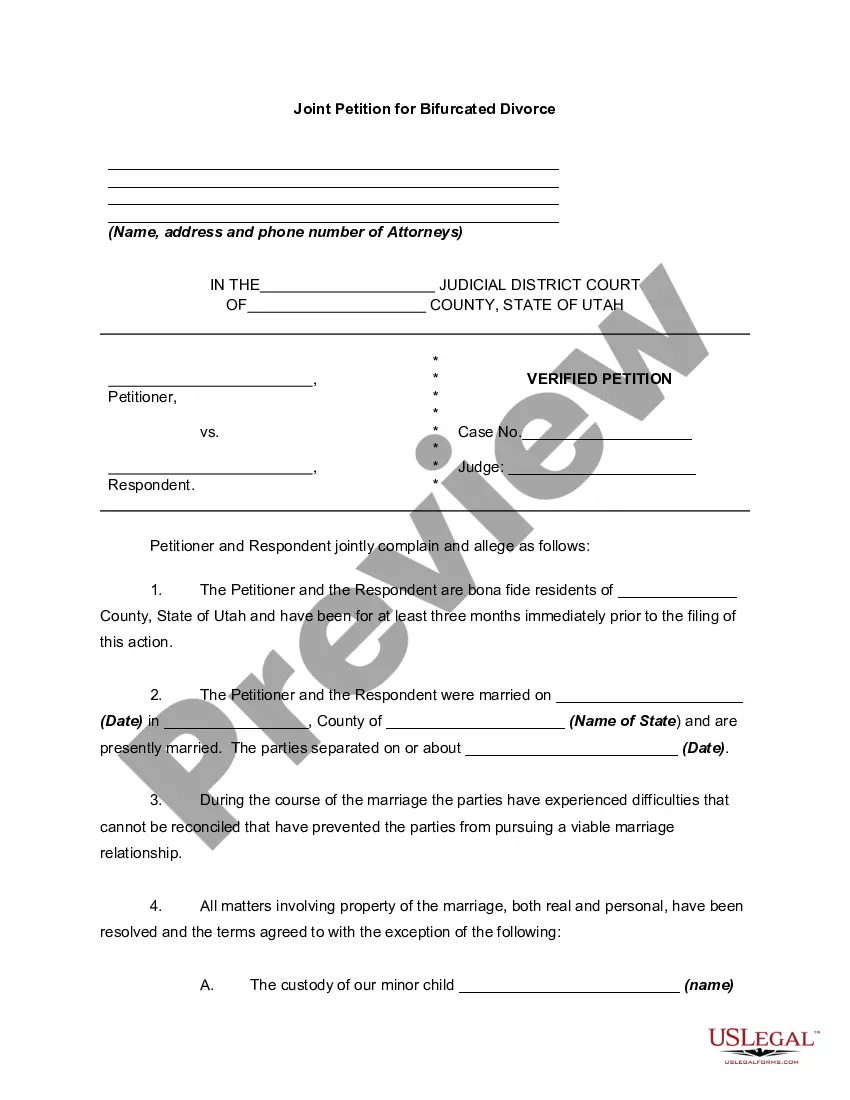
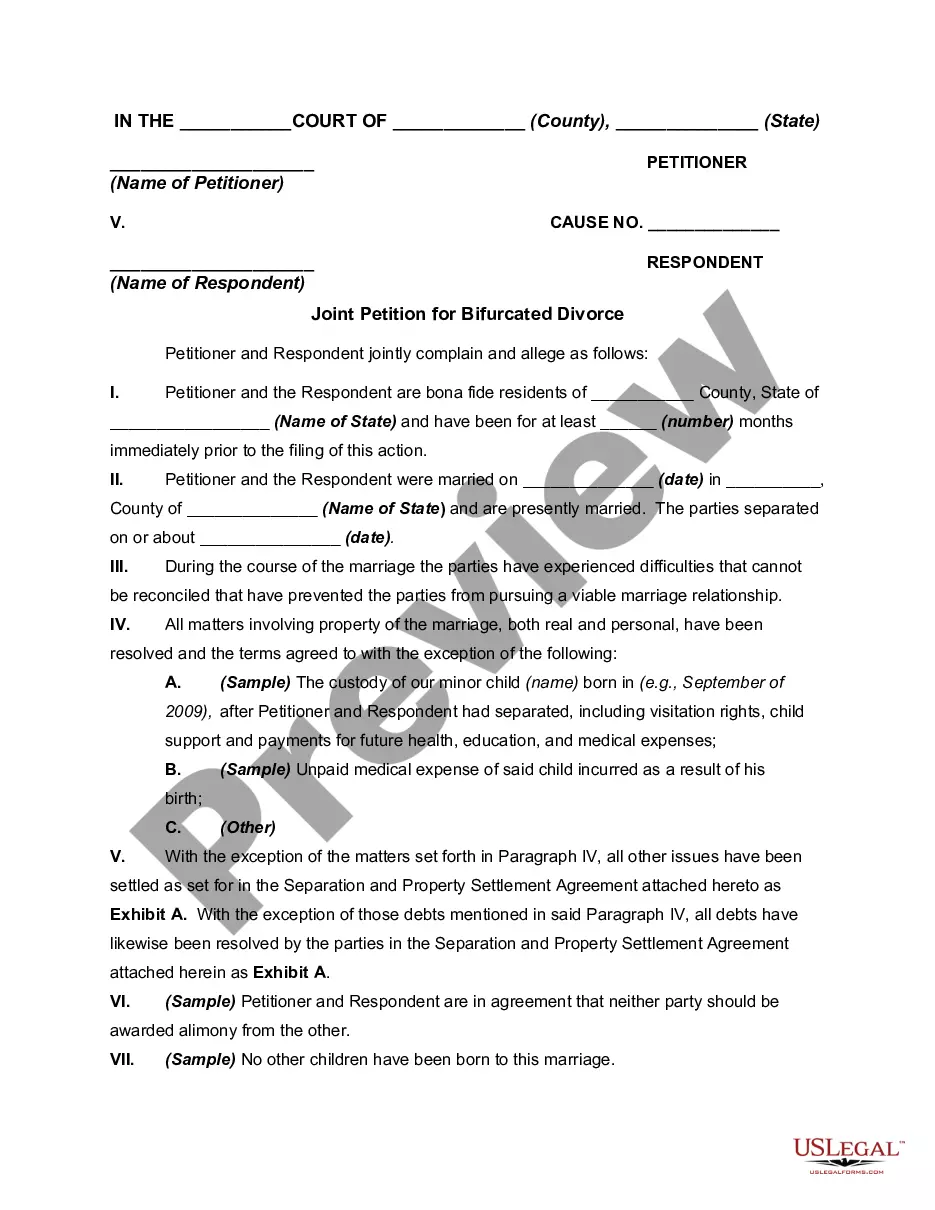
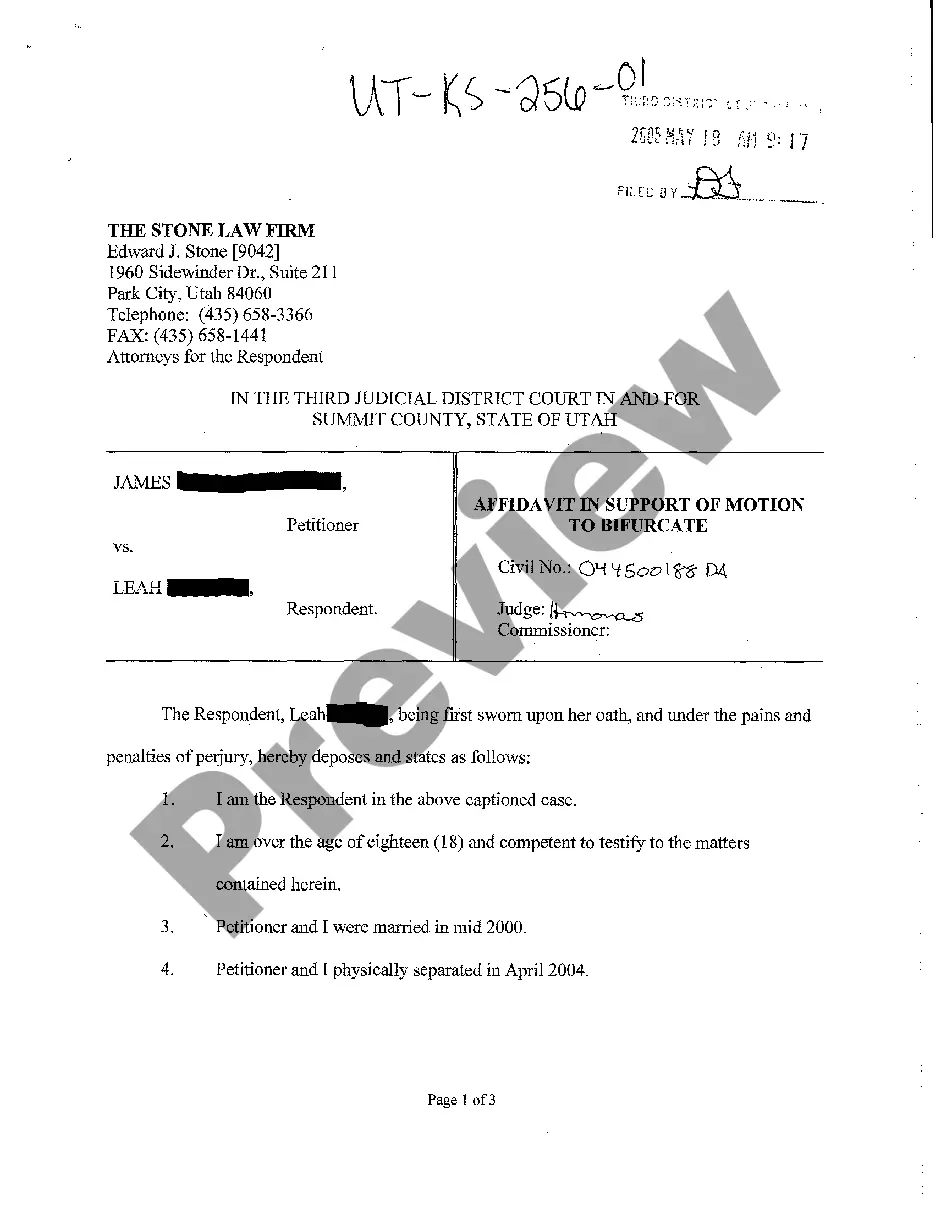
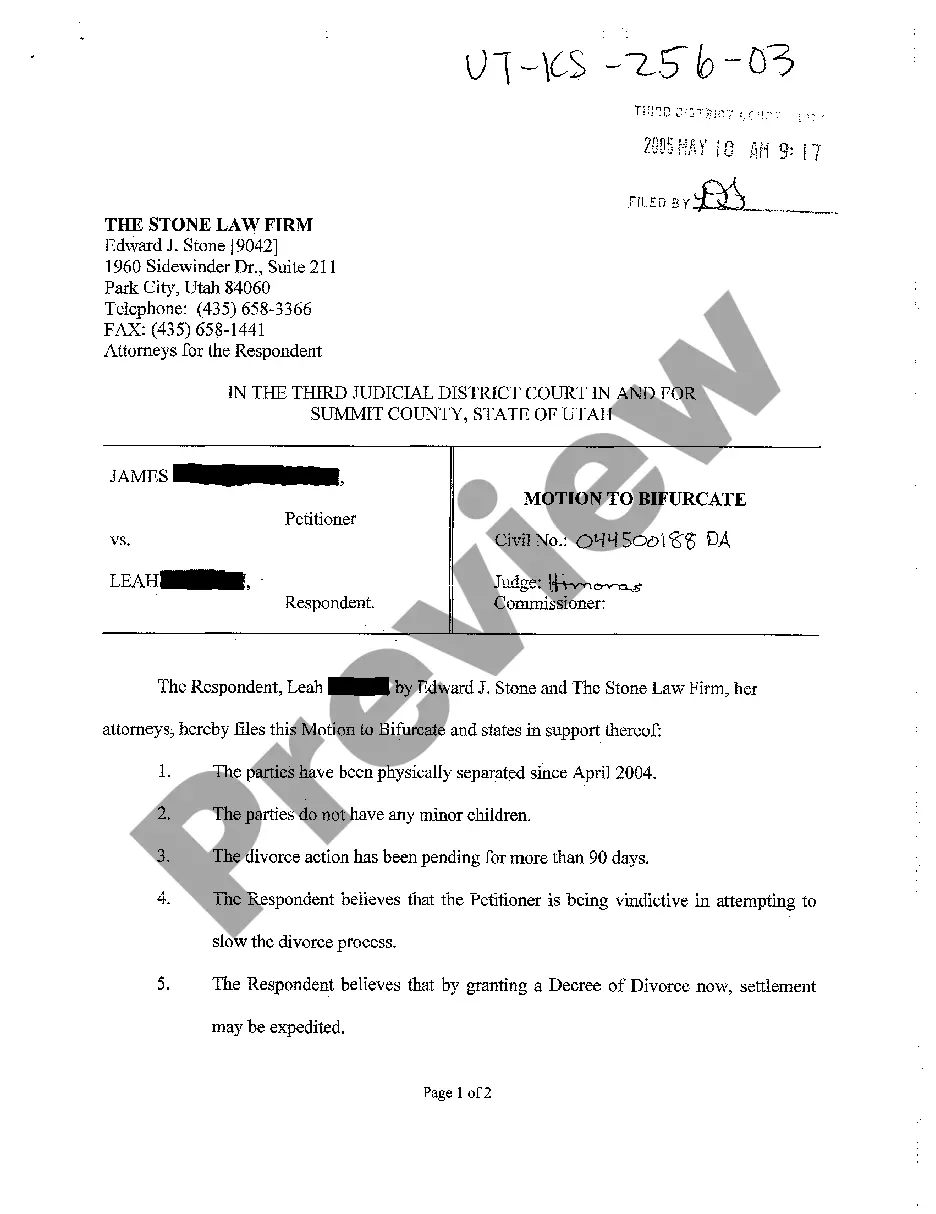
The Joint Petition for Bifurcated Divorce is a legal document used to terminate a marriage while postponing the resolution of other issues, such as property division, alimony, and child custody. This form is ideal for couples who seek a faster divorce process but are willing to settle remaining matters later. Unlike a traditional divorce, which resolves all issues at once, bifurcation allows one or both spouses to move on with their lives more quickly.
What’s included in this form
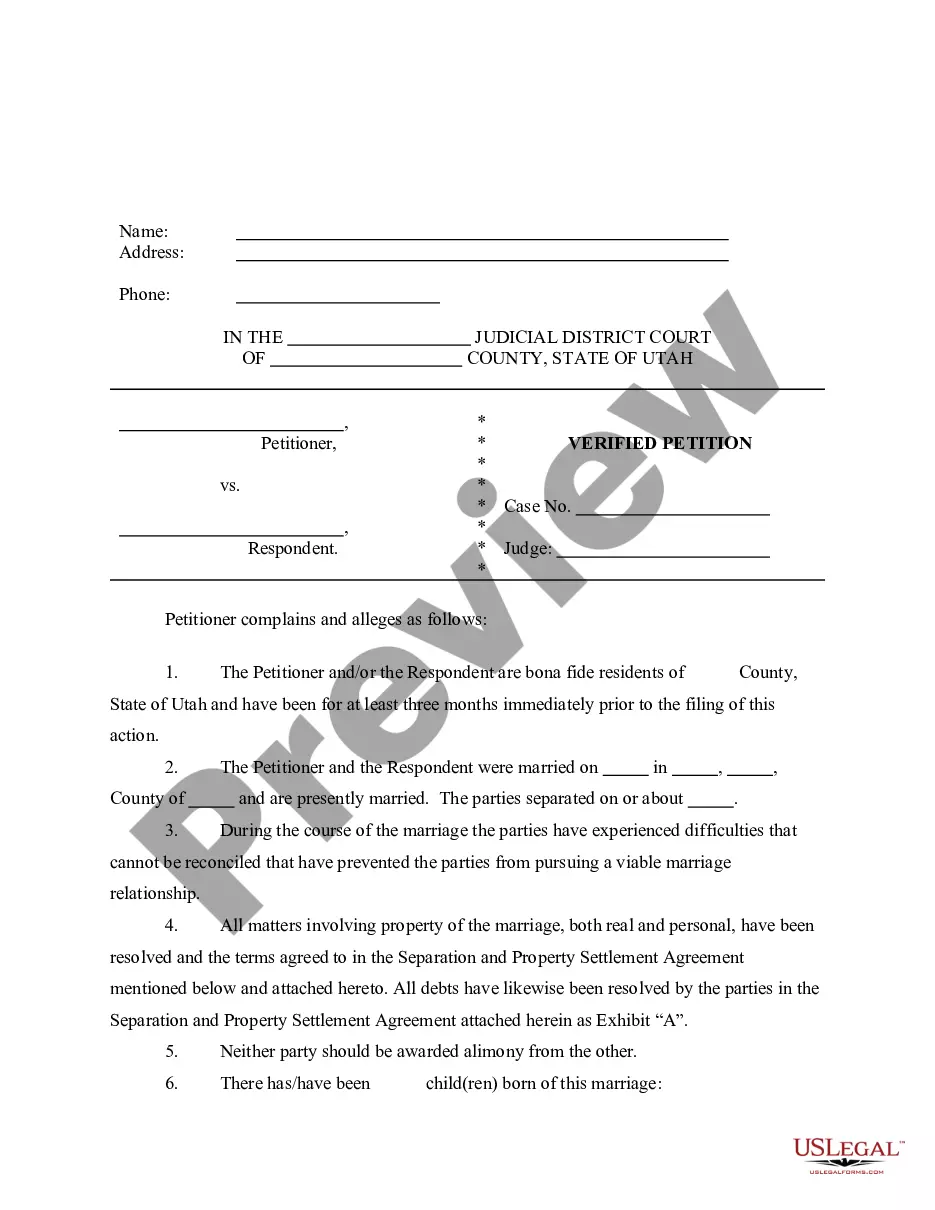
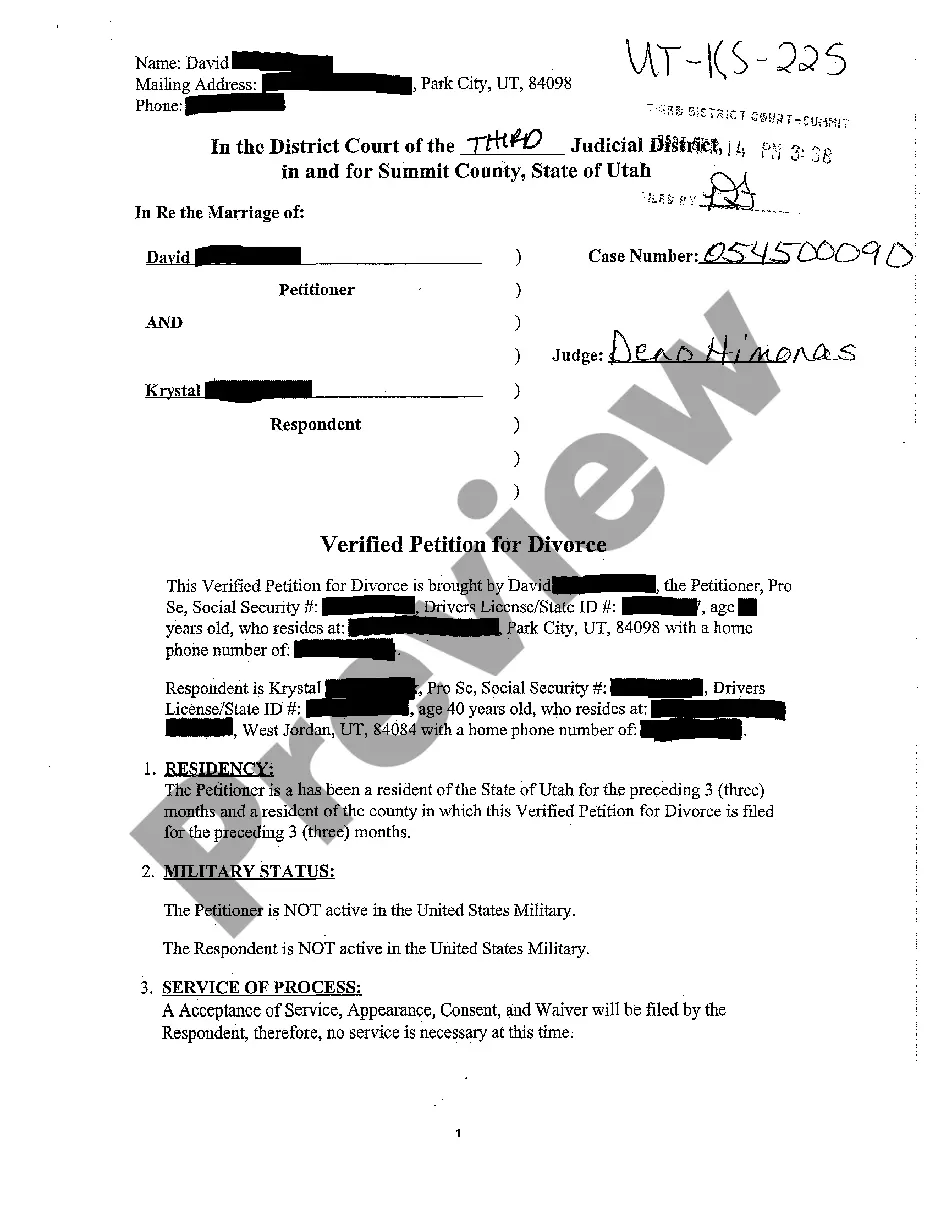
- Identification of the Petitioner and Respondent, including names and contact information.
- Statement of residency requirements in Utah before filing the petition.
- Details of the marriage, including the date and location of marriage, and date of separation.
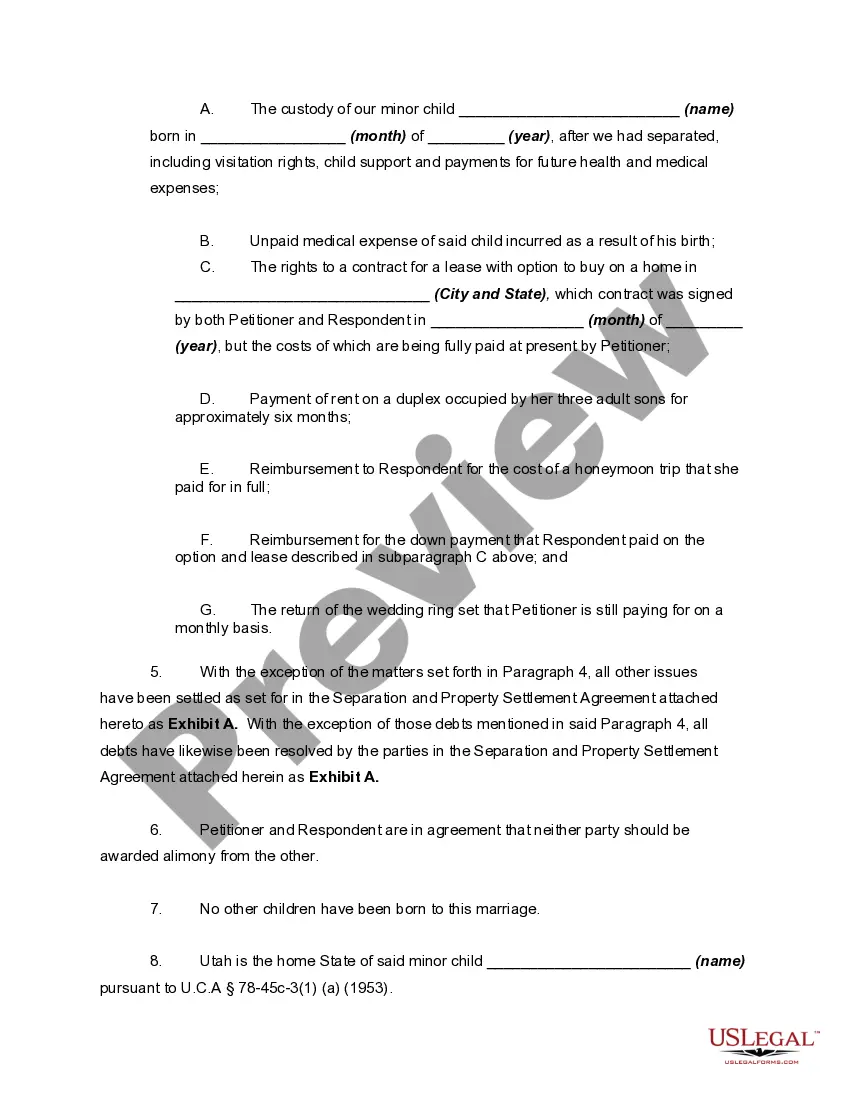
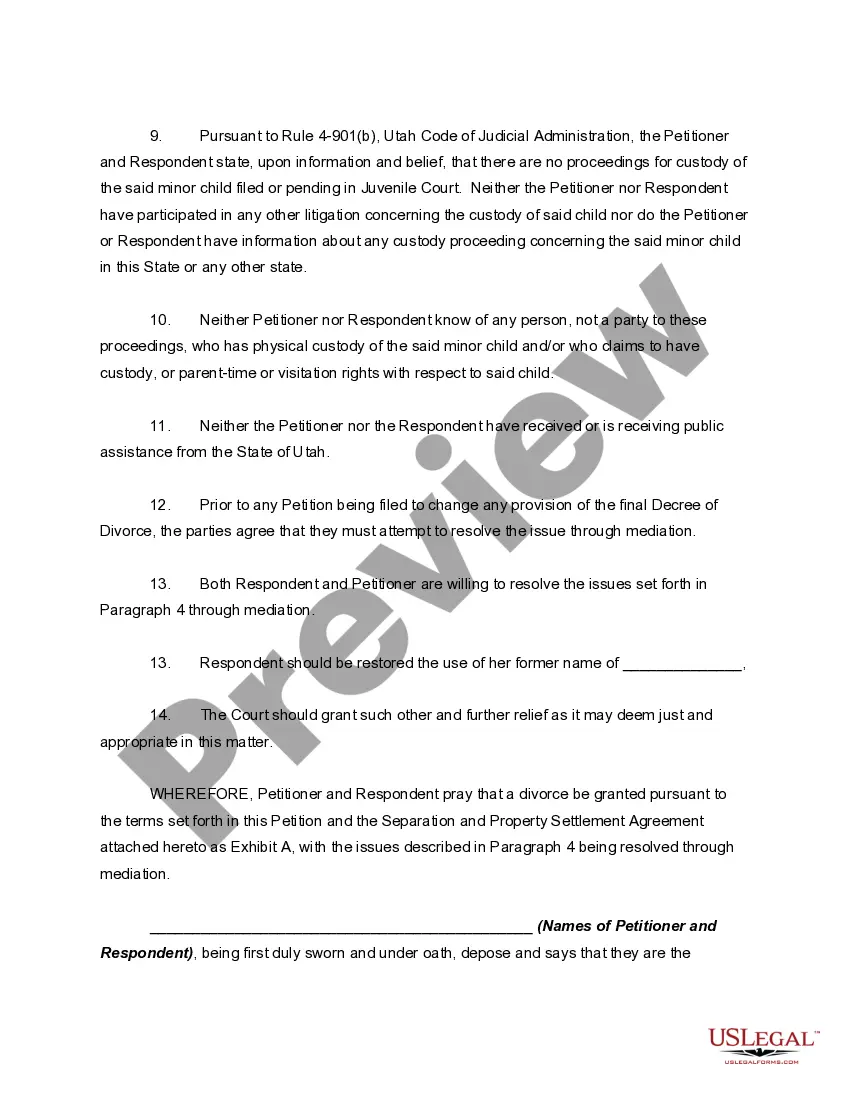
- Specific issues still unresolved, such as child custody, support, and other financial obligations.
- Agreement between both parties regarding alimony and any additional claims.
- Declaration of intention to mediate unresolved issues prior to filing any changes.
Situations where this form applies
This form is necessary when both spouses agree to end their marriage but want to leave other important matters for later resolution. It is often used when one or both parties desire to remarry quickly or need to address specific unresolved issues without delaying the divorce process. This approach can help facilitate a more amicable separation when both parties are willing to negotiate remaining matters.
Who needs this form
This form is intended for:
- Couples in Utah seeking a faster divorce process while addressing other issues later.
- Both parties who agree to the terms of property division, custody arrangements, and support payments.
- Individuals who wish to maintain an amicable relationship while settling marital disputes.
Steps to complete this form
To complete the Joint Petition for Bifurcated Divorce, follow these steps:
- Identify the parties involved by entering the full names, addresses, and phone numbers.
- Confirm residency in Utah for both parties and specify the duration.
- Provide details regarding the marriage, including the marriage date and location, as well as the separation date.
- Clearly outline any unresolved issues regarding child custody, support, and asset division.
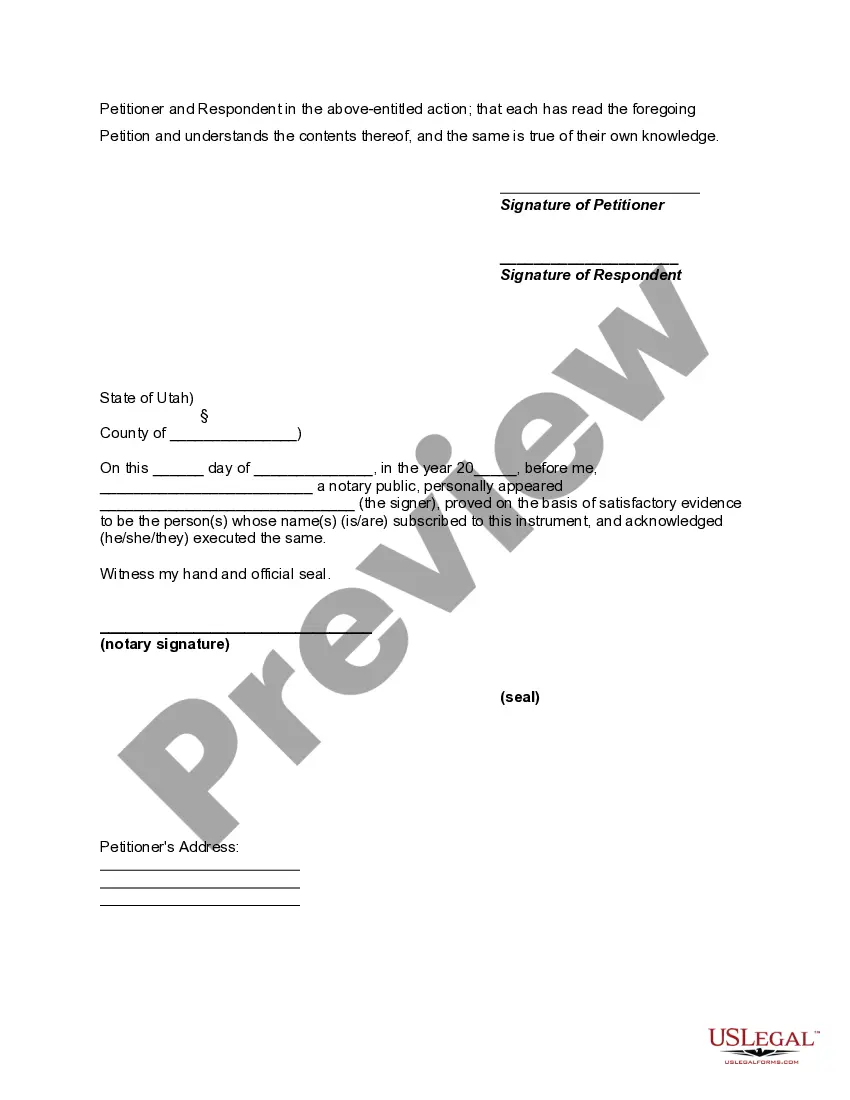
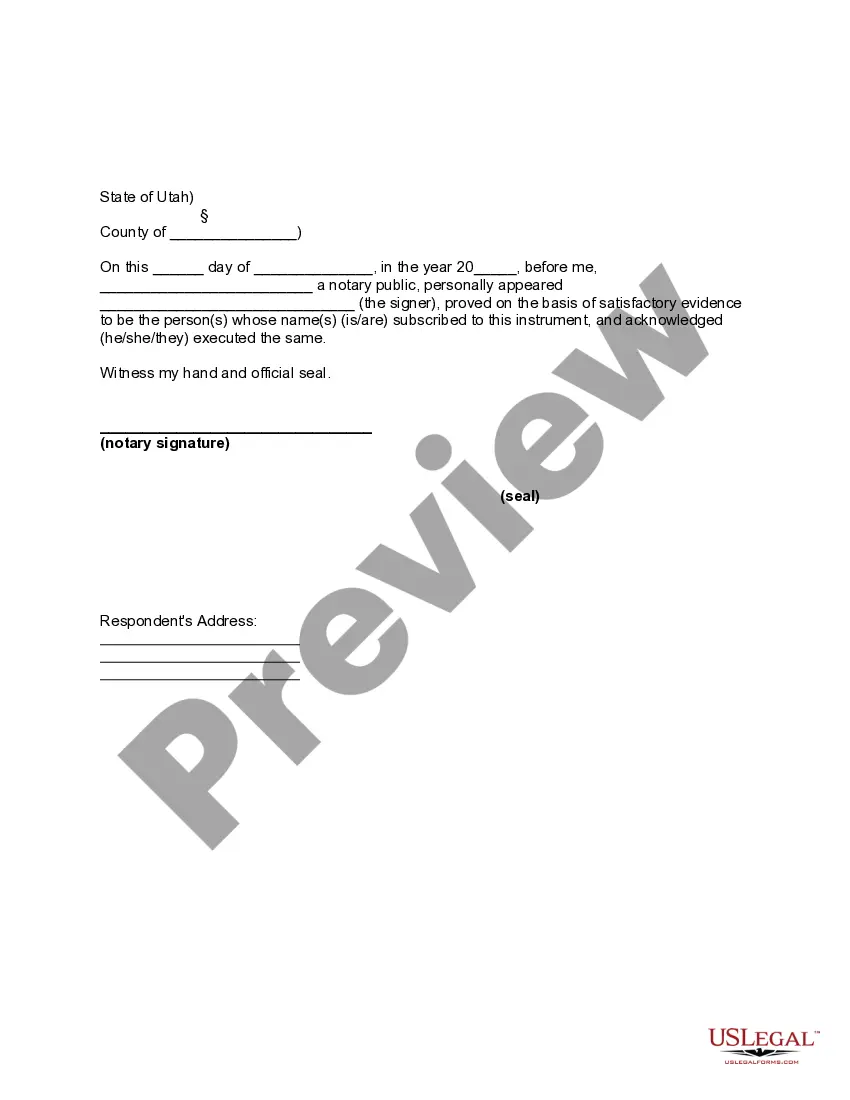
- Sign and date the petition in the presence of a notary public for verification.
Notarization guidance
Yes, this form must be notarized to be legally valid. It is essential for both parties to sign the document in front of a notary public, who will verify their identities and witness their signatures. US Legal Forms offers integrated online notarization services, allowing you to complete this process securely and conveniently via video call.
Get your form ready online
Our built-in tools help you complete, sign, share, and store your documents in one place.
Make edits, fill in missing information, and update formatting in US Legal Forms—just like you would in MS Word.
Download a copy, print it, send it by email, or mail it via USPS—whatever works best for your next step.
Sign and collect signatures with our SignNow integration. Send to multiple recipients, set reminders, and more. Go Premium to unlock E-Sign.
If this form requires notarization, complete it online through a secure video call—no need to meet a notary in person or wait for an appointment.
We protect your documents and personal data by following strict security and privacy standards.

Make edits, fill in missing information, and update formatting in US Legal Forms—just like you would in MS Word.

Download a copy, print it, send it by email, or mail it via USPS—whatever works best for your next step.

Sign and collect signatures with our SignNow integration. Send to multiple recipients, set reminders, and more. Go Premium to unlock E-Sign.

If this form requires notarization, complete it online through a secure video call—no need to meet a notary in person or wait for an appointment.

We protect your documents and personal data by following strict security and privacy standards.
Common mistakes to avoid
- Failing to provide accurate residency information for the required duration in Utah.
- Not detailing all unresolved issues, which may cause delays in the divorce process.
- Overlooking the necessity of both parties to agree to mediation before seeking further changes.
- Neglecting to have the document notarized, which is essential for its validity.
Why use this form online
- Convenience of completing the form online, allowing for modifications before finalization.
- Access to professionally drafted templates that ensure legal compliance.
- Time-saving functionality by enabling quick downloads without waiting for in-person appointments.
- Support available at every step for users who may have questions about the process.
Legal use & context
- The bifurcated divorce process allows parties to officially end their marriage while delaying the resolution of key issues.
- This approach may lead to faster legal relief for couples, facilitating future personal decisions.
- The form must comply with Utah law, especially regarding residency and custody provisions, to be enforceable.
Quick recap
- The Joint Petition for Bifurcated Divorce is designed for couples looking to end their marriage quickly.
- It allows couples to address critical issues later, providing flexibility in the divorce process.
- Proper completion and notarization are crucial for the form's validity in Utah.
Looking for another form?

Form popularity
FAQ
Transitive verb. : to cause to divide into two branches or parts bifurcate a beam of light. intransitive verb. : to divide into two branches or parts The stream bifurcates into two narrow channels.
According to the American Bar Association Journal, a bifurcated divorce is granting the divorce first and deciding on the economic issues later. The marital status has changed, but all of the details regarding assets have yet to be finalized.
Bifurcation is the splitting of a case into two separate trials. Generally, a civil lawsuit can be naturally divided into two major issues for a trier of fact, such as a judge or a jury, to decide: liability and damages. In a bifurcated case, the issues of liability and damages are decided separately.
Motion for Bifurcation (Get Divorced Sooner!) You are here: Home / California Divorce Guide / Pretrial & Pre-Settlement / Motion for Bifurcation (Get Divorced Sooner!) California divorces take at least six months to complete, and that's just the minimum.
A bifurcated trial refers to a trial divided into two stages: (1) guilt phase and (2) penalty phase.If the defendant is found guilty, the trial moves to a penalty phase in which the jury receives additional information and decides whether or not the defendant should be executed.
The word bifurcate is synonymous with the words split and divide. Thus, a bifurcation in a divorce case takes the issue of marital status and splits it from all of the other divorce issues, such as the issues of spousal support, child custody and visitation, child support, and property division.