Vermont Special Durable Power of Attorney for Bank Account Matters
What is this form?
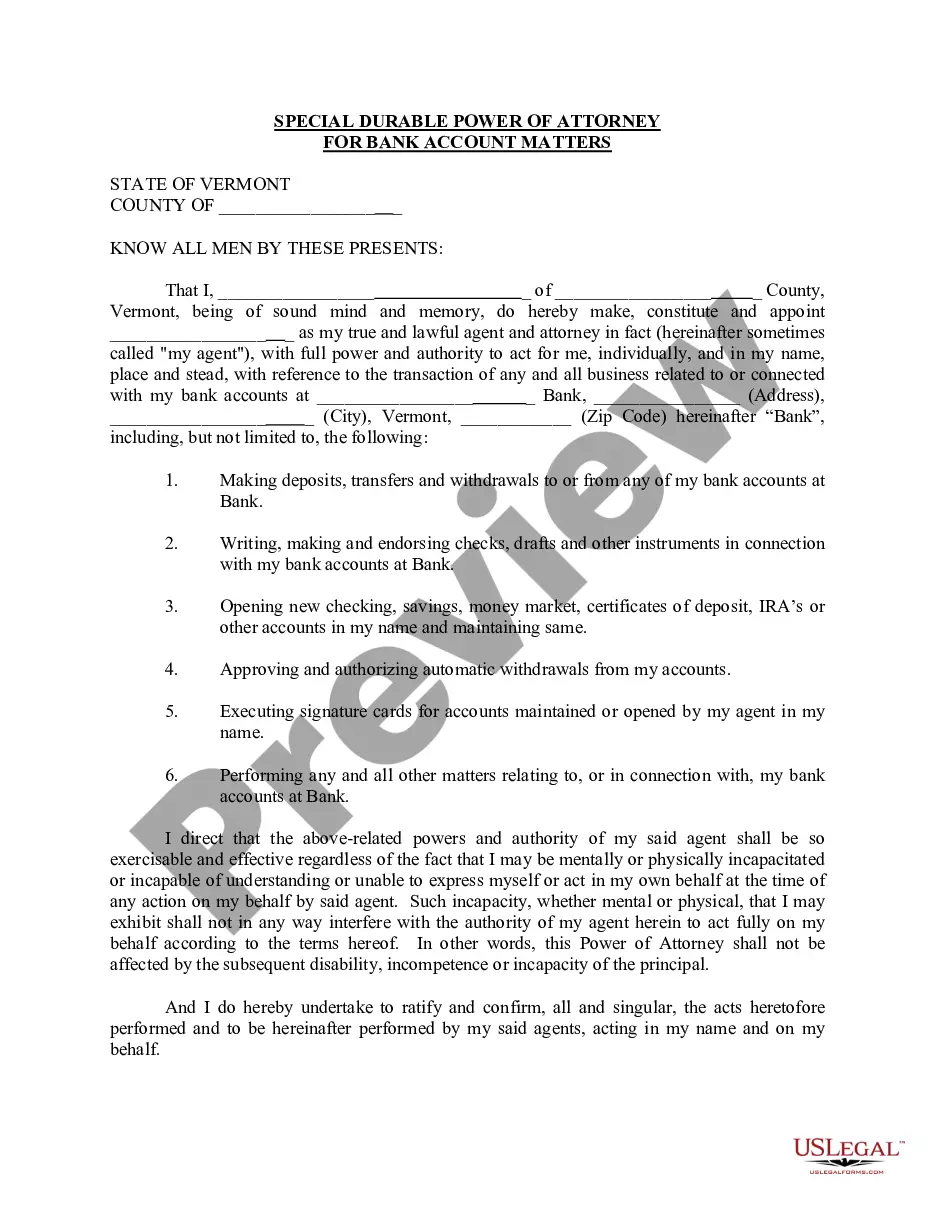
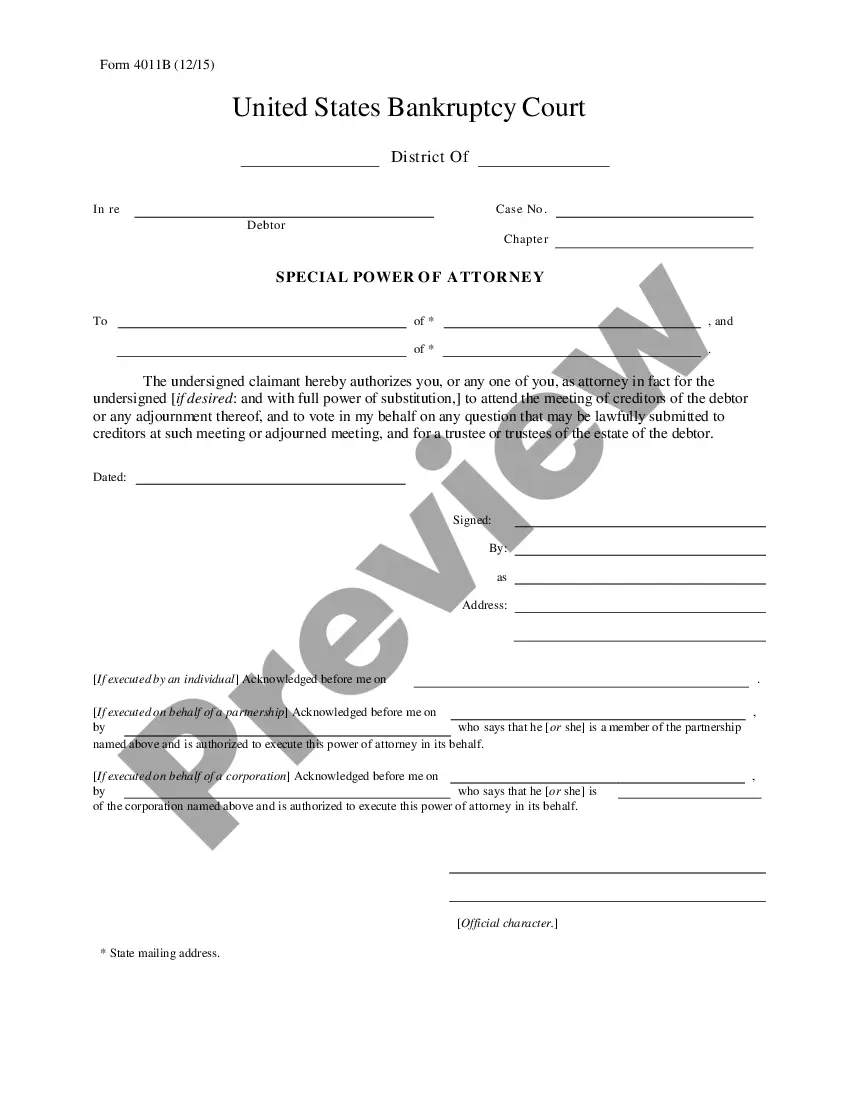
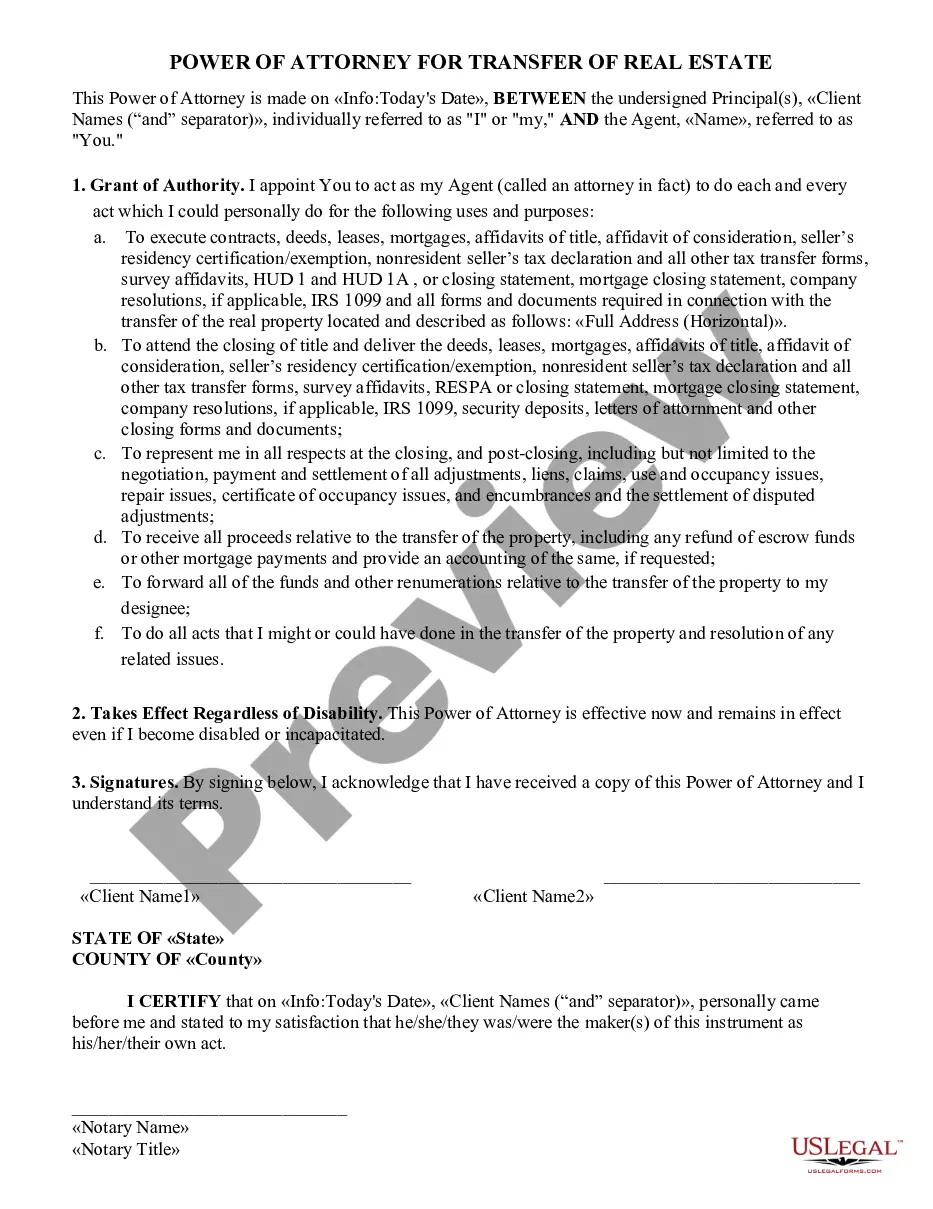
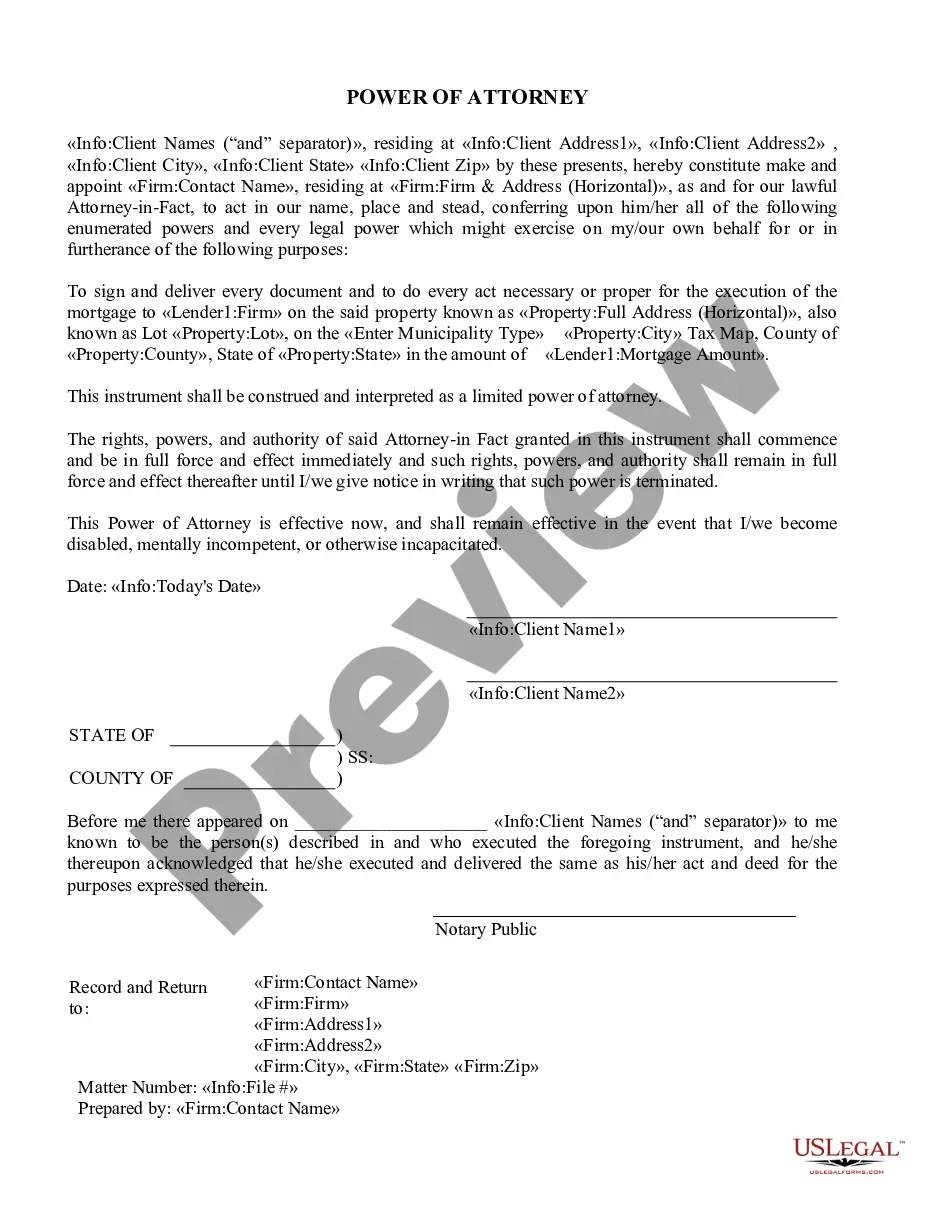
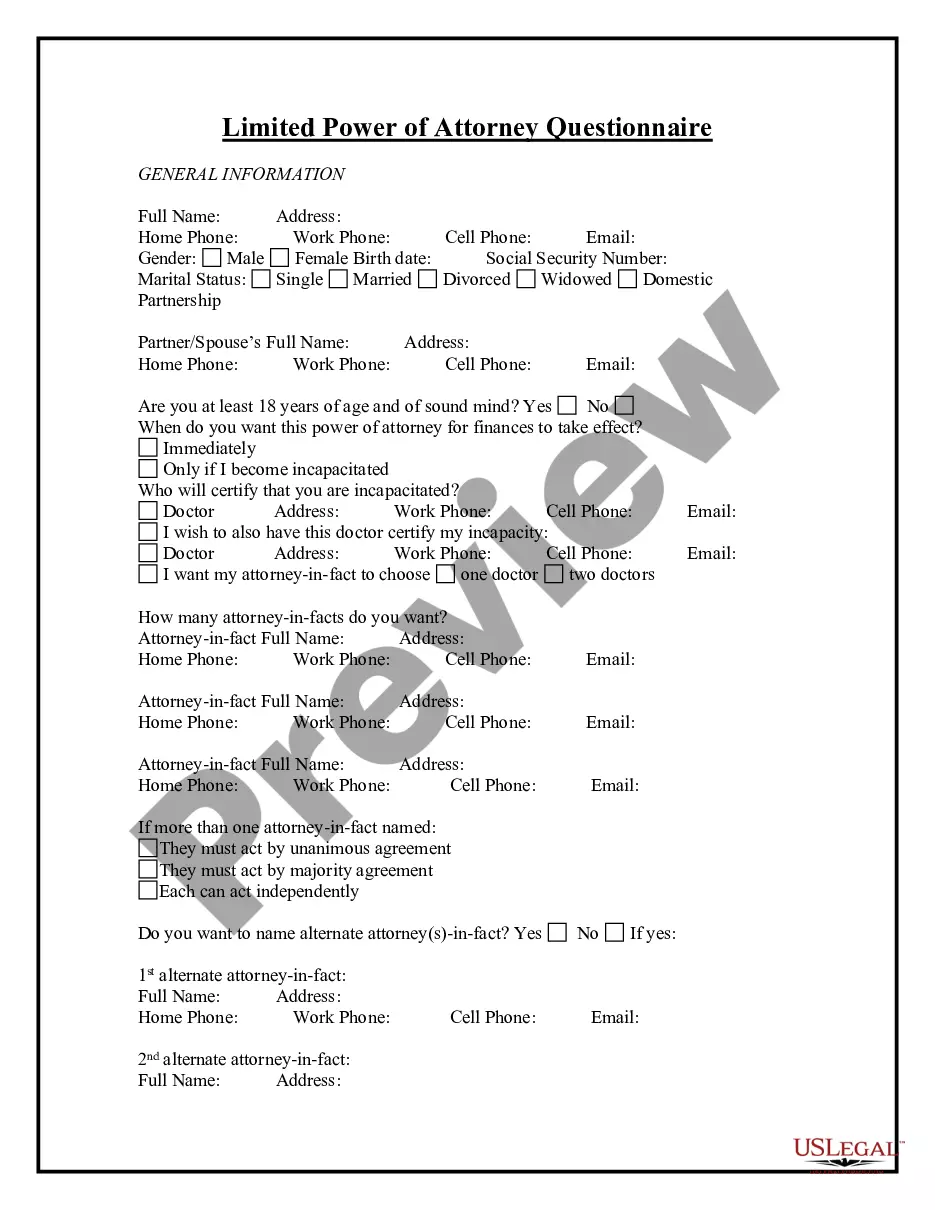
The Special Durable Power of Attorney for Bank Account Matters is a legal document that enables you, the principal, to authorize an agent to manage specific banking activities on your behalf. This power of attorney is designed for cases where you are temporarily unavailable or unable to handle banking matters. Unlike a general power of attorney, this form restricts the agent's authority to bank account transactions, making it a practical choice for managing your finances in specific situations.
What’s included in this form
- Principal's Information: The name and address of the individual granting authority.
- Agent's Information: The name of the person authorized to act on behalf of the principal.
- Authority Granted: Details on specific banking actions the agent can perform, such as making deposits and writing checks.
- Durability Clause: Stipulates that the power of attorney remains effective even if the principal becomes incapacitated.
- Indemnification: Protects the bank from liability regarding the actions of the agent.
Situations where this form applies
This form is particularly useful when you need to appoint someone you trust to manage your bank account transactions while you are away or unable to do so. Situations such as extended travel, hospitalization, or temporary incapacity may necessitate the use of this special power of attorney, ensuring your banking needs are handled seamlessly.
Who can use this document
This form is suitable for:
- Individuals who need to delegate banking responsibilities to a trusted agent.
- Those concerned about their ability to manage banking transactions during a temporary absence.
- People who want to restrict an agent's authority to only bank-related matters.
Steps to complete this form
- Identify the parties involved by providing the full names of the principal and the agent.
- Specify the name and address of the bank where the powers will be applied.
- Outline the specific banking transactions you are authorizing your agent to perform.
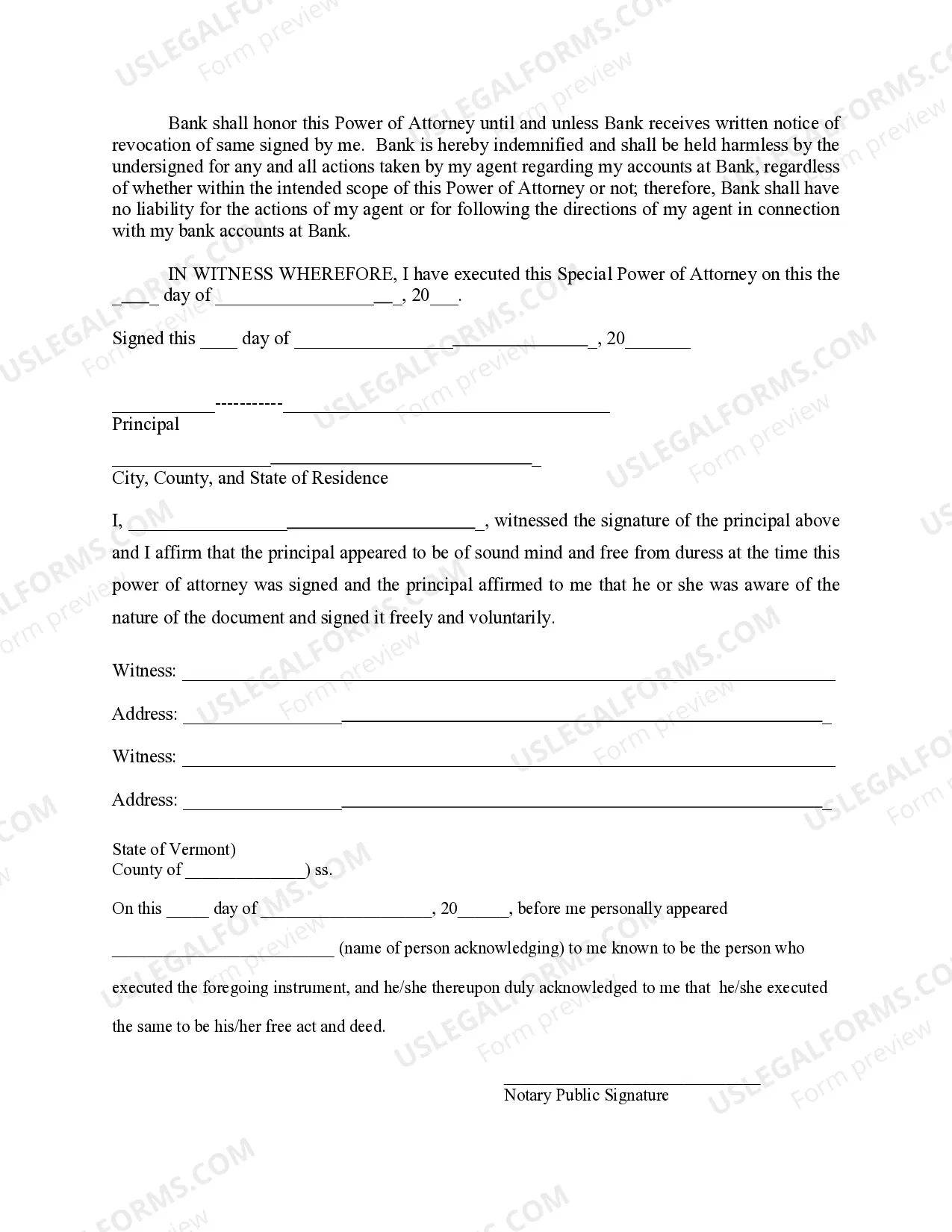
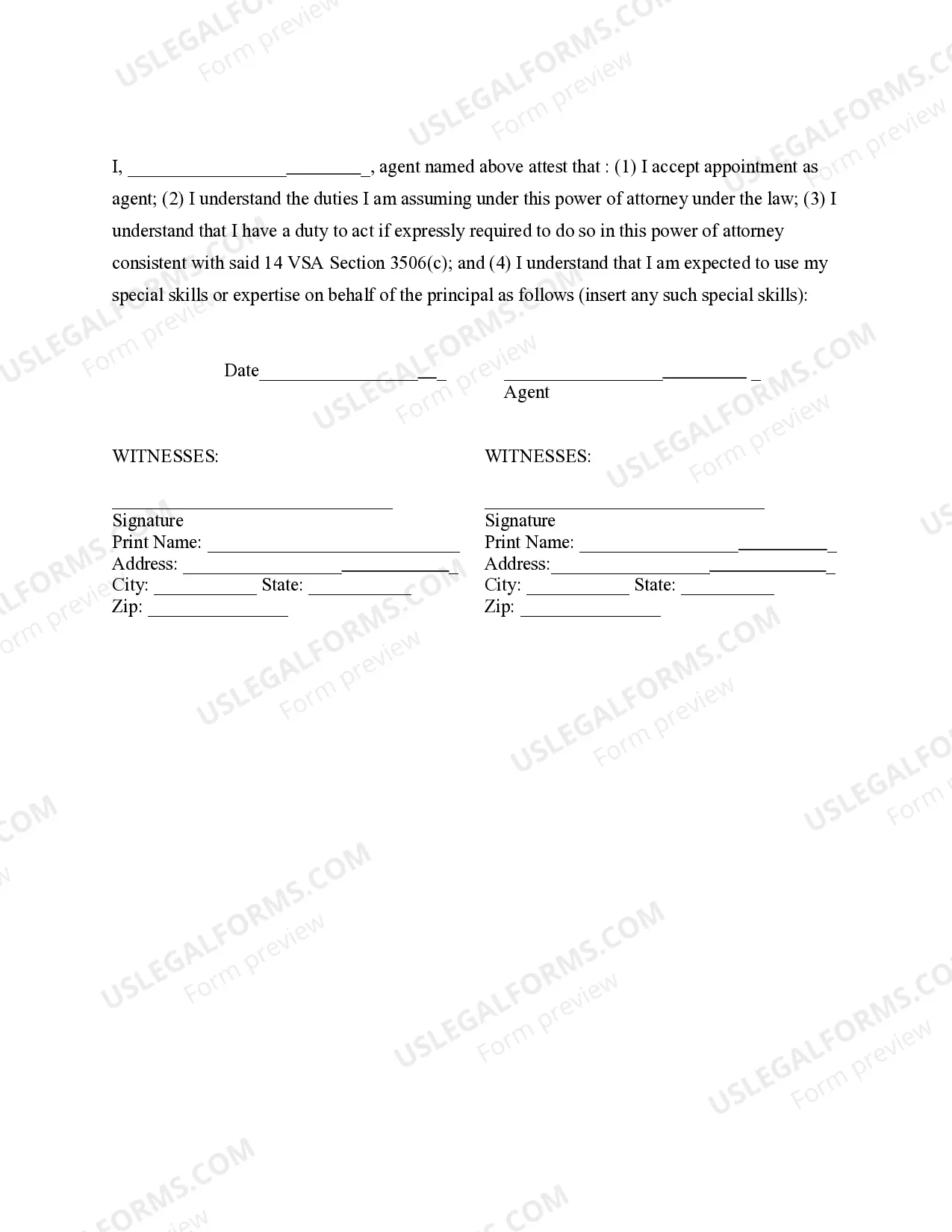
- Include the date of execution and sign the document in the presence of witnesses.
- Ensure the form is acknowledged by a notary public if required under local law.
Notarization guidance
This form does not typically require notarization unless specified by local law. However, having the document notarized can add an extra layer of validity and help prevent potential disputes regarding the authority granted.
Get your form ready online
Our built-in tools help you complete, sign, share, and store your documents in one place.
Make edits, fill in missing information, and update formatting in US Legal Forms—just like you would in MS Word.
Download a copy, print it, send it by email, or mail it via USPS—whatever works best for your next step.
Sign and collect signatures with our SignNow integration. Send to multiple recipients, set reminders, and more. Go Premium to unlock E-Sign.
If this form requires notarization, complete it online through a secure video call—no need to meet a notary in person or wait for an appointment.
We protect your documents and personal data by following strict security and privacy standards.

Make edits, fill in missing information, and update formatting in US Legal Forms—just like you would in MS Word.

Download a copy, print it, send it by email, or mail it via USPS—whatever works best for your next step.

Sign and collect signatures with our SignNow integration. Send to multiple recipients, set reminders, and more. Go Premium to unlock E-Sign.

If this form requires notarization, complete it online through a secure video call—no need to meet a notary in person or wait for an appointment.

We protect your documents and personal data by following strict security and privacy standards.
Common mistakes to avoid
- Failing to clearly specify the powers granted to the agent, which can lead to confusion.
- Not signing or dating the form correctly, which may invalidate it.
- Neglecting to have the document witnessed or notarized, if required by state law.
- Using vague language that does not adequately describe the authority given.
Why complete this form online
- Convenience of accessing and completing the form from anywhere.
- Ability to edit the document easily to fit your specific needs.
- Reliability of professionally drafted content, ensuring compliance with legal standards.
Looking for another form?
Form popularity
FAQ
But because of the risk of abuse, many banks will scrutinize a POA carefully before allowing the agent to act on the principal's behalf, and often a bank will refuse to honor a POA.The agent fought back in court and won a $64,000 judgment against the bank.
Draft a list of special powers. Decide what powers are springing. Pick an agent and a successor agent. Note the expiration date. Compile the information into one document. Execute the power of attorney letter.
Contact the bank before having a financial power of attorney drafted by a lawyer. Send or deliver your previously drafted financial power of attorney document to the bank. Provide identification and a copy of the financial power of attorney to the bank teller when you ready to complete a transaction.
Before you can manage the donor's account, you must show the bank the original registered lasting power of attorney ( LPA ) or a copy of it signed on every page by the donor, a solicitor or notary.
While almost any document can be notarized, some of the most common ones include sworn statements, powers of attorney, deeds of trust, rental agreements, copy certifications, beneficiary designations for retirement accounts, promissory notes, and motor vehicle bills of sale.
Determine if one is needed. Under a few circumstances, a power of attorney isn't necessary. Identify an agent. Take a look at the standard forms. Notarize the written POA, keep it stored safely, and provide copies to important people. Review the POA periodically.
Choose an agent. Before you begin to fill out the form, you have some decisions to make. Decide on the type of authority. You can choose whether you want your POA to be broad or narrow. Identify the length of time the POA will be in effect. Fill out the form. Execute the document.
Draft a list of special powers. Decide what powers are springing. Pick an agent and a successor agent. Note the expiration date. Compile the information into one document. Execute the power of attorney letter.
Most states offer simple forms to help you create a power of attorney for finances. Generally, the document must be signed, witnessed and notarized by an adult. If your agent will have to deal with real estate assets, some states require you to put the document on file in the local land records office.