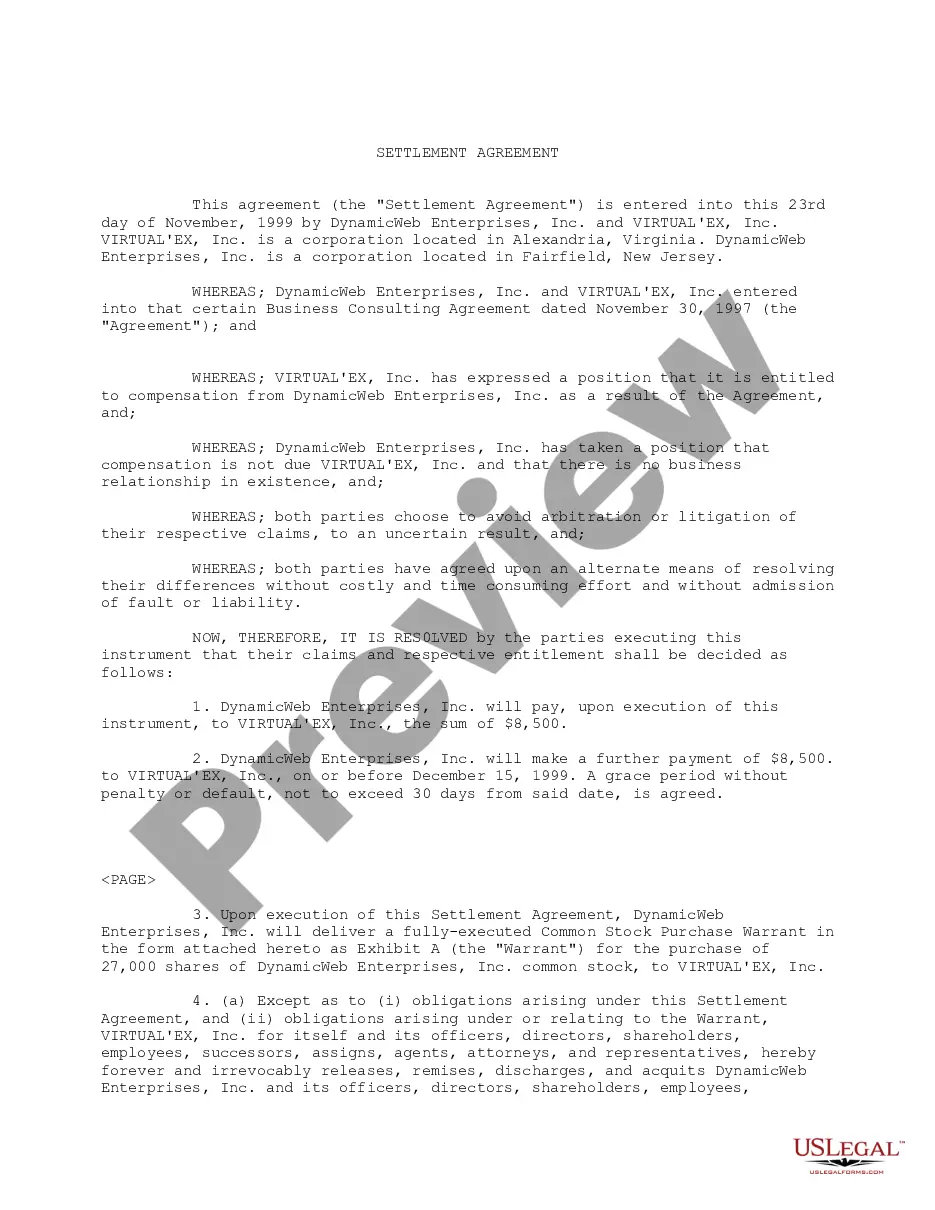
Vermont Letter from Landlord to Tenant for Failure to keep premises as clean and safe as condition of premises permits - Remedy or lease terminates
What this document covers
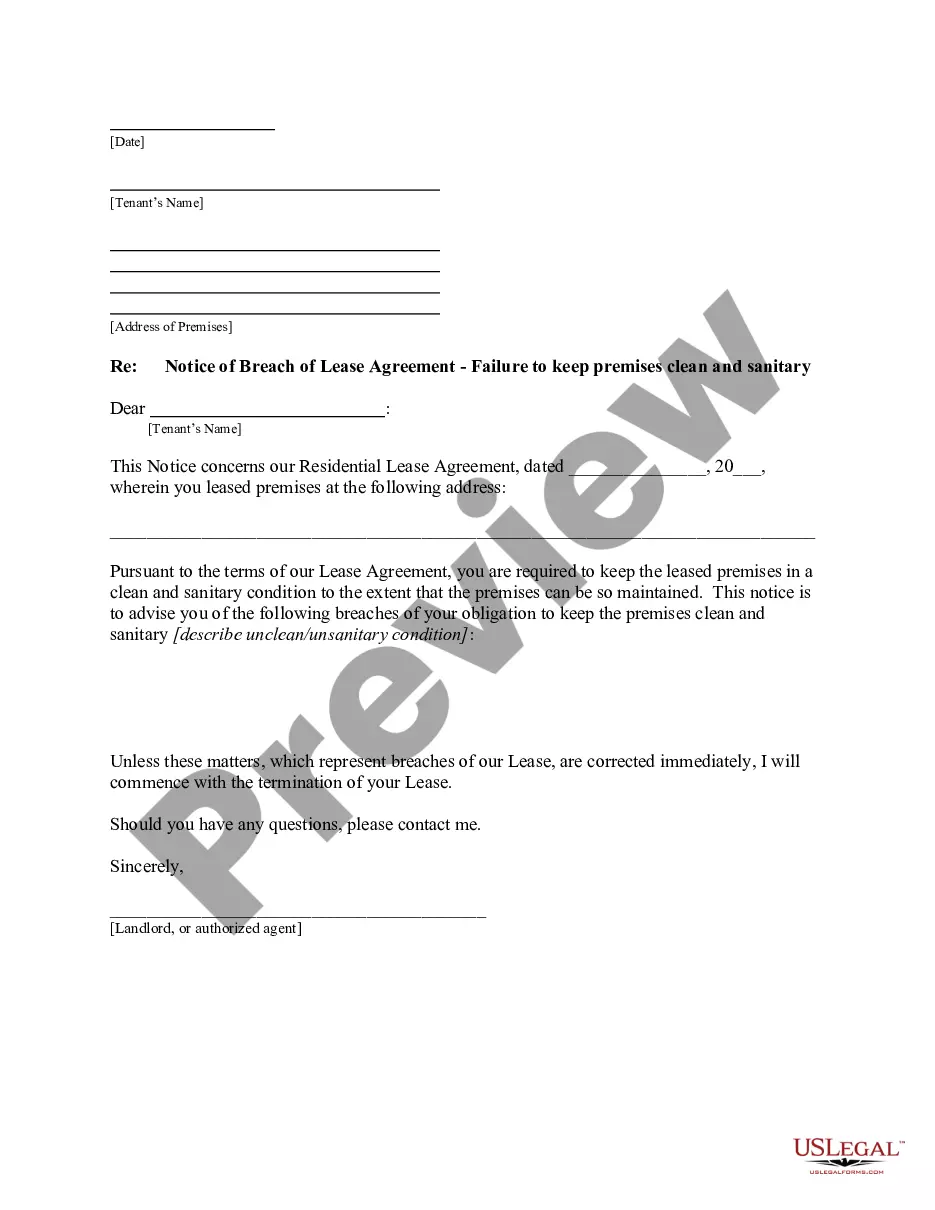
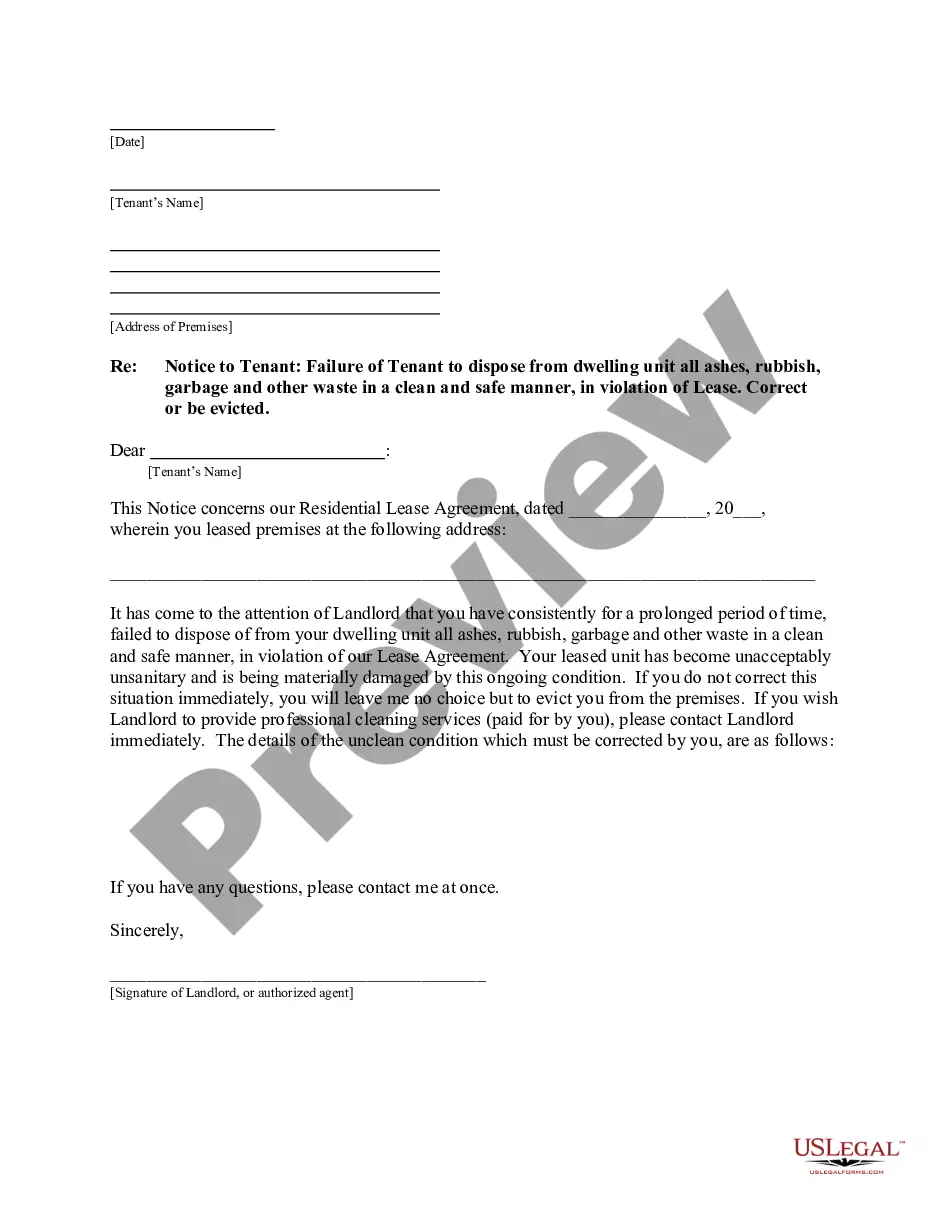
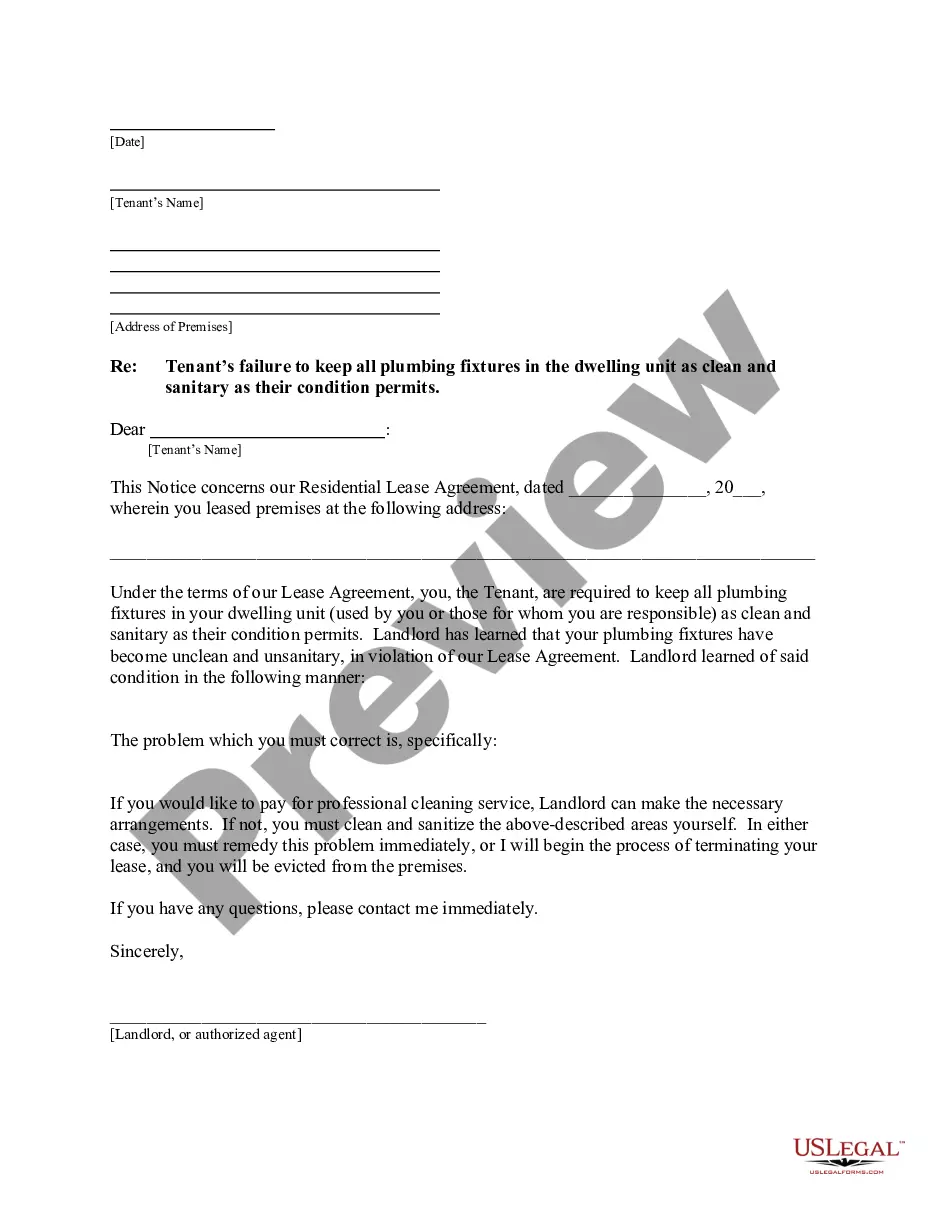
This form is a Letter from Landlord to Tenant regarding the tenant's failure to maintain the leased premises in a clean and sanitary condition. It serves as a formal notice informing the tenant of specific breaches of their responsibilities under the lease agreement. This form is essential for landlords seeking to address cleanliness issues before considering remedies or termination of the lease, distinguishing it from other tenant communication forms that may not specify cleanliness obligations.
Key parts of this document
- Identification of the parties involved (landlord and tenant).
- Reference to the lease agreement terms concerning cleanliness obligations.
- Detailed description of the unclean or unsanitary conditions identified.
- Notice of breach of the tenant's obligation to maintain cleanliness.
- Statement of potential remedies or lease termination as consequences of failing to remedy the situation.


Situations where this form applies
This form should be used when a landlord identifies that a tenant is not keeping the premises clean and sanitary as required by the lease. It is particularly useful in situations where the landlord needs to formally notify the tenant of specific cleanliness issues, providing a clear record before taking further action, such as seeking remedies or terminating the lease agreement.
Intended users of this form
- Landlords who rent residential or commercial properties.
- Property managers acting on behalf of landlords.
- Tenants who have received such a notice and wish to understand their rights and obligations.
Instructions for completing this form
- Identify the landlord and tenant's full names and contact information.
- Reference the specific lease agreement by including its date or related details.
- Clearly describe the unclean or unsanitary conditions that have been observed.
- State the required actions the tenant must take to remedy the situation.
- Include a statement regarding potential remedies or termination of the lease if the issues are not resolved.
- Sign and date the form to formally notify the tenant.
Notarization requirements for this form
In most cases, this form does not require notarization. However, some jurisdictions or signing circumstances might. US Legal Forms offers online notarization powered by Notarize, accessible 24/7 for a quick, remote process.
Get your form ready online
Our built-in tools help you complete, sign, share, and store your documents in one place.
Make edits, fill in missing information, and update formatting in US Legal Forms—just like you would in MS Word.
Download a copy, print it, send it by email, or mail it via USPS—whatever works best for your next step.
Sign and collect signatures with our SignNow integration. Send to multiple recipients, set reminders, and more. Go Premium to unlock E-Sign.
If this form requires notarization, complete it online through a secure video call—no need to meet a notary in person or wait for an appointment.
We protect your documents and personal data by following strict security and privacy standards.

Make edits, fill in missing information, and update formatting in US Legal Forms—just like you would in MS Word.

Download a copy, print it, send it by email, or mail it via USPS—whatever works best for your next step.

Sign and collect signatures with our SignNow integration. Send to multiple recipients, set reminders, and more. Go Premium to unlock E-Sign.

If this form requires notarization, complete it online through a secure video call—no need to meet a notary in person or wait for an appointment.

We protect your documents and personal data by following strict security and privacy standards.
Avoid these common issues
- Failing to provide a clear description of the unclean conditions.
- Not referencing the lease agreement correctly.
- Omitting necessary contact information for both parties.
- Neglecting to indicate the timeframe for the tenant to remedy the breaches.
Benefits of using this form online
- Convenience of downloading and printing the form immediately.
- Editable features to customize the content as necessary for specific situations.
- Access to professionally drafted templates created by licensed attorneys.
Legal use & context
- This notice is an essential tool for landlords to maintain property standards.
- It establishes a formal record of the tenant's obligations and potential breaches.
- Using this form can help prevent disputes and ensure clear communication.
Looking for another form?
Form popularity
FAQ
Landlords have a responsibility to ensure the property meets health and safety laws. Landlords must also provide and maintain locks or other security devices to ensure the property is reasonably secure.
Following building and housing codes. Keeping the unit safe and sanitary. Disposing of garbage. Maintaining plumbing fixtures. Properly operating all plumbing and electric fixtures. Maintaining appliances supplied by the landlord. Not damaging the unit.
Landlords are required to provide a safe environment for their tenants. In many states, landlords are legally responsible for the failure to keep tenants safe from dangerous conditions on a property or safe from criminal activity.
Security Deposit After you vacate the property, the landlord performs the official inspection.He may keep all or part of your security deposit to cover costs associated with unpaid rent, cleaning the unit, repair for damages or the cost of replacing furniture -- if the lease allows for it.
Filing a complaint with state or local health or building inspectors (who may fine a landlord who fails to correct the problem within a set amount of time, or actually condemn the property in severe cases) suing the landlord for the difference between the monthly rent and the value of the unit with defects, or.
Contact us at (888) 700-9995.
Fundamental responsibilities of landlords include: providing and maintaining the property in a clean and reasonable standard; giving proper receipts and maintaining records of all transactions pertaining to the tenancy; paying council rates and taxes; maintaining locks to ensure the property's security; and lodging the
What is the Law? In California, there is no legal definition for unsafe living conditions. Generally, the rule of thumb is that if your living environment affects your health or safety, then it can be considered an unsafe living condition.