Virginia Guaranty or Guarantee of Payment of Rent
What is this form?
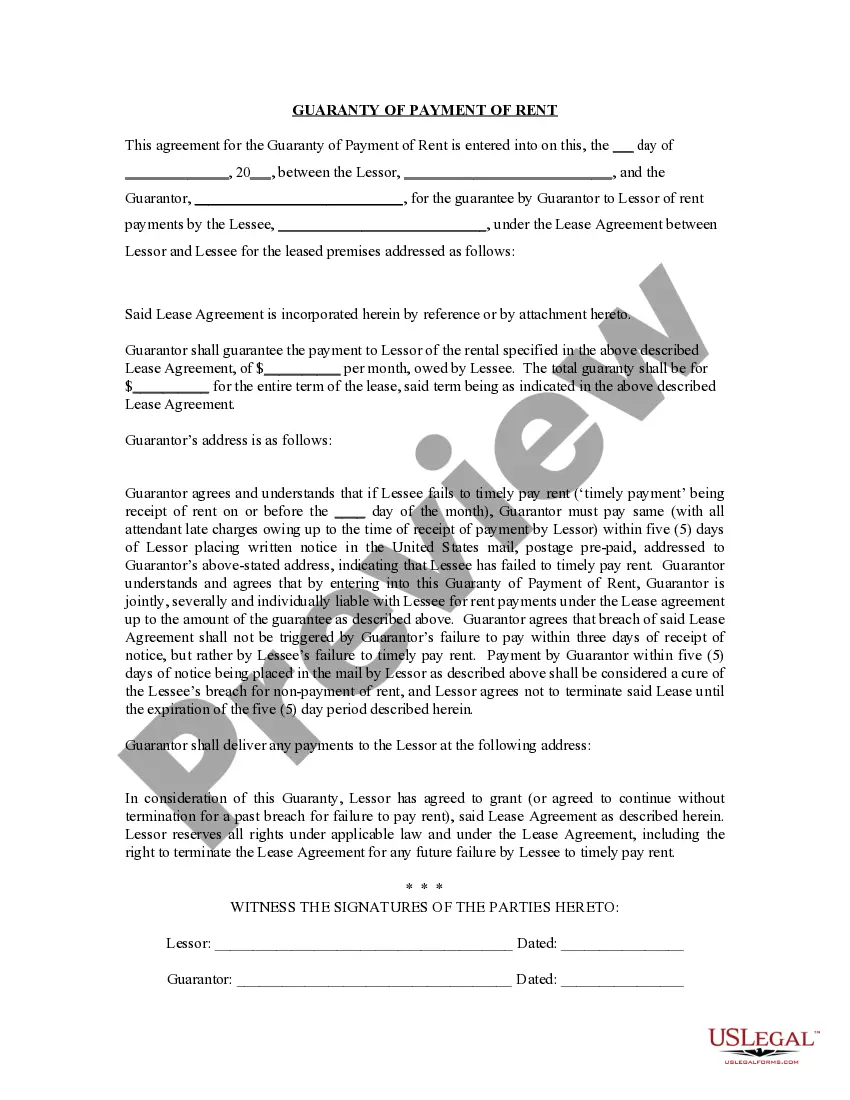
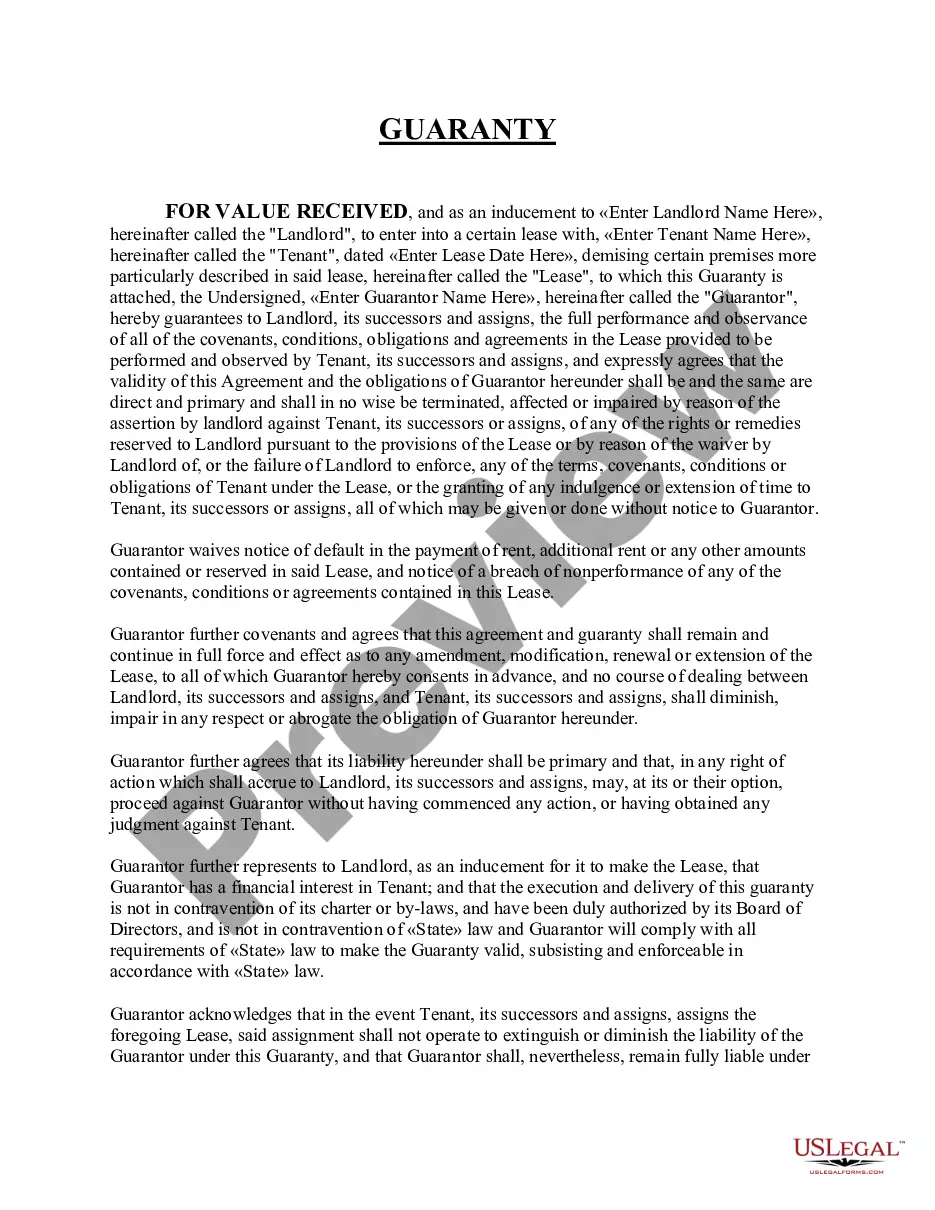
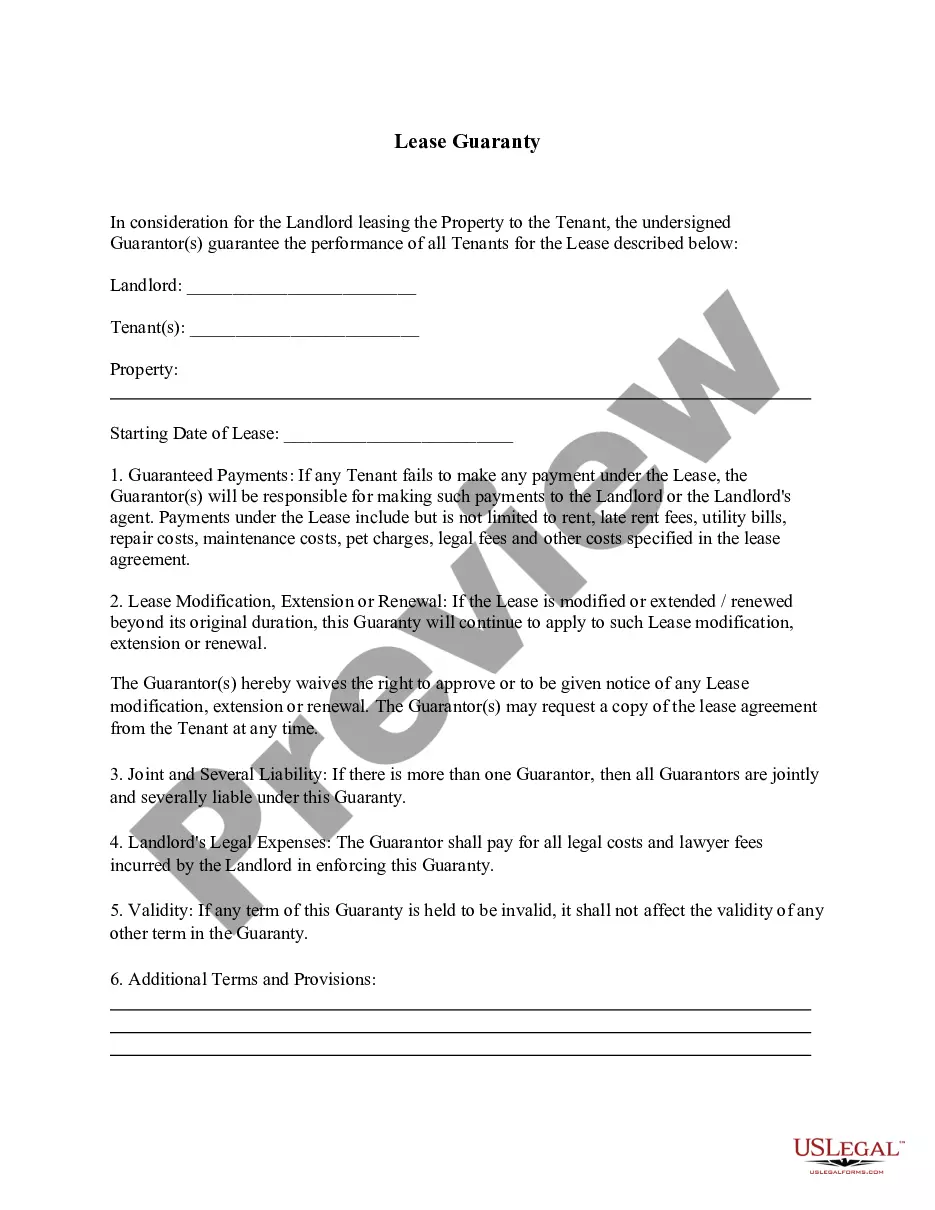
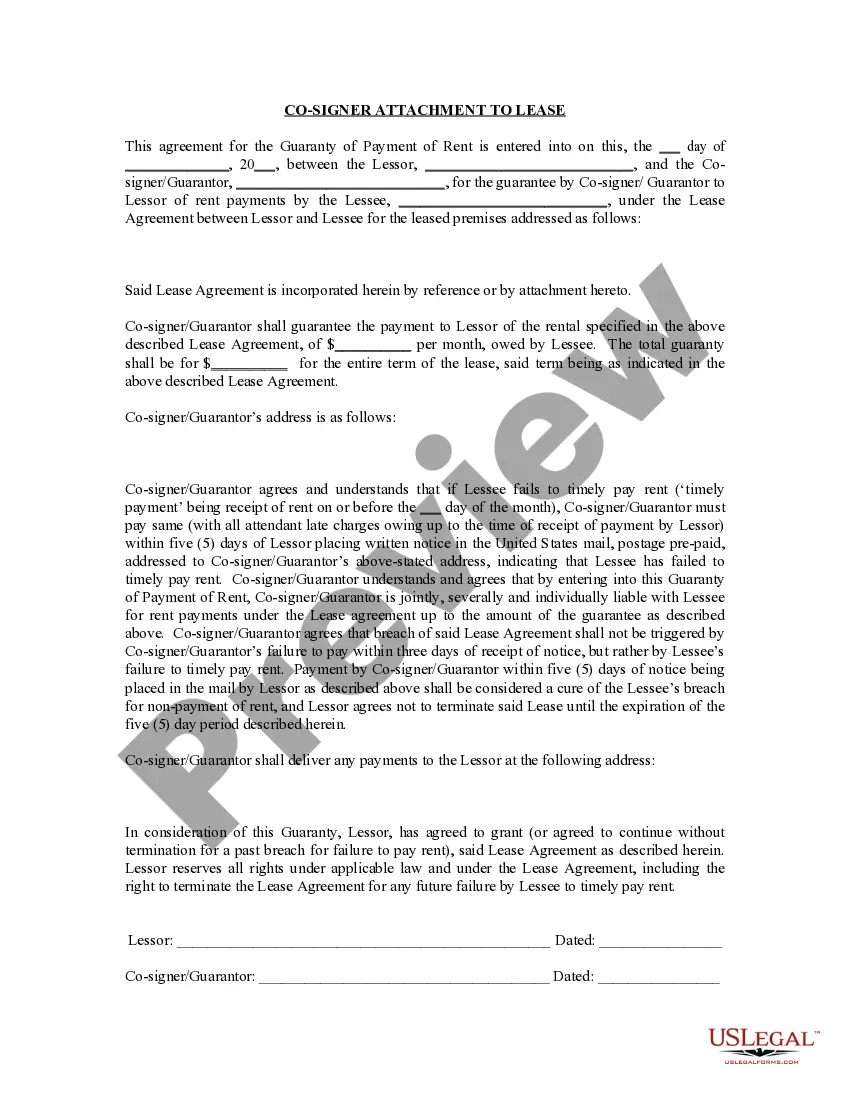
This Guaranty or Guarantee of Payment of Rent is a legal contract that secures a tenant's lease by ensuring the rent will be covered by a third party (the guarantor) in case the tenant is unable to make their payments. This form differs from standard rental agreements as it involves a guarantor who provides additional security for the landlord, reducing the risk of unpaid rent.
What’s included in this form
- Identification of the guarantor and tenant.
- Details of the leased property.
- Specific obligations of the guarantor regarding rent payment.
- Conditions triggering the guarantor's responsibility.
- Signatures of the landlord and guarantor to validate the agreement.
When this form is needed
This Guaranty or Guarantee of Payment of Rent should be used when a landlord requires assurance that the rent will be paid, especially when the tenant has limited credit history or financial stability. It is commonly used for rentals in residential properties where additional security for the landlord is needed to mitigate risks of non-payment.
Who can use this document
This form is intended for:
- Landlords seeking assurance against potential rent defaults.
- Tenants with insufficient credit or financial history.
- Guarantors willing to take on the responsibility of payment in case of tenant default.
How to prepare this document
- Identify the parties involvedâlist the tenant and the guarantor's names and addresses.
- Specify the address of the rental property covered by the agreement.
- Clearly state the obligations of the guarantor concerning rent payments and any conditions for enforcement.
- Include the date of the agreement and provide spaces for signatures of both the landlord and the guarantor.
- Ensure all parties review the terms carefully before signing to confirm understanding.
Does this form need to be notarized?
This form does not typically require notarization unless specified by local law. Notarization can add a layer of verification but is not always necessary for enforceability.
Get your form ready online
Our built-in tools help you complete, sign, share, and store your documents in one place.
Make edits, fill in missing information, and update formatting in US Legal Forms—just like you would in MS Word.
Download a copy, print it, send it by email, or mail it via USPS—whatever works best for your next step.
Sign and collect signatures with our SignNow integration. Send to multiple recipients, set reminders, and more. Go Premium to unlock E-Sign.
If this form requires notarization, complete it online through a secure video call—no need to meet a notary in person or wait for an appointment.
We protect your documents and personal data by following strict security and privacy standards.

Make edits, fill in missing information, and update formatting in US Legal Forms—just like you would in MS Word.

Download a copy, print it, send it by email, or mail it via USPS—whatever works best for your next step.

Sign and collect signatures with our SignNow integration. Send to multiple recipients, set reminders, and more. Go Premium to unlock E-Sign.

If this form requires notarization, complete it online through a secure video call—no need to meet a notary in person or wait for an appointment.

We protect your documents and personal data by following strict security and privacy standards.
Typical mistakes to avoid
- Failing to provide complete information about the parties involved.
- Not specifying the conditions under which the guarantor must fulfill their obligations.
- Overlooking the need for signatures from all parties involved.
- Using outdated forms that may not comply with current legal standards.
Why use this form online
- Convenience of downloading and filling out the form at your own pace.
- Editability allows you to tailor the agreement to specific needs.
- Reliability of professionally drafted templates by licensed attorneys.
Legal use & context
- This form serves as a binding agreement that can be enforced in court if the tenant fails to pay rent.
- Guarantors are legally obligated to cover the rent, making this form a crucial aspect of rental agreements.
- Reviewing state-specific regulations can help ensure compliance with local landlord-tenant laws.
Quick recap
- The Guaranty or Guarantee of Payment of Rent protects landlords by securing payment through a guarantor.
- Understanding the responsibilities of all parties involved is key to effective use of this form.
- Ensuring accuracy and completeness in the form can prevent legal issues in the future.
Looking for another form?

Form popularity
FAQ
TERMINATING OR ENDING YOUR TENANCY If you have no written lease and you pay rent by the month, the tenancy can be terminated by either you or the landlord for any reason or no reason at all, by giving at least 30 days written notice before the next rental due date.
It's very common for a guarantee to last as long as the tenancy lasts. So, if the tenant remains in the property for four years, you will continue to be responsible for any arrears or damages during that entire period.
Essentially, in the event of a tenant being unable to meet their obligations under the Tenancy Agreement contract, whether it is for overdue rent, damage to the property or whatever, the Guarantor is legally bound to accept the liabilities on behalf of the tenant.
It's very common for a guarantee to last as long as the tenancy lasts. So, if the tenant remains in the property for four years, you will continue to be responsible for any arrears or damages during that entire period. Most tenancies will run for a fixed term and will then continue on a month-by-month basis.
In rental property, the guarantors are also liable for any damage, cleaning costs, outstanding bills or any other tenancy related obligation - in effect they are agreeing to the obligations outlined in the tenancy agreement.
A guarantor is a third party who 'guarantees' a loan, mortgage or rental agreement. This means they agree to repay the total amount owed if the borrower or renter can't pay what they owe. By guaranteeing the agreement, you become responsible for any arrears that occur.
As a renter in Virginia, you have legal protections under the Virginia Residential Landlord and Tenant Act (VRLTA) that include the right to: A fair application fee. A fair security deposit. A decent and safe place to live.
Quite simply, if a guarantor can technically pay, but decides they will not pay it for whatever reason, they are breaking the contract that they signed.Collateral may be taken into account if the guarantor will not pay up what is due or the lender may have a claim in their estate.
While a co-signer is responsible for the rent at the moment it is due, a guarantor only has to pay once the person on the agreement fails to do so. A guarantor won't have any right to live in the apartment "because you are only going to be liable for anything if the tenant stops paying," says Cohen.