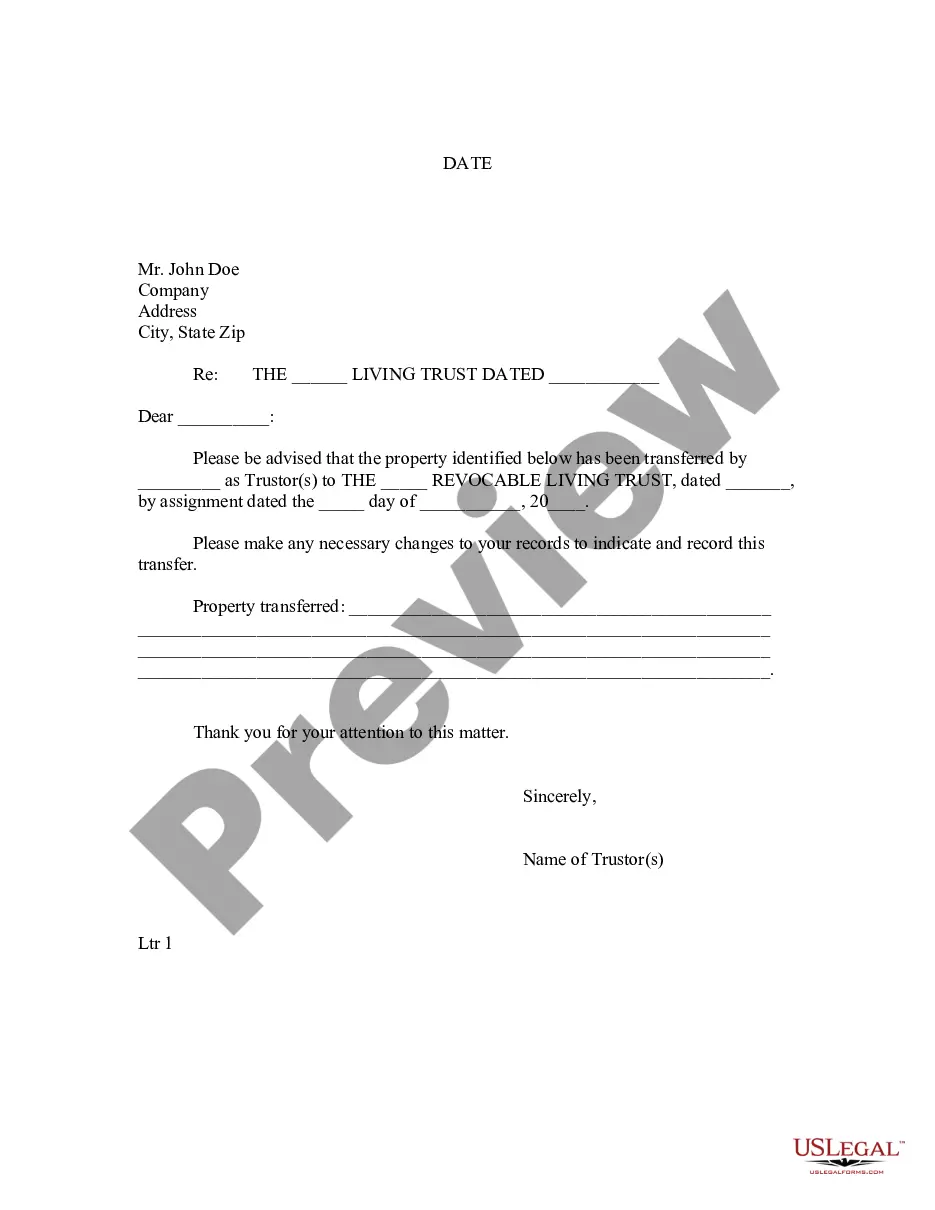
Lease of Commercial Building
Overview of this form
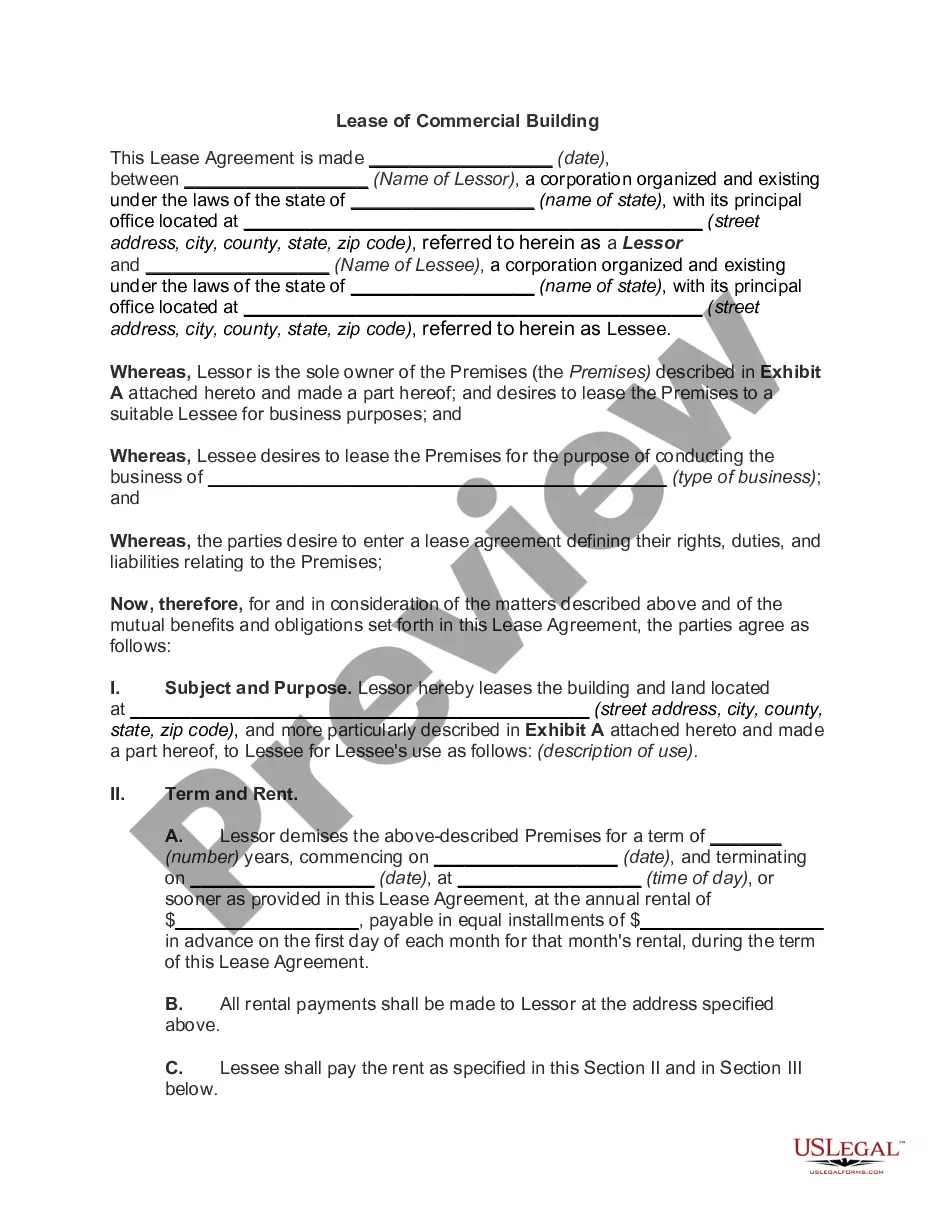
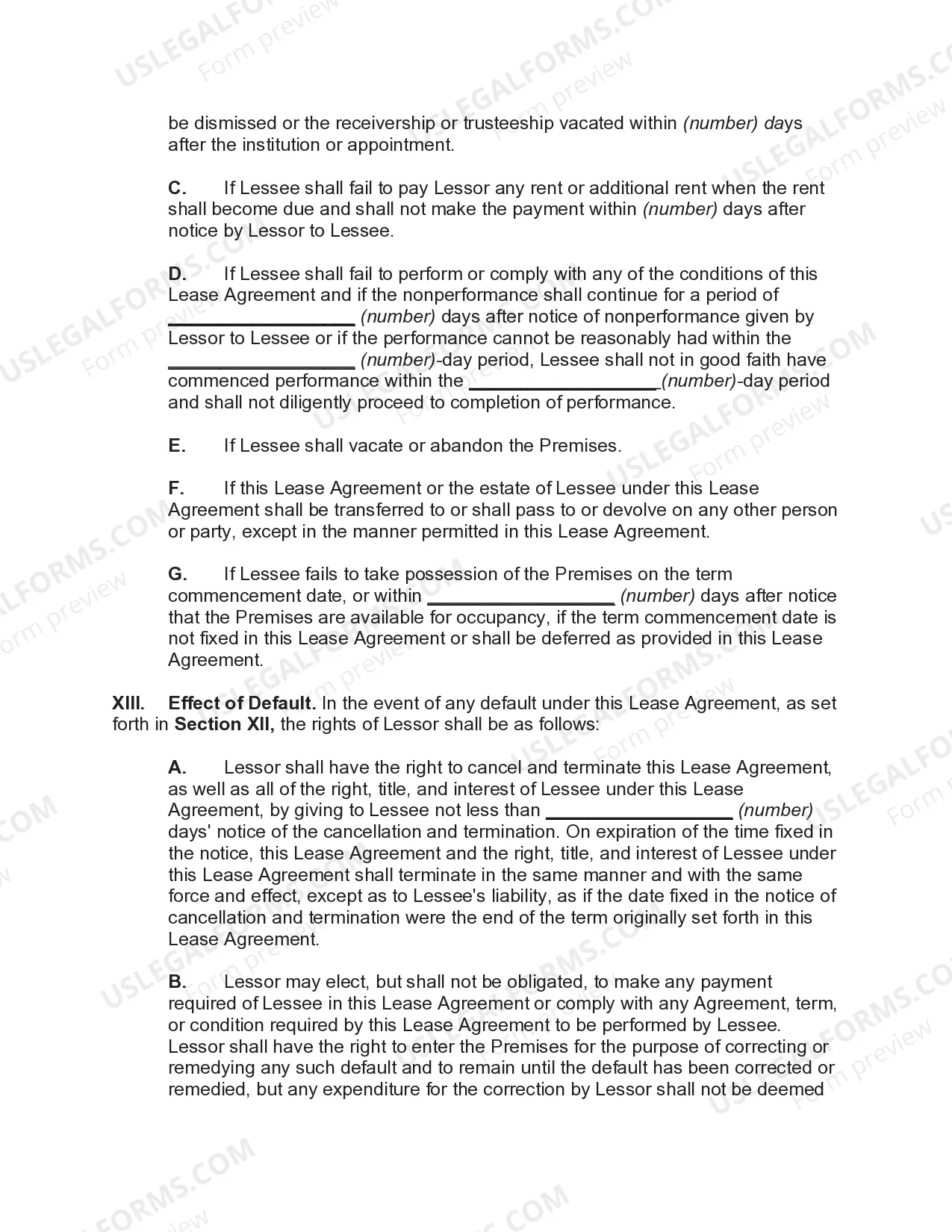
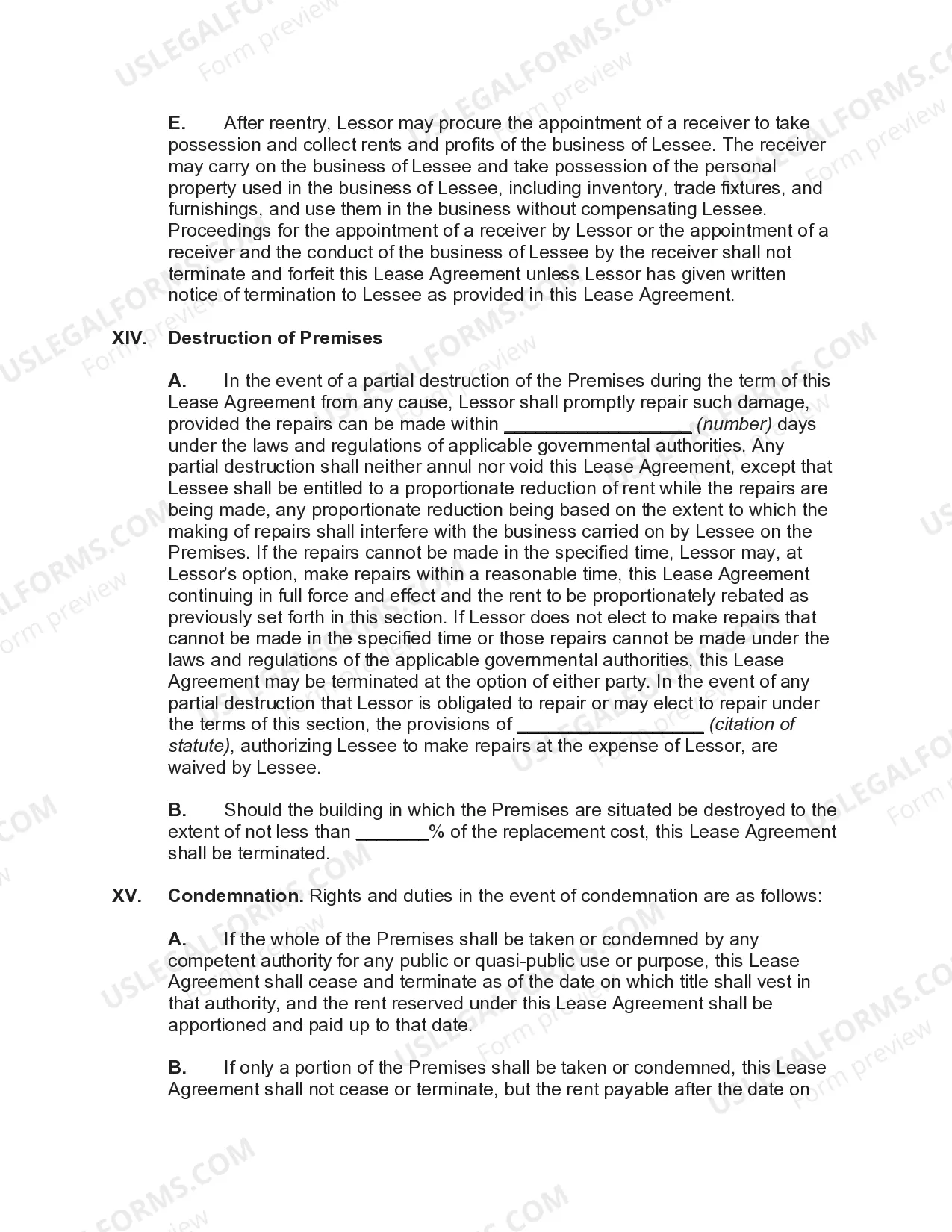
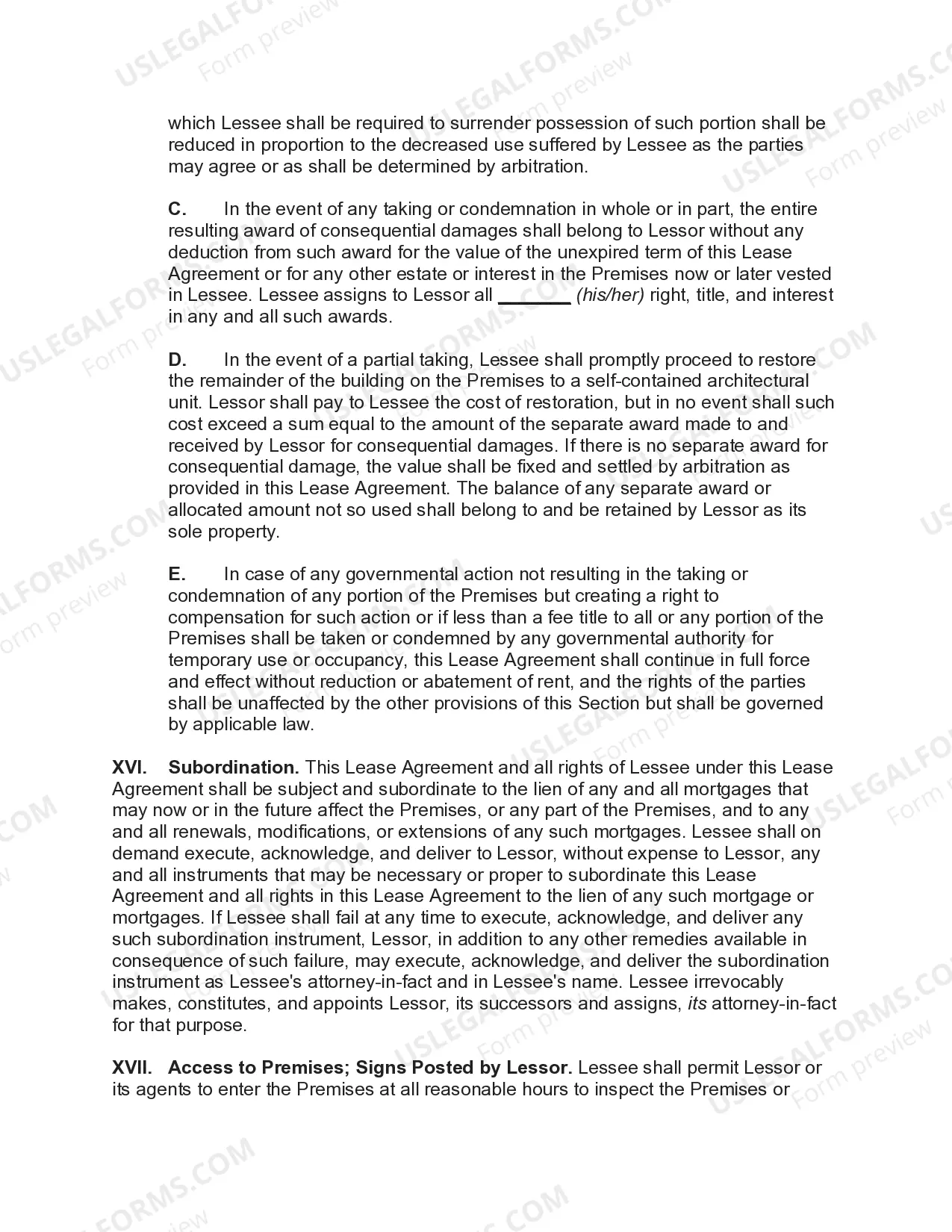
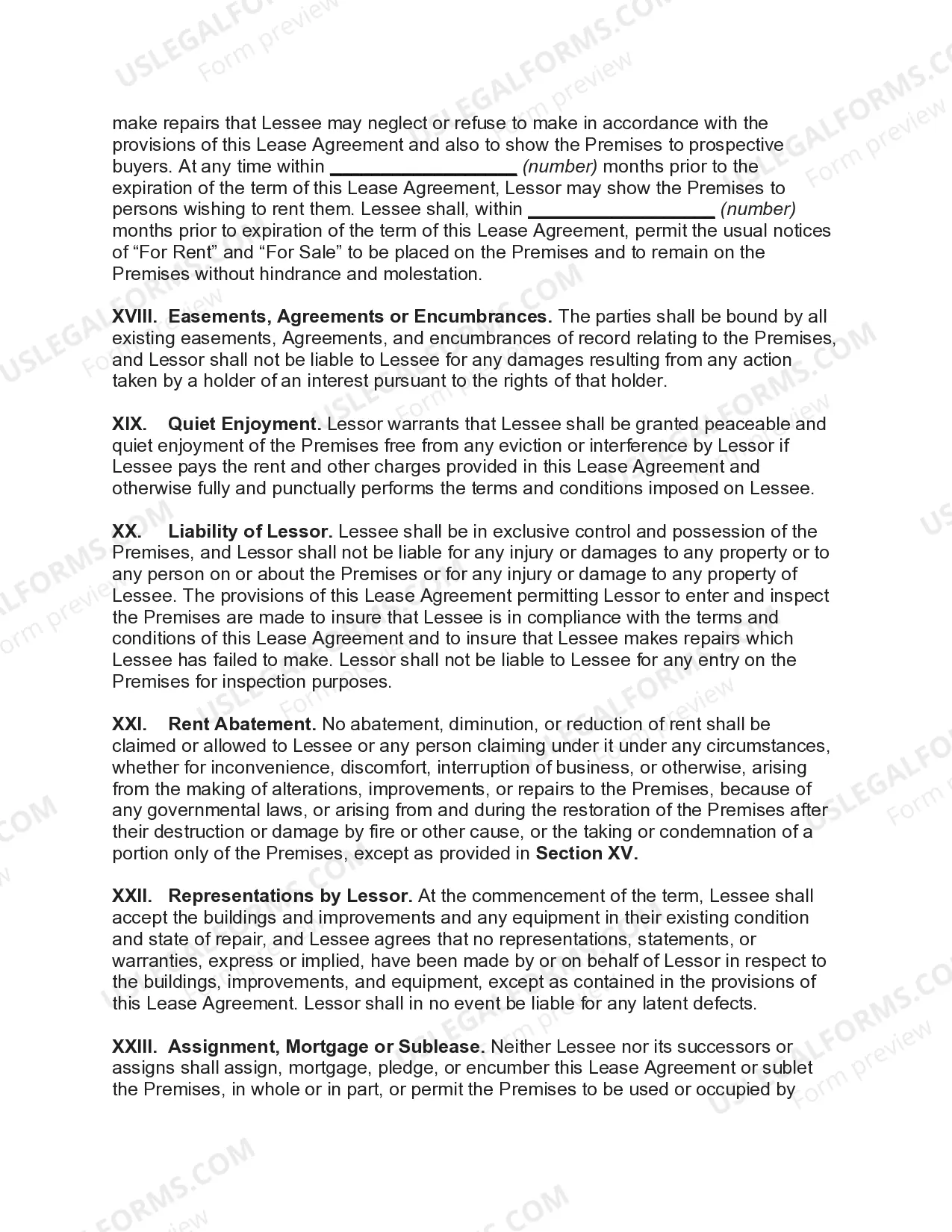
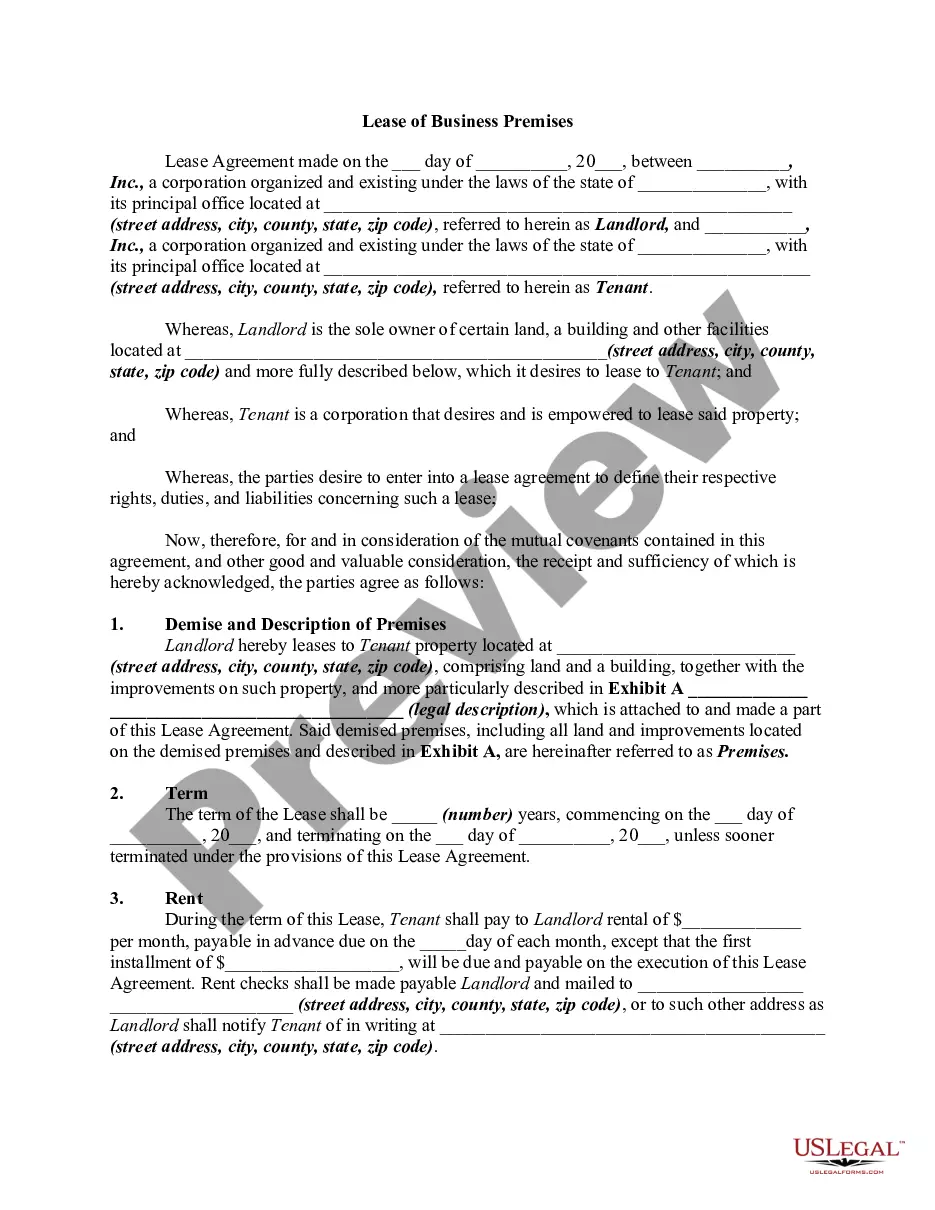
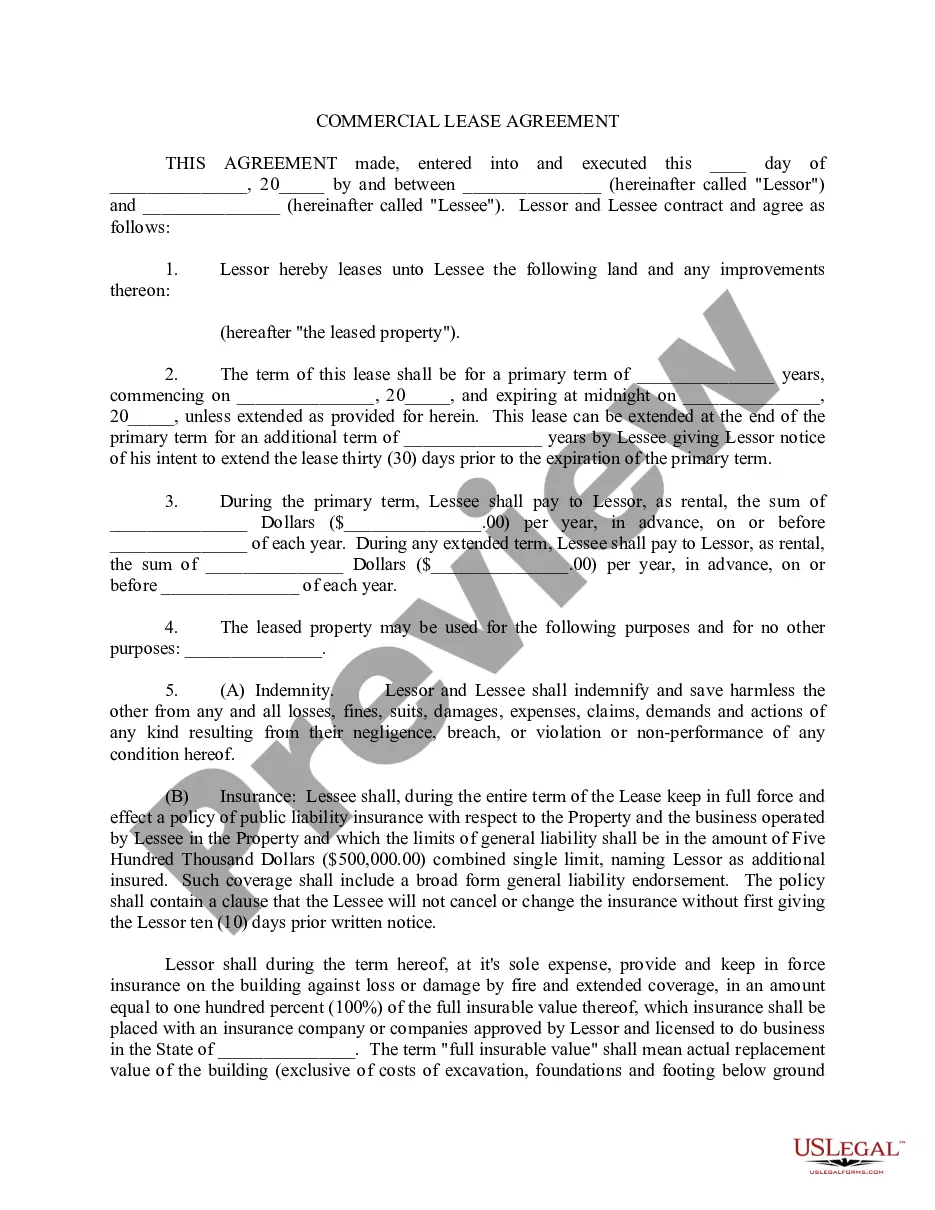
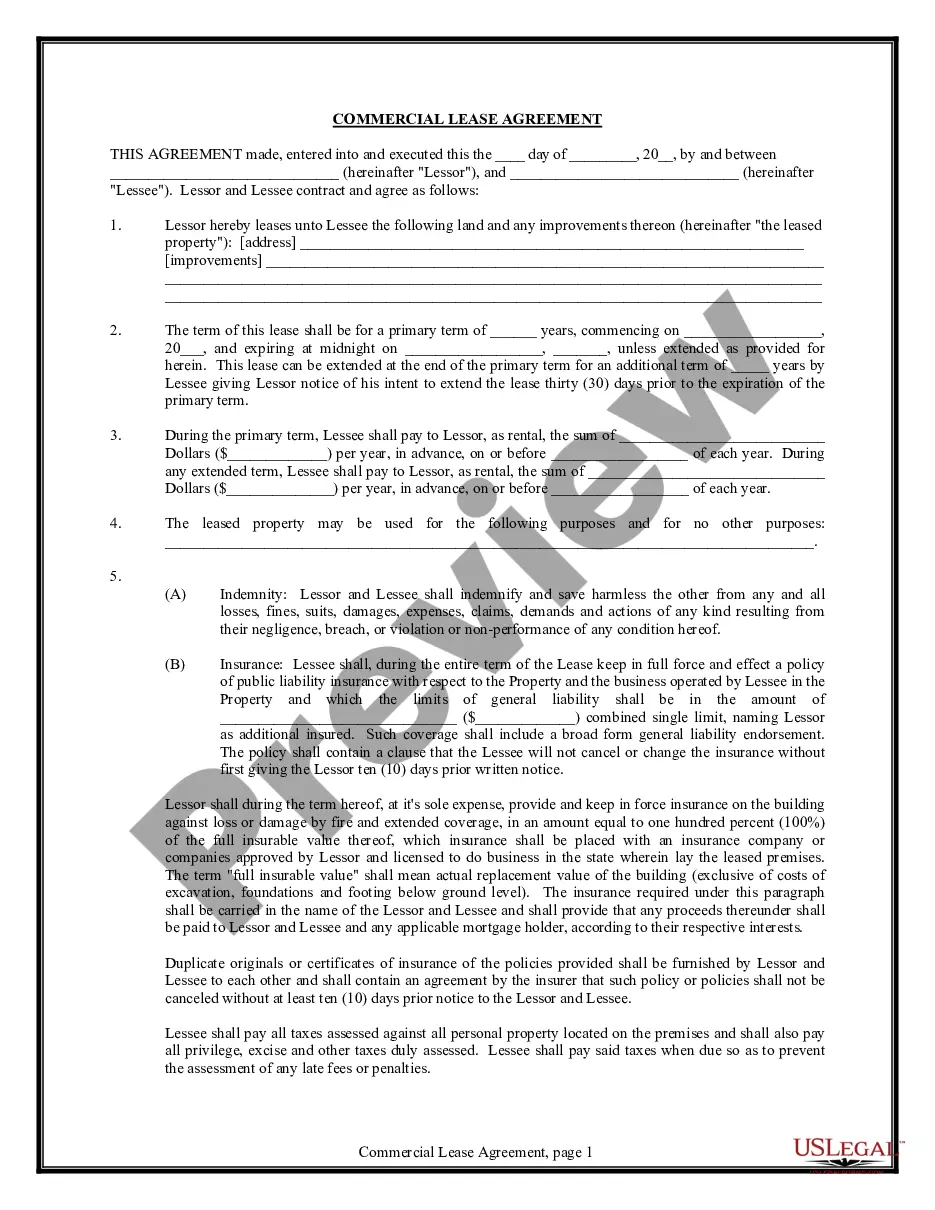
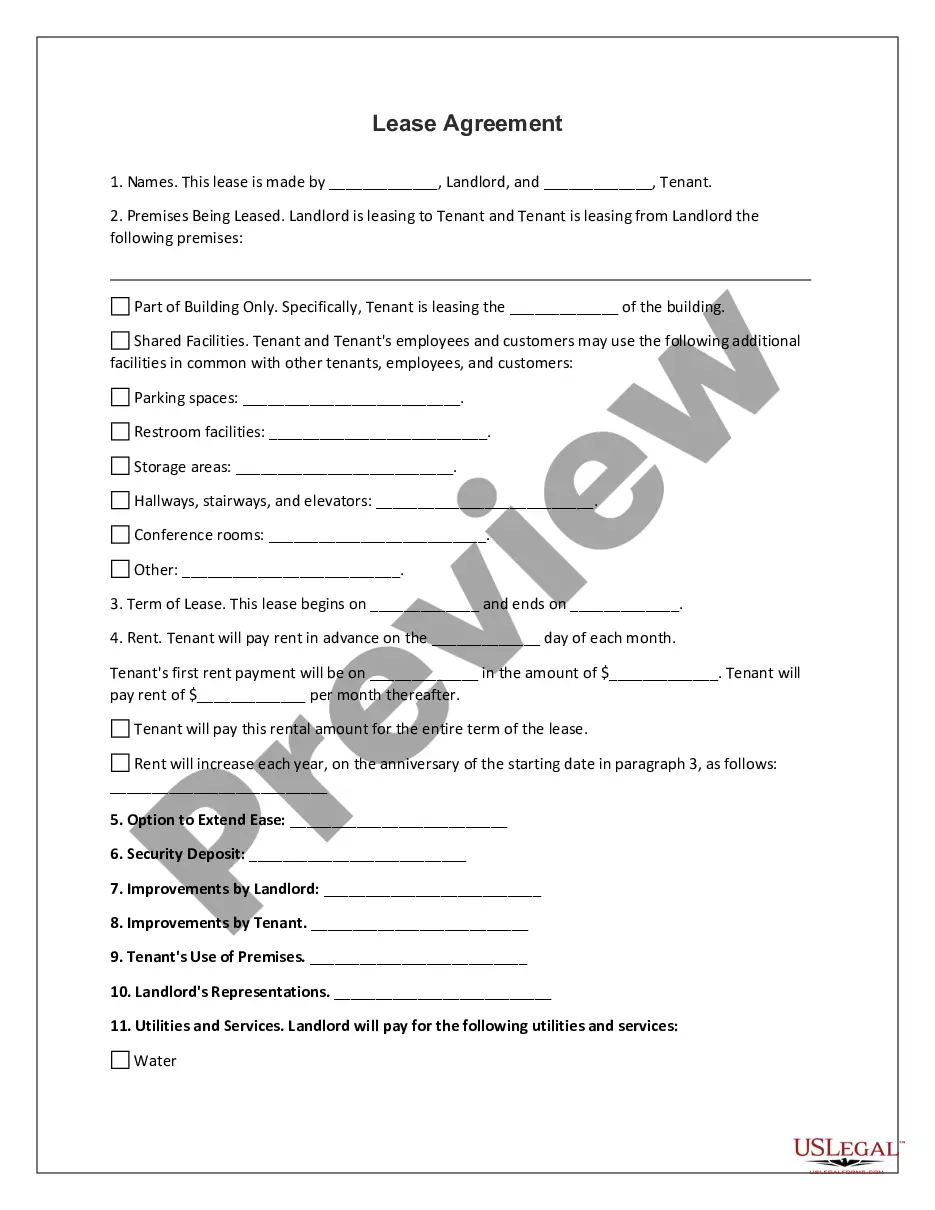
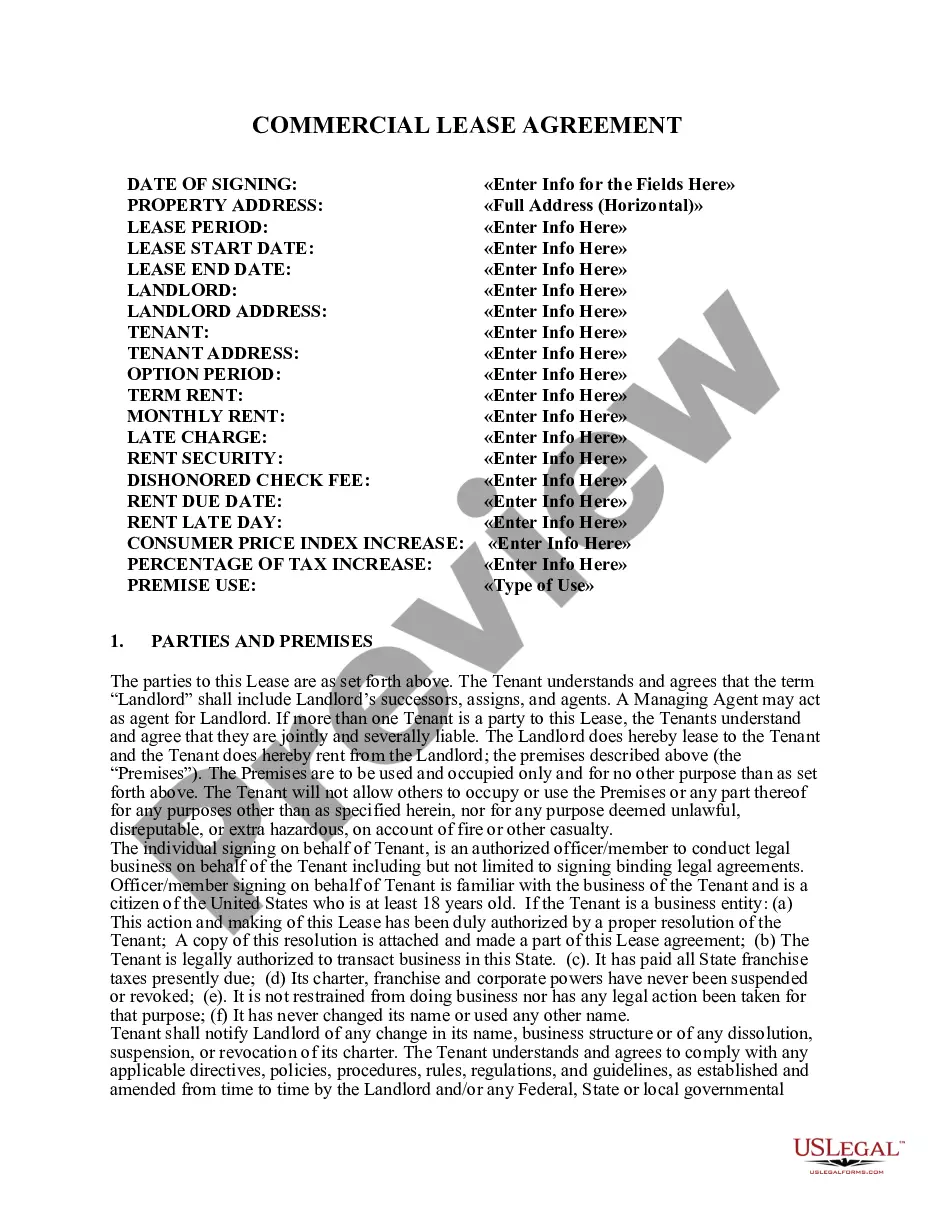
This Lease of Commercial Building form is a legally binding agreement between a lessor (property owner) and a lessee (tenant) for renting a commercial property. It sets out the rights and responsibilities of both parties concerning the leased premises. This form differentiates itself from residential leases by focusing specifically on business-related uses and stipulating terms relevant to commercial activities, such as rent, maintenance, and liabilities.
Key parts of this document
- Parties involved: Identifies the lessor and lessee with their legal names and addresses.
- Property description: Provides specific details about the premises being leased, including location and intended use.
- Term and rent: Sets the duration of the lease and outlines the rental payment schedule and amounts.
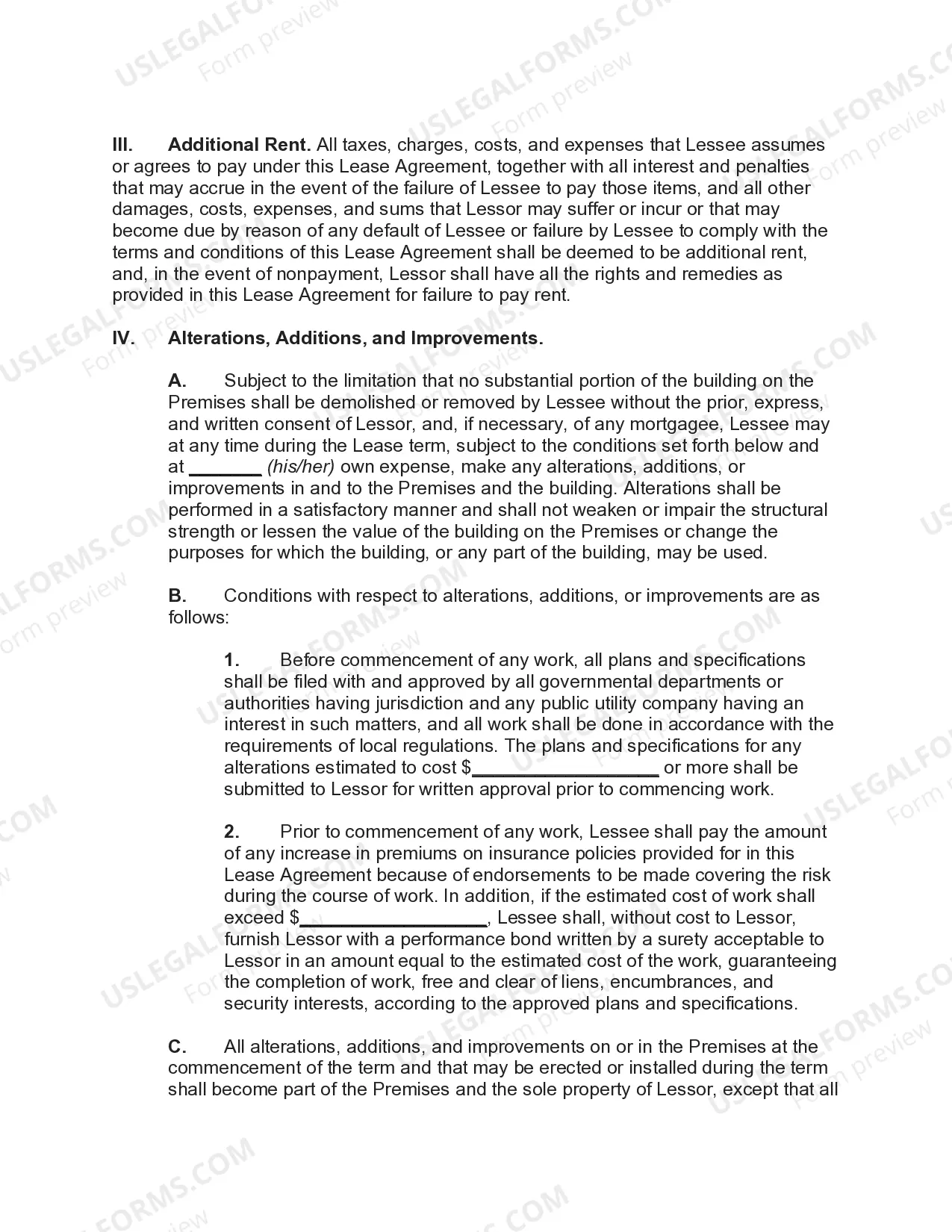
- Alterations and improvements: Addresses conditions for any modifications the lessee may want to make to the property.
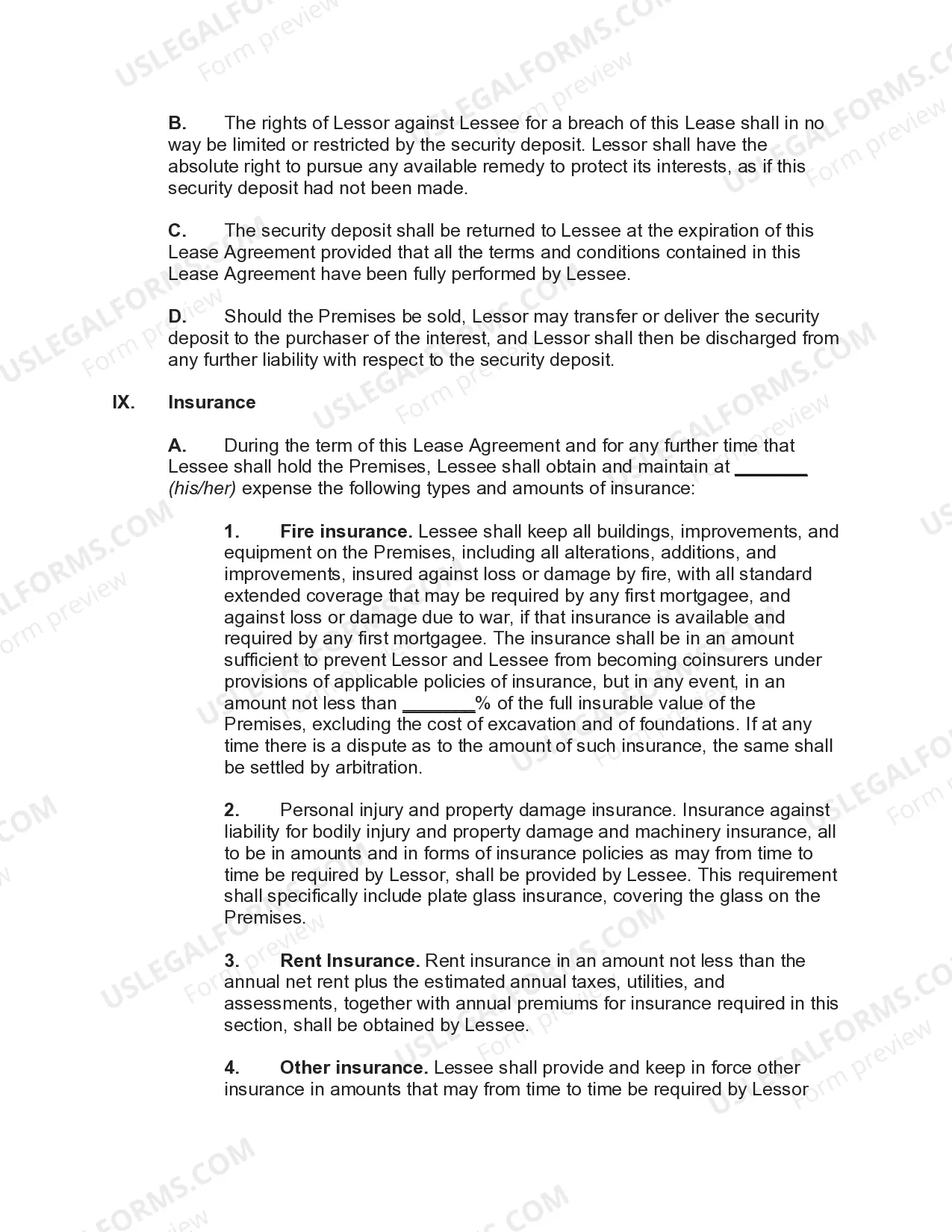
- Repair responsibilities: Specifies which party is responsible for maintaining the property during the lease period.
- Insurance requirements: Details the types of insurance the lessee must obtain to protect both parties.




When to use this document
This form should be used when a business seeks to rent commercial space for operations, such as an office, retail store, or warehouse. It's essential when entering into a formal agreement to secure the property and outline the terms under which it will be used, ensuring both parties have a clear understanding of their obligations and rights.
Who can use this document
Intended users of this form include:
- Businesses looking to lease commercial property.
- Landlords or property owners who wish to formalize leasing arrangements with tenants.
- Real estate professionals involved in commercial property transactions.
Completing this form step by step
To complete this Lease of Commercial Building form, follow these steps:
- Identify the parties: Fill in the names and addresses of both the lessor and lessee.
- Specify the property: Provide the physical address and a description of the premises being leased.
- Enter dates and term: Indicate the rental term's starting and ending dates.
- Outline rental payments: Specify the rental amount and payment schedule.
- Include additional terms: Mention any specific conditions regarding repairs, alterations, or improvements that might be relevant to the lease.
Notarization requirements for this form
This form does not typically require notarization unless specified by local law. However, consult local regulations to ensure compliance, as some jurisdictions may have specific requirements for commercial lease agreements.
Get your form ready online
Our built-in tools help you complete, sign, share, and store your documents in one place.
Make edits, fill in missing information, and update formatting in US Legal Forms—just like you would in MS Word.
Download a copy, print it, send it by email, or mail it via USPS—whatever works best for your next step.
Sign and collect signatures with our SignNow integration. Send to multiple recipients, set reminders, and more. Go Premium to unlock E-Sign.
If this form requires notarization, complete it online through a secure video call—no need to meet a notary in person or wait for an appointment.
We protect your documents and personal data by following strict security and privacy standards.

Make edits, fill in missing information, and update formatting in US Legal Forms—just like you would in MS Word.

Download a copy, print it, send it by email, or mail it via USPS—whatever works best for your next step.

Sign and collect signatures with our SignNow integration. Send to multiple recipients, set reminders, and more. Go Premium to unlock E-Sign.

If this form requires notarization, complete it online through a secure video call—no need to meet a notary in person or wait for an appointment.

We protect your documents and personal data by following strict security and privacy standards.
Avoid these common issues
- Failing to clearly define the property being leased, which can lead to disputes later.
- Not specifying the payment schedule or amounts, leading to confusion about rent obligations.
- Overlooking state-specific requirements that could invalidate the lease.
- Neglecting to address maintenance and repair responsibilities, leading to misunderstandings.
- Not including provisions for what happens in the event of a default, which can limit remedies later.
Why complete this form online
- Convenience: The form can be downloaded and completed at your convenience, eliminating the need for in-person meetings.
- Editability: Users can customize the form with specific information pertinent to their agreement.
- Reliability: The templates are drafted by licensed attorneys to ensure legal compliance.
- Time-saving: Using a pre-drafted lease saves time compared to creating a lease agreement from scratch.
Legal use & context
- The lease agreement provides a binding contract between the Lessor and Lessee.
- It defines both parties' rights and obligations, contributing to clarity and legal enforcement.
- In the event of a dispute, this document serves as a key reference for any legal proceedings.
What to keep in mind
- The Lease of Commercial Building is essential for formalizing rental agreements between landlords and businesses.
- It outlines key terms such as rental payments, property description, and repair liabilities.
- Ensure compliance with state-specific laws when using this form to avoid legal issues.
- Completing the form accurately helps prevent common disputes related to leasing commercial property.
Looking for another form?
Form popularity
FAQ
The Introduction. The beginning of the lease agreement should contain the name of the landlord and tenant, as well as a statement of the agreement into which they are entering. Rent. Deposit. Taxes. Property Insurance. Utilities and Amenities. Remodeling and Improvements. Repairs and Maintenance.
The Letter of Intent should include the names of the parties negotiating, such as the name of the Tenant and the Property Owner/Landlord, and a list of industry standard list items. You should also include items that are important to your business when leasing commercial real estate.
The Person Liable for the Lease. Your Business Structure. How Long You Have Been in Business. The Nature of Your Business. Contact Information. Your Proposed Terms (or, Counter Offer) The Length of the Lease. Condition of the Property.
Specifically, the tenant pays the base rent, property but also taxes, insurance, utilities, and maintenance. This even includes standard property repairs associated with the commercial space being occupied.
Justify Why You Need Free Office Rent. Don't just ask for it for no reason. Build-Out Period. Base Rent Free OR Base Rent & Operating Expenses? Early Occupancy. Ask For More Free Rent Than You Need. Consider Adding More Term to The Lease. Offer to Spread The Free Rent Out Over a Period of Time.
Step 1: Write a Cover Letter. Step 2: Provide a Summary of the Proposal. Step 3: Specify the Operations of the Tenant. Step 4: Present the Cost Summary. Step 5: List the Terms of the Contract. Step 6: Mention the Benefits. >
Name the parties. A simple rental agreement form needs to name the parties signing the lease and where they live. Describe the premises. Define the term of the lease. Set how much rent is owed. Assign a security deposit amount. Finalize the lease.
Settle ahead of time on your budget, your must-haves, and your nice-to-haves. Get an agent or lawyer to negotiate for you. Do negotiate on more than one location at the same time. Don't pay asked base rent. Check the square footage yourself.
The Introduction. The beginning of the lease agreement should contain the name of the landlord and tenant, as well as a statement of the agreement into which they are entering. Rent. Deposit. Taxes. Property Insurance. Utilities and Amenities. Remodeling and Improvements. Repairs and Maintenance.