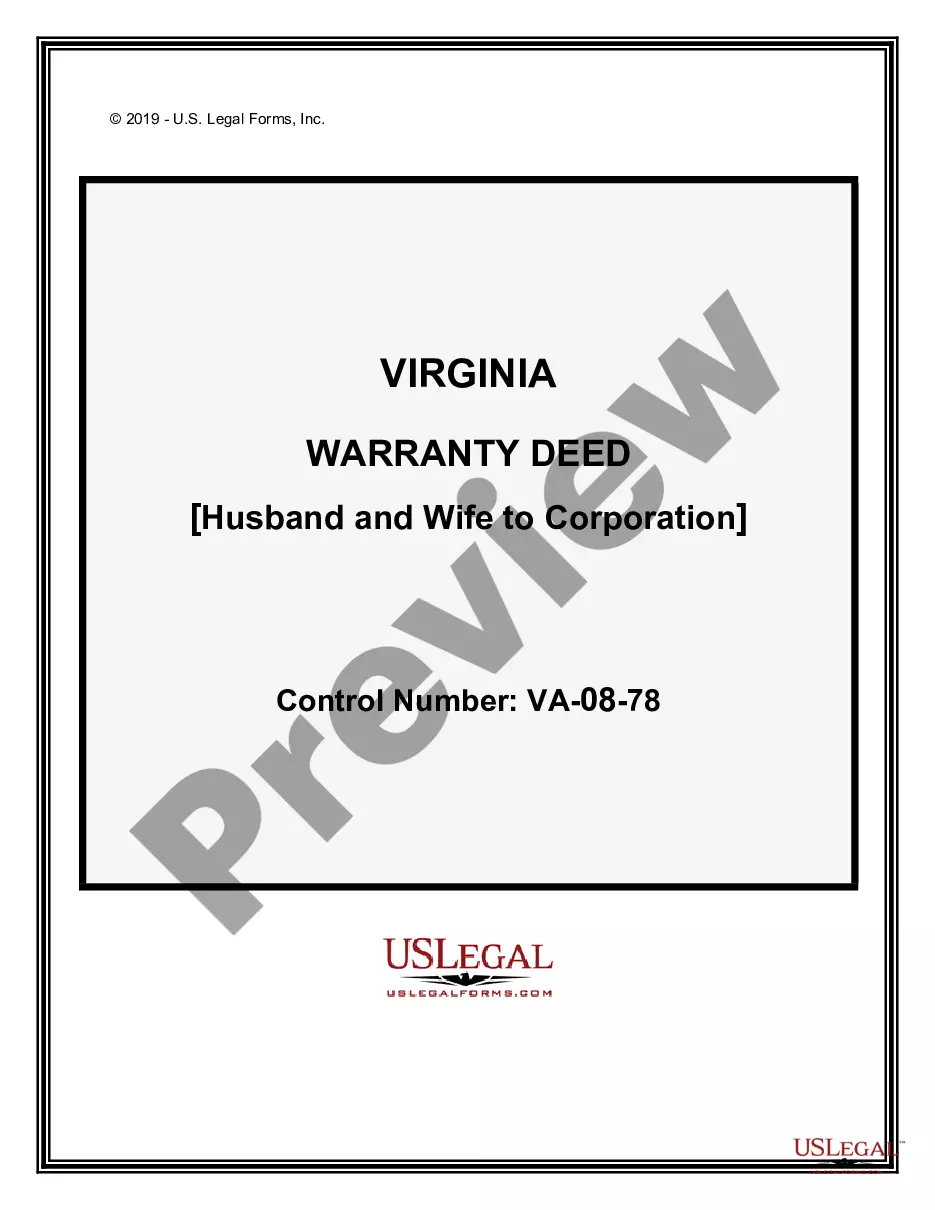
Virginia Warranty Deed from Husband and Wife to Corporation
What is this form?
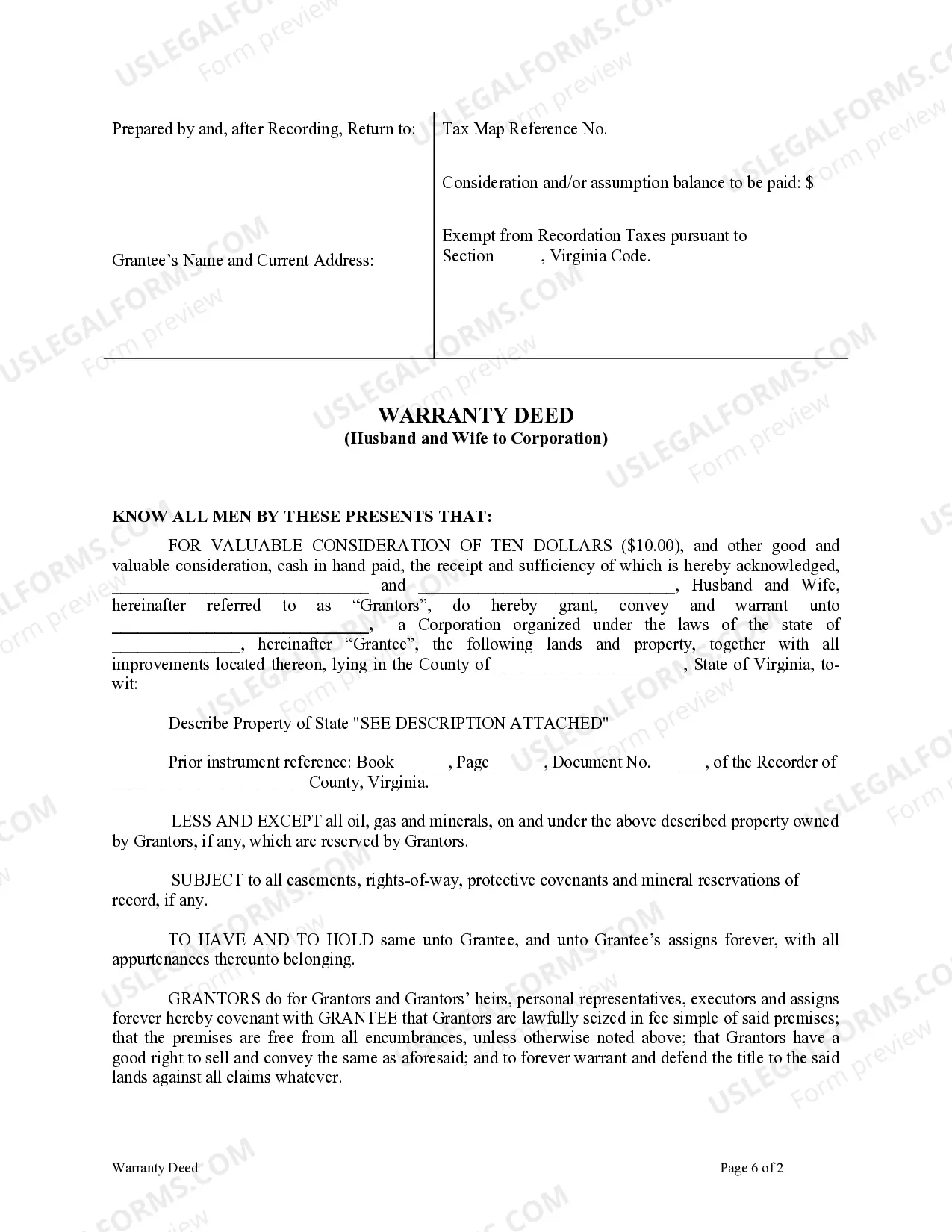
The Warranty Deed from Husband and Wife to Corporation is a legal document used to transfer ownership of real property from a married couple (the grantors) to a corporation (the grantee). This form ensures that the grantors convey their property while reserving rights to oil, gas, and minerals beneath the surface, if applicable. Unlike other property transfer forms, this warranty deed offers a guarantee of clear title, providing peace of mind for both parties.
Main sections of this form
- Identification of the grantors (husband and wife) and the grantee (corporation).
- Description of the property being transferred, including any attached property descriptions.
- Statement reserving rights to oil, gas, and minerals under the property, if any.
- Covenants guaranteeing that the grantors are the rightful owners and the property is free from encumbrances.
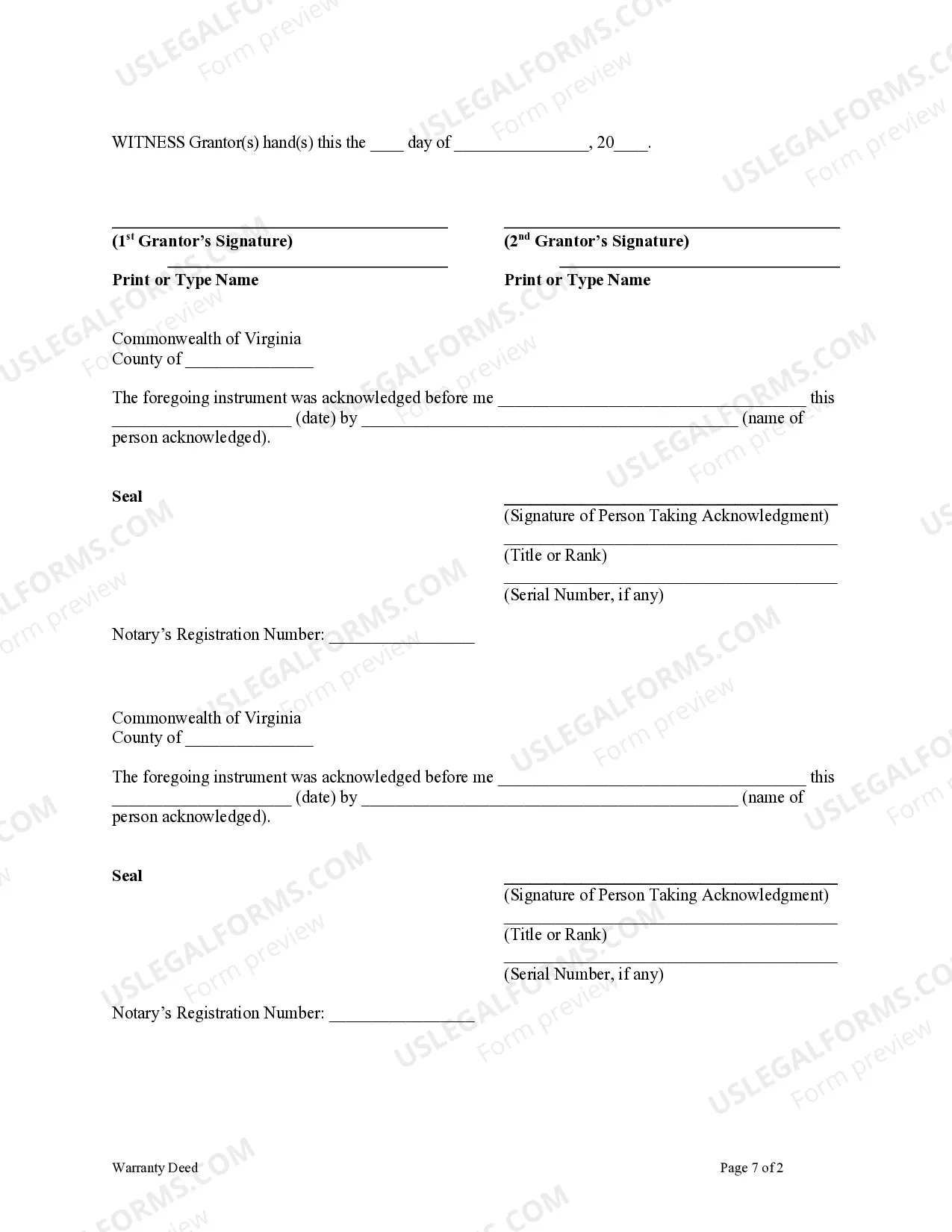
- Signature lines for the grantors and a date for the transaction.



When to use this form
This form is typically used when a married couple decides to transfer their jointly owned property to a corporation for various reasons, such as business ownership, asset protection, or estate planning. It is essential when the couple wants to ensure clear title and protect their rights in the transaction.
Who this form is for
This form is suitable for:
- Married couples who jointly own real estate.
- Corporations seeking to acquire property from individuals.
- Legal representatives handling property transfers for clients.
Steps to complete this form
- Identify the parties involved: enter the full names of the husband and wife as grantors and the corporation name as the grantee.
- Provide a clear description of the property, including any necessary legal descriptions attached.
- Indicate any reservations regarding mineral rights, as necessary.
- Both grantors must sign and date the document in the designated areas.
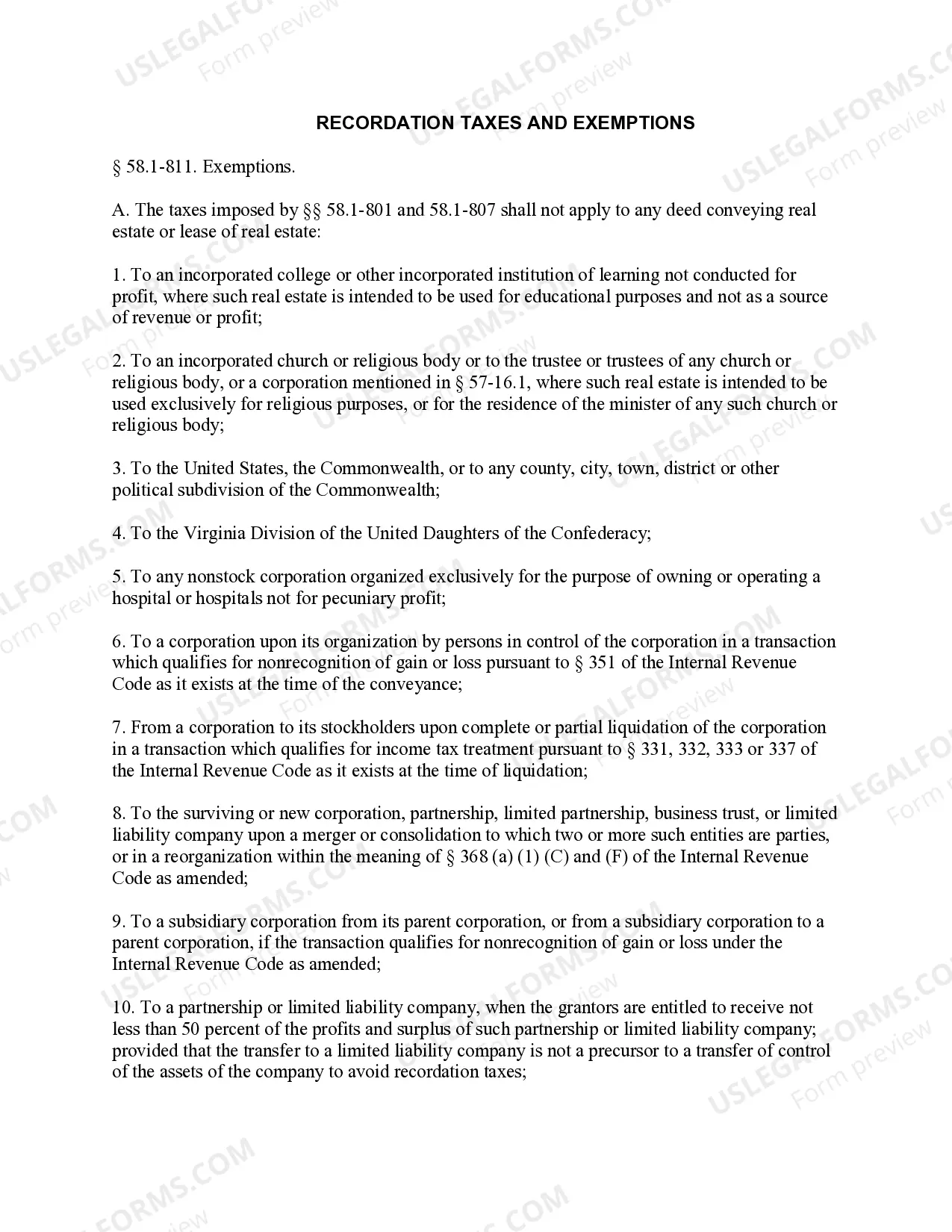
- Make sure to consult any relevant local laws regarding recordation or additional requirements.
Notarization guidance
Yes, this form must be notarized to be legally valid. This process verifies the identities of the grantors signing the deed. US Legal Forms offers integrated online notarization services, allowing you to complete this legally required step conveniently from home through secure video calls at any time.
Get your form ready online
Our built-in tools help you complete, sign, share, and store your documents in one place.
Make edits, fill in missing information, and update formatting in US Legal Forms—just like you would in MS Word.
Download a copy, print it, send it by email, or mail it via USPS—whatever works best for your next step.
Sign and collect signatures with our SignNow integration. Send to multiple recipients, set reminders, and more. Go Premium to unlock E-Sign.
If this form requires notarization, complete it online through a secure video call—no need to meet a notary in person or wait for an appointment.
We protect your documents and personal data by following strict security and privacy standards.

Make edits, fill in missing information, and update formatting in US Legal Forms—just like you would in MS Word.

Download a copy, print it, send it by email, or mail it via USPS—whatever works best for your next step.

Sign and collect signatures with our SignNow integration. Send to multiple recipients, set reminders, and more. Go Premium to unlock E-Sign.

If this form requires notarization, complete it online through a secure video call—no need to meet a notary in person or wait for an appointment.

We protect your documents and personal data by following strict security and privacy standards.
Avoid these common issues
- Failing to include complete and accurate property descriptions.
- Not specifying reservations of rights clearly, which can lead to disputes.
- Inadequate signatures or dates from grantors.
- Not considering state-specific requirements for recording the deed.
Advantages of online completion
- Convenient access to essential legal documents from home.
- Editability allows for accurate customization to fit individual needs.
- Reliable and up-to-date legal forms prepared by licensed attorneys.
Looking for another form?

Form popularity
FAQ
The only way to change a recorded deed is to have a new deed prepared and recorded in the Clerk's Land Records Office. The deed on record cannot be changed. Once a document is recorded, it cannot be changed.
All deeds must be prepared by the owner of the property or by an attorney licensed to practice in Virginia. The requirements are listed below in the code section. Click here to read about e-Recording. § 17.1-223.
The only way to forcibly change the ownership status is through a legal action and the resultant court order. However, if an owner chooses to be removed from the deed, it is simply a matter of preparing a new deed transferring that owner's interest in the property.
A special warranty deed is a common form of conveyance in Virginia that is used to transfer title to real estate. Unless an exception is made in the deed, all appurtenances, buildings, and privileges belonging to the land being conveyed will be included in the conveyance (55.1-303).
Retrieve your original deed. Get the appropriate deed form. Draft the deed. Sign the deed before a notary. Record the deed with the county recorder. Obtain the new original deed.
Locate the most recent deed to the property. Create the new deed. Sign and notarize the new deed. Record the deed in the land records of the clerk's office of the circuit court in the jurisdiction where the property is located.
A special warranty deed to real estate offers protection to the buyer through the seller's guarantee that the title has been free and clear of encumbrances during their ownership of the property. It does not guarantee clear title beyond their ownership.
Locate the most recent deed to the property. Create the new deed. Sign and notarize the new deed. Record the deed in the land records of the clerk's office of the circuit court in the jurisdiction where the property is located.