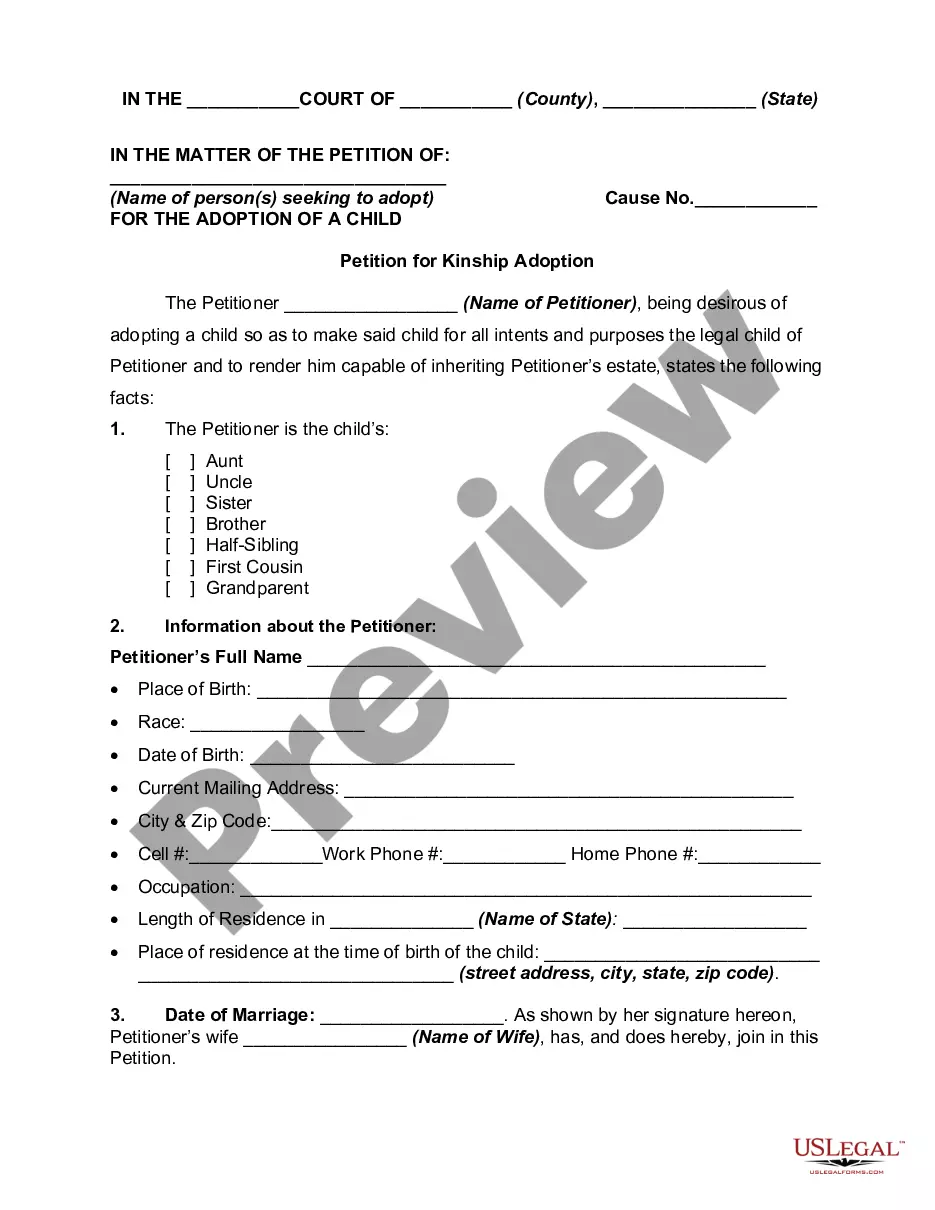
Utah Last Will and Testament for Divorced person not Remarried with Adult Children
About this form
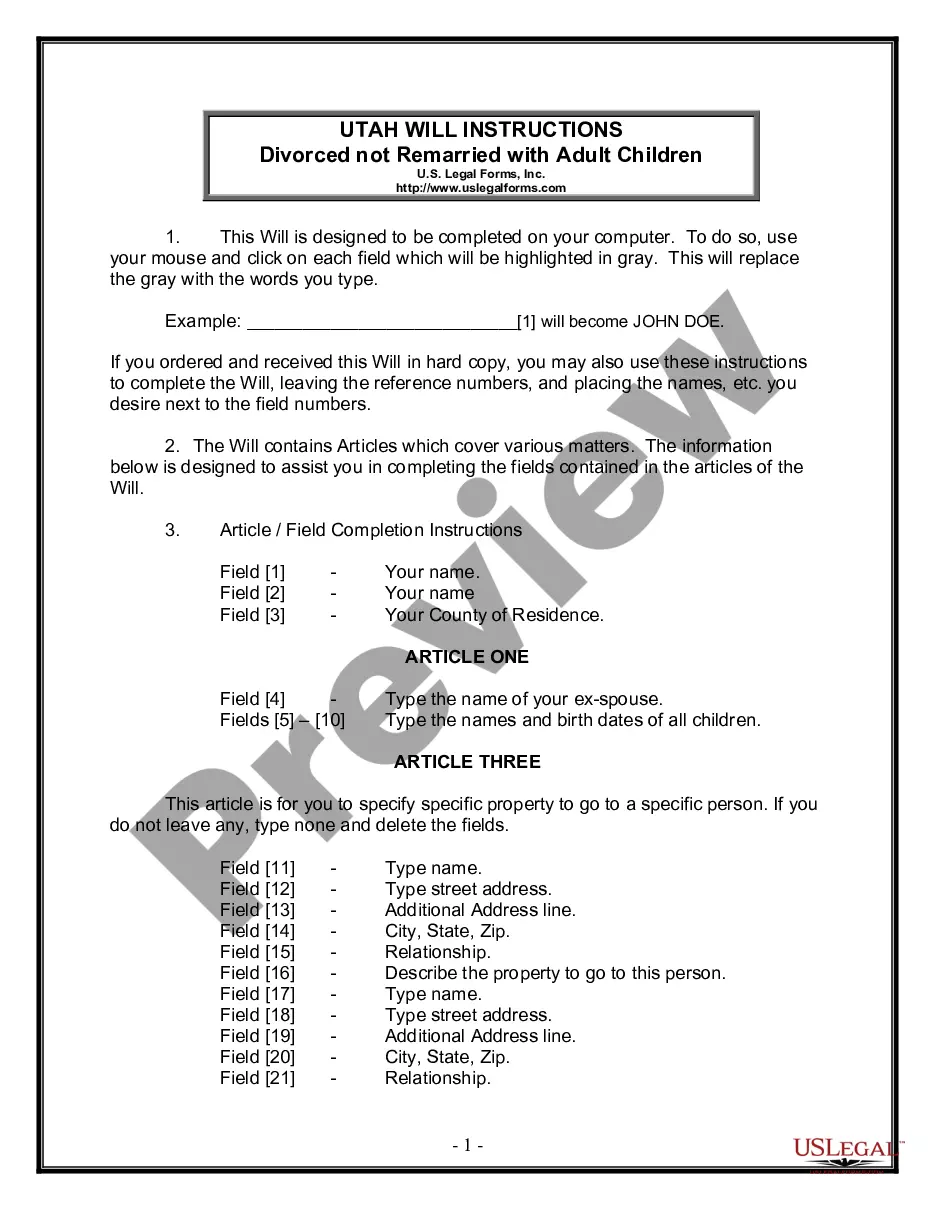
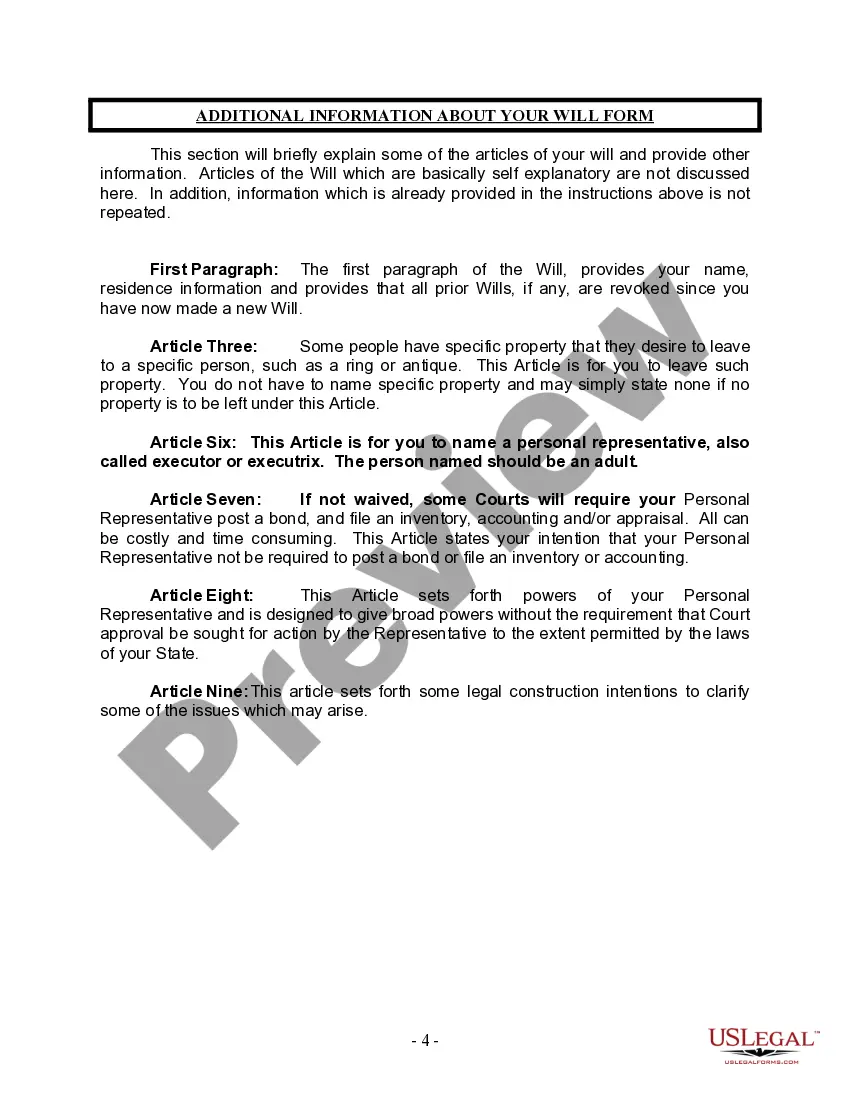
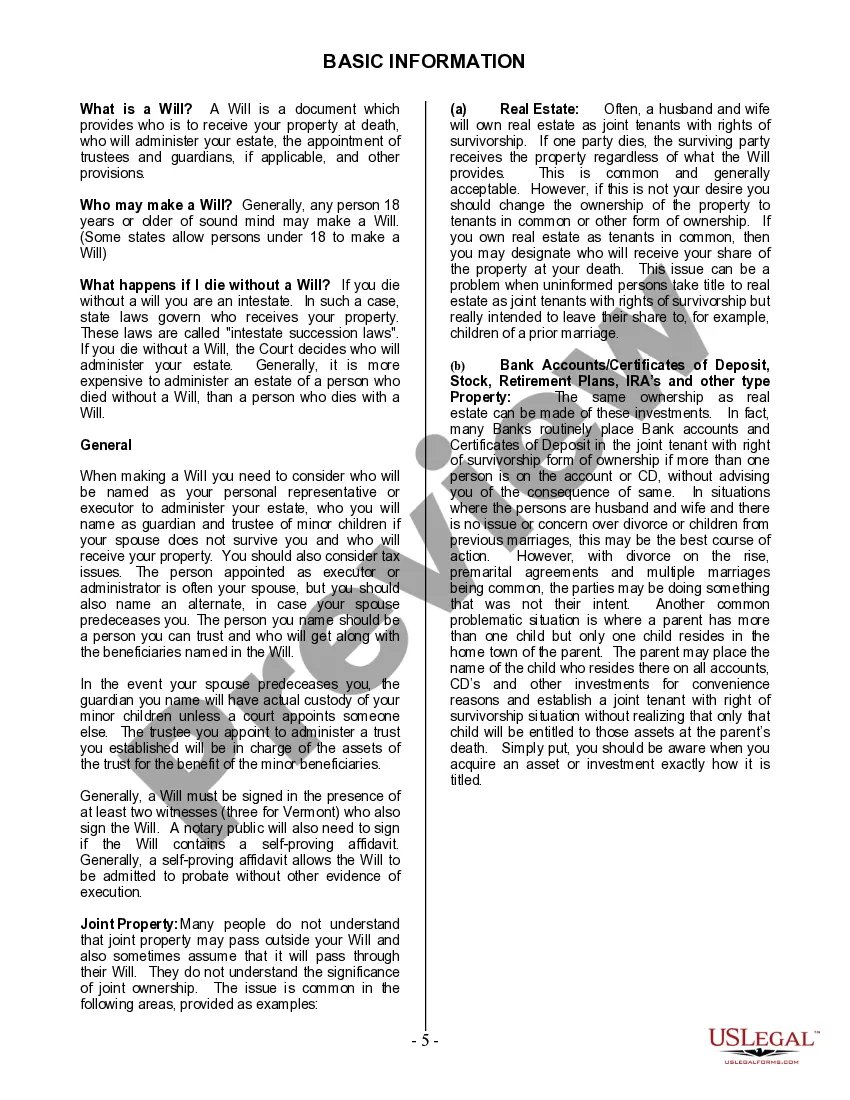
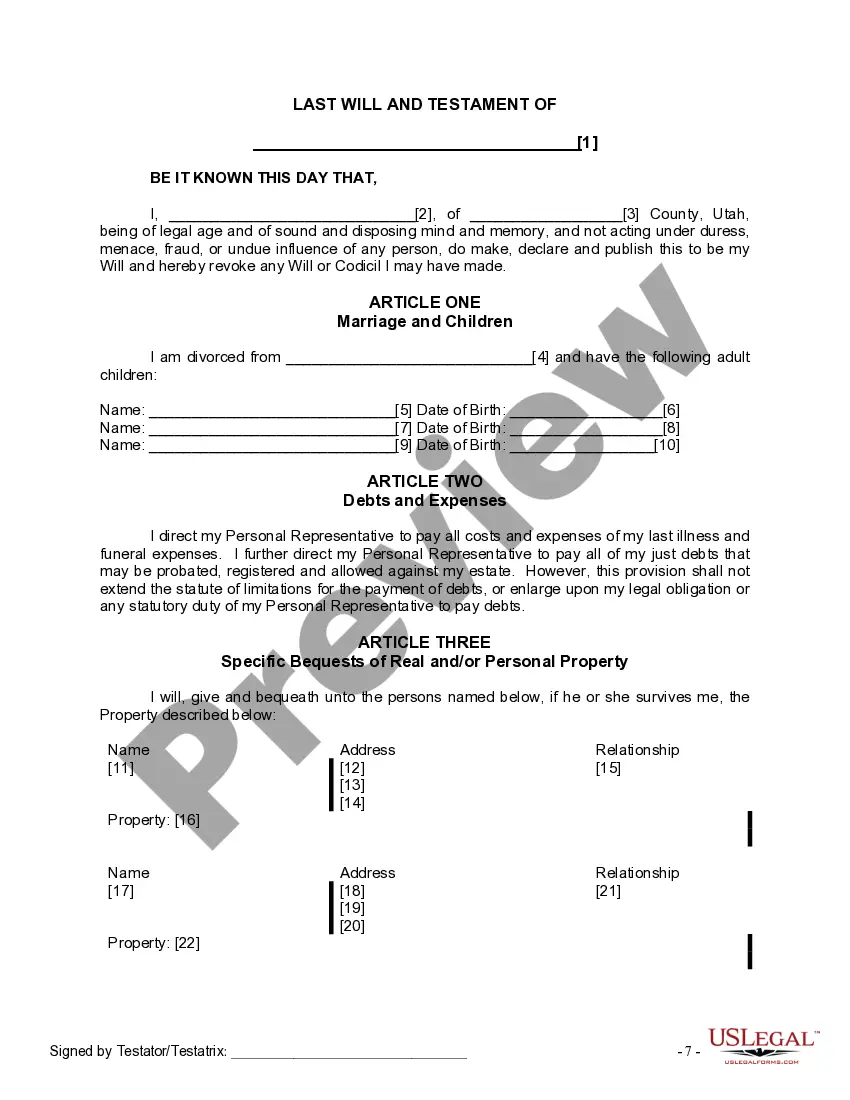
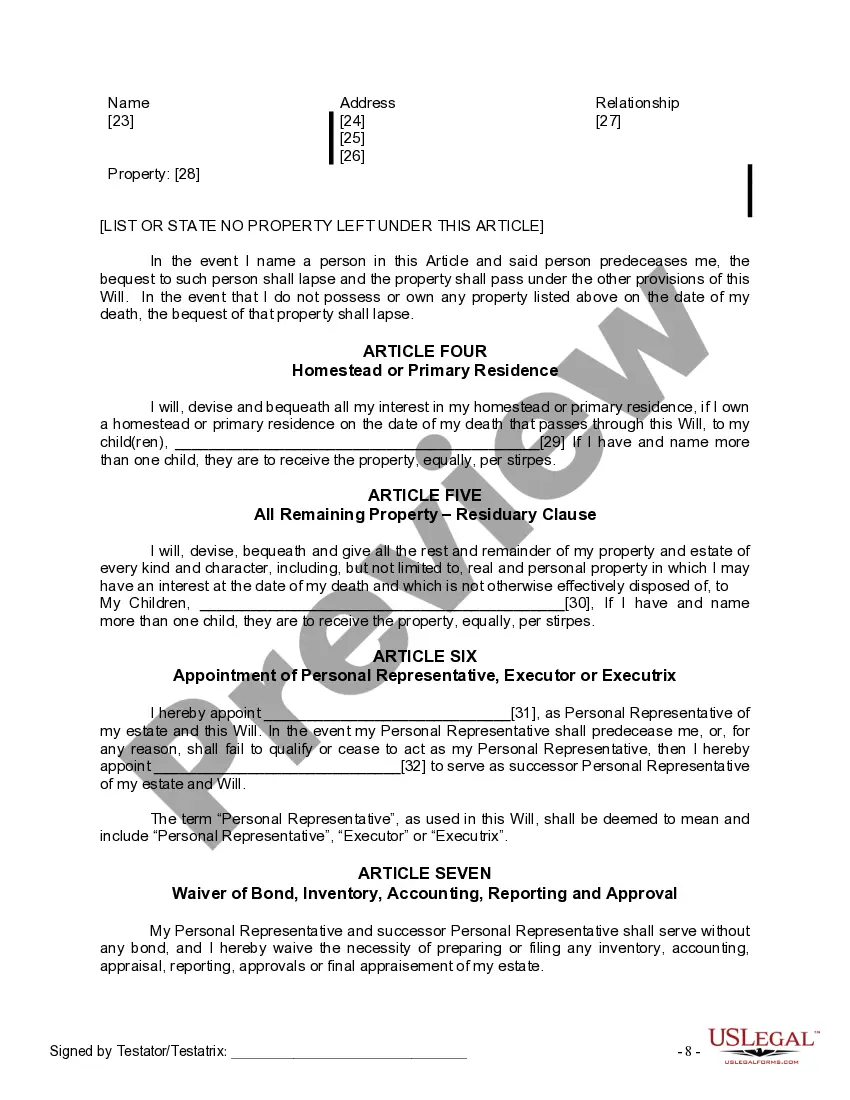
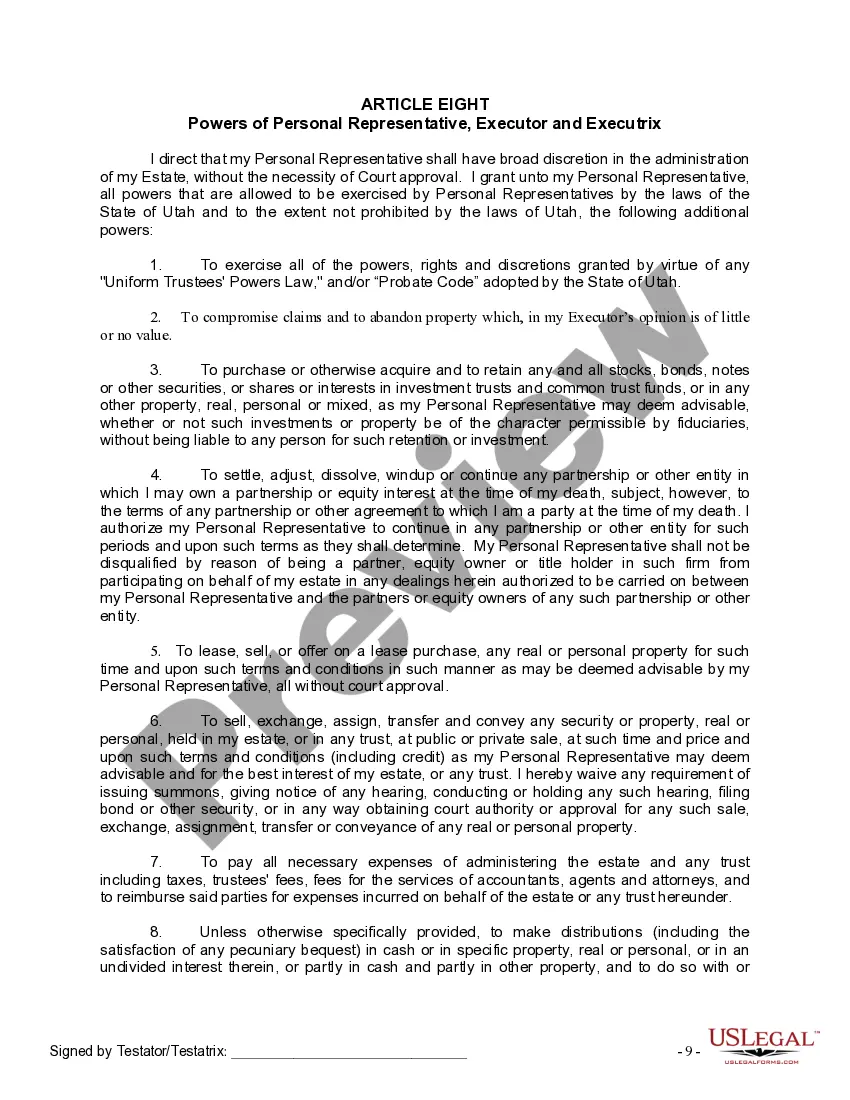
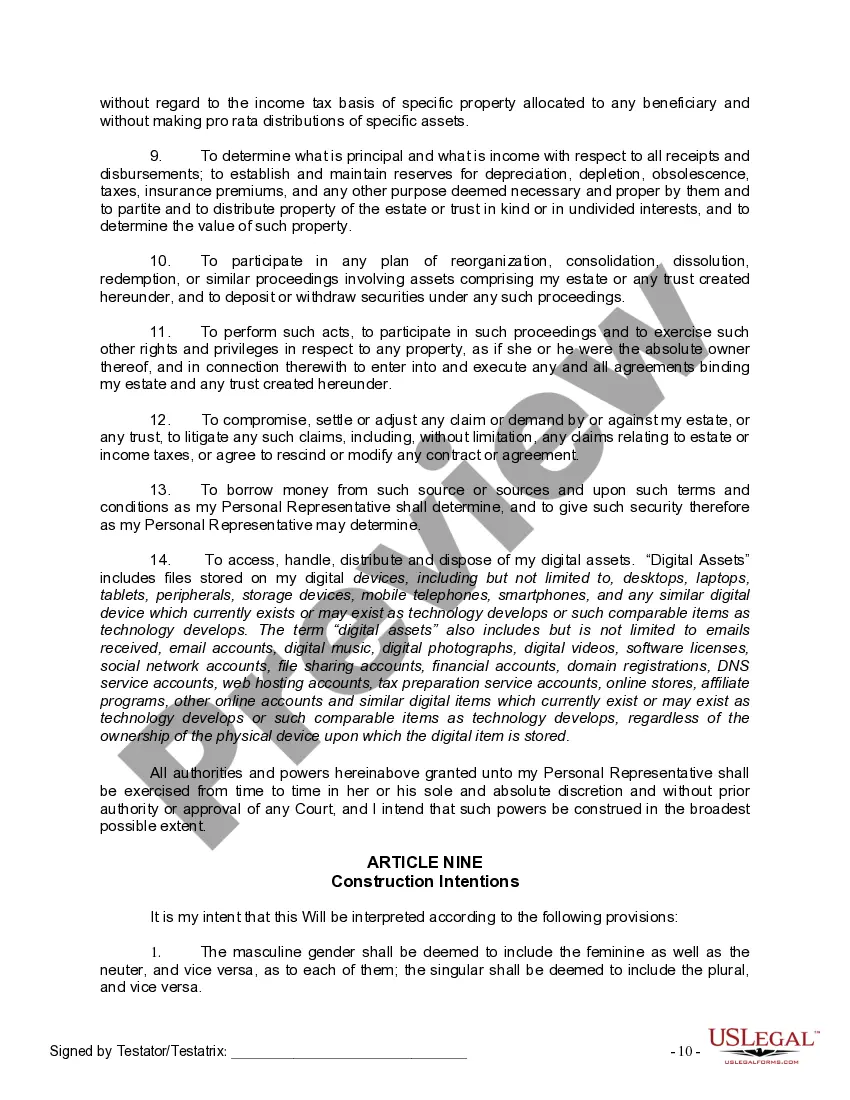
This Last Will and Testament is specifically designed for a divorced individual who has not remarried and has adult children. It enables the individual to outline how their property and assets should be distributed upon their death, including the appointment of a personal representative or executor. This form differs from general wills as it takes into account the individual's unique family dynamics, particularly the absence of a current spouse and the presence of adult children.
Key components of this form
- Your information: Includes your name and county of residence.
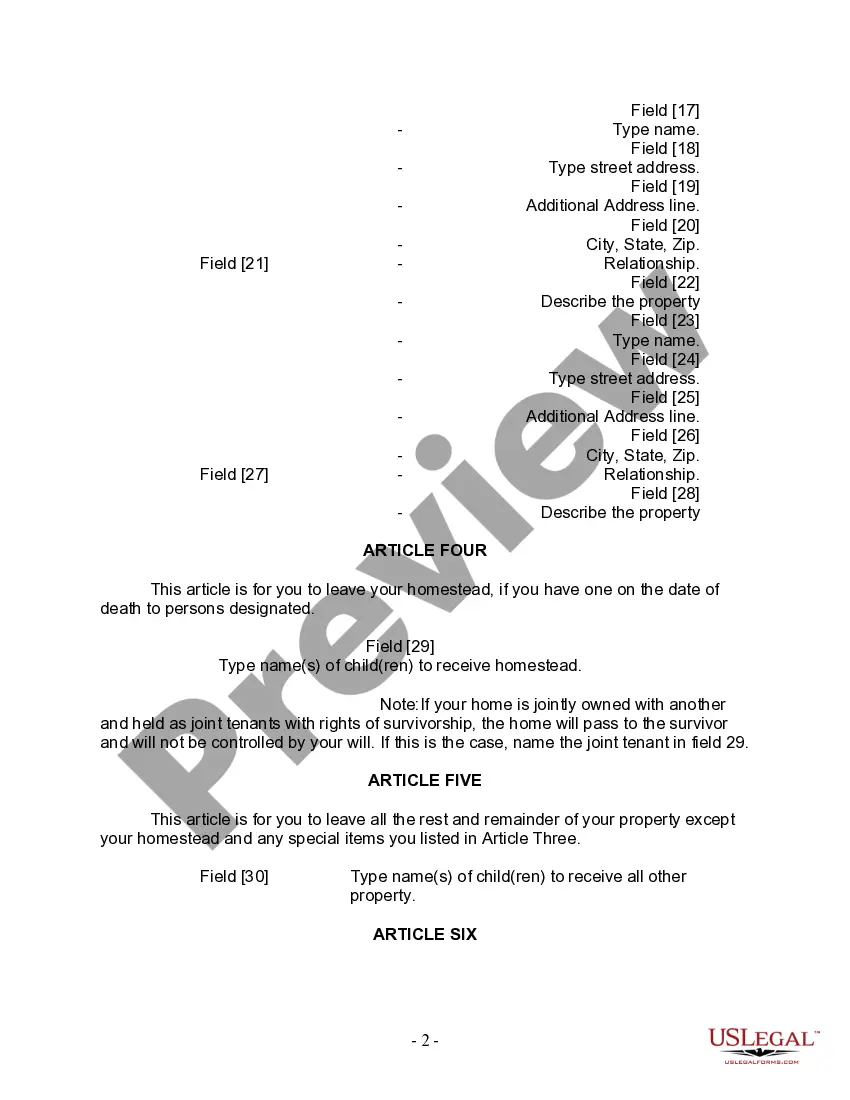
- Appointment of a personal representative: Designate someone to manage your estate after your death.
- Distribution of property: Specify how your assets, including specific bequests and your homestead, will be divided among your adult children.
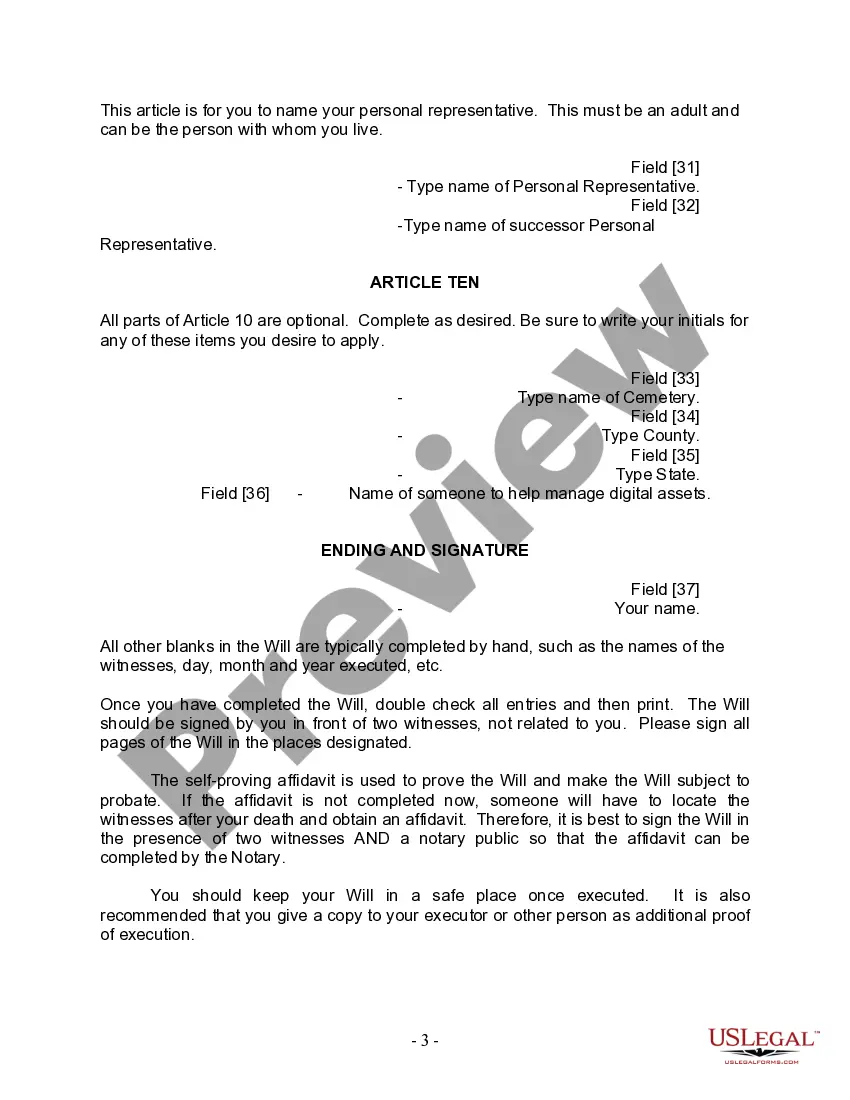
- Witness requirements: Instructions on how to properly sign and witness the will.
- Self-proving affidavit: Allows the will to be accepted in probate without further witness verification, if notarized.

When this form is needed
This form should be used when a divorced person without a current spouse wishes to specify the distribution of assets after their death. It is particularly relevant for individuals who have adult children and want to ensure their wishes reflect their family circumstances, especially in light of previous marriages and the potential complexities that may arise from them.
Who can use this document
- Individuals who are divorced and have not remarried.
- Parents of adult children who wish to designate how their assets should be distributed.
- Anyone looking for a customized will that considers their unique family situation.
- Individuals wanting to ensure their estate is handled according to their specific wishes.
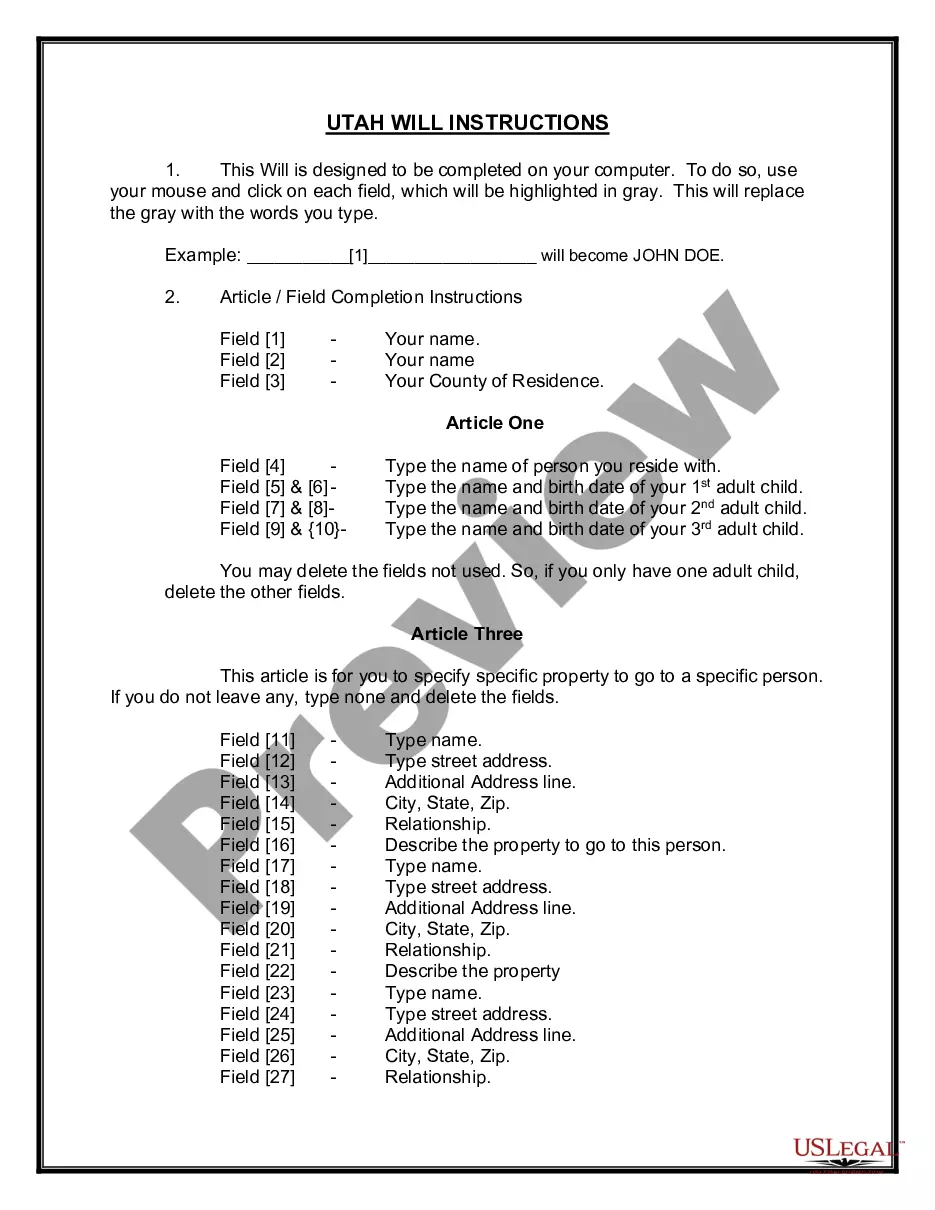
Instructions for completing this form
- Begin by entering your full name and county of residence in the designated fields.
- Specify your ex-spouse's name and the names and birthdates of your adult children.
- Designate your personal representative, ensuring that they are an adult you trust.
- Outline how you want your property to be divided among your children, including any specific items or your homestead.
- Sign the will in the presence of two witnesses who are not related to you or named in the will, and have it notarized if required.
Is notarization required?
Yes, this form must be notarized to be legally valid. It is advisable to sign the will in the presence of two witnesses and a notary public, which allows for the completion of a self-proving affidavit. This can expedite the probate process by eliminating the need to locate witnesses after your passing.
Get your form ready online
Our built-in tools help you complete, sign, share, and store your documents in one place.
Make edits, fill in missing information, and update formatting in US Legal Forms—just like you would in MS Word.
Download a copy, print it, send it by email, or mail it via USPS—whatever works best for your next step.
Sign and collect signatures with our SignNow integration. Send to multiple recipients, set reminders, and more. Go Premium to unlock E-Sign.
If this form requires notarization, complete it online through a secure video call—no need to meet a notary in person or wait for an appointment.
We protect your documents and personal data by following strict security and privacy standards.

Make edits, fill in missing information, and update formatting in US Legal Forms—just like you would in MS Word.

Download a copy, print it, send it by email, or mail it via USPS—whatever works best for your next step.

Sign and collect signatures with our SignNow integration. Send to multiple recipients, set reminders, and more. Go Premium to unlock E-Sign.

If this form requires notarization, complete it online through a secure video call—no need to meet a notary in person or wait for an appointment.

We protect your documents and personal data by following strict security and privacy standards.
Common mistakes to avoid
- Failing to have the will witnessed properly, which can invalidate the document.
- Neglecting to specify the distribution of certain assets, leading to ambiguity.
- Using outdated versions of the will, which may not align with current state laws.
- Not keeping the will in a safe or easily accessible location for your loved ones.
Why use this form online
- Convenience of filling out your will from home without the need for in-person legal consultations.
- Ability to easily edit and customize your will to reflect your current wishes.
- Access to a legally vetted form prepared by licensed attorneys, ensuring compliance with state laws.
- Quick downloadable options, allowing you to complete the process efficiently.
Summary of main points
- The Last Will and Testament for Divorced Person Not Remarried with Adult Children is essential for ensuring your estate is distributed according to your wishes.
- It is crucial to appoint a reliable personal representative to handle your estate's affairs.
- All necessary signatures and notarizations must be completed to ensure legal validity.
Looking for another form?
Form popularity
FAQ
Notarization is not required in California to make your will legal. Some states allow you to make your will self-proving by signing a special affidavit in front of a notary that accompanies the will. However, California allows your will to be self-proved without a self-proving affidavit.
In short, the executor makes the majority of the decisions regarding the distribution of the estate. Although they must follow the instructions in the deceased's Will, sometimes they do have the power to make certain decisions.In these cases, the court can appoint a new executor.
The short answer is yes, online wills are legitimate as long as you ensure they comply with federal and state laws. Online will companies hire licensed attorneys and legal professionals to carefully word their estate planning documents so that each is legally binding.
What makes a will legal?The will must be signed by at least two witnesses. The witnesses must watch you sign the will, though they don't need to read it. Your witnesses, in most states, must be people who won't inherit anything under the will.