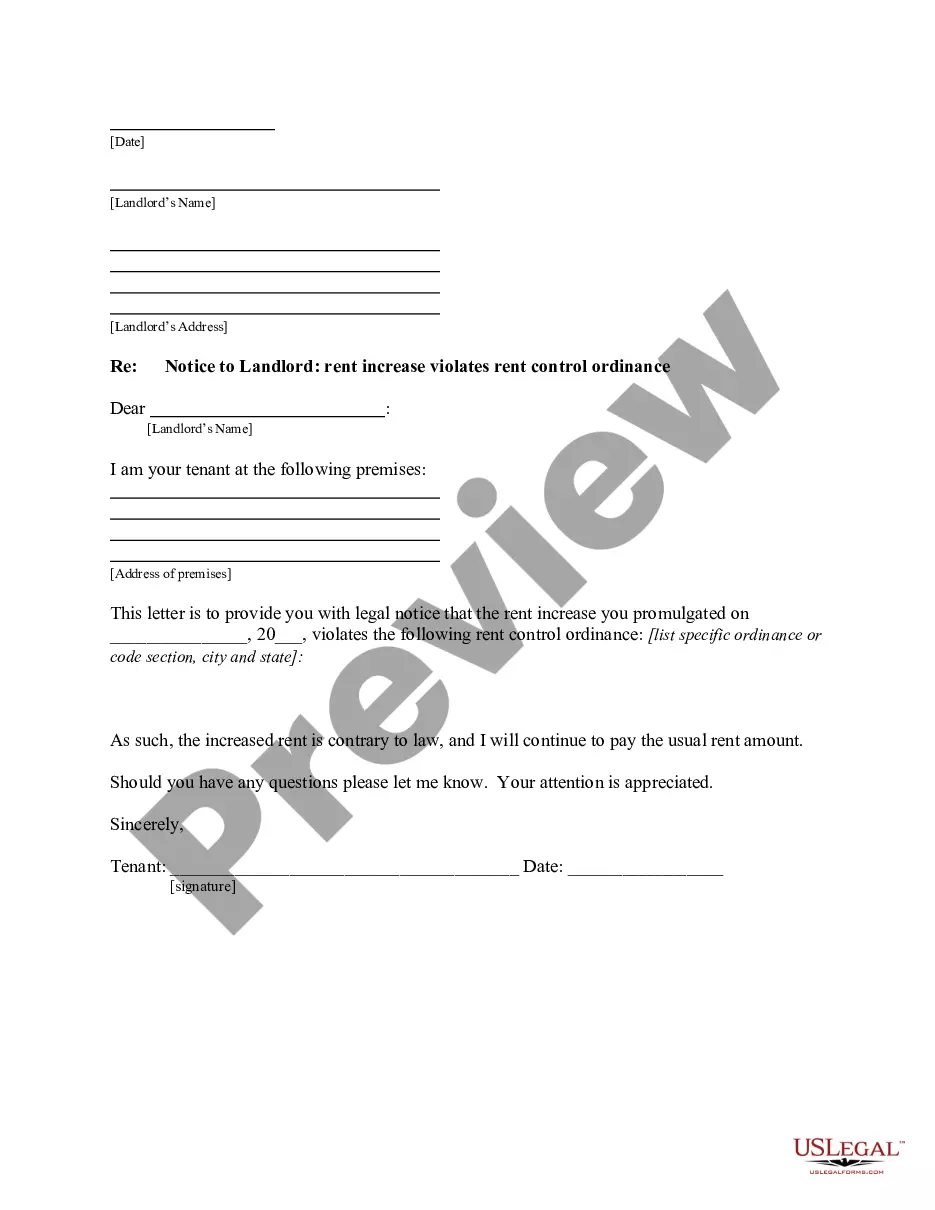
Utah Letter from Tenant to Landlord containing Notice to landlord to withdraw improper rent increase due to violation of rent control ordinance
Overview of this form
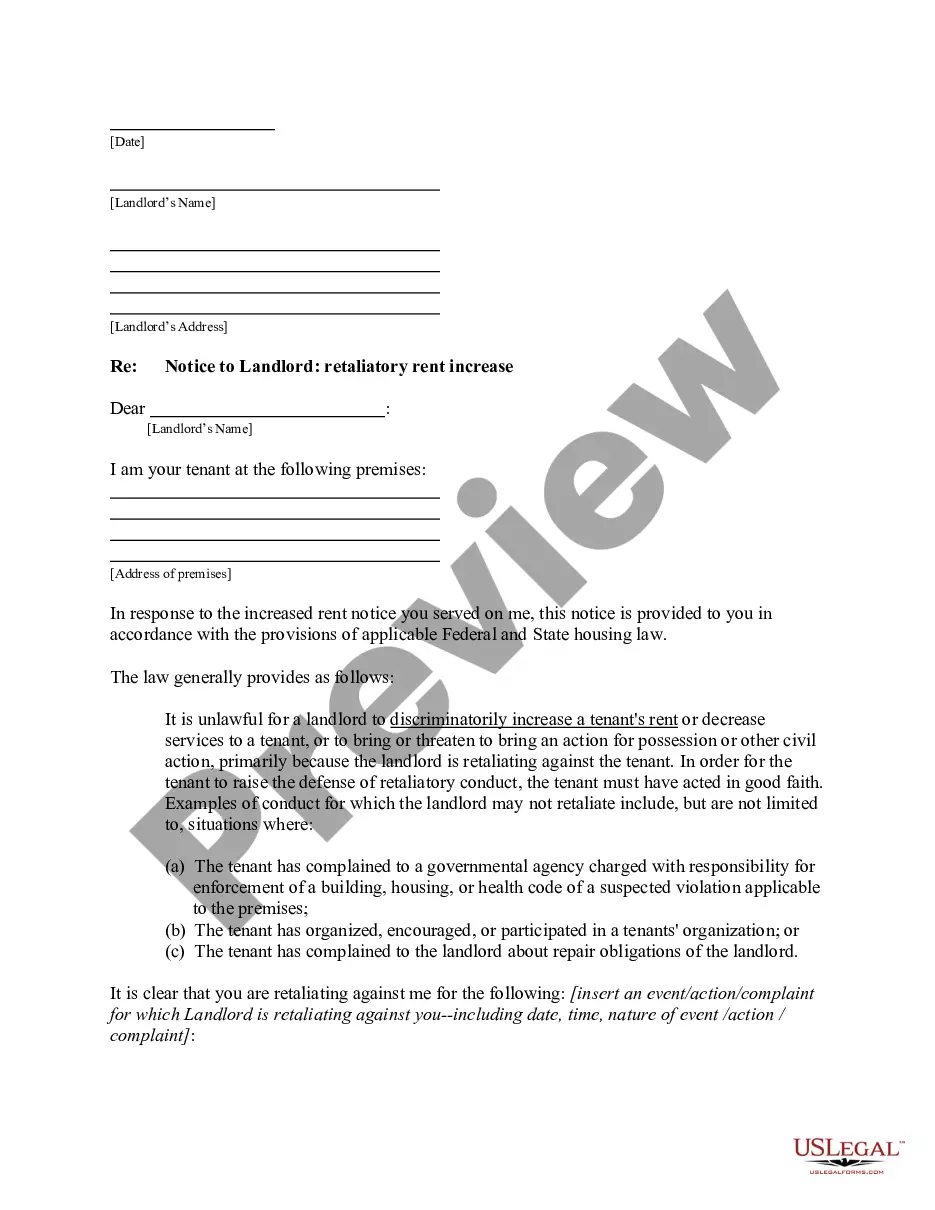
This form is a letter from the tenant to the landlord that contains a notice requesting the landlord to withdraw an improper rent increase. The notice is crucial for informing the landlord that the rent increase may violate local rent control ordinances. This form specifically addresses situations where a rent increase is deemed unlawful under these regulations, distinguishing it from general rent adjustment requests.
Key components of this form
- Tenant's contact information and signature
- Landlord's name and address
- Statement of the improper rent increase
- Reference to the applicable rent control ordinance
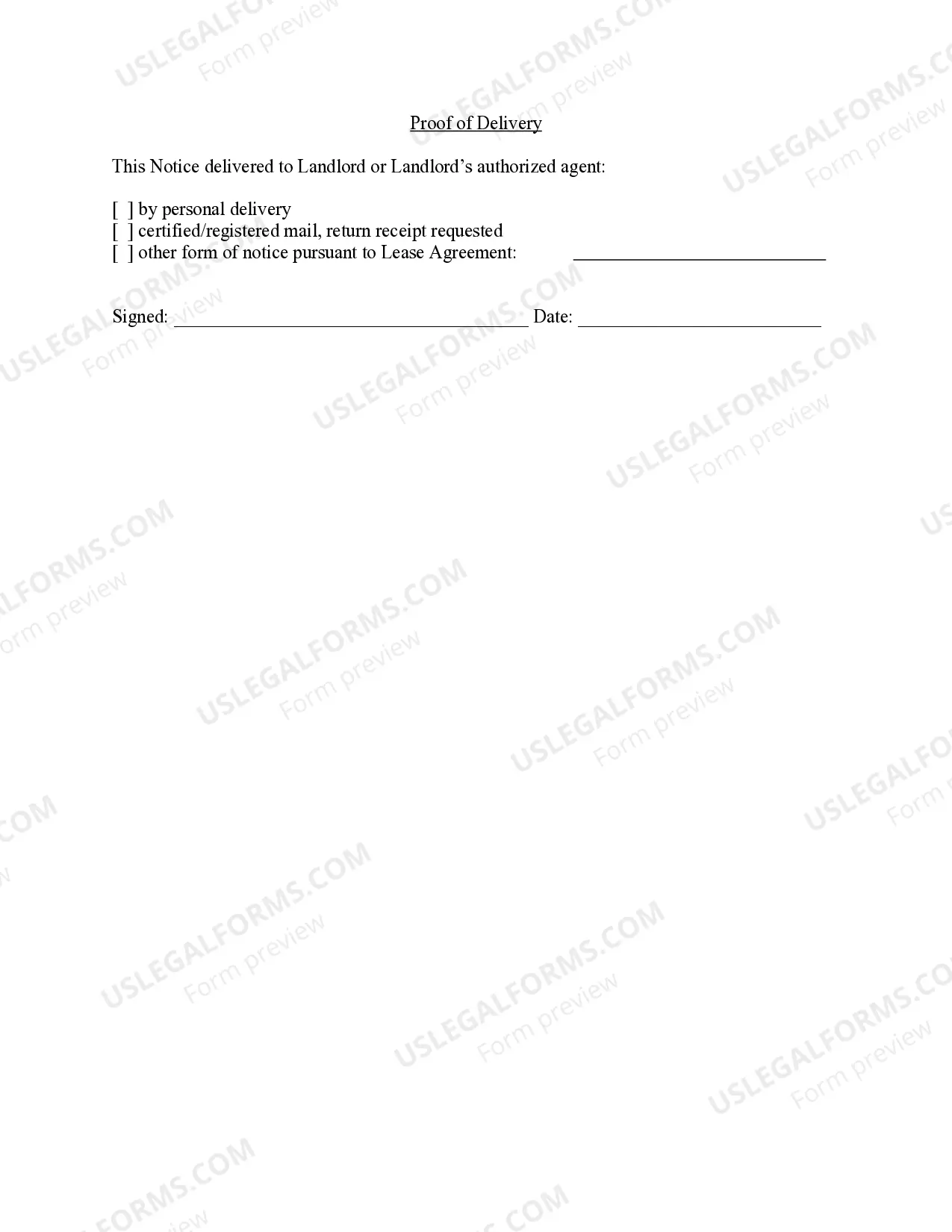
- Proof of delivery section for record-keeping

When to use this document
This form is used when a tenant believes that their landlord has increased the rent unlawfully in conflict with established rent control laws. It is applicable in situations where tenants want to officially document their concern and formally request the landlord to reverse the increase. This notice serves as a protective measure to ensure tenants do not pay more than what is legally permissible.
Who should use this form
- Tenants experiencing an improper rent increase
- Individuals living in areas with rent control regulations
- Renters who wish to formally notify their landlord of legal violations
How to prepare this document
- Identify the parties by filling in the tenant's and landlord's names and addresses.
- Clearly state the details of the improper rent increase and how it violates rent control ordinances.
- Sign the letter to confirm it is from the tenant.
- Select the method of delivery: personal delivery or certified mail.
- Keep a copy of the delivered notice for your records.
Does this document require notarization?
This form usually doesn’t need to be notarized. However, local laws or specific transactions may require it. Our online notarization service, powered by Notarize, lets you complete it remotely through a secure video session, available 24/7.
Get your form ready online
Our built-in tools help you complete, sign, share, and store your documents in one place.
Make edits, fill in missing information, and update formatting in US Legal Forms—just like you would in MS Word.
Download a copy, print it, send it by email, or mail it via USPS—whatever works best for your next step.
Sign and collect signatures with our SignNow integration. Send to multiple recipients, set reminders, and more. Go Premium to unlock E-Sign.
If this form requires notarization, complete it online through a secure video call—no need to meet a notary in person or wait for an appointment.
We protect your documents and personal data by following strict security and privacy standards.

Make edits, fill in missing information, and update formatting in US Legal Forms—just like you would in MS Word.

Download a copy, print it, send it by email, or mail it via USPS—whatever works best for your next step.

Sign and collect signatures with our SignNow integration. Send to multiple recipients, set reminders, and more. Go Premium to unlock E-Sign.

If this form requires notarization, complete it online through a secure video call—no need to meet a notary in person or wait for an appointment.

We protect your documents and personal data by following strict security and privacy standards.
Common mistakes
- Failing to mention the specific rent control ordinance being violated.
- Not including proof of delivery for documentation purposes.
- Omitting personal contact information for follow-up.
Benefits of using this form online
- Easy access to legally sound templates drafted by licensed attorneys.
- Convenient downloadable format for immediate use.
- Editable to fit specific situations and personal details.
Looking for another form?
Form popularity
FAQ
By the law, Utah tenants are required to abide in a certain way. They must follow certain procedures as outlined by the law as well. Tenants also have certain rights that they are entitled to, as well as things they are responsible for. The tenant has the right to dwell in a safe and sanitary housing unit.
Remember you're a business. Do your research. Raise the rent all at once or incrementally. Don't negotiate or ask tenants what they think a fair rent increase would be. Be courteous and firm. Find a template you like. Send a formal letter by certified mail. Give the tenant notice.
If you refuse access to your home If you refuse access for repairs and inspections entirely, you could be breaking your tenancy agreement and putting your health or safety at risk.You could be at risk of section 21 eviction if you rent privately and refuse access for repairs or gas or electrical safety checks.
Tenant's name. Property address. Landlord name and contact information. Date the letter is written. Date the rent increase will take effect. Amount of rent increase. Current cost of rent.
Enacted in 2012, Utah Code § 10-9a-505.5 prevents local governments from adopting excessive limits on the numbers of unrelated persons that can occupy a single residential unit in a single family zone. The minimum number is 4 unrelated persons in most areas, and 3 in cities that contain a university.
In most states, a landlord must give tenants notice at least 30 days before they'll enforce a rent increase. However, in other states like California, the notice can increase to 60 days' notice if the increase is more than 10% of the current rent rate.
Generally, no. The landlord cannot raise the rent during a 12-month lease term. Once a year, HUD calculates the median gross income in each part of the U.S. LIHTC rent amounts are based upon this calculation. If the local average income increases, the LIHTC rent may be increased during the next 12-month lease term.
The Fit Premises Act is the Utah law that governs housing conditions. Under this law, a landlord must provide safe and livable housing. This means the landlord must rent housing that is up to code.If you break something in your apartment or cause damage to the rental, you may have to pay for the repairs.