Tennessee Concrete Mason Contract for Contractor
What is this form?
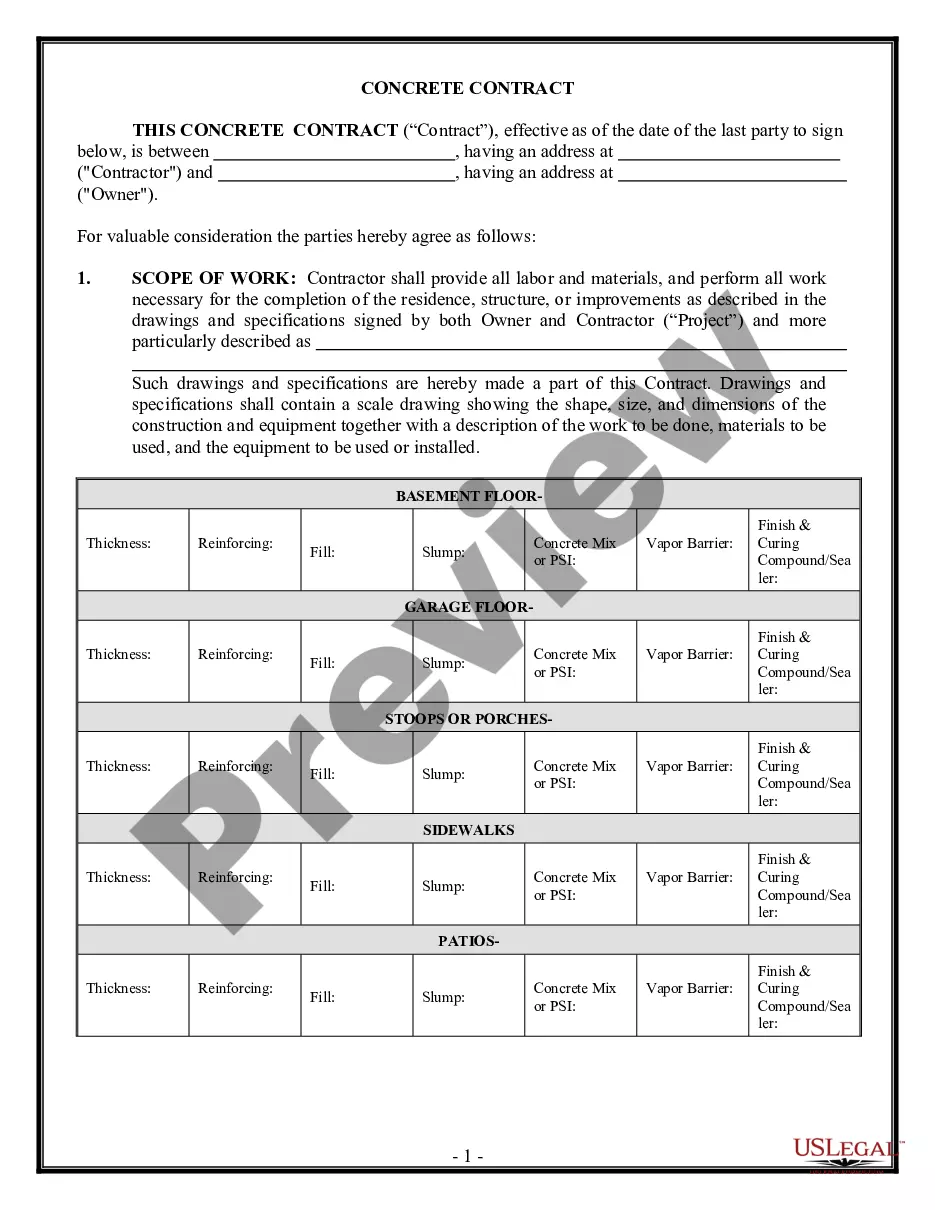
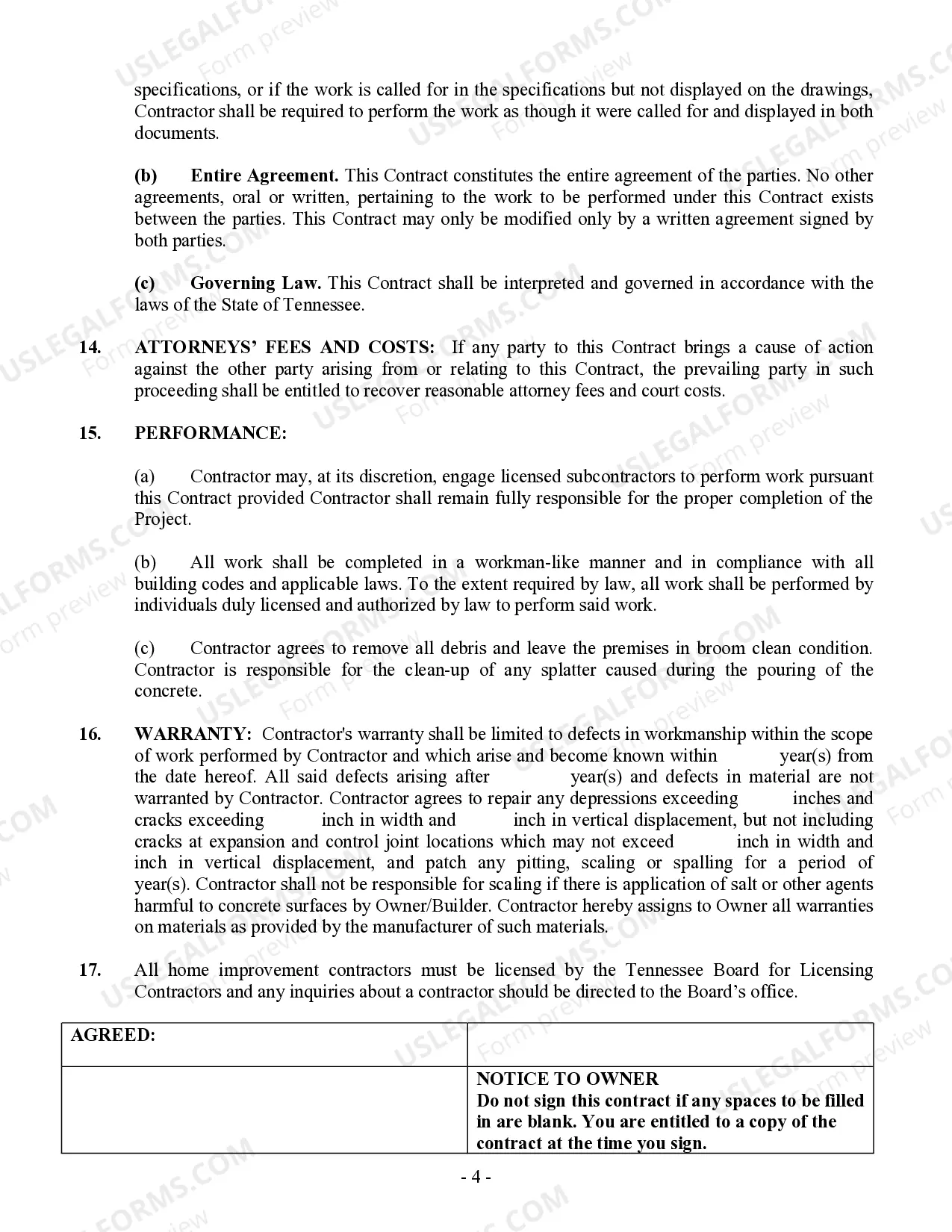
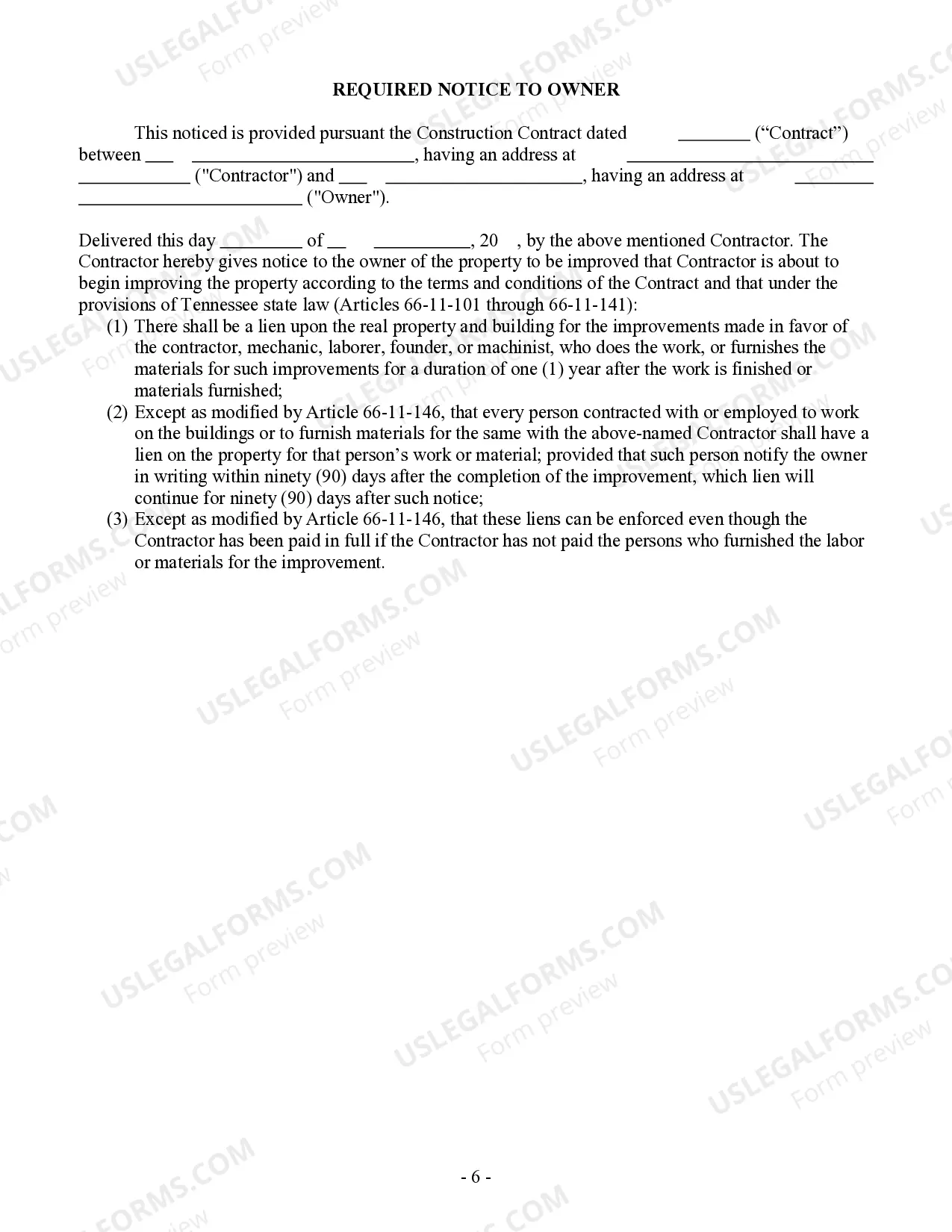
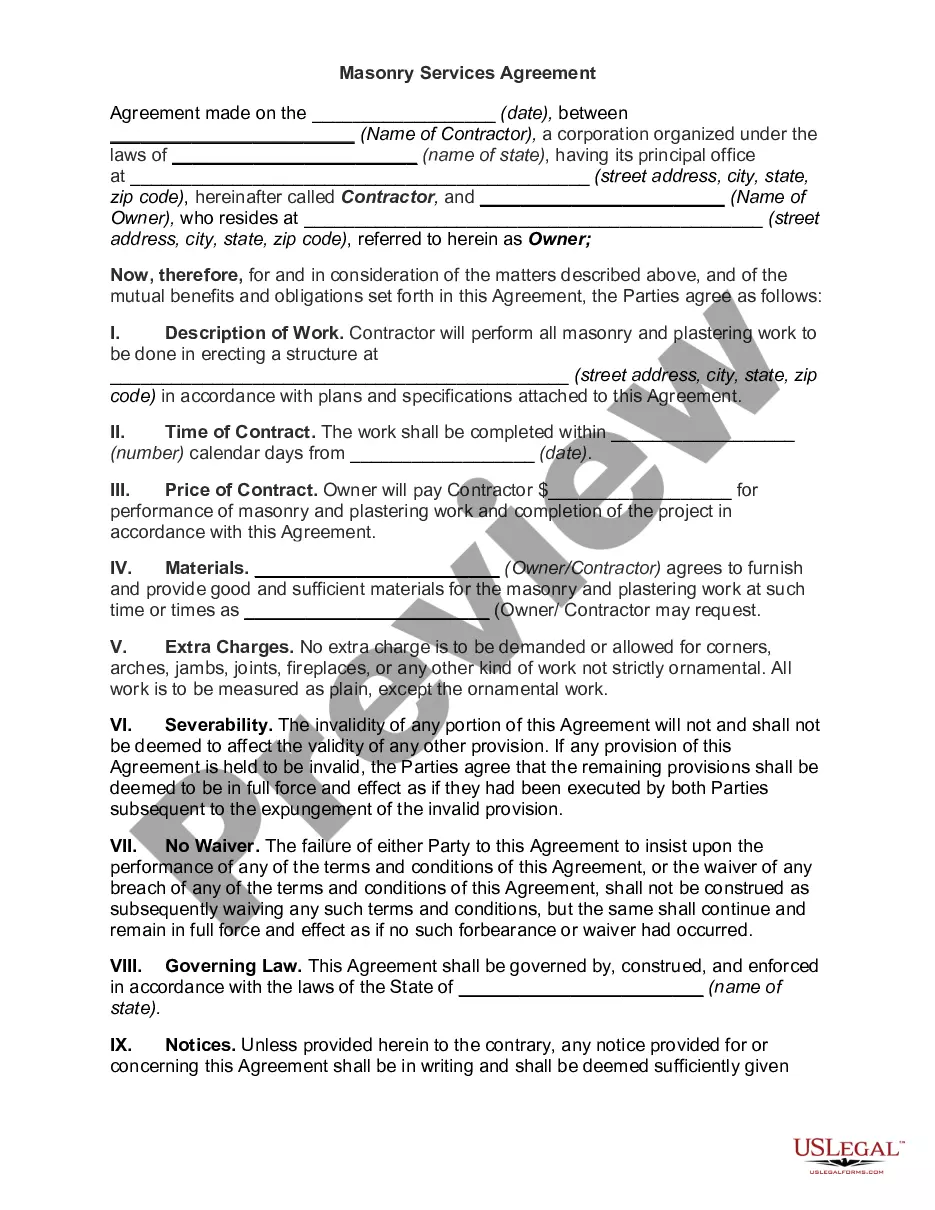
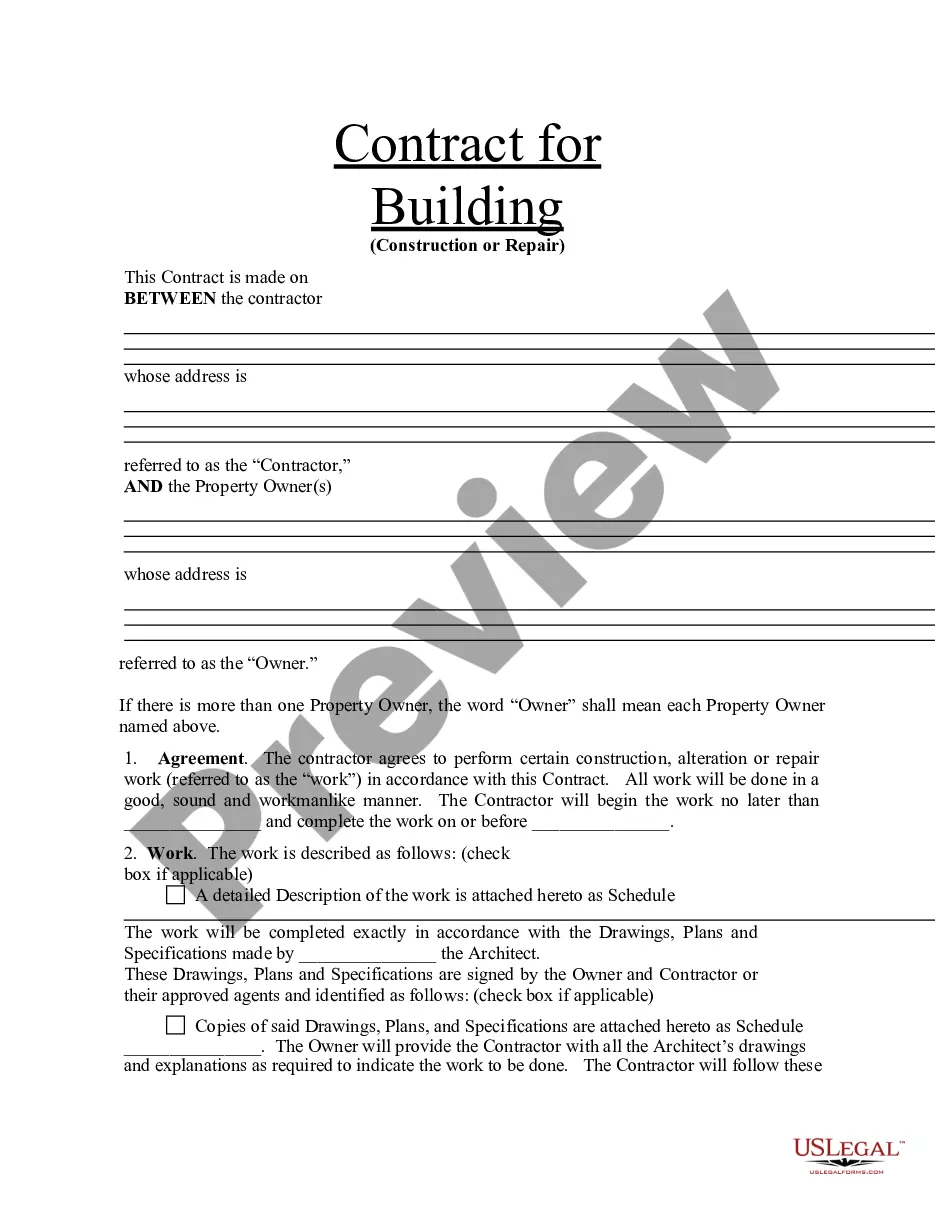
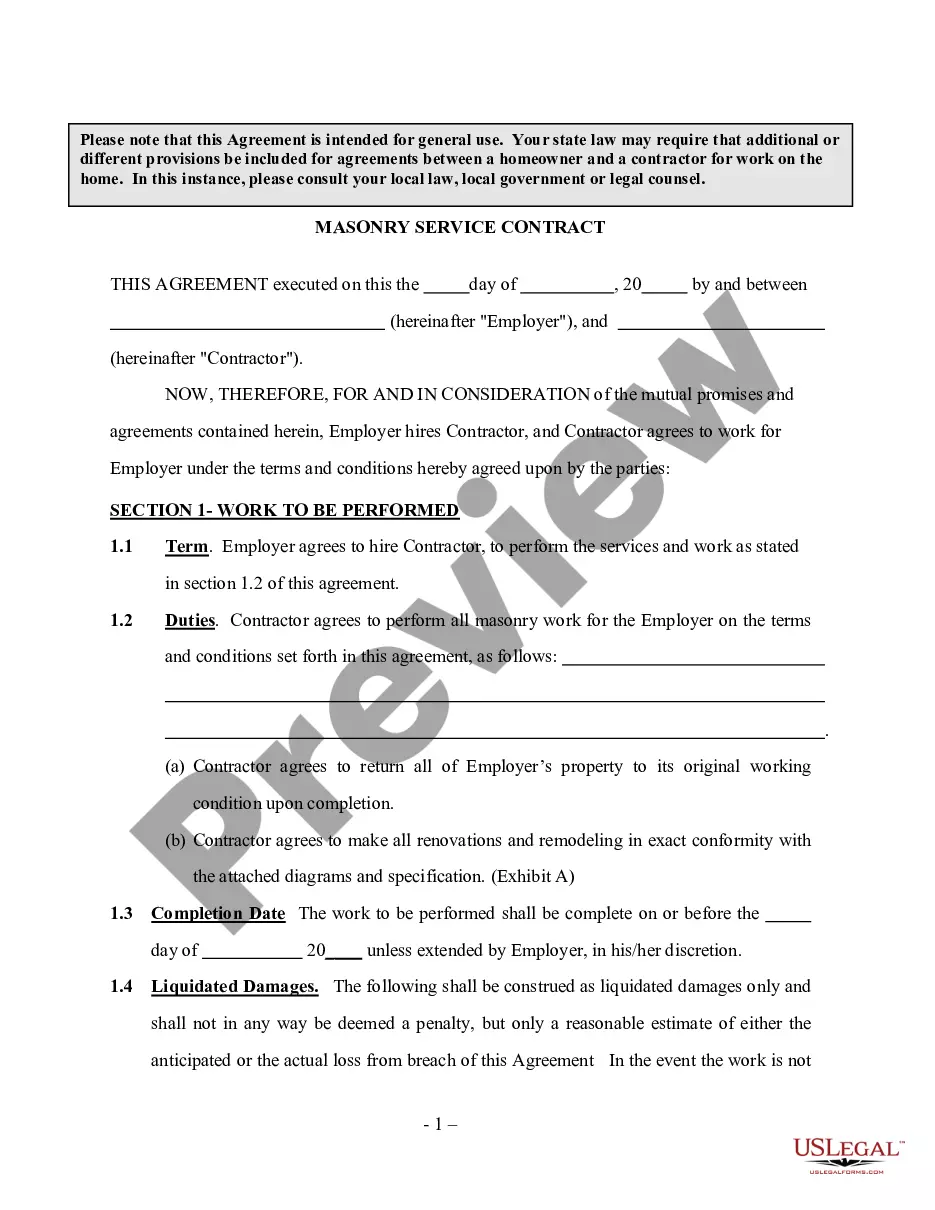
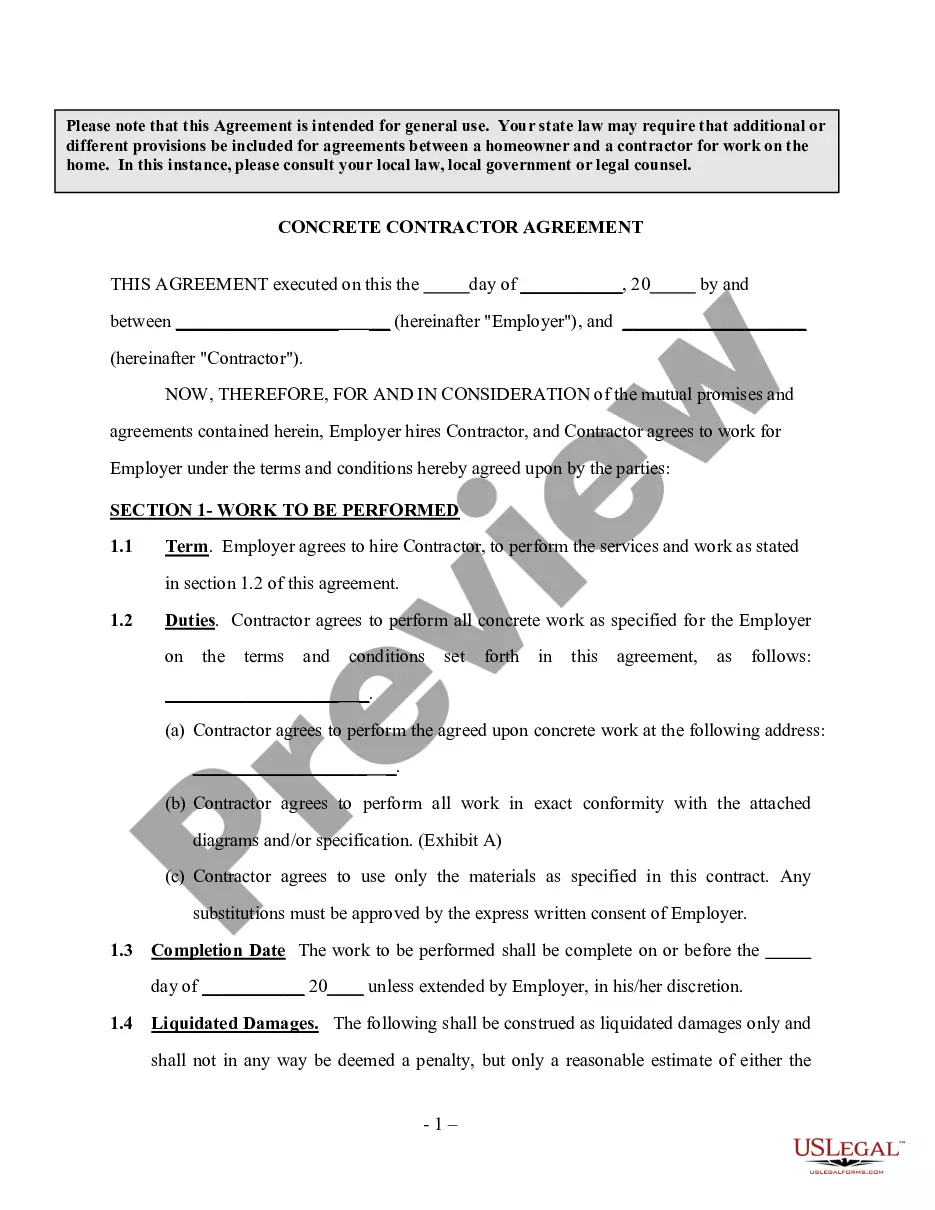
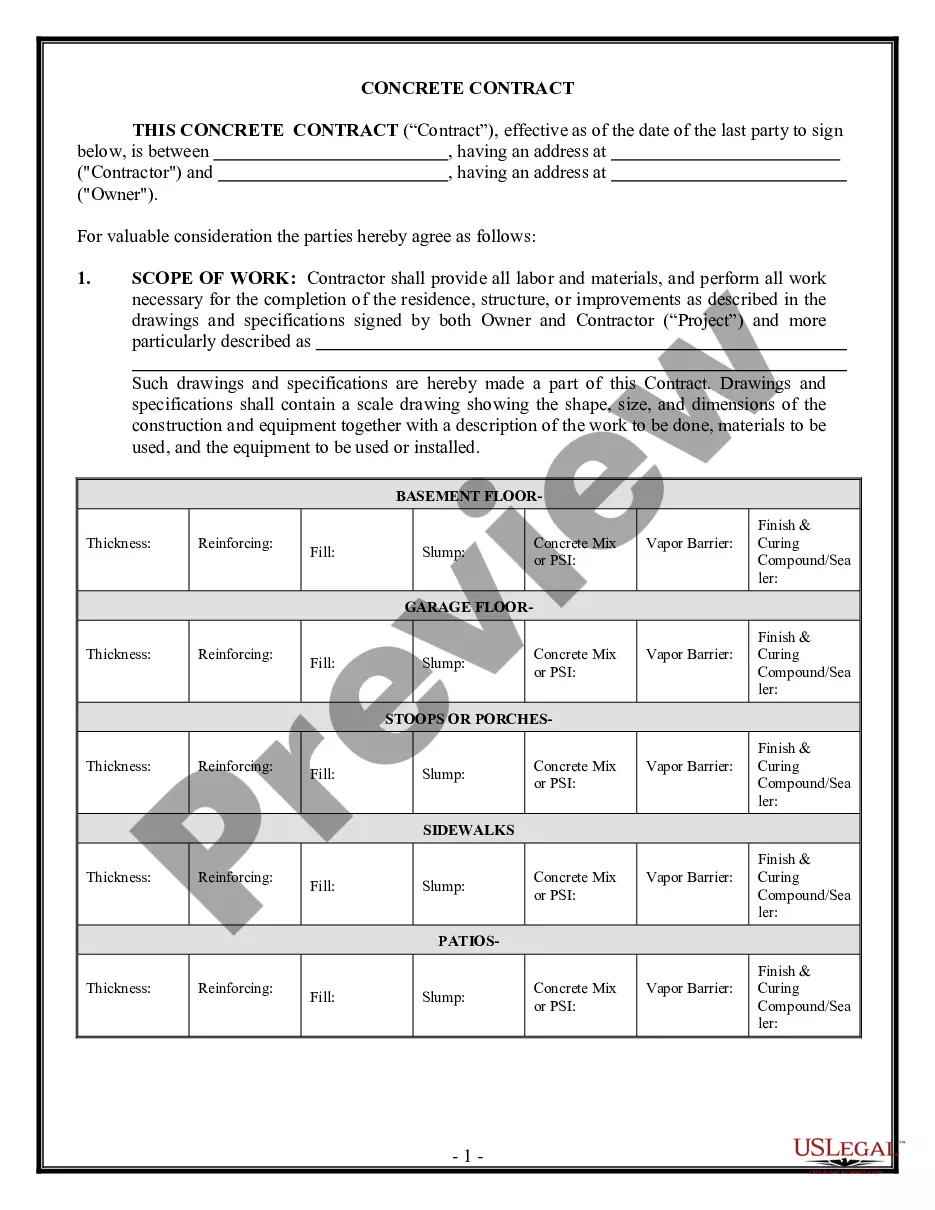
The Concrete Mason Contract for Contractor is a legal document used between Concrete Mason Contractors and Property Owners for construction projects, specifically involving concrete work. This contract outlines the terms of the agreement, including payment arrangements (either cost-plus or fixed fee), responsibilities concerning permits, insurance, and site conditions, ensuring compliance with Tennessee laws. It serves to protect both parties by clearly defining expectations and legal obligations throughout the project lifecycle.
What’s included in this form
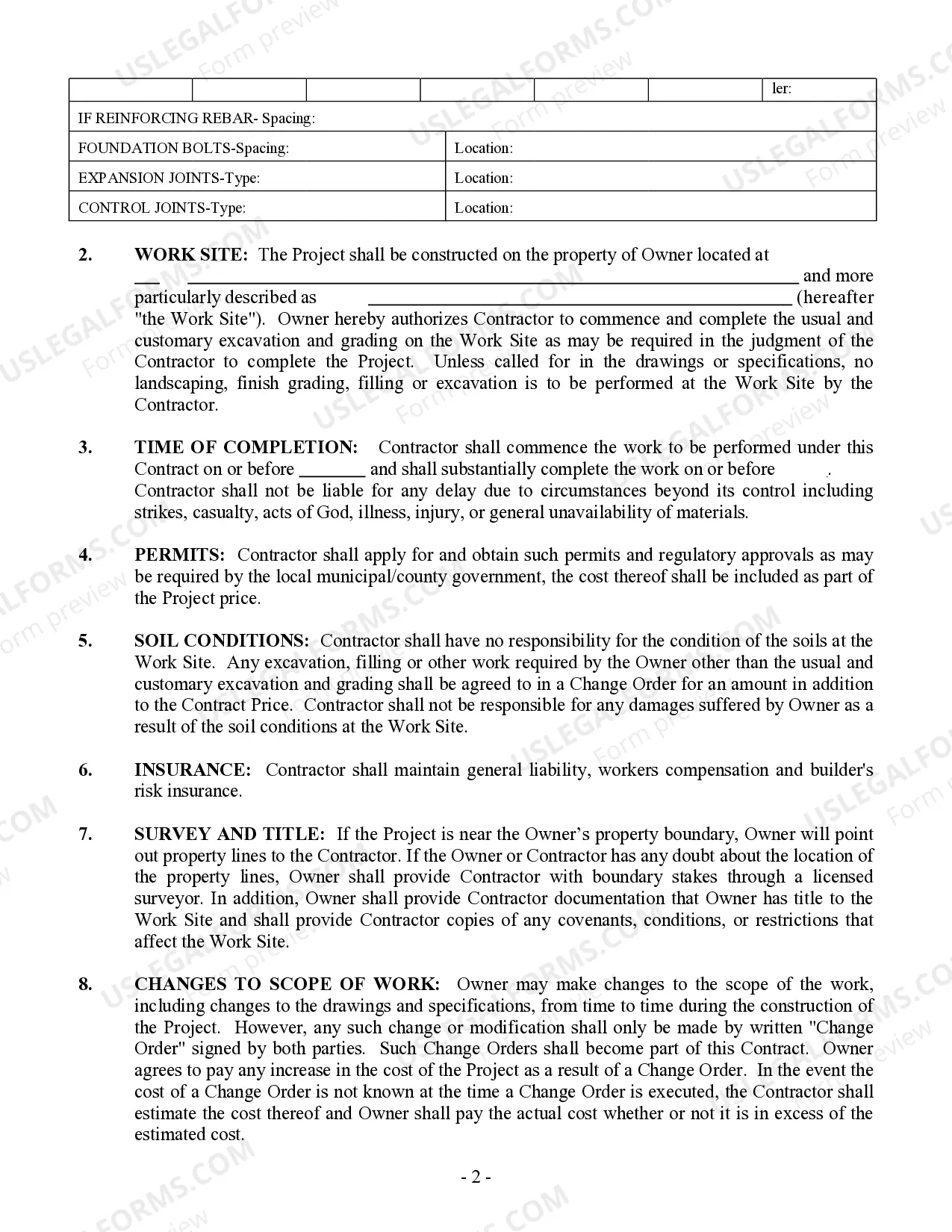
- Permits and regulatory approvals required for the project.
- Conditions of the soil at the work site and related responsibilities.
- Insurance requirements for the contractor, including general liability and workers compensation.
- Procedures for making changes to the scope of work, documented through Change Orders.
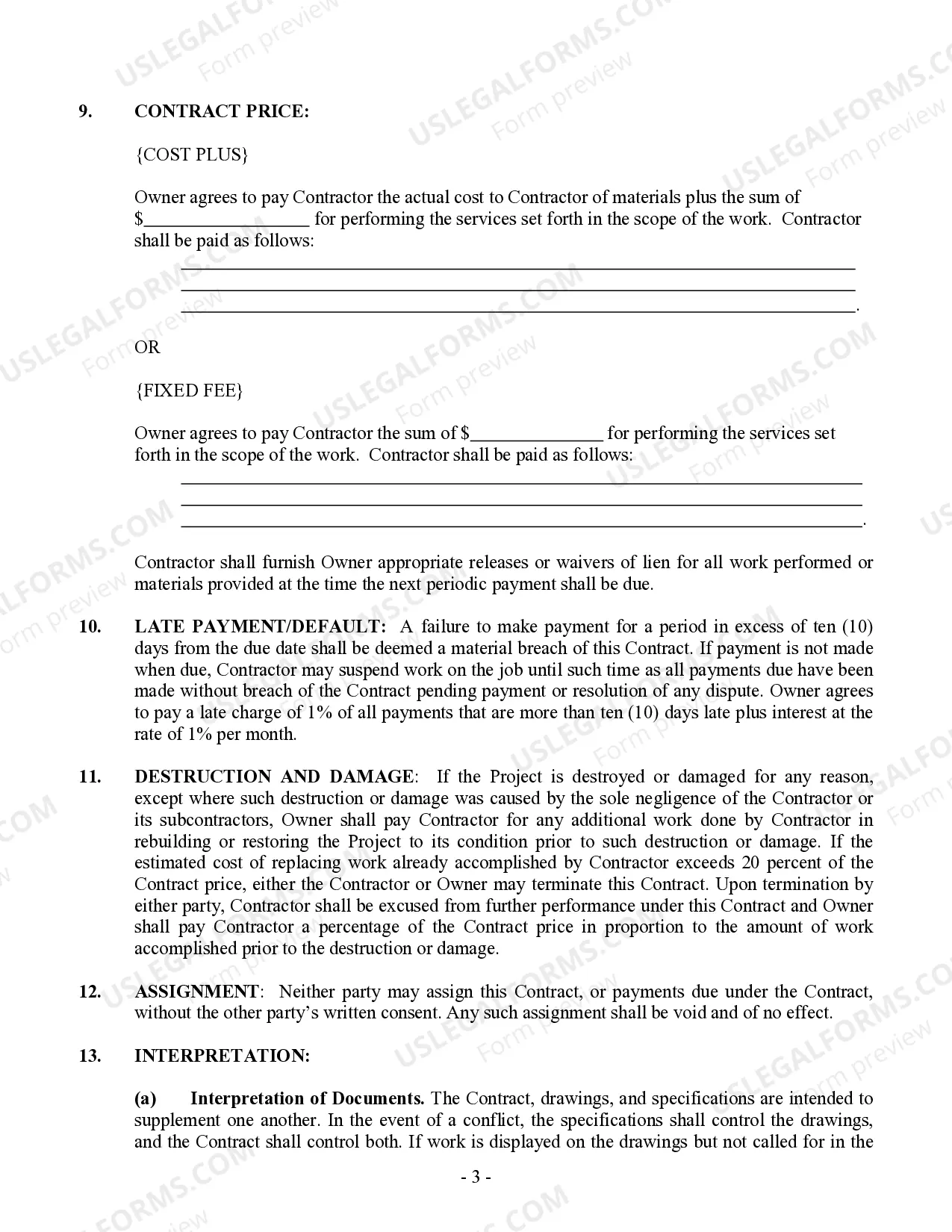
- Contract price terms, including cost calculations and late payment penalties.
- Clauses regarding destruction or damage to the work and responsibilities of the parties.
- Legal interpretations and assignment of the contract rights.
When this form is needed
This form should be used whenever a Concrete Mason Contractor is hired for a project involving concrete installation or repair. It is particularly useful when both parties want to establish clear terms regarding payments, project specifications, and responsibilities related to permits and site conditions. Use this contract to minimize disputes and ensure all parties are in agreement before commencing work.
Intended users of this form
- Concrete Mason Contractors looking to formalize agreements with property owners.
- Property owners who wish to hire a contractor for concrete-related work.
- Parties involved in construction projects wanting to outline specific expectations and legal protections.
- Individuals and businesses operating in Tennessee, as this contract complies with local laws.
Instructions for completing this form
- Identify the parties involved, including legal names and contact information for both the contractor and the property owner.
- Specify the work scope and project details, including start and completion dates.
- Outline the payment structure, whether cost-plus or fixed fee, including amounts and due dates.
- Include provisions for obtaining necessary permits, insurance coverage, and handling soil conditions.
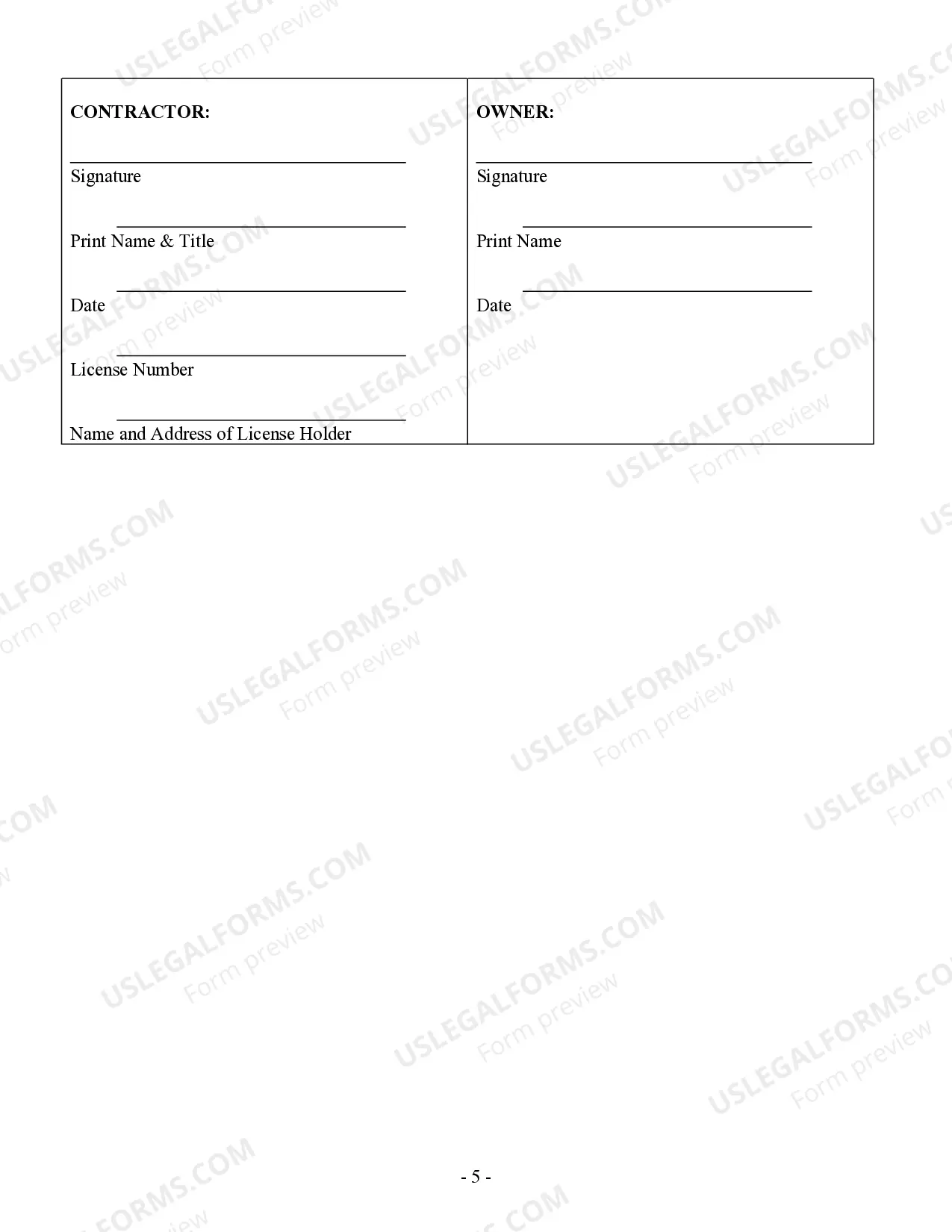
- Sign and date the document to make it legally binding for both parties.
Does this form need to be notarized?
Notarization is generally not required for this form. However, certain states or situations might demand it. You can complete notarization online through US Legal Forms, powered by Notarize, using a verified video call available anytime.
Get your form ready online
Our built-in tools help you complete, sign, share, and store your documents in one place.
Make edits, fill in missing information, and update formatting in US Legal Forms—just like you would in MS Word.
Download a copy, print it, send it by email, or mail it via USPS—whatever works best for your next step.
Sign and collect signatures with our SignNow integration. Send to multiple recipients, set reminders, and more. Go Premium to unlock E-Sign.
If this form requires notarization, complete it online through a secure video call—no need to meet a notary in person or wait for an appointment.
We protect your documents and personal data by following strict security and privacy standards.

Make edits, fill in missing information, and update formatting in US Legal Forms—just like you would in MS Word.

Download a copy, print it, send it by email, or mail it via USPS—whatever works best for your next step.

Sign and collect signatures with our SignNow integration. Send to multiple recipients, set reminders, and more. Go Premium to unlock E-Sign.

If this form requires notarization, complete it online through a secure video call—no need to meet a notary in person or wait for an appointment.

We protect your documents and personal data by following strict security and privacy standards.
Avoid these common issues
- Failing to specify the complete payment terms can lead to misunderstandings.
- Not including details about maintaining insurance during the project.
- Omitting the procedures for making changes through Change Orders.
Benefits of completing this form online
- Immediate access to a legally sound contract template tailored for Tennessee.
- Editable fields make customization easy to meet specific project requirements.
- Convenient download options allow for quick printing and sharing.
Legal use & context:
- This contract is enforceable under Tennessee law and serves to protect the rights of both parties.
- In case of disputes, the contract provides a framework for resolution and potential recovery of costs.
What to keep in mind
- The Concrete Mason Contract establishes clear terms for construction projects involving concrete work.
- It protects both contractor and owner by formalizing expectations and responsibilities.
- Understand and follow Tennessee-specific legal requirements when using this form.
Looking for another form?
Form popularity
FAQ
Tennessee. A handyman in Tennessee is not required to hold a state license unless the job they are working on is worth more than $25,000. A home improvement license is required for remodeling jobs worth between $3,000 and $24,999.
It is required to repair, replace, remodel, alter, conversion, modernization, improvement, or addition to any land or building, such as, driveways, swimming pools, porches, garages, landscaping, fences, fall-out shelters, roofing, painting and other improvements adjacent to the dwelling (see T.C.A.
A homeowner of the residential property may perform work themselves ( individual use), without a contractor's license, as long as the residential structure is not open to the public; or for sale, lease or rent). Allowed one homeowner permit once every two (2) years.
A Tennessee contractor's license is required BEFORE bidding or offering a price, for projects $25,000 and up (includes materials and labor), as a prime (general) contractor; and also subcontractors performing electrical, mechanical, plumbing, HVAC, roofing and masonry are also required to be licensed as a contractor,
Class B General Building Contractor The principal business is in connection with any structure built, being built, or to be built, requiring in its construction the use of at least two unrelated building trades or crafts.
A general contractor's job is to oversee the daily operations of the project and act as the contact for all parties involved. They take complete control of a construction project and are the one to hire the specialists (subcontractors) to fulfill different tasks, and schedule and plan out the different project stages.
In states where licensing is required, have their own license that allows them to contract work specifically for their scope of work. A general contractor license allows one to contract the overall job or project and the general then subcontracts out the various scopes of work to the individually licensed trades.
A general contractor is responsible for providing all of the material, labor, equipment (such as engineering vehicles and tools) and services necessary for the construction of the project. A general contractor often hires specialized subcontractors to perform all or portions of the construction work.
Licensed general contractors can perform a wide variety of work. It can be earthmoving, plumbing, electrical, foundations, framing, or roofing work.General Contractor Type C have specialized roles. This includes contractors that specialize in concrete, fireproofing, HVAC, elevators, asbestos removal, and electricians.