Waiver and Release From Liability For Minor Child for Zoo
What this document covers
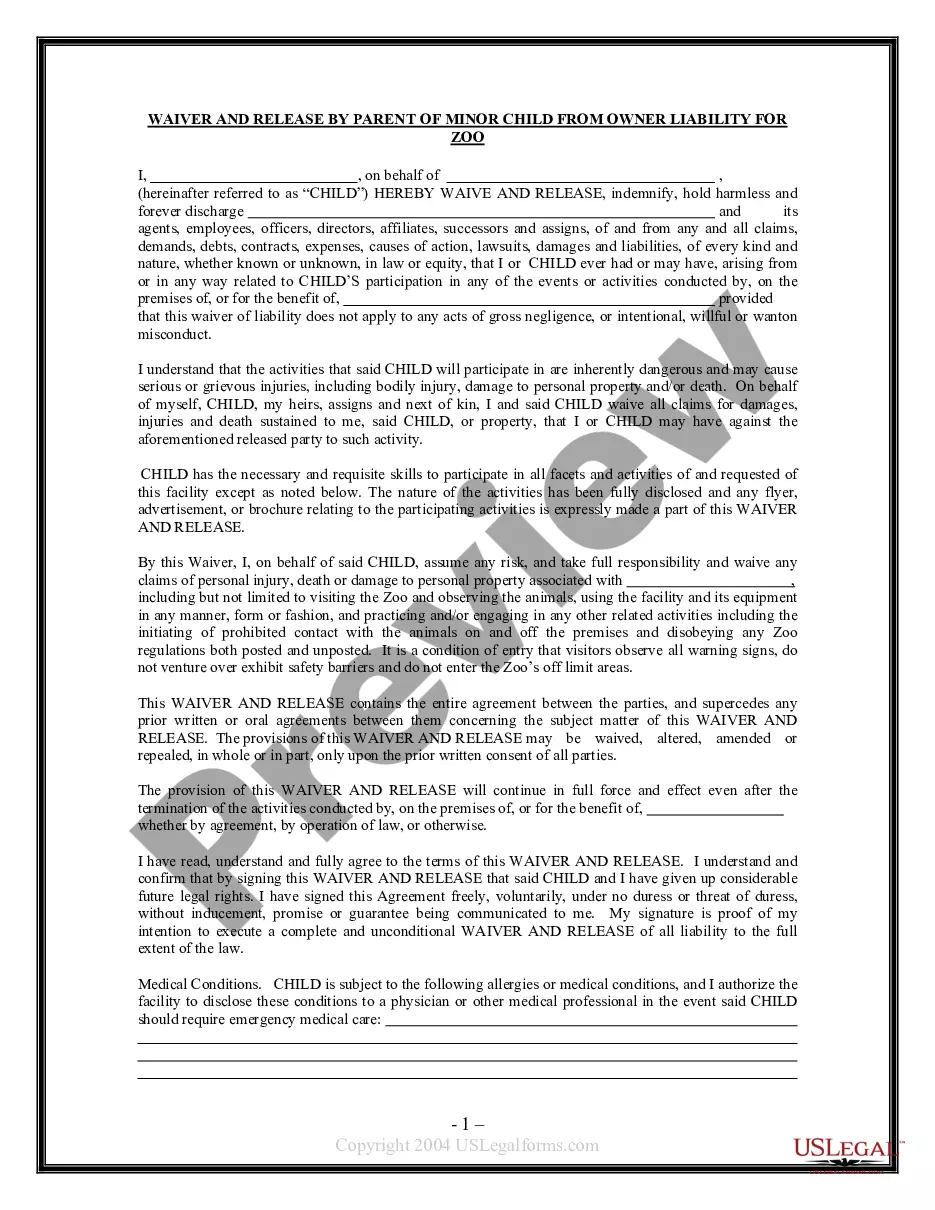
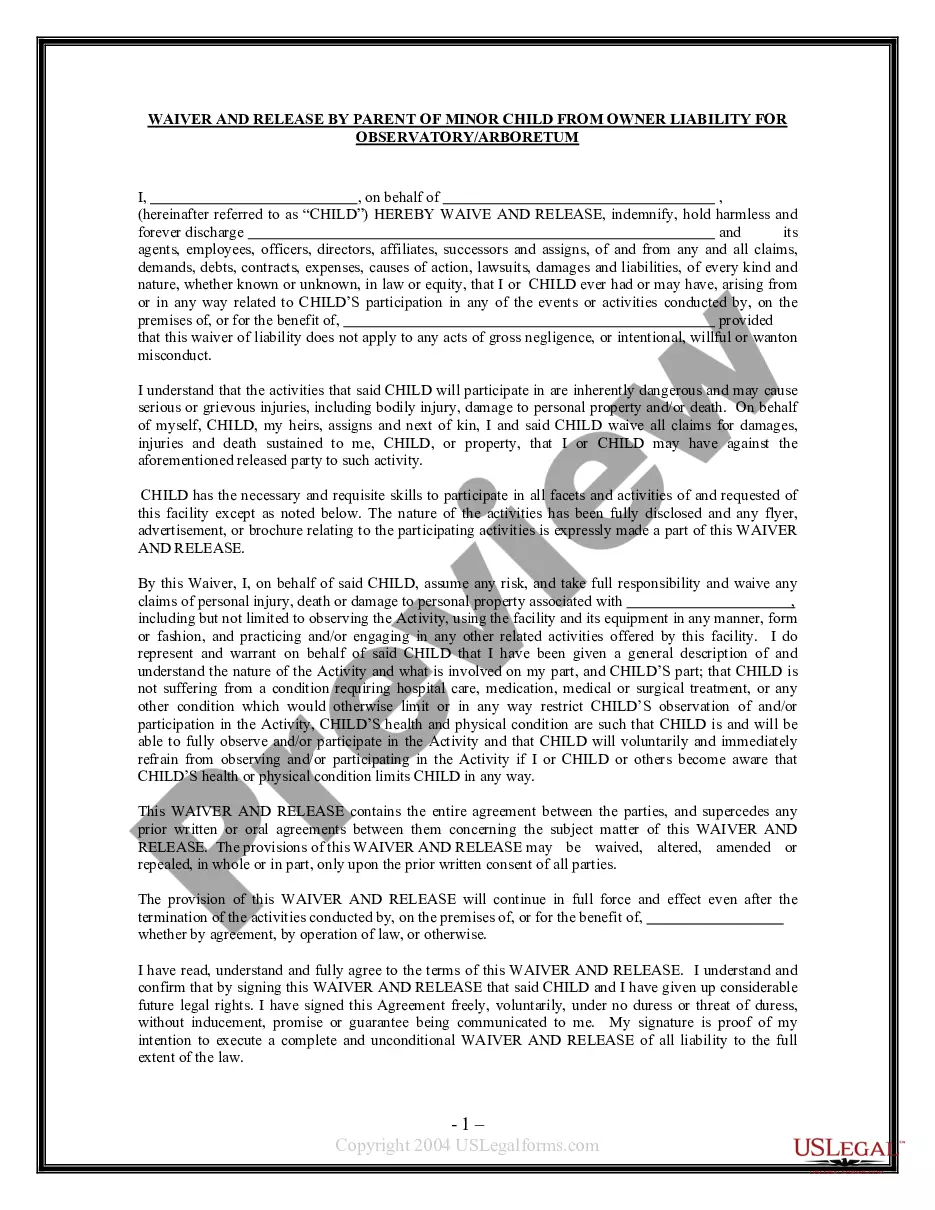
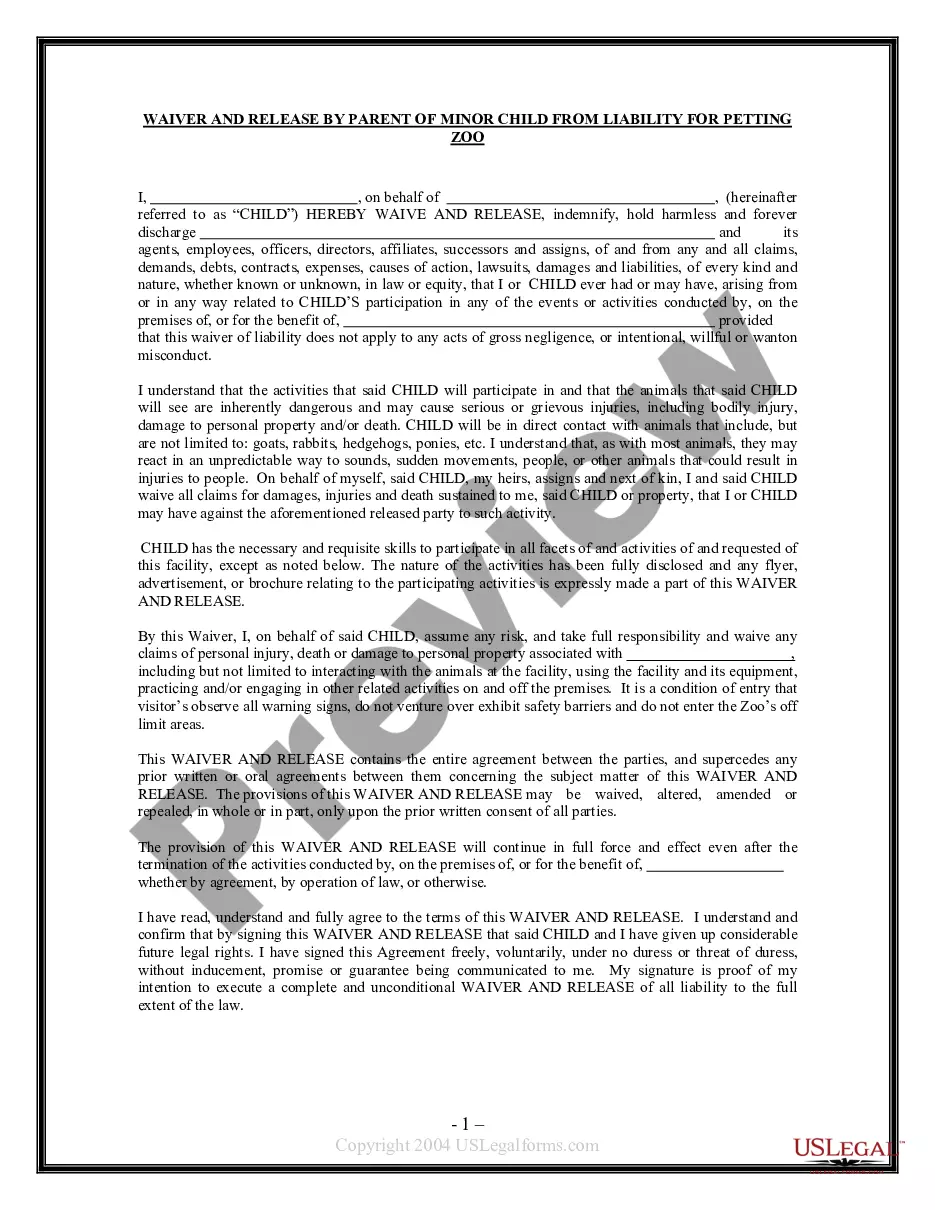
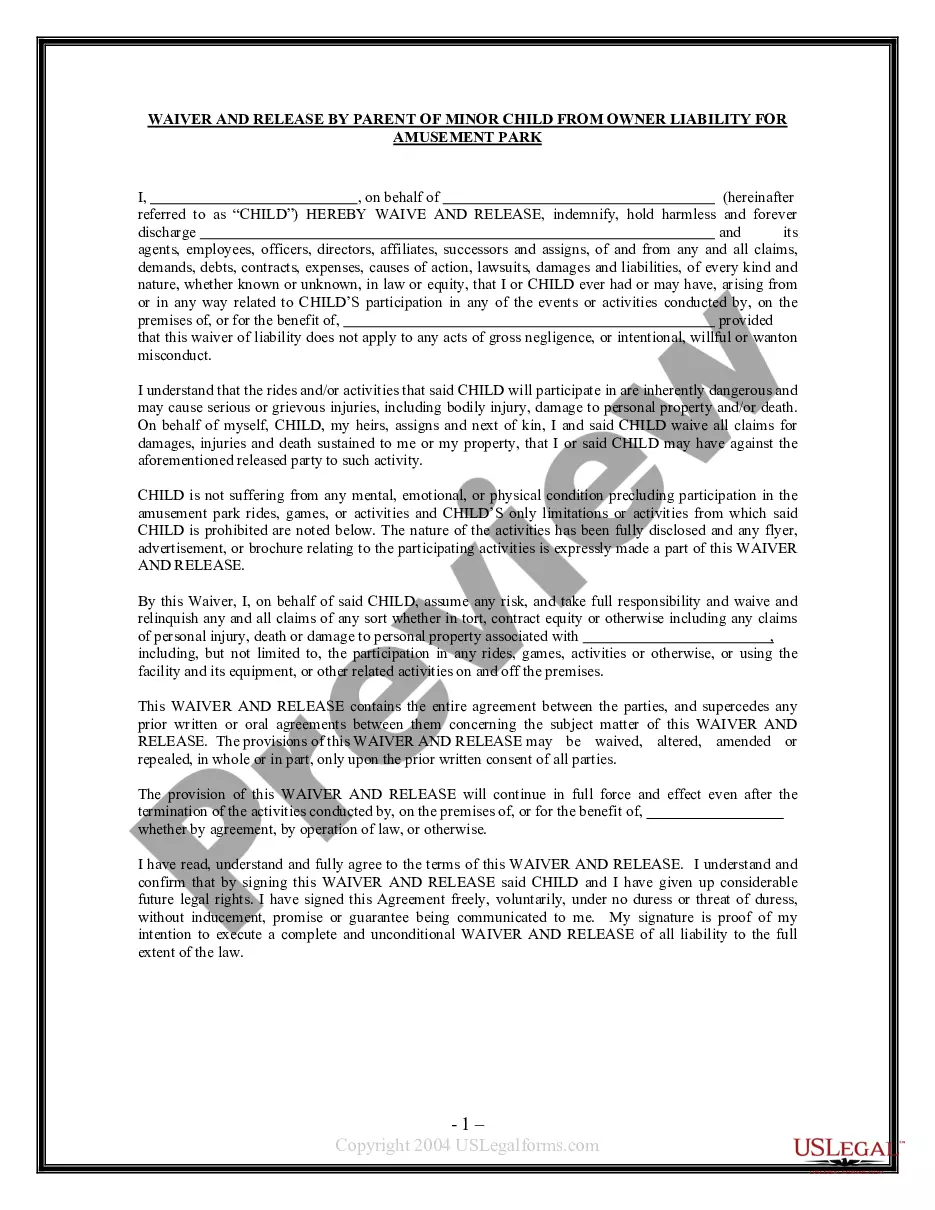
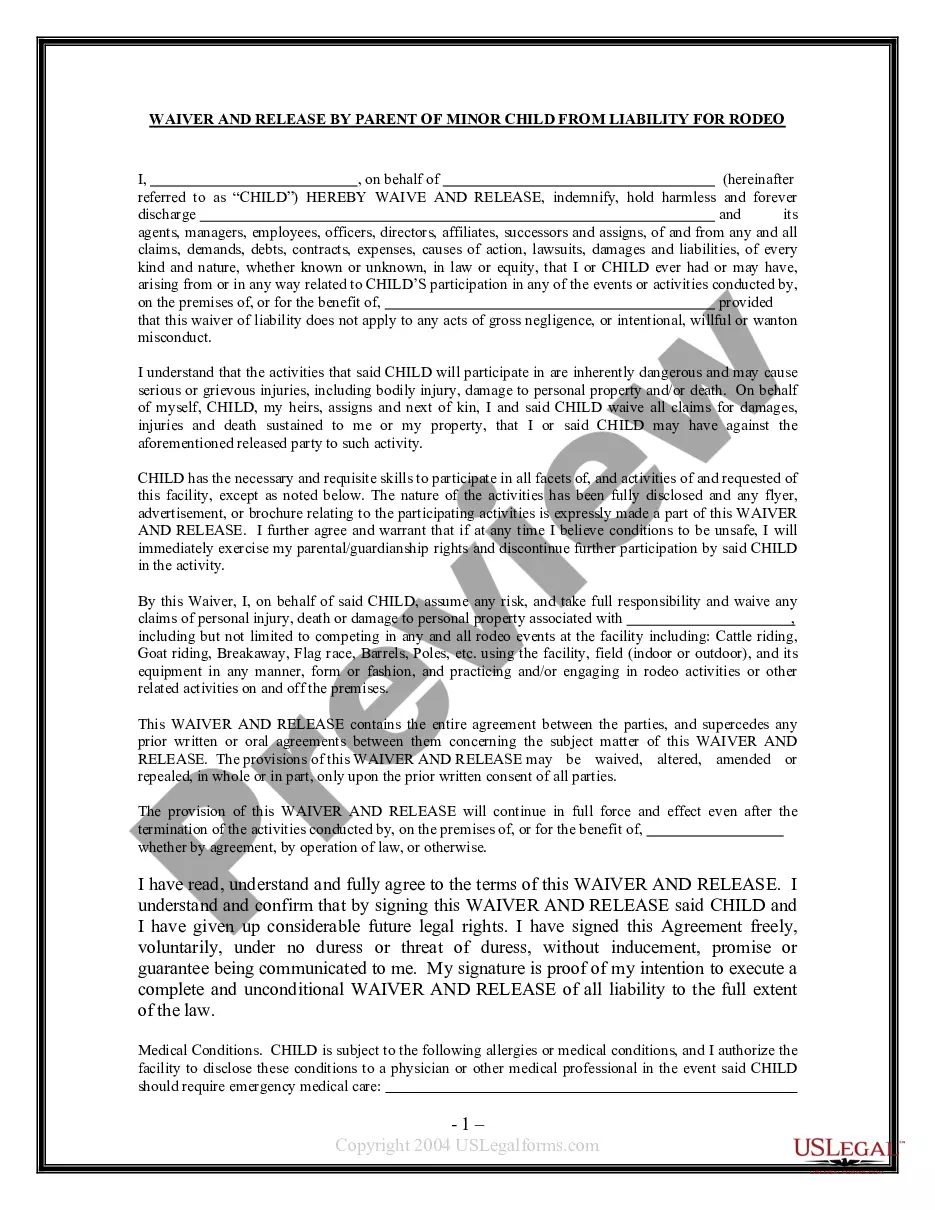
The Waiver and Release From Liability For Minor Child for Zoo is a legal document that allows a parent or guardian to waive any liability claims against a zoo facility for injuries that may occur to a minor child while attending the zoo or participating in its activities. This form is crucial in protecting the zoo from lawsuits related to accidents or injuries, while also ensuring that guardians acknowledge the inherent risks involved in such activities.
Key parts of this document
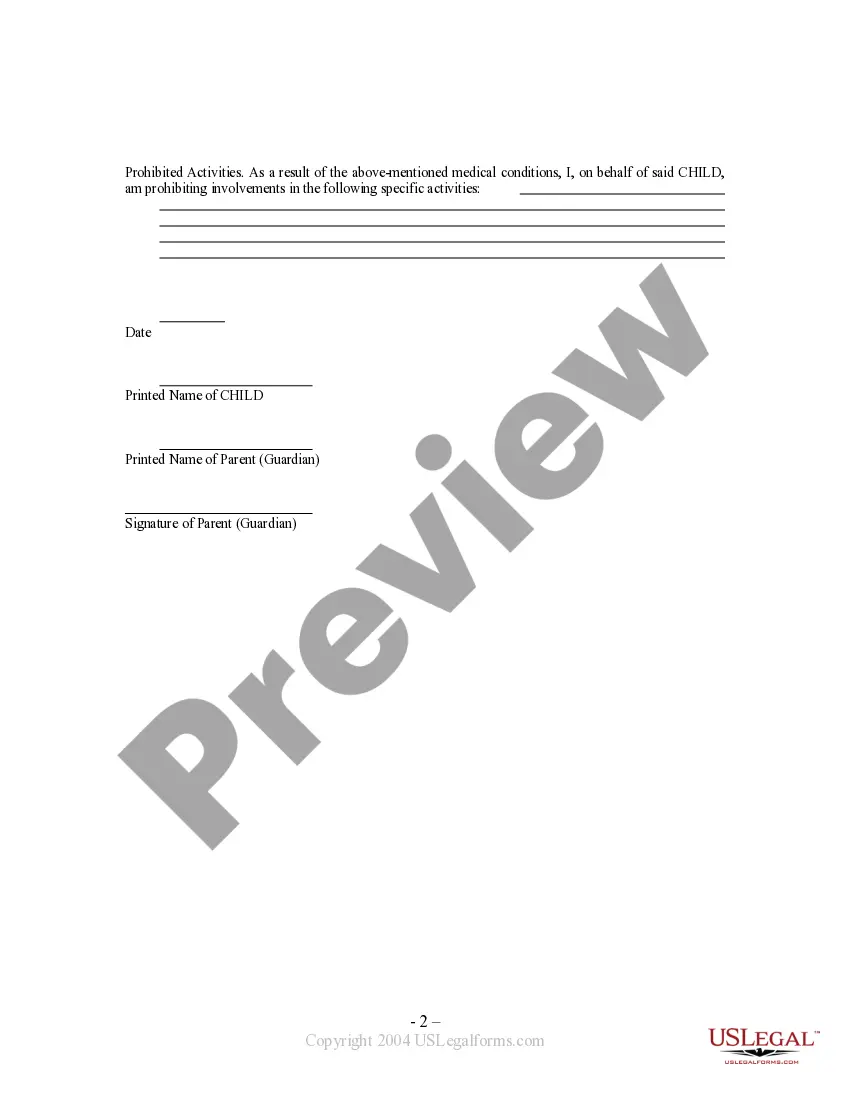
- Identification of the child and the parent/guardian.
- Explicit acknowledgment of the inherent risks associated with zoo activities.
- Waiver of claims against the zoo for injuries or damages incurred.
- Confirmation that the child possesses the necessary skills for participation.
- Entire agreement clause, superseding any previous agreements.
Common use cases
This form should be used when a parent or guardian is registering a minor child to attend a zoo or participate in its activities. It is essential in situations where the zoo requires confirmation of the guardian's understanding of the risks and their intent to waive liability for any potential injuries. Using this form helps ensure that both parties are aware of the risks involved.
Who needs this form
- Parents or guardians looking to register their minor children for zoo activities.
- Zoo operators needing legal protection against liability claims.
- Legal representatives assisting families with liability waivers.
How to prepare this document
- Enter the child's full name and date of birth.
- Provide the parent's or guardian's full name and contact information.
- Read and understand the waiver clauses regarding risks associated with zoo activities.
- Sign and date the form to acknowledge acceptance of the terms.
- Return the completed form to the zoo to finalize registration.
Is notarization required?
This form usually doesn’t need to be notarized. However, local laws or specific transactions may require it. Our online notarization service, powered by Notarize, lets you complete it remotely through a secure video session, available 24/7.
Get your form ready online
Our built-in tools help you complete, sign, share, and store your documents in one place.
Make edits, fill in missing information, and update formatting in US Legal Forms—just like you would in MS Word.
Download a copy, print it, send it by email, or mail it via USPS—whatever works best for your next step.
Sign and collect signatures with our SignNow integration. Send to multiple recipients, set reminders, and more. Go Premium to unlock E-Sign.
If this form requires notarization, complete it online through a secure video call—no need to meet a notary in person or wait for an appointment.
We protect your documents and personal data by following strict security and privacy standards.

Make edits, fill in missing information, and update formatting in US Legal Forms—just like you would in MS Word.

Download a copy, print it, send it by email, or mail it via USPS—whatever works best for your next step.

Sign and collect signatures with our SignNow integration. Send to multiple recipients, set reminders, and more. Go Premium to unlock E-Sign.

If this form requires notarization, complete it online through a secure video call—no need to meet a notary in person or wait for an appointment.

We protect your documents and personal data by following strict security and privacy standards.
Common mistakes
- Failing to include the child's full name or date of birth.
- Not reading and understanding the waiver clauses before signing.
- Forgetting to provide accurate contact information of the guardian.
- Neglecting to date the form upon signing.
Why complete this form online
- Convenient access and instant download from any location.
- Editability allows for easy customization to meet specific needs.
- Reliable templates drafted by licensed attorneys ensure legal compliance.
Looking for another form?








Form popularity
FAQ
A liability waiver, or release waiver, is a legal document that a company or organization requires members of the public to sign in order to protect their organization from being sued if you sustain an injury.Depending on the facts of your case, you may still be able to file a lawsuit and recover damages.
Can a minor child sign a liability waiver in California? Yes, as long as a parent or legal guardian also signs. In California, a parent can also sign a liability waiver on his or her child's behalf. This makes California different from many other states.
A liability waiver, or release of liability, is a legal document that a company or organization has you sign in order to protect them from being sued in the event that you are injured.
A release and waiver agreement is an enforceable promise not to pursue legal action in exchange for compensation. The releasee gives money or some other form of compensation to the releasor, who then agrees not to press charges, sue, or take any other legal action against the releasee.
Minor Waiver. RELEASE OF LIABILITY, WAIVER OF CLAIMS, ASSUMPTION OF RISKS AND INDEMNTIY AGREEMENT BY SIGNING THIS DOCUMENT YOU WILL WAIVE CERTAIN LEGAL RIGHTS, INCLUDING THE RIGHT TO SUE.
Release Versus Waiver The main difference between releases and waivers is the transferring of ownership. When rights are released, they are transferred to another party. When rights are waived, they are gone altogether.In the case of the skydiver, they might be asked to sign a release form rather than a waiver.
Waiver of Parental permission is permitted under 45 CFR 46.408(c) when it is not a reasonable requirement to protect subjects. This waiver is usually but not always limited to minimal risk research, such as surveys, interviews or focus groups.
If you've been injured due to negligent actions, you can sue even if you signed a waiver. Winning a lawsuit concerning negligence is not uncommon. Many celebrities have sued for negligence even though they signed documents stating they understood the risks.
Essentially, a waiver removes a real or potential liability for the other party in the agreement. For example, in a settlement between two parties, one party might, by means of a waiver, relinquish its right to pursue any further legal action once the settlement is finalized.