Term Sheets and Letters of Intent
Understanding this form
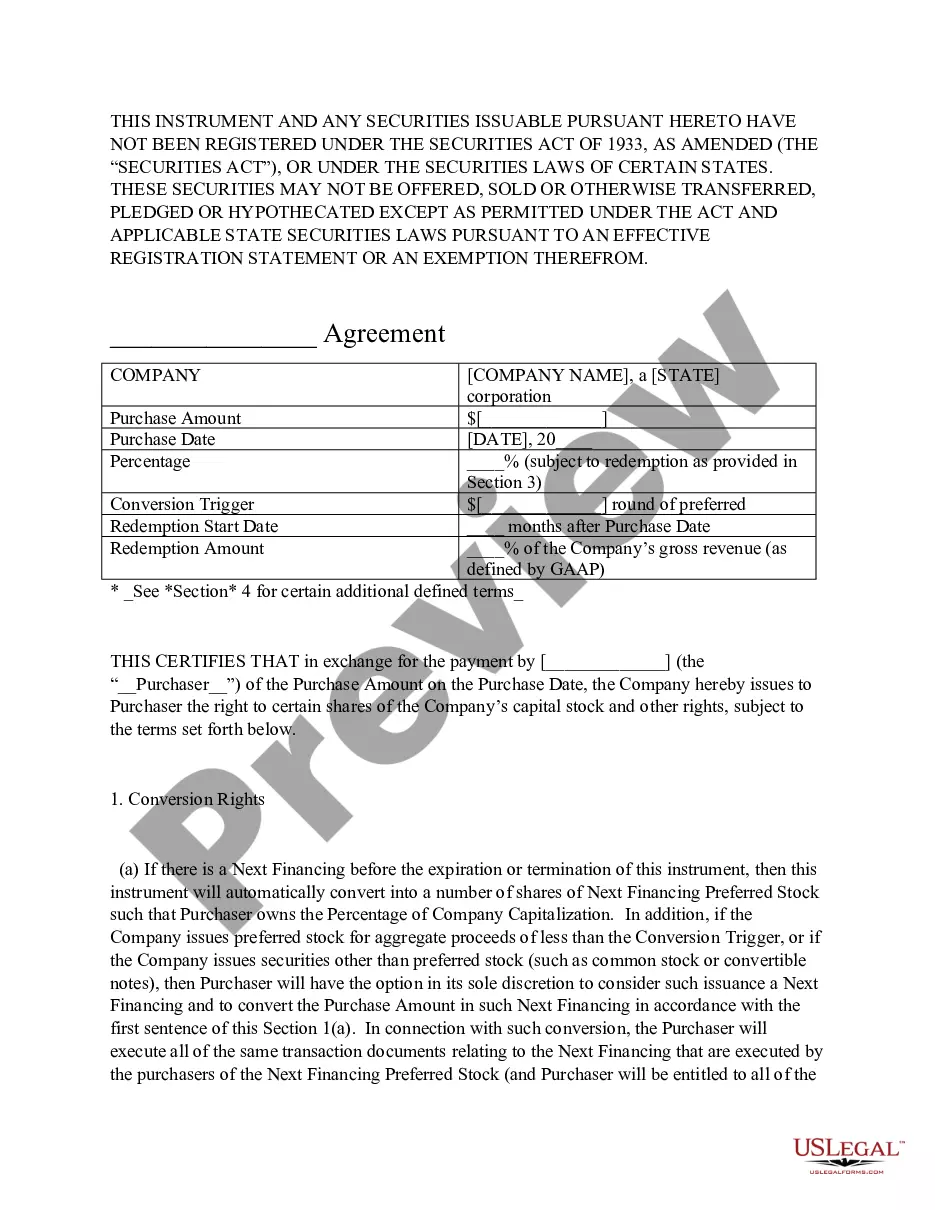
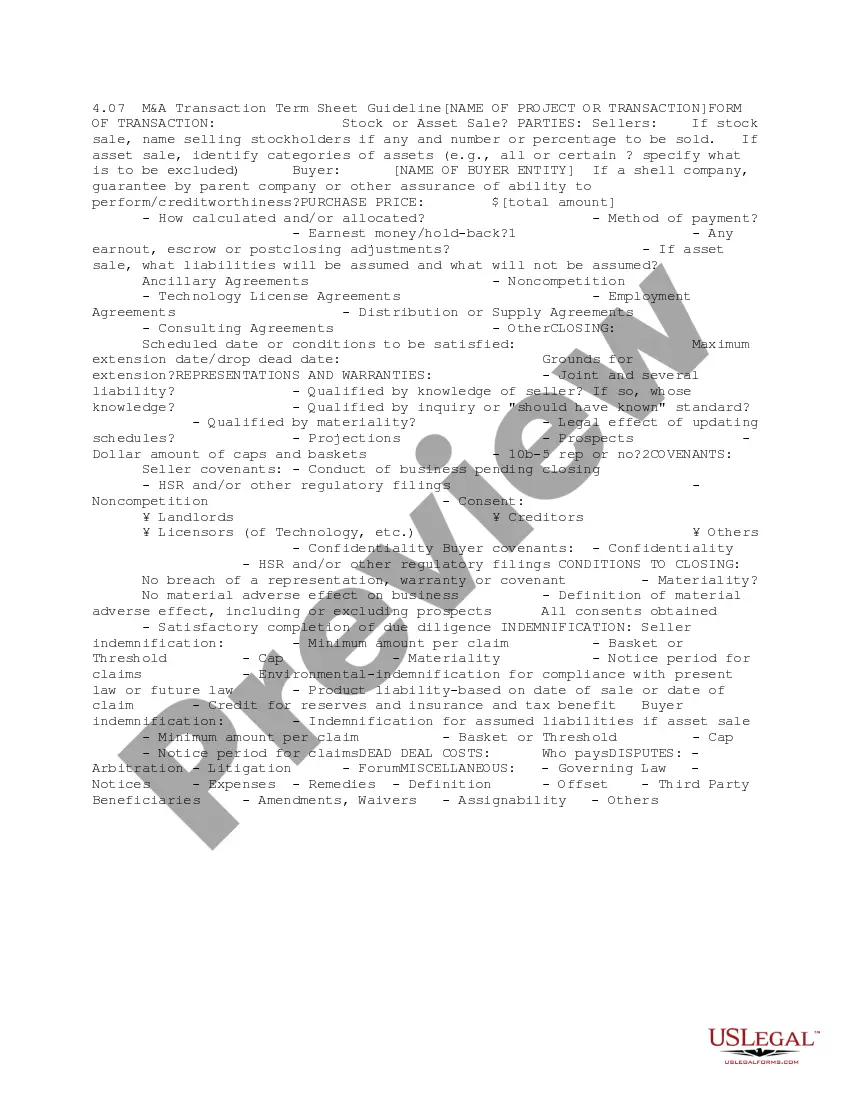
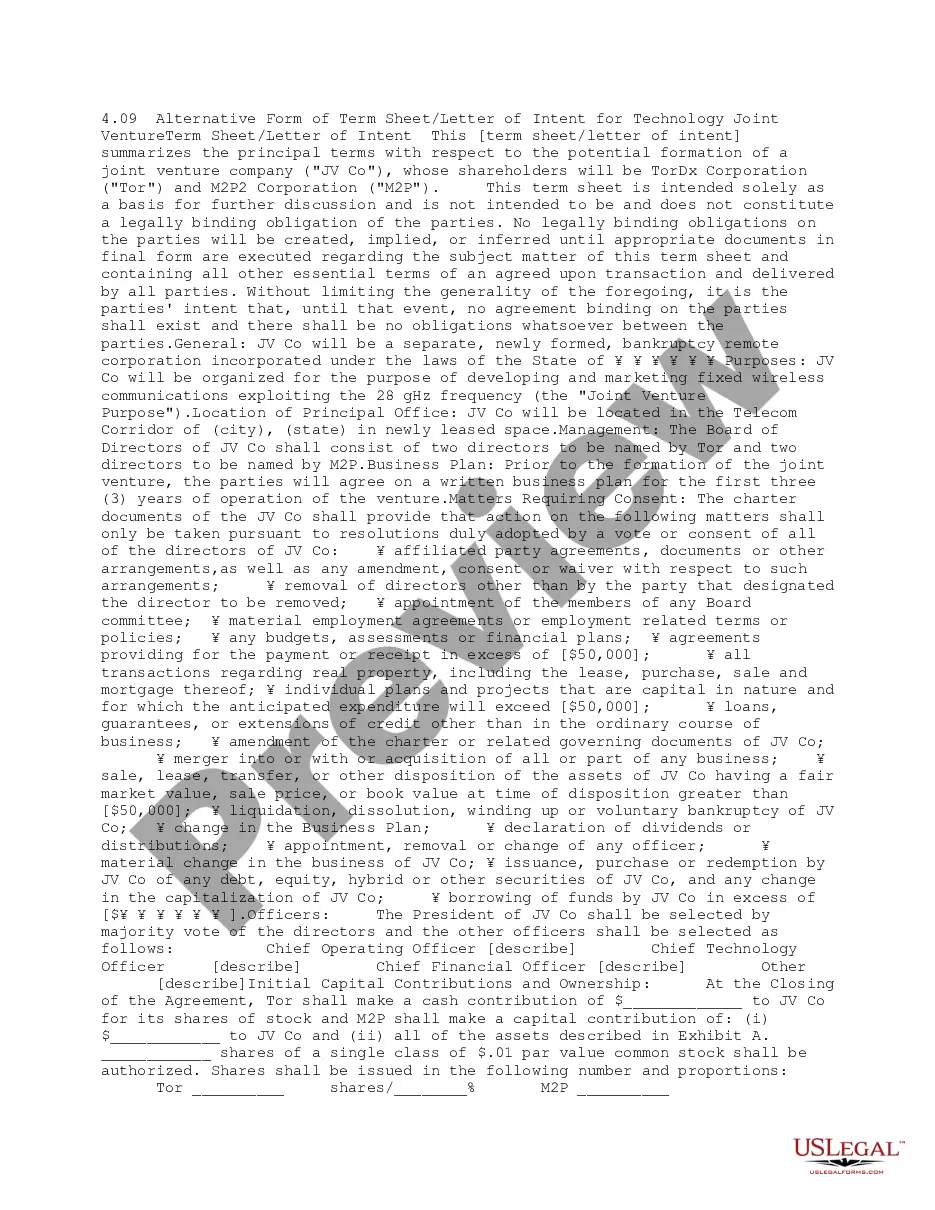
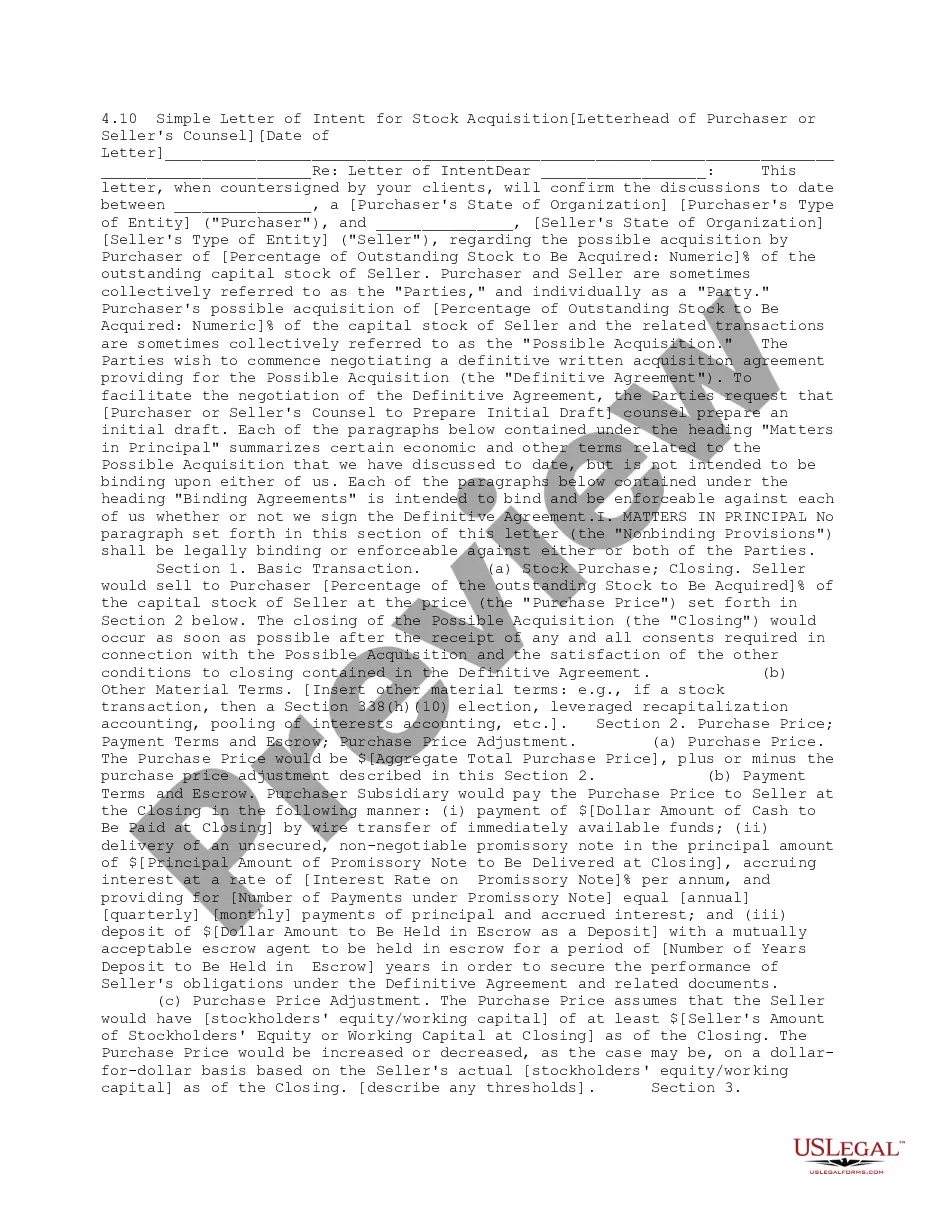
A term sheet or letter of intent is a preliminary agreement that outlines the main terms of a business deal before a formal contract is finalized. This document serves as a framework for negotiation, helping parties clarify their intentions and establish a mutual understanding. Unlike a legally binding contract, a term sheet is generally nonbinding, though certain provisions may create enforceable obligations. This form is essential for setting the stage for potential transactions including mergers, acquisitions, or joint ventures.
What’s included in this form
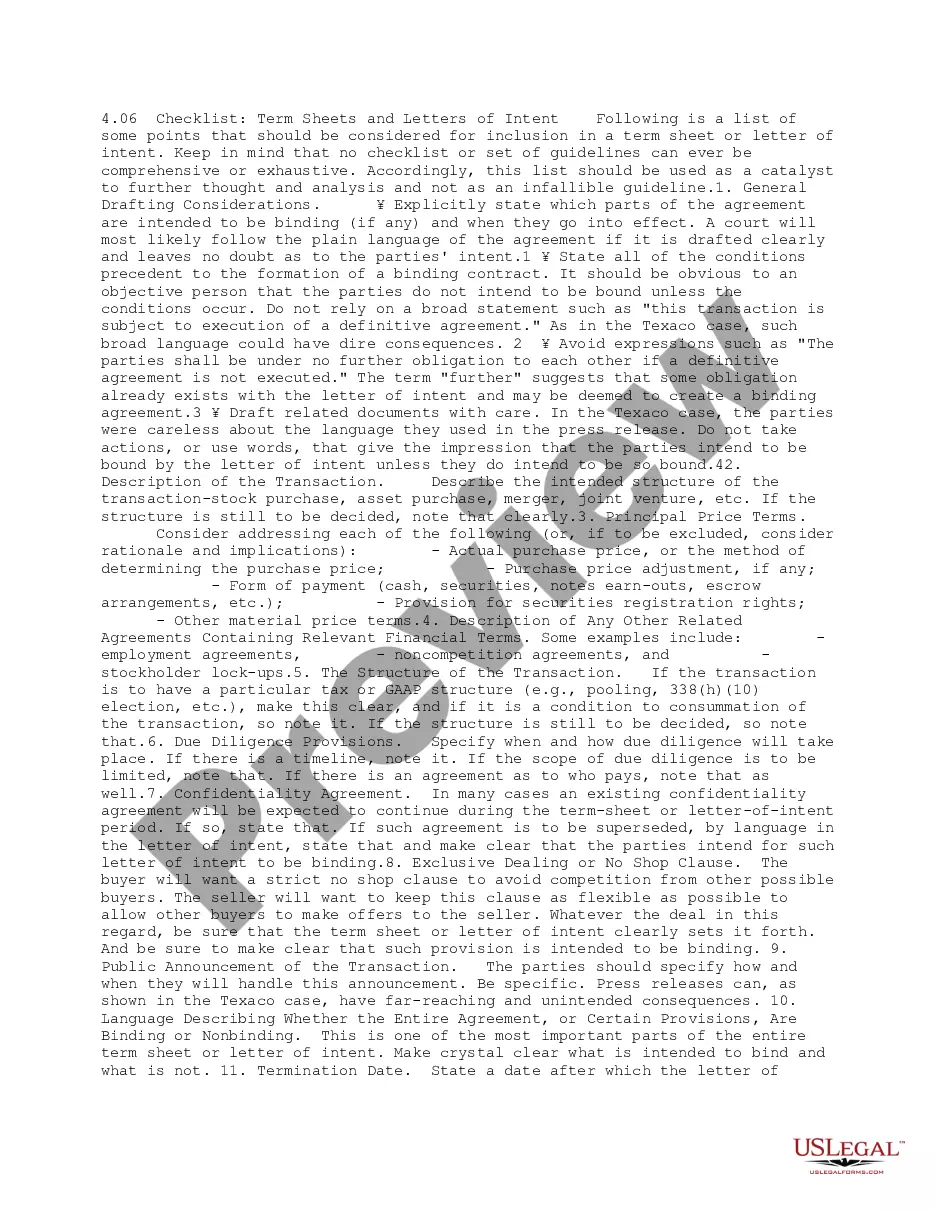
- General drafting considerations including binding clauses and conditions.
- Description of the transaction structure like stock purchase or merger.
- Principal price terms including purchase price and payment forms.
- Details of any related agreements pertinent to the transaction.
- Due diligence provisions specifying timelines and responsibilities.
- Confidentiality agreements that protect sensitive information during negotiations.
- Termination date outlining when the letter expires without a formal agreement.


When to use this document
Use this form when you are entering negotiations for a business transaction, such as a merger, acquisition, or joint venture. It is particularly useful when parties need to outline their intentions while still exploring options and conducting due diligence. This form helps mitigate misunderstandings and encourages constructive discussions before formalizing an agreement.
Who needs this form
This form is intended for:
- Business owners and executives involved in potential transactions.
- Finance and legal professionals needing to draft or review a term sheet.
- Investors considering investment opportunities.
- Parties interested in formalizing preliminary discussions before drafting definitive agreements.
Instructions for completing this form
To complete this form, follow these steps:
- Identify the parties involved in the transaction.
- Clearly describe the structure of the transaction.
- Specify the principal price terms and payment method.
- Outline confidentiality provisions and due diligence timelines.
- State the binding and nonbinding aspects of the agreement.
- Set a termination date for the agreement to ensure clarity on timelines.
Notarization guidance
Notarization is generally not required for this form. However, certain states or situations might demand it. You can complete notarization online through US Legal Forms, powered by Notarize, using a verified video call available anytime.
Get your form ready online
Our built-in tools help you complete, sign, share, and store your documents in one place.
Make edits, fill in missing information, and update formatting in US Legal Forms—just like you would in MS Word.
Download a copy, print it, send it by email, or mail it via USPS—whatever works best for your next step.
Sign and collect signatures with our SignNow integration. Send to multiple recipients, set reminders, and more. Go Premium to unlock E-Sign.
If this form requires notarization, complete it online through a secure video call—no need to meet a notary in person or wait for an appointment.
We protect your documents and personal data by following strict security and privacy standards.

Make edits, fill in missing information, and update formatting in US Legal Forms—just like you would in MS Word.

Download a copy, print it, send it by email, or mail it via USPS—whatever works best for your next step.

Sign and collect signatures with our SignNow integration. Send to multiple recipients, set reminders, and more. Go Premium to unlock E-Sign.

If this form requires notarization, complete it online through a secure video call—no need to meet a notary in person or wait for an appointment.

We protect your documents and personal data by following strict security and privacy standards.
Common mistakes to avoid
- Failing to clearly specify which sections are binding.
- Using vague language that can lead to misinterpretation.
- Not including all key terms necessary for a comprehensive agreement.
- Neglecting to review the transaction structure, which can complicate negotiations.
- Overlooking the importance of due diligence timelines.
Why use this form online
- Convenience of accessing the form online and downloading it for immediate use.
- Editability allows for customization to fit specific negotiation needs.
- Form reliability, drafted when overseen by licensed attorneys.
- Term sheets and letters of intent can outline binding and nonbinding terms.
- These documents are typically used in preliminary negotiations but can sometimes lead to enforceable agreements if not drafted carefully.
- Legal review is recommended to ensure compliance with applicable laws and regulations.
Key takeaways
- A term sheet or letter of intent is a preliminary document that outlines essential terms for a potential transaction.
- It helps parties understand their obligations and intentions before formalizing a contract.
- Clear communication in the form can prevent misunderstandings and disputes.
Looking for another form?









Form popularity
FAQ
Investors: Those who are investing money into the business. Amount Raised: Total amount raised to date. Price Per Share: Price of each share. Pre-Money Valuation: Value of the company before investment. Capitalization: Company's shares multiplied by share price.
A term sheet is a nonbinding agreement that shows the basic terms and conditions of an investment. The term sheet serves as a template and basis for more detailed, legally binding documents.
Take the Time to Woo Multiple Investors. Do Your Due Diligence When Finding Investors. Negotiate A Term Sheet Better by Understanding the Terminology. Hire a Good Lawyer to Assist You. Prioritize the Non-Negotiables of Your Term Sheet. Be Prepared to Negotiate with Your Investor. Watch for Red Flags.
Write the introduction. Describe the transaction and timeframes. List contingencies. Go through due diligence. Include covenants and other binding agreements. State that the agreement is nonbinding. Include a closing date.
Salutation. Begin with a professional salutation. Body Paragraph 1: Introduction. Body Paragraph 2: Highlight Relevant Skills. Body Paragraph 3: Call to Action. Closing. Use the appropriate format. When sending an email, include a clear subject line. Research the company.
A term sheet usually has some provisions that are called out as being binding even though the rest of the term sheet is typically not binding. These binding provisions give the non-breaching party a right to sue for breach of those "binding" provisions.
What is a term sheet? A term sheet is a mostly non-binding document signed by the target and the prospective buyer that describes the major terms of the proposed acquisition. While most term sheets are non-binding, they often contain binding provisions regarding non-soliciation, exculsivity and confidentiality.
How much money is expected from the VC, or venture capitalist, to the founder of the startup, A detailed overview of the financial side of the investment, and. The power and controls given to the VCs.
The difference between the two is slight and mostly a matter of style: an LOI is typically written in letter form and focuses on the parties' intentions; a term sheet skips most of the formalities and lists deal terms in bullet-point or similar format.A term sheet may be a proposal, not an agreed-to document.