Resume for Real Estate Agent or Realtor
What this document covers
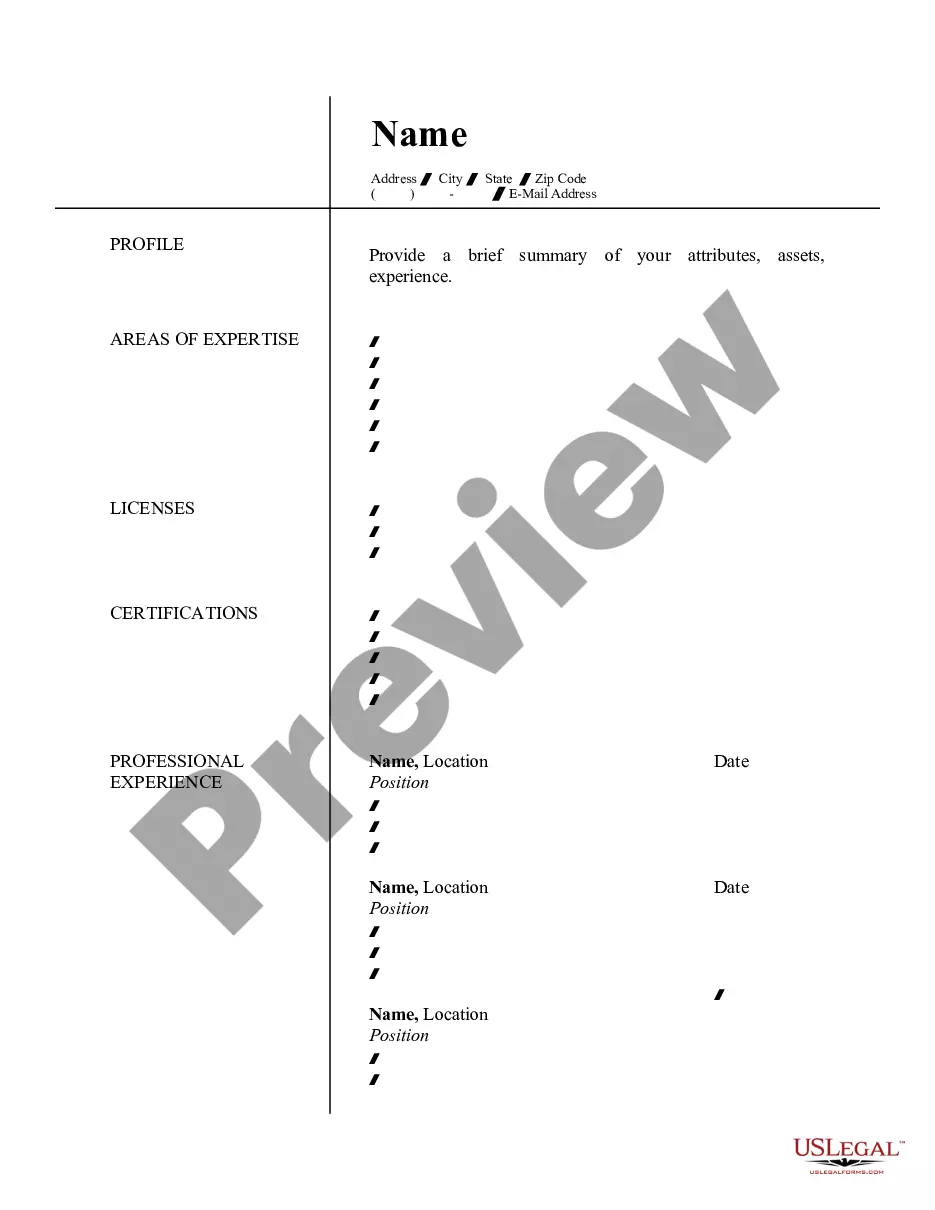
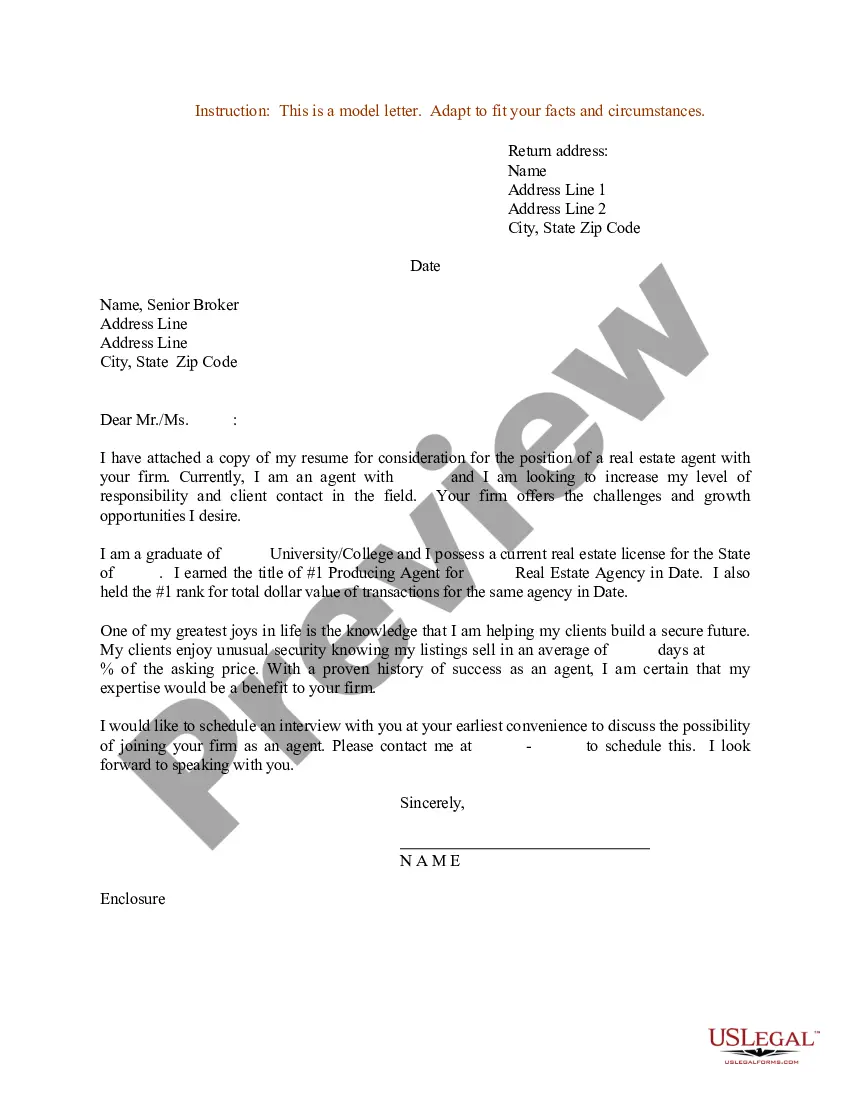
The Resume for Real Estate Agent or Realtor is a specialized document designed for individuals seeking a position within the real estate industry. This form provides a structured format that highlights the candidate's qualifications, experience, and skills specific to real estate. It differs from standard resumes by focusing on elements that are particularly relevant to real estate careers, such as sales achievements and realty licenses.
What’s included in this form
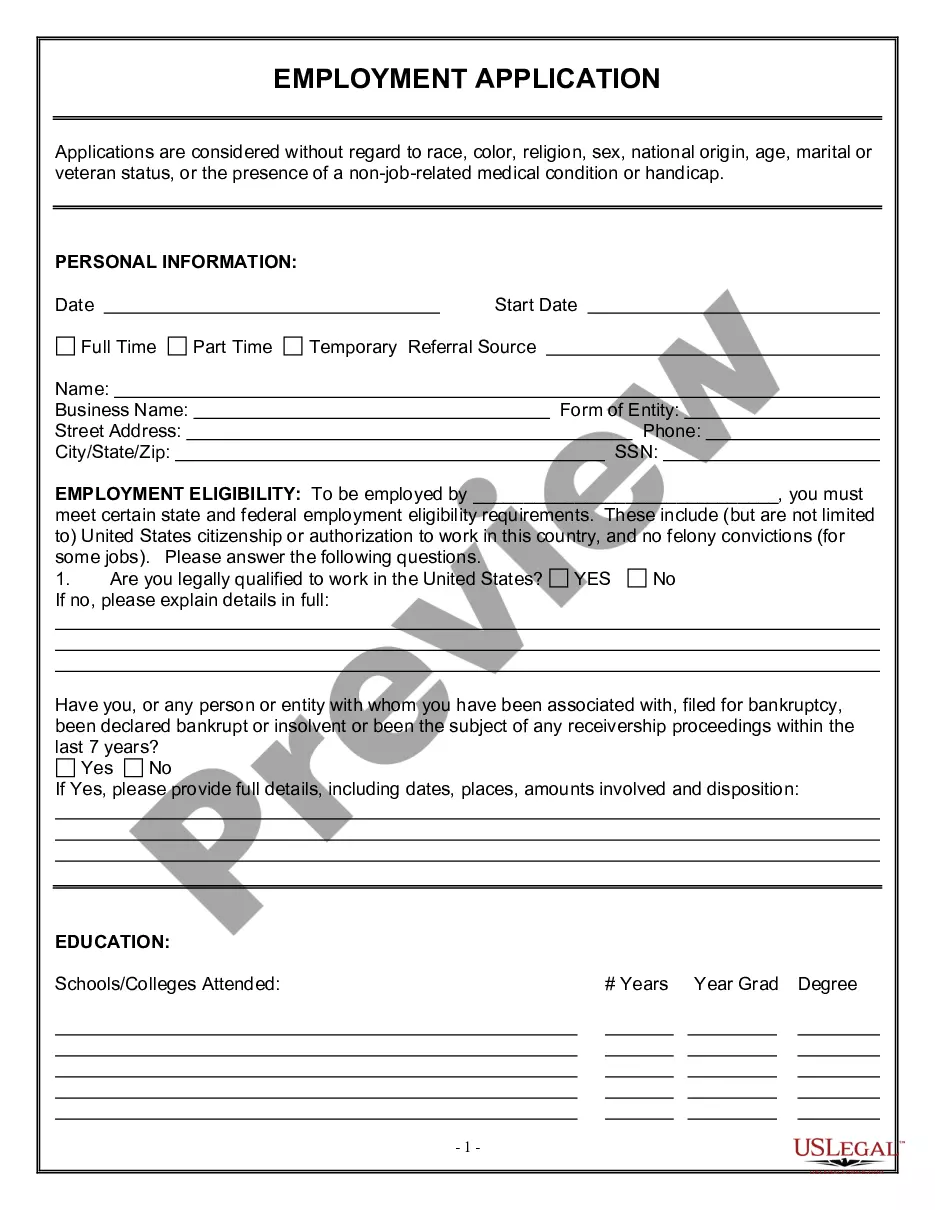
- Contact information: Includes name, phone number, email, and address.
- Objective statement: A brief introduction outlining career goals in real estate.
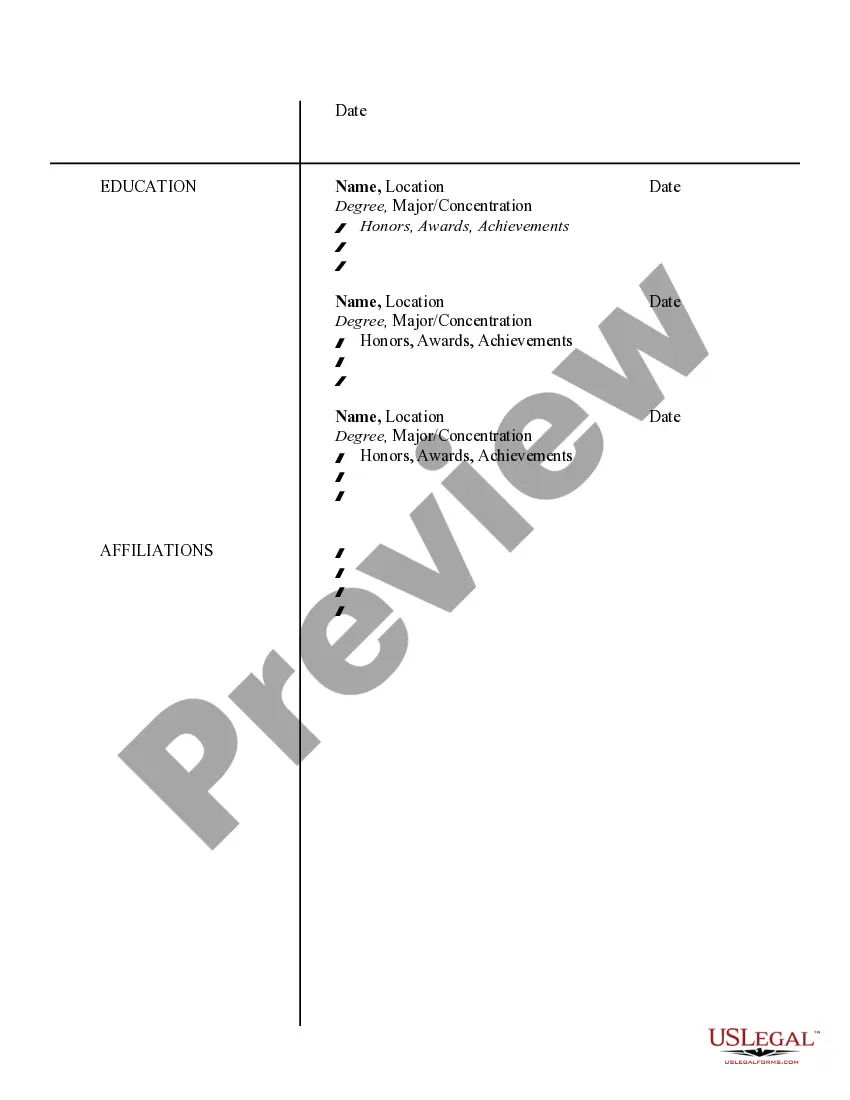
- Education section: Details on relevant degrees, certifications, and licenses.
- Work experience: A summary of previous jobs, focusing on roles in real estate or related fields.
- Skills section: Lists specific skills relevant to a real estate agent, such as negotiation and client relations.
Situations where this form applies
You should use this form when applying for a position as a real estate agent or realtor. Whether you are entering the real estate market for the first time or seeking to advance in your career, a well-structured resume can help you stand out to potential employers. This form is ideal for job applications, networking events, and professional presentations.
Intended users of this form
This resume is intended for:
- Individuals seeking employment as real estate agents or realtors.
- New entrants into the real estate field looking to showcase their potential.
- Experienced real estate professionals aiming to leverage their skills for new opportunities.
- Those applying to real estate firms, brokerages, or related businesses.
How to complete this form
- Gather your personal information, including your name, contact details, and professional social media links.
- Write a clear objective statement that reflects your interest in the real estate field.
- List your educational qualifications, emphasizing real estate licensing or relevant coursework.
- Detail your work experience, focusing on roles related to sales, customer service, or real estate.
- Identify and include specific skills that will set you apart from other candidates.
Does this document require notarization?
This form usually doesn’t need to be notarized. However, local laws or specific transactions may require it. Our online notarization service, powered by Notarize, lets you complete it remotely through a secure video session, available 24/7.
Get your form ready online
Our built-in tools help you complete, sign, share, and store your documents in one place.
Make edits, fill in missing information, and update formatting in US Legal Forms—just like you would in MS Word.
Download a copy, print it, send it by email, or mail it via USPS—whatever works best for your next step.
Sign and collect signatures with our SignNow integration. Send to multiple recipients, set reminders, and more. Go Premium to unlock E-Sign.
If this form requires notarization, complete it online through a secure video call—no need to meet a notary in person or wait for an appointment.
We protect your documents and personal data by following strict security and privacy standards.

Make edits, fill in missing information, and update formatting in US Legal Forms—just like you would in MS Word.

Download a copy, print it, send it by email, or mail it via USPS—whatever works best for your next step.

Sign and collect signatures with our SignNow integration. Send to multiple recipients, set reminders, and more. Go Premium to unlock E-Sign.

If this form requires notarization, complete it online through a secure video call—no need to meet a notary in person or wait for an appointment.

We protect your documents and personal data by following strict security and privacy standards.
Common mistakes to avoid
- Failing to tailor the resume to the real estate position being applied for.
- Including irrelevant work experience that does not enhance your candidacy.
- Neglecting to proofread for spelling and grammatical errors.
- Using vague language instead of quantifiable achievements.
- Omitting licenses or certifications that are essential in real estate.
Advantages of online completion
- Convenience of downloading and filling out the resume at your own pace.
- Editability allows for customization to reflect personal style and experiences.
- Access to professionally drafted templates increases your chances of impressing potential employers.
Legal use & context
- Understand that the resume itself is not a legal document but a representation of your professional qualifications.
- The form should be used in conjunction with formal applications and not as a standalone document.
- Ensure compliance with any local real estate regulations that may influence the information presented.
What to keep in mind
- The Resume for Real Estate Agent or Realtor is essential for job applications in the real estate sector.
- A well-crafted resume can significantly enhance your opportunities in a competitive job market.
- Customizing your resume to fit specific job requirements is key to success.
Looking for another form?







Form popularity
FAQ
The three most important things in real estate are price, price, price!
It takes hard work, dedication, and perseverance to become a successful real estate agent. To become an agent, you must take classes, pass a test, and find a broker to work for. Once you get your license, the work is not over. You must learn to sell houses, which they do not teach in real estate school.
For your interview, that means professional interview attire. Men will need to wear a well-fitting suit in a conservative color, white, or pastel shirt, conservative tie, dark socks, and dress shoes. Women can choose between a pant or skirt suit, blouse (not low cut), hosiery, and closed-toe pumps.
You do not need a resume. YOU are interviewing the broker, not the broker interviewing you. You will discover that most brokers are excited to see you walk through the door. They want commissions... the more agents, the better!
Able to negotiate. Excellent interpersonal skills. Advanced math skills. Effective use of marketing techniques. Knowledgeable of all federal and local laws regarding real estate. Trustworthiness. Expert customer service skills.
Be clear about what you want. Real estate is wide field. Do your homework on the company. Prepare for common interview questions. Prepare 5-10 questions for your interviewer. Be prepared for unusual interviews. Dress the part. Be on time. Be honest.
Honesty and integrity. Knowledge of purchase process. Responsiveness. Knowledge of real estate market. Communication skills. Negotiation skills.
Agents can also become Realtors, active and paying members of the National Association of Realtors (NAR). In this sense, there is generally no difference between real estate agents and Realtors, other than distinguishing between members and non-members of the NAR when it comes to professional duties.
Where do you see yourself in five years? Why do you want to work for this company? Why should we hire you? What did you like most about your last position? What are your top three skills? What skills would you like to learn and why?