Amended Complaint for Personal Injury and Wrongful Death
About this form
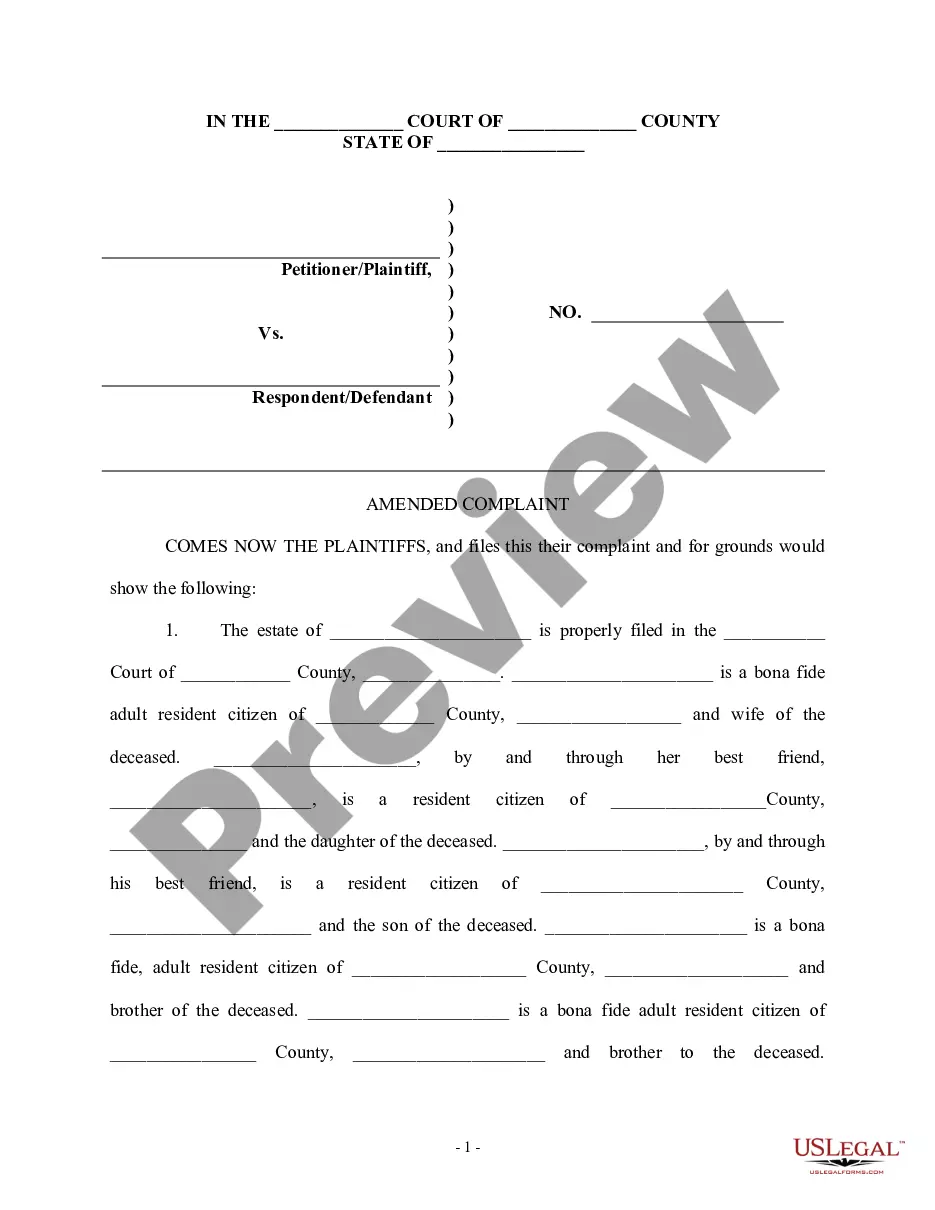
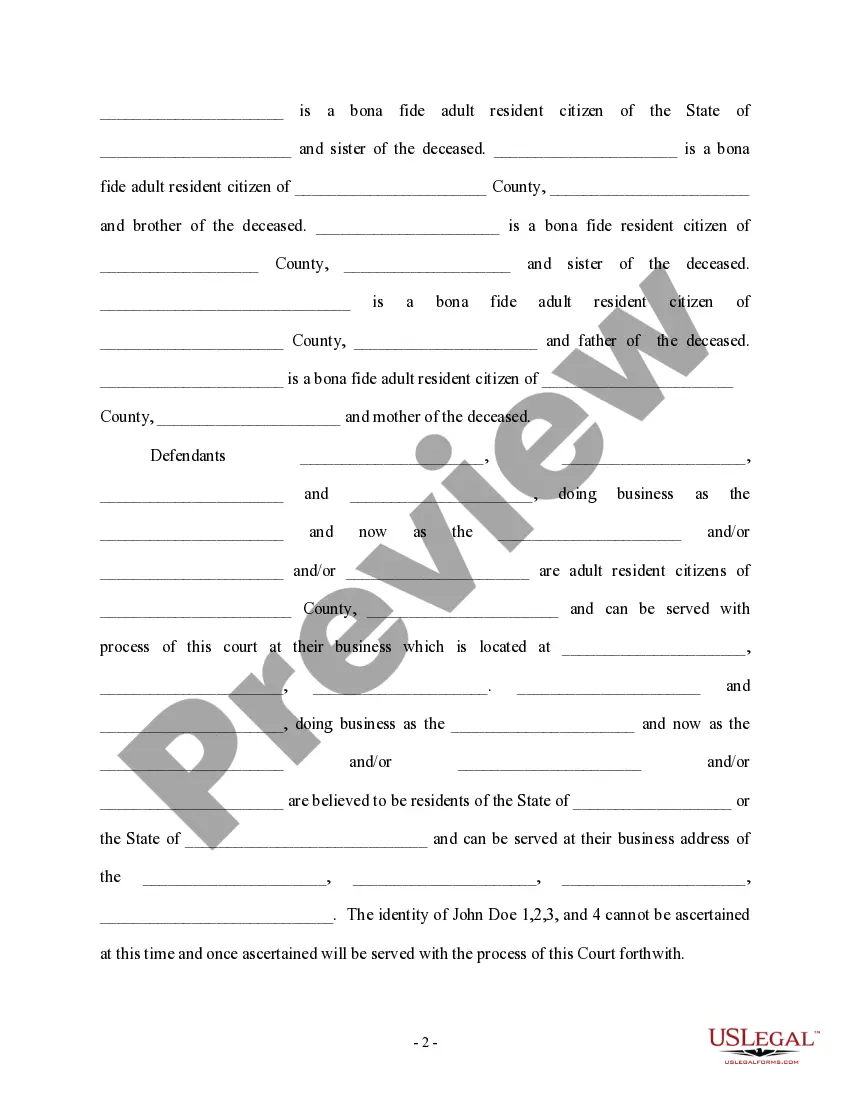
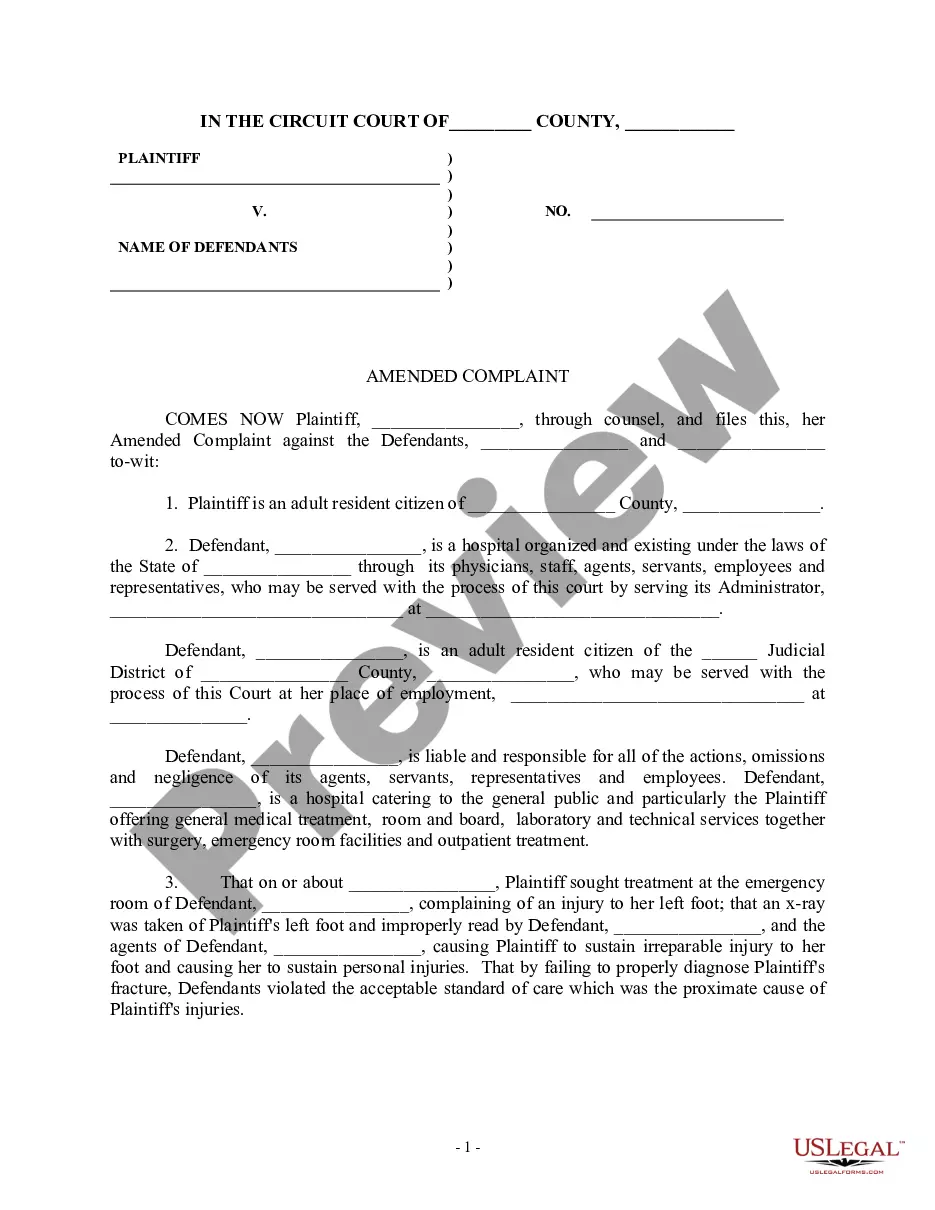
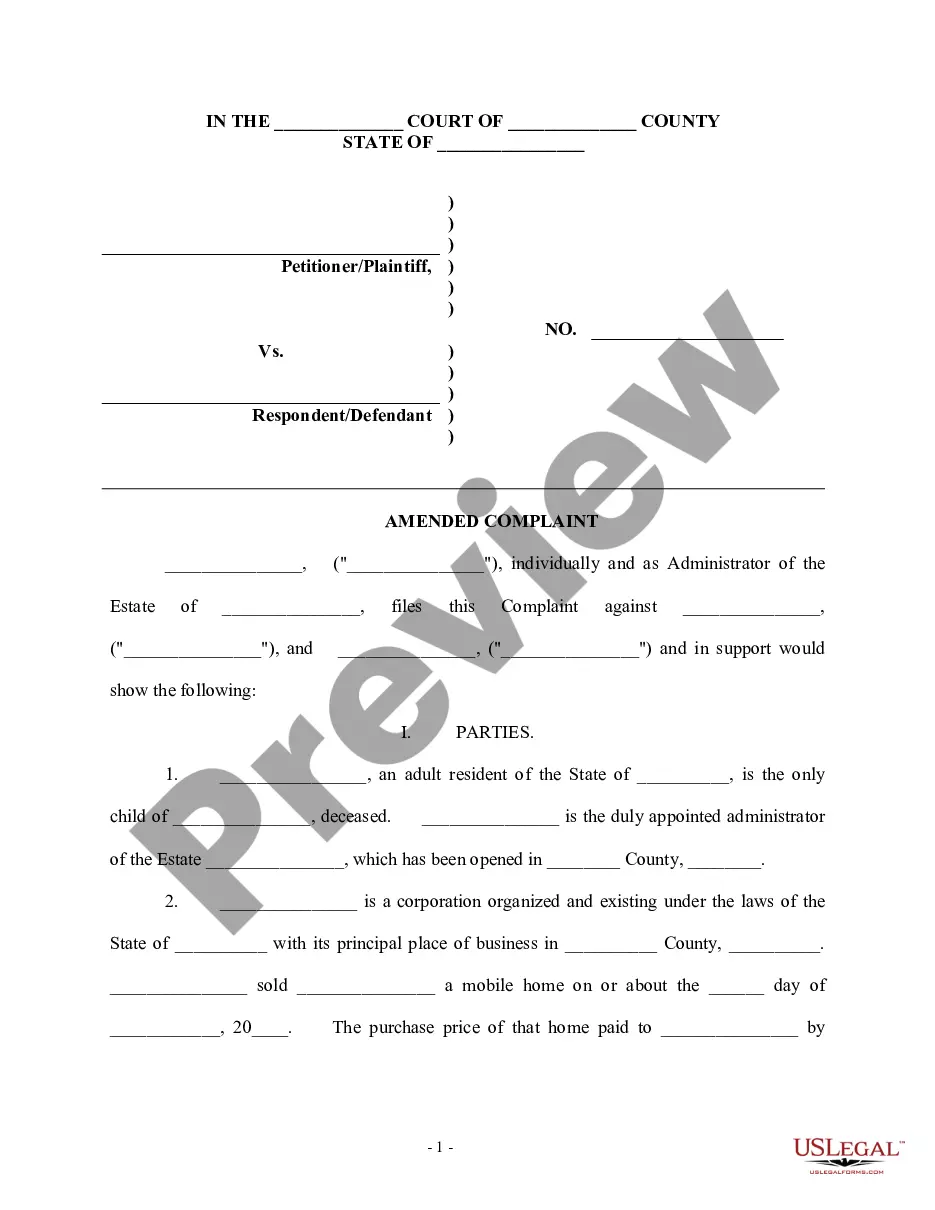
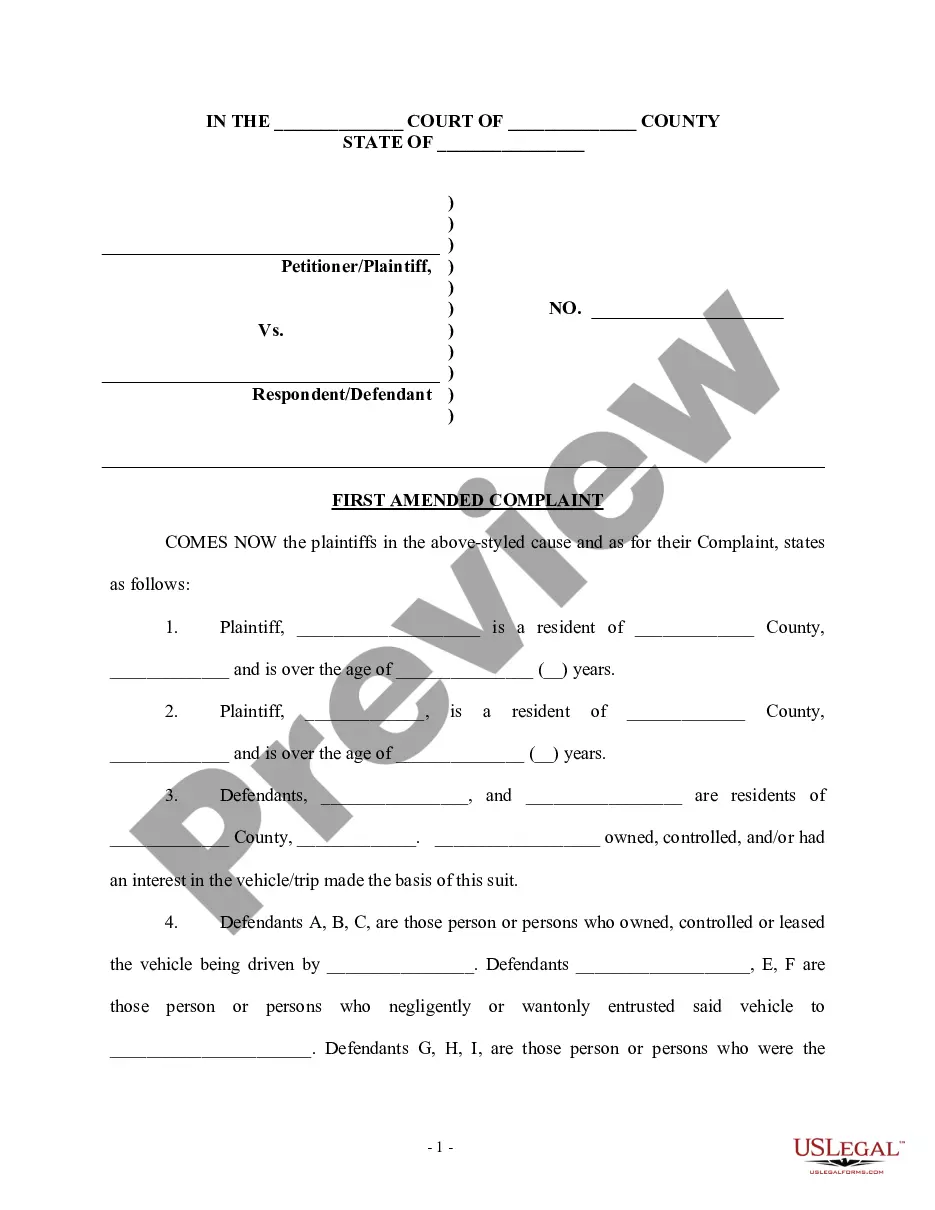
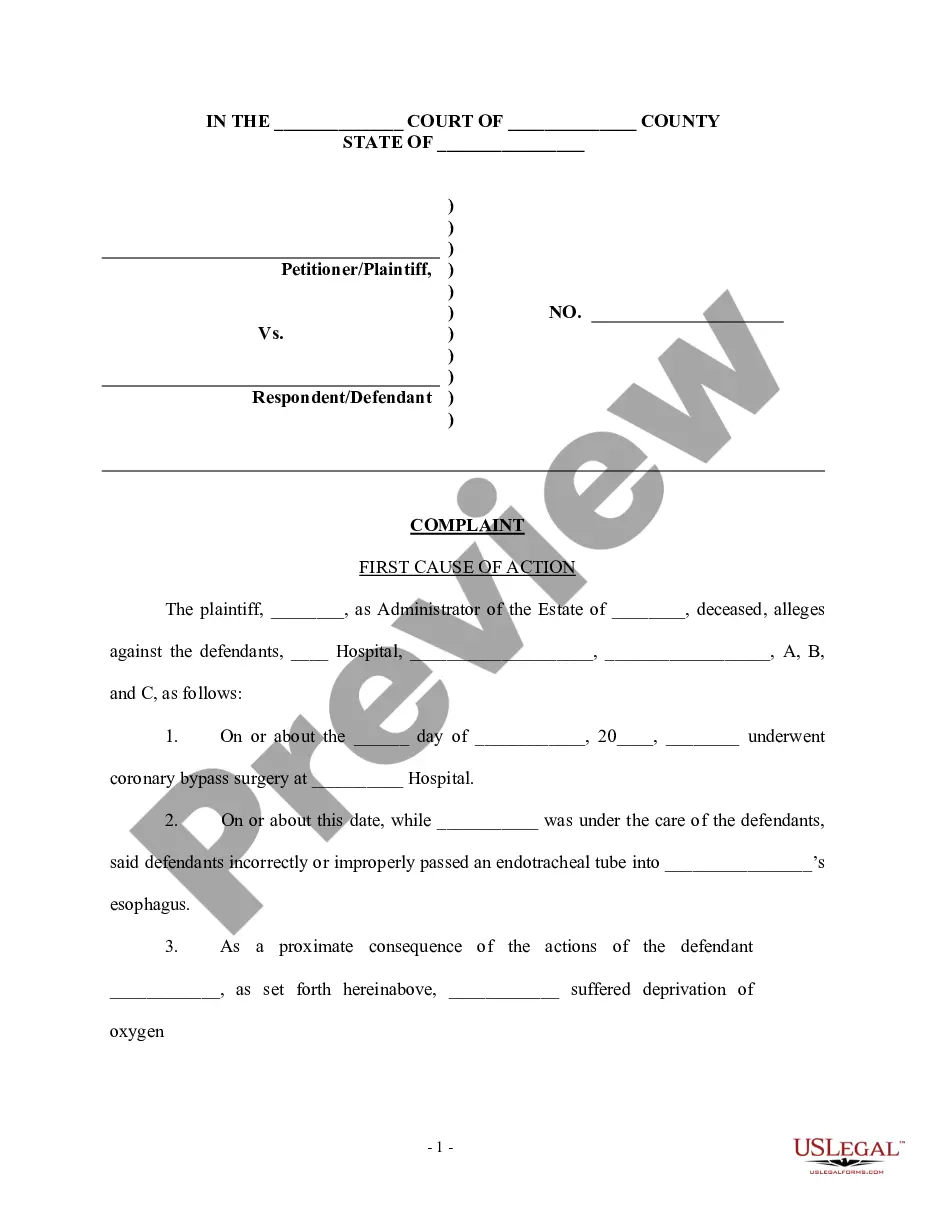
The Amended Complaint for Personal Injury and Wrongful Death is a legal document used to initiate a lawsuit related to personal injuries or fatalities caused by negligence. This form is specifically designed for situations where a plaintiff seeks to hold a defendant accountable for inadequate security measures, leading to an attack or wrongful death. It differs from standard complaints by focusing on the unique circumstances surrounding personal injury in locations such as motels or hotels.
Key parts of this document
- Parties involved: Identifying plaintiffs and defendants.
- Jurisdiction: Establishing the court's authority over the case.
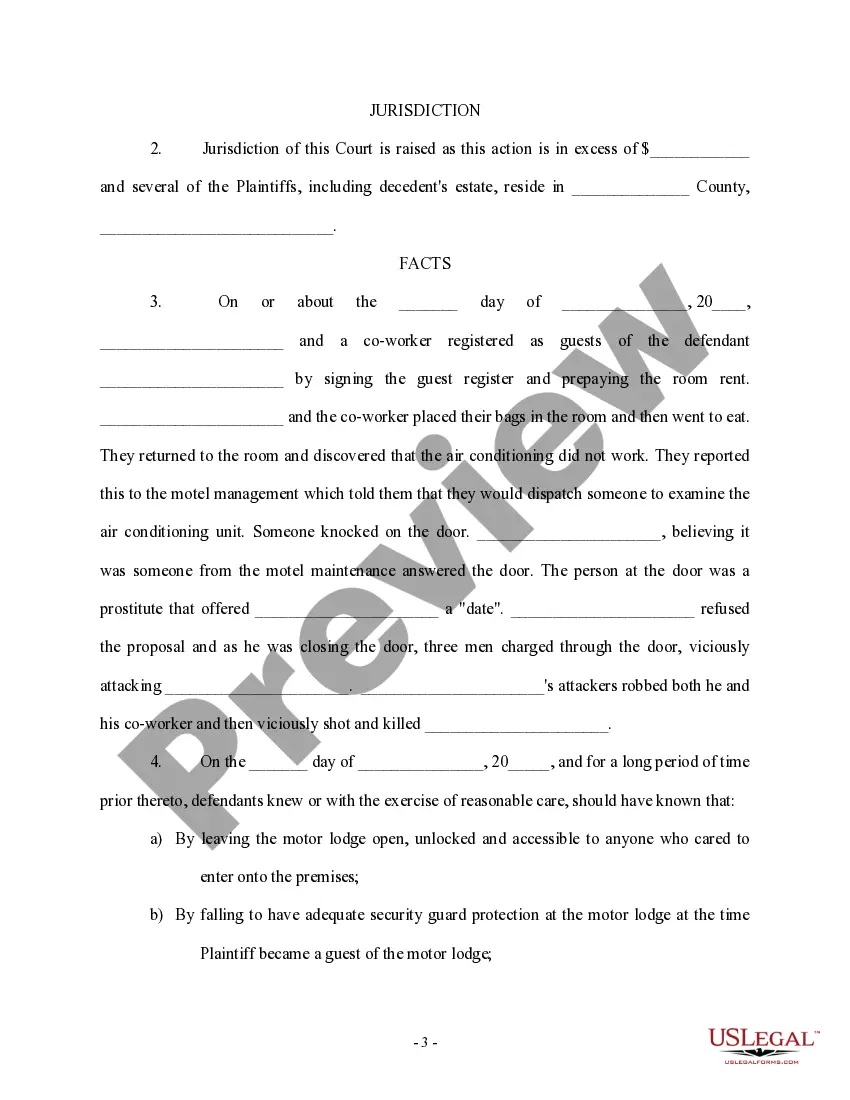
- Facts: Detailing the event leading to the injury or death.
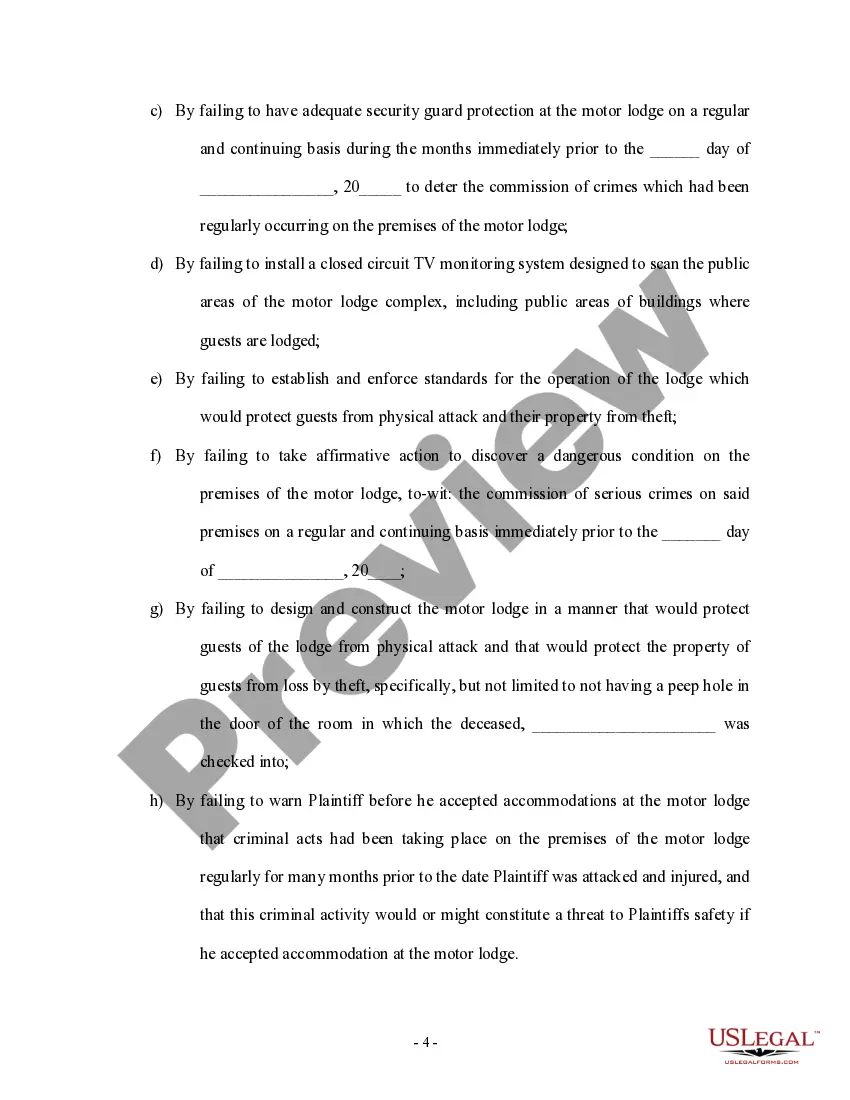
- Allegations of negligence: Outlining specific actions or inactions of the defendants that contributed to the harm.
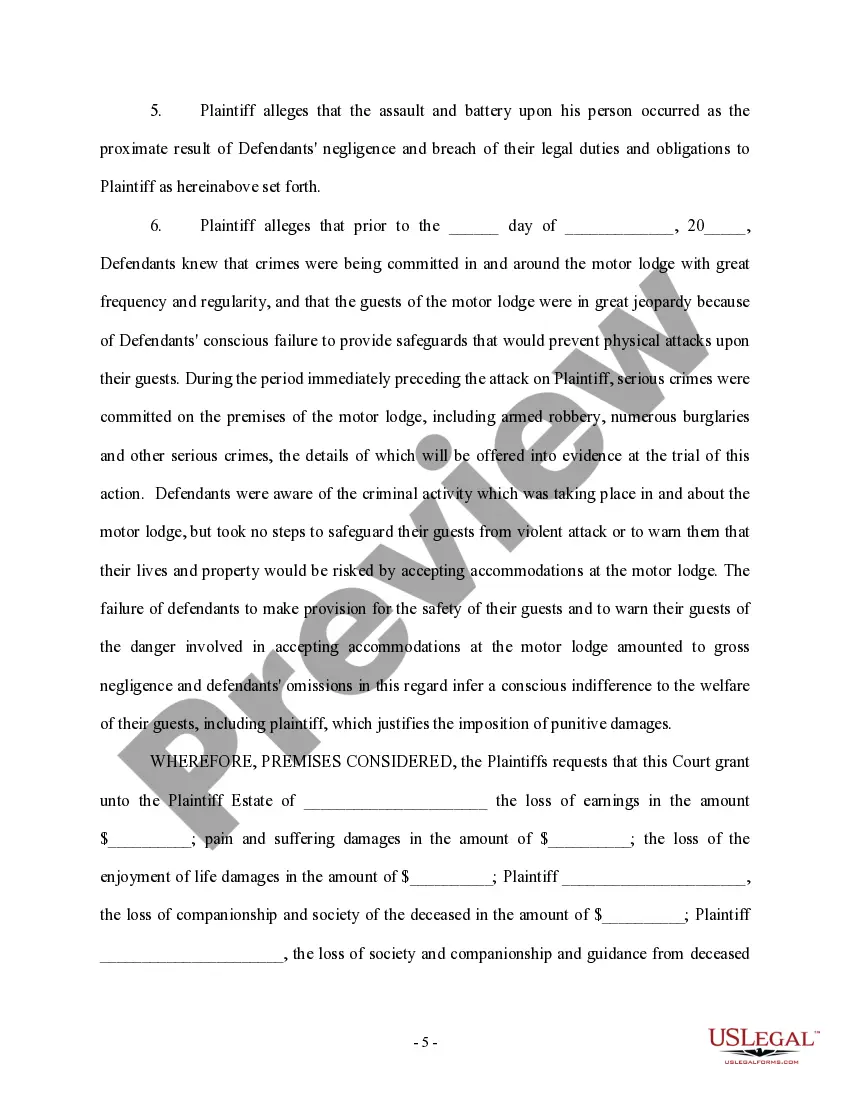
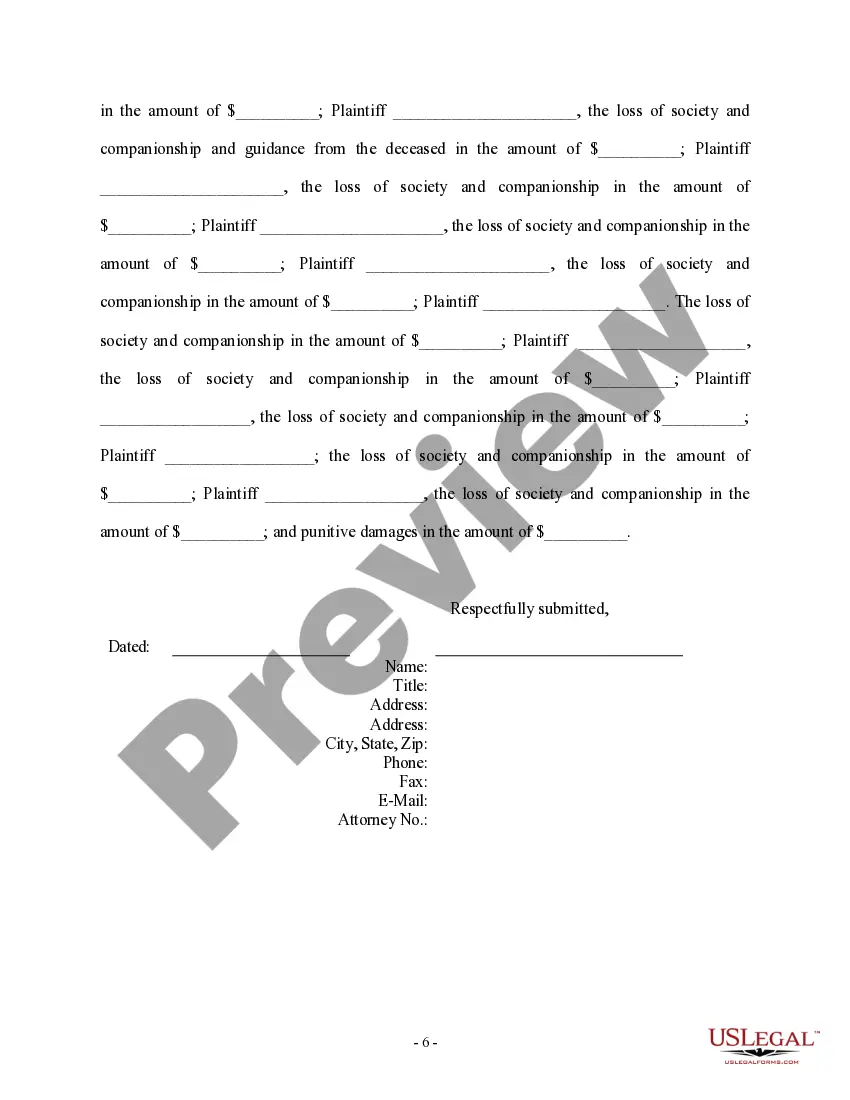
- Damages sought: Specifying types of compensation being requested, such as lost earnings and pain and suffering.

Common use cases
This form should be used in instances where an individual or a family member has suffered personal injury or wrongful death due to inadequate security measures in a public place, such as a motel. It's applicable when proof exists that the property owner failed to provide adequate protection for their guests, resulting in dangerous incidents.
Who this form is for
- Individuals who have experienced a personal injury in a public lodging space.
- Families seeking justice for a relative who died due to negligence.
- Legal representatives acting on behalf of victims or their families.
How to prepare this document
- Identify the parties: Fill in the names of the plaintiffs and defendants.
- Enter jurisdiction: Specify the court and the relevant county.
- Detail the facts: Clearly outline the circumstances of the incident, including dates and actions taken.
- List allegations: Specify how the defendants were negligent and how that led to the harm suffered.
- Request damages: Fill in the requested amounts for lost earnings, pain, and suffering, among other types of compensation.
Notarization guidance
Notarization is not commonly needed for this form. However, certain documents or local rules may make it necessary. Our notarization service, powered by Notarize, allows you to finalize it securely online anytime, day or night.
Get your form ready online
Our built-in tools help you complete, sign, share, and store your documents in one place.
Make edits, fill in missing information, and update formatting in US Legal Forms—just like you would in MS Word.
Download a copy, print it, send it by email, or mail it via USPS—whatever works best for your next step.
Sign and collect signatures with our SignNow integration. Send to multiple recipients, set reminders, and more. Go Premium to unlock E-Sign.
If this form requires notarization, complete it online through a secure video call—no need to meet a notary in person or wait for an appointment.
We protect your documents and personal data by following strict security and privacy standards.

Make edits, fill in missing information, and update formatting in US Legal Forms—just like you would in MS Word.

Download a copy, print it, send it by email, or mail it via USPS—whatever works best for your next step.

Sign and collect signatures with our SignNow integration. Send to multiple recipients, set reminders, and more. Go Premium to unlock E-Sign.

If this form requires notarization, complete it online through a secure video call—no need to meet a notary in person or wait for an appointment.

We protect your documents and personal data by following strict security and privacy standards.
Common mistakes to avoid
- Failing to include all defendants involved in the case.
- Not specifying the jurisdiction correctly, which may lead to dismissal.
- Leaving out critical facts or details of the incident.
- Incorrectly calculating or omitting claimed damages.
- Not signing or dating the complaint properly.
Benefits of completing this form online
- Quick access: Download the form instantly without waiting for a physical copy.
- Editability: Customize the form with specific case details easily.
- Guidance: Built-in tips and explanations to help users understand every section.
Looking for another form?









Form popularity
FAQ
Elements of Wrongful Death Lawsuits A person's death caused by another person's negligence or by another person's intent to cause the deceased individual harm. Monetary injuries, related to the death, for the surviving family members. Appointment of a personal representative for the estate of the decedent.
A wrongful death claim must be filed by a representative on behalf of the survivors who suffer damage from the decedent's death (they are called the "real parties in interest"). The representative is usually the executor of the decedent's estate. The "real parties in interest" vary from state to state.
How Much Are Wrongful Death Settlements? Wrongful death settlements are, on average, $500,000 or more. Your case may be more or less than average. The purpose of a wrongful death settlement is to place a value on the loss of companionship, life, and income that happens when a personal injury results in death.
Wrongful death happens when somebody is killed because of another person or entity's negligence or misconduct. Although there may be a criminal prosecution related to the fatality, a wrongful death lawsuit is a civil action that is separate and distinct from any criminal charges.
Since the parties are the same, you do not need an amended summons. Same for doe defendants once you ascertain their names. If your amended complaint has new names in the caption, then you want an amended summons, too.
Citations If an amendment adds a new party defendant, an amended or new summons naming that party as a defendant must be issued and served upon the new defendant, since no jurisdiction would be obtained by serving him with a copy of the summons that does not name him.
It means to change the basis for the case in some way. A motion to amend a complaint is the formal way of asking the court for permission to change the original complaint.
(e) (1) In response to a demurrer and prior to the case being at issue, a complaint or cross-complaint shall not be amended more than three times, absent an offer to the trial court as to such additional facts to be pleaded that there is a reasonable possibility the defect can be cured to state a cause of action.