Motion for Summary Judgment on Behalf of Defendant
What is this form?
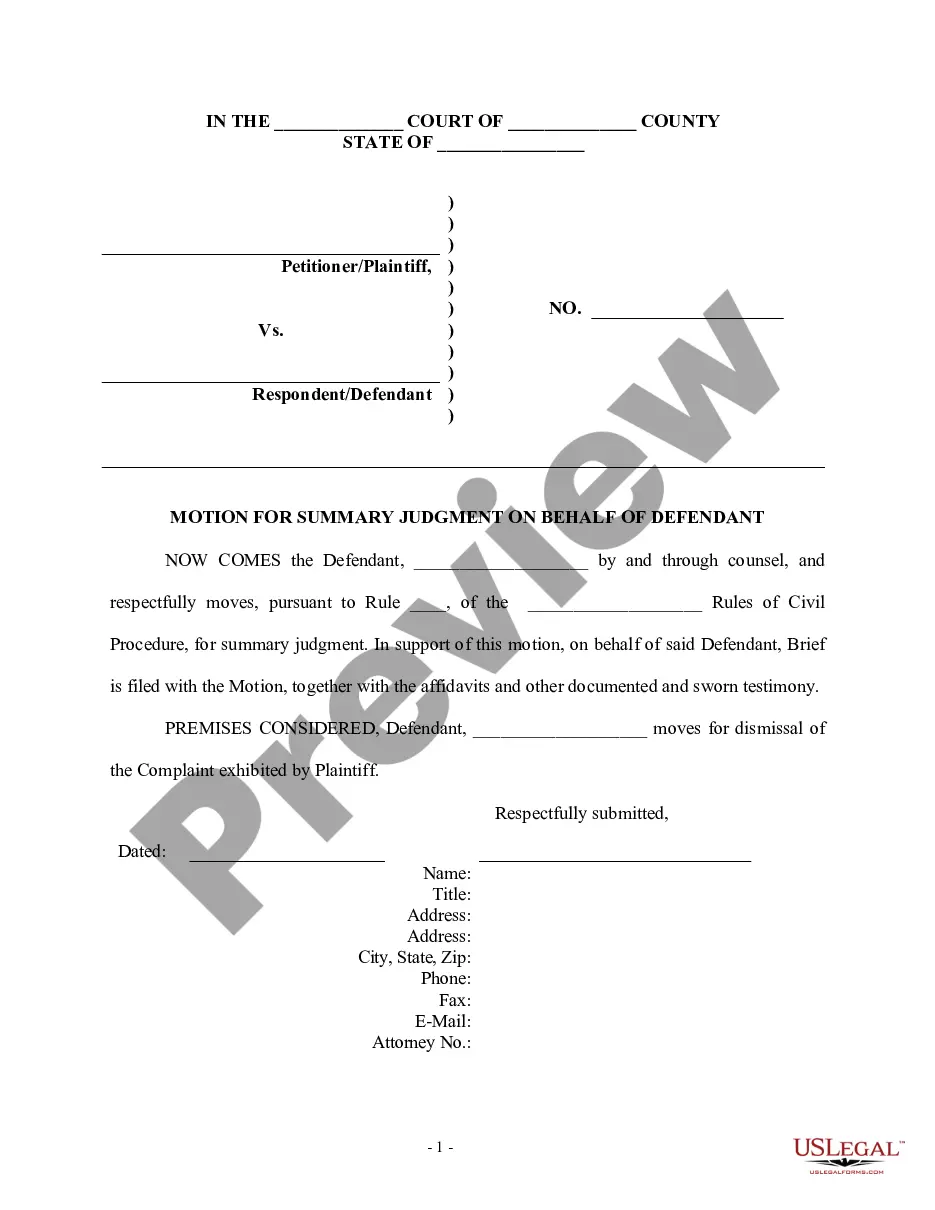
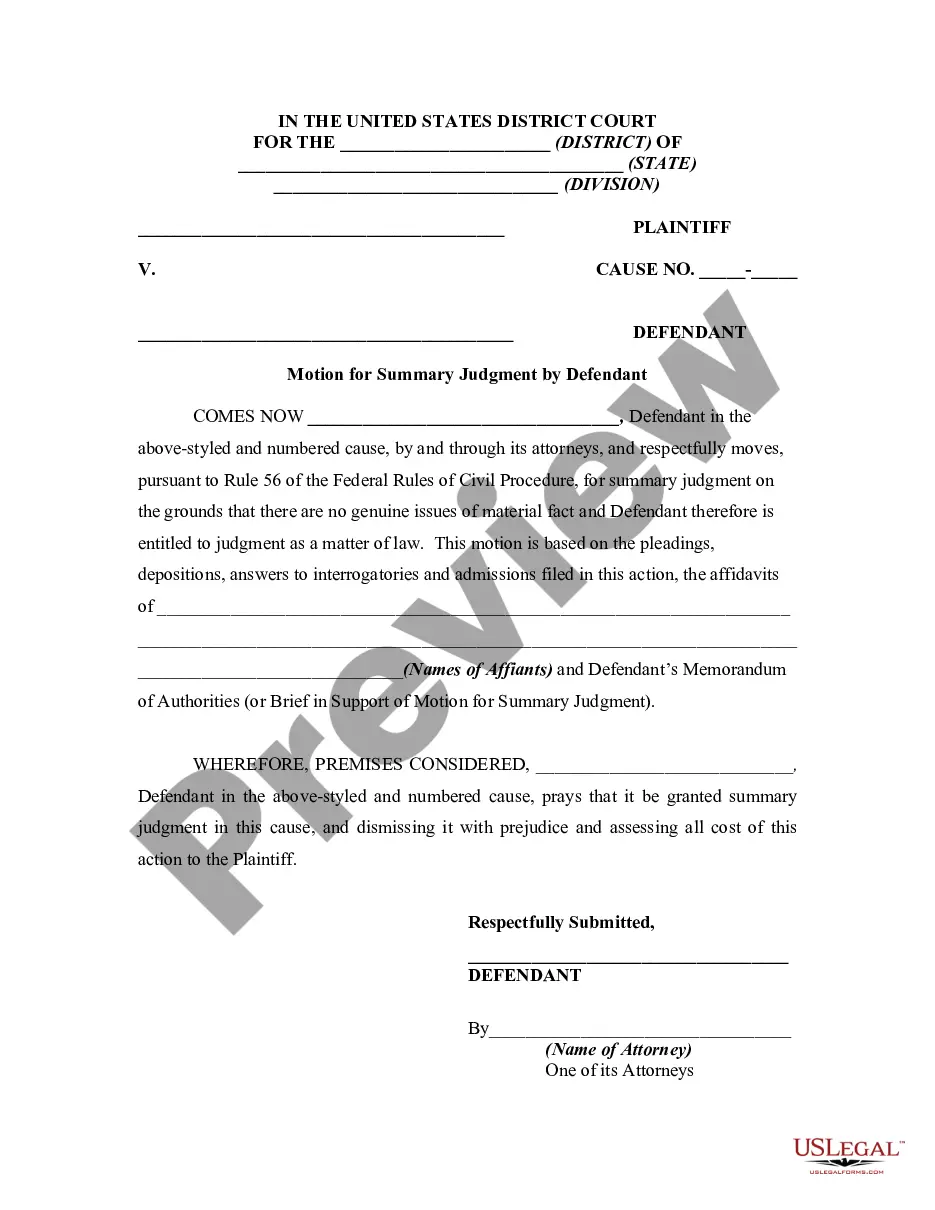
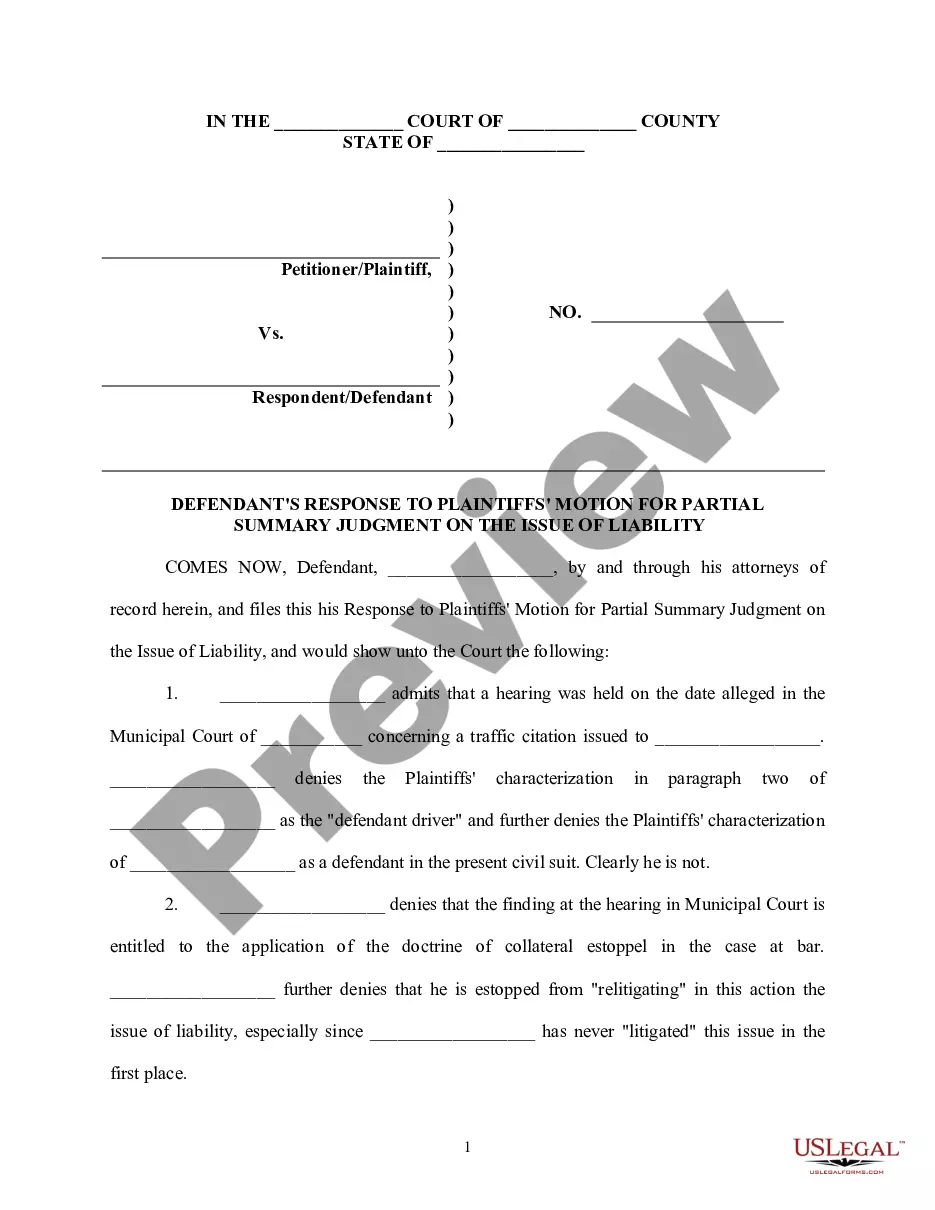
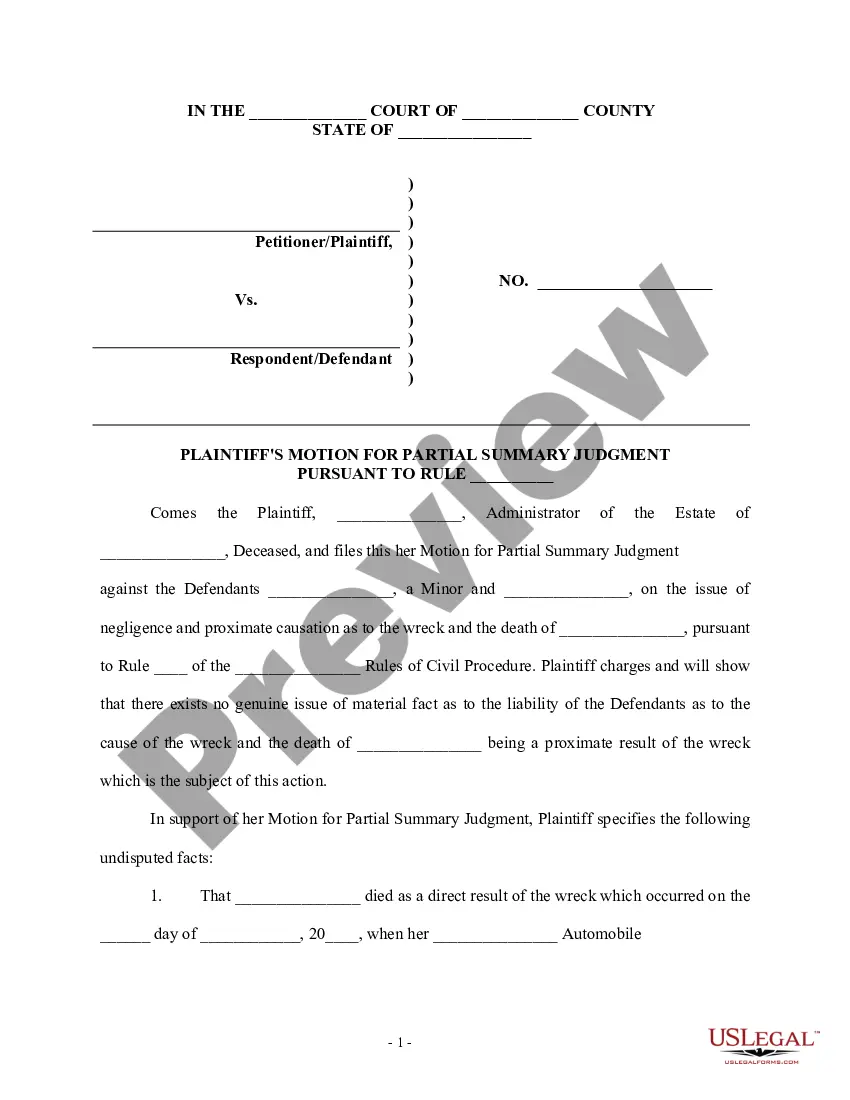
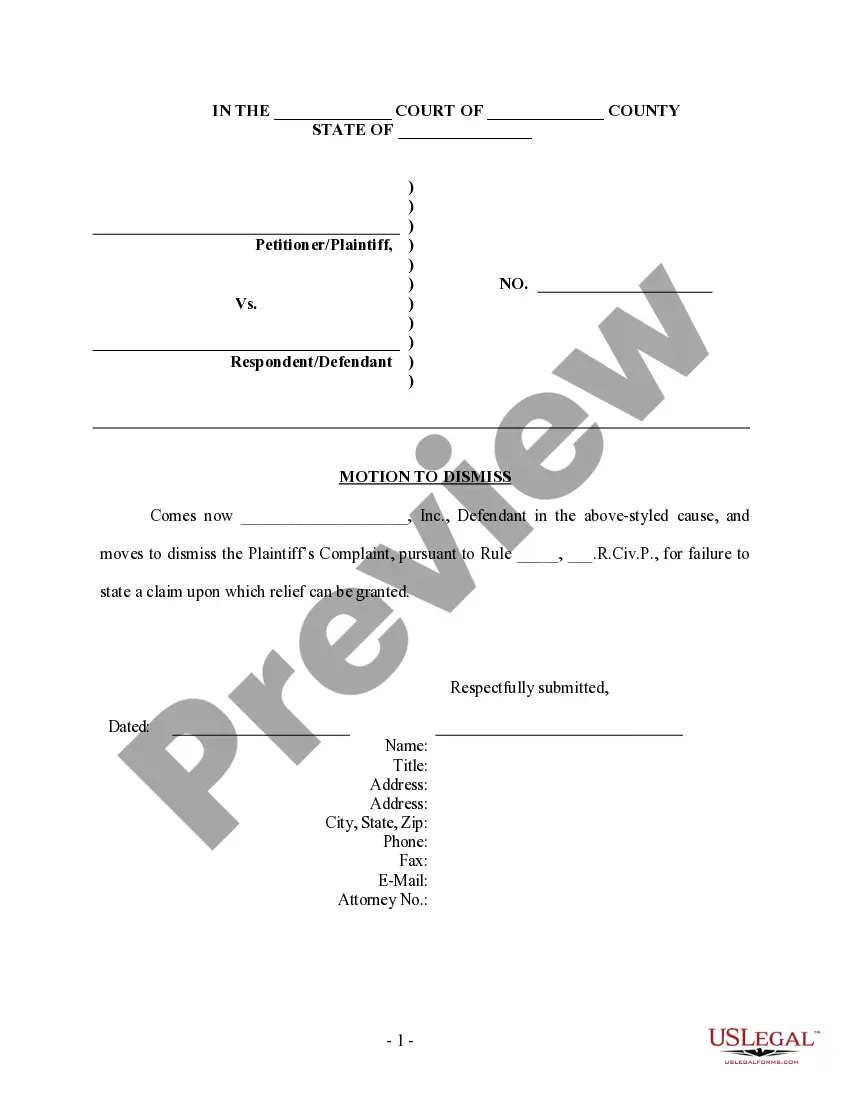
The Motion for Summary Judgment on Behalf of Defendant is a legal document used by defendants seeking to dismiss the plaintiff's complaint before a trial. This motion asserts that there are no genuine disputes of material fact requiring a trial, which distinguishes it from other forms of motions that may focus on different legal arguments or procedural aspects.
Main sections of this form
- Defendant's name and information placeholder
- Request for dismissal of the plaintiff's complaint
- Date of filing
- Signature line for the defendant or attorney
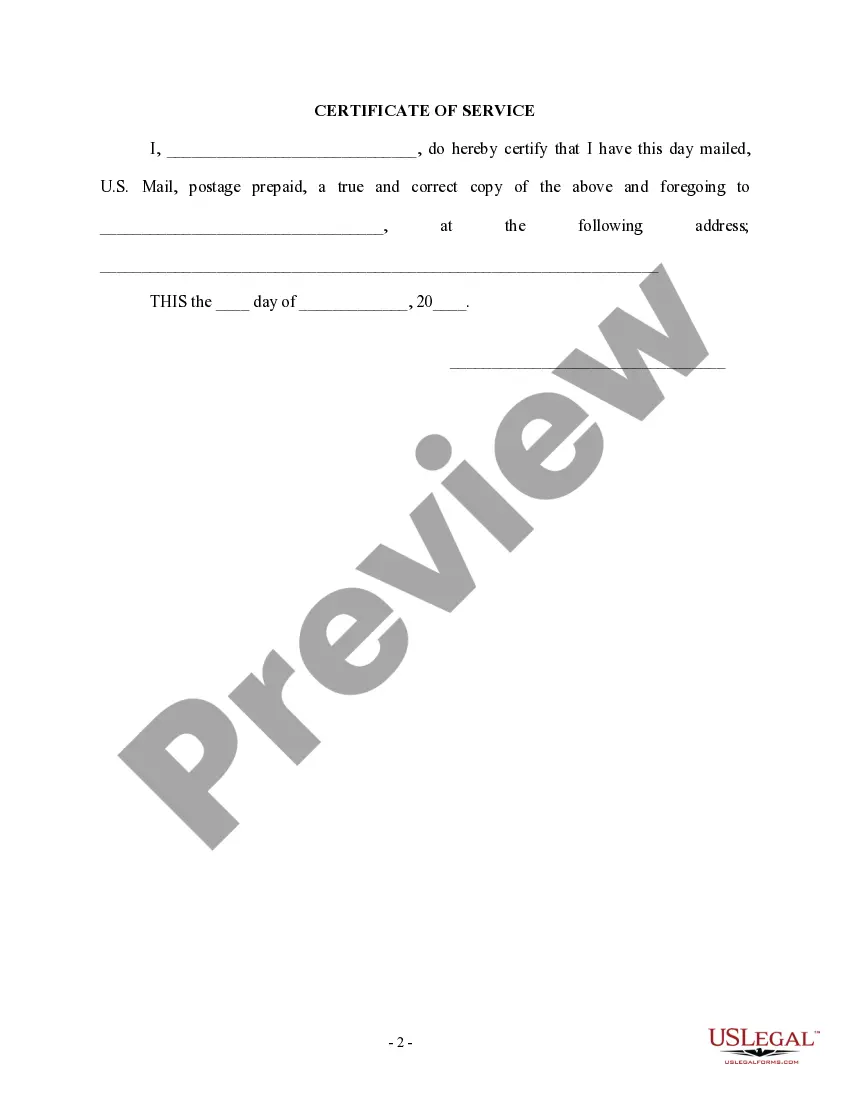
- Certificate of service with mailing details
When this form is needed
This form is useful when a defendant believes that the plaintiff's complaint lacks sufficient legal basis and wishes to seek its dismissal without going to trial. Common scenarios include cases where the evidence shows that there are no genuine disputes regarding the material facts of the case or where the law does not support the plaintiff's claims.
Who needs this form
- Defendants in civil lawsuits who wish to challenge the validity of the plaintiff's claims
- Attorneys representing defendants in court
- Individuals seeking to understand their rights and options in a lawsuit
Steps to complete this form
- Identify the parties involved and fill in the defendant's name.
- State the grounds for seeking dismissal of the complaint.
- Enter the date of filing in the appropriate section.
- Sign the document, including the title and contact information of the attorney, if applicable.
- Complete the certificate of service, ensuring it includes the recipient's name and address.
Notarization guidance
Notarization is not commonly needed for this form. However, certain documents or local rules may make it necessary. Our notarization service, powered by Notarize, allows you to finalize it securely online anytime, day or night.
Get your form ready online
Our built-in tools help you complete, sign, share, and store your documents in one place.
Make edits, fill in missing information, and update formatting in US Legal Forms—just like you would in MS Word.
Download a copy, print it, send it by email, or mail it via USPS—whatever works best for your next step.
Sign and collect signatures with our SignNow integration. Send to multiple recipients, set reminders, and more. Go Premium to unlock E-Sign.
If this form requires notarization, complete it online through a secure video call—no need to meet a notary in person or wait for an appointment.
We protect your documents and personal data by following strict security and privacy standards.

Make edits, fill in missing information, and update formatting in US Legal Forms—just like you would in MS Word.

Download a copy, print it, send it by email, or mail it via USPS—whatever works best for your next step.

Sign and collect signatures with our SignNow integration. Send to multiple recipients, set reminders, and more. Go Premium to unlock E-Sign.

If this form requires notarization, complete it online through a secure video call—no need to meet a notary in person or wait for an appointment.

We protect your documents and personal data by following strict security and privacy standards.
Typical mistakes to avoid
- Failing to provide accurate information for the defendant.
- Not clearly stating the reasons for the dismissal request.
- Omitting the date of filing or signature.
- Incorrectly completing the certificate of service.
Why use this form online
- Immediate access to a legally vetted template, ensuring compliance with legal standards.
- Ability to edit the form to suit individual cases and specifics.
- Convenient download options for easy printing or filing.
Looking for another form?









Form popularity
FAQ
One of the most significant motions is a motion for summary judgment (sometimes simply called an MSJ). If granted, an MSJ can end a civil case.For example, a motion might ask the court to prohibit a piece of evidence from being considered at trial or it might request that the court move the case to another venue.
How Is Summary Judgment Granted? Summary judgment is granted when there are no other facts to be tried.Summary judgment is granted when the facts can be decided upon without needing to go to trial, where the opposing party would lose due to a lack of evidence.
The grant of summary judgment usually results in a final judgment only if the grant resolves all issues as to all parties. An order for summary judgment is interlocutory if it does not entirely end the proceedings before the trial court.
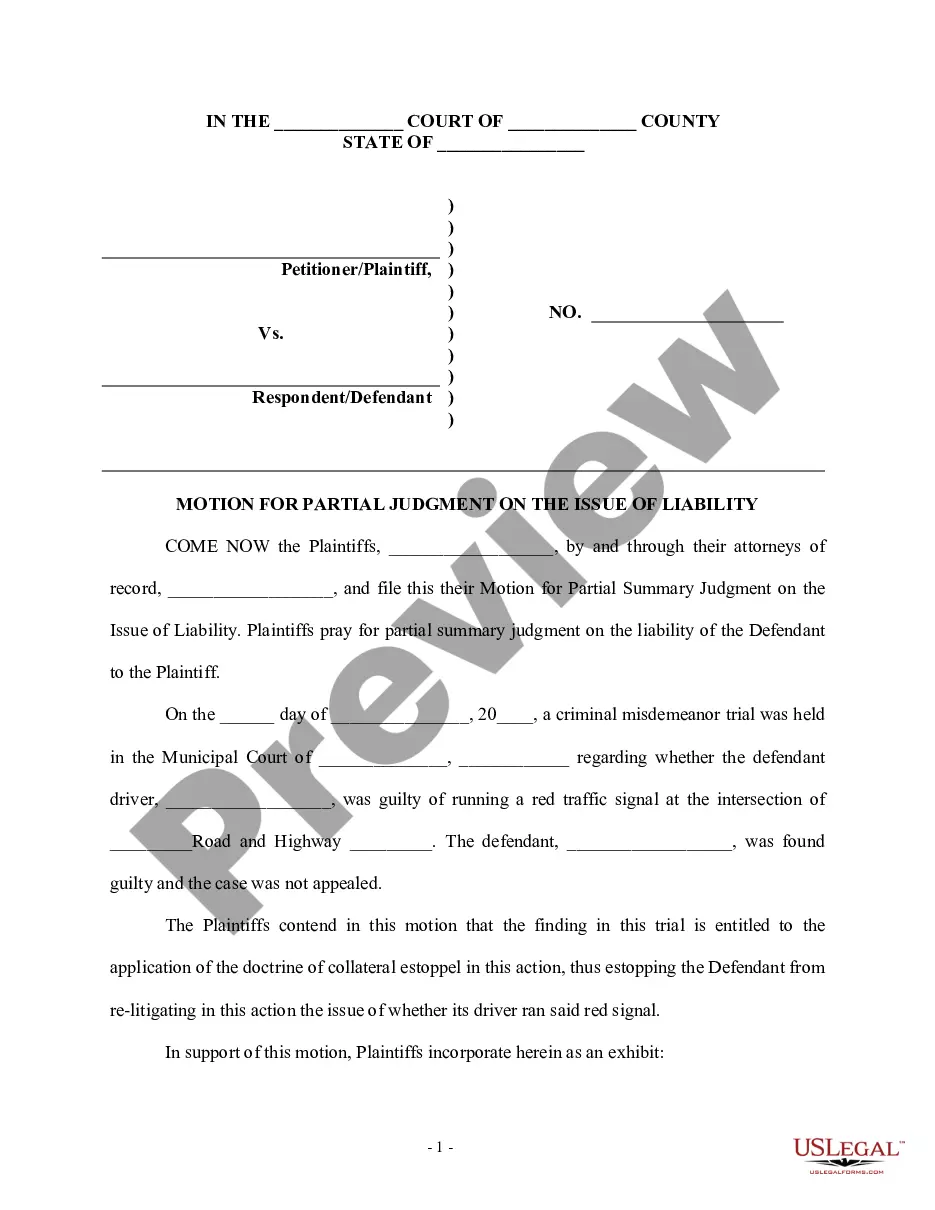
The purpose of summary judgment is to avoid unnecessary trials. It may also simplify a trial, as when partial summary judgment dispenses with certain issues or claims. For example, a court might grant partial summary judgment in a personal injury case on the issue of liability.