Form - Stock Purchase Agreement for Strategic Investment Made at Time of Initial Public Offering
Overview of this form
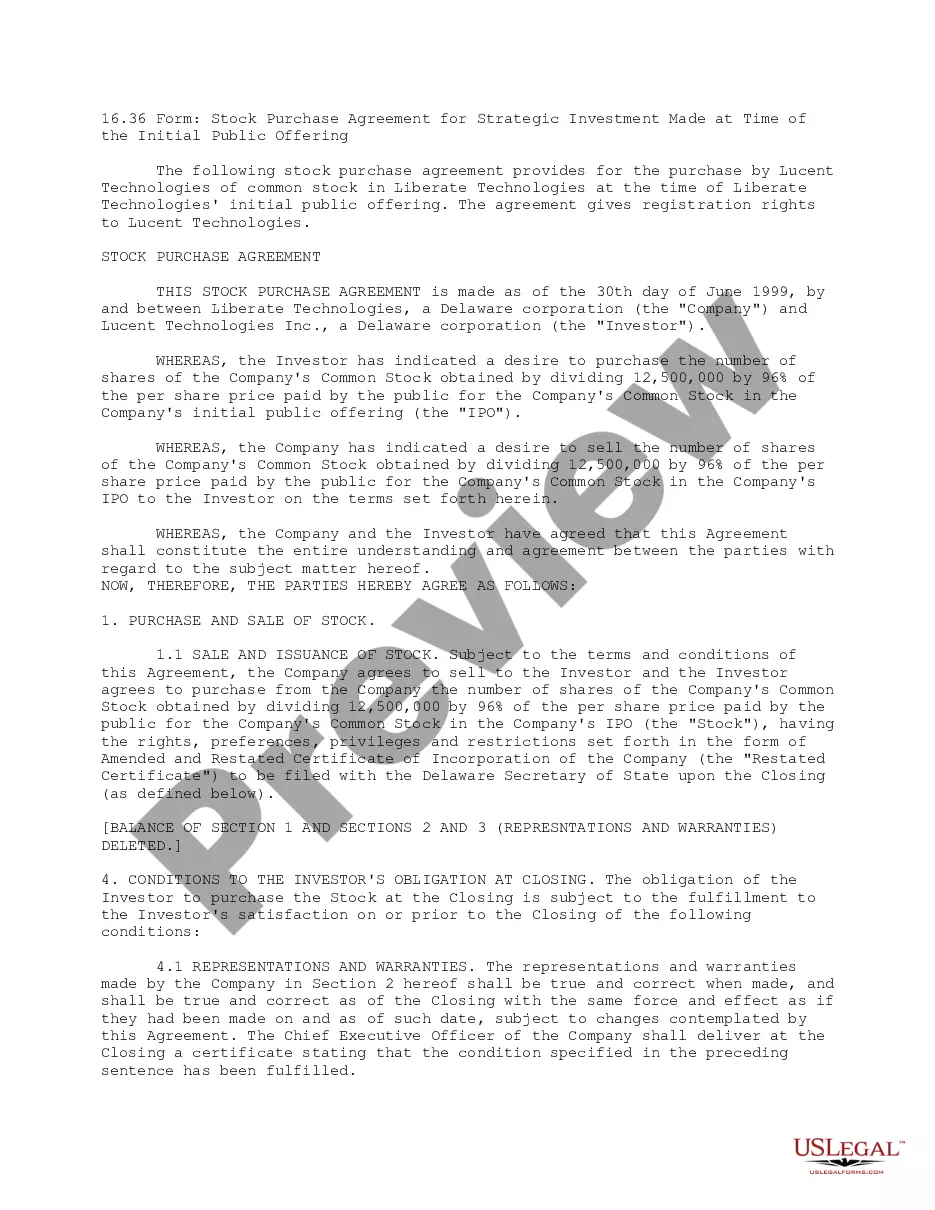
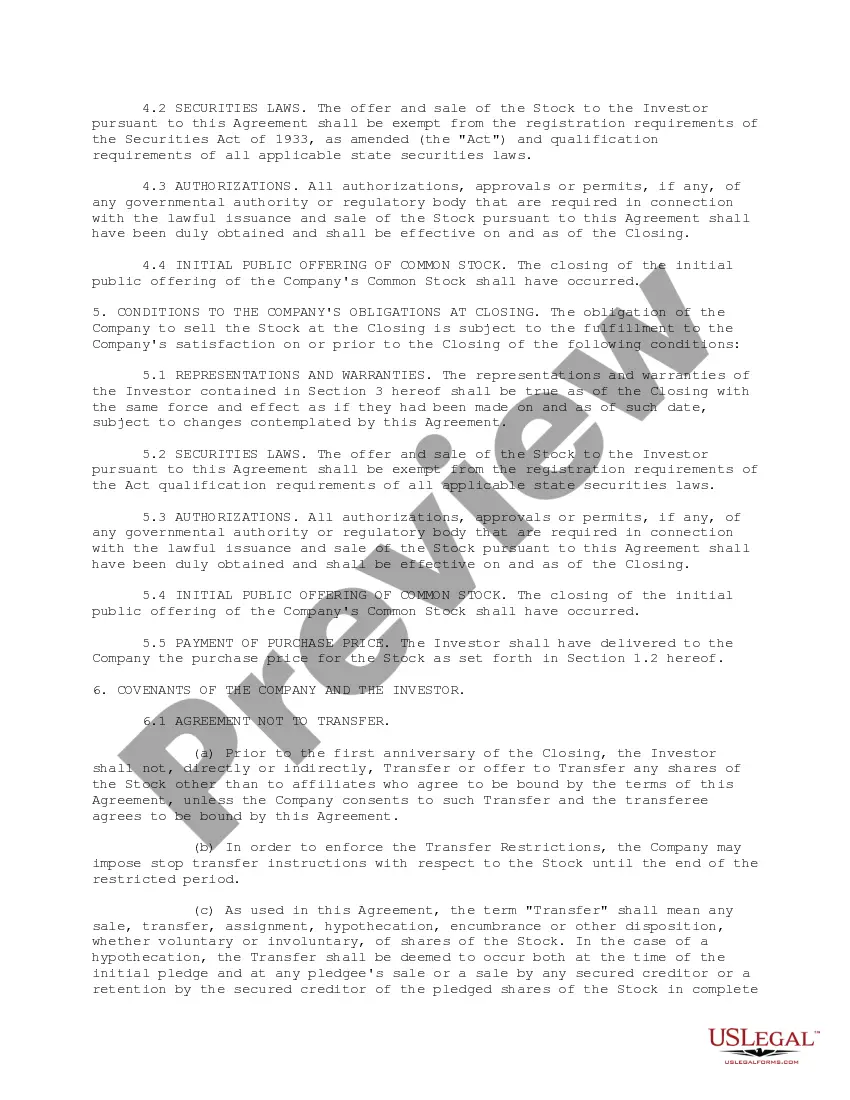
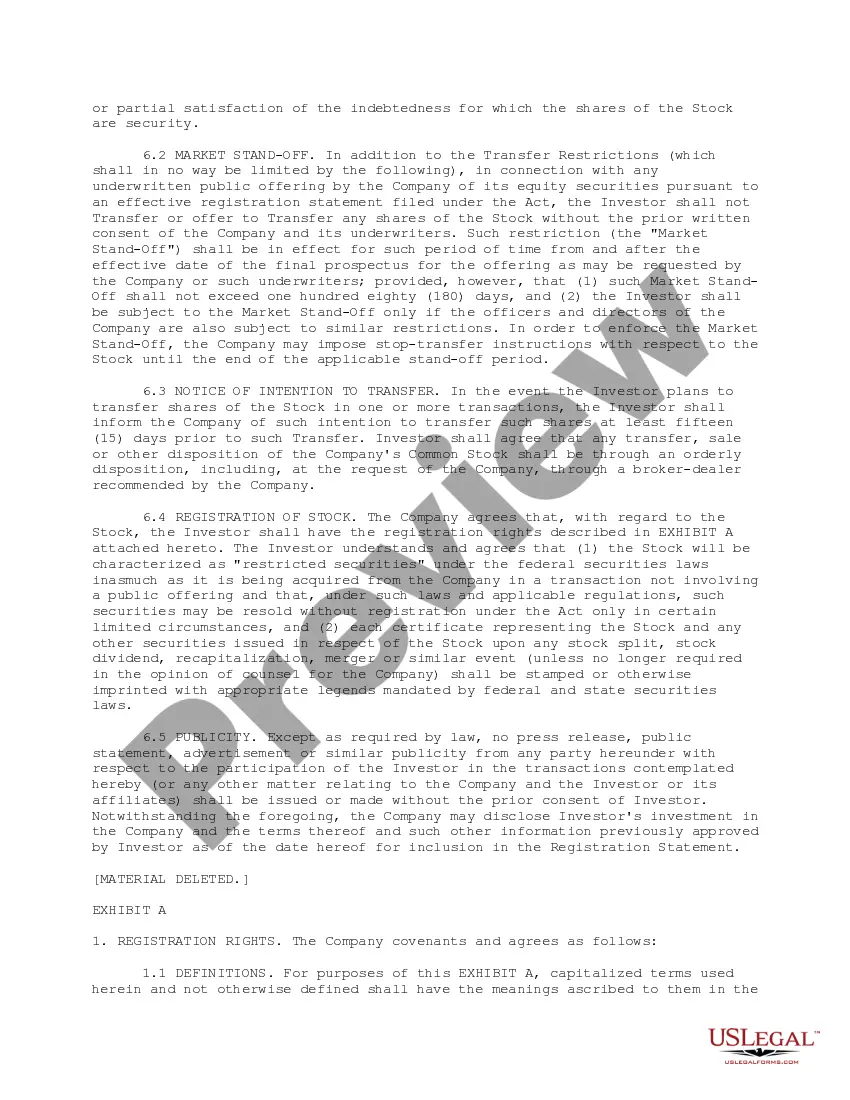
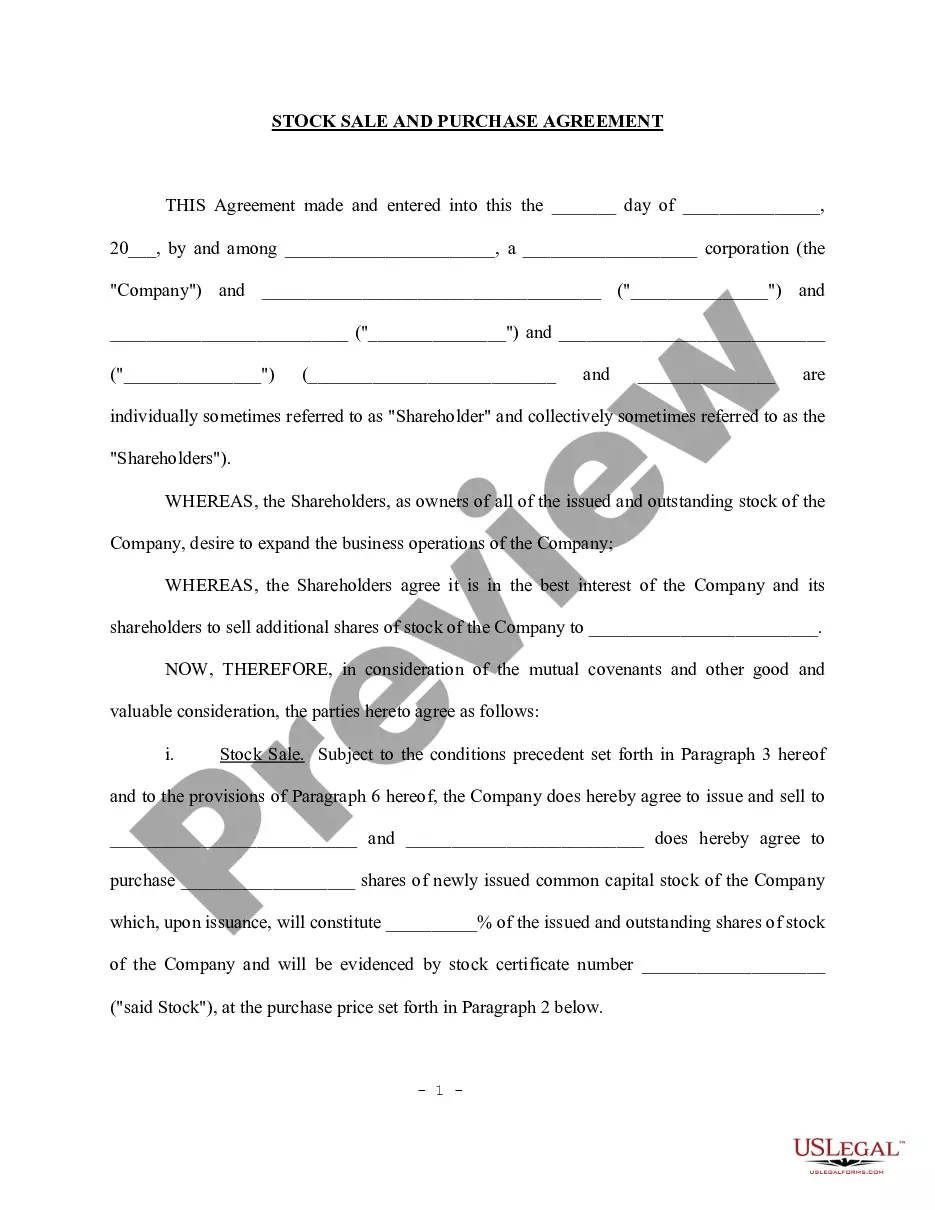
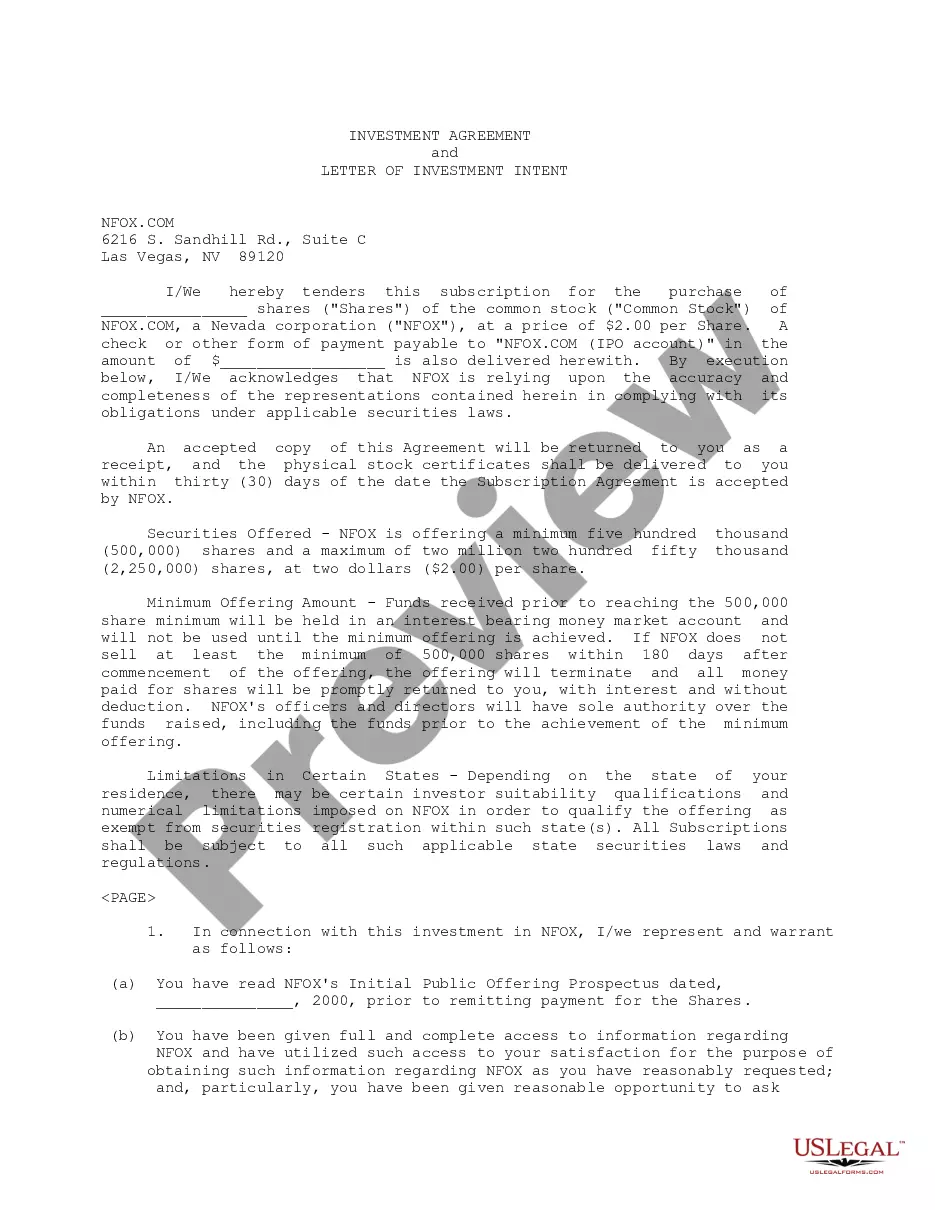
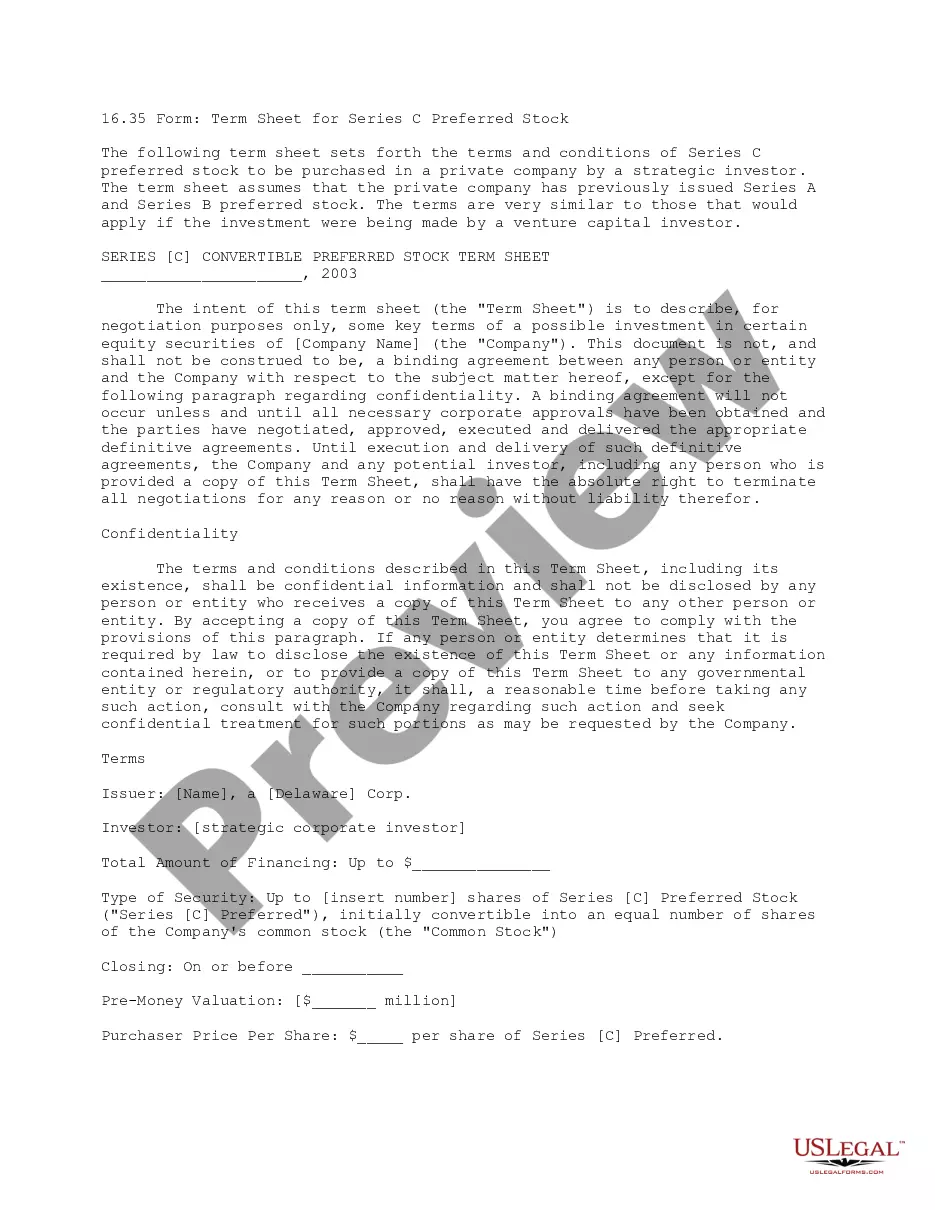
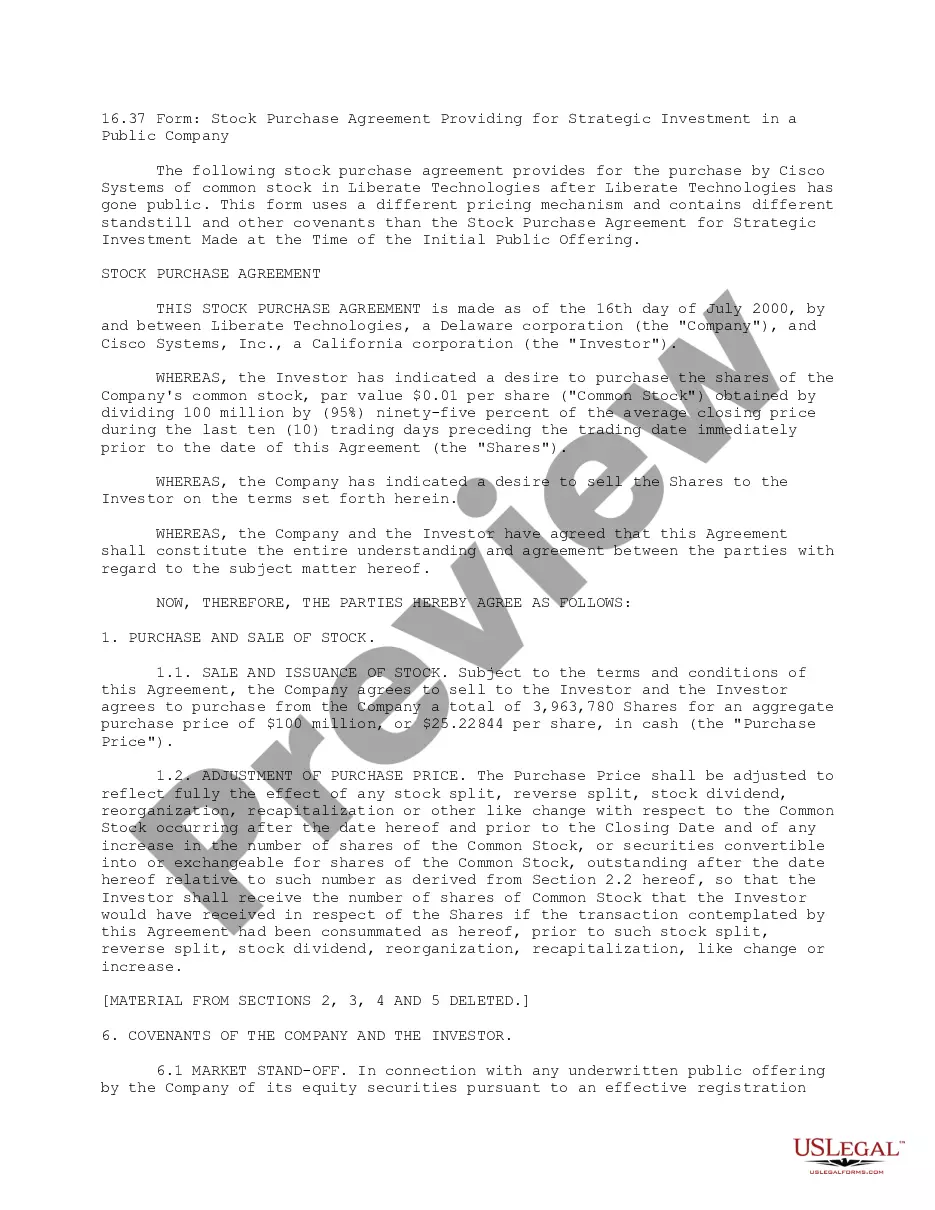
This Stock Purchase Agreement for Strategic Investment Made at Time of Initial Public Offering is a legally binding contract between a company and an investor. It details the terms under which the investor purchases shares of the company's stock during its initial public offering (IPO). Unlike standard stock purchase agreements, this form emphasizes strategic investment considerations and the associated registration rights, making it suitable for significant financial partnerships at the IPO stage.
Key parts of this document
- Purchase and Sale of Stock: Details the shares being sold, based on the IPO price and the total amount available.
- Conditions to Investor's Obligation: Outlines the conditions that must be met before the investor is required to purchase the stock.
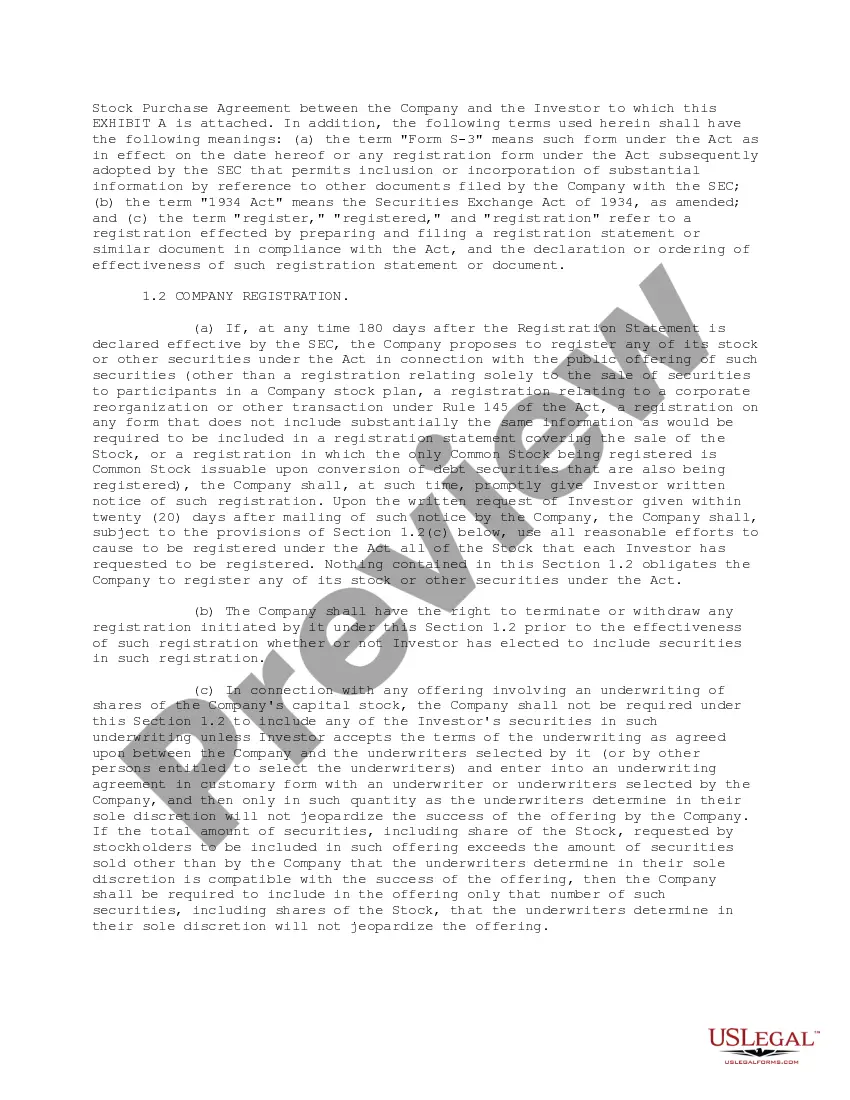
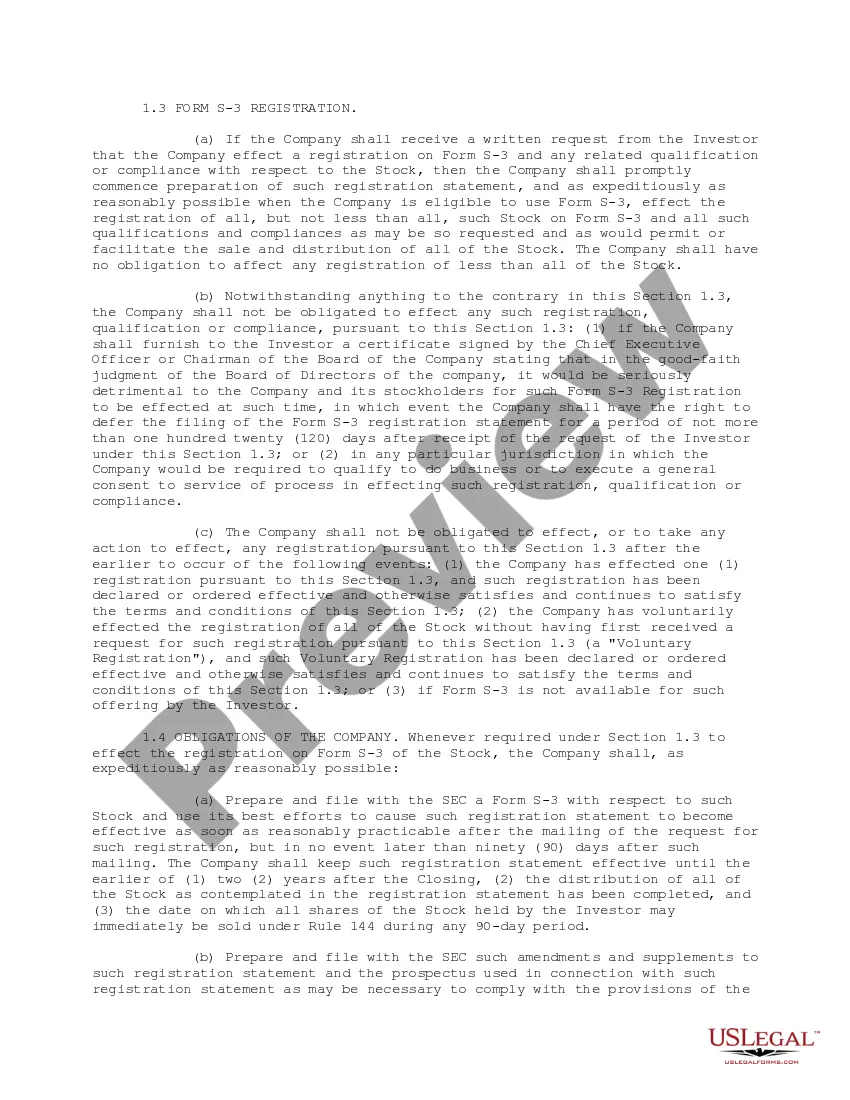
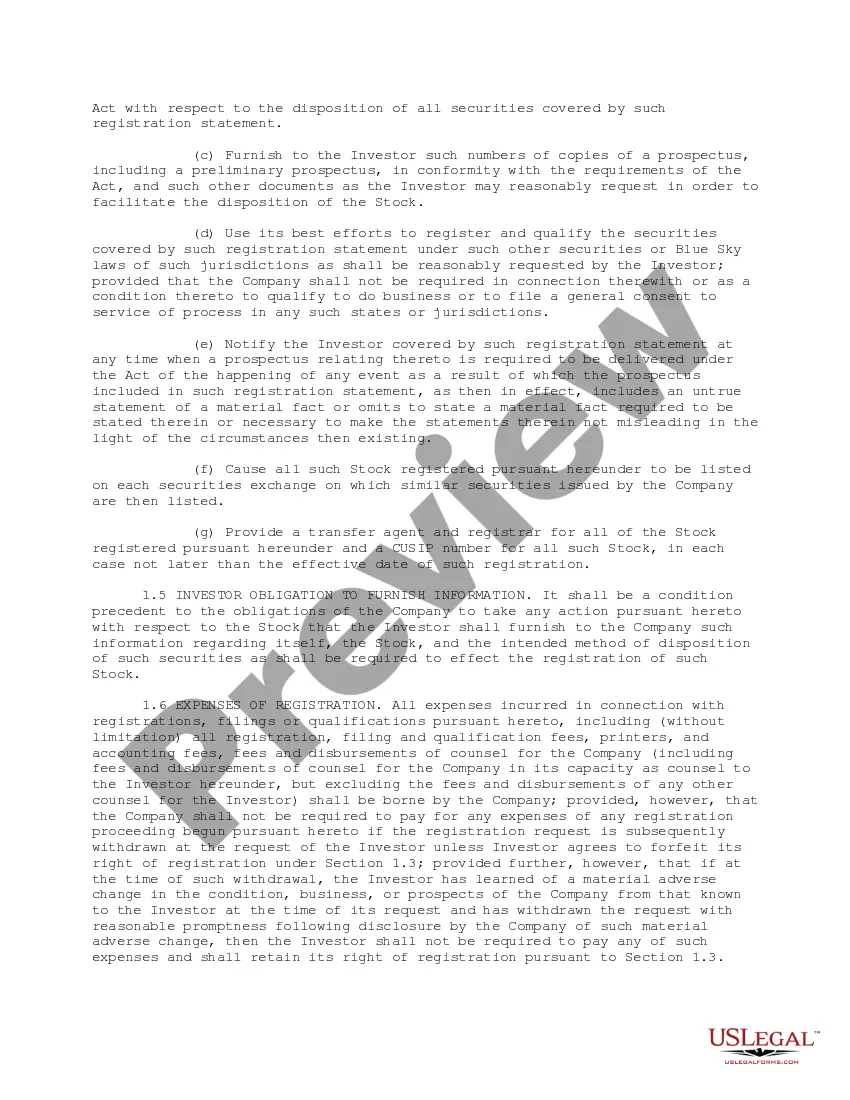
- Company Covenants: Includes provisions related to transfer restrictions, market stand-off periods, and registration rights.
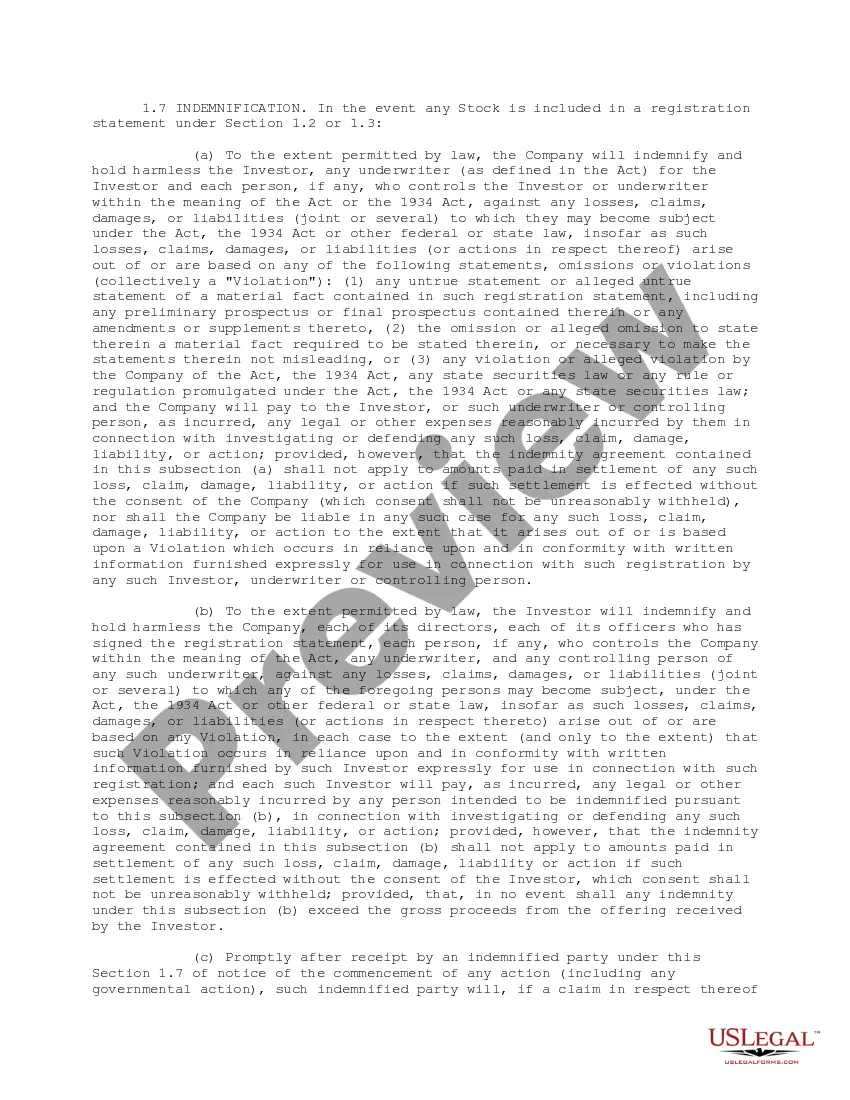
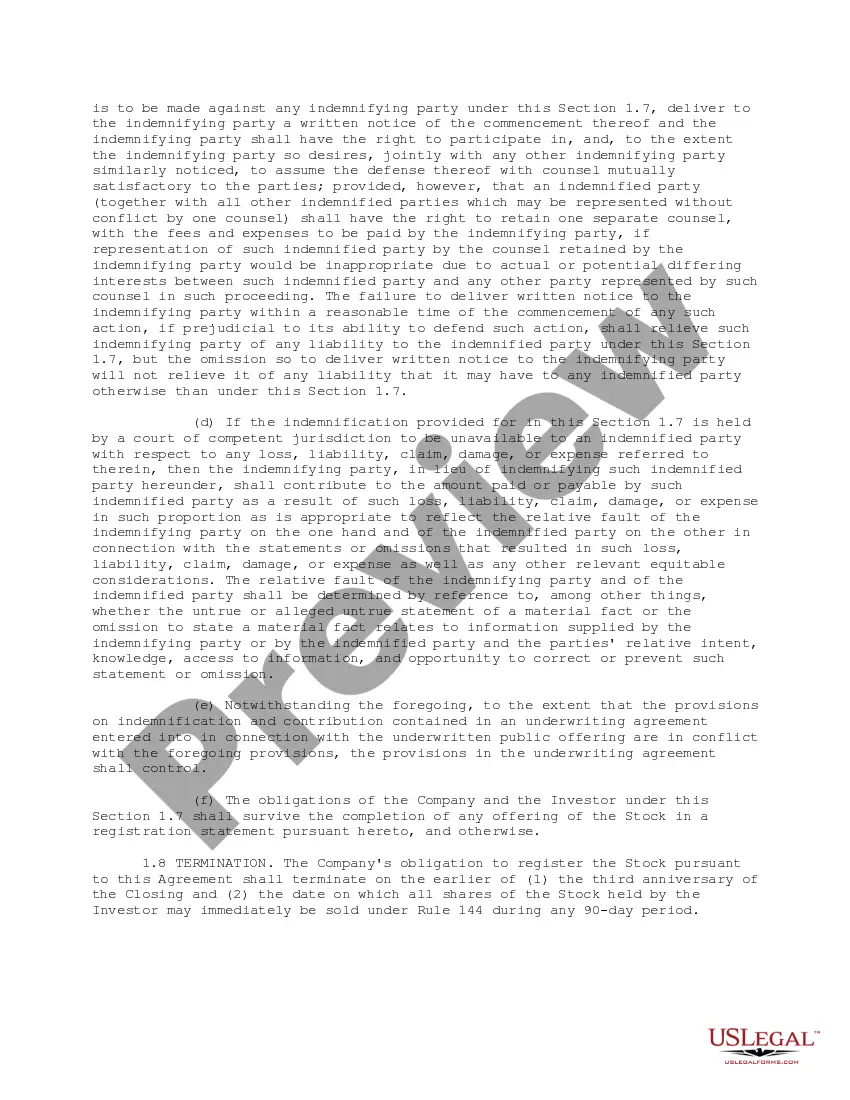
- Indemnification Clauses: Protects parties from losses linked to misstatements or omissions in the registration documents.
- General Provisions: Includes terms for amendment, enforcement, and the governing law for the agreement.
Situations where this form applies
This form should be used when a company is preparing to go public and seeks to establish terms for strategic investment from entities like venture capitalists or institutional investors. It is particularly valuable in structuring the agreement to clarify the expectations and rights of both parties at the time of the IPO.
Who needs this form
- Companies planning to go public that wish to attract significant institutional investors.
- Investors seeking to purchase substantial shares of a company during its IPO.
- Legal professionals drafting agreements related to stock purchases in connection with an IPO.
How to prepare this document
- Identify the parties involved: the company and the investor.
- Specify the number of shares and the price at which they will be purchased.
- Detail any conditions that must be met before the closing of the sale.
- Include covenants regarding the transfer of shares and market stand-off periods.
- Obtain signatures from both parties to finalize the agreement.
Notarization requirements for this form
This form does not typically require notarization unless specified by local law. However, it's advisable to consult with a legal professional to ensure compliance with any jurisdiction-specific requirements.
Get your form ready online
Our built-in tools help you complete, sign, share, and store your documents in one place.
Make edits, fill in missing information, and update formatting in US Legal Forms—just like you would in MS Word.
Download a copy, print it, send it by email, or mail it via USPS—whatever works best for your next step.
Sign and collect signatures with our SignNow integration. Send to multiple recipients, set reminders, and more. Go Premium to unlock E-Sign.
If this form requires notarization, complete it online through a secure video call—no need to meet a notary in person or wait for an appointment.
We protect your documents and personal data by following strict security and privacy standards.

Make edits, fill in missing information, and update formatting in US Legal Forms—just like you would in MS Word.

Download a copy, print it, send it by email, or mail it via USPS—whatever works best for your next step.

Sign and collect signatures with our SignNow integration. Send to multiple recipients, set reminders, and more. Go Premium to unlock E-Sign.

If this form requires notarization, complete it online through a secure video call—no need to meet a notary in person or wait for an appointment.

We protect your documents and personal data by following strict security and privacy standards.
Common mistakes to avoid
- Failing to accurately specify share quantities and pricing, leading to potential disputes.
- Neglecting to address all conditions precedent to the closing of the sale.
- Overlooking necessary regulatory compliance concerning securities laws.
Why complete this form online
- Convenient access from anywhere, allowing for quick completion.
- Easy adaptability to meet specific investment terms and conditions.
- Safe and secure storage of completed forms, eliminating paperwork clutter.
Legal use & context
- This agreement is enforceable under state and federal securities laws, provided all conditions and covenants are properly followed.
- Registration rights described within provide the investor with protections for future share transactions.
Main things to remember
- The Stock Purchase Agreement is essential for formalizing stock purchases during an IPO.
- Clear terms and conditions reduce risks for both investors and companies.
- Customization options allow the form to fit unique investment scenarios.
Looking for another form?
Form popularity
FAQ
IPO allows companies to raise capital by selling shares. Moreover, companies don't have to repay the capital raised through the issuance of IPO. Companies can offer stock as an incentive, bonus, or as part of an employment contract.
One convenient way to do so is to purchase stocks from companies that invest in growth-stage businesses. One such company is Sutter Rock Capital, a venture capital firm listed on the Nasdaq that invests in companies two or more years before they go public. Some of their pre-IPO investments included Spotify and Dropbox.
Hence, I would highly advice against buying IPOs on the first day. If you want to invest in an IPO, I suggest that you do a full due diligence and wait until the lockup expires. The price will fall as insiders start selling. You can then decide whether you want to buy the firm or not.
Choose an order type Placing a "market order," which instructs your broker to buy the stock immediately and at the best available price, is typically the best order type for buy-and-hold investors.
Usually 180 days. The end of the lock out period is when the original owners can sell on the open market.
An initial public offering (IPO) refers to the process of offering shares of a private corporation to the public in a new stock issuance. Public share issuance allows a company to raise capital from public investors.Meanwhile, it also allows public investors to participate in the offering.
But it's likely most of those investors were already close to becoming millionaires before the IPO. For the average investor, IPOs may prove to be only a little bit more profitable than ordinary stock investing. Maybe you'll make a lot of money on a single trade, and maybe you won't.
Dig Deep for Objective Research. Getting information on companies set to go public is tough. Pick a Company With Strong Brokers. Always Read the Prospectus. Be Cautious. Consider Waiting for the Lock-Up Period to End.
After the IPO stock has begun trading, it can be bought or sold just as any other stock. In fact, on the first day of trading it is often easier to buy the stock due to the high number of shares bought and sold (or liquidity).