Form - Term Sheet for Series C Preferred Stock
About this form
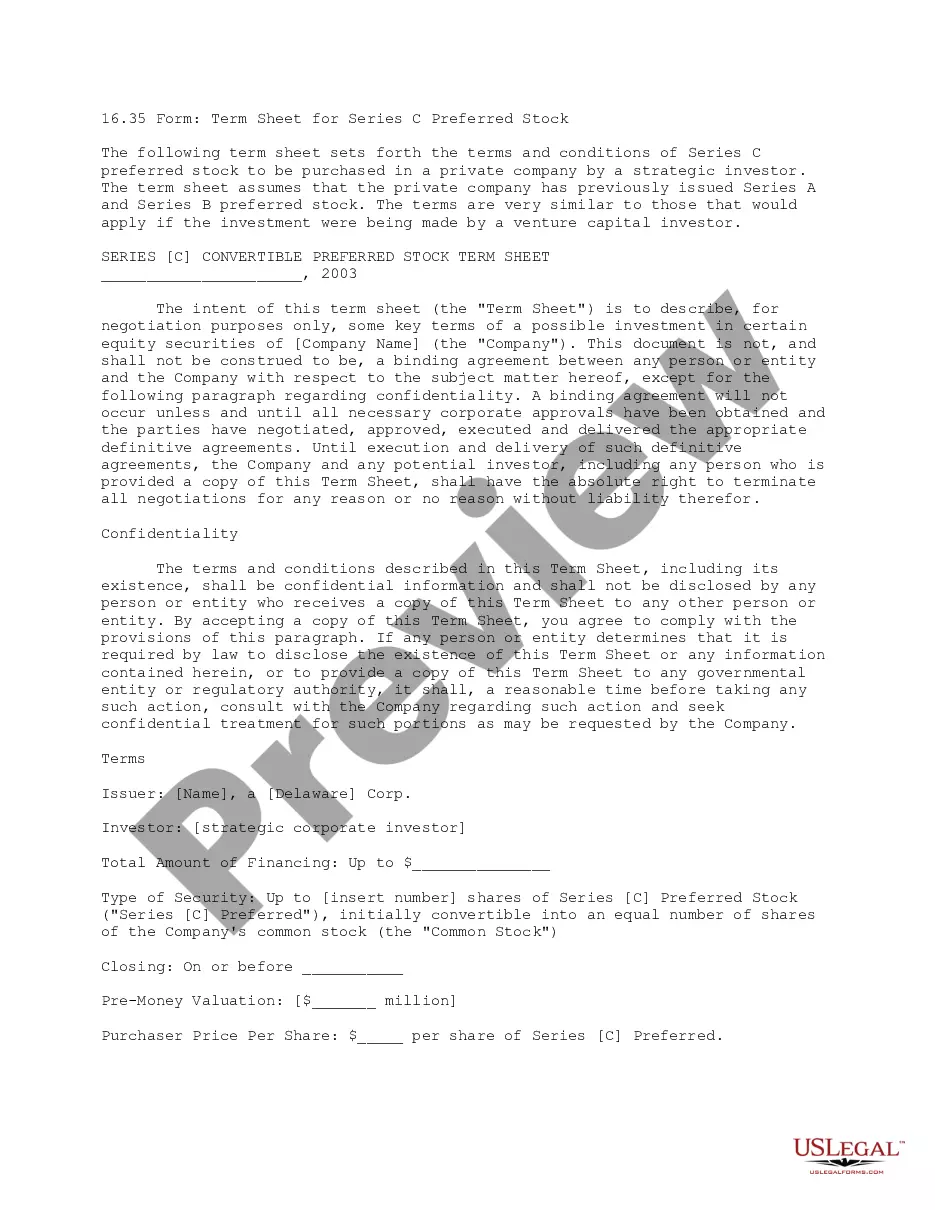
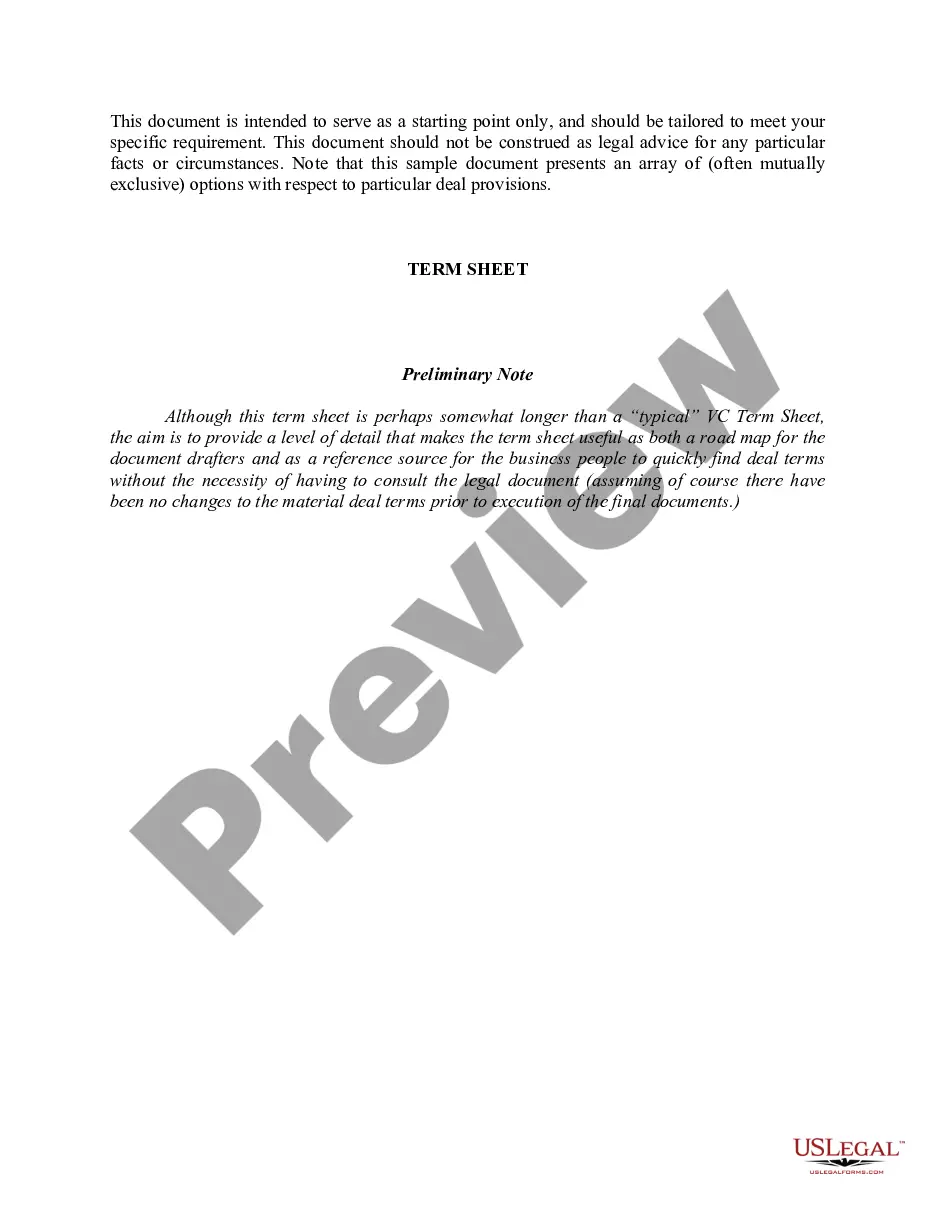
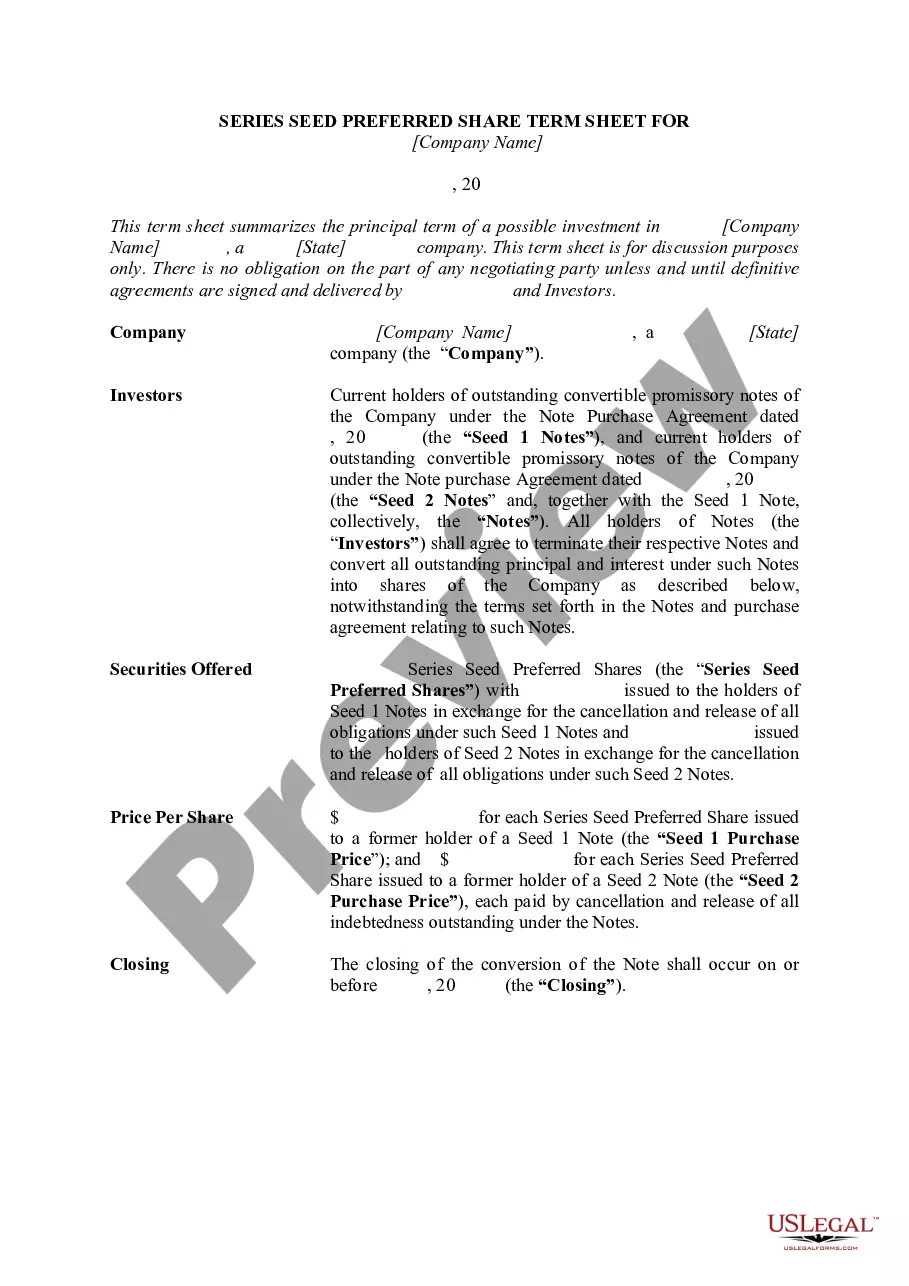
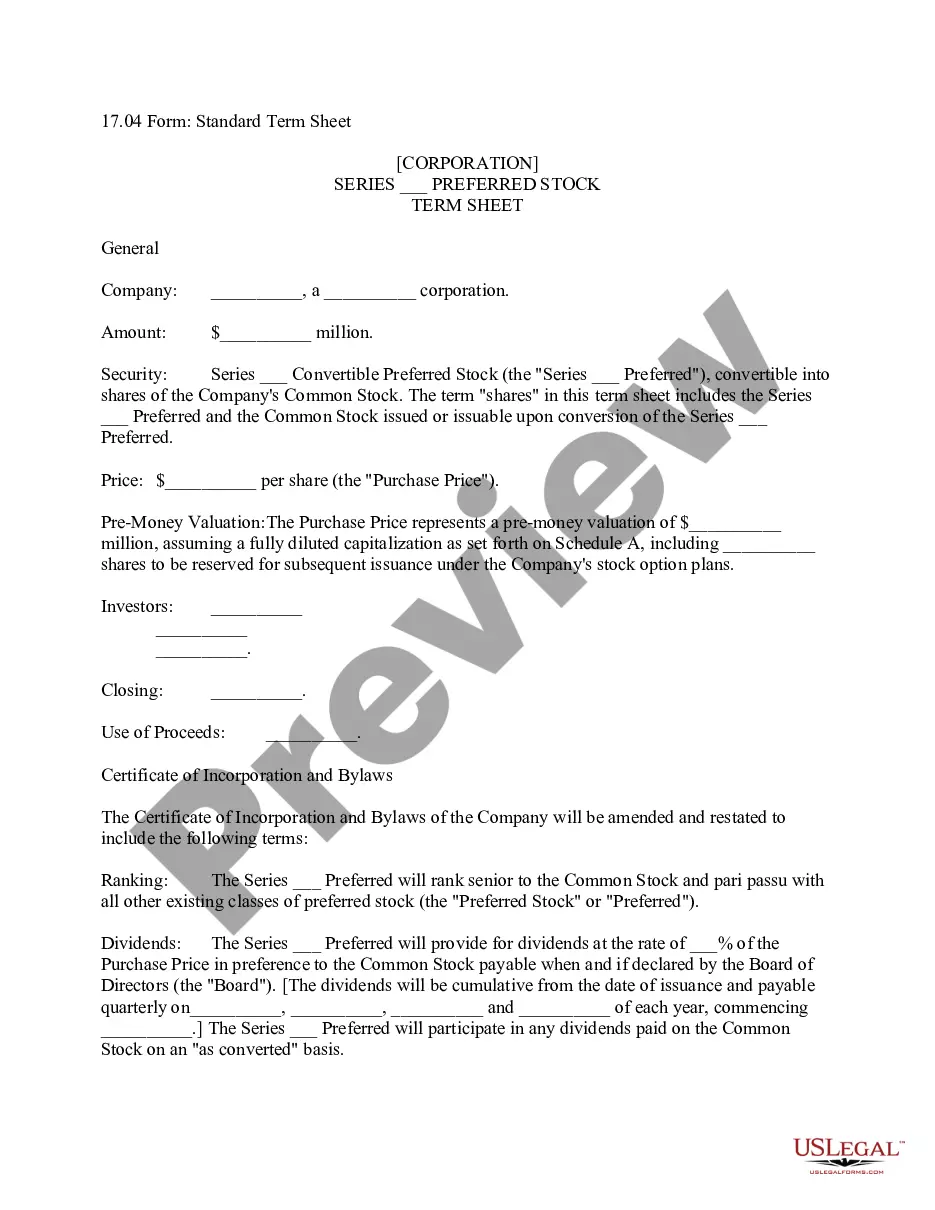
This Term Sheet for Series C Preferred Stock outlines the key terms and conditions for an investment in a private company by strategic investors. This form serves as a preliminary guide meant for negotiation purposes only and is adaptable to suit individual needs. It is distinct from other corporate governance documents, focusing specifically on preferred stock financing, particularly for companies that have already issued Series A and Series B preferred stock.
What’s included in this form
- Confidentiality clause protecting the non-disclosure of terms.
- Details on the issuer and investor identification.
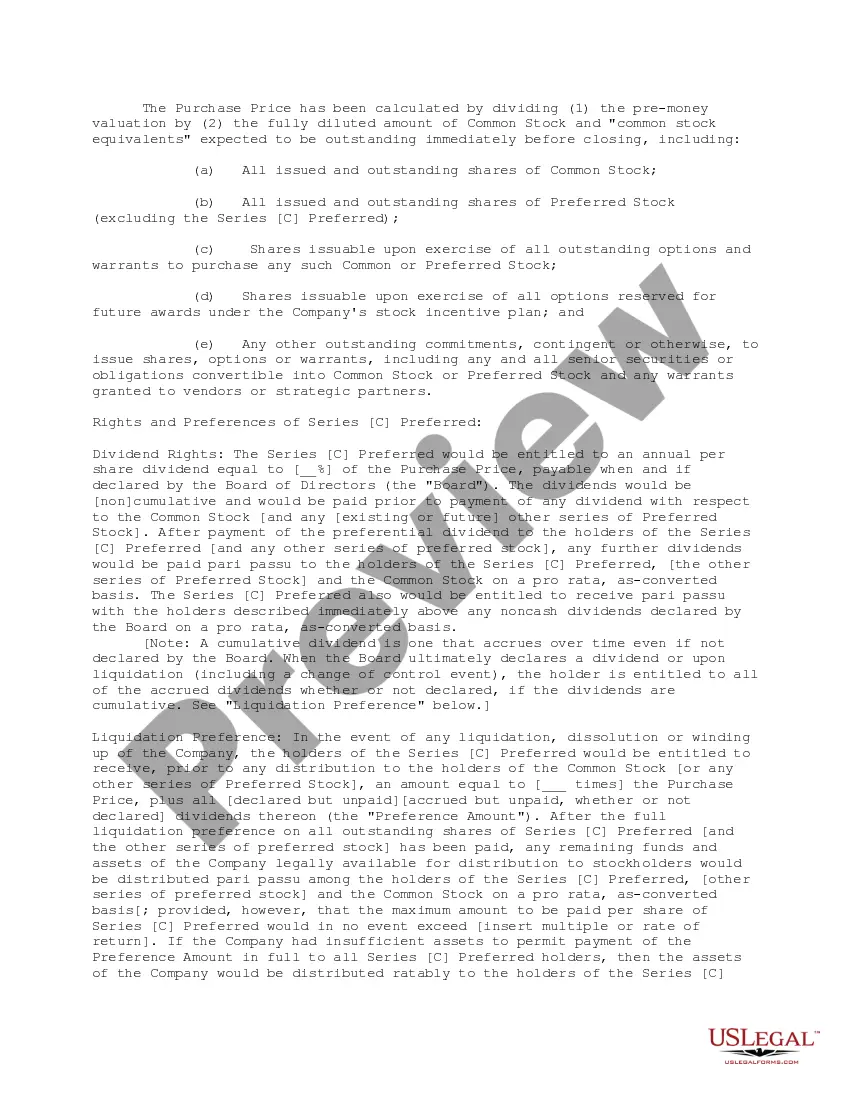
- Terms regarding dividend rights and payment schedules.
- Liquidation preferences outlining investor rights in case of company liquidation.
- Redemption rights allowing investors to require share buyback under specified conditions.
- Conversion rights detailing how preferred shares can be converted to common stock.
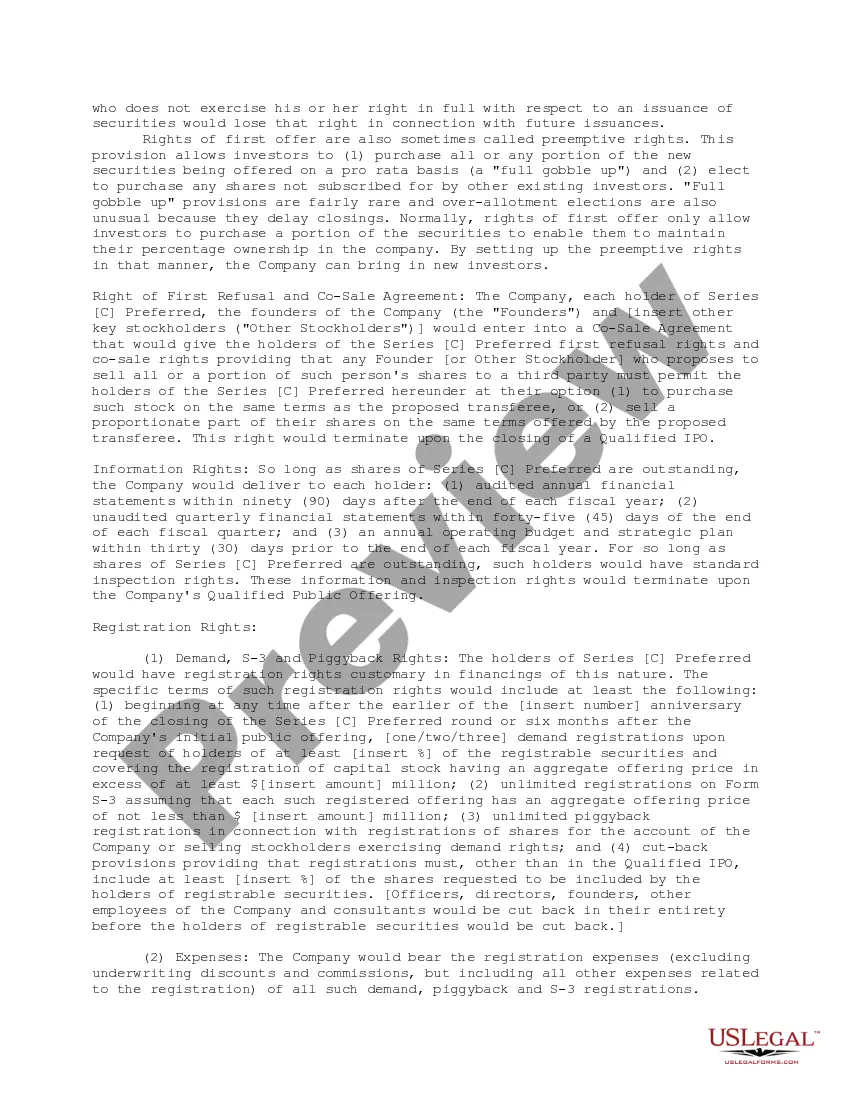
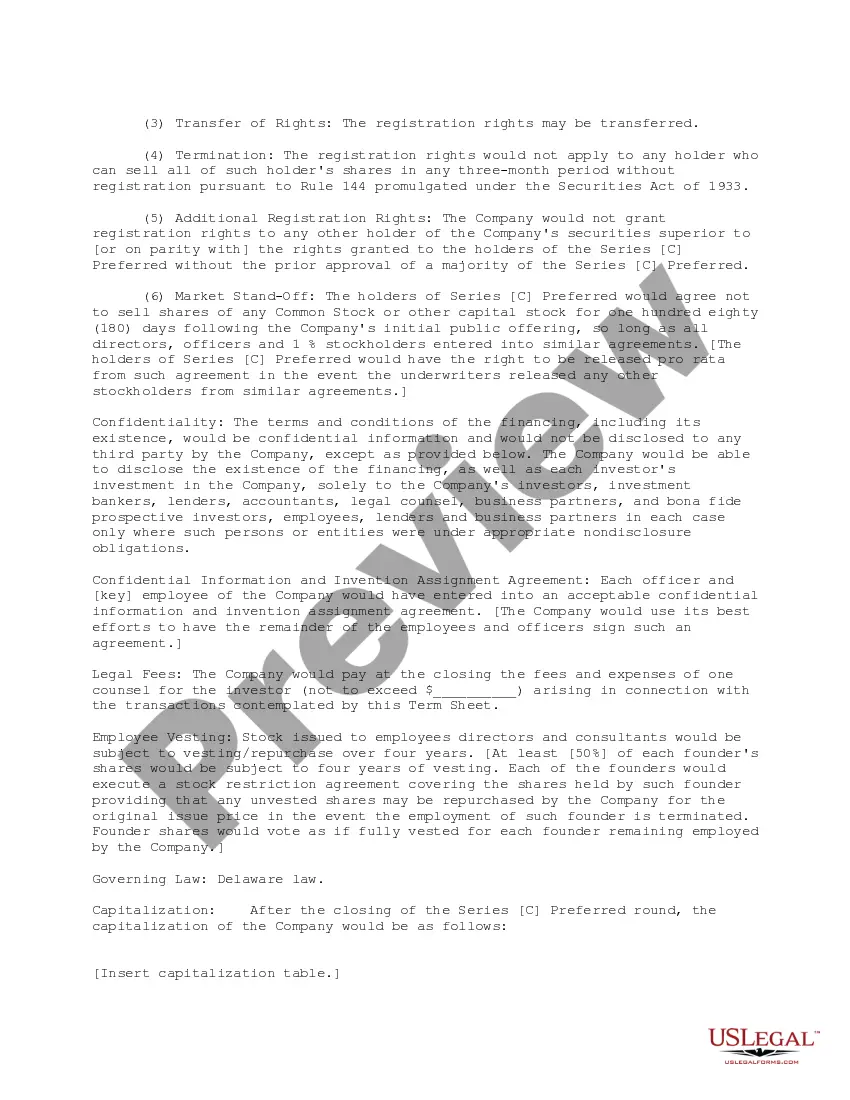
- Voting rights and protective provisions for Series C shareholders.
- Regulatory compliance terms regarding registration rights for securities sales.



Situations where this form applies
This form is essential when a private company seeks to raise capital by issuing Series C Preferred Stock to strategic investors. It is commonly used in negotiations for financing rounds where previous series of preferred stock have already been issued. It is applicable to companies preparing for significant growth phases, potentially leading to public offerings or acquisitions.
Who this form is for
- Business owners or CEOs of private companies looking to secure investments through preferred stock.
- Strategic investors interested in investing in private companies with existing preferred stock structure.
- Corporate finance professionals involved in the negotiation of investment terms.
- Legal counsel advising clients on equity financing transactions.
Steps to complete this form
- Identify the issuer and investor by filling in the respective names and details.
- Specify the total amount of financing desired and the purchase price per share.
- Outline the terms of dividends, liquidation preferences, and conversion rights.
- Include pertinent dates, such as the closing date of the transaction.
- Review and sign the confidentiality agreement component before sharing the term sheet.
Notarization requirements for this form
This form does not typically require notarization unless specified by local law. It is advisable to consult legal counsel to ensure compliance with any specific state requirements.
Get your form ready online
Our built-in tools help you complete, sign, share, and store your documents in one place.
Make edits, fill in missing information, and update formatting in US Legal Forms—just like you would in MS Word.
Download a copy, print it, send it by email, or mail it via USPS—whatever works best for your next step.
Sign and collect signatures with our SignNow integration. Send to multiple recipients, set reminders, and more. Go Premium to unlock E-Sign.
If this form requires notarization, complete it online through a secure video call—no need to meet a notary in person or wait for an appointment.
We protect your documents and personal data by following strict security and privacy standards.

Make edits, fill in missing information, and update formatting in US Legal Forms—just like you would in MS Word.

Download a copy, print it, send it by email, or mail it via USPS—whatever works best for your next step.

Sign and collect signatures with our SignNow integration. Send to multiple recipients, set reminders, and more. Go Premium to unlock E-Sign.

If this form requires notarization, complete it online through a secure video call—no need to meet a notary in person or wait for an appointment.

We protect your documents and personal data by following strict security and privacy standards.
Common mistakes to avoid
- Failing to clearly define the rights and preferences of the Series C Preferred.
- Not specifying the pre-money valuation correctly.
- Overlooking necessary confidentiality clauses before sharing the term sheet.
- Neglecting to amend clauses according to specific investor requirements.
Why use this form online
- Convenient access to a professionally drafted term sheet that saves time and reduces legal costs.
- Editable features allow customization to fit specific investment scenarios.
- Instant availability ensures that you can respond quickly to investment opportunities.
- The term sheet serves as a preliminary agreement outlining investment terms but does not constitute a binding contract.
- It is essential for negotiating expectations and finalizing agreements in accordance with corporate governance.
- Investors and companies should ensure mutual understanding and clarity of terms to prevent disputes.
Main things to remember
- The Term Sheet for Series C Preferred Stock outlines essential terms for investment negotiations.
- Confidentiality and clear definitions of rights are critical in the negotiation process.
- Understanding the liquidation and dividend rights is vital for both issuers and investors.
- This form is adaptable and designed for use across various states.
Looking for another form?

Form popularity
FAQ
On a Series A term sheet, the voting rights simply states the voting rights of the investor. Generally, your Series A investors will likely receive the same number of votes as the number of common shares they could convert to at any given time.
Similar to previous stages of financing, the series C round primarily relies on raising capital through the sale of preferred shares. The shares are more senior than common stock but are more junior relative to debt, such as bonds.. The shares are likely to be convertible shares.
How much money is expected from the VC, or venture capitalist, to the founder of the startup, A detailed overview of the financial side of the investment, and. The power and controls given to the VCs.
Investors: Those who are investing money into the business. Amount Raised: Total amount raised to date. Price Per Share: Price of each share. Pre-Money Valuation: Value of the company before investment. Capitalization: Company's shares multiplied by share price.
A term sheet is a nonbinding agreement that shows the basic terms and conditions of an investment. The term sheet serves as a template and basis for more detailed, legally binding documents.
In Series C rounds, investors inject capital into the meat of successful businesses, in an effort to receive more than double that amount back. Series C funding is focused on scaling the company, growing as quickly and as successfully as possible.
Take the Time to Woo Multiple Investors. Do Your Due Diligence When Finding Investors. Negotiate A Term Sheet Better by Understanding the Terminology. Hire a Good Lawyer to Assist You. Prioritize the Non-Negotiables of Your Term Sheet. Be Prepared to Negotiate with Your Investor. Watch for Red Flags.
A term sheet usually has some provisions that are called out as being binding even though the rest of the term sheet is typically not binding. These binding provisions give the non-breaching party a right to sue for breach of those "binding" provisions.