No Fault Clause
Understanding this form
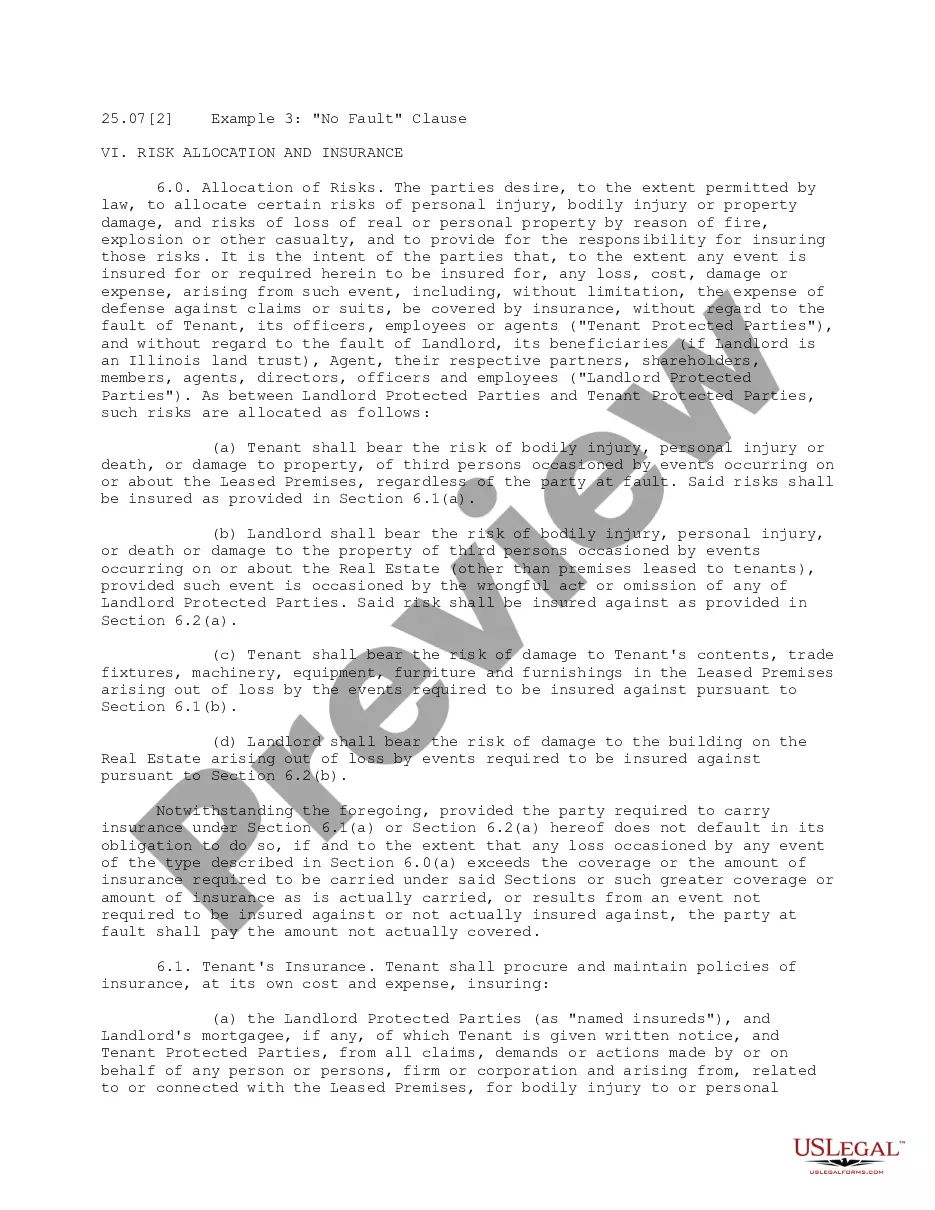
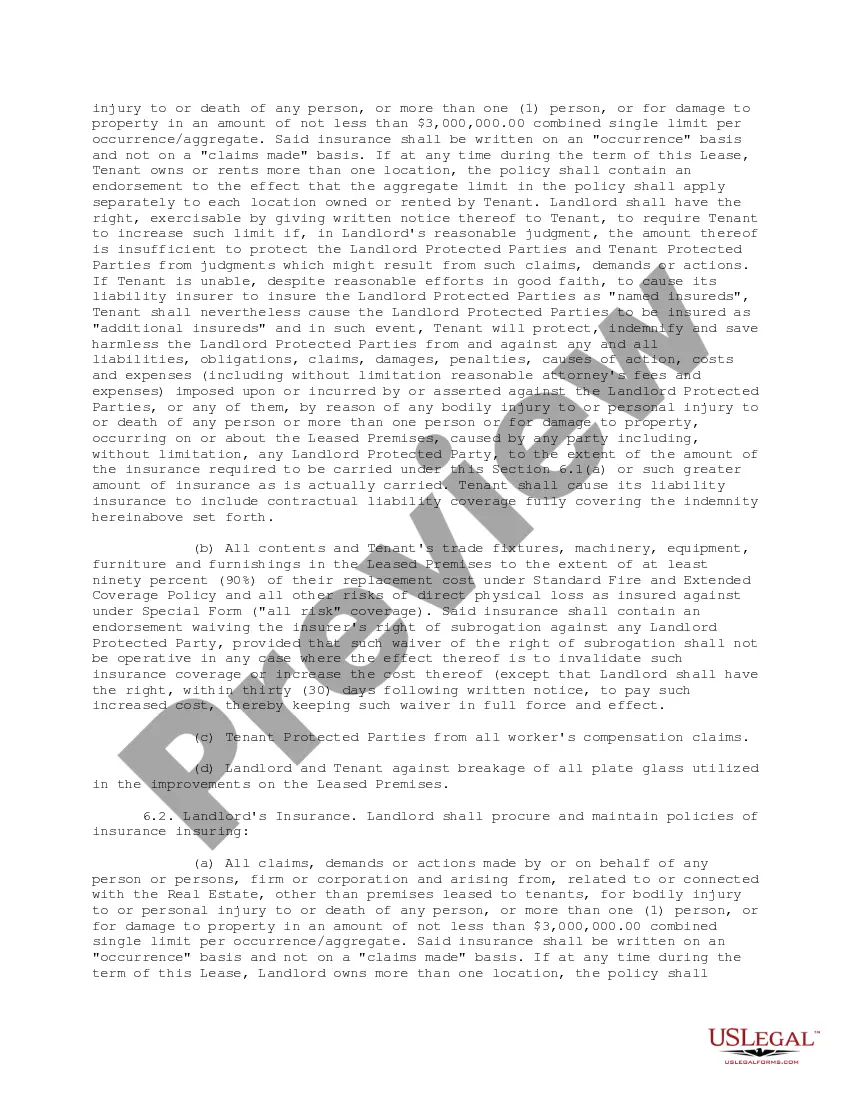
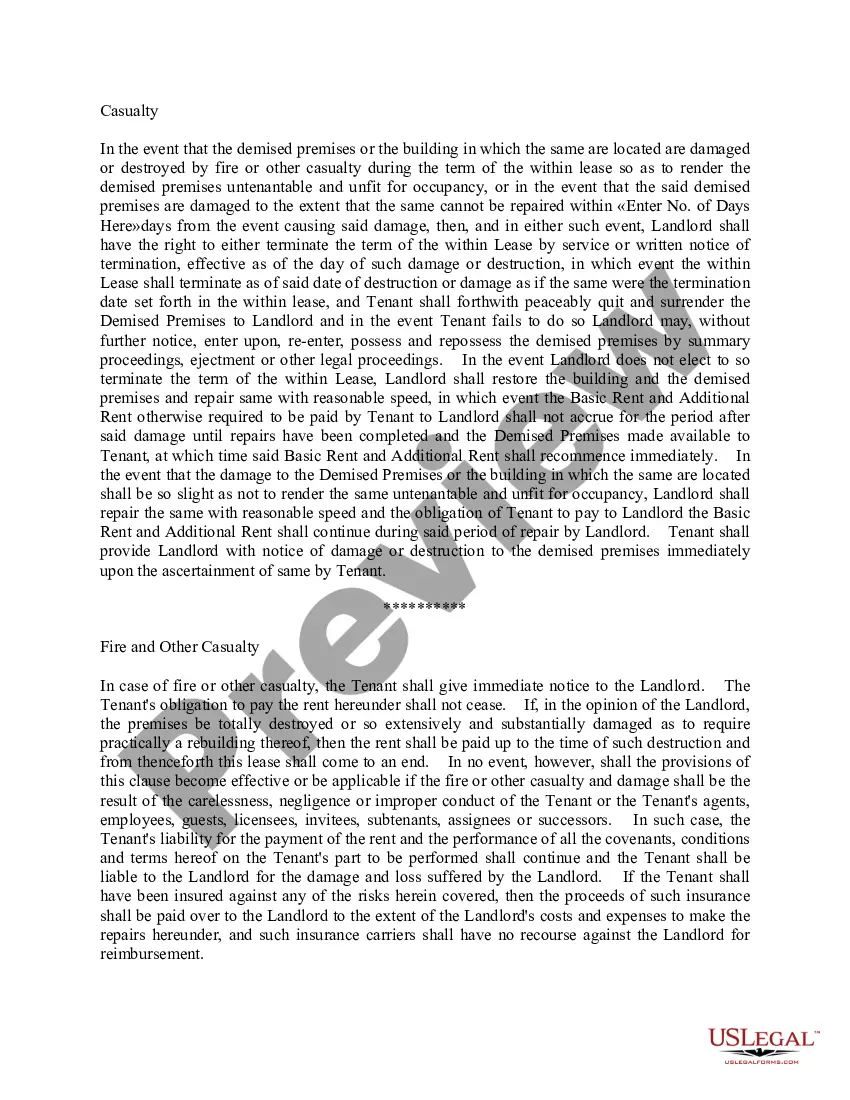
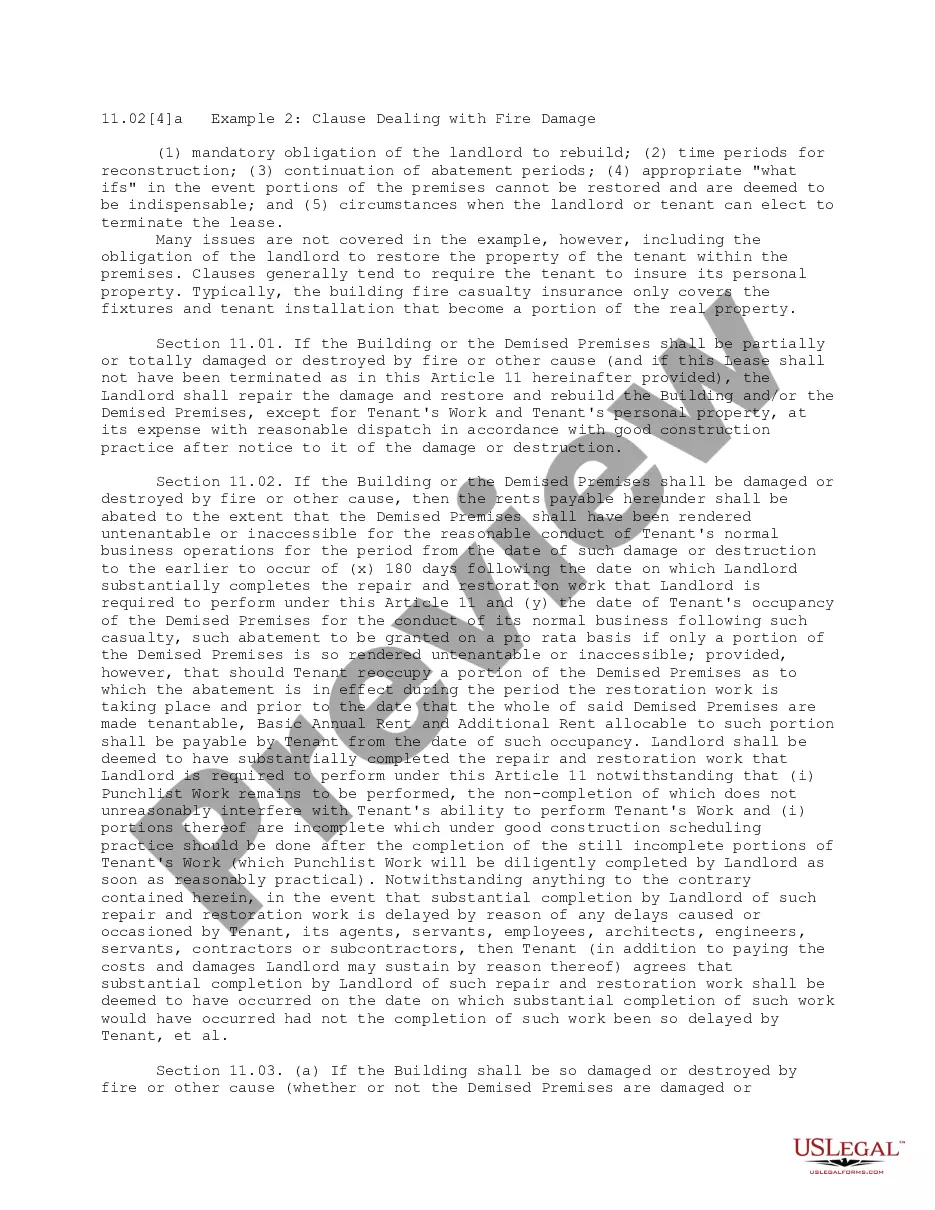
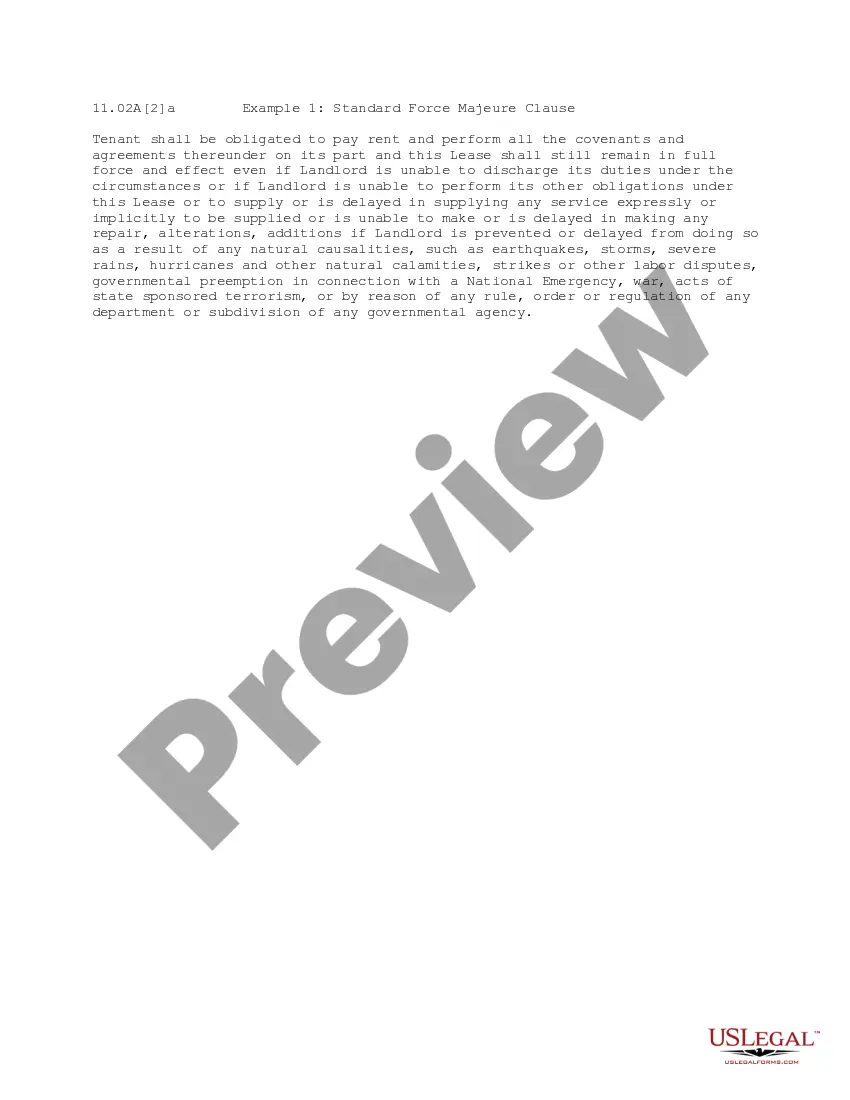
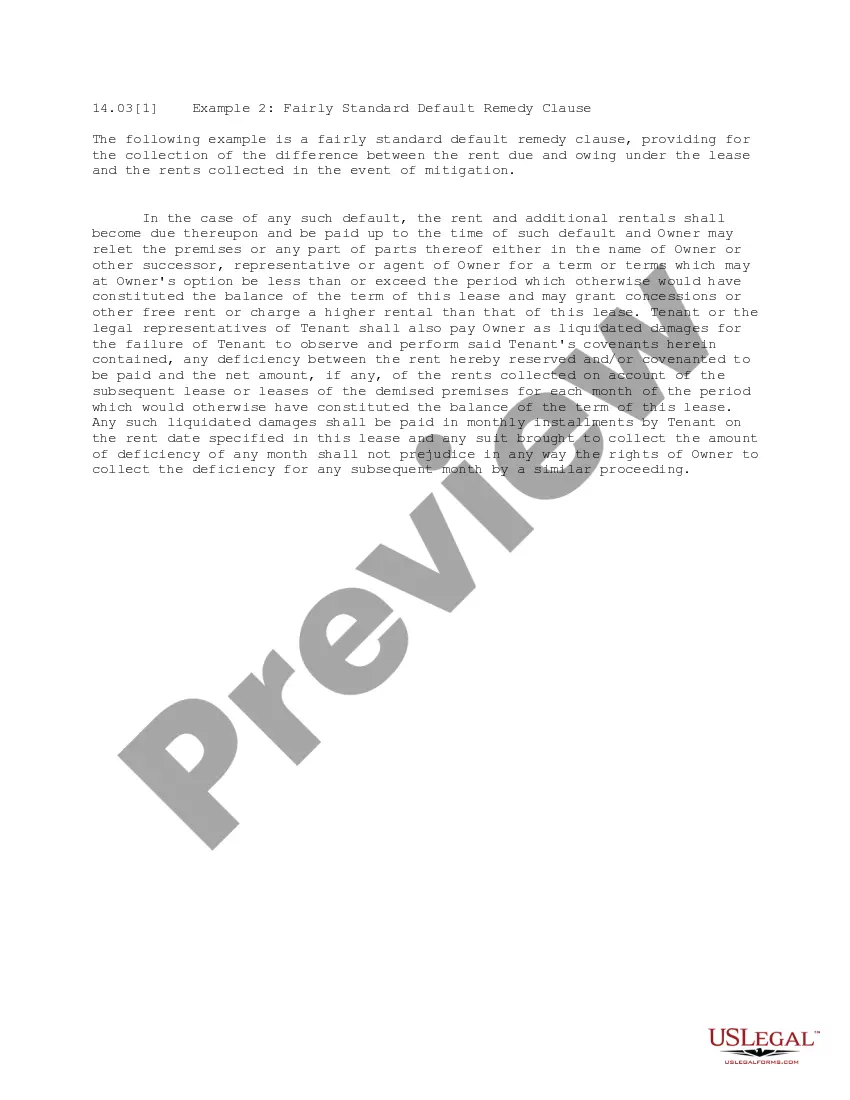
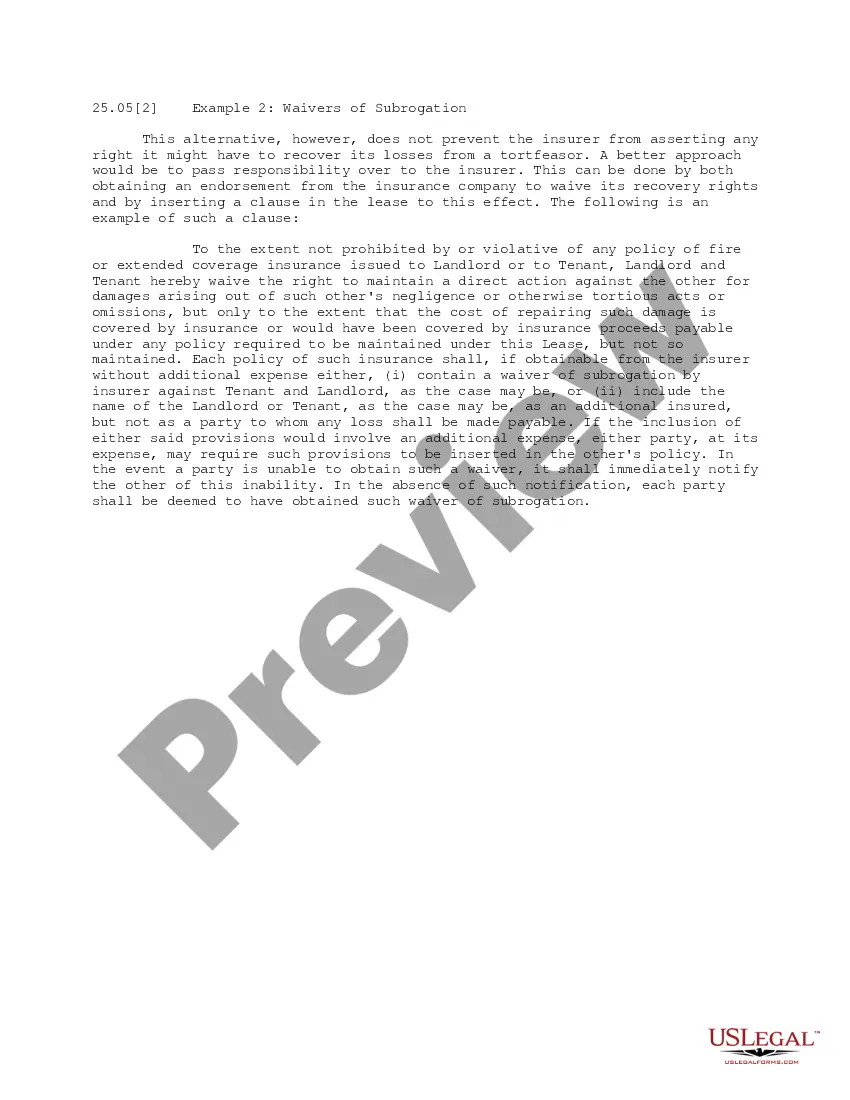
The No Fault Clause is a critical component of an office lease agreement that outlines how risks related to personal injury, bodily harm, or property damage are allocated between the tenant and landlord. This clause helps ensure that both parties understand their responsibilities for insuring against such risks, irrespective of who may be at fault in an incident. It is particularly important for limiting liability and clarifying insurance obligations, distinguishing it from standard lease agreements that may not address risk allocation in detail.
Key components of this form
- Allocation of Risks: Defines how risks of injury or damage are divided between the landlord and tenant.
- Tenant's Insurance Obligations: Requires the tenant to maintain specific insurance policies protecting both parties against claims.
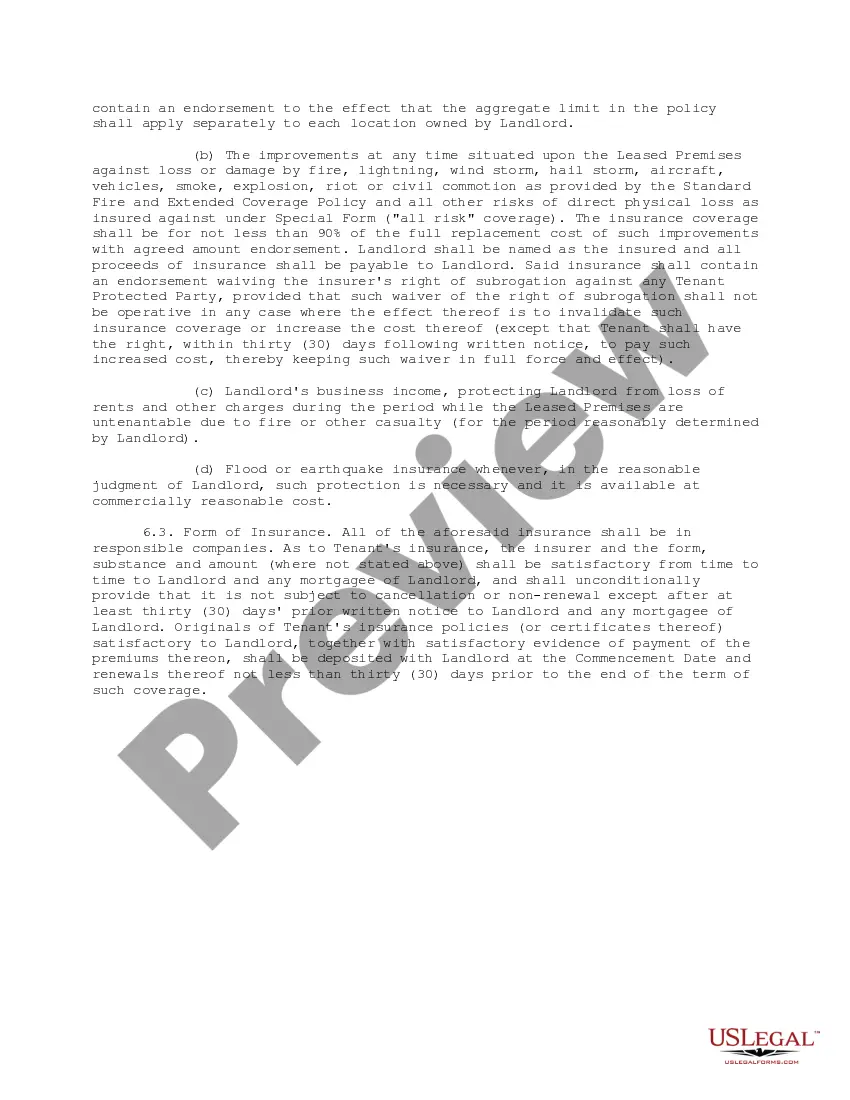
- Landlord's Insurance Obligations: Stipulates the landlord's insurance responsibilities for areas outside of the leased premises.
- Excess Loss Coverage: Addresses how losses exceeding insurance limits will be handled.
- Content Coverage: Specifies the insurance coverage for the tenant's belongings within the leased space.
When to use this form
This form should be used when entering into an office lease to establish clear guidelines on risk allocation. It is particularly useful in commercial leases where liability can be a significant concern, such as in multi-tenant buildings. The No Fault Clause is essential for both landlords and tenants who wish to mitigate potential legal disputes arising from accidents or damages that occur on the leased premises.
Who should use this form
Intended Users
- Landlords who want to clearly outline their insurance and liability responsibilities.
- Tenants looking to understand their obligations regarding risk and insurance.
- Commercial real estate agents facilitating lease agreements.
How to complete this form
Steps to Complete the No Fault Clause
- Identify the parties involved, including the landlord and tenant.
- Clearly specify the property being leased.
- Detail the insurance obligations for both tenant and landlord.
- Indicate any coverage limits or special endorsements required.
- Ensure both parties sign and date the agreement to validate the terms.
Is notarization required?
Notarization is generally not required for this form. However, certain states or situations might demand it. You can complete notarization online through US Legal Forms, powered by Notarize, using a verified video call available anytime.
Get your form ready online
Our built-in tools help you complete, sign, share, and store your documents in one place.
Make edits, fill in missing information, and update formatting in US Legal Forms—just like you would in MS Word.
Download a copy, print it, send it by email, or mail it via USPS—whatever works best for your next step.
Sign and collect signatures with our SignNow integration. Send to multiple recipients, set reminders, and more. Go Premium to unlock E-Sign.
If this form requires notarization, complete it online through a secure video call—no need to meet a notary in person or wait for an appointment.
We protect your documents and personal data by following strict security and privacy standards.

Make edits, fill in missing information, and update formatting in US Legal Forms—just like you would in MS Word.

Download a copy, print it, send it by email, or mail it via USPS—whatever works best for your next step.

Sign and collect signatures with our SignNow integration. Send to multiple recipients, set reminders, and more. Go Premium to unlock E-Sign.

If this form requires notarization, complete it online through a secure video call—no need to meet a notary in person or wait for an appointment.

We protect your documents and personal data by following strict security and privacy standards.
Typical mistakes to avoid
- Failing to specify insurance coverage limits can lead to inadequate protection.
- Not understanding the implications of risk allocation can result in future liability disputes.
- Omitting necessary endorsements or clauses related to subrogation rights.
Why complete this form online
- Online access allows for quick and easy downloading of the form without the need for physical paperwork.
- Editable templates ensure that you can customize the clause to fit your specific needs.
- Access to professional legal advice ensures that your lease terms are compliant and effective.
- The No Fault Clause can help prevent legal disputes by clearly delineating responsibilities.
- It is a legally binding component of a lease when both parties agree to its terms.
- Complying with local laws regarding lease agreements enhances enforceability.
What to keep in mind
- The No Fault Clause is essential for allocating risks in a lease agreement.
- Clear insurance obligations protect both parties and can mitigate disputes.
- Understanding and correctly completing this form can lead to better leasing arrangements.
Looking for another form?






Form popularity
FAQ
Usually, a no-fault accident will not raise your insurance premium. That's because the at-fault driver's insurance company is responsible for compensating you for vehicle damages and medical costs. If your insurance company doesn't have to give you any money for the claim, your rate won't go up.
Even if you're not at fault, you can make a claim with your insurance company for payment of damages and injuries -- if you have the right coverages.It will pay for the cost of repairs or total loss of your vehicle. If you take this approach, you will have to pay your collision deductible toward repairs.
What are the requirements of the No-Fault law? You must show proof of Personal Injury Protection (PIP) and Property Damage Liability (PDL) coverage.
Insurance rates can go up after a not-at-fault accident because statistics show that having any accident on your driving record makes you more likely to file a claim in the future. And in some situations, not-at-fault accidents can still cost insurers money.
The safest bet is always to call your own car insurance company after an accident. They can tell you what kind of coverage you have for personal injury, collisions, damages and medical expenses. You may also have uninsured motorist coverage you can use if the other driver doesn't have insurance.
Yes. Regardless of fault, it is important to call your insurance company and report any accident that involved injuries or property damage. A common myth is that you do not need to contact your insurance company if you were not at fault.
If someone hits your car and you do have collision coverage, then your insurance company can help pay for repairs. Collision coverage will also cover damage to your car if you caused the accident, or if there were no other drivers involved, like if you drove into a telephone pole.
No-fault auto insurance laws require every driver to file a claim with their own insurance company after an accident, regardless of who was at fault. In states with no-fault laws, all drivers are required to purchase personal injury protection (PIP), as part of their auto insurance policies.
In a no-fault state, a driver who is injured in an auto accident simply has to file a claim for compensation for their injuries. Once filed, the other driver's insurance provider must pay the claim.They can file for coverage regardless, without having to prove who caused the accident.