Gross up Clause that Should be Used in a Base Year Lease
Understanding this form
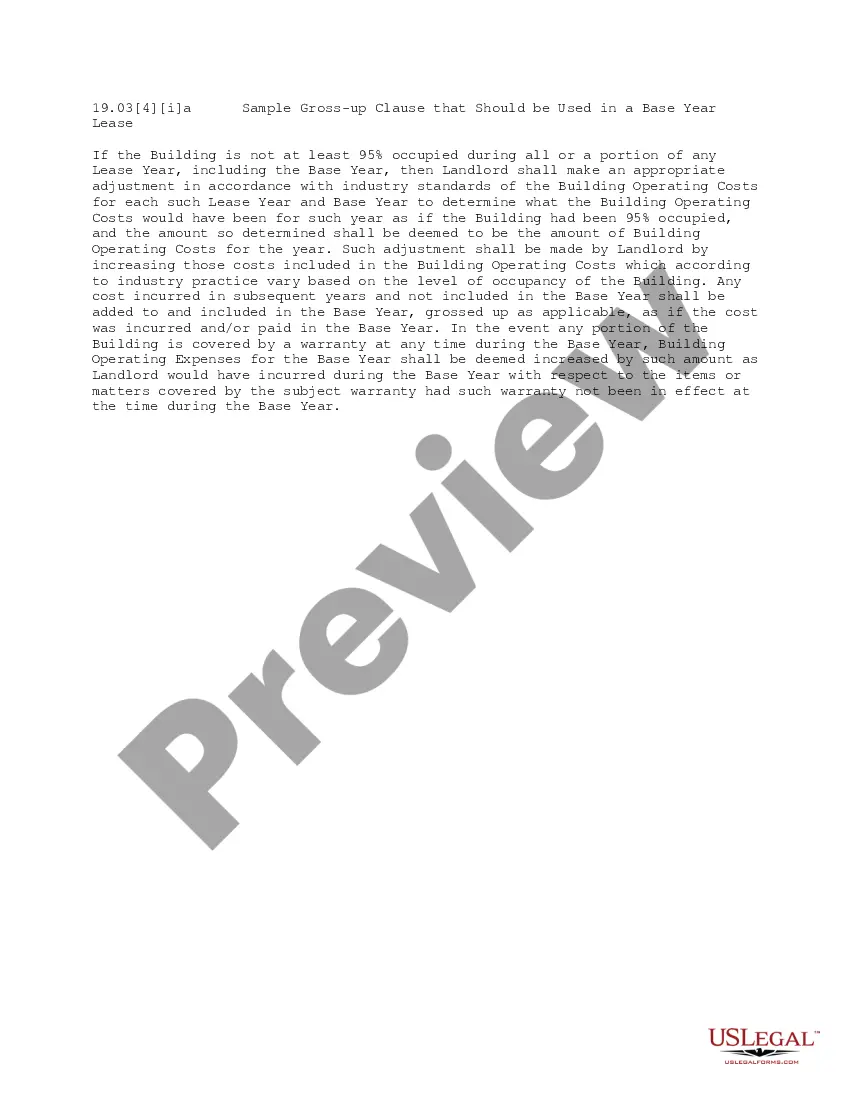
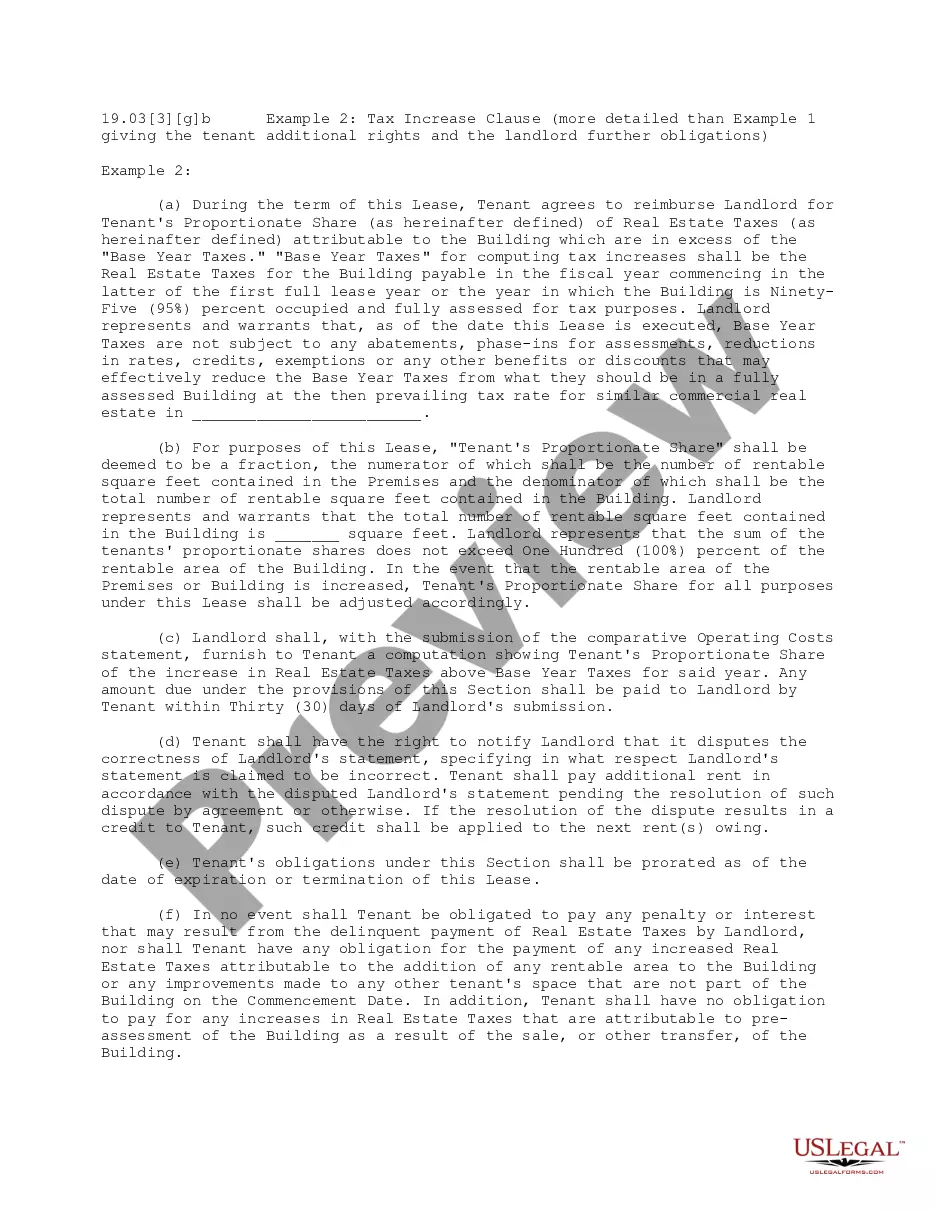
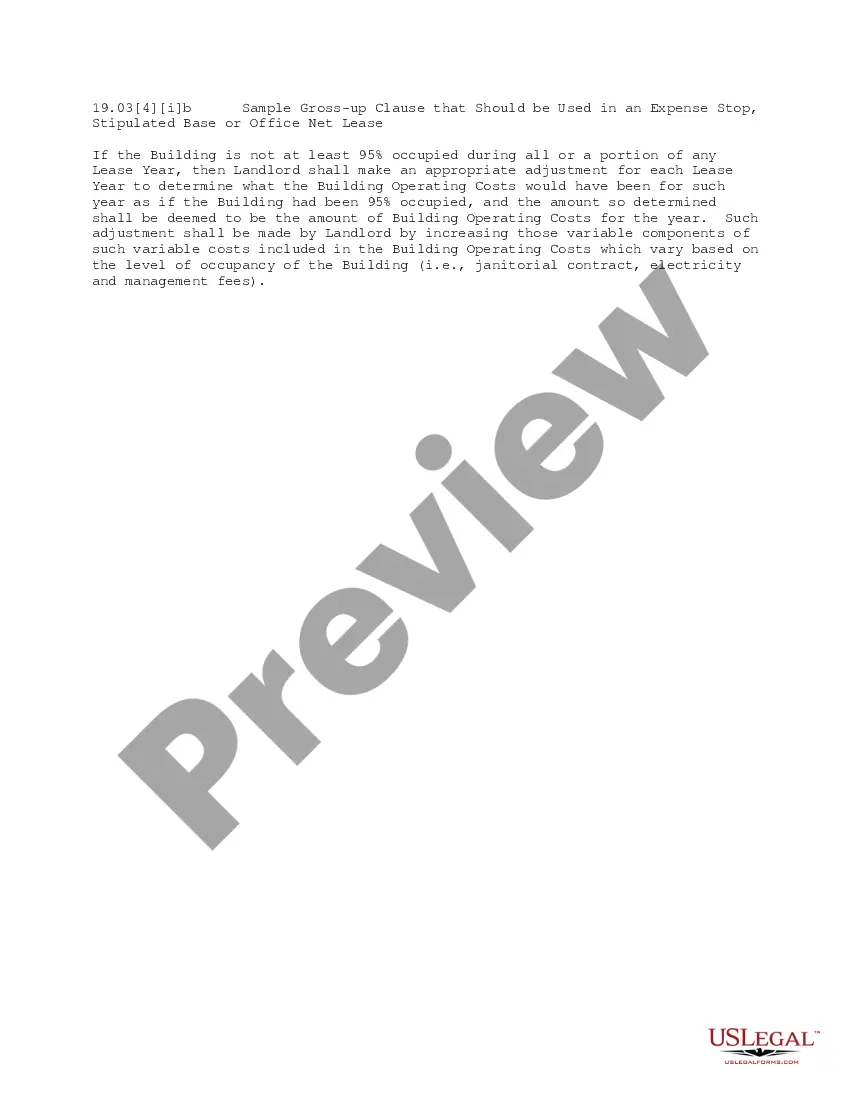
The gross up clause that should be used in a base year lease is a legal provision designed to adjust building operating costs based on occupancy levels. This clause ensures that if a building is less than 95 percent occupied, the landlord will calculate the operating costs as if it were fully occupied. This adjustment helps maintain fairness in the lease agreement by aligning costs with actual occupancy, distinguishing it from standard lease agreements that may not account for such fluctuations.
Key parts of this document
- Definition of occupancy threshold set at 95 percent.
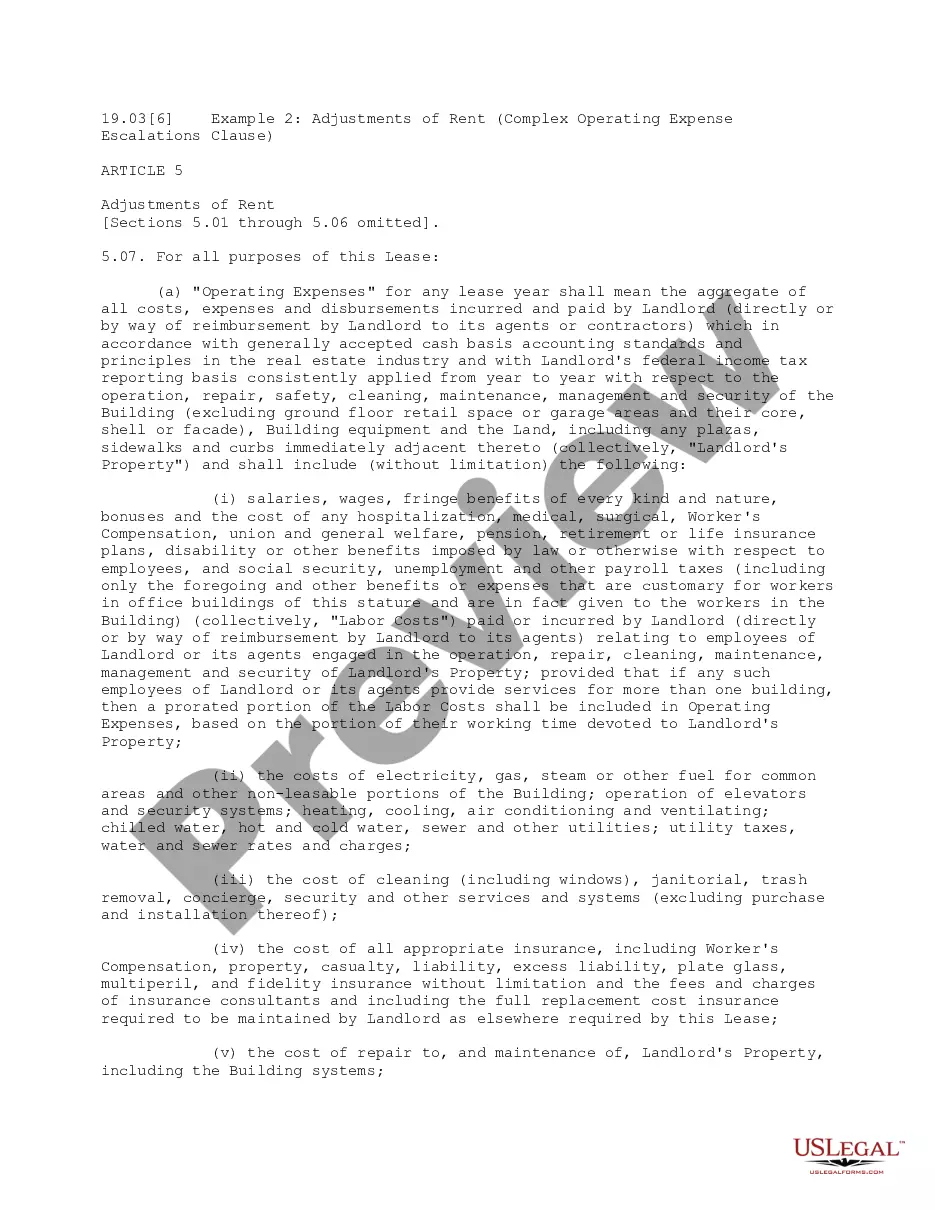
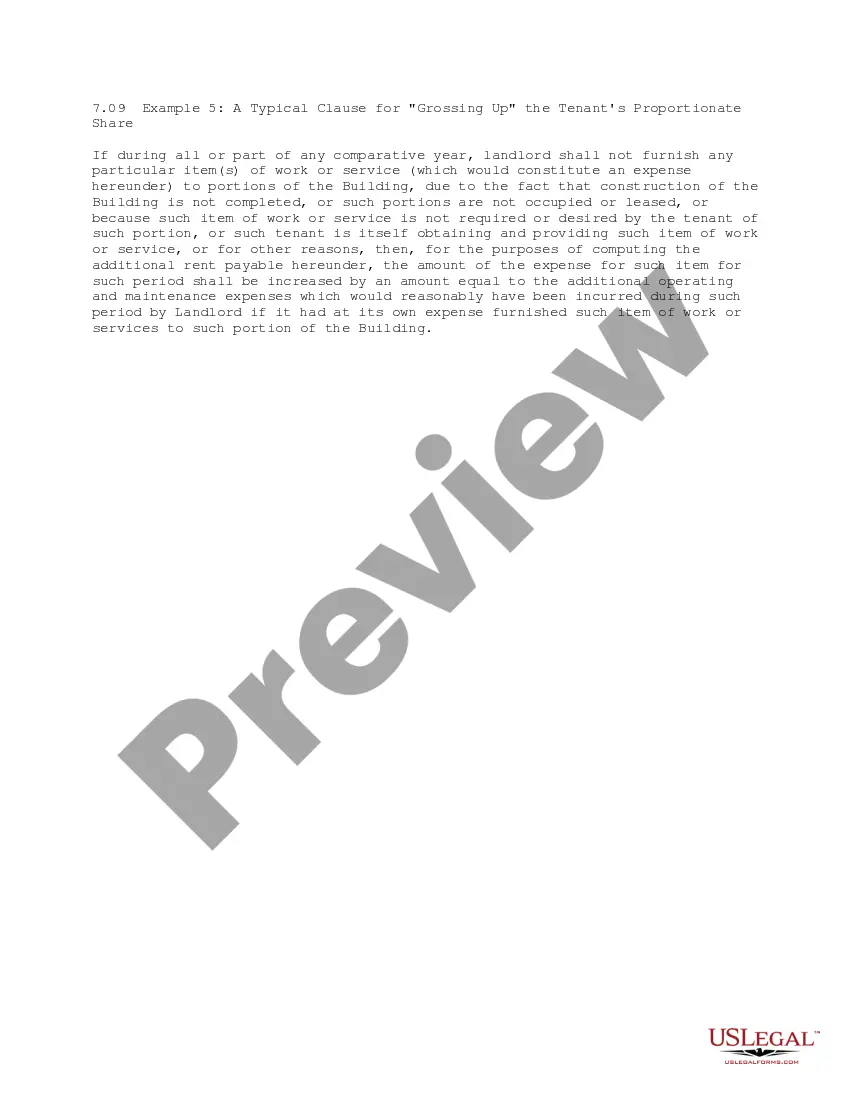
- Adjustment calculation for operating costs based on actual occupancy.
- Provisions for grossing up costs incurred in subsequent years.
- Specification of costs affected by warranties during the base year.
- Determination of annual building operating costs according to industry standards.
When to use this document
This form should be utilized in commercial lease agreements where the leasing arrangement includes a base year clause. It is especially relevant when landlords need to protect their interests by adjusting costs based on occupancy levels. If a tenant is concerned about the unpredictability of building operating costs in relation to occupancy, this clause serves to clarify financial responsibilities.
Who can use this document
- Landlords seeking to establish clear financial expectations in lease agreements.
- Commercial property managers responsible for managing lease agreements.
- Tenants wanting a fair assessment of operating costs in relation to occupancy.
- Real estate attorneys drafting or reviewing lease agreements.
Instructions for completing this form
- Identify the parties involved in the lease agreement.
- Specify the property being leased.
- Enter details about the occupancy rates and the reference year for adjustments.
- Include any specific provisions regarding warranties that may affect costs.
- Ensure all parties review and sign the amended lease agreement.
Notarization guidance
Notarization is generally not required for this form. However, certain states or situations might demand it. You can complete notarization online through US Legal Forms, powered by Notarize, using a verified video call available anytime.
Get your form ready online
Our built-in tools help you complete, sign, share, and store your documents in one place.
Make edits, fill in missing information, and update formatting in US Legal Forms—just like you would in MS Word.
Download a copy, print it, send it by email, or mail it via USPS—whatever works best for your next step.
Sign and collect signatures with our SignNow integration. Send to multiple recipients, set reminders, and more. Go Premium to unlock E-Sign.
If this form requires notarization, complete it online through a secure video call—no need to meet a notary in person or wait for an appointment.
We protect your documents and personal data by following strict security and privacy standards.

Make edits, fill in missing information, and update formatting in US Legal Forms—just like you would in MS Word.

Download a copy, print it, send it by email, or mail it via USPS—whatever works best for your next step.

Sign and collect signatures with our SignNow integration. Send to multiple recipients, set reminders, and more. Go Premium to unlock E-Sign.

If this form requires notarization, complete it online through a secure video call—no need to meet a notary in person or wait for an appointment.

We protect your documents and personal data by following strict security and privacy standards.
Common mistakes to avoid
- Failing to clearly define the occupancy threshold.
- Overlooking additional costs that can be grossed up beyond the base year.
- Not addressing warranty issues explicitly in the operating costs calculation.
Advantages of online completion
- Easy download and editing capabilities for customization.
- Access to templates drafted by licensed attorneys for reliability.
- Convenience of filling out forms from any location without the need for in-person appointments.
Legal use & context
- This clause is enforceable as part of a lease agreement when properly drafted and agreed upon by both parties.
- Understanding the implications of the gross up clause is crucial for both landlords and tenants to avoid disputes.
- Consulting with a legal professional can help tailor the clause to meet specific state laws and market practices.
Main things to remember
- The gross up clause is crucial for adjusting operating costs based on occupancy.
- This clause protects both landlords and tenants from unpredictable leasing costs.
- Ensure clear definitions and conditions are included in the lease agreement to avoid disputes.
Looking for another form?


Form popularity
FAQ
A gross-up is an additional amount of money added to a payment to cover the income taxes the recipient will owe on the payment.For example, a company may agree to pay an executive's relocation expenses plus a gross-up to offset the expected income taxes that will be owed on the salary payment.
Simply stated, the concept of gross up provision stipulates that if a building has significant vacancy, the landlord can estimate what the variable operating expense would have been had the building been fully occupied, and charge the tenants their pro-rata share of that cost.
A gross lease allows the tenant to pay a flat fee in exchange for the exclusive use of the property.For example, a tenant may ask the landlord to include janitorial or landscaping services.
Correctly drafted, a gross up provision relates only to Operating Expenses that vary with occupancyso called variable expenses. Variable expenses are those expenses that will go up or down depending on the number of tenants in the Building, such as utilities, trash removal, management fees and janitorial services.
Many commercial leases contain a gross-up provision to amplify the property's operating expenses to the amount of operating expenses that would be incurred if the building was fully occupied.This authorizes the landlord to restate the operating expenses as if the building was completely occupied for one year.
This is the normal tax liability, but now as the company has to pay tax as a perquisite to the expatriate this amount will be grossed-up and that amount will be paid as salary tax perquisite. The amount of salary tax perquisite is 1743275 144.71/100 = 25,22,693.
Add up all federal, state, and local tax rates. Subtract the total tax rates from the number 1. 1 tax = net percent. Divide the net payment by the net percent. net payment / net percent = gross payment. Check your answer by calculating gross payment to net payment.