Indemnity Provisions - Duration of the Indemnity
Overview of this form
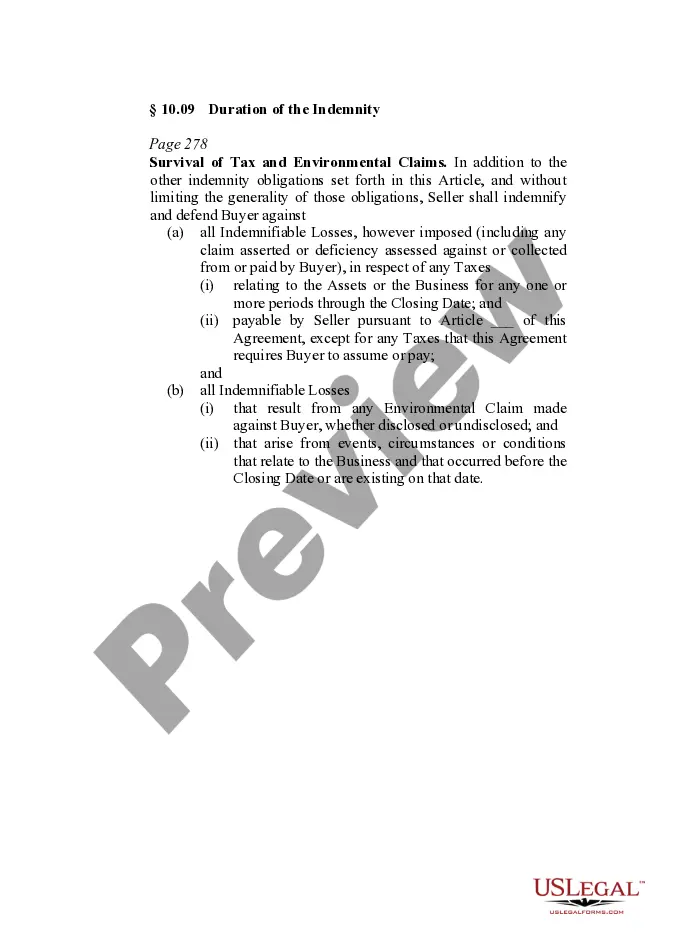
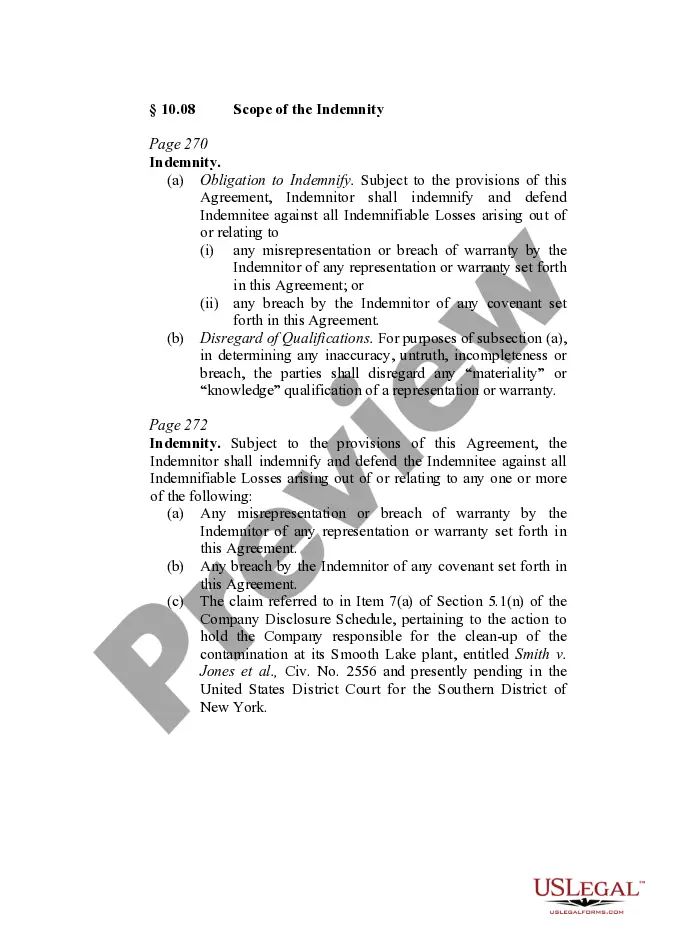
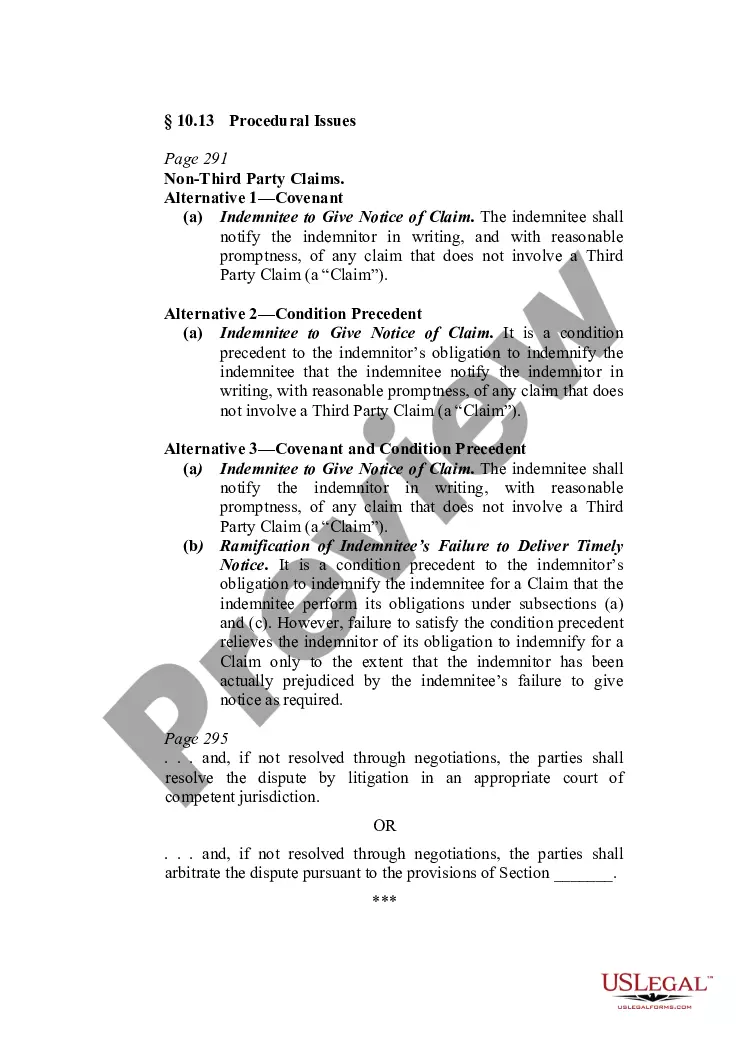
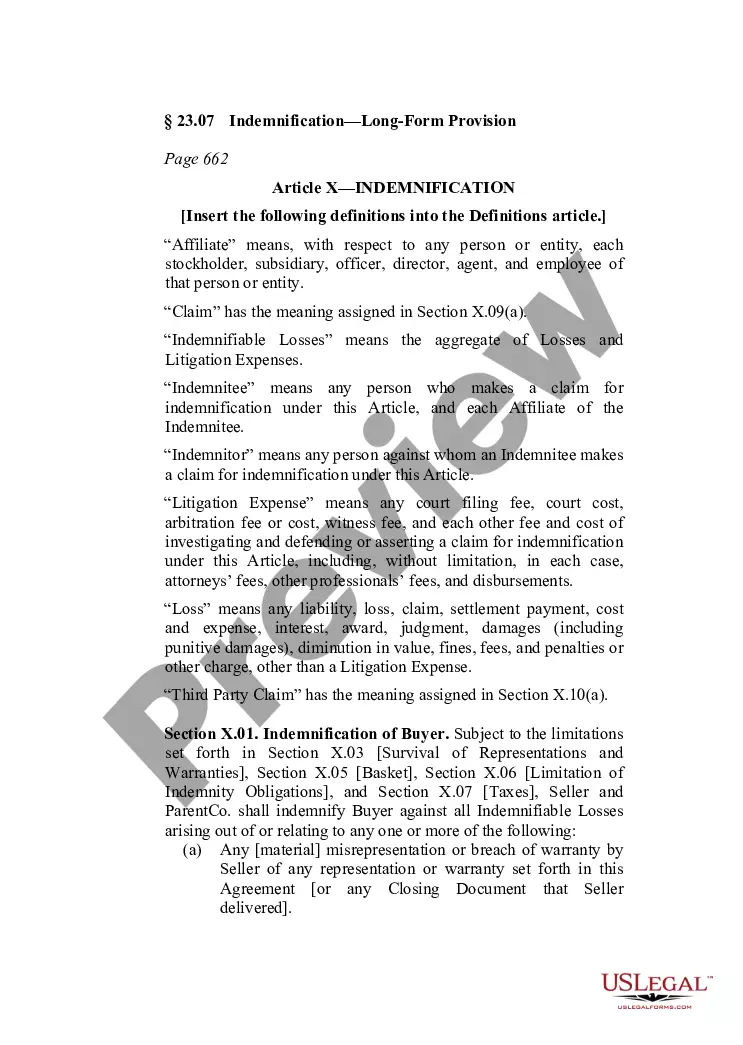
The Indemnity Provisions - Duration of the Indemnity form provides boilerplate contract clauses that detail the duration of indemnity obligations within a contract, focusing particularly on tax and environmental claims. This form is essential for businesses and individuals looking to clarify their responsibilities regarding indemnity in legal agreements, ensuring that potential liabilities are adequately managed and understood.
Form components explained
- Survival of tax and environmental claims clause outlining seller obligations.
- Definitions of "Indemnifiable Losses" and related liabilities.
- Timeframe specified for indemnity responsibilities, especially concerning claims existing before the closing date.
- Clear delineation of responsibilities regarding taxes associated with assets or businesses.
When to use this form
This form is useful when entering contract agreements where indemnity related to tax and environmental claims may arise. It is particularly relevant in transactions such as asset sales or business acquisitions, where parties need to protect themselves against unresolved liabilities that may surface post-transaction.
Who can use this document
- Buyers of a business or assets looking to ensure protection against future claims.
- Sellers who want to clarify their obligations regarding indemnity.
- Legal professionals drafting contracts that require clear indemnity terms.
- Business owners engaged in negotiations over transactional agreements.
Steps to complete this form
- Identify the parties involved in the contract.
- Clearly define the indemnity terms specific to tax and environmental claims.
- Specify the duration of the indemnity obligations.
- Ensure that all parties recognize their responsibilities regarding indemnifiable losses.
- Review for accuracy before obtaining signatures to finalize the agreement.
Is notarization required?
This form does not typically require notarization unless specified by local law. It is advisable to verify specific state regulations regarding notarization for contractual agreements to ensure compliance.
Get your form ready online
Our built-in tools help you complete, sign, share, and store your documents in one place.
Make edits, fill in missing information, and update formatting in US Legal Forms—just like you would in MS Word.
Download a copy, print it, send it by email, or mail it via USPS—whatever works best for your next step.
Sign and collect signatures with our SignNow integration. Send to multiple recipients, set reminders, and more. Go Premium to unlock E-Sign.
If this form requires notarization, complete it online through a secure video call—no need to meet a notary in person or wait for an appointment.
We protect your documents and personal data by following strict security and privacy standards.

Make edits, fill in missing information, and update formatting in US Legal Forms—just like you would in MS Word.

Download a copy, print it, send it by email, or mail it via USPS—whatever works best for your next step.

Sign and collect signatures with our SignNow integration. Send to multiple recipients, set reminders, and more. Go Premium to unlock E-Sign.

If this form requires notarization, complete it online through a secure video call—no need to meet a notary in person or wait for an appointment.

We protect your documents and personal data by following strict security and privacy standards.
Mistakes to watch out for
- Failing to clearly define the terms of indemnity, leading to ambiguity.
- Not including all relevant parties in the indemnity provisions.
- Overlooking the necessity for updates as laws or situations change.
Why use this form online
- Convenient access allowing for quick downloads and customization.
- Editability features that let users tailor the indemnity terms to their specific situations.
- Reliability derived from clauses drafted by licensed attorneys to ensure legal adequacy.
Legal use & context
- This form outlines legally binding indemnity provisions that protect buyers from past liabilities.
- Indemnity clauses can vary significantly by state; using a correct form ensures compliance with local laws.
- The enforceability of the indemnity obligations is contingent upon clear definitions and stipulated timeframes.
Looking for another form?

Form popularity
FAQ
Thus, it can be understood from reading Section 124 of the Contract Act that indemnity can be claimed when one party gives assurance to the other party to provide protection from any kind of loss or damage that has accrued or incurred by that other party due to the action of the person who is giving such assurance.
As discussed, an indemnity provision transfers risk from one party (called the indemnitee) to another party (called the indemnitor). Under an indemnity provision, the indemnitor agrees to reimburse the indemnitee for losses resulting from a claim or claims brought by a third-party.
Indemnity clauses are written into contracts to allow an indemnifier to take on any losses incurred by a party in the contract. They can also be used to absolve the indemnifier or the other party of liability if a breach of contract occurs, or damages/loss of goods are incurred.
Liquidated Damages v. Capped Indemnity clause.However, a capped indemnity clause operates on a different footing as the concept of reasonability, foreseeability and remoteness applicable to a damage claim is not applicable to the adjudication of an indemnity claim.
Indemnity is compensation paid by one party to another to cover damages, injury or losses.An example of an indemnity would be an insurance contract, where the insurer agrees to compensate for any damages that the entity protected by the insurer experiences.
Third party indemnification refers to a clause in the contract between a company working in health care or safety industries and a customer, specifying the compensation the customer is due in case of third-party losses.
The most important part of an indemnification clause is that it protects the indemnified party from lawsuits filed by third parties. This protection is important because damaged parties are still able to pursue compensation for their losses even if this clause isn't in the contract.
In most contracts, an indemnification clause serves to compensate a party for harm or loss arising in connection with the other party's actions or failure to act. The intent is to shift liability away from one party, and on to the indemnifying party.
You should look to limit indemnification clauses by narrowing their scope, putting in caps on damages, and clearly defining the indemnifiable acts (i.e. the representations and warranties in the example above). Also consider purchasing insurance as a means to limit your financial risk.