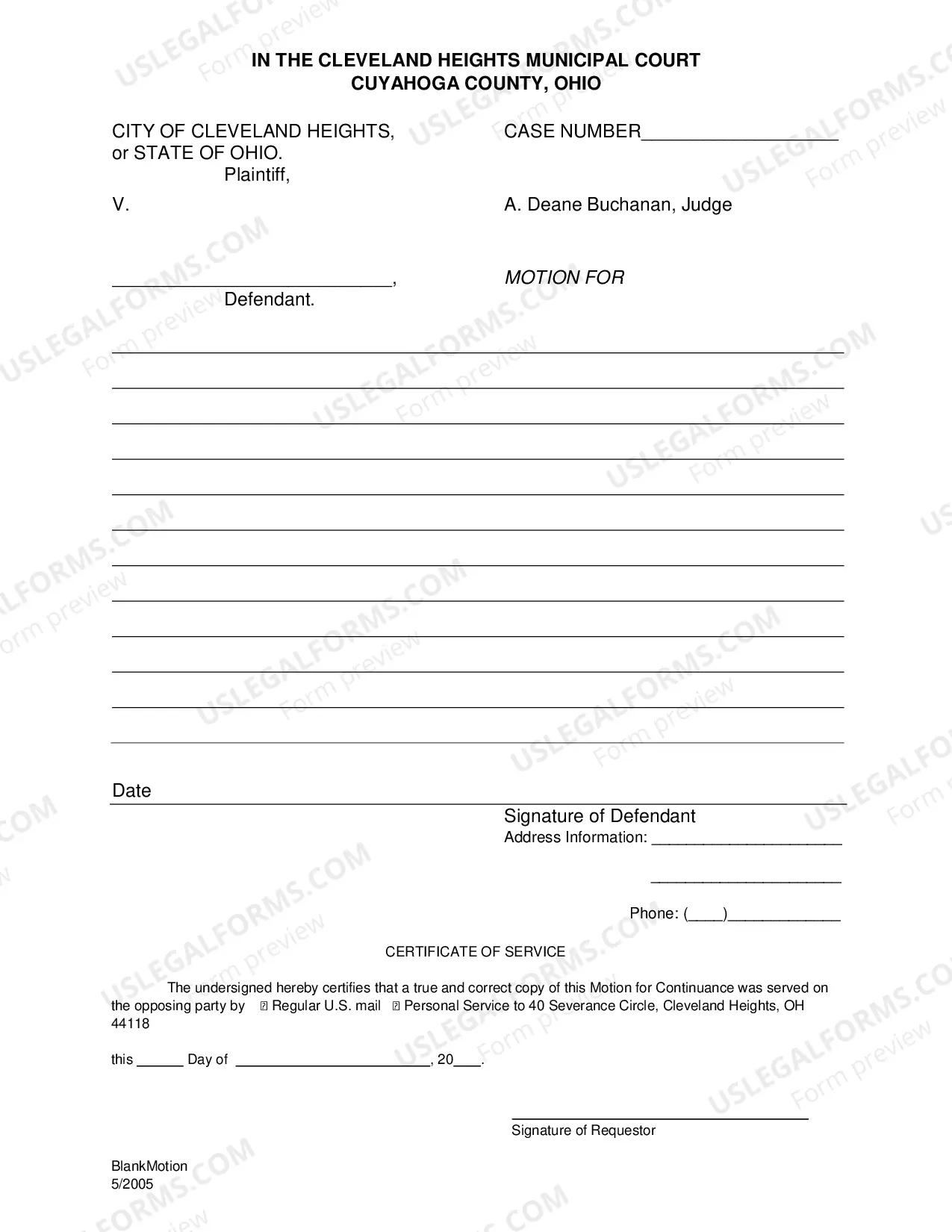
Literary Work License Agreement
Overview of this form
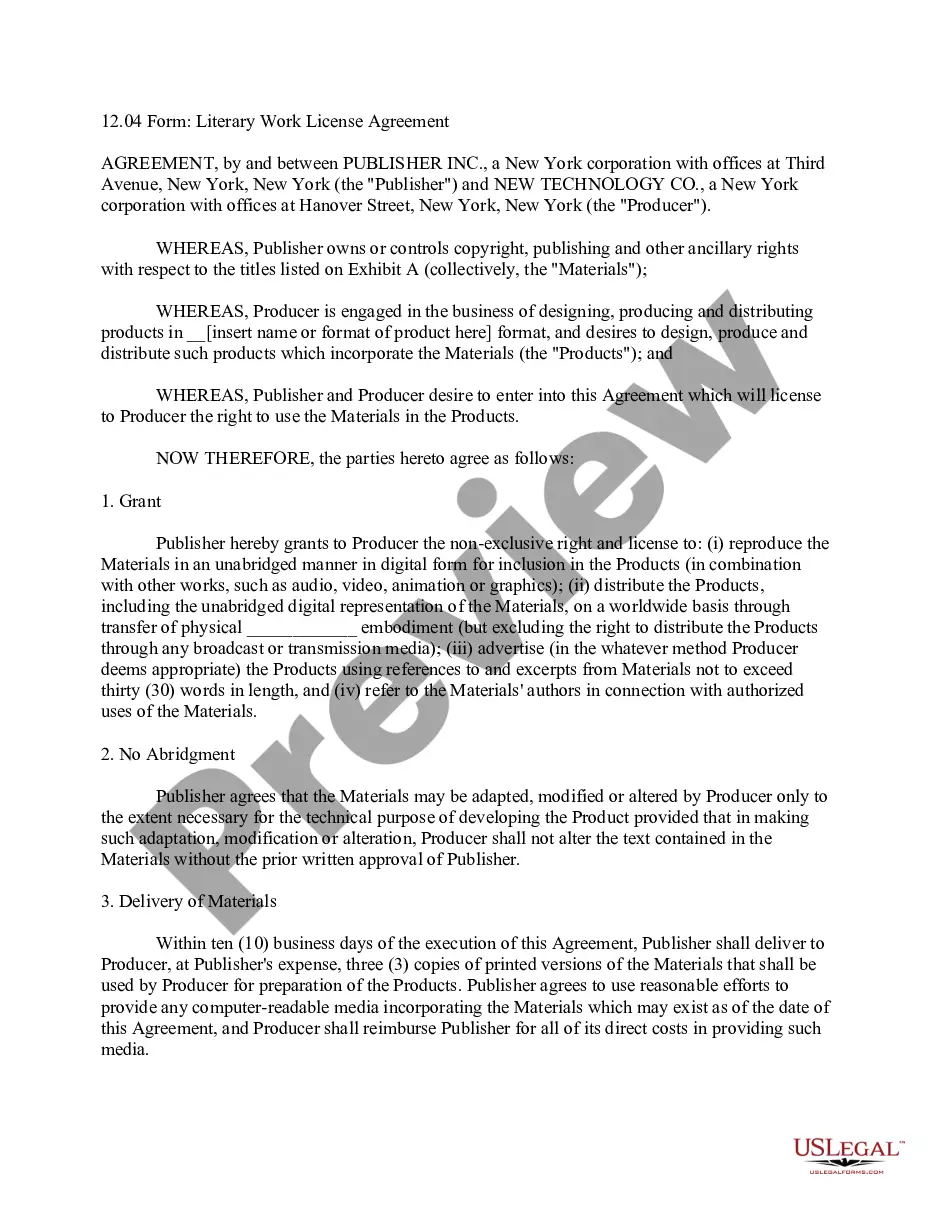
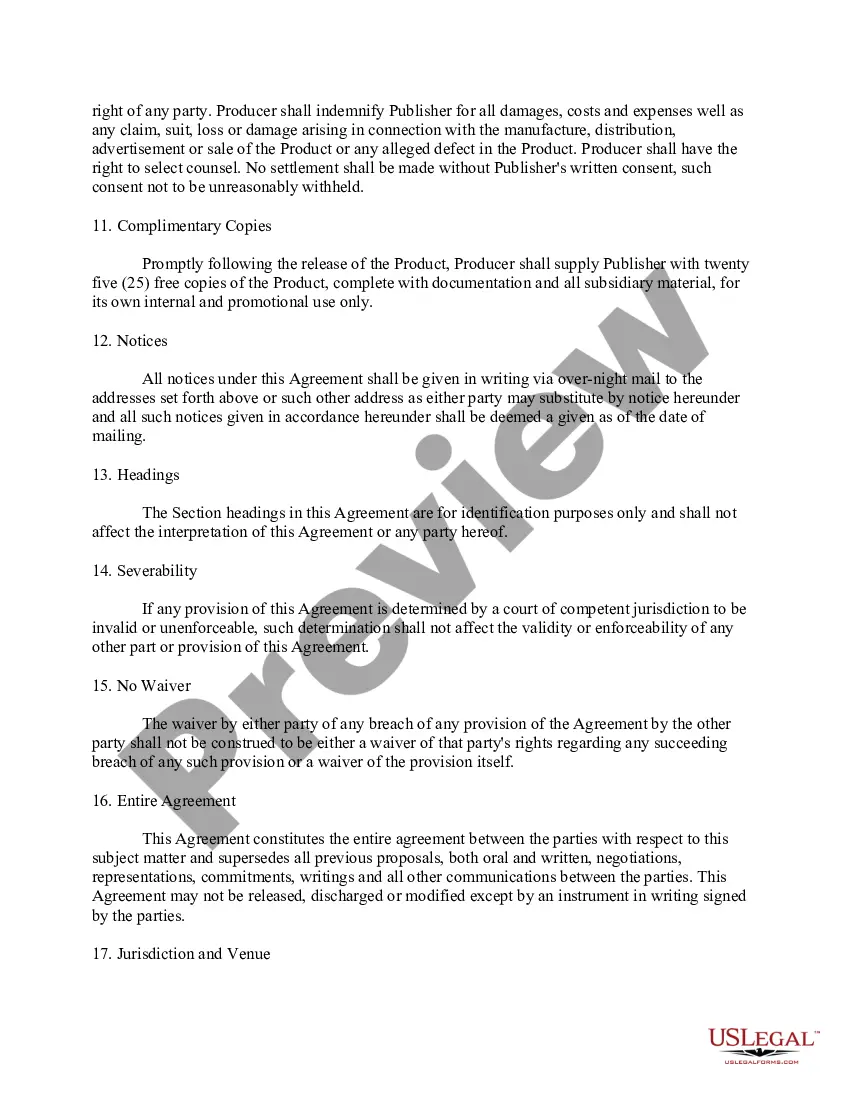
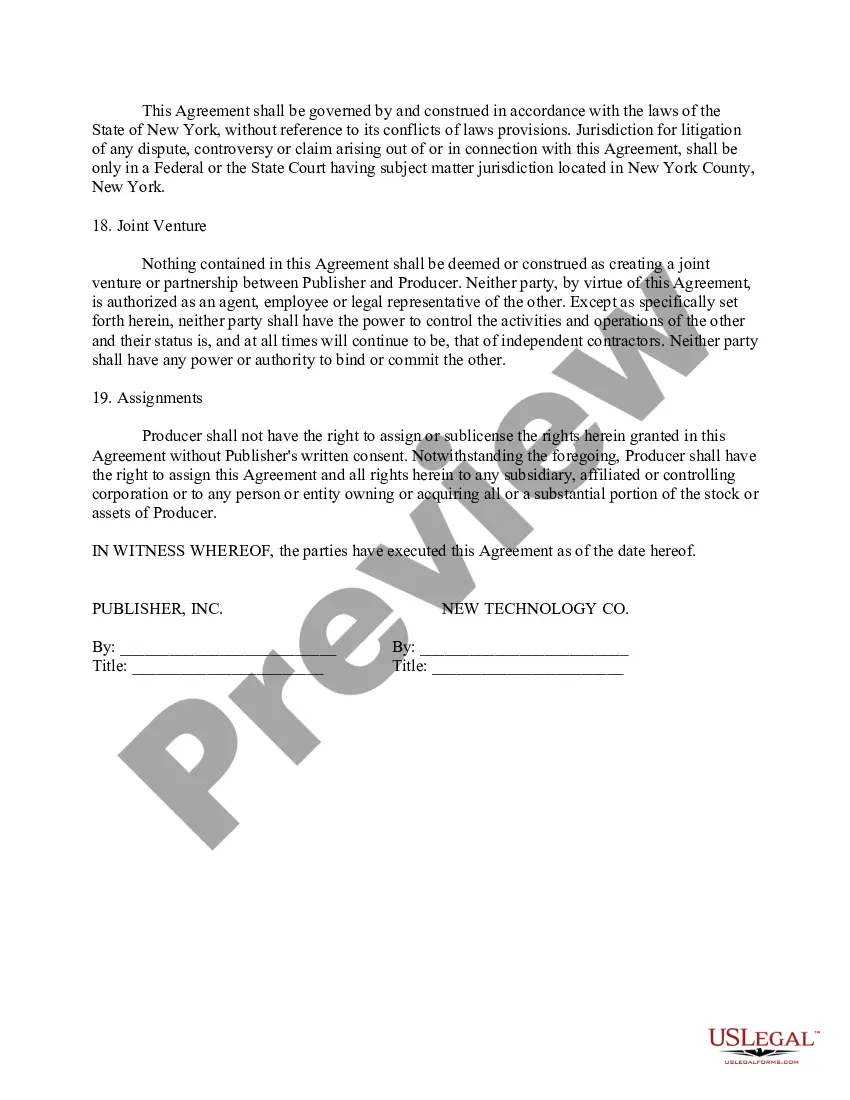
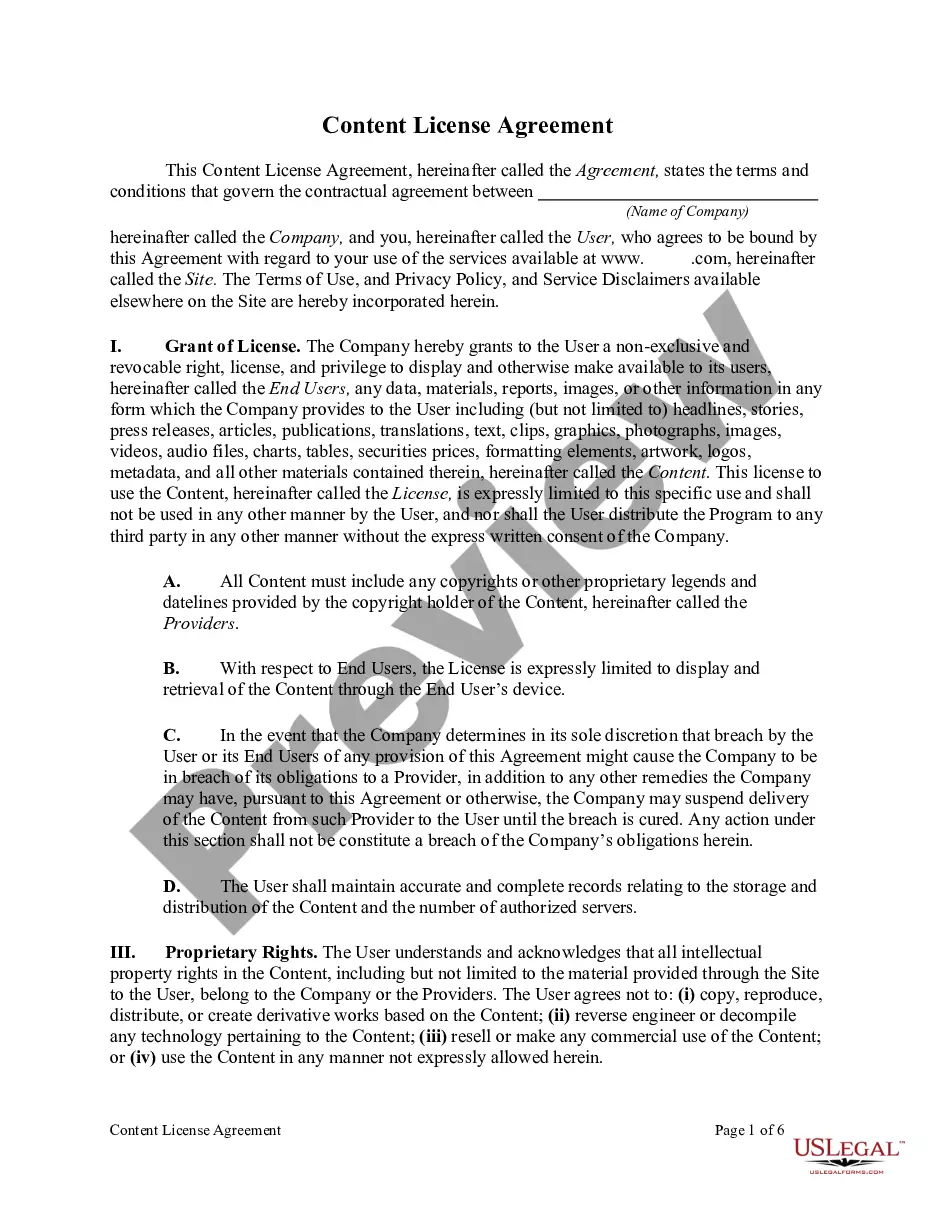
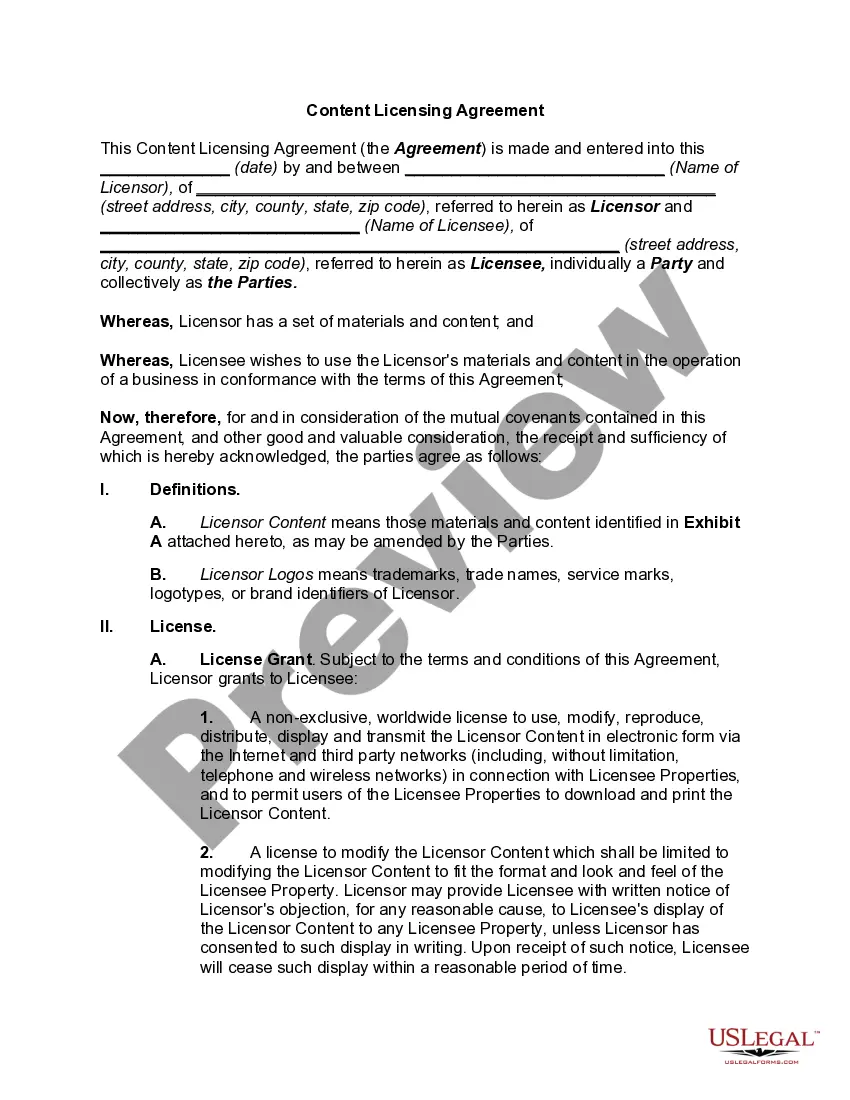
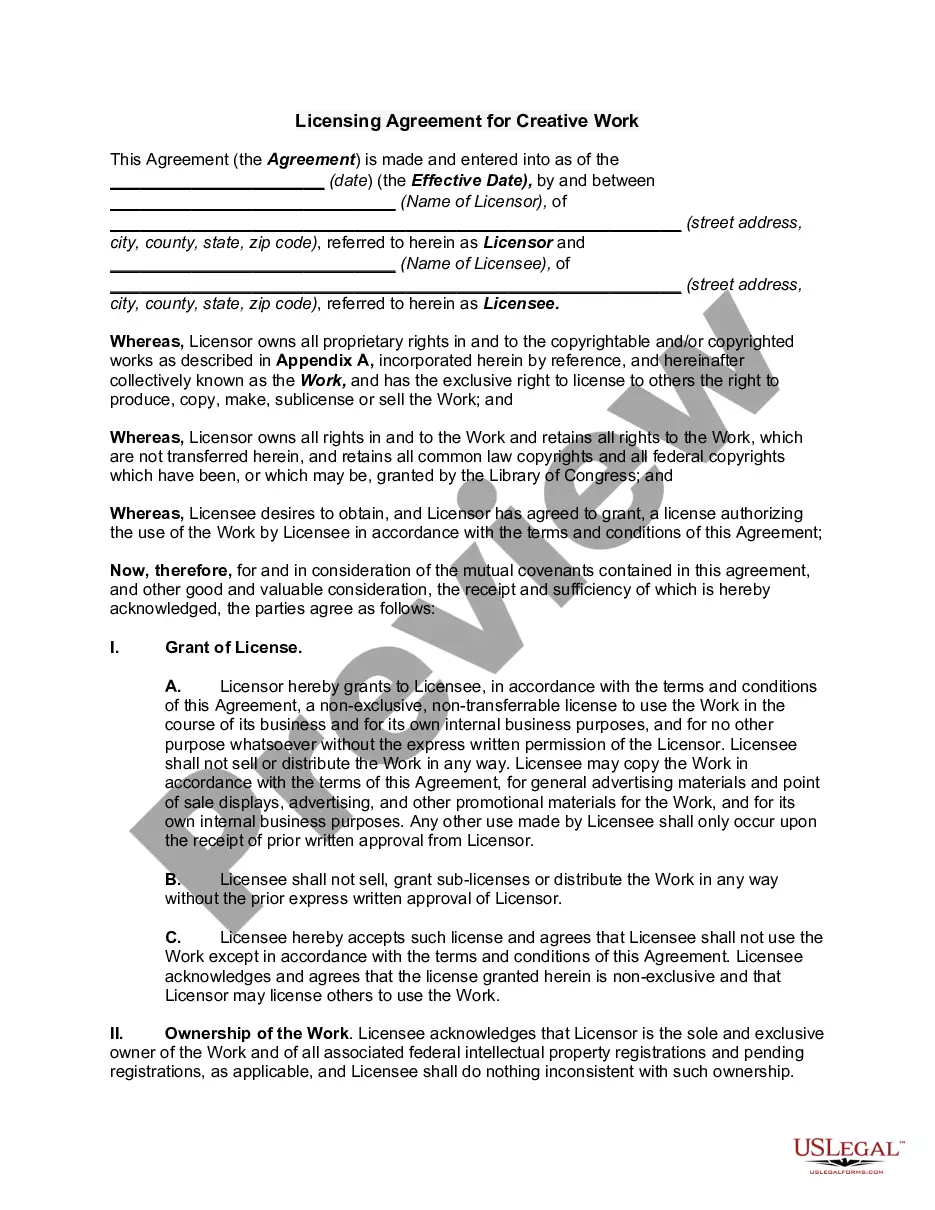
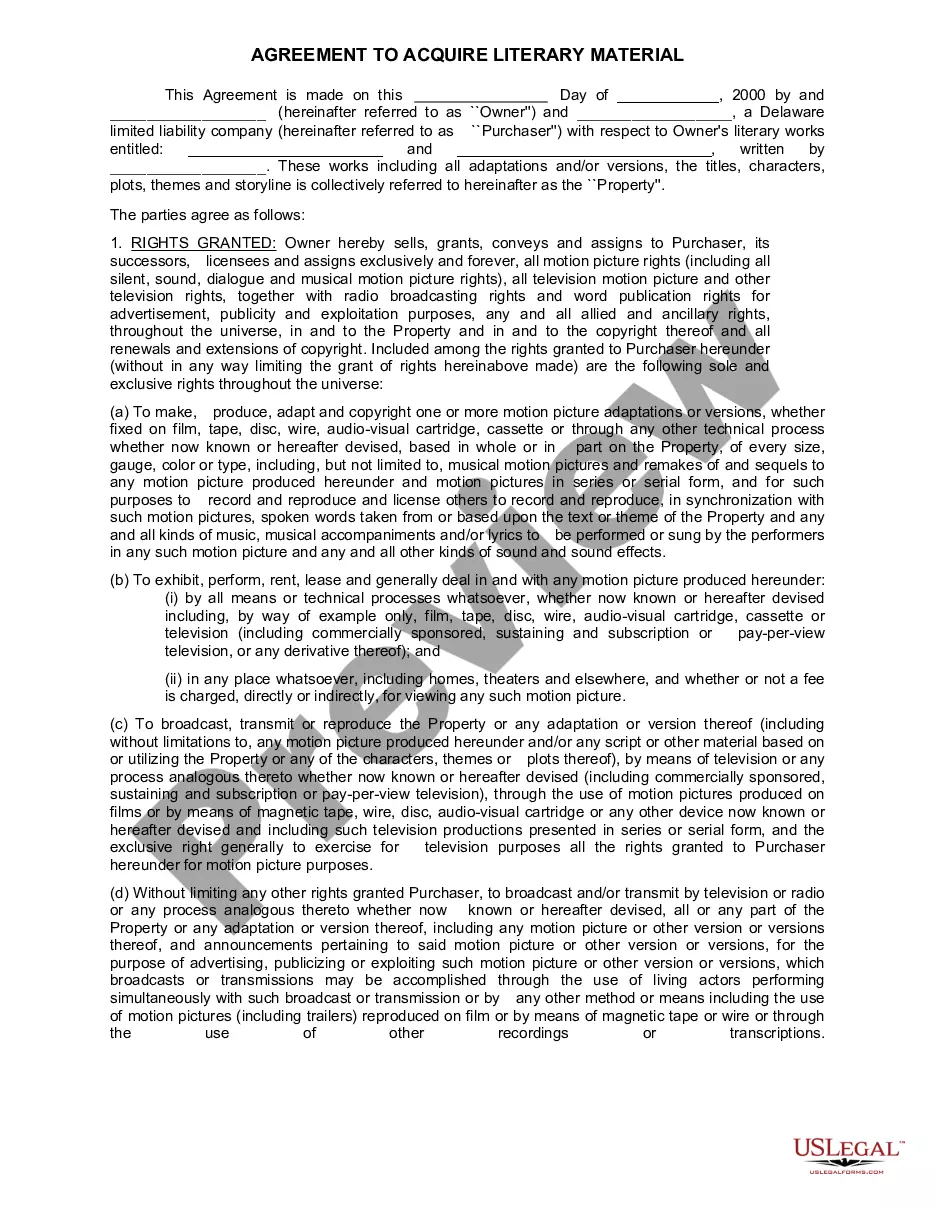
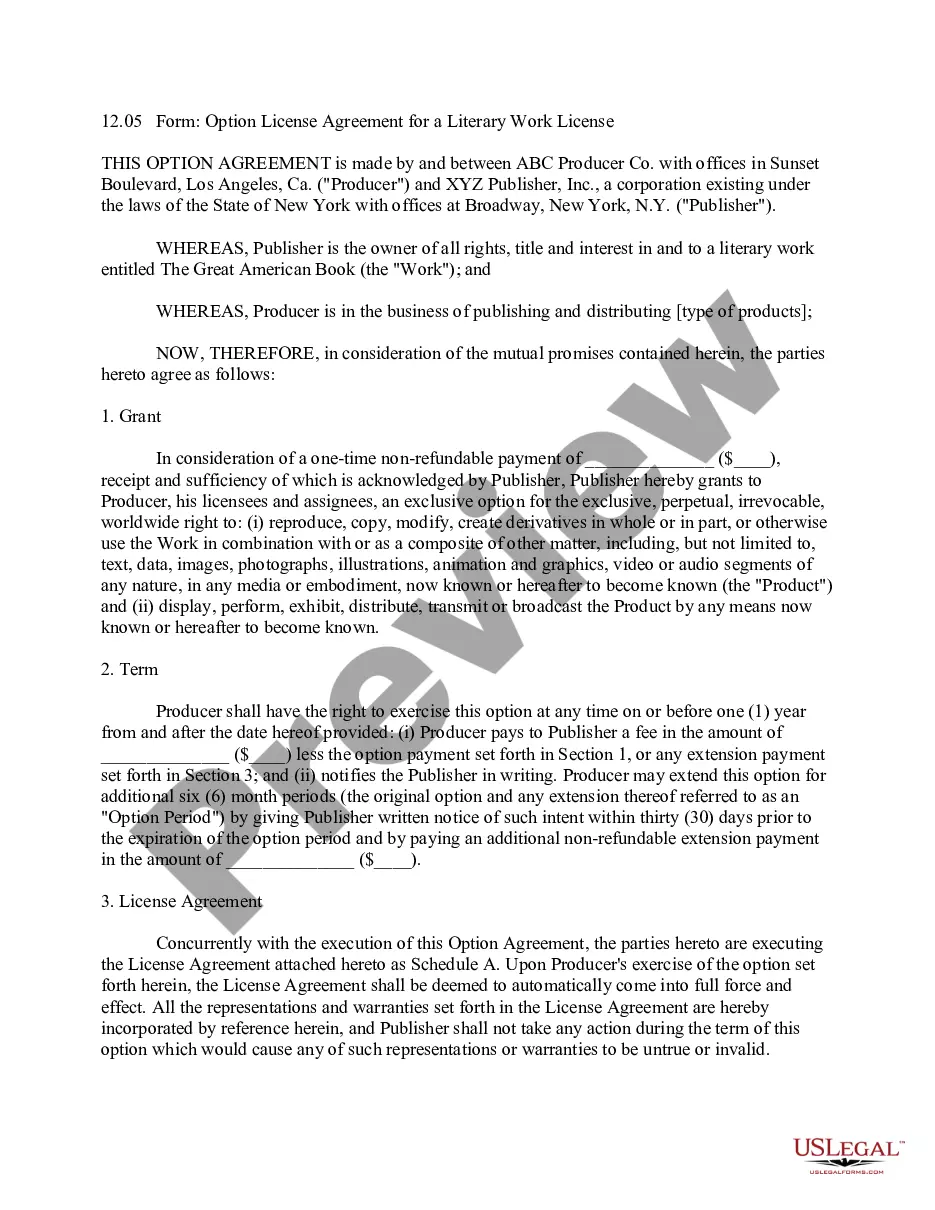
A Literary Work License Agreement is a legal document that enables a publisher to grant a producer the rights to use specific literary materials. This agreement allows the producer to reproduce and distribute products that incorporate these materials while ensuring the original rights of the publisher are protected. It differs from similar agreements by clearly outlining the non-exclusive nature of the rights granted and the terms for any modifications of the literary work.
Main sections of this form
- Grant of rights: Specifies the non-exclusive rights to reproduce, distribute, and advertise the materials.
- No abridgment clause: Outlines limitations on modifications of the materials without publisher approval.
- Delivery of materials: Defines the publisher's obligation to provide the producer with copies of the materials.
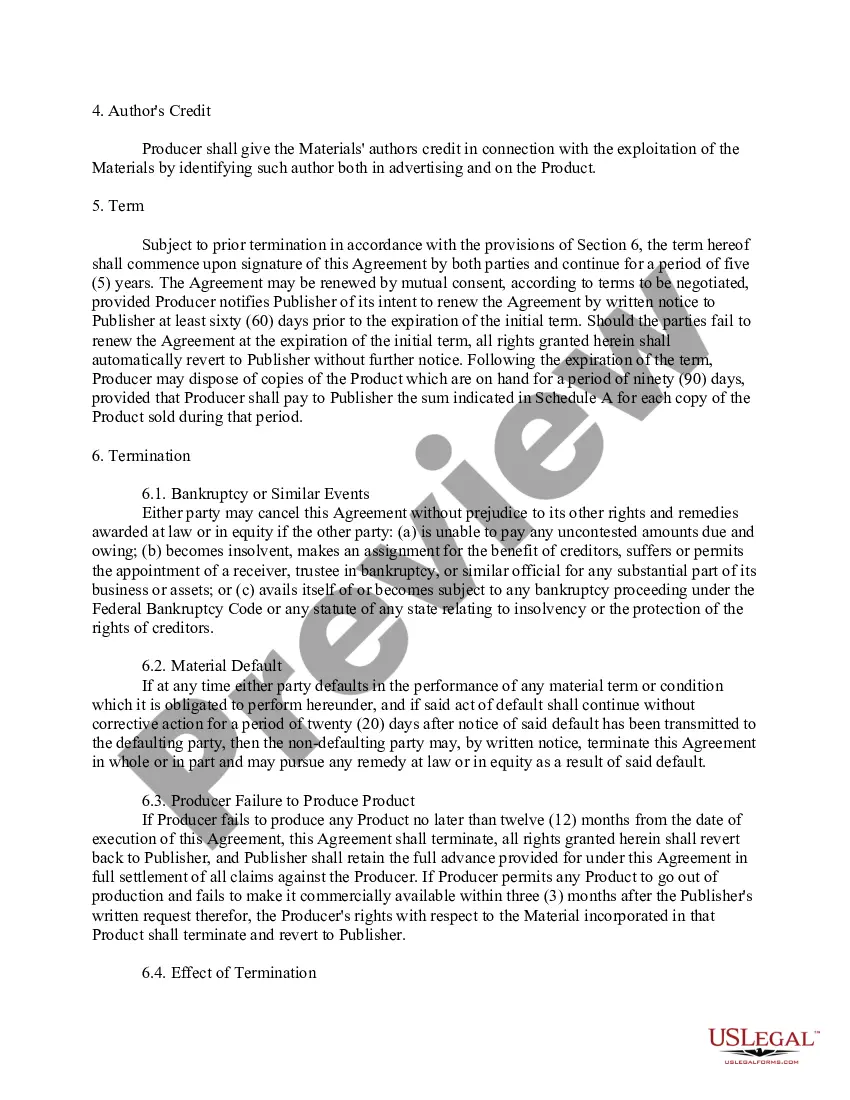
- Credit to authors: Requires the producer to credit the authors of the materials in promotional materials and products.
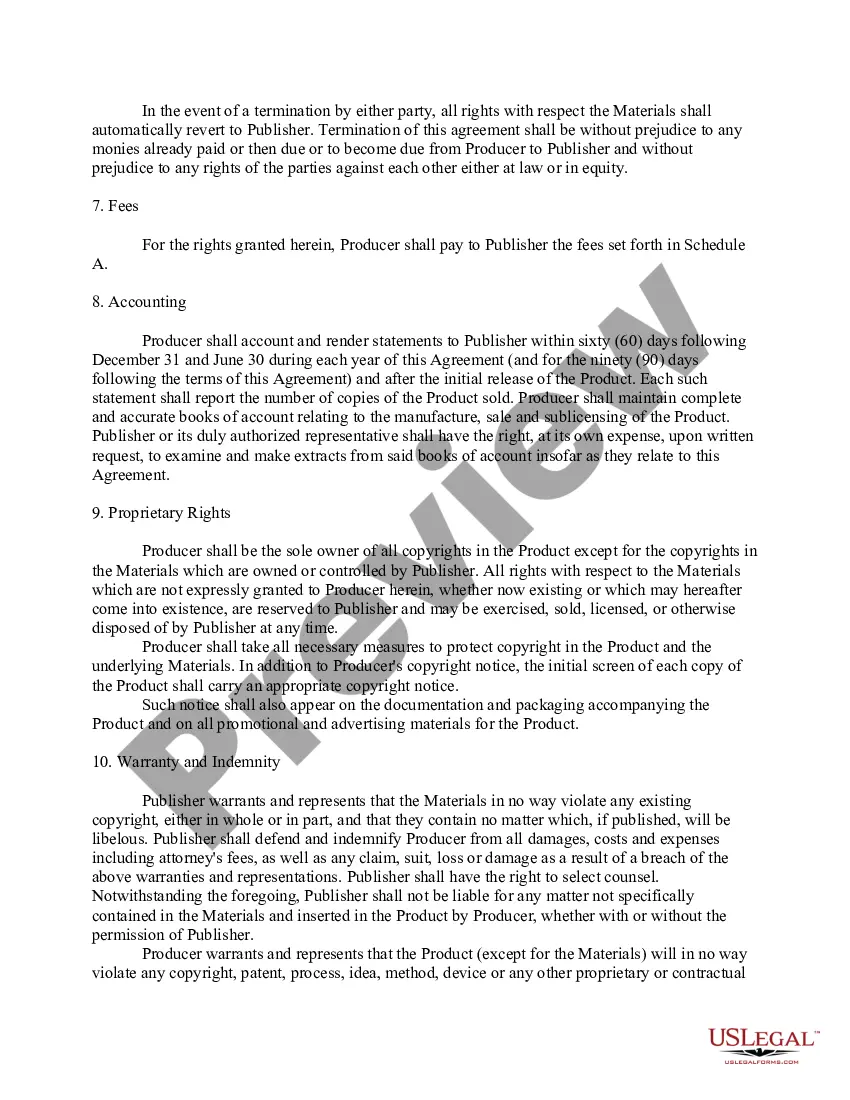
- Termination clauses: Details the conditions under which either party may terminate the agreement.
- Fees and accounting: Establishes financial obligations related to the rights granted.
Common use cases
This form is necessary when a producer wants to create products, such as books, videos, or digital content, that incorporate literary works owned by a publisher. It is used to clarify the distribution rights and ensure both parties understand their obligations regarding the use, reproduction, and modification of the materials. For example, if a tech company wishes to create an educational app that features excerpts from a book, they would require a Literary Work License Agreement to proceed legally.
Intended users of this form
- Publishers looking to license their literary works to producers or third parties.
- Producers engaged in creating new products incorporating existing literary materials.
- Authors collaborating with publishers to ensure their rights are protected when their works are used by producers.
- Legal representatives seeking to draft or review licensing agreements for clients involved in literary works.
Steps to complete this form
- Identify the parties involved: Enter the names and addresses of the publisher and the producer.
- Specify the literary materials: List the works or titles covered under this agreement.
- Define the products: Clearly state the type of products that will incorporate the materials.
- Enter the financial terms: Specify fees and payment rights as outlined in the agreement.
- Include the term and termination conditions: Set the duration of the agreement and circumstances for termination.
Is notarization required?
Notarization is generally not required for this form. However, certain states or situations might demand it. You can complete notarization online through US Legal Forms, powered by Notarize, using a verified video call available anytime.
Get your form ready online
Our built-in tools help you complete, sign, share, and store your documents in one place.
Make edits, fill in missing information, and update formatting in US Legal Forms—just like you would in MS Word.
Download a copy, print it, send it by email, or mail it via USPS—whatever works best for your next step.
Sign and collect signatures with our SignNow integration. Send to multiple recipients, set reminders, and more. Go Premium to unlock E-Sign.
If this form requires notarization, complete it online through a secure video call—no need to meet a notary in person or wait for an appointment.
We protect your documents and personal data by following strict security and privacy standards.

Make edits, fill in missing information, and update formatting in US Legal Forms—just like you would in MS Word.

Download a copy, print it, send it by email, or mail it via USPS—whatever works best for your next step.

Sign and collect signatures with our SignNow integration. Send to multiple recipients, set reminders, and more. Go Premium to unlock E-Sign.

If this form requires notarization, complete it online through a secure video call—no need to meet a notary in person or wait for an appointment.

We protect your documents and personal data by following strict security and privacy standards.
Avoid these common issues
- Failing to clearly define the rights being granted can lead to misunderstandings.
- Not specifying the duration of the agreement can result in legal complications.
- Neglecting to include the need for author credit can violate copyright laws.
- Omitting terms related to fees and payment schedules can create financial disputes later.
Benefits of completing this form online
- Convenient access to a professionally drafted agreement that complies with legal standards.
- Editable templates that allow customization to suit specific needs.
- Immediate availability for download, ensuring timely execution of licensing agreements.
Main things to remember
- The Literary Work License Agreement allows producers to use copyrighted materials in their products.
- Clearly define the scope of rights, authorship credit, and accounting procedures in the agreement.
- Ensure compliance with state-specific laws, particularly if operating in New York.
Looking for another form?
Form popularity
FAQ
Copyrights give the copyright owner exclusive rights over their original works. While not all works are copyrightable, a few examples of copyrightable materials include movies, literary works, live performances, sound recordings, radio broadcasts, and even software.
A Copyright License Agreement is a contract under which a copyright owner allows another person or company to use their copyrighted material in one way or another: to reprint it, or distribute it, to use it for a specified amount of time, and more.
Exclusive or non-exclusive. In an exclusive license, the intellectual property holder is licensing the work only to one person, for that particular use/territory. Territory. Use. Attribution. Derivative works. Confidentiality. Time frame. Termination.
What is a Licensing Agreement? A licensing agreement is a contract between two parties (the licensor and licensee) in which the licensor grants the licensee the right to use the brand name, trademark, patented technology, or ability to produce and sell goods owned by the licensor.
Download a template for a licensing agreement. Choose your role as the licensor or licensee. Define the license(s) in the agreement. Decide whether the license is exclusive or not. Settle the matter of fees and payment schedule. Add a renewal date and rules.
A licensing agreement allows one party (the licensee) to use and/or earn revenue from the property of the owner (the licensor). Licensing agreements generate revenues, called royalties, earned by a company for allowing its copyrighted or patented material to be used by another company.
An example of a licensing agreement is a contract between the copyright holders of software and another company, allowing the latter to use the computer software for their daily business operations.
Public Performing Right. The exclusive right of the copyright owner, granted by the U.S. Copyright Law, to authorize the performance or transmission of the work in public. Public Performance License. Reproduction Right. Mechanical License. Synchronization License. Digital Performance Right in Sound Recordings.
Determine if permission is needed. Identify the owner. Identify the rights needed. Contact the owner and negotiate whether payment is required. Get your permission agreement in writing.