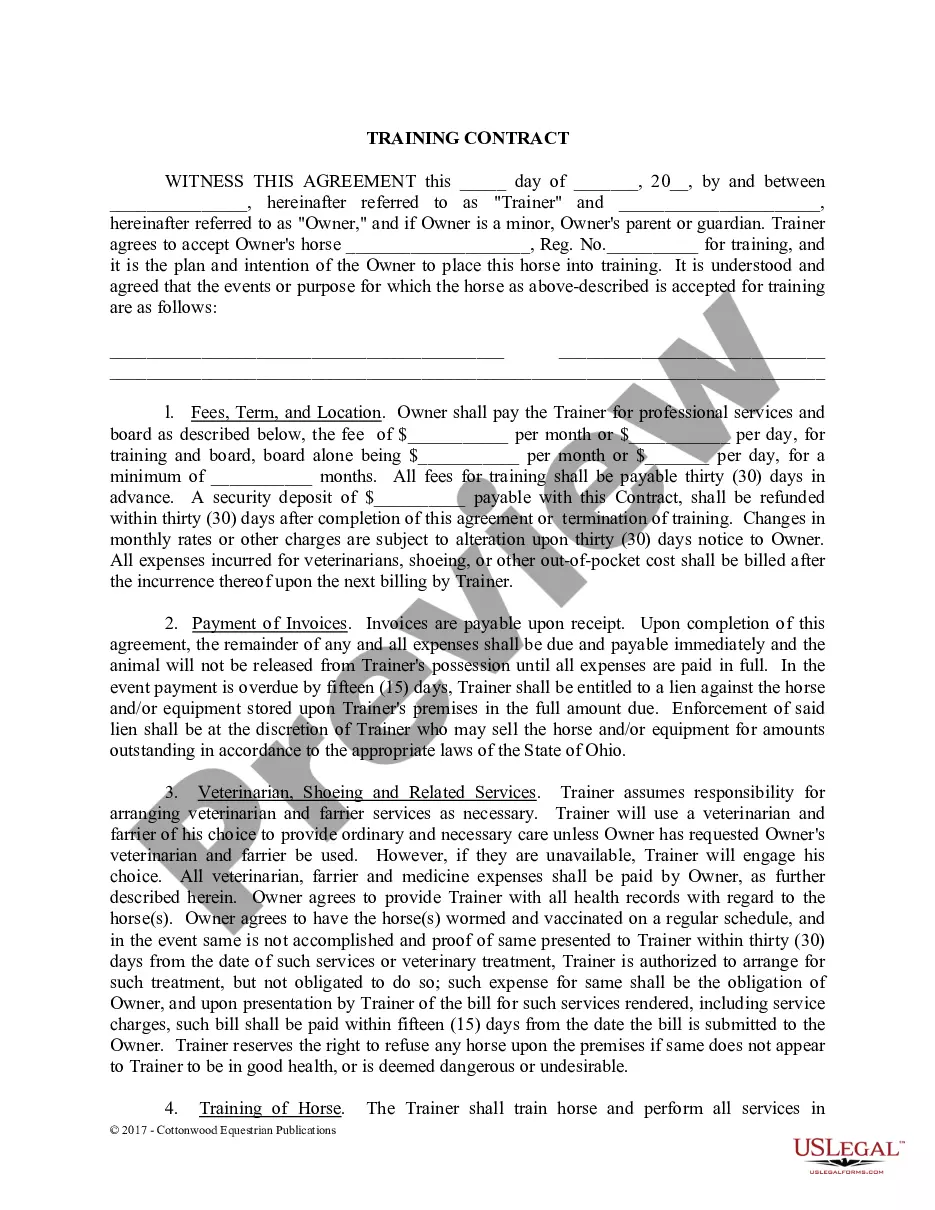
Cartoonist License and Merchandising Agreement
Overview of this form
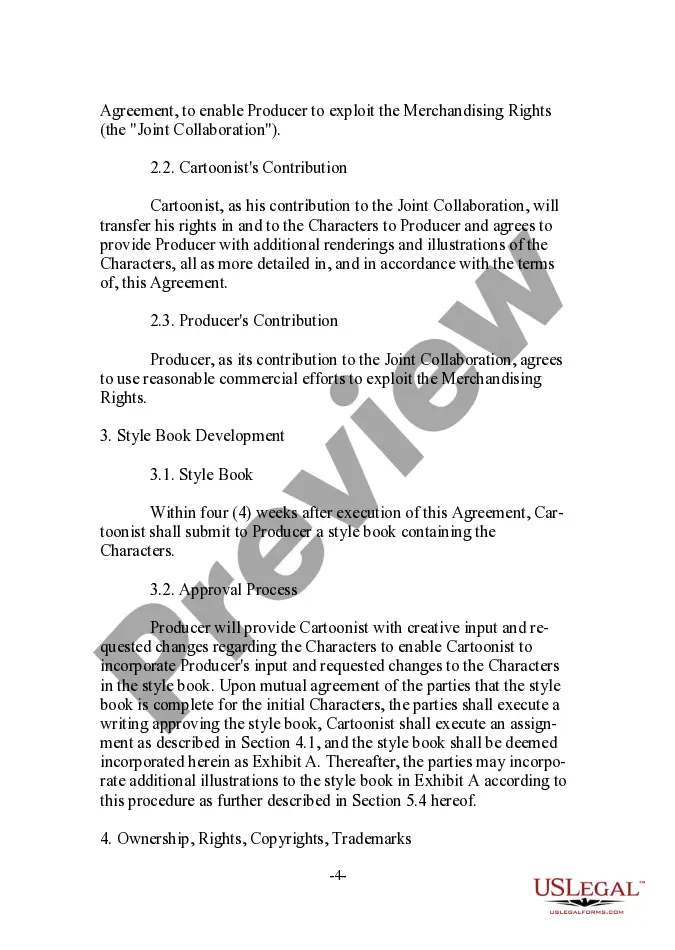
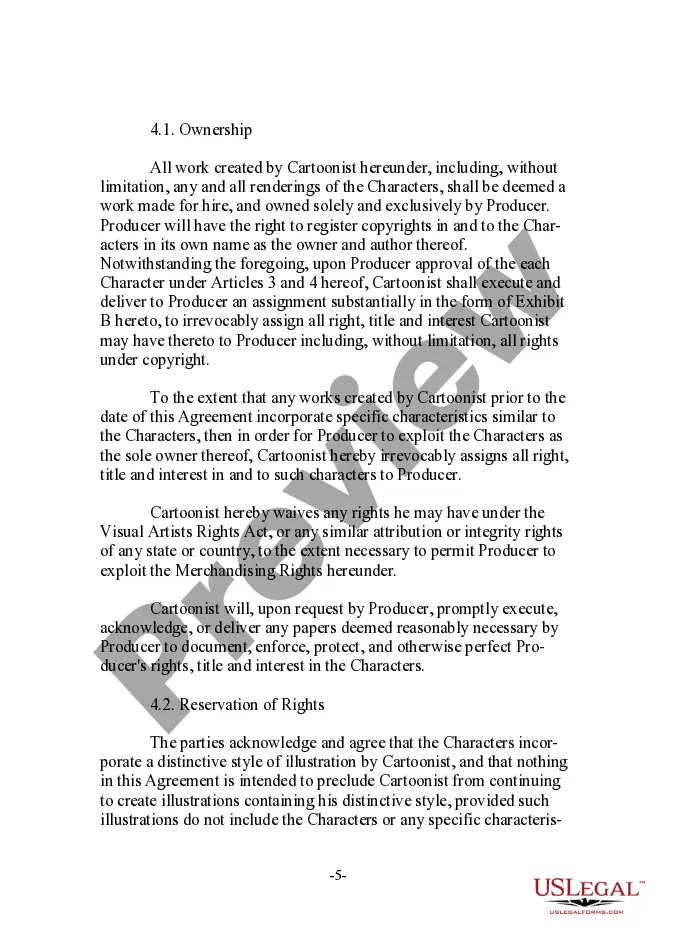
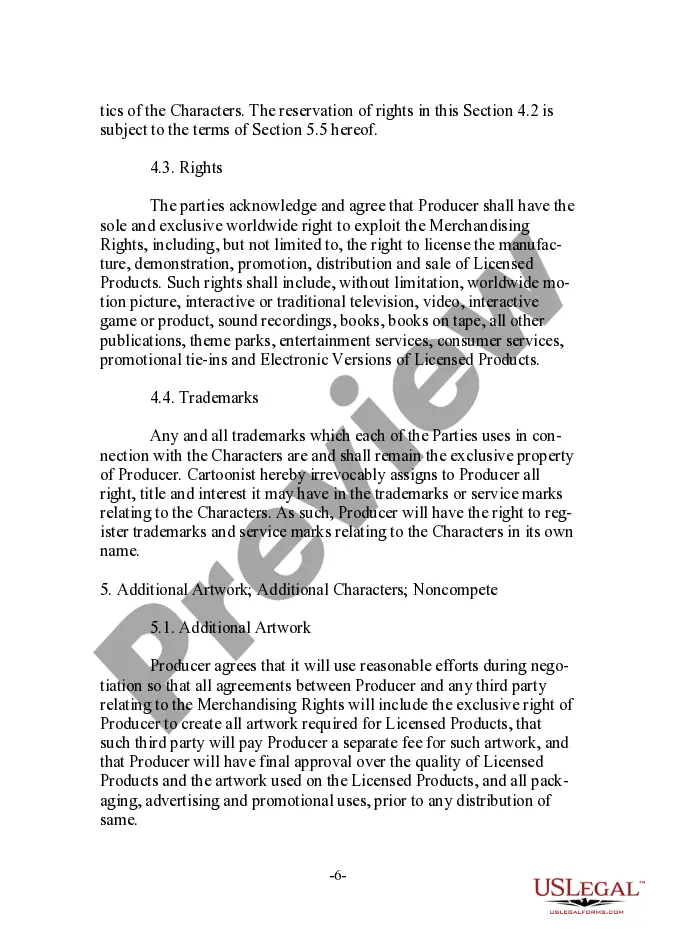
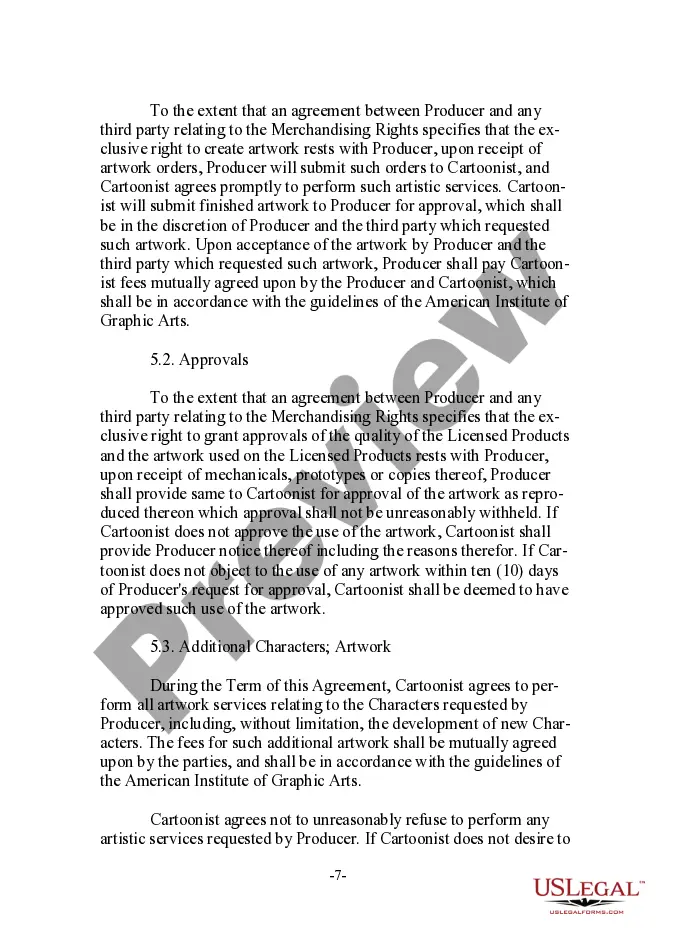
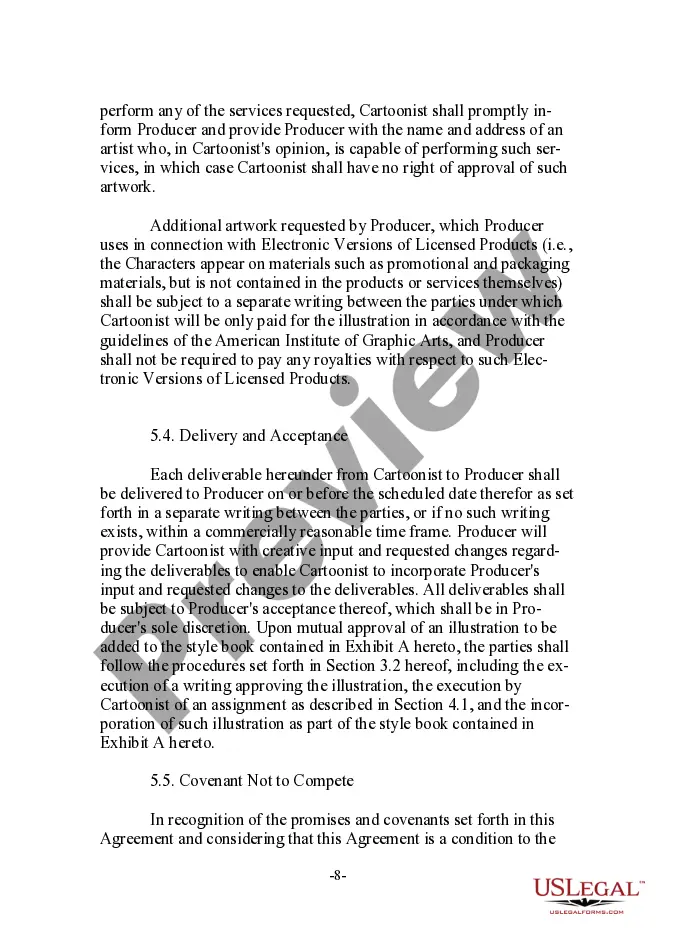
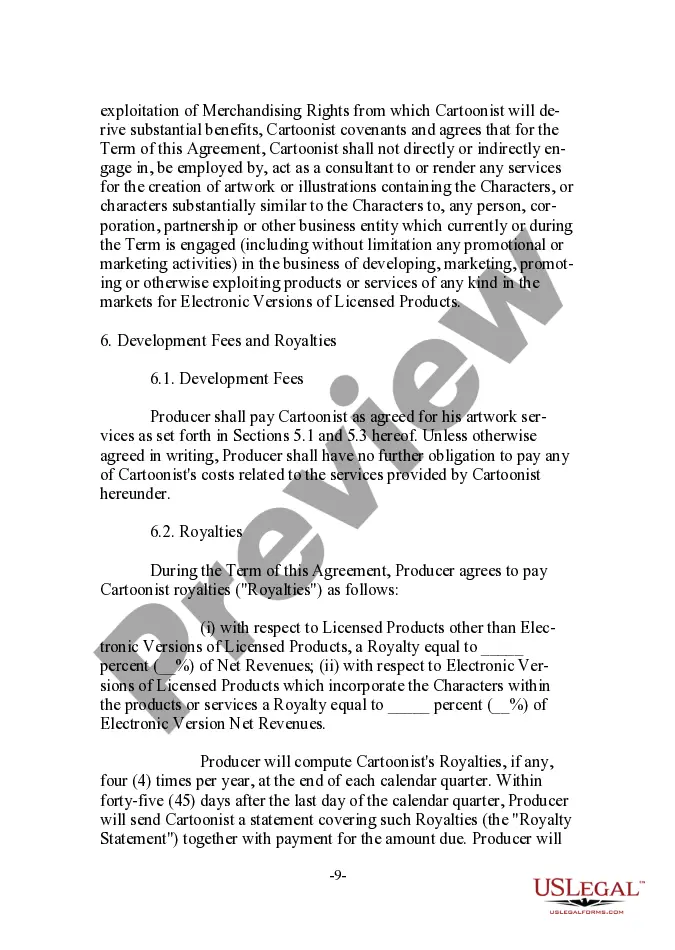
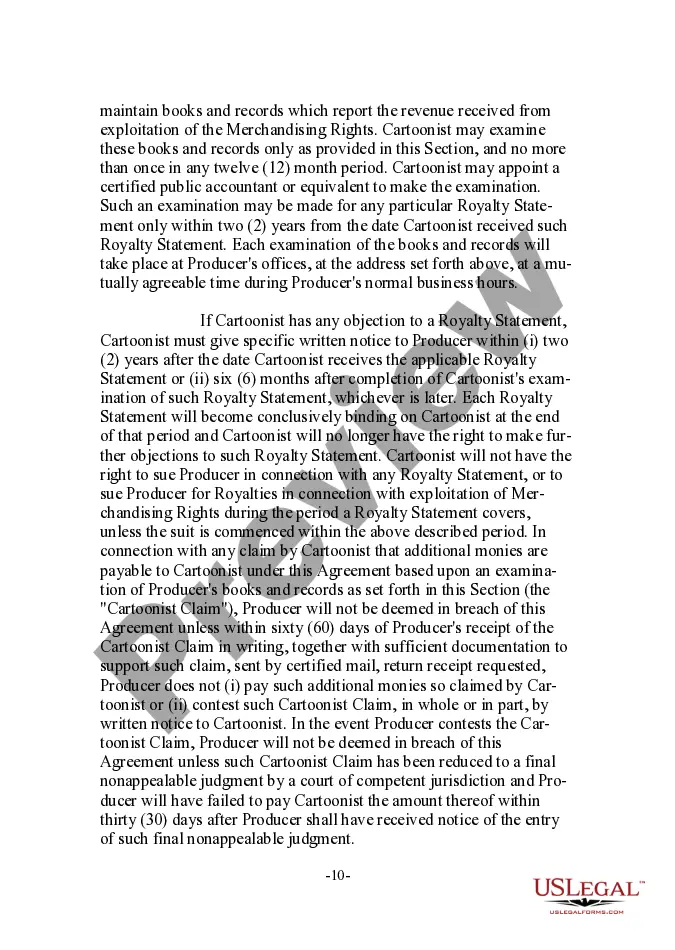
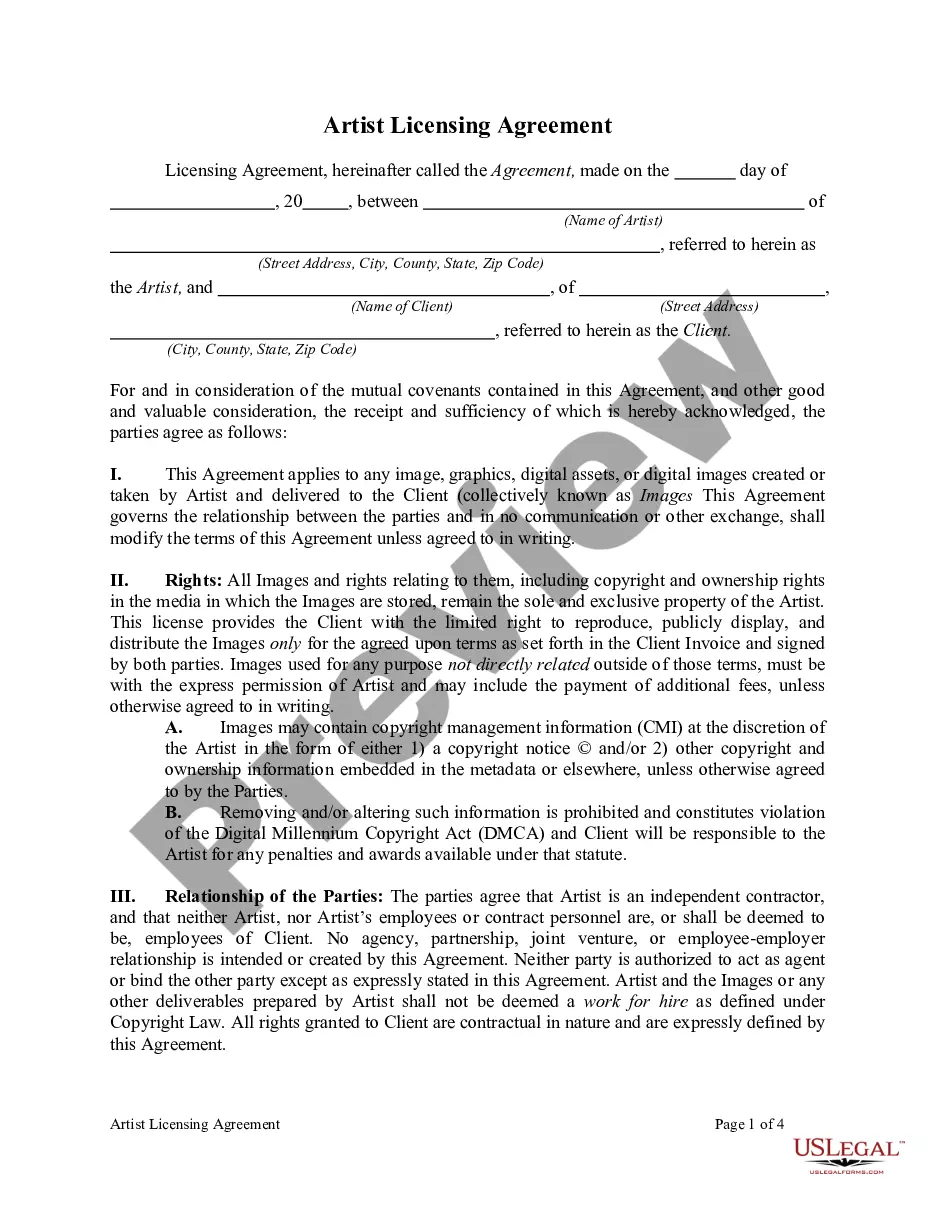
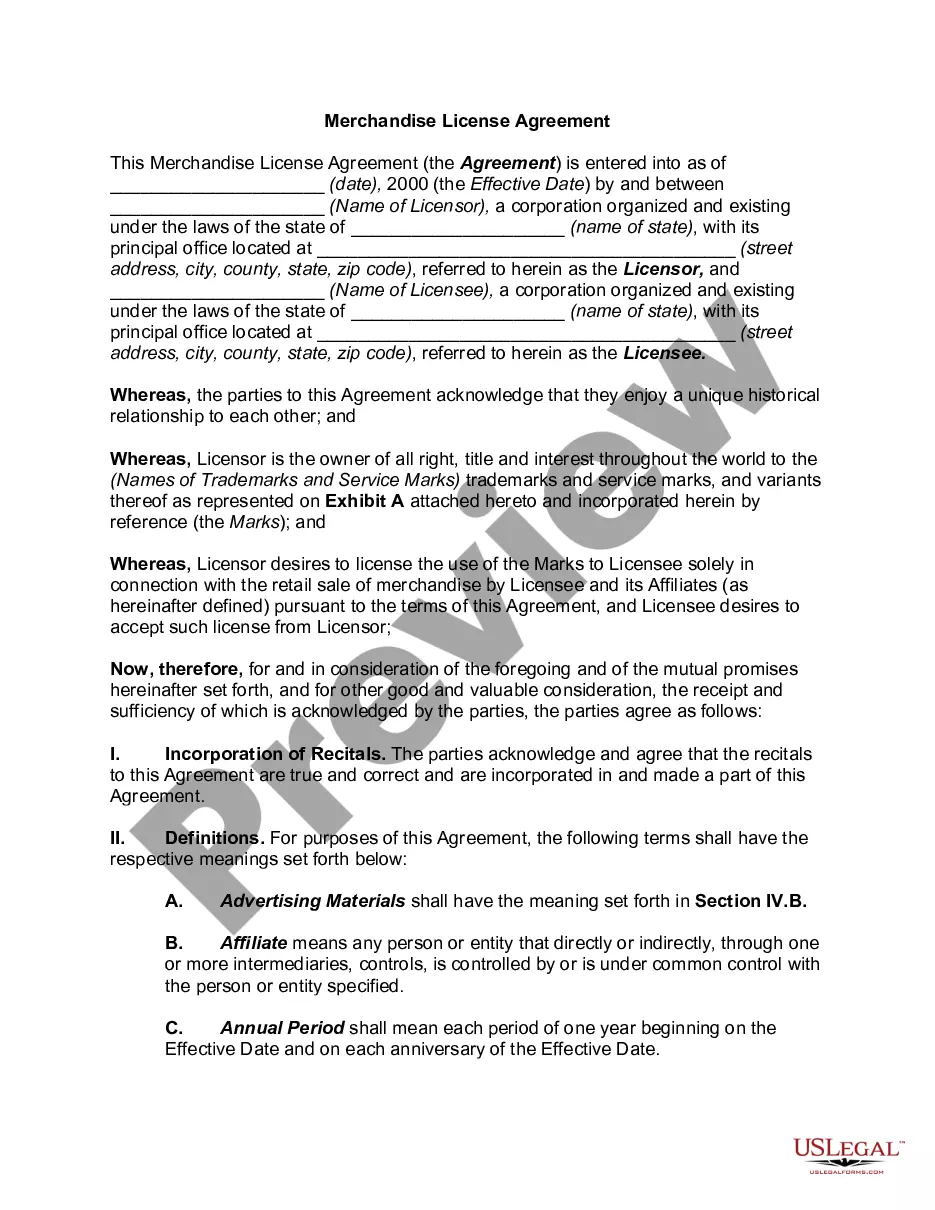
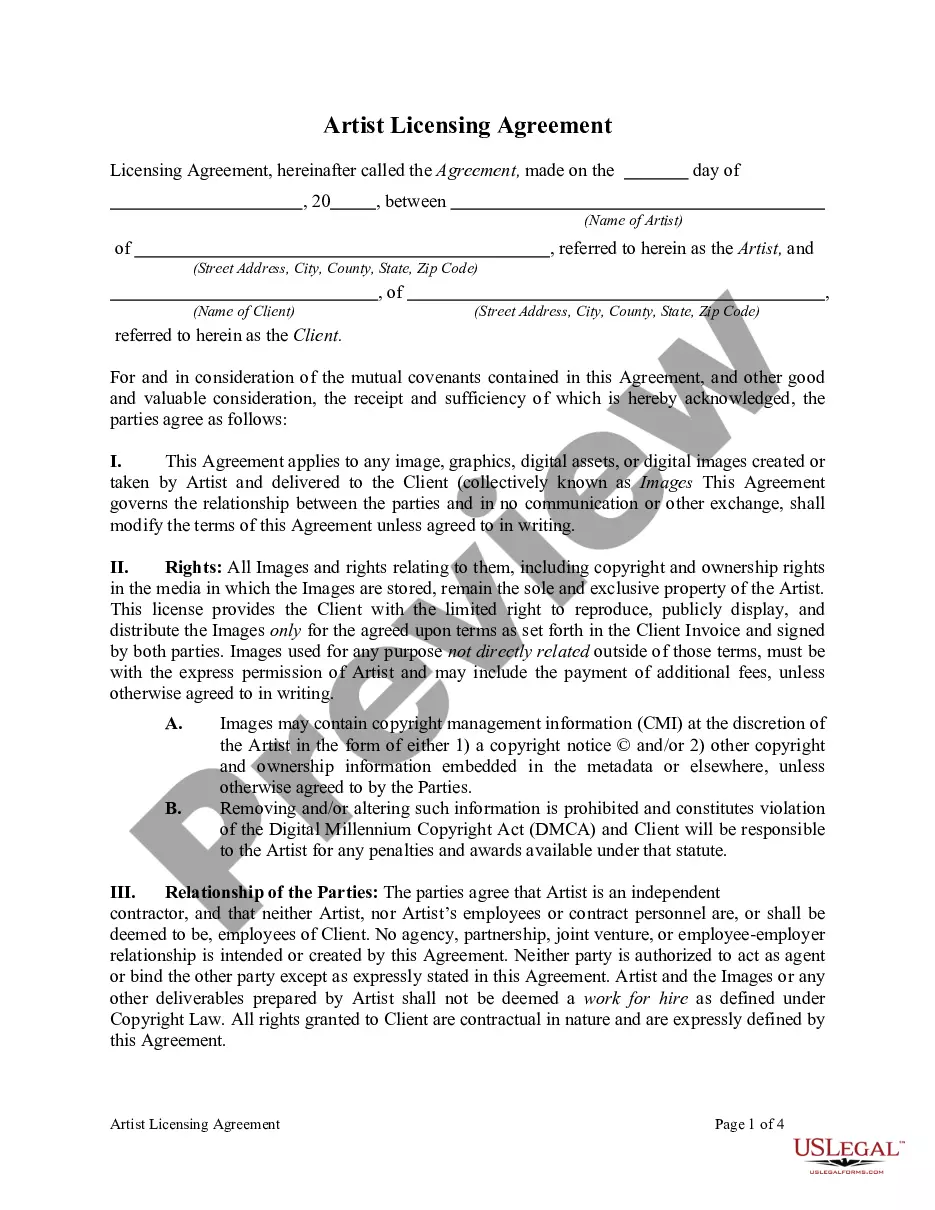
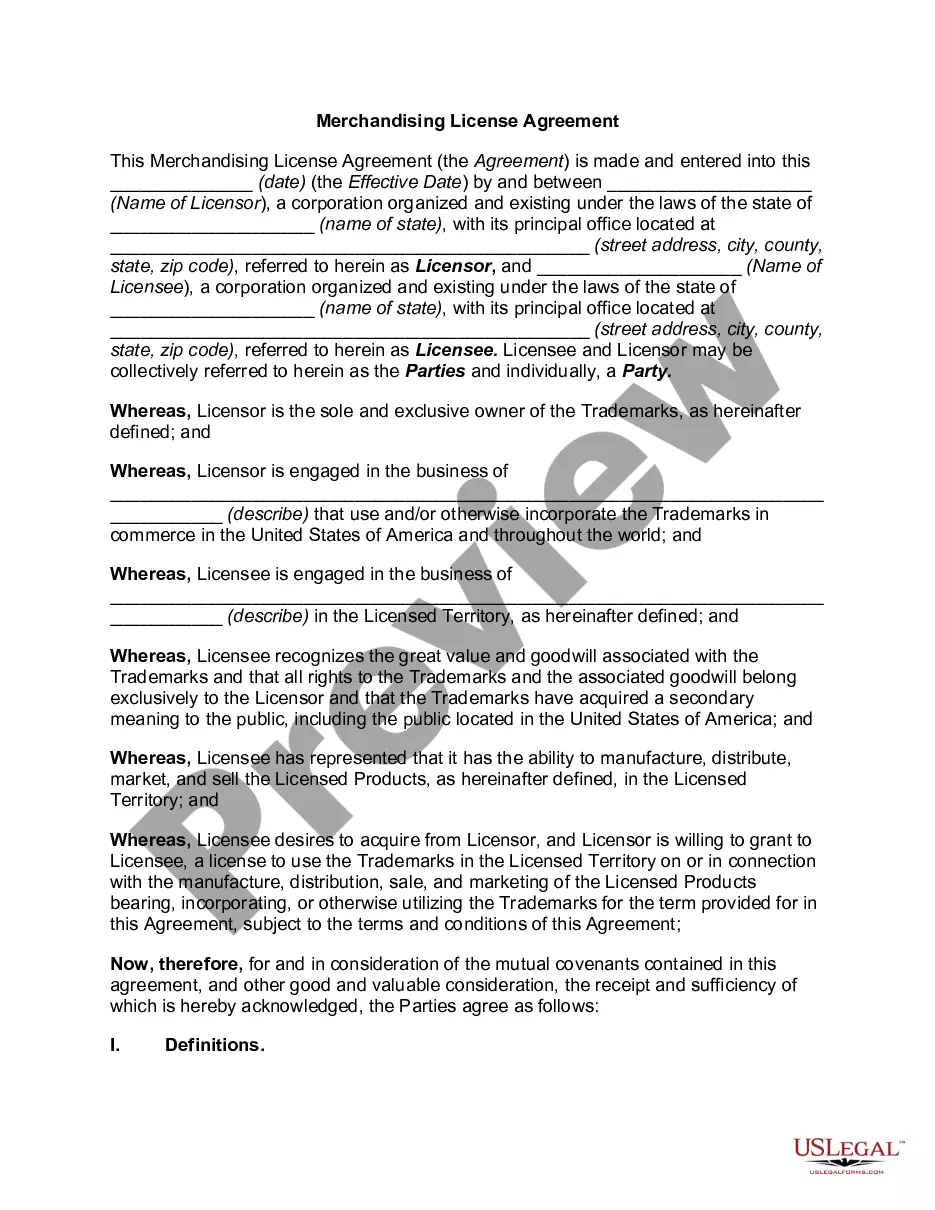
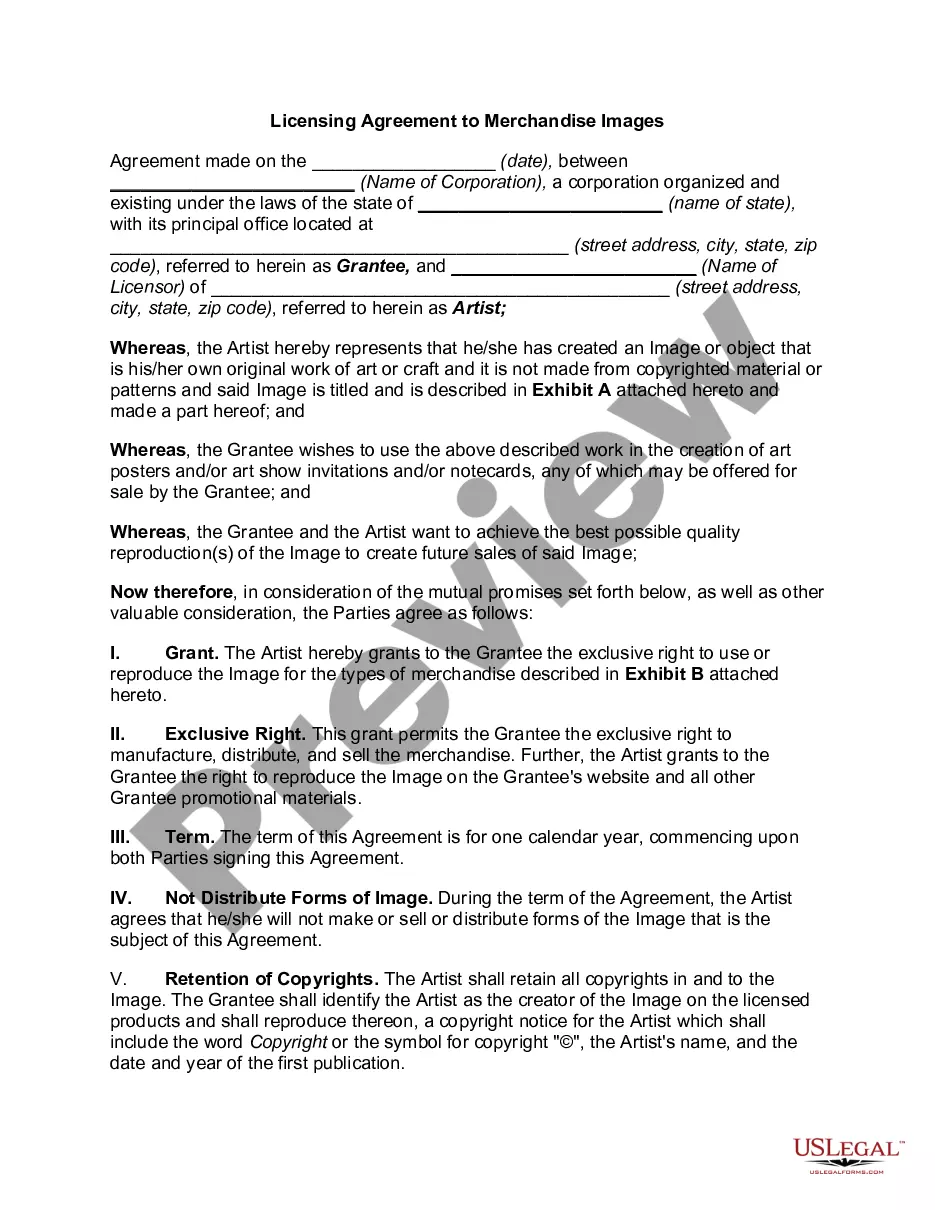
The Cartoonist License and Merchandising Agreement is a legal document designed to establish a partnership between a Producer and a Cartoonist. This agreement outlines the terms under which the Cartoonist grants rights to the Producer for the use and merchandising of their created characters. It ensures both parties have clear responsibilities, rights, and compensation terms, making it ideal for those in the entertainment and intellectual property sectors looking to collaborate effectively.
Key components of this form
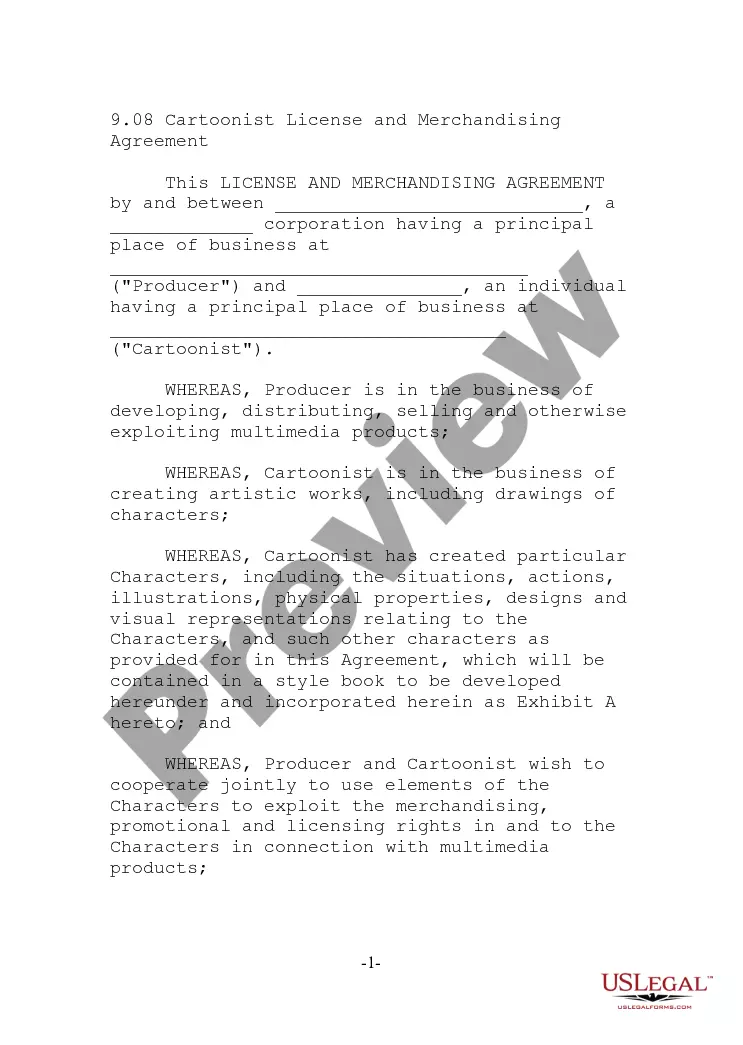
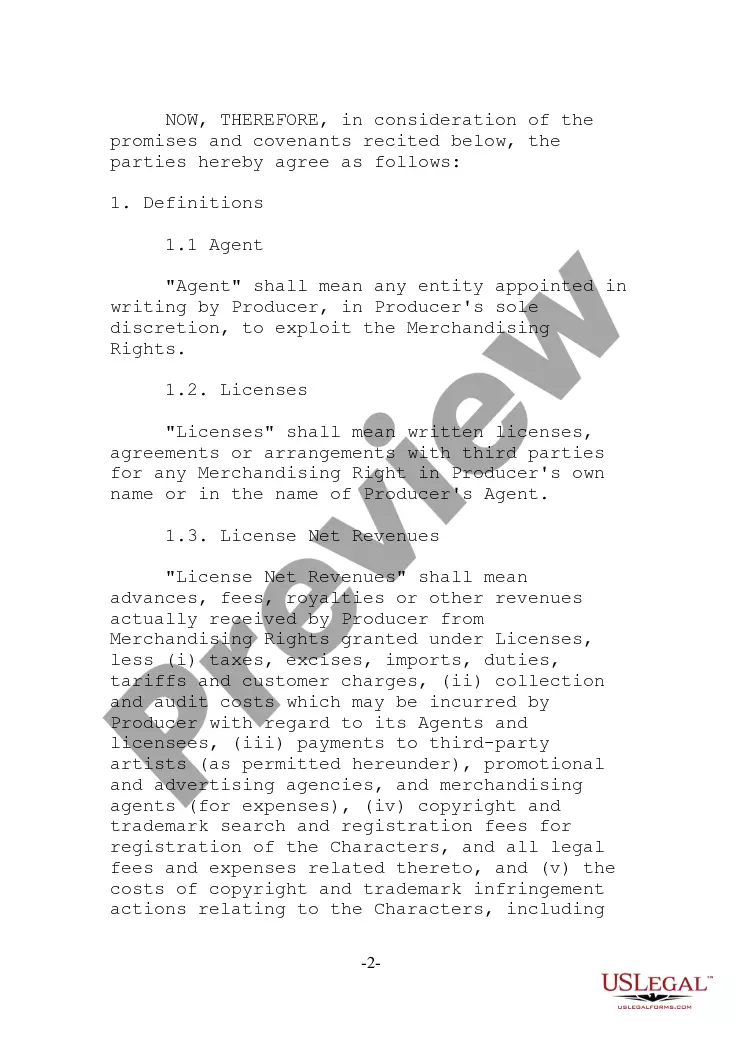
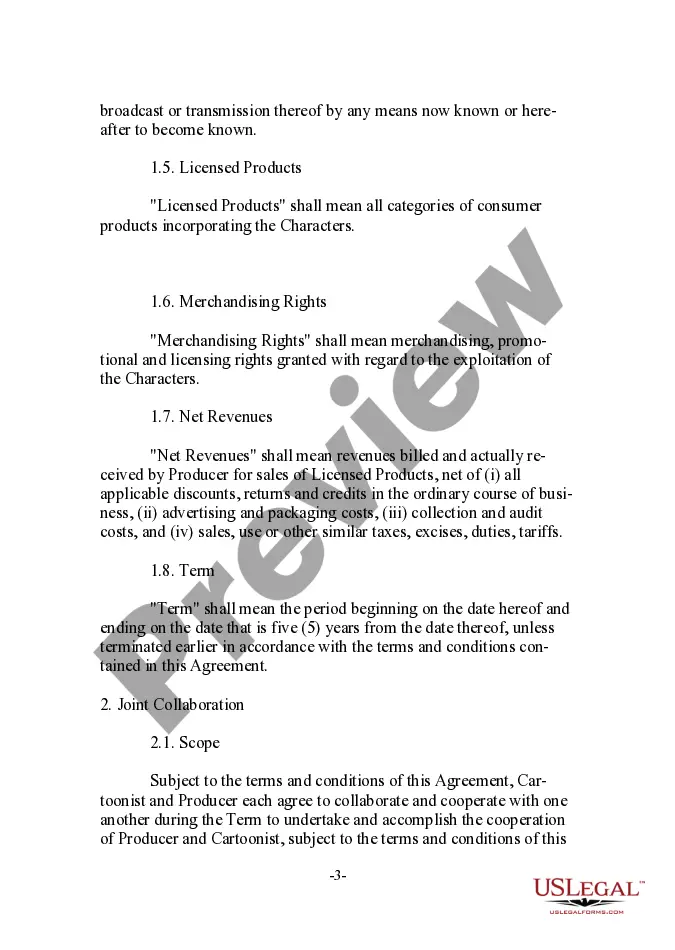
- Definitions of key terms including "Merchandising Rights" and "Licensed Products."
- Collaboration terms outlining contributions from both the Producer and the Cartoonist.
- Ownership clauses that specify rights to the created characters and related artwork.
- Development fees and royalty structures agreed upon for licensed products.
- Confidentiality requirements to protect proprietary information shared between parties.
- Termination provisions detailing how and when the agreement can be ended.

Situations where this form applies
This form is necessary when a Cartoonist and a Producer seek to enter into a business relationship involving the creation and merchandising of artistic characters. It is particularly useful when there are plans to distribute or license merchandise based on the Cartoonist's work, ensuring both parties are protected and compensated fairly. This agreement is ideal for independent creators seeking to collaborate with production companies in entertainment or multimedia projects.
Who can use this document
- Cartoonists who wish to license their artwork and characters to producers or companies.
- Producers looking to legally secure merchandising rights for characters created by independent artists.
- Companies in the entertainment and multimedia sectors involved in character development and merchandising.
- Freelance artists and graphic designers creating character-based content for commercial use.
How to prepare this document
- Identify the parties involved: fill in the names and business details of the Producer and the Cartoonist.
- Define the Characters by providing detailed descriptions or attaching a separate style book if necessary.
- Outline the contribution of each party to clarify responsibilities regarding the creation and exploitation of the Characters.
- Specify the royalty percentages and development fees that will be paid to the Cartoonist for the use of their work.
- Review and sign the agreement to formalize the partnership and ensure all parties understand their rights and obligations.
Is notarization required?
This form does not typically require notarization unless specified by local law. However, it may be beneficial to have the agreement notarized to provide an additional layer of authenticity and protection for both parties involved.
Get your form ready online
Our built-in tools help you complete, sign, share, and store your documents in one place.
Make edits, fill in missing information, and update formatting in US Legal Forms—just like you would in MS Word.
Download a copy, print it, send it by email, or mail it via USPS—whatever works best for your next step.
Sign and collect signatures with our SignNow integration. Send to multiple recipients, set reminders, and more. Go Premium to unlock E-Sign.
If this form requires notarization, complete it online through a secure video call—no need to meet a notary in person or wait for an appointment.
We protect your documents and personal data by following strict security and privacy standards.

Make edits, fill in missing information, and update formatting in US Legal Forms—just like you would in MS Word.

Download a copy, print it, send it by email, or mail it via USPS—whatever works best for your next step.

Sign and collect signatures with our SignNow integration. Send to multiple recipients, set reminders, and more. Go Premium to unlock E-Sign.

If this form requires notarization, complete it online through a secure video call—no need to meet a notary in person or wait for an appointment.

We protect your documents and personal data by following strict security and privacy standards.
Mistakes to watch out for
- Failing to clearly define the Characters and their respective rights, which can lead to disputes later on.
- Neglecting to specify payment terms, including royalties or development fees, can create misunderstandings.
- Overlooking confidentiality clauses, which are crucial in protecting proprietary information shared between the parties.
- Not reviewing state-specific requirements, which could invalidate the agreement if not properly aligned with local laws.
Benefits of completing this form online
- Easy customization to fit the specific details of your agreement, allowing for tailored clauses and terms.
- Immediate access to a professionally drafted template, ensuring legal soundness.
- The ability to download and store the form for future reference and modifications.
- Online availability simplifies the process of agreement execution between the parties.
Looking for another form?
Form popularity
FAQ
What is a Licensing Agreement? A licensing agreement is a contract between two parties (the licensor and licensee) in which the licensor grants the licensee the right to use the brand name, trademark, patented technology, or ability to produce and sell goods owned by the licensor.
Interestingly, LIMA suggests the average rate for art licensing agreements range between 3-6%. Companies or manufacturers selling to mass retailers are pressed hard to keep costs low and can't afford to pay hefty royalties, so expect to see a 3-4% range.
A license agreement is a business contract between two parties. The licensor (the seller of the license) owns the asset being licensed and the licensee (the buyer) pays for the right to use the license. The licensee pays royalties to the owner in exchange for the right to sell the product or use the technology.
The 3 P's of collegiate licensing are protection, promotion, and profit.
Licensed Merchandise means any goods (including photographs and memorabilia) bearing Institution Trademarks and, with respect to the Online Store, services (including auction) bearing the Institution Trademarks.
With a Merchandising Agreement, you can lay out both parties' roles and responsibilities, including who maintains the rights to the item that you are licensing. You can define the geographical areas where the product will be sold, length of the term, and financial details such as royalties or payments per unit sold.
In a merchandise license transaction, an artist, designer, trademark owner or celebrity (the "licensor") grants a license to a manufacturer or retailer (the "licensee") to manufacture and sell articles of merchandise which use the property that is the subject of the license, in exchange for a royalty from sales of
An example of a licensing agreement is a contract between the copyright holders of software and another company, allowing the latter to use the computer software for their daily business operations.
Exclusive or non-exclusive. In an exclusive license, the intellectual property holder is licensing the work only to one person, for that particular use/territory. Territory. Use. Attribution. Derivative works. Confidentiality. Time frame. Termination.