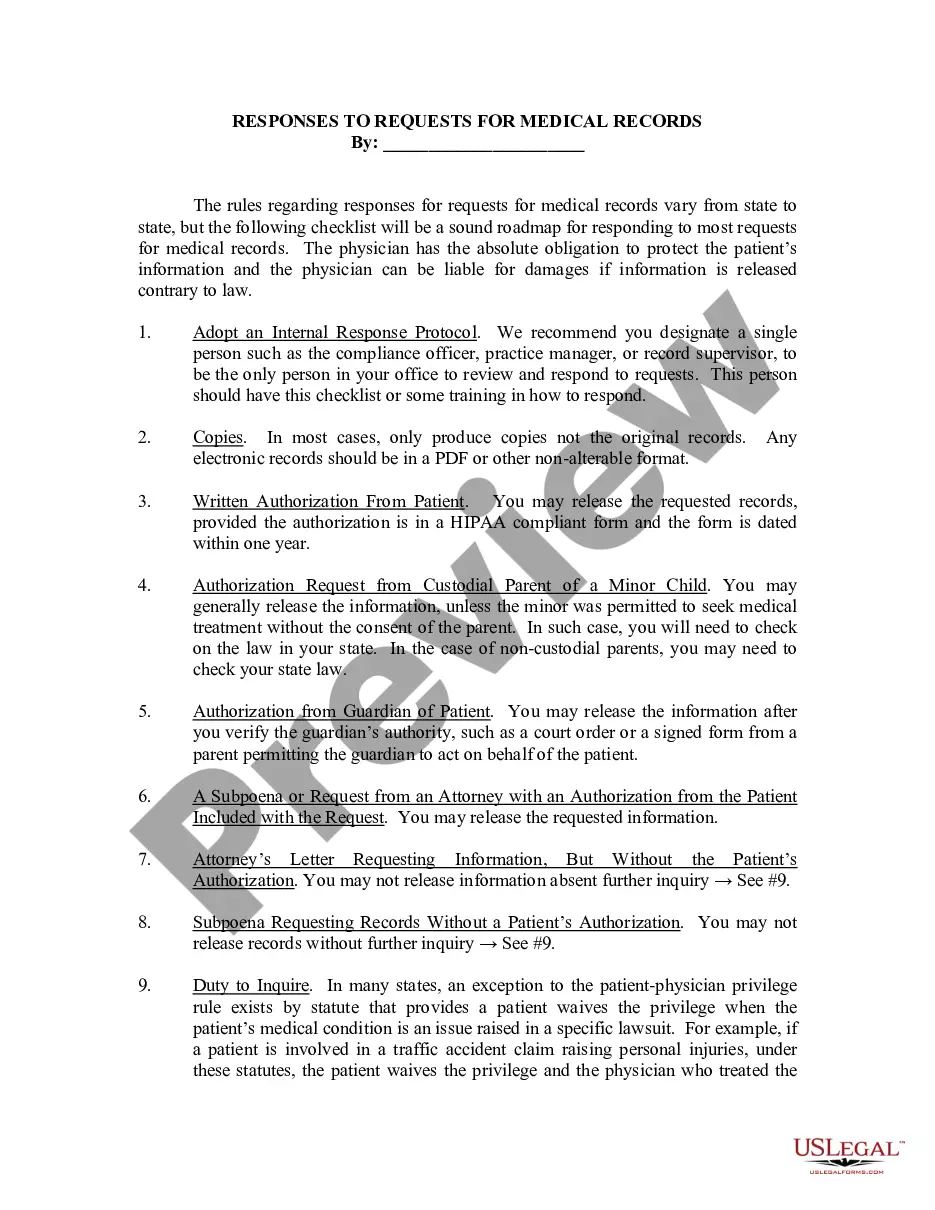
Cartoonist License and Merchandising Agreement
What this document covers
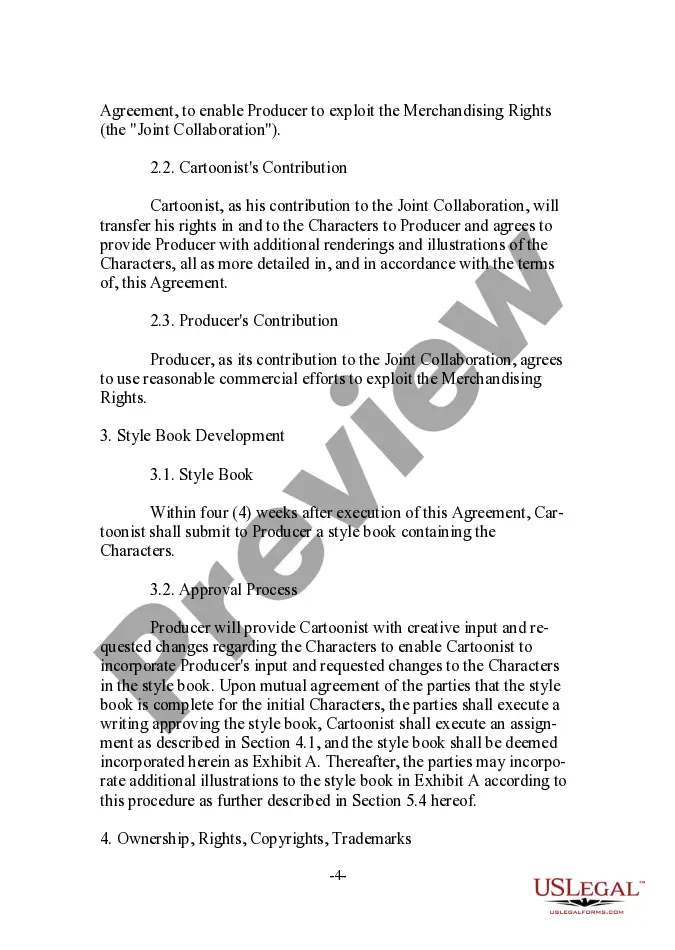
The Cartoonist License and Merchandising Agreement is a legal document that outlines the terms under which a cartoonist grants rights to a producer for the use and commercialization of their characters. This agreement is distinct from other licensing forms as it addresses collaborations specifically related to specialized artistic works and merchandising rights within multimedia contexts. It is tailored for those engaged in creative content development and distribution.
Form components explained
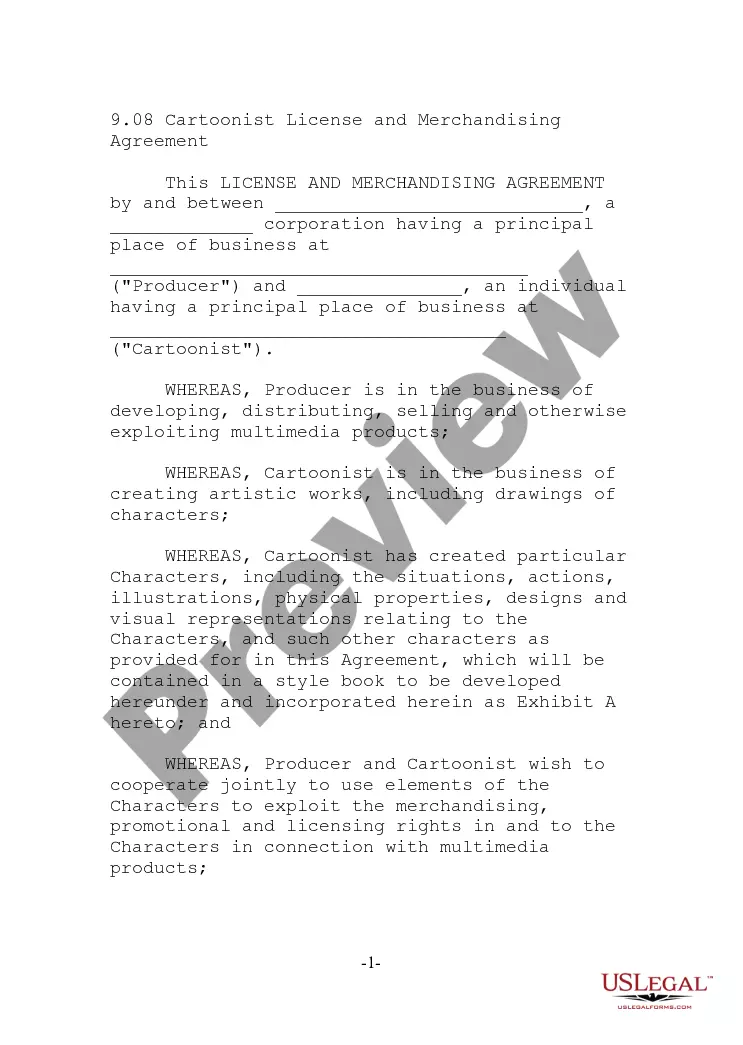
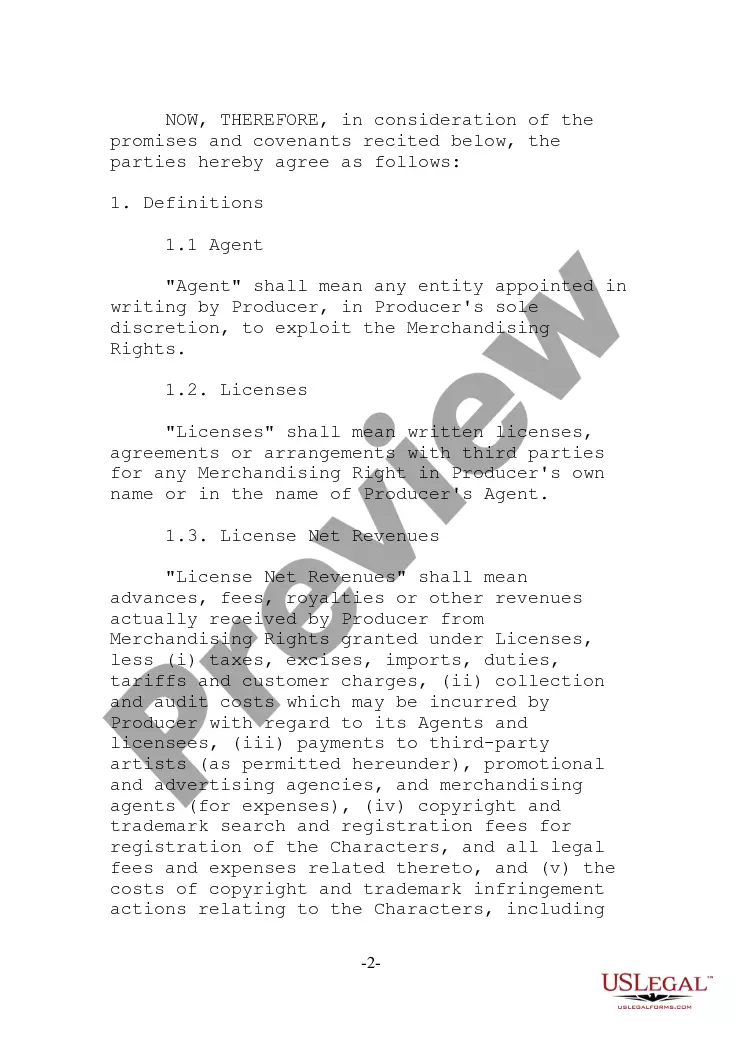
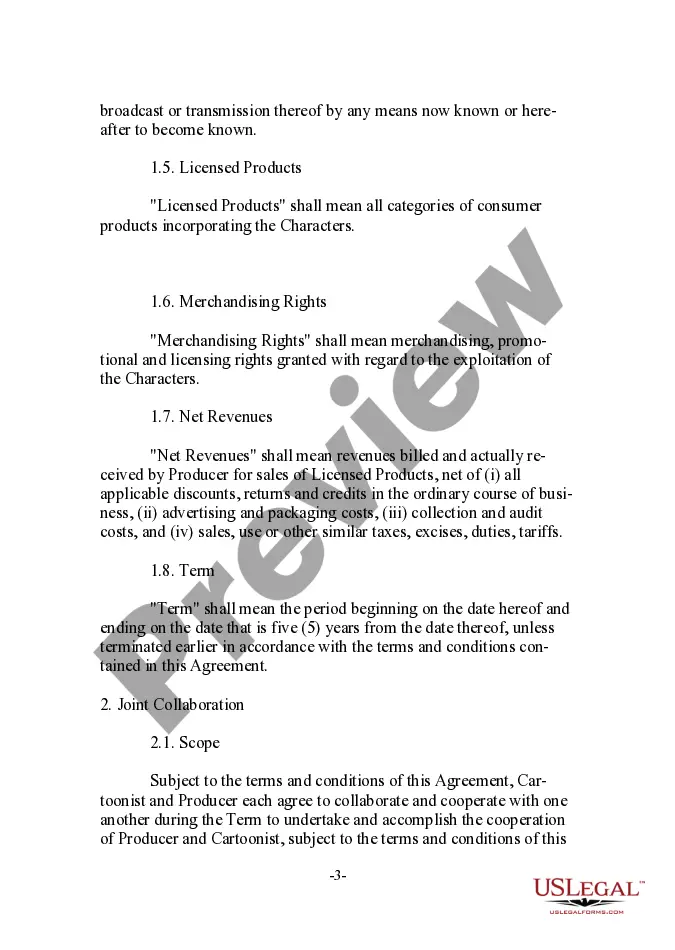
- Definitions: Clarifies key terminologies such as "Licenses," "Merchandising Rights," and "Net Revenues."
- Joint Collaboration: Outlines the responsibilities of both the cartoonist and the producer in the creative process.
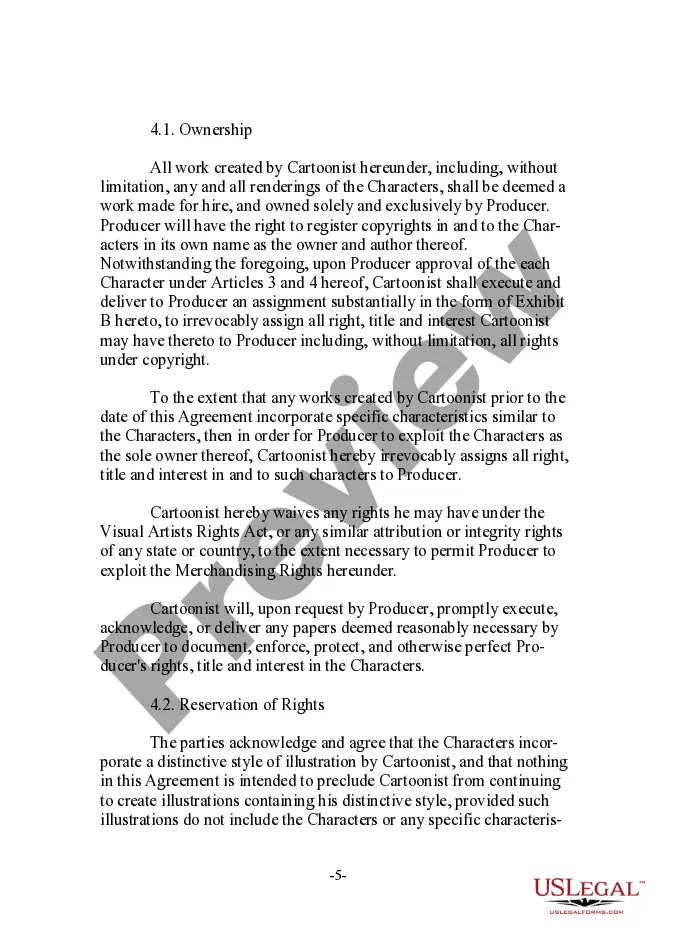
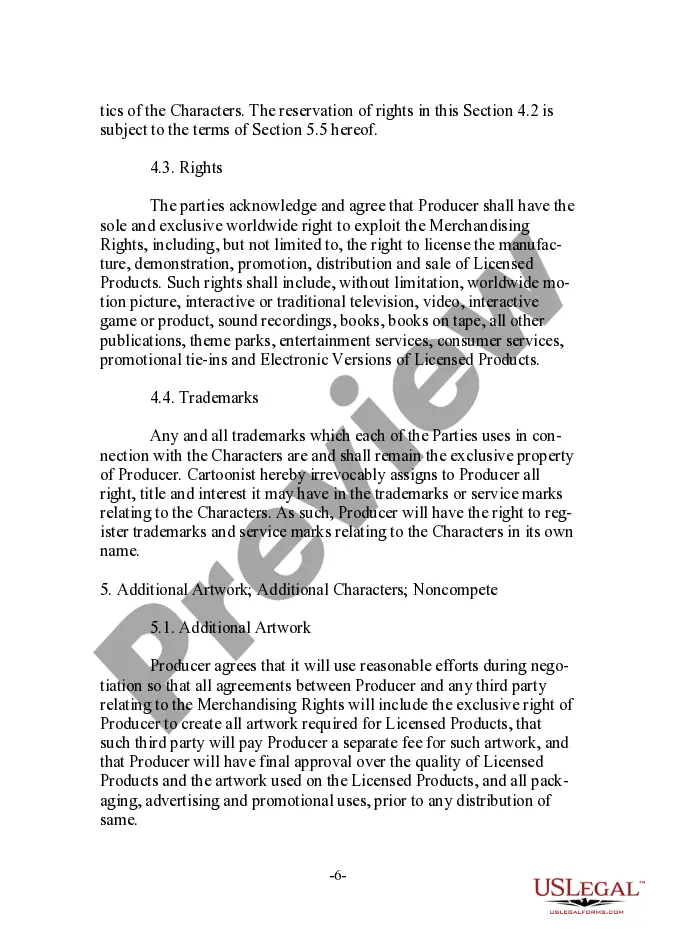
- Ownership and Rights: Details the ownership of the characters and the rights associated with their use.
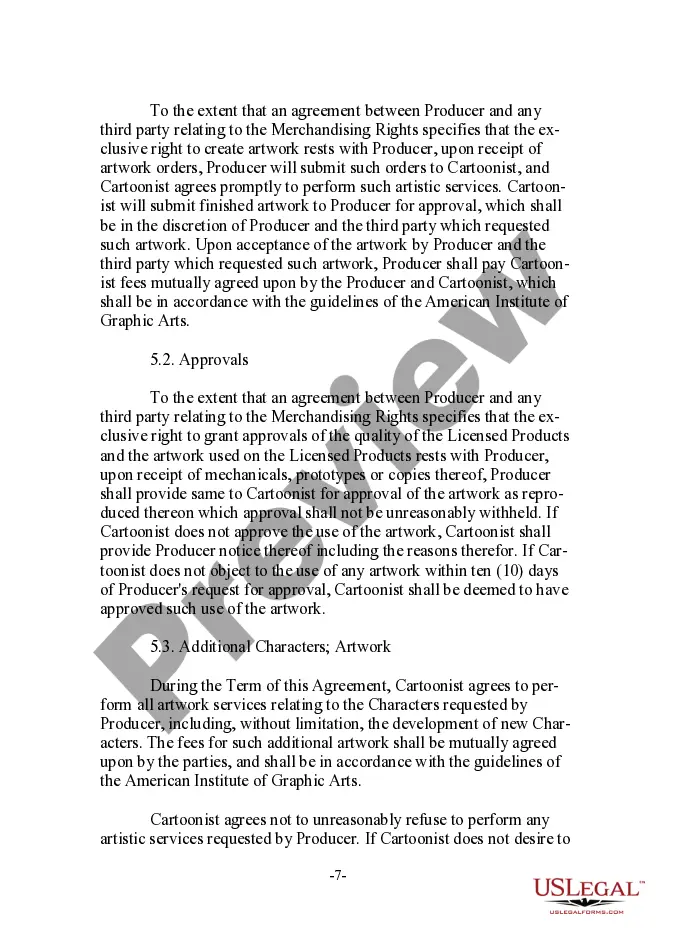
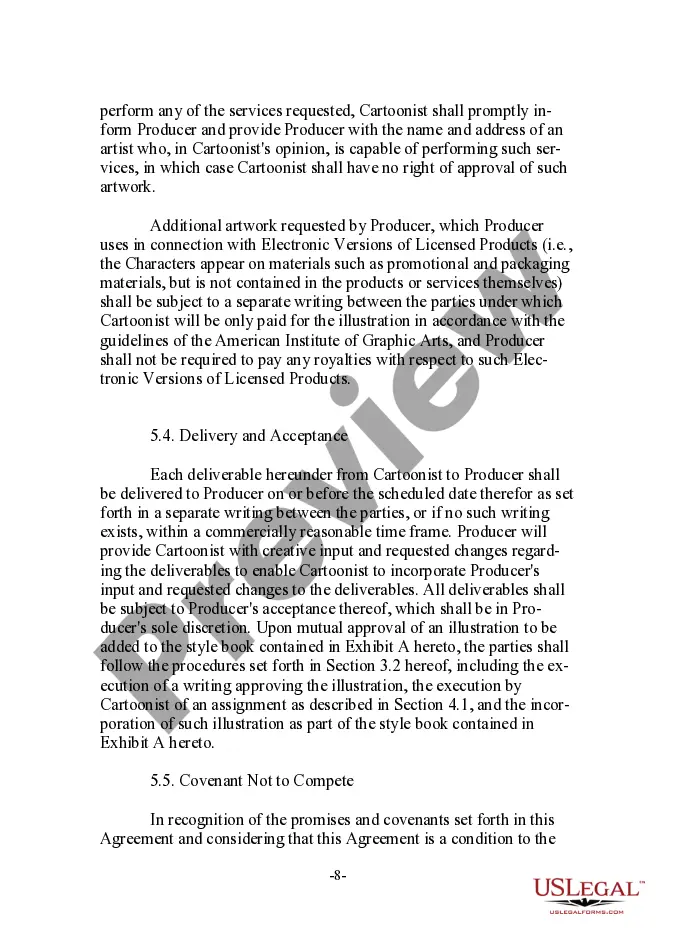
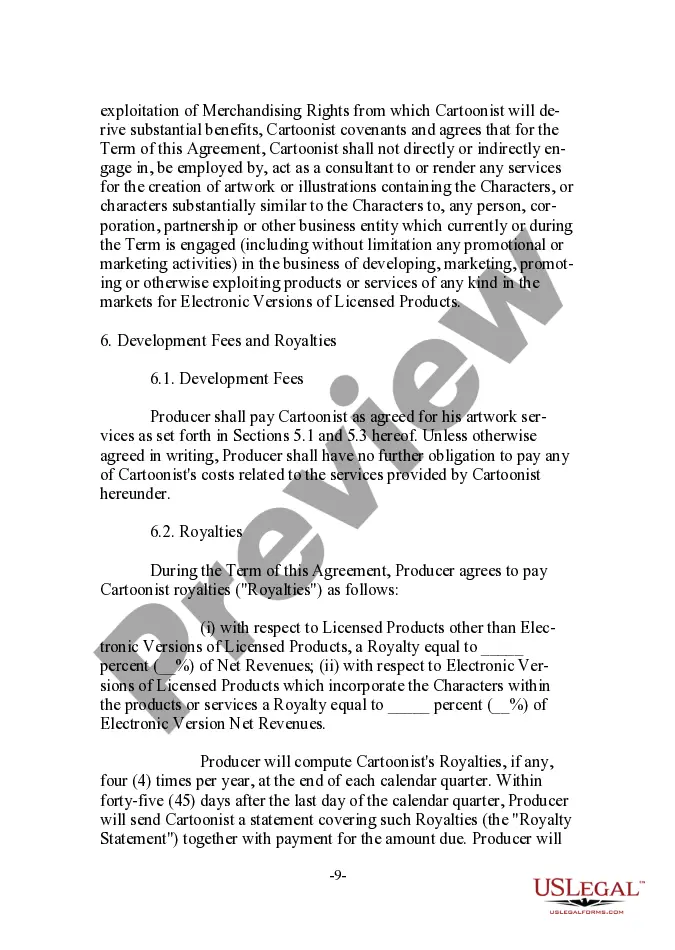
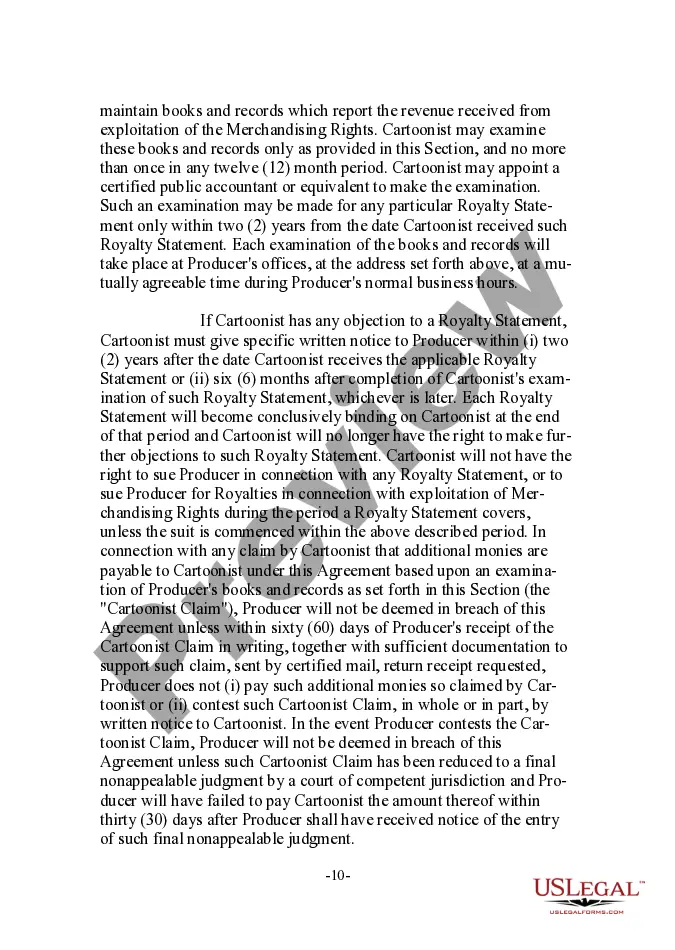
- Development Fees and Royalties: Specifies how royalties are calculated and paid to the cartoonist for licensed products.
- Confidentiality: Mandates the protection of confidential information exchanged between the parties.

When this form is needed
This agreement should be utilized when a cartoonist creates characters or artistic works and wishes to license those characters to a producer for merchandising and entertainment purposes. It's particularly useful when entering into collaborations that involve the development and exploitation of multimedia products, enabling both parties to benefit from the merchandising rights.
Who this form is for
This form is suitable for the following individuals and entities:
- Cartoonists who create original characters and artwork.
- Producers or companies looking to license characters for multimedia projects.
- Legal professionals advising clients on copyright and licensing matters related to artistic works.
How to prepare this document
- Identify the parties: Fill in the names and addresses of both the producer and the cartoonist.
- Define the characters: List the specific characters created by the cartoonist to be included in the agreement.
- Detail the ownership terms: Specify the ownership rights of the characters and the responsibilities of each party.
- Set royalty percentages: Determine the royalty rate for the profits generated from licensed products.
- Include duration terms: Specify the term of the agreement and conditions for termination.
Notarization guidance
This form usually doesn’t need to be notarized. However, local laws or specific transactions may require it. Our online notarization service, powered by Notarize, lets you complete it remotely through a secure video session, available 24/7.
Get your form ready online
Our built-in tools help you complete, sign, share, and store your documents in one place.
Make edits, fill in missing information, and update formatting in US Legal Forms—just like you would in MS Word.
Download a copy, print it, send it by email, or mail it via USPS—whatever works best for your next step.
Sign and collect signatures with our SignNow integration. Send to multiple recipients, set reminders, and more. Go Premium to unlock E-Sign.
If this form requires notarization, complete it online through a secure video call—no need to meet a notary in person or wait for an appointment.
We protect your documents and personal data by following strict security and privacy standards.
Make edits, fill in missing information, and update formatting in US Legal Forms—just like you would in MS Word.
Download a copy, print it, send it by email, or mail it via USPS—whatever works best for your next step.
Sign and collect signatures with our SignNow integration. Send to multiple recipients, set reminders, and more. Go Premium to unlock E-Sign.
If this form requires notarization, complete it online through a secure video call—no need to meet a notary in person or wait for an appointment.
We protect your documents and personal data by following strict security and privacy standards.
Common mistakes to avoid
- Failing to clearly define the scope of rights granted for merchandising.
- Not specifying the royalty rate or payment schedule clearly.
- Omitting details about the ownership of additional characters created during the agreement term.
Benefits of completing this form online
- Convenience: Instantly download and customize the agreement to fit specific needs.
- Editability: Easily modify terms to reflect your unique situation and protect your interests.
- Reliability: Use professionally drafted legal templates backed by licensed attorneys.
Looking for another form?
Form popularity
FAQ
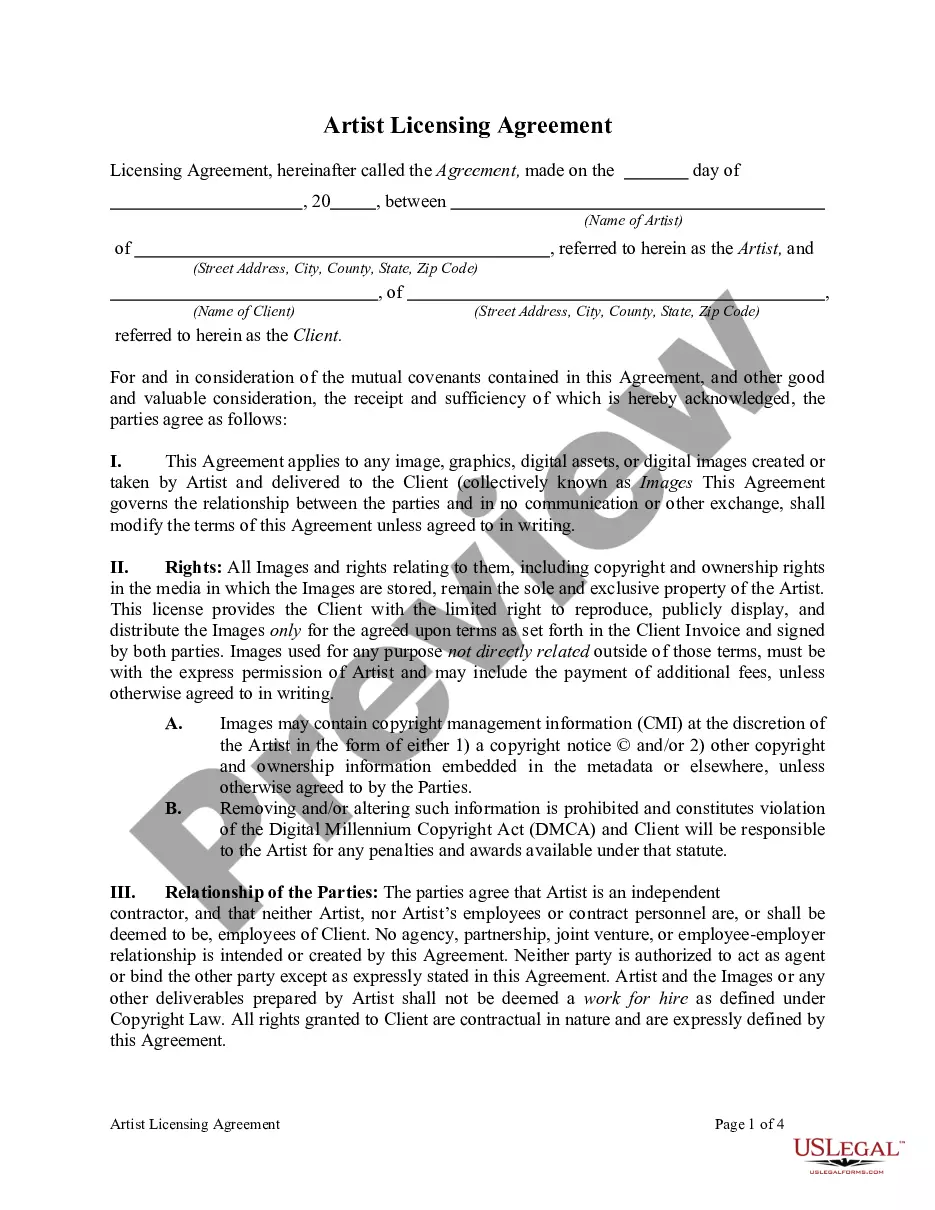
What is a Licensing Agreement? A licensing agreement is a contract between two parties (the licensor and licensee) in which the licensor grants the licensee the right to use the brand name, trademark, patented technology, or ability to produce and sell goods owned by the licensor.
Interestingly, LIMA suggests the average rate for art licensing agreements range between 3-6%. Companies or manufacturers selling to mass retailers are pressed hard to keep costs low and can't afford to pay hefty royalties, so expect to see a 3-4% range.
A license agreement is a business contract between two parties. The licensor (the seller of the license) owns the asset being licensed and the licensee (the buyer) pays for the right to use the license. The licensee pays royalties to the owner in exchange for the right to sell the product or use the technology.
The 3 P's of collegiate licensing are protection, promotion, and profit.
Licensed Merchandise means any goods (including photographs and memorabilia) bearing Institution Trademarks and, with respect to the Online Store, services (including auction) bearing the Institution Trademarks.
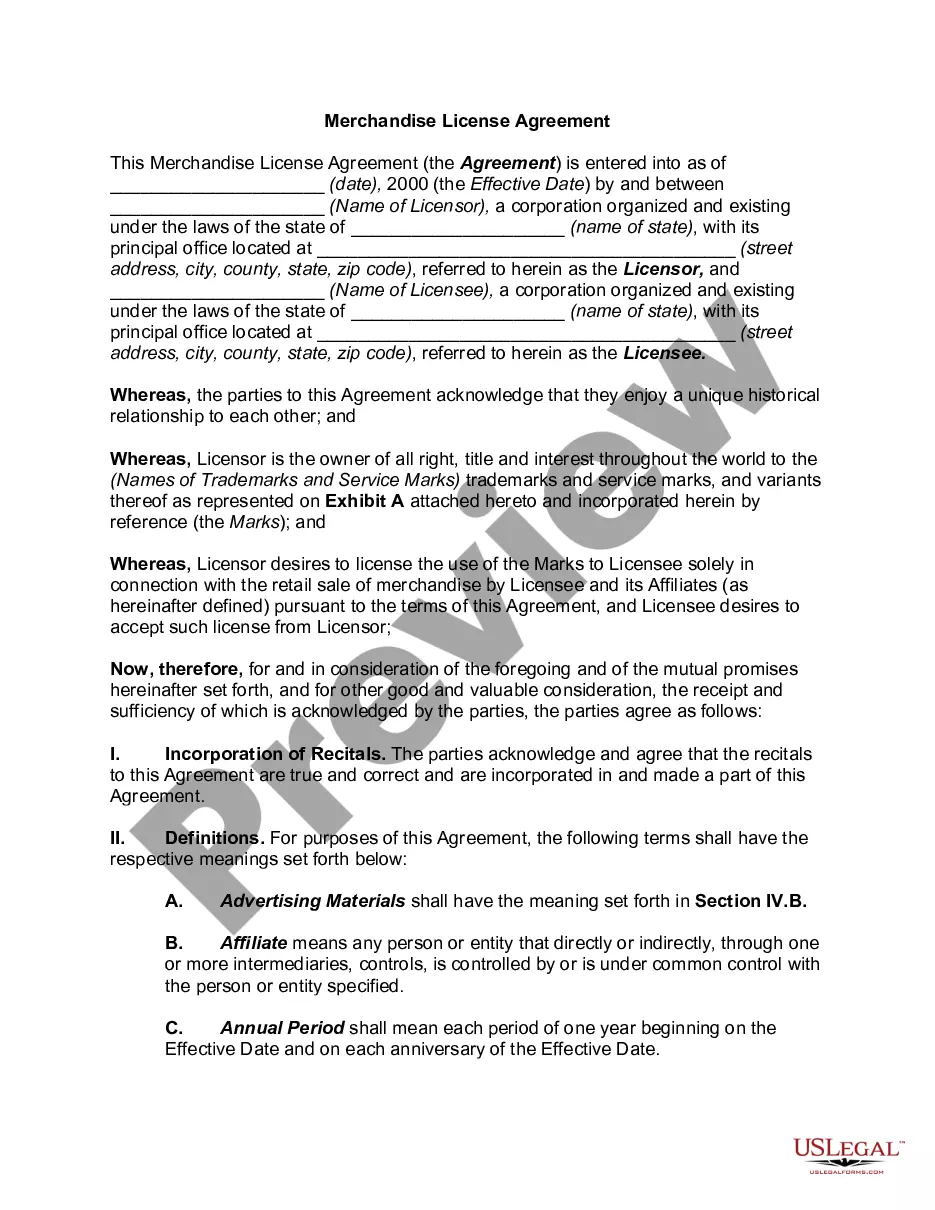
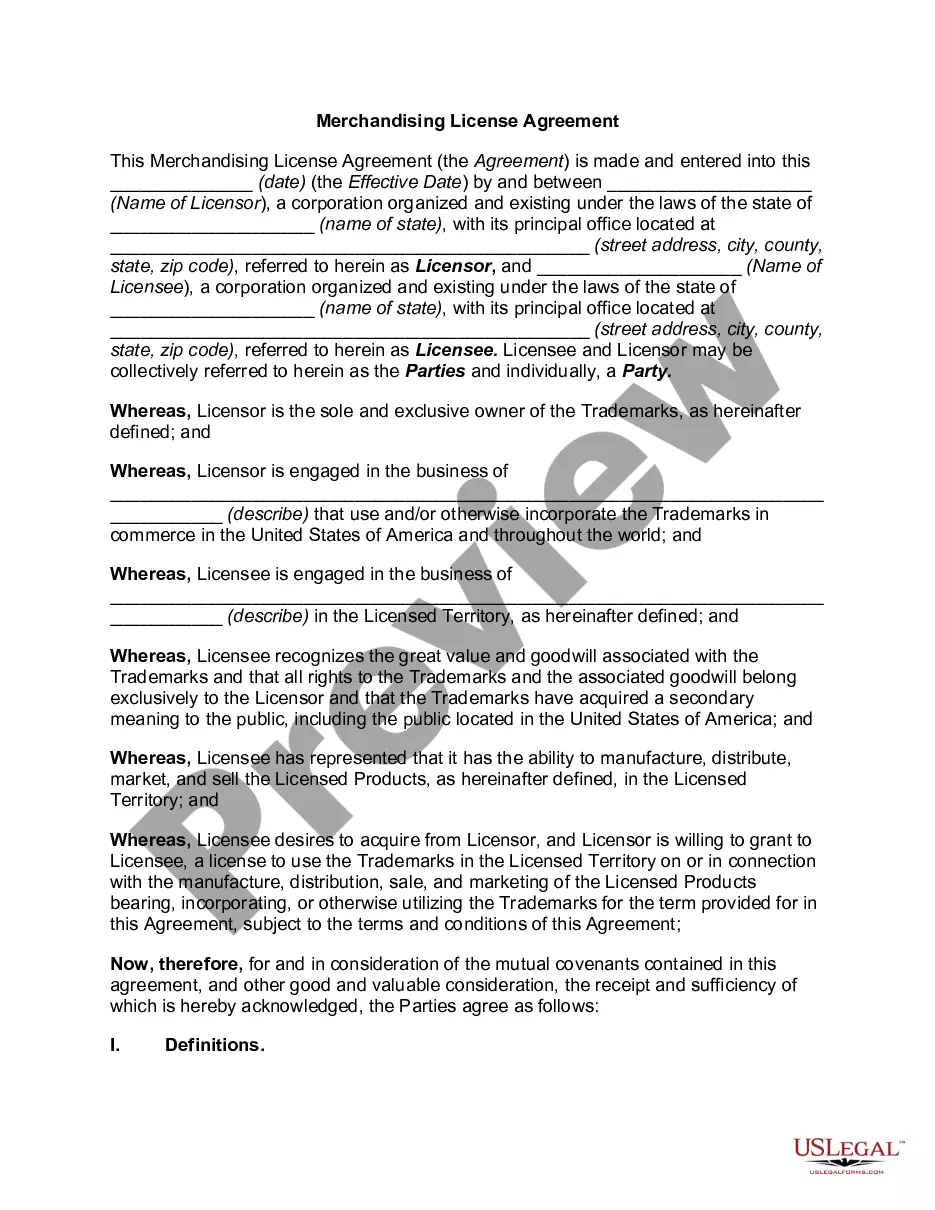
With a Merchandising Agreement, you can lay out both parties' roles and responsibilities, including who maintains the rights to the item that you are licensing. You can define the geographical areas where the product will be sold, length of the term, and financial details such as royalties or payments per unit sold.
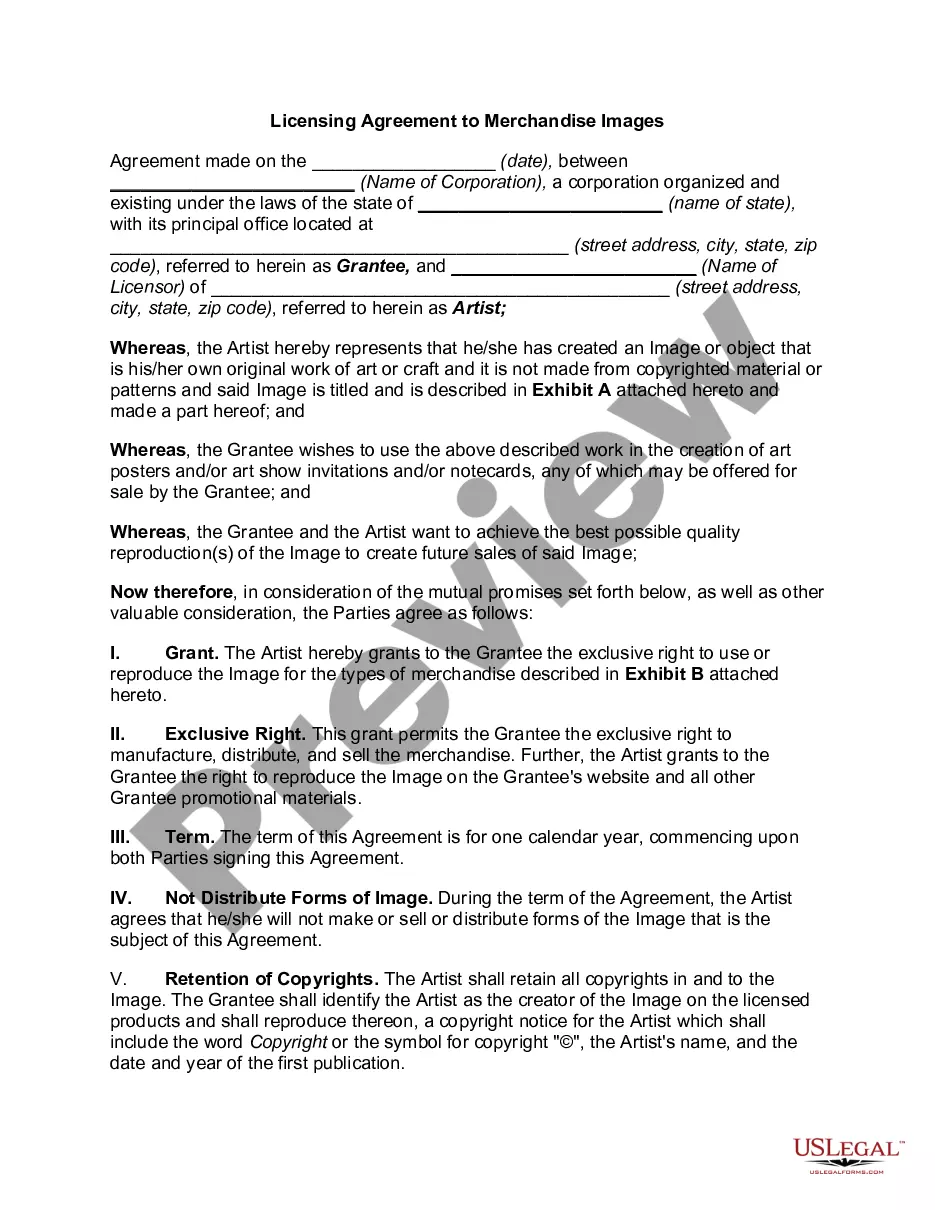
In a merchandise license transaction, an artist, designer, trademark owner or celebrity (the "licensor") grants a license to a manufacturer or retailer (the "licensee") to manufacture and sell articles of merchandise which use the property that is the subject of the license, in exchange for a royalty from sales of
An example of a licensing agreement is a contract between the copyright holders of software and another company, allowing the latter to use the computer software for their daily business operations.
Exclusive or non-exclusive. In an exclusive license, the intellectual property holder is licensing the work only to one person, for that particular use/territory. Territory. Use. Attribution. Derivative works. Confidentiality. Time frame. Termination.