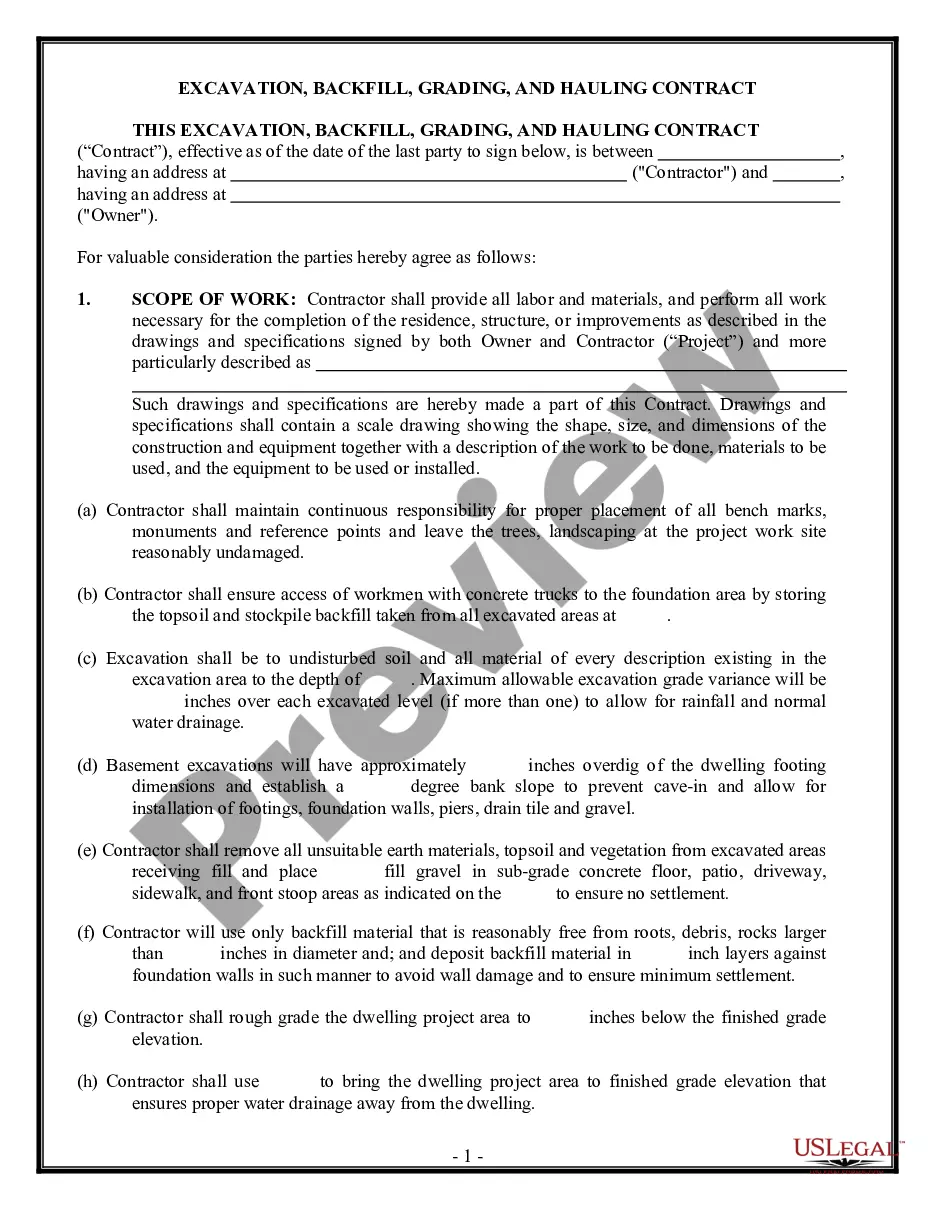
Ohio Tenant Welcome Letter
About this form
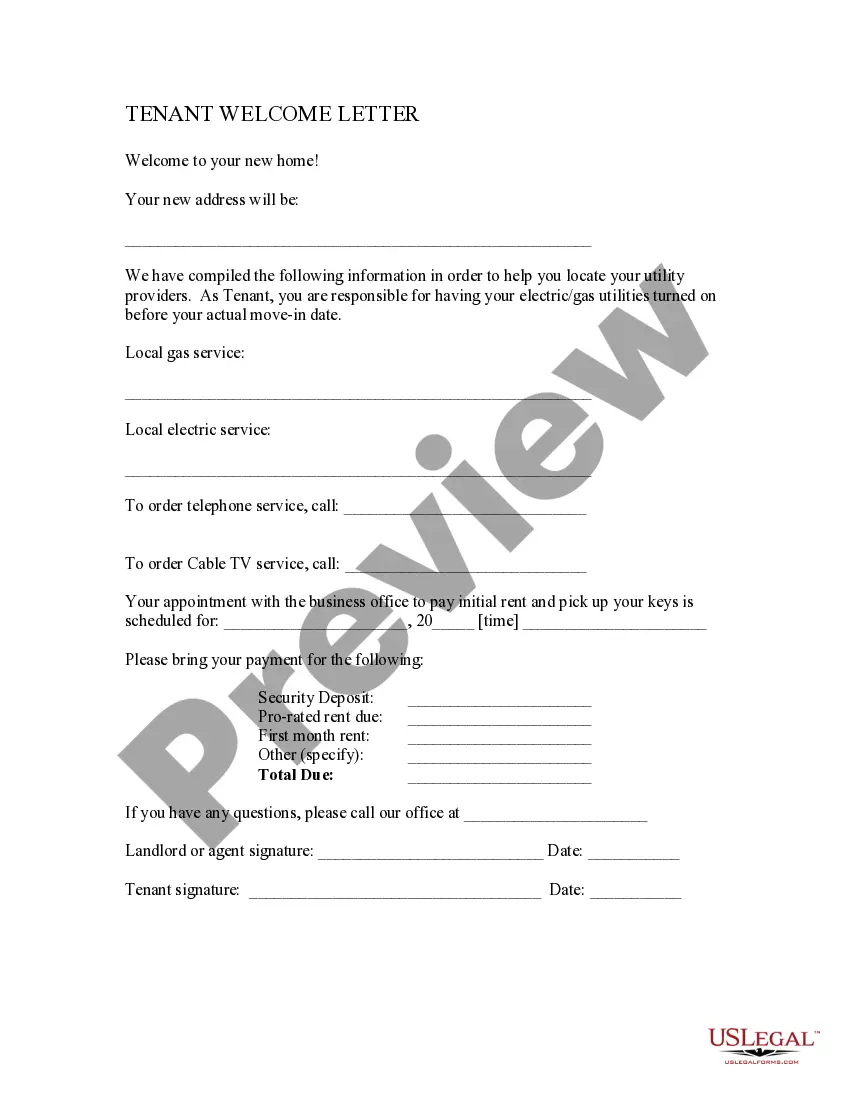
The tenant welcome letter is a crucial document designed to assist landlords in welcoming new tenants. This letter provides essential information, such as utility contact details and reminders related to the lease agreement, ensuring that tenants have a smooth transition into their new home. Unlike a lease agreement, which outlines the terms of the tenancy, the tenant welcome letter serves as a guide for new occupants, helping them understand their responsibilities and important contacts.
Key parts of this document
- Contact information for utility providers.
- Payment details including security deposit, pro-rated rent, and first month's rent.
- Field to specify any additional payments required.
- Subtotal of all dues to be paid upon move-in.
When to use this form
This form is used when a landlord is preparing to move in a new tenant. It is helpful for informing the tenant about important contact details, payment requirements, and other essential lease agreement reminders to ensure a clear understanding of their obligations and facilitate a seamless onboarding process.
Who should use this form
- landlords with rental properties.
- property management companies.
- real estate agents handling rentals.
- landlords seeking to establish clear communication with new tenants.
Steps to complete this form
- Fill in the tenant's name and the address of the rental property.
- Provide the contact information for the necessary utility companies.
- Detail the security deposit amount due and any pro-rated rent.
- Include any other payments that the tenant needs to be aware of.
- Calculate and write the total amount due at move-in.
Does this form need to be notarized?
In most cases, this form does not require notarization. However, some jurisdictions or signing circumstances might. US Legal Forms offers online notarization powered by Notarize, accessible 24/7 for a quick, remote process.
Get your form ready online
Our built-in tools help you complete, sign, share, and store your documents in one place.
Make edits, fill in missing information, and update formatting in US Legal Forms—just like you would in MS Word.
Download a copy, print it, send it by email, or mail it via USPS—whatever works best for your next step.
Sign and collect signatures with our SignNow integration. Send to multiple recipients, set reminders, and more. Go Premium to unlock E-Sign.
If this form requires notarization, complete it online through a secure video call—no need to meet a notary in person or wait for an appointment.
We protect your documents and personal data by following strict security and privacy standards.

Make edits, fill in missing information, and update formatting in US Legal Forms—just like you would in MS Word.

Download a copy, print it, send it by email, or mail it via USPS—whatever works best for your next step.

Sign and collect signatures with our SignNow integration. Send to multiple recipients, set reminders, and more. Go Premium to unlock E-Sign.

If this form requires notarization, complete it online through a secure video call—no need to meet a notary in person or wait for an appointment.

We protect your documents and personal data by following strict security and privacy standards.
Avoid these common issues
- Failing to include all necessary utility contact information.
- Not stating the payment amounts clearly, leading to confusion.
- Omitting any special instructions related to move-in procedures.
Benefits of completing this form online
- Convenient access to customizable templates tailored to your needs.
- Easy to edit and update as required without requiring physical copies.
- Reliable legal backing from attorney-drafted documents ensuring compliance.
What to keep in mind
- The tenant welcome letter is essential for facilitating a positive landlord-tenant relationship.
- Accurate payment details help prevent misunderstandings at the start of tenancy.
- Providing comprehensive information supports new tenants in settling in efficiently.
Looking for another form?


Form popularity
FAQ
Introduce the New Management Company. Identify a person in charge to contact regarding the property. Provide contact information, including email and phone number. Explain how to pay rent and when it will be due. Tell them how to submit maintenance requests.
Begin the letter with the date on which you mail or deliver the letter in person. Include your name, address and phone number, followed by the tenant's name and address. You can also insert a subject line that summarizes the reason for the letter to vacate. Start with a salutation, followed by your tenant's name.
A welcome letter is a document provided by you to new employees. Welcome letters introduce key team members and provide basic information to the new employee to prepare them for their first day on the job.
Clean the Unit and Repair Damage. Provide Information About Utilities. Assemble a Welcome Package. Help With Logistics During the Move. A Warm Welcome for Your Tenant.
Congratulations! You've found new tenants and you're ready to welcome them to your property. Up until now, you've put in a lot of work: you've listed your property, screened tenants, signed a lease, and now you're ready to help your tenants settle in.
A tenant welcome letter provides an informal way for a landlord to say hello or a more formal way to provide helpful information. The document can refer to a list of apartment rules and regulations and include a checklist of the unit's move-in condition.
Your contact information. Time and date of the rental walkthrough. Time and location for key collection. Instructions on setting up utilities.
A tenant welcome letter provides an informal way for a landlord to say hello or a more formal way to provide helpful information. The document can refer to a list of apartment rules and regulations and include a checklist of the unit's move-in condition.