Buying, Selling and Merger Discussion Checklist
About this form
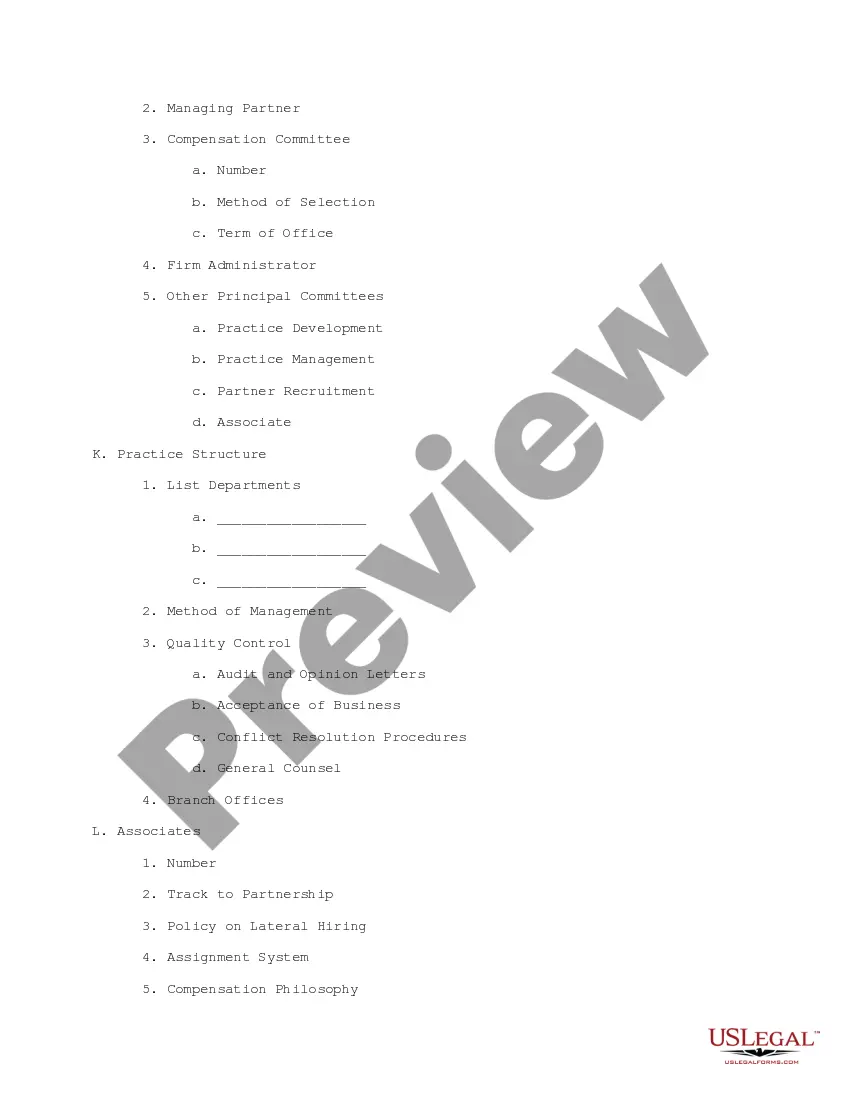
The Buying, Selling and Merger Discussion Checklist is a comprehensive tool designed to facilitate discussions when considering the purchase, sale, or merger of a law firm. It helps ensure that all critical aspects are covered, differing from other forms by offering a structured approach to negotiations and planning.
Key parts of this document
- Initial Discussion: Reasons for Sale or Merger
- Basic Issues: Including firm structure, liabilities, and effective dates
- Clients: Addressing direct and indirect conflicts
- General Policies: Covering billing, outside activities, and business development
- Finance: Accounts receivable, tax ramifications, and pro forma budgets
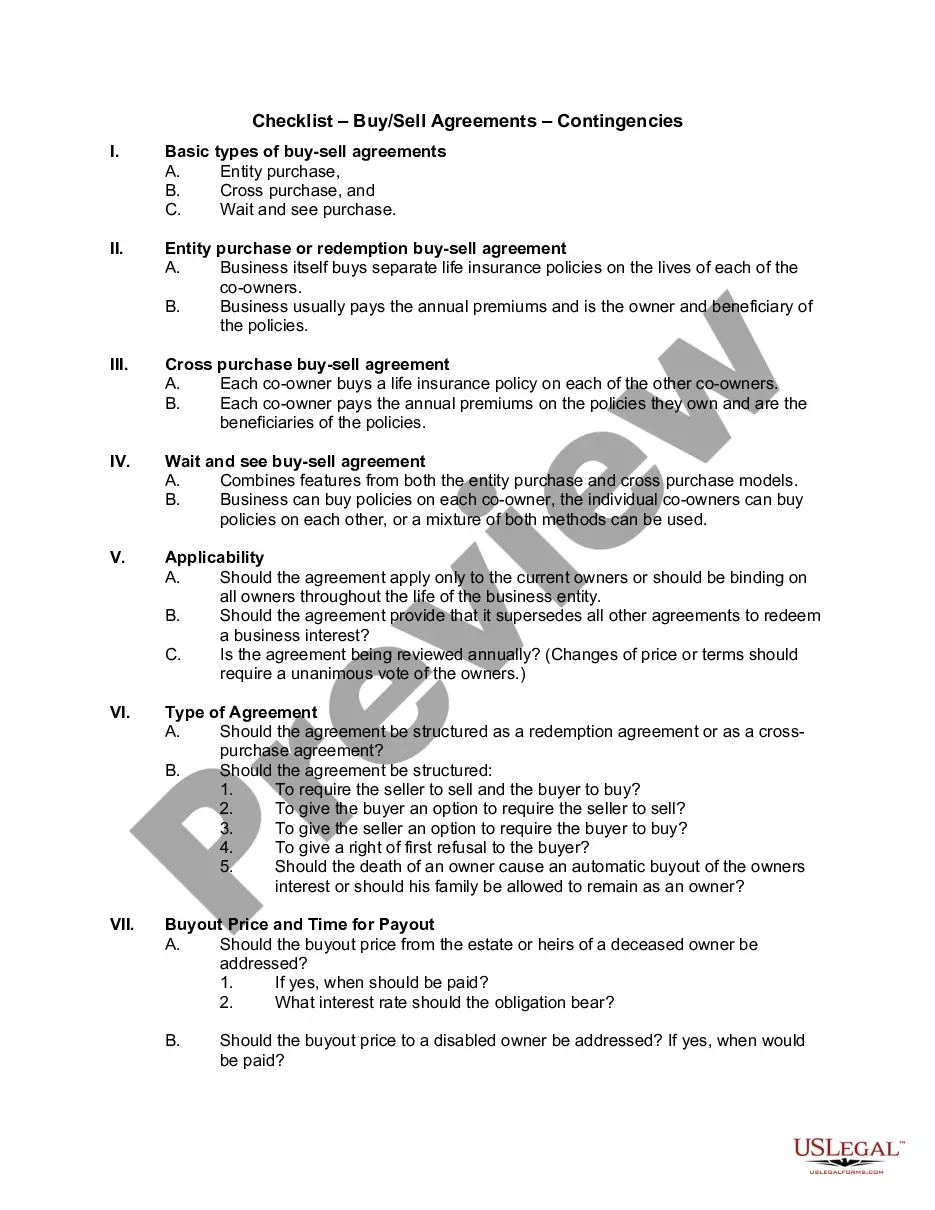
- Partner Compensation: Policies regarding retirement, withdrawal, and special arrangements
- Insurance: Coverage options for partners and staff
- Management Structure: Details on committees and partner selection
- Practice Structure: Overview of departments and management methodologies
- Employee Benefit Plans: Options under ERISA and non-ERISA






When to use this form
This checklist is useful for law firms contemplating buying, selling, or merging with another firm. It can be utilized during initial discussions to outline concerns and topics for negotiation, ensuring all parties have a clear understanding of the potential transaction.
Who can use this document
- Law firm partners and stakeholders involved in merger discussions
- Legal advisors and consultants guiding firms through sales or mergers
- Administrative staff responsible for organizing merger-related documentation
How to complete this form
- Start by identifying the key issues for discussion, including the reasons for the transaction.
- Fill in details regarding the firm's structure, assets, and liabilities relevant to the sale or merger.
- List the clients involved and identify potential conflicts or concerns.
- Review and document general policies that may affect the transition, such as billing and work acceptance.
- Outline financial considerations, including accounts receivable and compensation structures.
- Discuss management roles and how they will be affected by the merger or sale.
Does this document require notarization?
Notarization is generally not required for this form. However, certain states or situations might demand it. You can complete notarization online through US Legal Forms, powered by Notarize, using a verified video call available anytime.
Get your form ready online
Our built-in tools help you complete, sign, share, and store your documents in one place.
Make edits, fill in missing information, and update formatting in US Legal Forms—just like you would in MS Word.
Download a copy, print it, send it by email, or mail it via USPS—whatever works best for your next step.
Sign and collect signatures with our SignNow integration. Send to multiple recipients, set reminders, and more. Go Premium to unlock E-Sign.
If this form requires notarization, complete it online through a secure video call—no need to meet a notary in person or wait for an appointment.
We protect your documents and personal data by following strict security and privacy standards.

Make edits, fill in missing information, and update formatting in US Legal Forms—just like you would in MS Word.

Download a copy, print it, send it by email, or mail it via USPS—whatever works best for your next step.

Sign and collect signatures with our SignNow integration. Send to multiple recipients, set reminders, and more. Go Premium to unlock E-Sign.

If this form requires notarization, complete it online through a secure video call—no need to meet a notary in person or wait for an appointment.

We protect your documents and personal data by following strict security and privacy standards.
Avoid these common issues
- Overlooking specific client conflicts that may arise during a merger
- Failing to address all financial liabilities associated with the firm
- Not having clear policies on partner compensation and retirement plans
- Neglecting to incorporate an escape clause in discussions
Benefits of using this form online
- Convenient access to a structured checklist that can be updated as negotiations progress
- Editability allows for customization based on specific firm needs
- Reliability of attorney-drafted content ensuring legal soundness
Legal use & context
- This checklist serves as a preliminary tool for discussing legal mergers or sales.
- While helpful, it is recommended to consult with a legal professional for finalizing agreements and compliance.
What to keep in mind
- The checklist organizes important discussions around buying, selling, or merging law firms.
- Completing this form can help identify critical issues before negotiations begin.
- Consulting with legal advisors is essential to ensure compliance with state-specific regulations.
Looking for another form?



Form popularity
FAQ
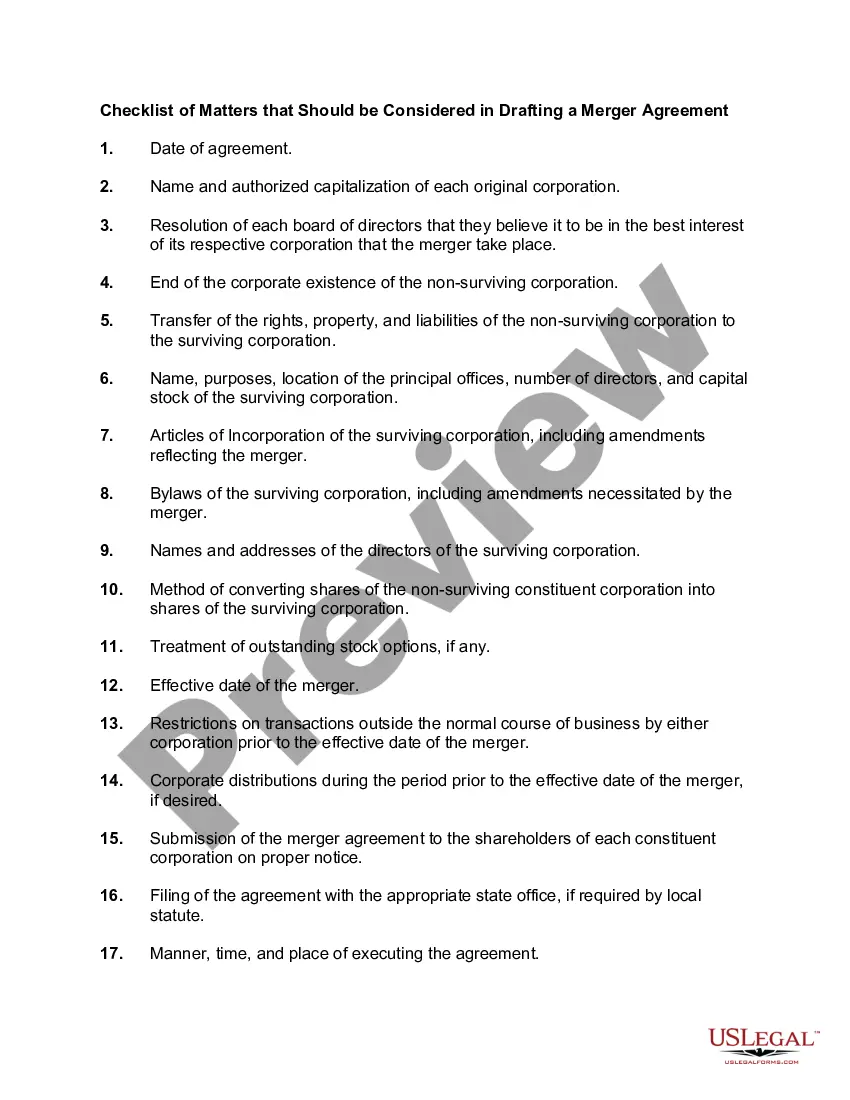
Determine Growth Markets/Services: Identify Merger and Acquisition Candidates: Assess Strategic Financial Position and Fit: Make a Go/No-Go Decision: Conduct Valuation. Perform Due Diligence, Negotiate a Definitive Agreement, and Execute Transaction:
Look at the rationale behind the acquisition. Study what you're acquiring. Have a third party as a mediator. Manage expectations well. Get to know the team management. Have a proper integration plan. Focus on human capital. Impact on financials.
1 How do you value a company as a professional? 2 Given the case of an acquisition, what would you consider the equity value or the enterprise value? 3 Can an organiation have a negative enterprise value? 4 Given the FCFF, calculate the FCFE?
Comparable Company Analysis. Discounted Cash Flow Analysis. Accretion/Dilution Analysis.
Be clear with yourself on goals and motivations for the sale. Get your house in order. Time to involve the experts. Be open with your management team. Secure alignment among key stakeholders to avoid last minute snafus. Secure major partnerships and clients. Know your company narrative.
A good acquisition shares value creation on both the buyer and the seller side.There needs to be mutual communication between the buyer and seller. Companies should front load their potential issues by being honest with each other at the start of the M&A process.
Is there a market/opportunity that makes this acquisition essential? Is this a compelling target? What is the size of the market and what market share does the acquisition target hold? Does it fit in with your current (growth) strategy? To what level can the business be grown? Who are the industry leaders?
Will My Position Continue to Exist? Is There Another Position Available For You? What Severance is Offered For Eliminated Positions? Will My Position Be Shared With Anyone Else? Will My Role and Duties Change? Will the Merger Affect Who I Report to? Will the Merger Affect My Pay? Will My Benefits Change?
Financial Matters. Technology/Intellectual Property. Customers/Sales. Strategic Fit with Buyer. Material Contracts. Employee/Management Issues. Litigation. Tax Matters.