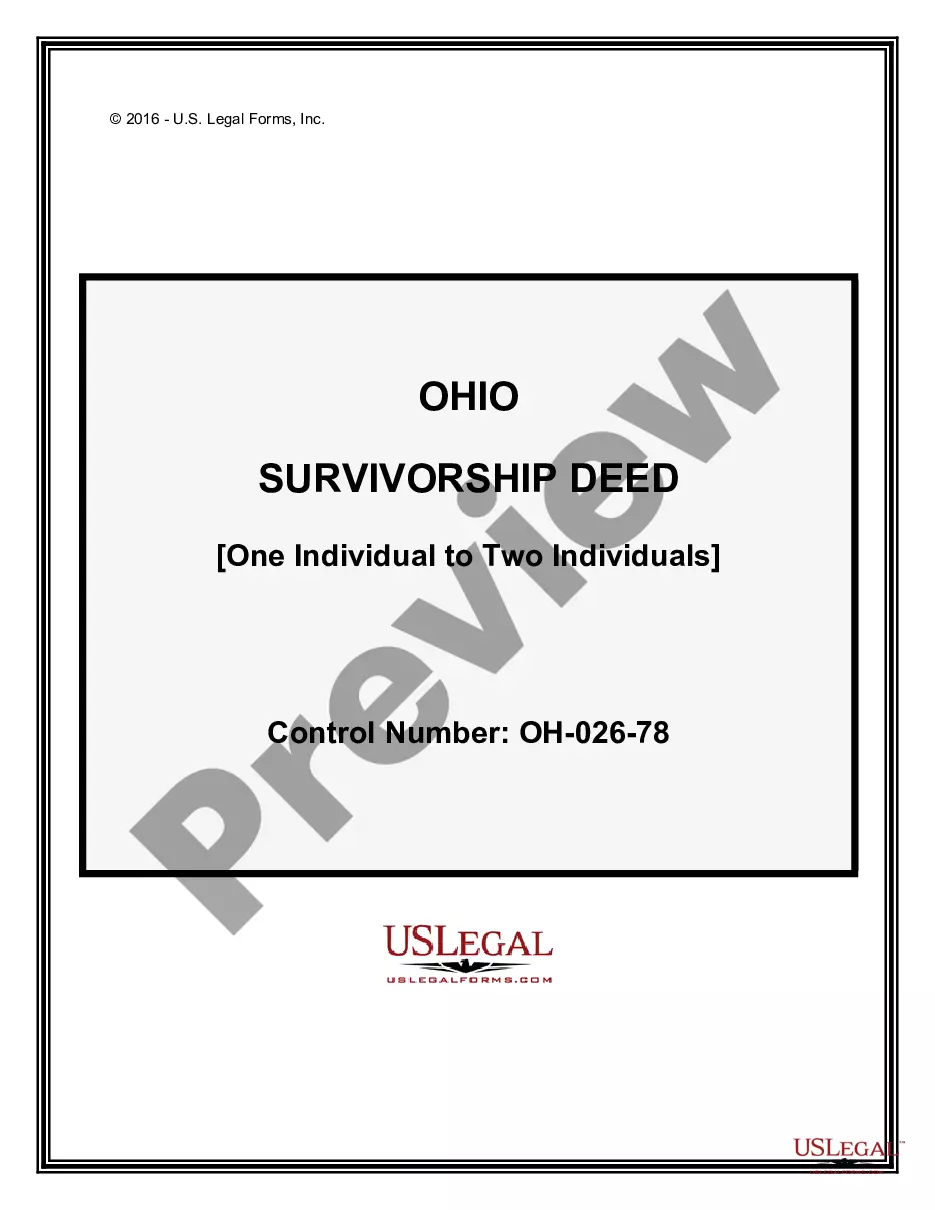
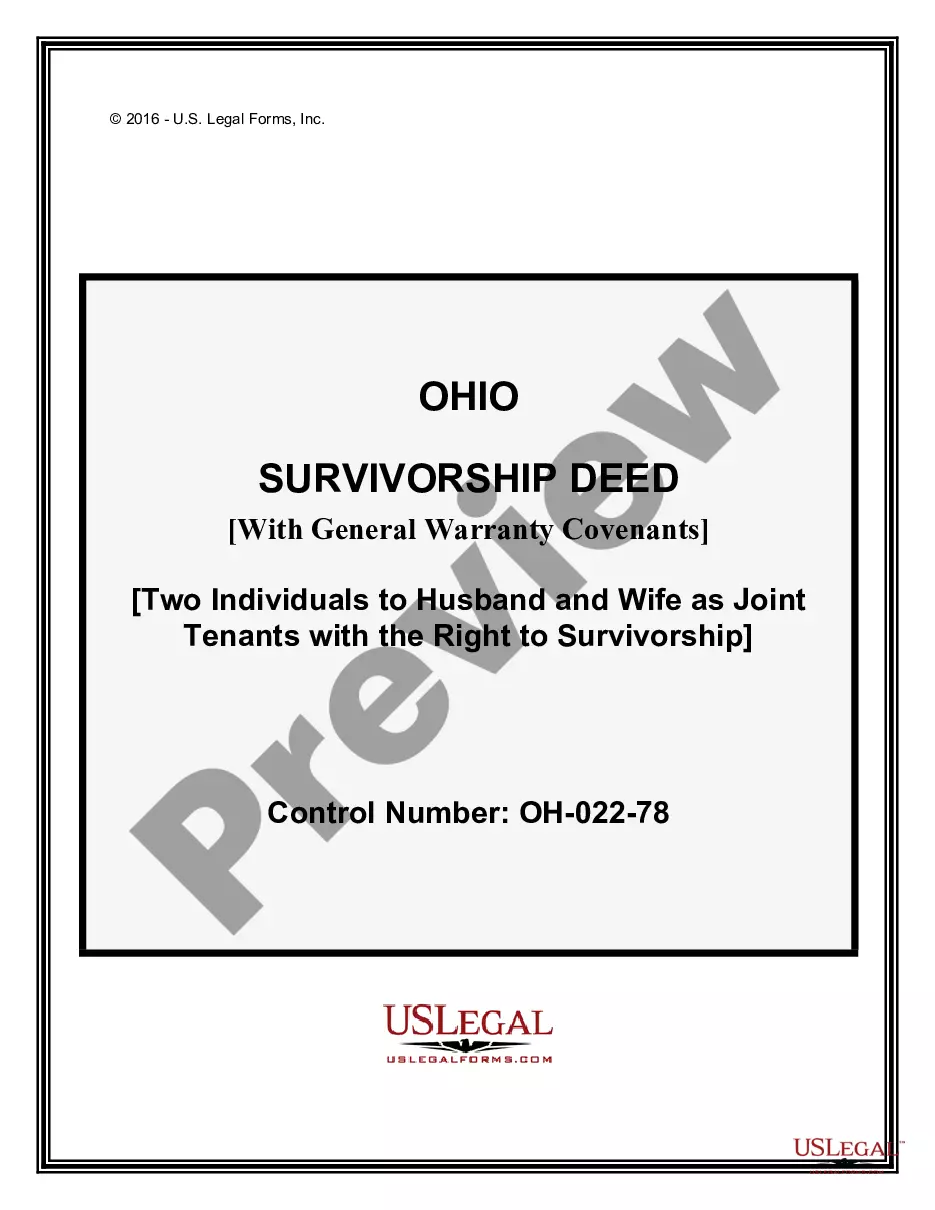
Ohio Survivorship Deed - Individual to Two Individuals
About this form
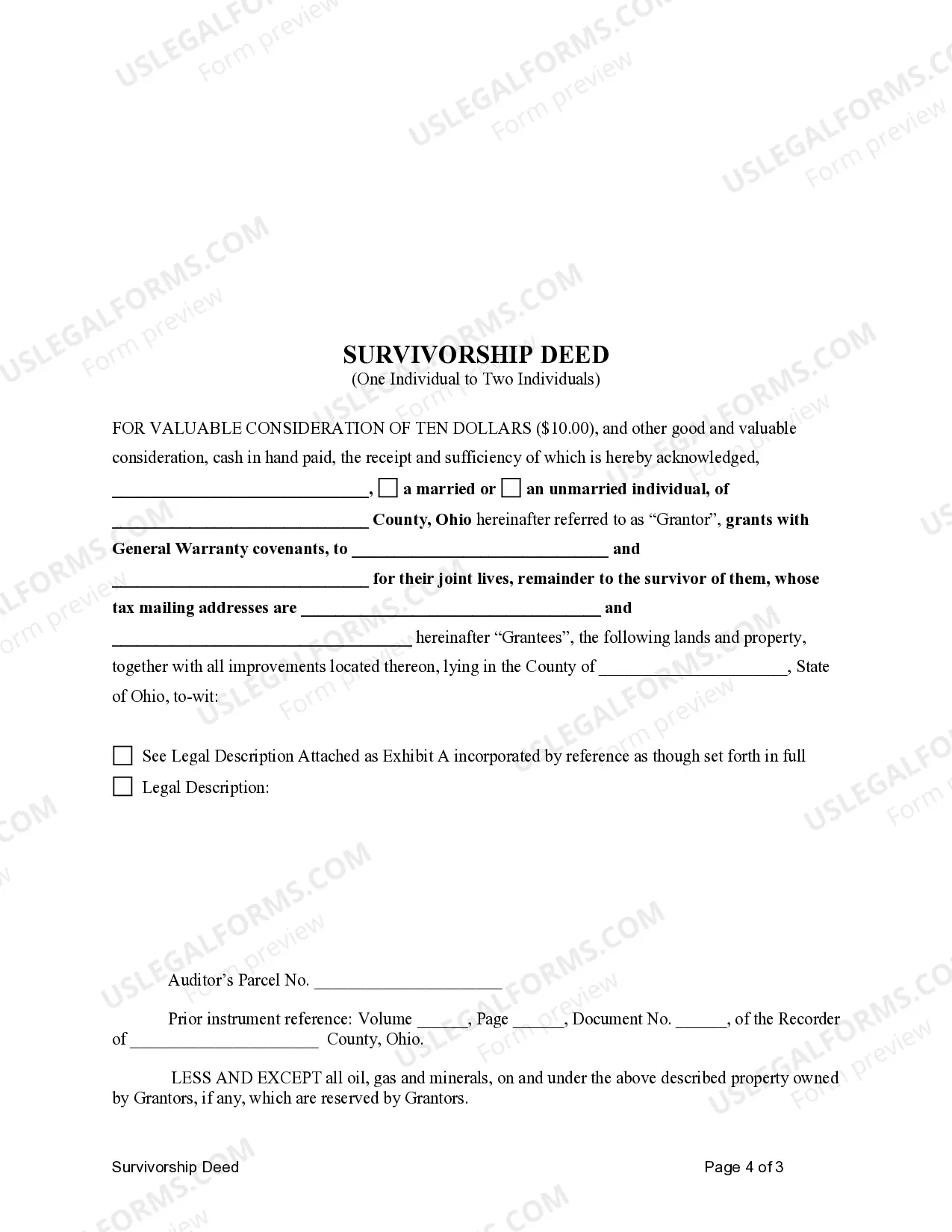
The Survivorship Deed - Individual to Two Individuals is a legal document used to transfer property from one individual (the Grantor) to two individuals (the Grantees) while establishing joint tenancy with the right of survivorship. This form ensures that, in the event of the death of one Grantee, their interest in the property automatically passes to the surviving Grantee, thereby avoiding probate. This deed complies with Ohio state law and is ideal for those looking to clarify property ownership while ensuring a smooth transition of assets.
Main sections of this form
- Grantor's full name and address.
- Grantees' full names and addresses.
- Legal description of the property being conveyed.
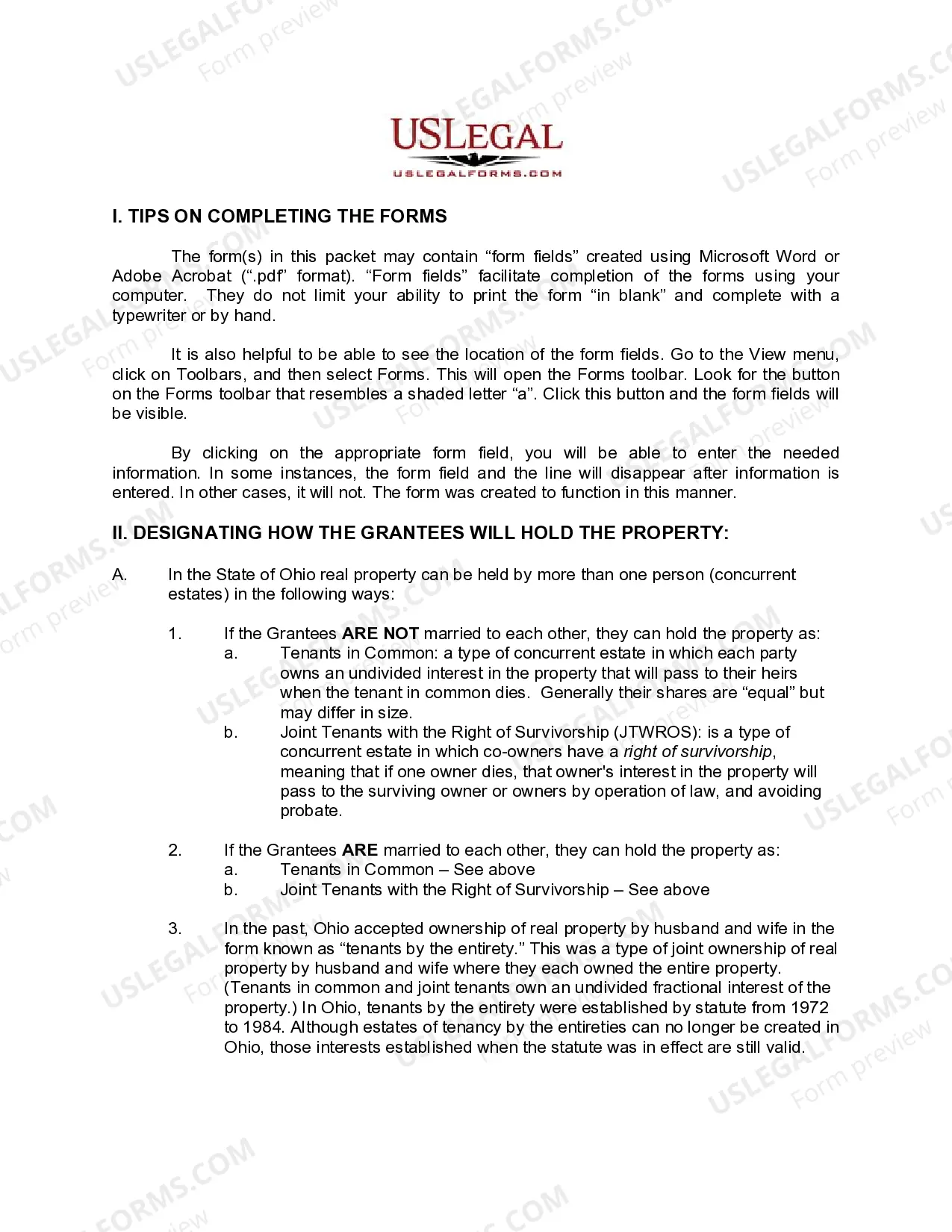
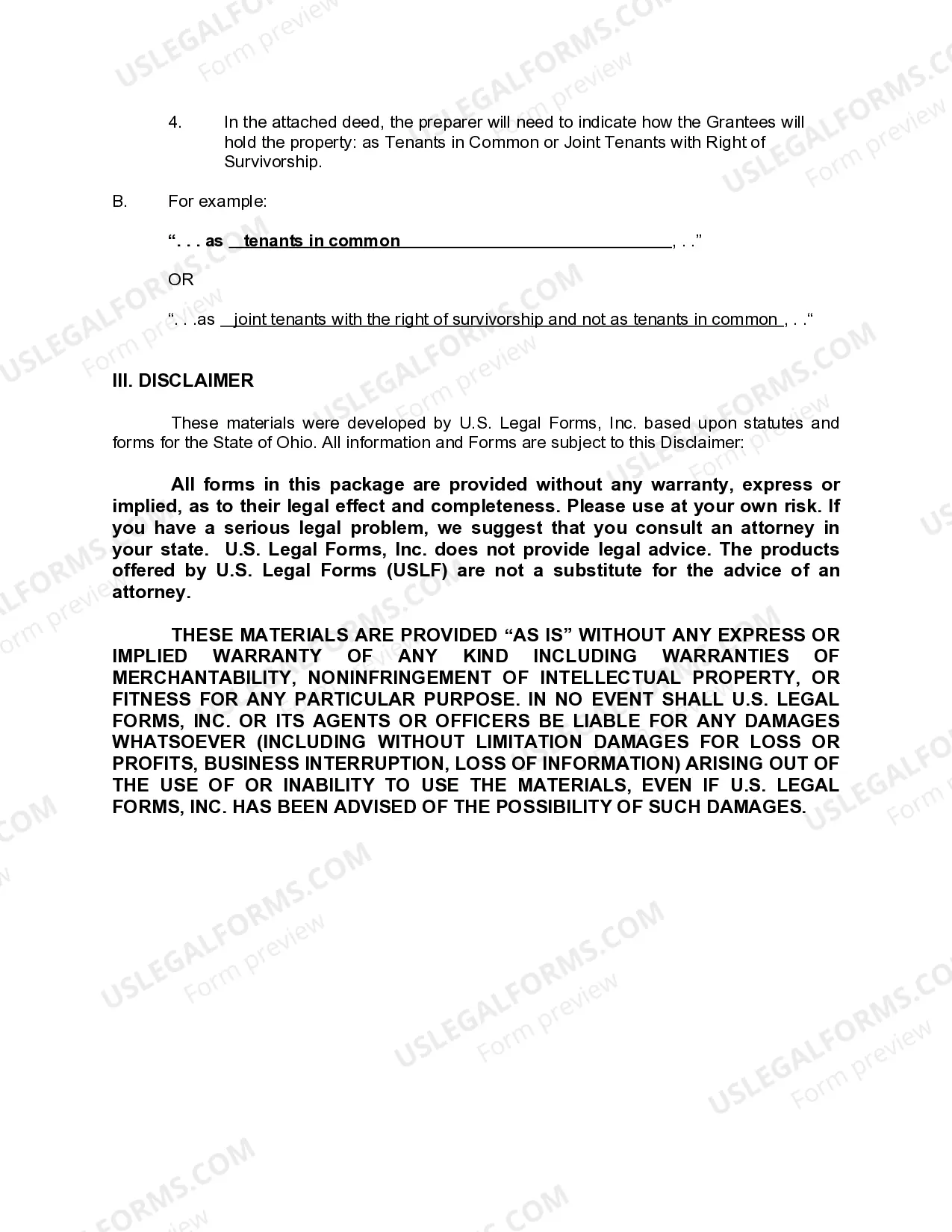
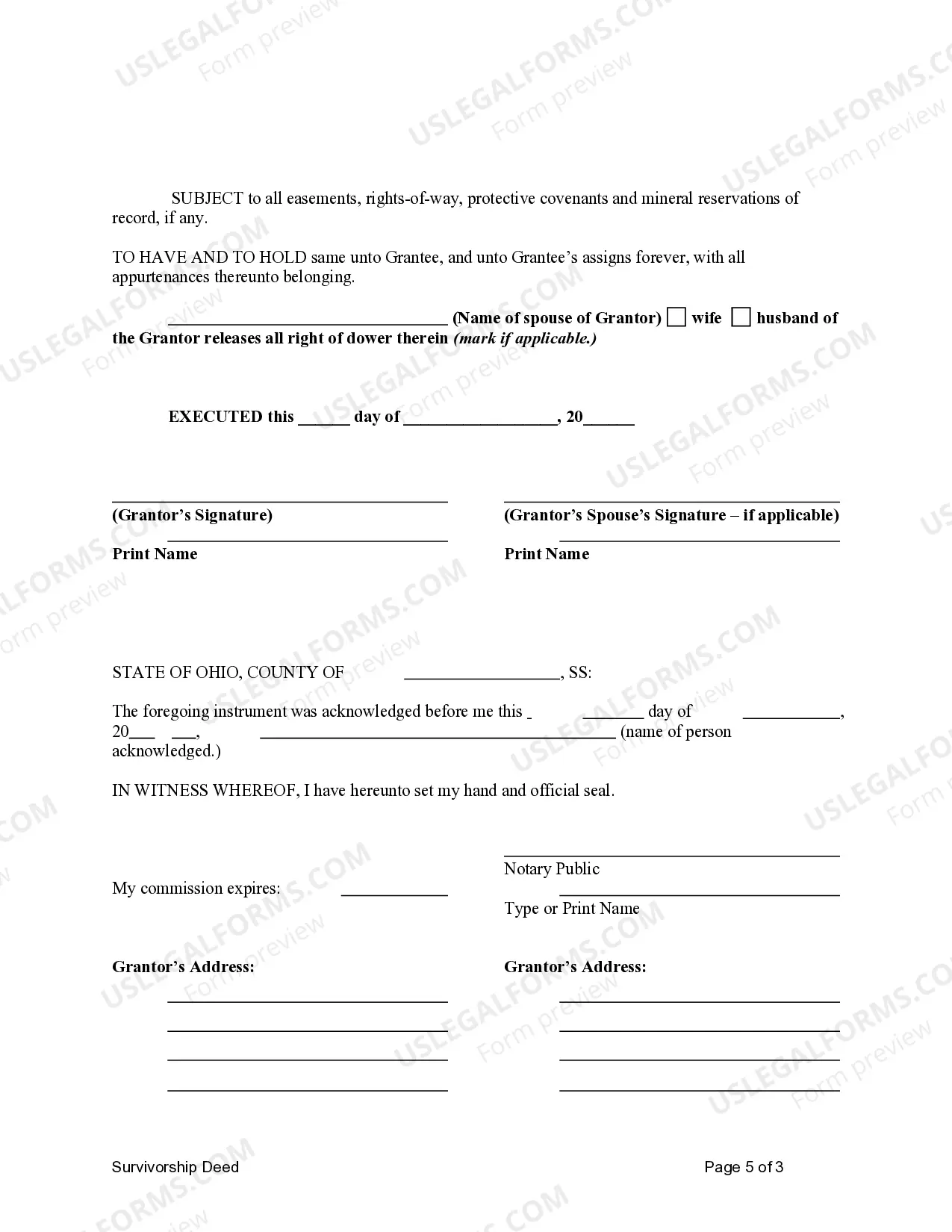
- Designation of how the property will be held (as Joint Tenants or Tenants in Common).
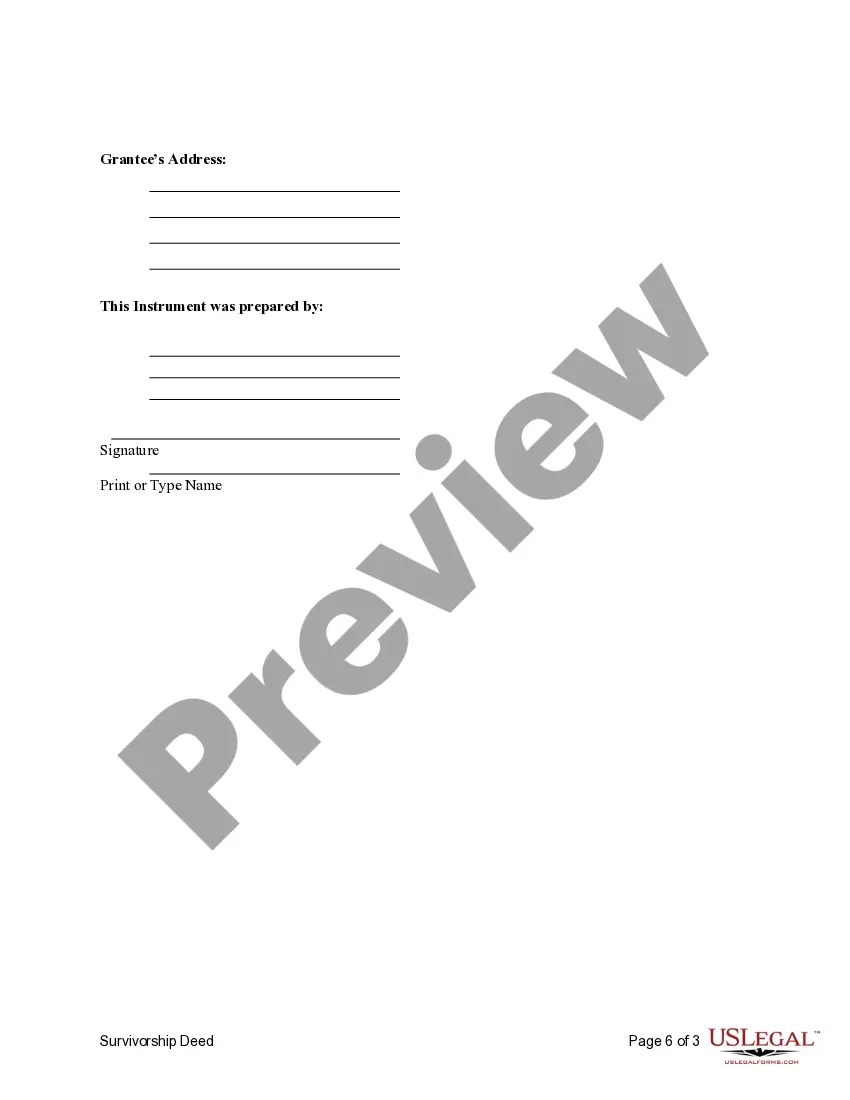
- Signature lines for the Grantor and space for notarization, if needed.




When this form is needed
This form should be used when an individual wants to transfer property ownership to two persons as joint tenants with rights of survivorship. It is particularly useful when the Grantor wishes to ensure that property passes seamlessly to one of the Grantees upon their death, thus avoiding potential conflicts or delays associated with the probate process.
Intended users of this form
- Individuals in Ohio who own property and wish to transfer it to two other individuals.
- Those seeking an efficient way to ensure property is passed along without the need for court intervention after death.
- Persons involved in estate planning or those with specific wishes regarding property inheritance.
Completing this form step by step
- Identify the Grantor's full name and address.
- Enter the full names and addresses of the two Grantees.
- Provide a detailed legal description of the property being transferred.
- Specify how the Grantees will hold the property (Joint Tenants or Tenants in Common).
- Have the Grantor sign the document in the presence of a notary public, if necessary.
Is notarization required?
Yes, this form must be notarized to be legally valid. Notarization ensures that the identities of the parties are verified and protects against fraud. US Legal Forms offers integrated online notarization, allowing you to complete this process securely via video call, at any time, without the need to travel.
Get your form ready online
Our built-in tools help you complete, sign, share, and store your documents in one place.
Make edits, fill in missing information, and update formatting in US Legal Forms—just like you would in MS Word.
Download a copy, print it, send it by email, or mail it via USPS—whatever works best for your next step.
Sign and collect signatures with our SignNow integration. Send to multiple recipients, set reminders, and more. Go Premium to unlock E-Sign.
If this form requires notarization, complete it online through a secure video call—no need to meet a notary in person or wait for an appointment.
We protect your documents and personal data by following strict security and privacy standards.

Make edits, fill in missing information, and update formatting in US Legal Forms—just like you would in MS Word.

Download a copy, print it, send it by email, or mail it via USPS—whatever works best for your next step.

Sign and collect signatures with our SignNow integration. Send to multiple recipients, set reminders, and more. Go Premium to unlock E-Sign.

If this form requires notarization, complete it online through a secure video call—no need to meet a notary in person or wait for an appointment.

We protect your documents and personal data by following strict security and privacy standards.
Mistakes to watch out for
- Failing to accurately describe the property.
- Not properly naming the Grantees, leading to potential disputes.
- Omitting the designation of ownership type (Joint Tenants vs. Tenants in Common).
- Not having the form notarized when necessary.
Why use this form online
- Convenience of completing the form from home.
- Editability allows for quick adjustments before finalizing the document.
- Access to templates reviewed by licensed attorneys to ensure legal compliance.
- Immediate download for timely execution.
Quick recap
- The Survivorship Deed allows for joint ownership with rights of survivorship, streamlining property transfer upon death.
- It is crucial to clearly describe the property and specify how it will be held.
- Common mistakes to avoid include unclear property descriptions and missing signatures.
Looking for another form?


Form popularity
FAQ
In Ohio, a Survivorship Deed is used to convey title to real estate to two or more people as joint tenants with rights of survivorship. Upon the death of an owner, the property passes to the surviving owner(s). A Survivorship Deed is commonly utilized to convey property to spouses.
Property held in joint tenancy, tenancy by the entirety, or community property with right of survivorship automatically passes to the survivor when one of the original owners dies. Real estate, bank accounts, vehicles, and investments can all pass this way. No probate is necessary to transfer ownership of the property.
Unity of time. Unity of title. Unity of interest. Unity of possession.
The way that the right of survivorship works is that if a property is purchased and owned by two or more individuals and the right of survivorship has been included in the title to the property, then if one of the owners dies, the surviving owner or owners will absorb the share for the deceased's share of the property
A Survivorship Deed transfers residential or commercial property from one property owner (the grantor) to another (the grantee) while allowing them to avoid going through probate when they (the grantor) passes away. The parties transferring property in a Survivorship Deed must have full ownership of the property.
A survivorship deed is a deed conveying title to real estate into the names of two or more persons as joint tenants with rights of survivorship. Upon the death of one owner, the property passes to and vests in the name of the surviving owner or owners.
The General Rule. In the great majority of states, if you and the other owners call yourselves "joint tenants with the right of survivorship," or put the abbreviation "JT WROS" after your names on the title document, you create a joint tenancy. A car salesman or bank staffer may assure you that other words are enough.
Joint Tenancy With Survivorship In this arrangement, tenants have an equal right to the account's assets. They are also afforded survivorship rights in the event of the death of another account holder. In simple terms, it means that when one partner or spouse dies, the other receives all of the money or property.
This is true even if the decedent created a will and bequeathed their interest in the property to someone else. This is known as the right of survivorship.The decedent's portion of the property receives a step-up in basis as of the date of their passing.