Ohio Survivorship Deed from Four Individuals to Four Individuals
What this document covers
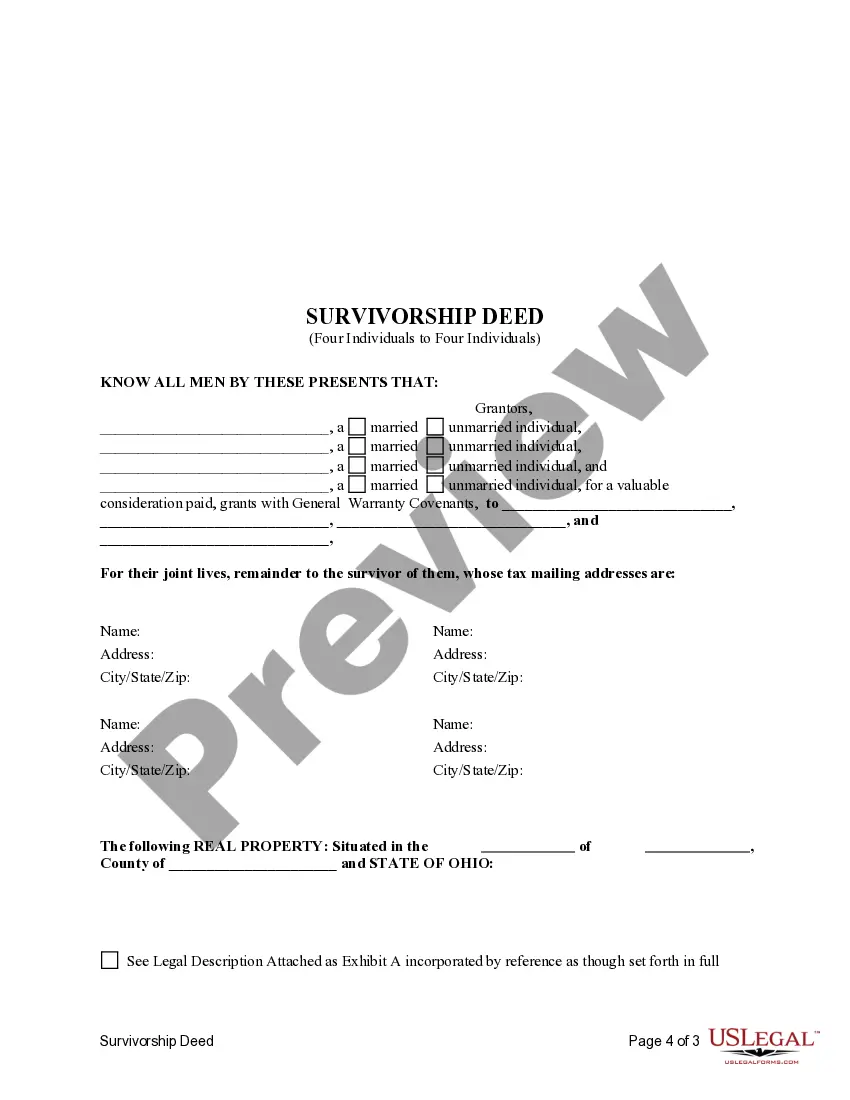
The Survivorship Deed from Four Individuals to Four Individuals is a legal document that allows four individuals (the Grantors) to convey property to another group of four individuals (the Grantees) while establishing survivorship rights. This means that when one owner passes away, their share automatically transfers to the surviving owners, avoiding probate. This deed is akin to the joint tenancy with right of survivorship found in other jurisdictions, and it adheres to the statutory laws of the state of Ohio.
Key components of this form
- Parties involved: Clearly identifies the Grantors and Grantees.
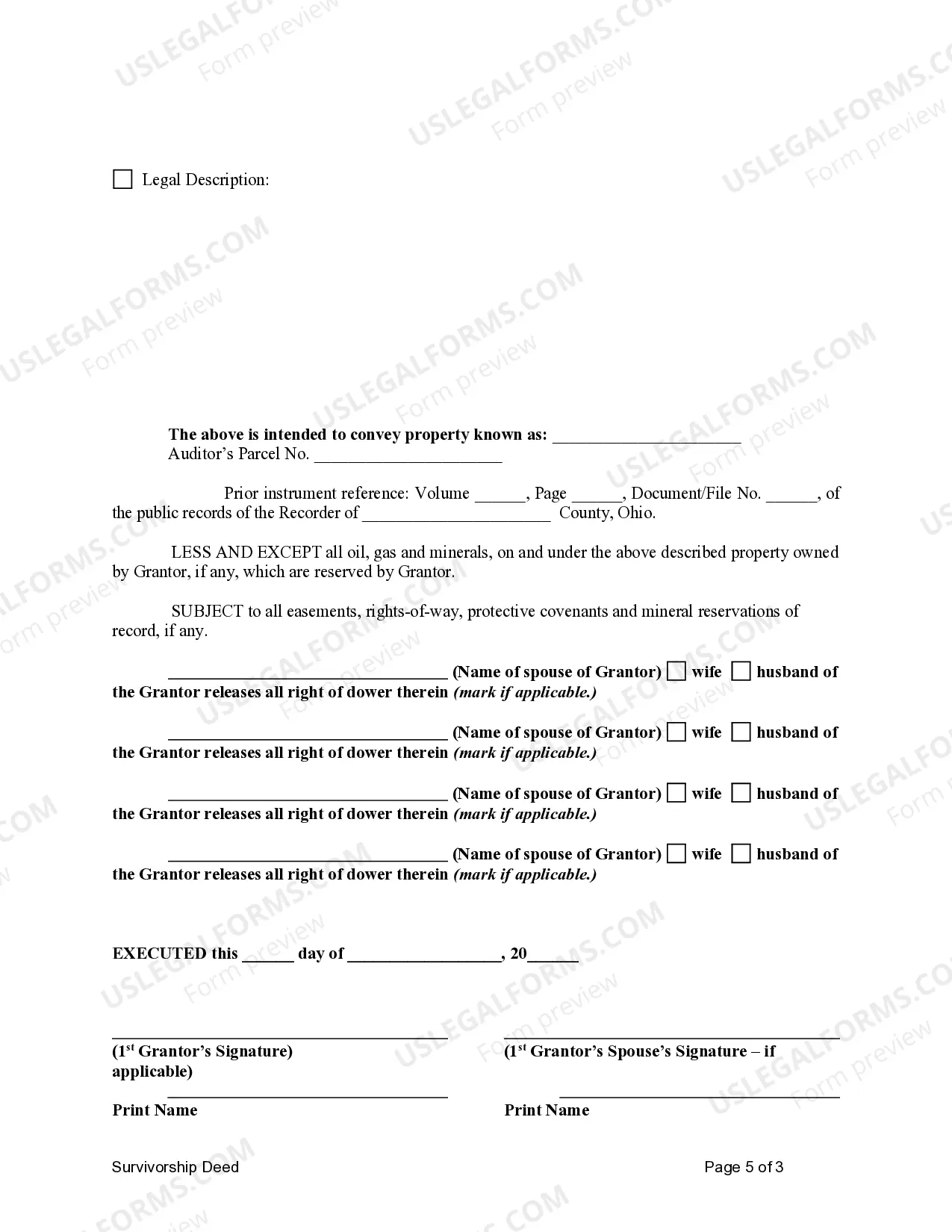
- Property description: Specifies the property being conveyed.
- Survivorship rights: Details how ownership will pass to surviving co-owners in the event of death.
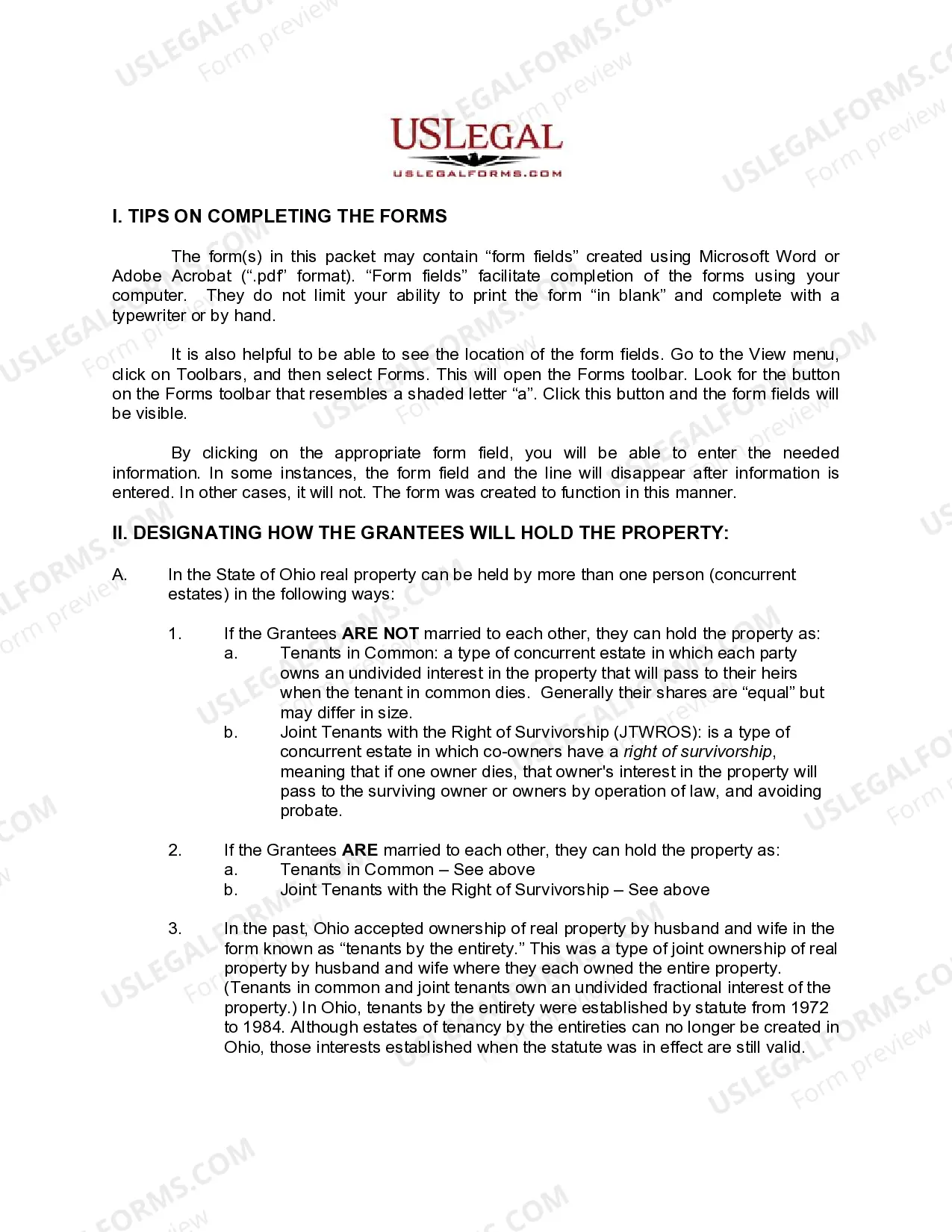
- Holding property method: Allows designation of how Grantees will hold the property (Tenants in Common or Joint Tenants with Right of Survivorship).
- Legal compliance: Ensures adherence to Ohio statutory laws regarding real estate ownership.





Situations where this form applies
This form should be used when four individuals wish to collectively own property with survivorship rights in Ohio. It is particularly useful in family situations or partnerships where owners want to ensure that their interests in the property automatically transfer to the surviving owners upon their death, thus simplifying estate management and avoiding probate complications.
Who this form is for
This form is suitable for:
- Individuals wanting to transfer property ownership to multiple co-owners.
- Families or groups of friends looking to maintain joint ownership of real estate.
- Persons engaged in partnerships who need to ensure continuity of ownership.
- Anyone intending to simplify the transfer of property rights upon death.
Completing this form step by step
To complete the Survivorship Deed, follow these steps:
- Identify the Grantors: List the names and details of the four individuals conveying the property.
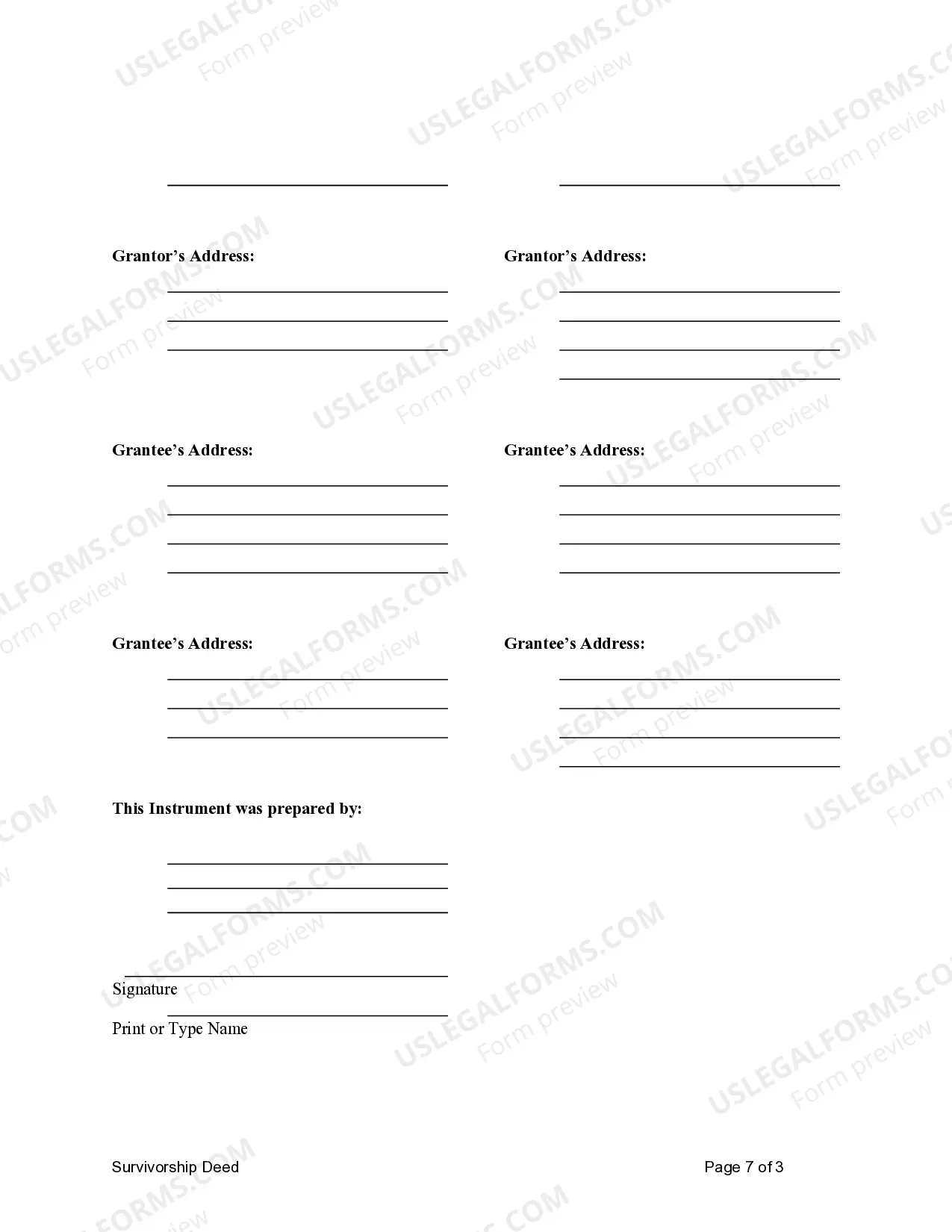
- Identify the Grantees: Include the names and details of the four individuals receiving the property.
- Specify the property: Provide a clear description of the property being transferred.
- Determine property holding method: Indicate whether Grantees will hold the property as Tenants in Common or Joint Tenants with Right of Survivorship.
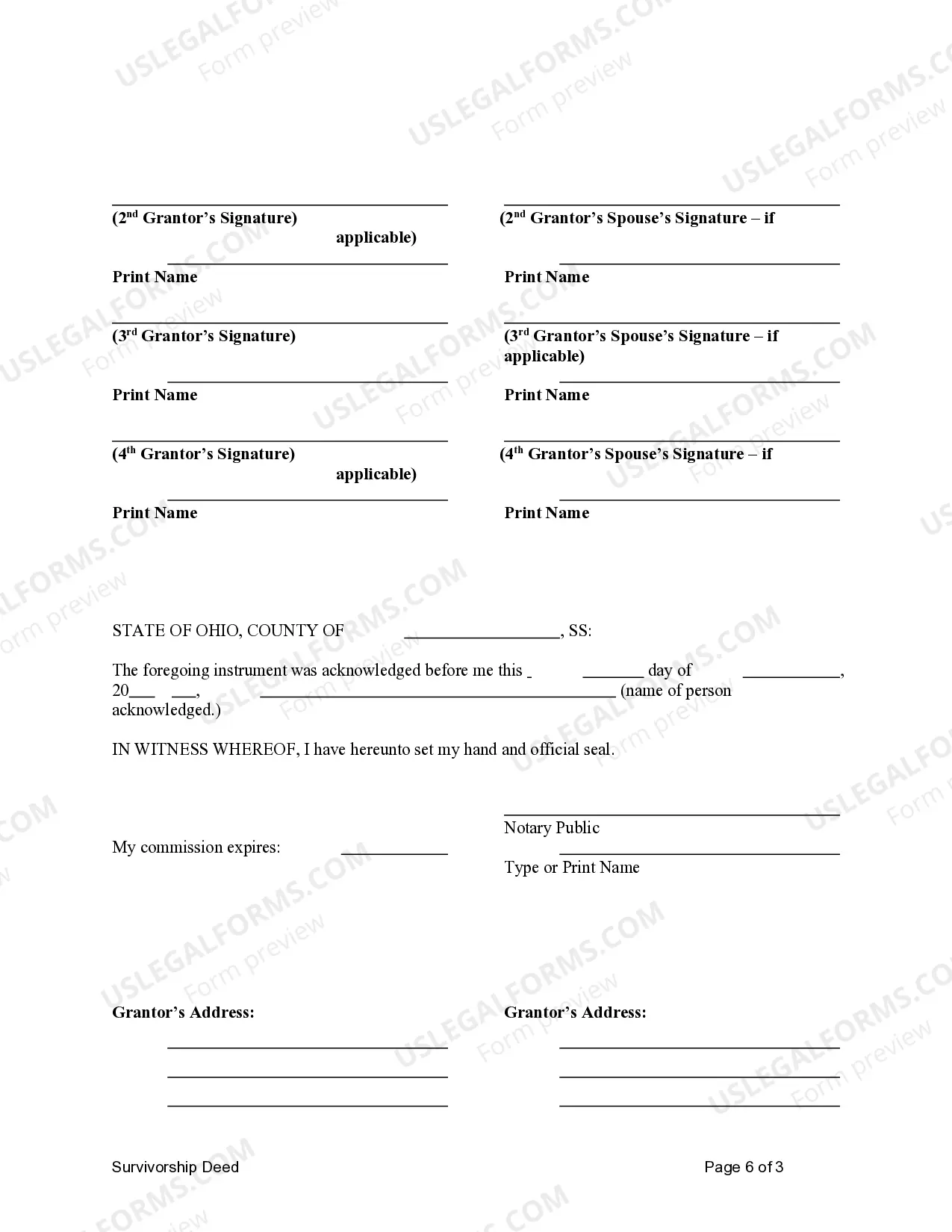
- Obtain signatures: Ensure all parties involved sign the Deed as required by law.
Notarization requirements for this form
This form does not typically require notarization unless specified by local law. If you are unsure about notarization requirements, consult relevant local guidelines or legal counsel.
Get your form ready online
Our built-in tools help you complete, sign, share, and store your documents in one place.
Make edits, fill in missing information, and update formatting in US Legal Forms—just like you would in MS Word.
Download a copy, print it, send it by email, or mail it via USPS—whatever works best for your next step.
Sign and collect signatures with our SignNow integration. Send to multiple recipients, set reminders, and more. Go Premium to unlock E-Sign.
If this form requires notarization, complete it online through a secure video call—no need to meet a notary in person or wait for an appointment.
We protect your documents and personal data by following strict security and privacy standards.

Make edits, fill in missing information, and update formatting in US Legal Forms—just like you would in MS Word.

Download a copy, print it, send it by email, or mail it via USPS—whatever works best for your next step.

Sign and collect signatures with our SignNow integration. Send to multiple recipients, set reminders, and more. Go Premium to unlock E-Sign.

If this form requires notarization, complete it online through a secure video call—no need to meet a notary in person or wait for an appointment.

We protect your documents and personal data by following strict security and privacy standards.
Typical mistakes to avoid
Here are some common errors to avoid when completing this form:
- Not clearly stating the property description, which can lead to disputes later.
- Failing to specify the method of ownership (Tenants in Common vs. Joint Tenants) which impacts property transfer upon death.
- Omitting signatures or dates, making the deed legally unenforceable.
- Using incorrect or outdated language that may not comply with current Ohio statutes.
Benefits of using this form online
Using this form online offers several advantages, including:
- Convenience: Access the form anytime and from anywhere, avoiding trips to legal offices.
- Editability: Fill out the form digitally, making it easy to revise if necessary.
- Reliability: Ensure that the form complies with Ohio state laws, drafted by licensed attorneys.
Looking for another form?
Form popularity
FAQ
In Ohio, a Survivorship Deed is used to convey title to real estate to two or more people as joint tenants with rights of survivorship. Upon the death of an owner, the property passes to the surviving owner(s). A Survivorship Deed is commonly utilized to convey property to spouses.
A Survivorship Deed transfers residential or commercial property from one property owner (the grantor) to another (the grantee) while allowing them to avoid going through probate when they (the grantor) passes away. The parties transferring property in a Survivorship Deed must have full ownership of the property.
A Survivorship Deed transfers residential or commercial property from one property owner (the grantor) to another (the grantee) while allowing them to avoid going through probate when they (the grantor) passes away. The parties transferring property in a Survivorship Deed must have full ownership of the property.
The General Rule. In the great majority of states, if you and the other owners call yourselves "joint tenants with the right of survivorship," or put the abbreviation "JT WROS" after your names on the title document, you create a joint tenancy. A car salesman or bank staffer may assure you that other words are enough.
Unity of time. Unity of title. Unity of interest. Unity of possession.
Joint Tenancy With Survivorship In this arrangement, tenants have an equal right to the account's assets. They are also afforded survivorship rights in the event of the death of another account holder. In simple terms, it means that when one partner or spouse dies, the other receives all of the money or property.
This is true even if the decedent created a will and bequeathed their interest in the property to someone else. This is known as the right of survivorship.The decedent's portion of the property receives a step-up in basis as of the date of their passing.
Property held in joint tenancy, tenancy by the entirety, or community property with right of survivorship automatically passes to the survivor when one of the original owners dies. Real estate, bank accounts, vehicles, and investments can all pass this way. No probate is necessary to transfer ownership of the property.
When you want to change your property's title to include the right of survivorship, you do it by redeeding the property "as joint tenants with rights of survivorship," or JTWROS. Changing the title vesting to JTWROS allows the ownership of the property to automatically pass to the other owner when one dies.