Trademark License as a Dispute Settlement Agreement
About this form
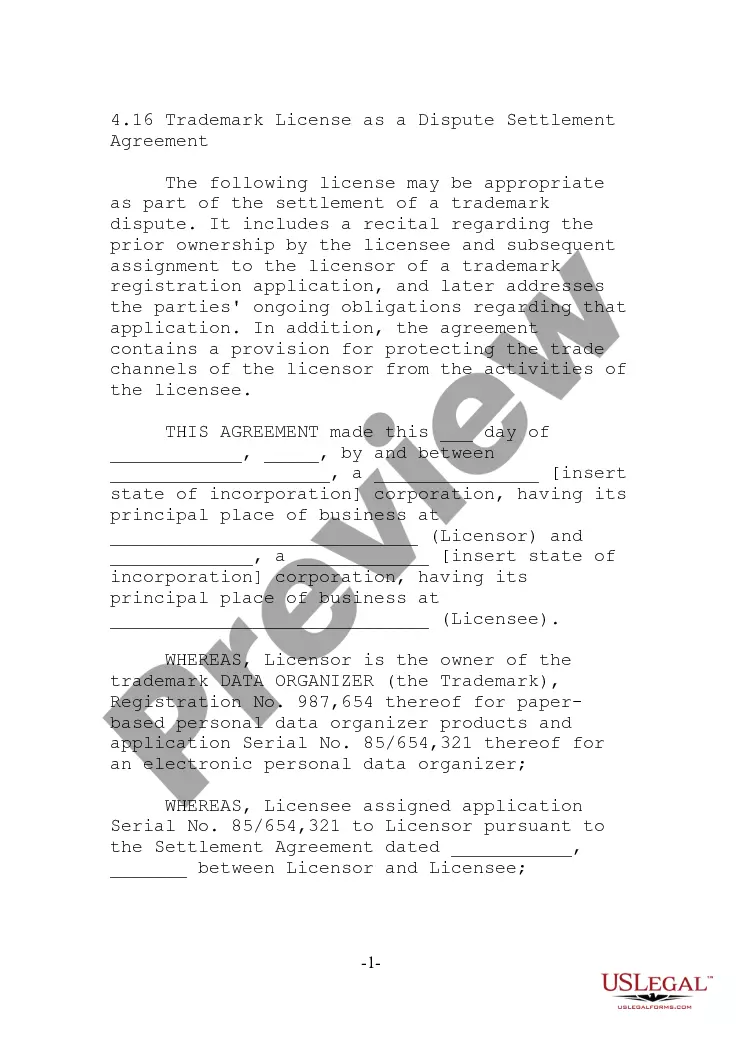
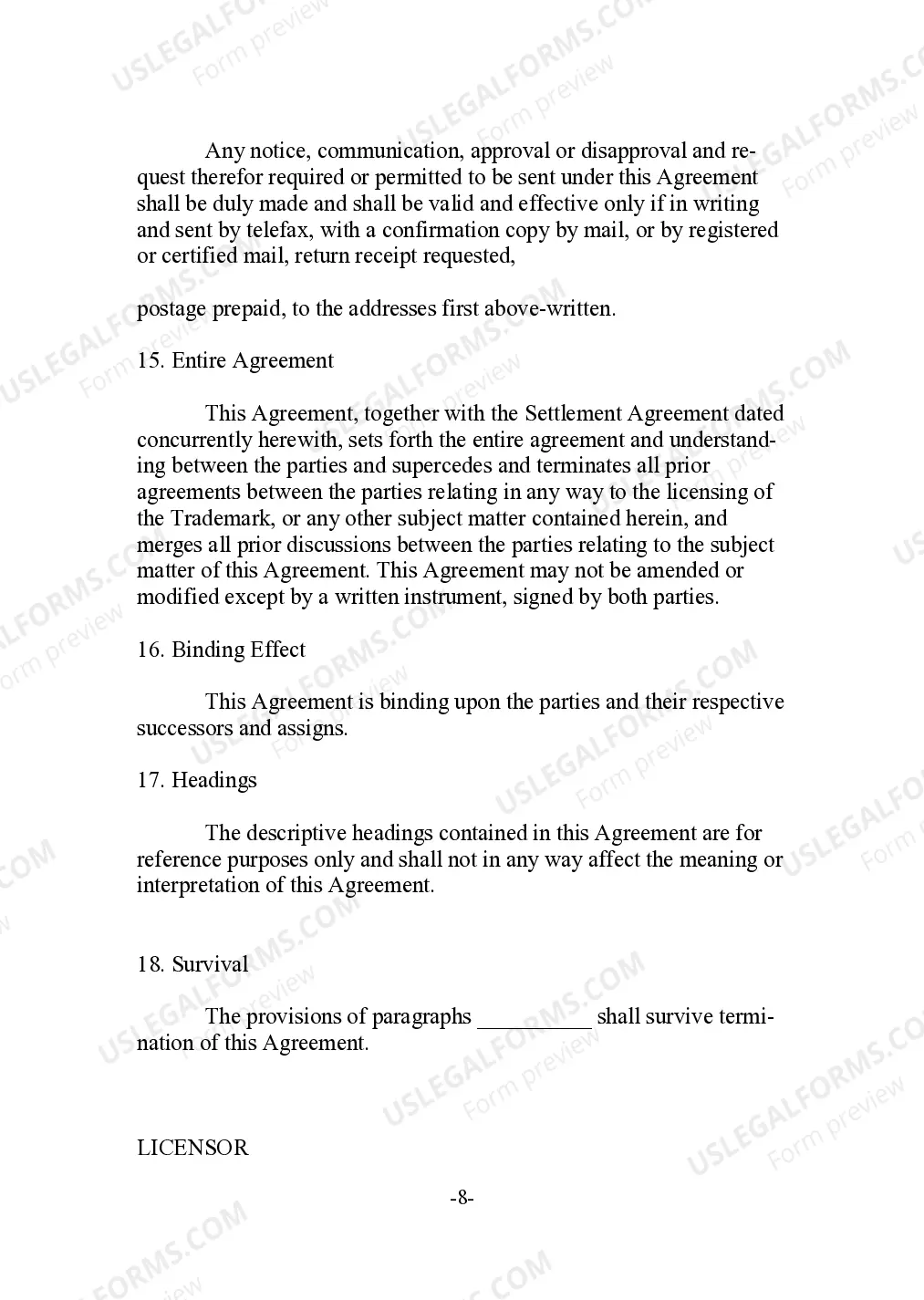
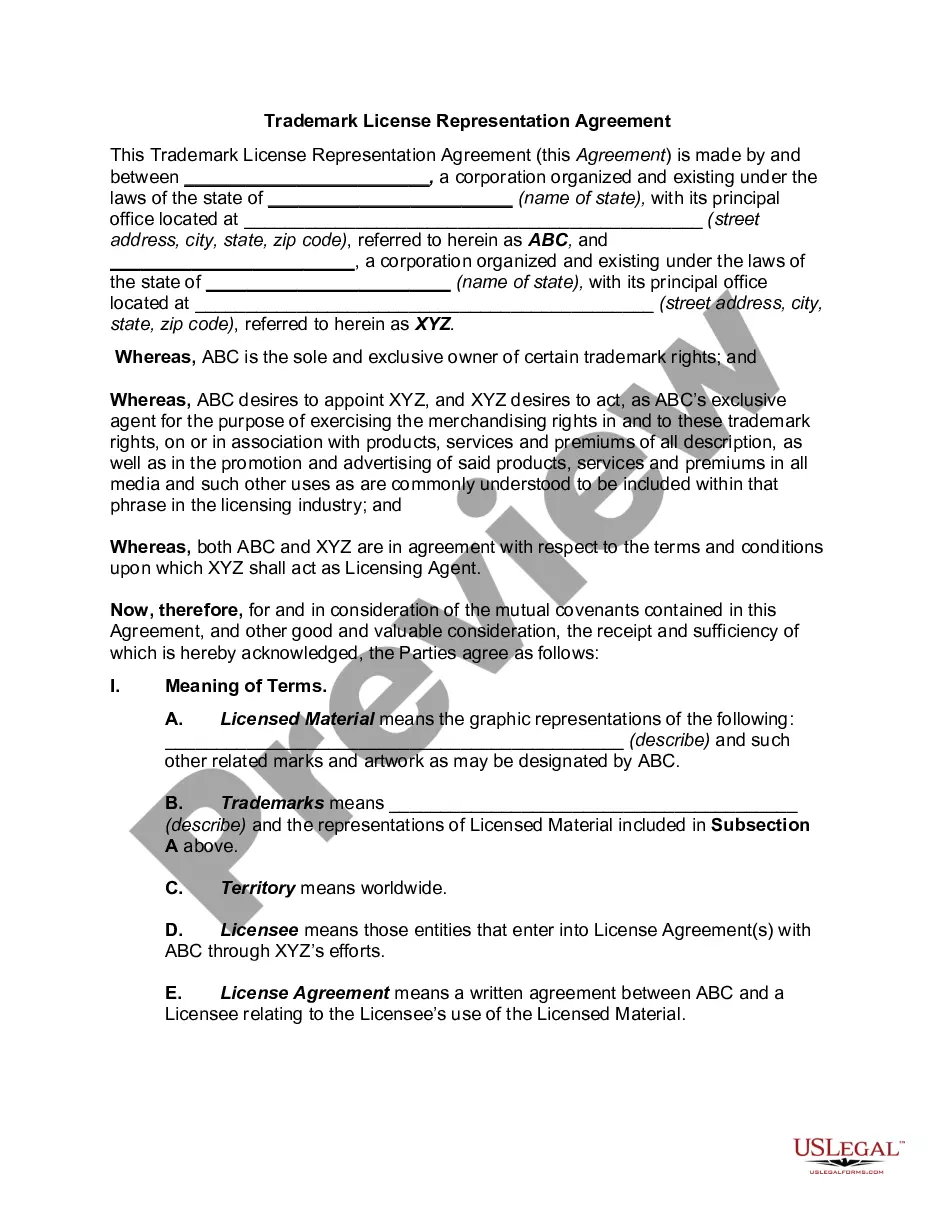
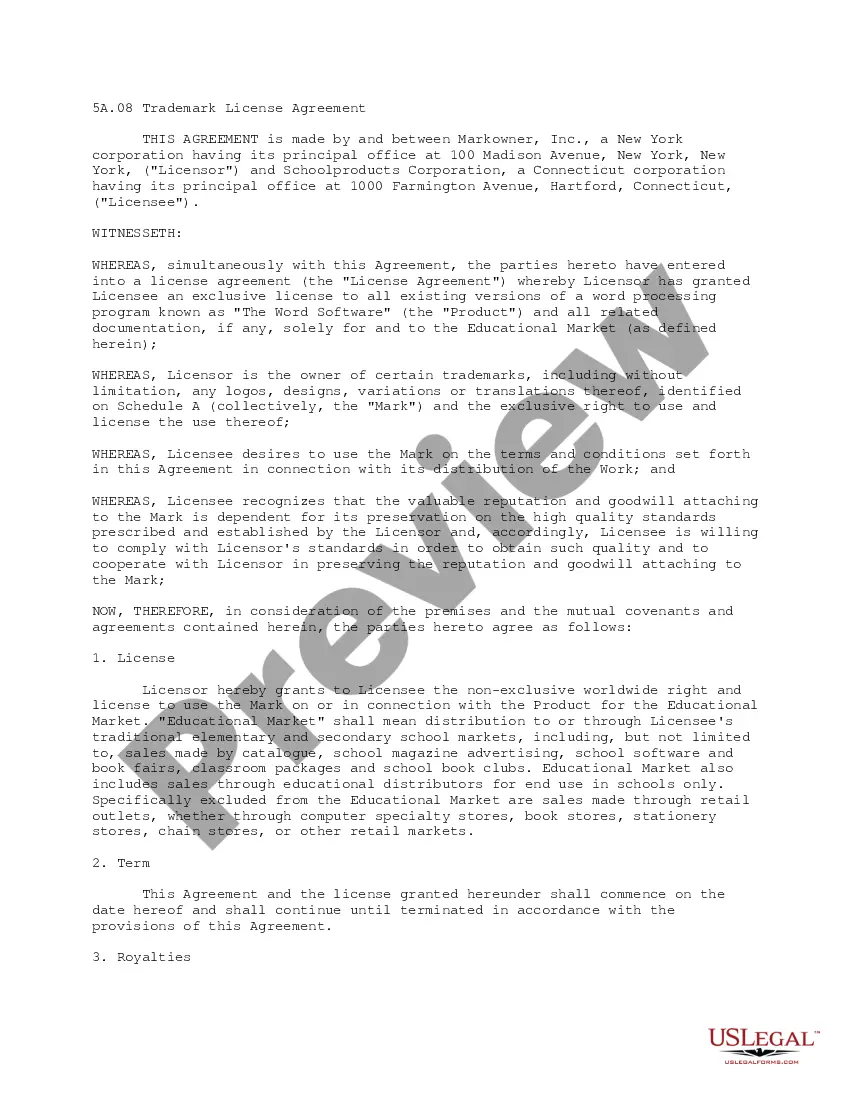
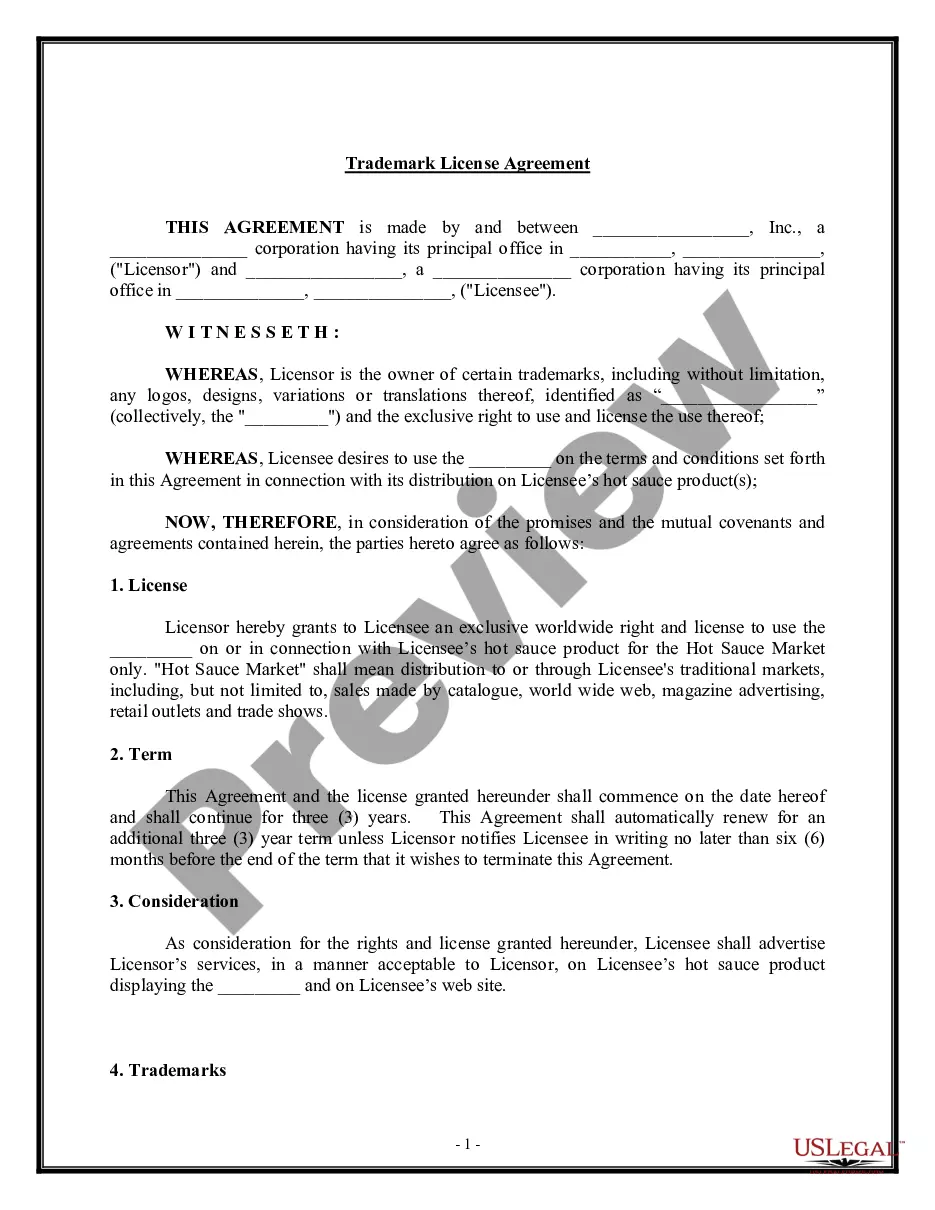
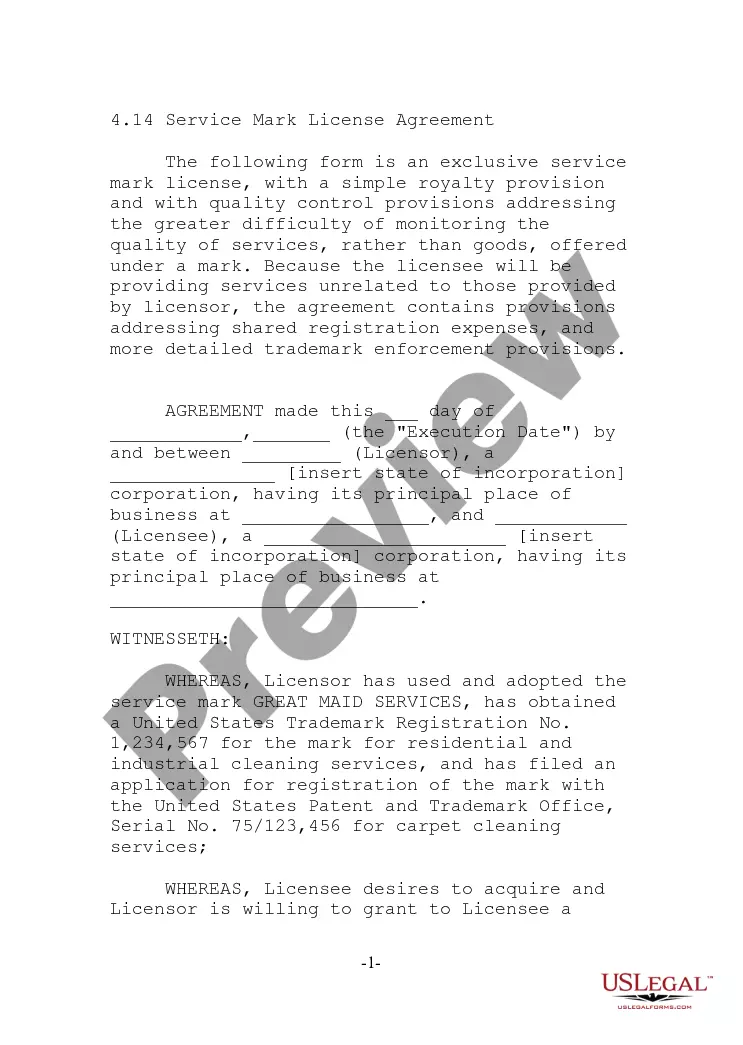
The Trademark License as a Dispute Settlement Agreement is a legal document used to outline the terms under which one party (the licensee) is allowed to use a trademark owned by another party (the licensor) as part of settling a trademark dispute. This form specifically addresses aspects such as ownership rights, obligations, and the promotion of products associated with the trademark. It differs from a standard trademark license by explicitly linking the agreement to the resolution of a dispute, making it suitable for cases involving negotiations over trademark usage or ownership.
Key components of this form
- Parties involved: Identifies the licensor and licensee, including their legal business structure and address.
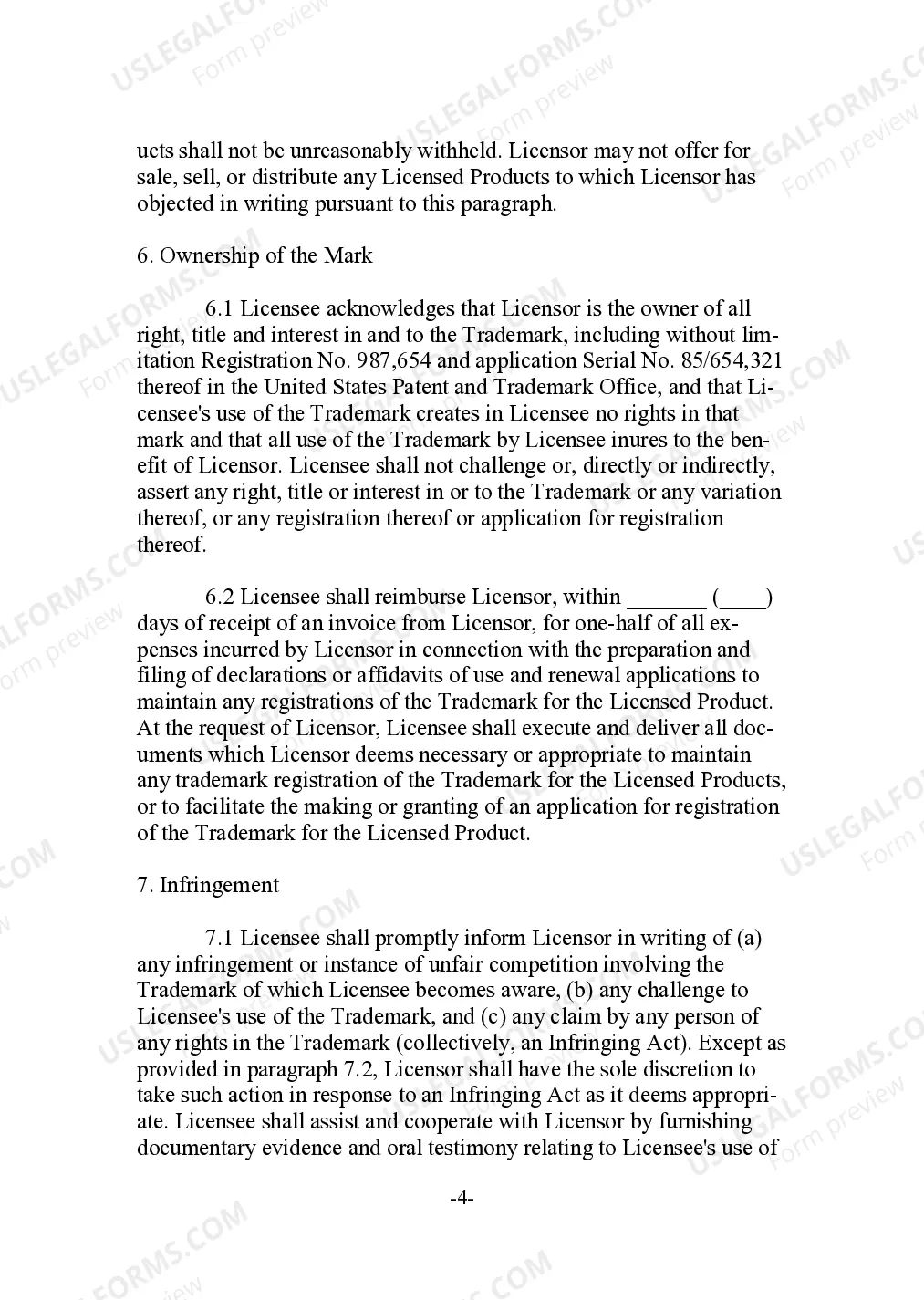
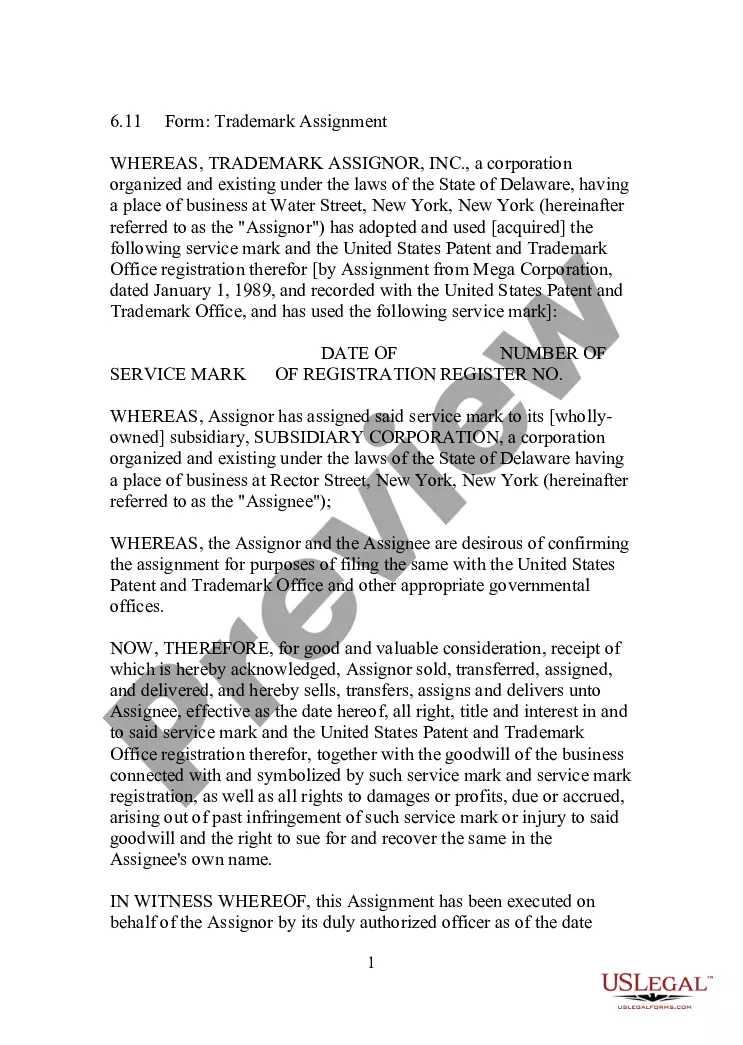
- Trademark details: Recitals clarify prior ownership and specific trademarks involved in the settlement.
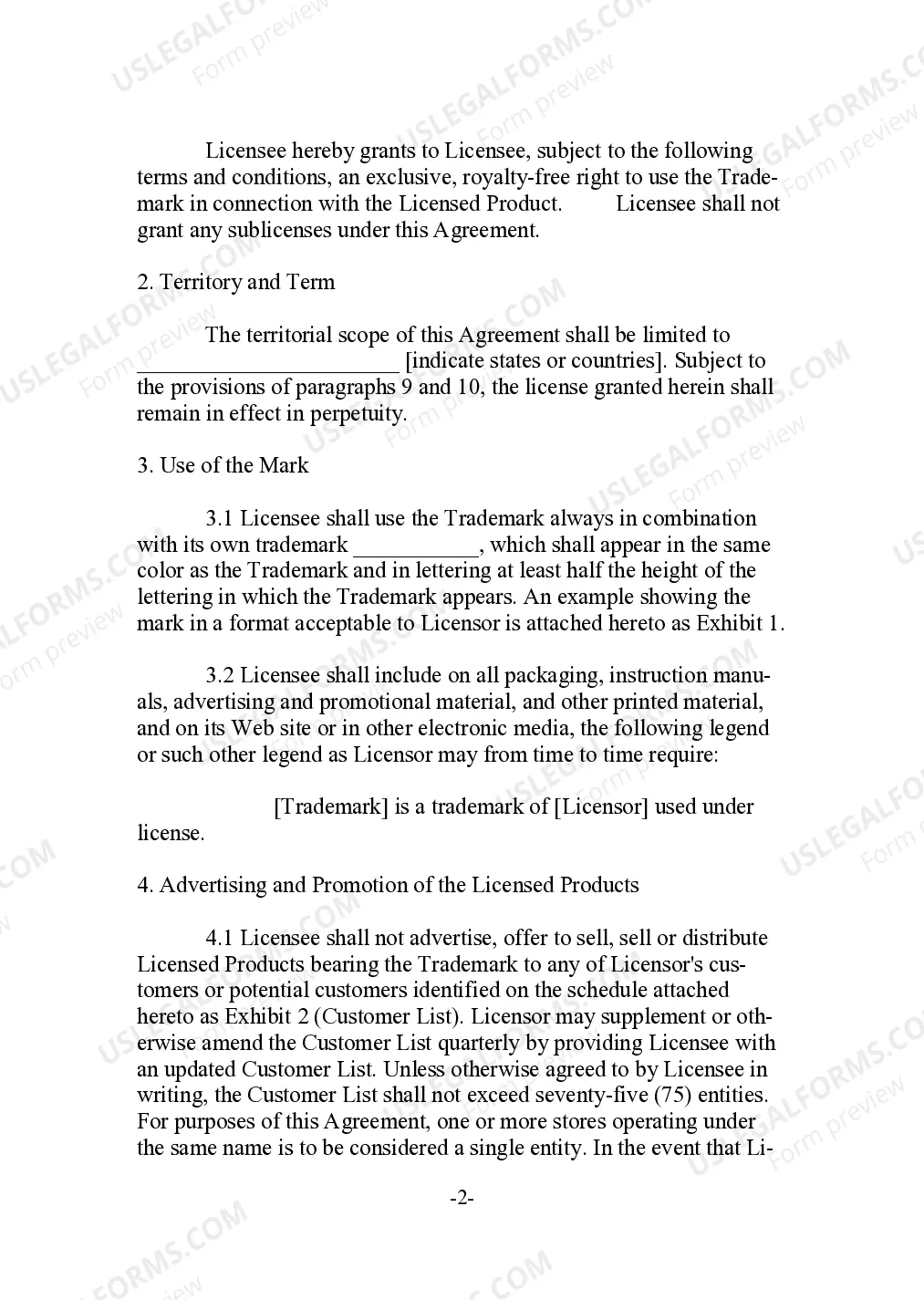
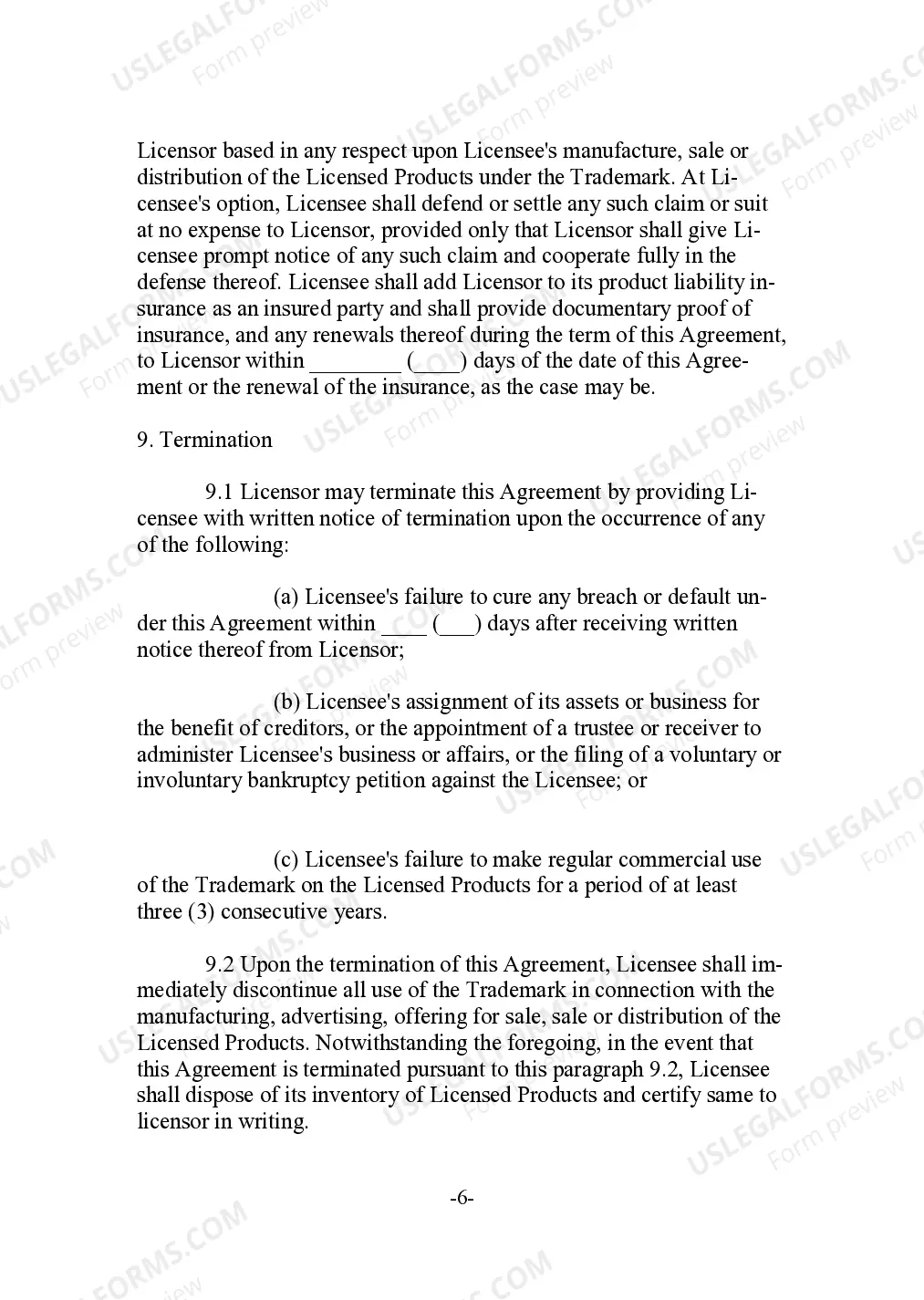
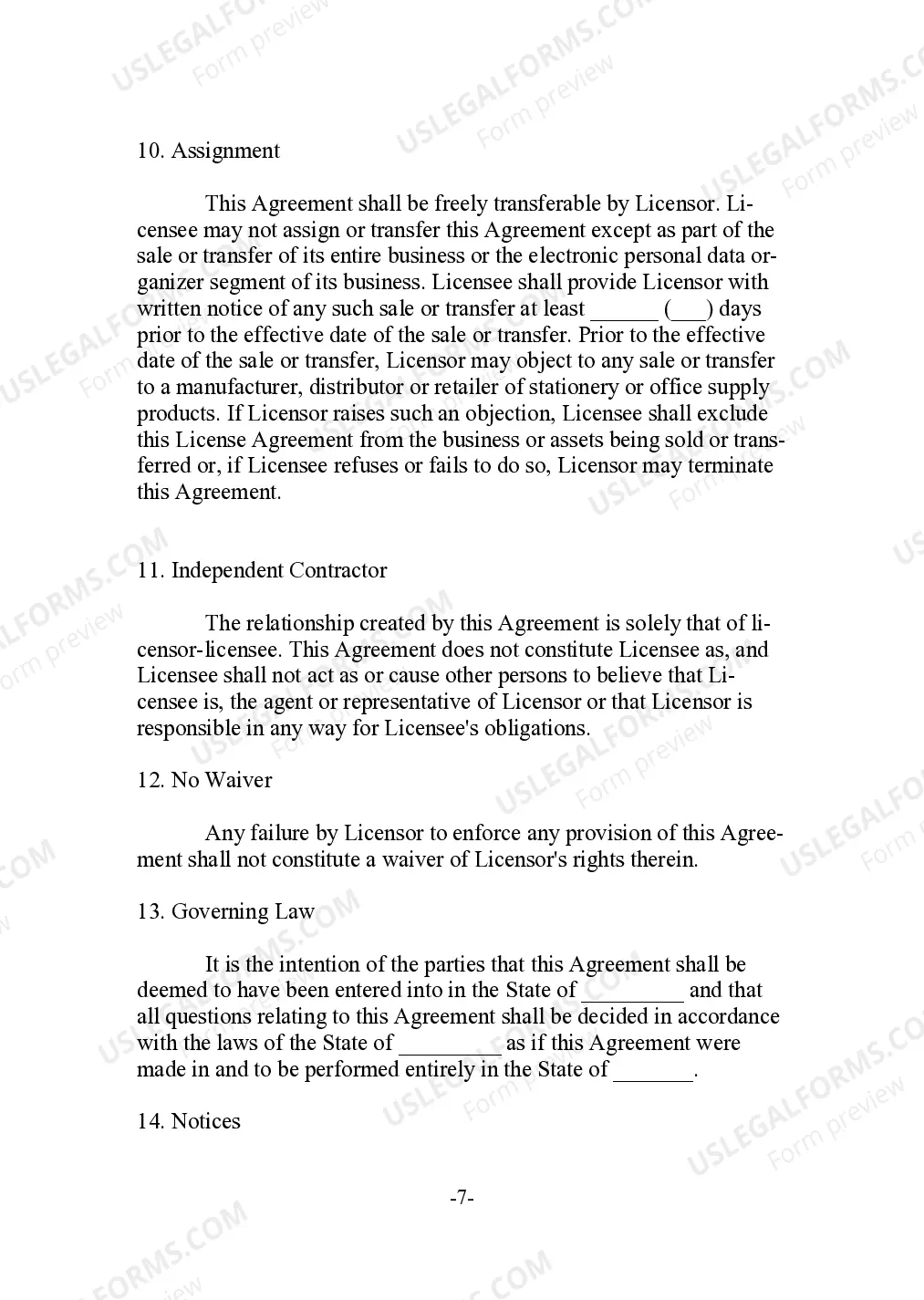
- Grant of license: Conditions under which the trademark can be used and restrictions on sublicensing.
- Territory and term: Specifies the geographic areas where the trademark can be used and the duration of the license.
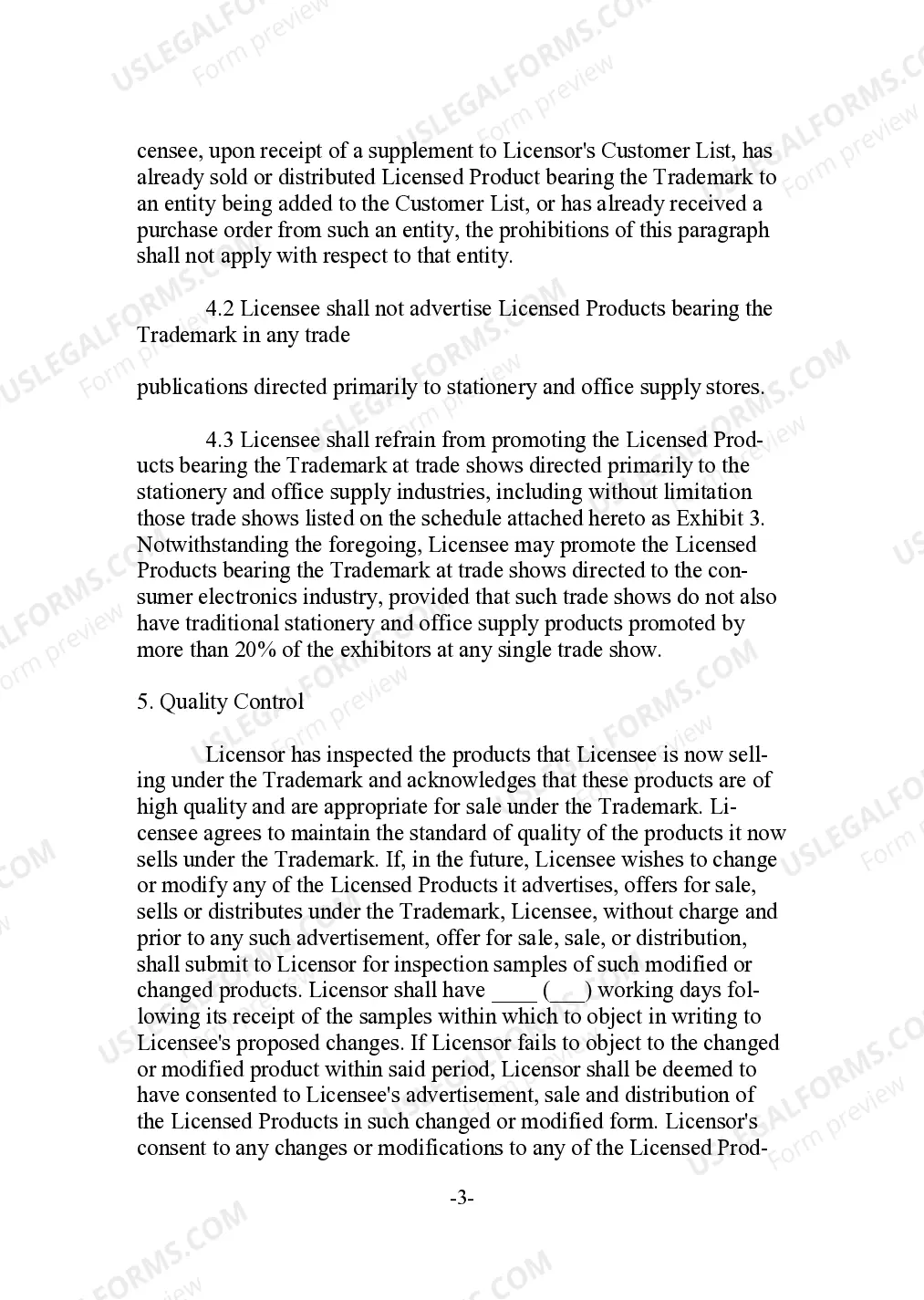
- Quality control: Ensures that products bearing the trademark meet certain quality standards.
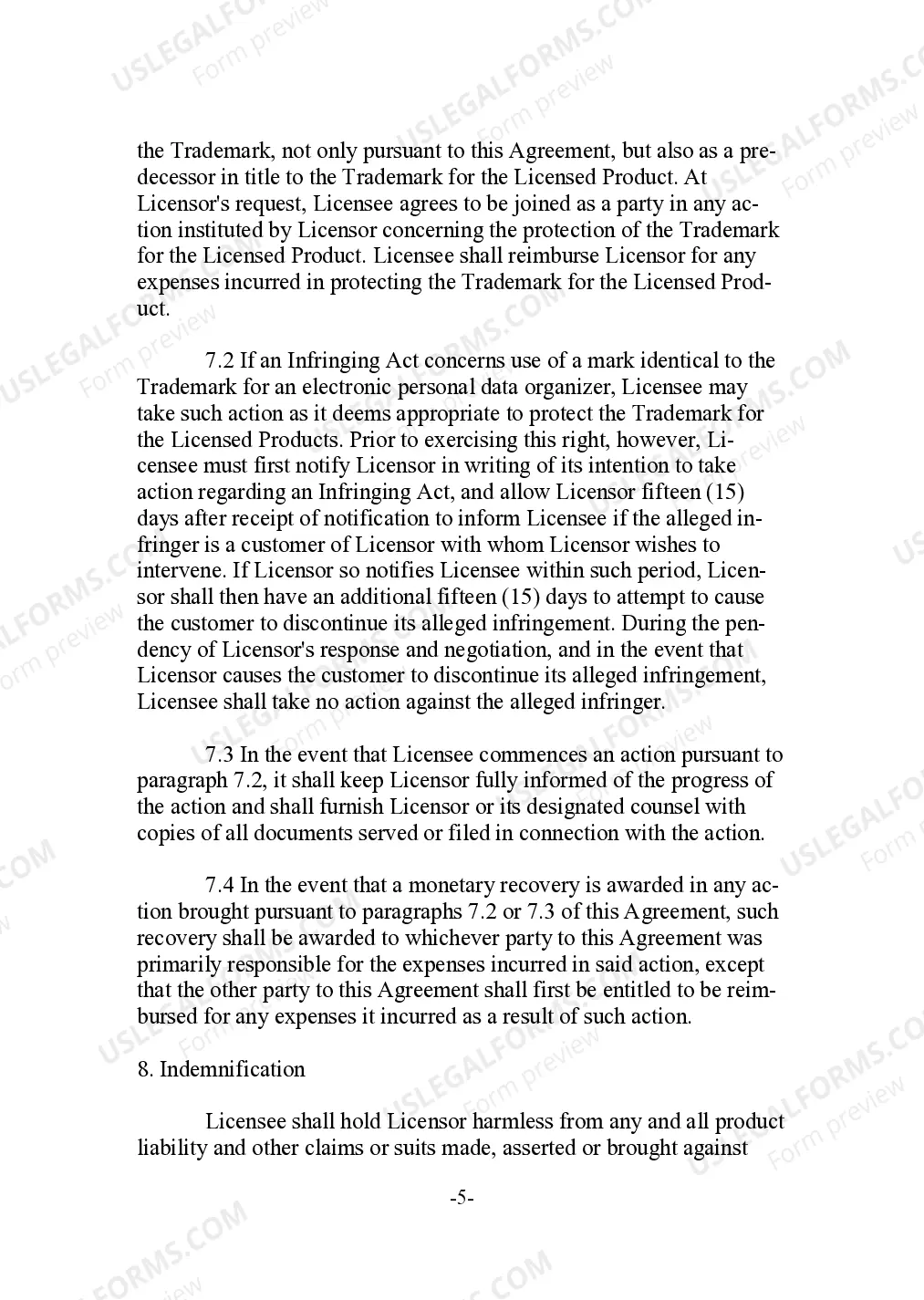
- Infringement provisions: Outlines how to handle instances of trademark infringement and the responsibilities of both parties.

Situations where this form applies
This form is needed when two parties have reached a settlement regarding a trademark dispute and want to formalize the agreement allowing one party to use the other's trademark. It is useful in situations like licensing negotiations, resolving trademark-related litigation, or any context where a clear understanding of rights and responsibilities concerning trademark usage is required.
Who can use this document
- Businesses involved in a trademark dispute seeking a license agreement.
- Licensors who want to grant permission to a licensee while protecting their trademark rights.
- Licensees looking to use a trademark as part of resolving a dispute with the trademark owner.
- Legal professionals drafting agreements related to trademark disputes.
Steps to complete this form
- Identify the parties: Enter the legal names and business structures of both the licensor and the licensee.
- Fill in trademark details: Specify the trademark names, registration numbers, and any relevant applications.
- Define the license terms: Indicate the scope of the license, including territory and duration.
- Outline quality control requirements: Set standards for product quality and outline procedures for any changes.
- Include signatures: Ensure that authorized representatives from both parties sign and date the agreement.
Is notarization required?
This form does not typically require notarization unless specified by local law. It is advisable to check local regulations or consult a legal professional to ensure compliance with any jurisdiction-specific requirements.
Get your form ready online
Our built-in tools help you complete, sign, share, and store your documents in one place.
Make edits, fill in missing information, and update formatting in US Legal Forms—just like you would in MS Word.
Download a copy, print it, send it by email, or mail it via USPS—whatever works best for your next step.
Sign and collect signatures with our SignNow integration. Send to multiple recipients, set reminders, and more. Go Premium to unlock E-Sign.
If this form requires notarization, complete it online through a secure video call—no need to meet a notary in person or wait for an appointment.
We protect your documents and personal data by following strict security and privacy standards.

Make edits, fill in missing information, and update formatting in US Legal Forms—just like you would in MS Word.

Download a copy, print it, send it by email, or mail it via USPS—whatever works best for your next step.

Sign and collect signatures with our SignNow integration. Send to multiple recipients, set reminders, and more. Go Premium to unlock E-Sign.

If this form requires notarization, complete it online through a secure video call—no need to meet a notary in person or wait for an appointment.

We protect your documents and personal data by following strict security and privacy standards.
Typical mistakes to avoid
- Failing to define the territorial scope of the license clearly.
- Not including specific quality control measures, leading to potential trademark dilution.
- Neglecting to specify obligations for both parties in case of trademark infringement.
Benefits of completing this form online
- Convenient access to legal documents that can be customized to fit specific settlement needs.
- Editable format allows for quick adjustments according to individual circumstances.
- Reliability from an attorney-drafted template ensures compliance with legal standards.
Looking for another form?
Form popularity
FAQ
A licensing agreement is a legal contract between two parties, known as the licensor and the licensee. In a typical licensing agreement, the licensor grants the licensee the right to produce and sell goods, apply a brand name or trademark, or use patented technology owned by the licensor.
Trademark infringement is the unauthorized use of a trademark or service mark on or in connection with goods and/or services in a manner that is likely to cause confusion, deception, or mistake about the source of the goods and/or services.
A trademark licensing agreement is a legal contract between a trademark owner and another party that have agreed to use the trademark on preapproved terms decided between the contracting parties.
Several options exist to challenge another party's trademark registration or application, depending on the particular circumstances and grounds for challenging: You may challenge a trademark registration issued by the USPTO by filing a petition to cancel the registration with the Trademark Trial & Appeal Board (TTAB).
A trademark license agreement allows the licensee to use (but not own) the licensor's trademark in connection with agreed-on products or services. Licensing can help a company expand into new markets effectively and easily while lending the licensee an established name and reputation.
Get it in writing. Develop a detailed licensing agreement that is signed by both licensor and licensee. Work with an experienced trademark attorney, who has knowledge in both drafting agreements and enforcing proper use. Establish brand guidelines that clearly dictate how and where the trademark can be used.
Trademark licensing is the process by which a registered trademark owner, called a licensor or proprietor, allows another party, called a licensee, to make and distribute specific products or services under the licensor's trademark agreement. Trademark licensing is a type of merchandise agreement.
What is a Licensing Agreement? A licensing agreement is a contract between two parties (the licensor and licensee) in which the licensor grants the licensee the right to use the brand name, trademark, patented technology, or ability to produce and sell goods owned by the licensor.
A licensing agreement allows one party (the licensee) to use and/or earn revenue from the property of the owner (the licensor). Licensing agreements generate revenues, called royalties, earned by a company for allowing its copyrighted or patented material to be used by another company.