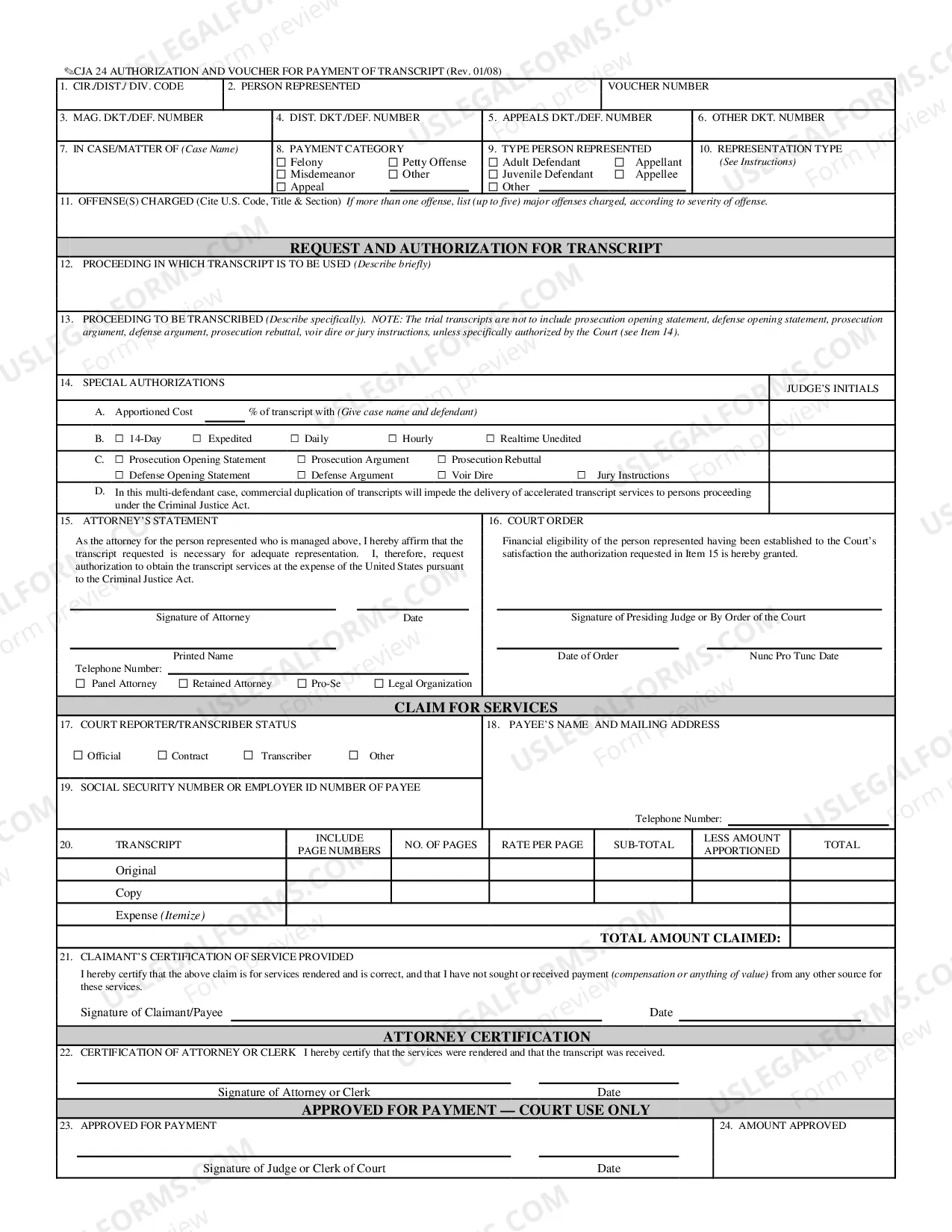
Court Order Resolving an Action for Accounting
Understanding this form
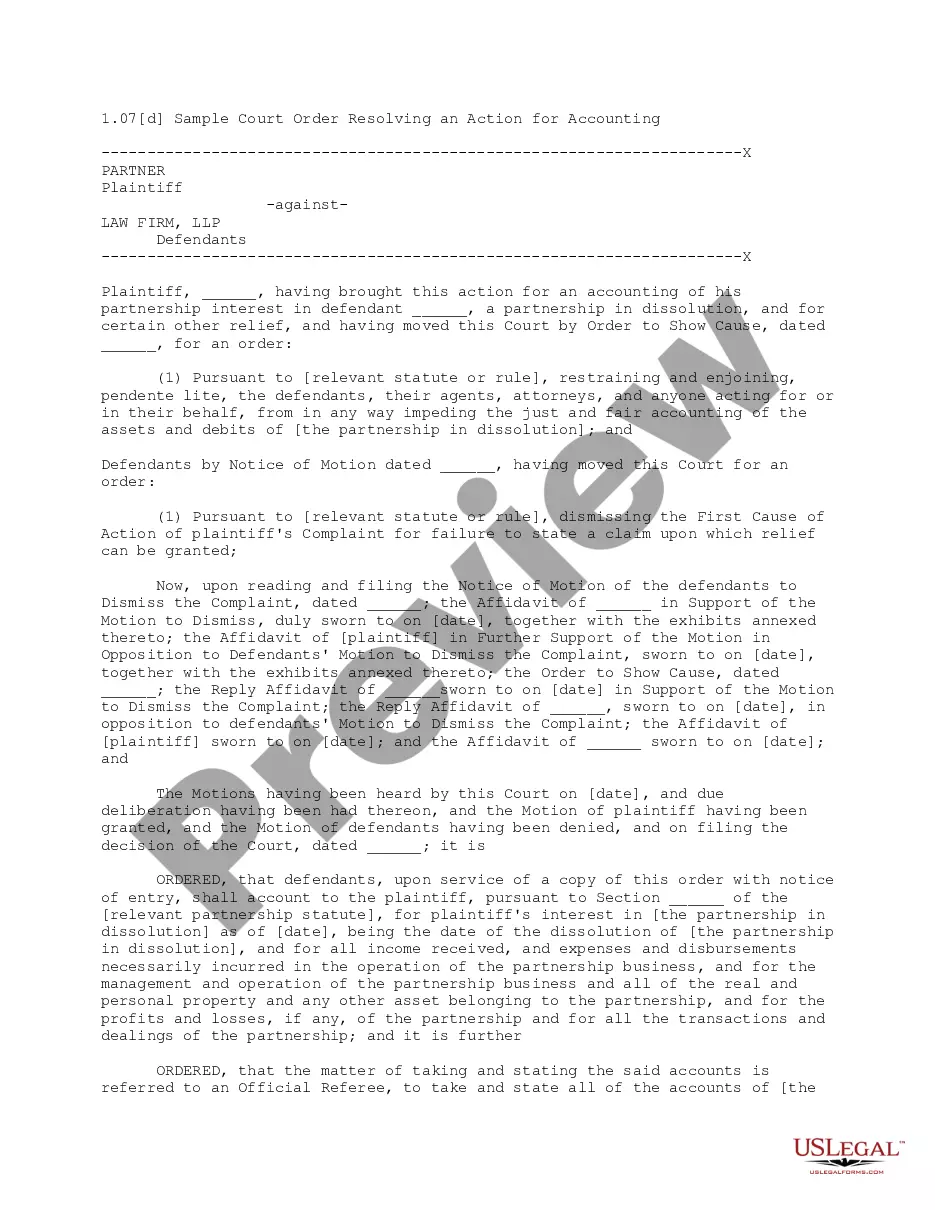
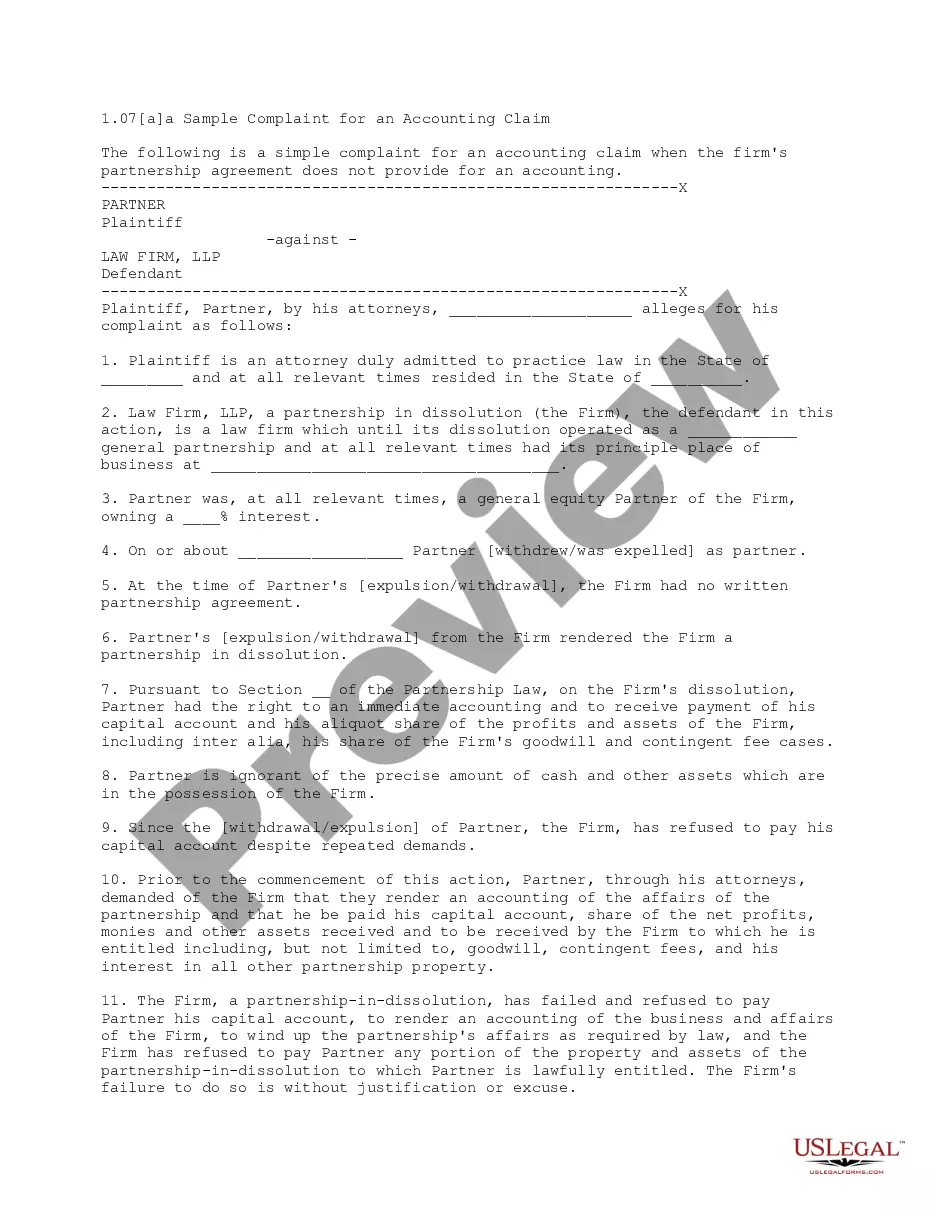
The Court Order Resolving an Action for Accounting is a legal document designed to finalize an accounting process within a partnership, particularly when one partner is seeking to assess their financial interests after the dissolution of the partnership. This order facilitates the examination of financial records, ensuring transparency and fairness in the accounting of assets, income, and expenses, setting it apart from similar forms that may not specifically address partnership accounting issues.
Key components of this form
- Identification of the plaintiff and defendants, along with the partnership details.
- Order restricting the defendants from impeding the accounting process.
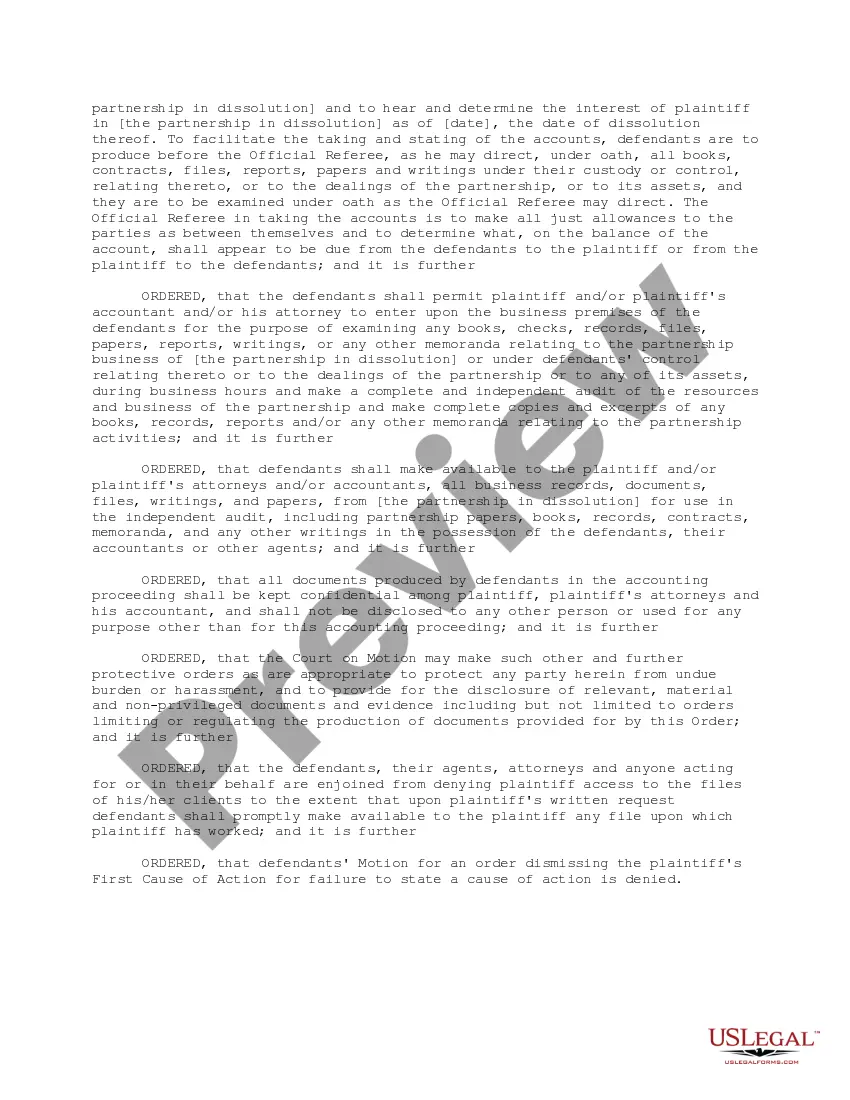
- Directions for the defendants to provide necessary financial records to the plaintiff.
- Appointment of an Official Referee to oversee the accounting process.
- Confidentiality provisions regarding the financial documents shared.
When to use this form
This form is used in situations where a partner in a dissolving partnership requires an official accounting of their financial interests. It is applicable when disputes arise regarding the management of partnership assets, income, or expenses, and is crucial for ensuring that all financial relations are documented and resolved fairly.
Who can use this document
- Partners in a partnership that is in the process of dissolution.
- Individuals seeking clarity on their financial interest in the partnership.
- Accountants and attorneys representing partners in accounting disputes.
Instructions for completing this form
- Identify the parties involved, including the plaintiff and defendants.
- Specify the details of the partnership, including the date of dissolution.
- Outline the order's obligations regarding access to financial records.
- Include any statutory references relevant to the partnership laws.
- Ensure all dates are accurate and reflect the timeline of the case.
Notarization guidance
This form usually doesn’t need to be notarized. However, local laws or specific transactions may require it. Our online notarization service, powered by Notarize, lets you complete it remotely through a secure video session, available 24/7.
Get your form ready online
Our built-in tools help you complete, sign, share, and store your documents in one place.
Make edits, fill in missing information, and update formatting in US Legal Forms—just like you would in MS Word.
Download a copy, print it, send it by email, or mail it via USPS—whatever works best for your next step.
Sign and collect signatures with our SignNow integration. Send to multiple recipients, set reminders, and more. Go Premium to unlock E-Sign.
If this form requires notarization, complete it online through a secure video call—no need to meet a notary in person or wait for an appointment.
We protect your documents and personal data by following strict security and privacy standards.

Make edits, fill in missing information, and update formatting in US Legal Forms—just like you would in MS Word.

Download a copy, print it, send it by email, or mail it via USPS—whatever works best for your next step.

Sign and collect signatures with our SignNow integration. Send to multiple recipients, set reminders, and more. Go Premium to unlock E-Sign.

If this form requires notarization, complete it online through a secure video call—no need to meet a notary in person or wait for an appointment.

We protect your documents and personal data by following strict security and privacy standards.
Common mistakes
- Failing to include all relevant parties in the form.
- Not specifying the date of dissolution, leading to ambiguity.
- Omitting necessary statutory references that support the order.
Benefits of using this form online
- Immediate access to professionally drafted legal documents.
- Convenient editing and customization options to suit specific needs.
- Time-saving process to finalize legal matters without extensive delays.
Legal use & context
- Serves as a binding court order to resolve partnership disputes involving financial accounting.
- Helps establish an official record for future legal proceedings if needed.
- Provides a structured process for a fair audit of partnership assets and liabilities.
Quick recap
- The Court Order Resolving an Action for Accounting is essential for settling partnership financial disputes.
- It allows access to necessary financial records and appoints an Official Referee for oversight.
- Using this form online offers convenience and reliability when handling legal matters.
Looking for another form?
Form popularity
FAQ
An account of profits (sometimes referred to as an accounting for profits or simply an accounting) is a type of equitable remedy most commonly used in cases of breach of fiduciary duty.
Read Information Sheet: Responsive Declaration to Request for Order (Form FL-320-INFO ). Fill out your court forms. Have your forms reviewed. Make at least 2 copies of all your forms. File your forms with the court clerk. Serve your papers on the other parent. File your Proof of Service.
After you complete your motion, you must file it with the court.You must then serve (mail) a copy of your filed motion (including all exhibits and the date, time, and place of hearing) to all other parties in the case. If a party is represented by an attorney, mail the motion directly to the attorney's office.
Fill out the forms. You have to fill out at least 2 forms, maybe more, to file your opposition. File the forms. Turn in your completed forms by mail or efiling. Serve the other party. Get ready for the hearing. Prepare an order.
Writing and filing the complaint. Paying the filing fee (or getting it waived) Notifying the party you are suing (this notification is usually called service of process) Proving to the court that the party you are suing (the Defendant) has been served.
File an answer. The most common way to respond to a complaint is by filing an answer. Negotiate. Being served with a lawsuit does not automatically mean you need to appear in court. Request more information from the plaintiff. Cross-complain. File a motion to dismiss.
Seventh Cause of Action, Accounting: The demurrer to this cause of action is overruled. An accounting is an equitable action that may be brought where a fiduciary relationship exists between the parties or the accounts are so complicated that an ordinary action demanding a fixed sum is impracticable.
Don't ignore it. If you do this, the court will simply rule in the issuer or debt collector's favor. Try to work things out. Answer the summons. Consult an attorney. Go to court. Respond to the ruling.
A response to an order to show cause typically requires you to show up in-person to the hearing. You can provide an answer to the order and state why you object to the order being issued.