Demand for Discovery in an Action for an Accounting
Understanding this form
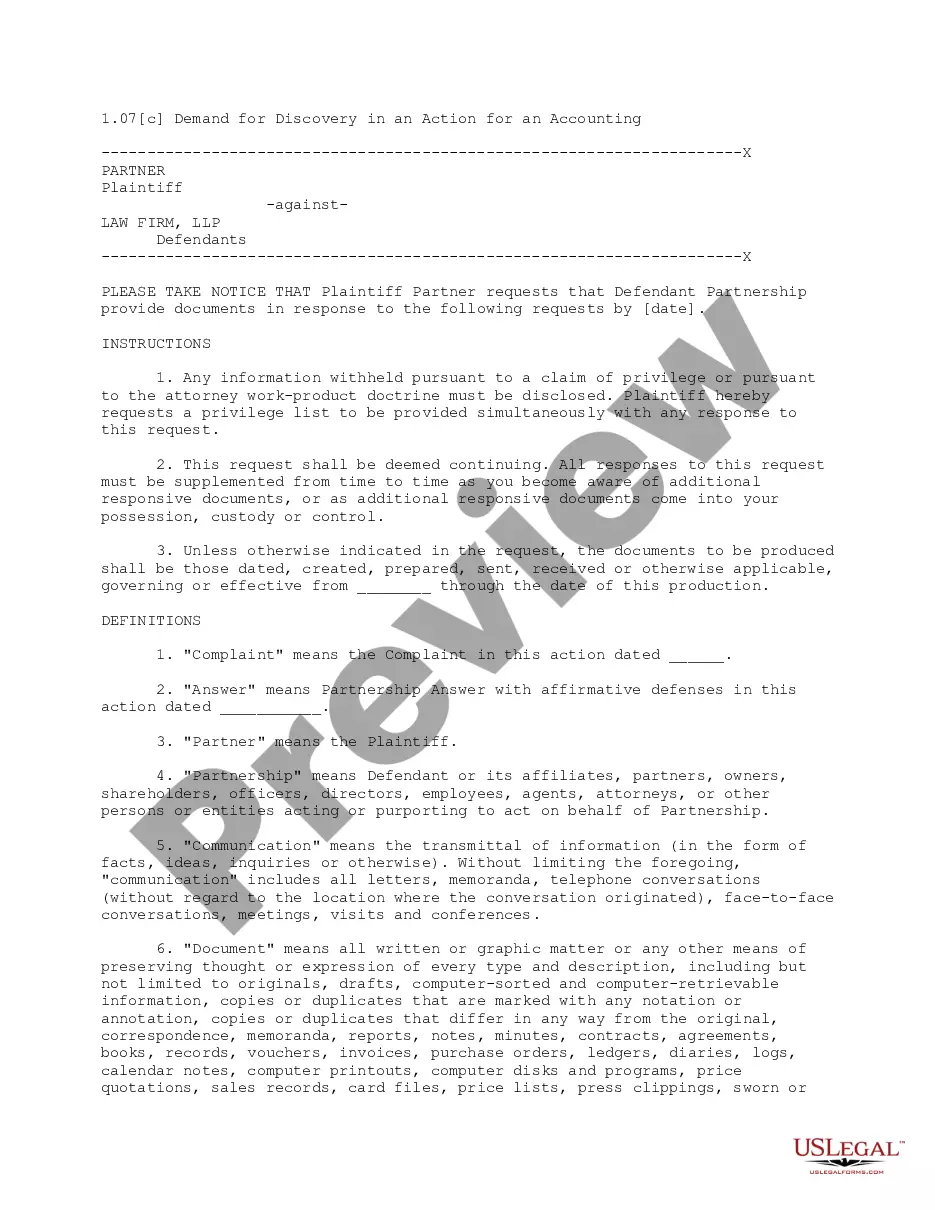
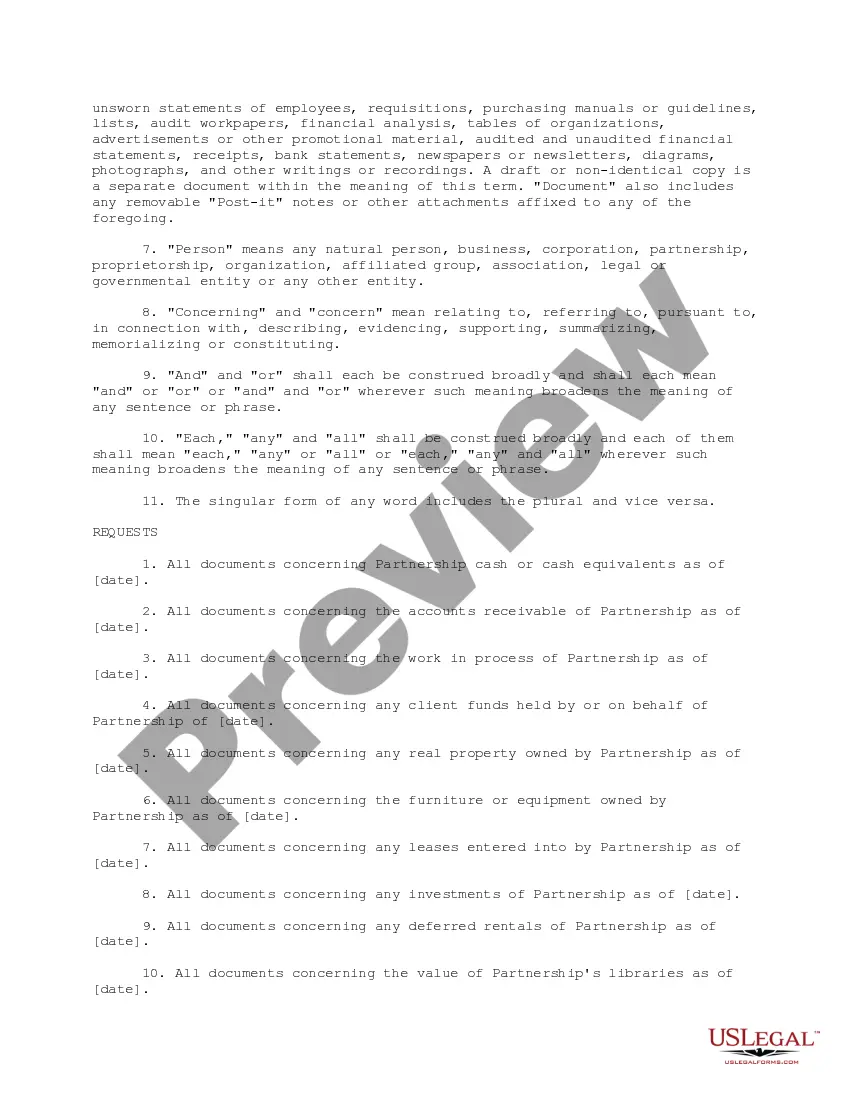
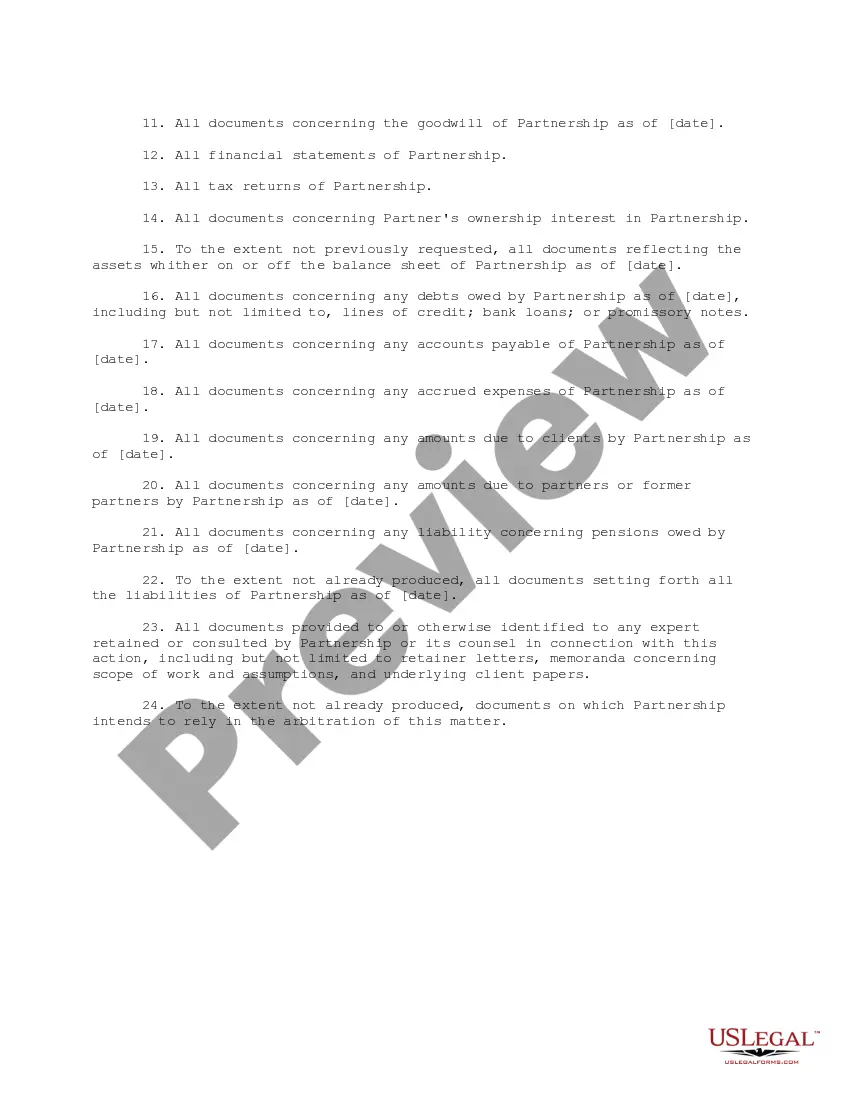
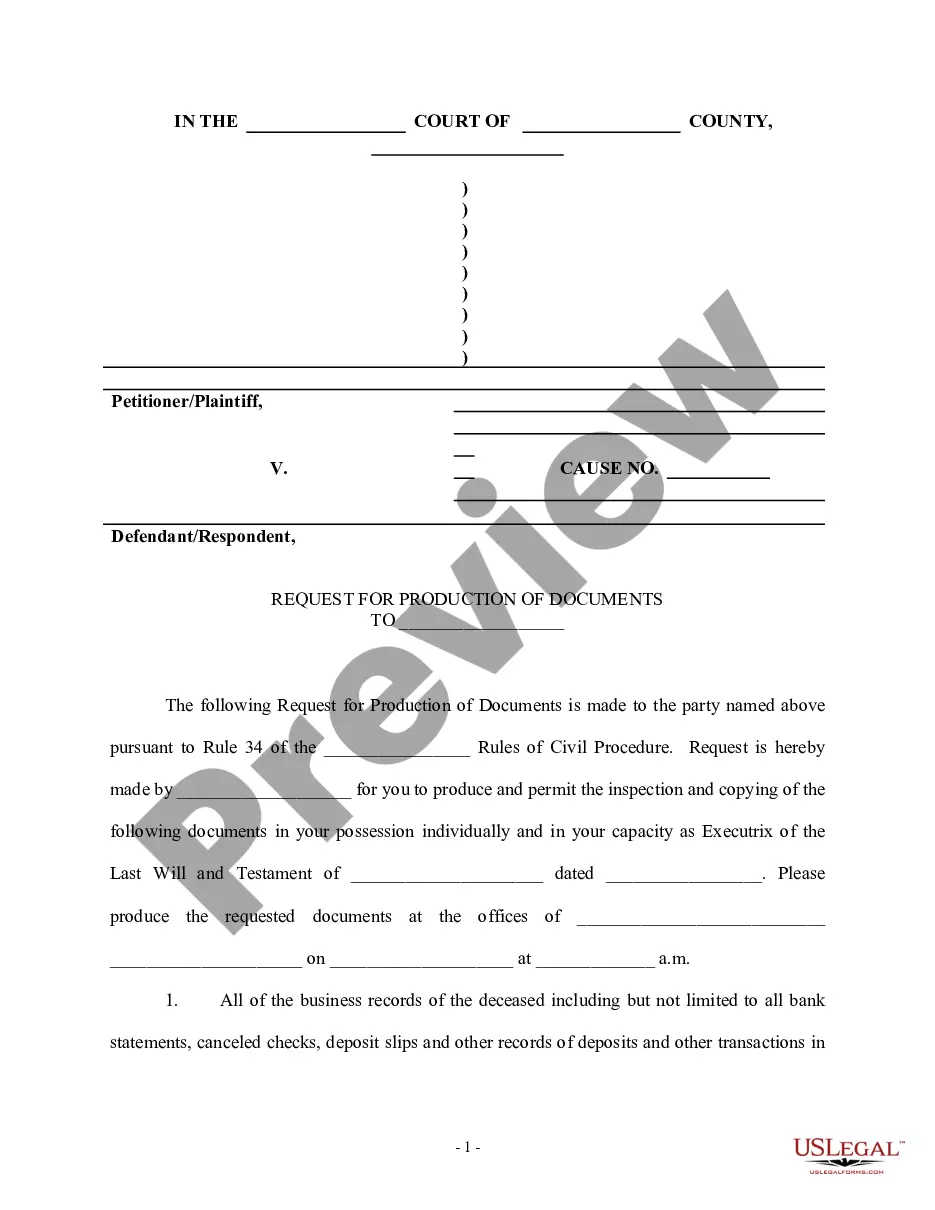
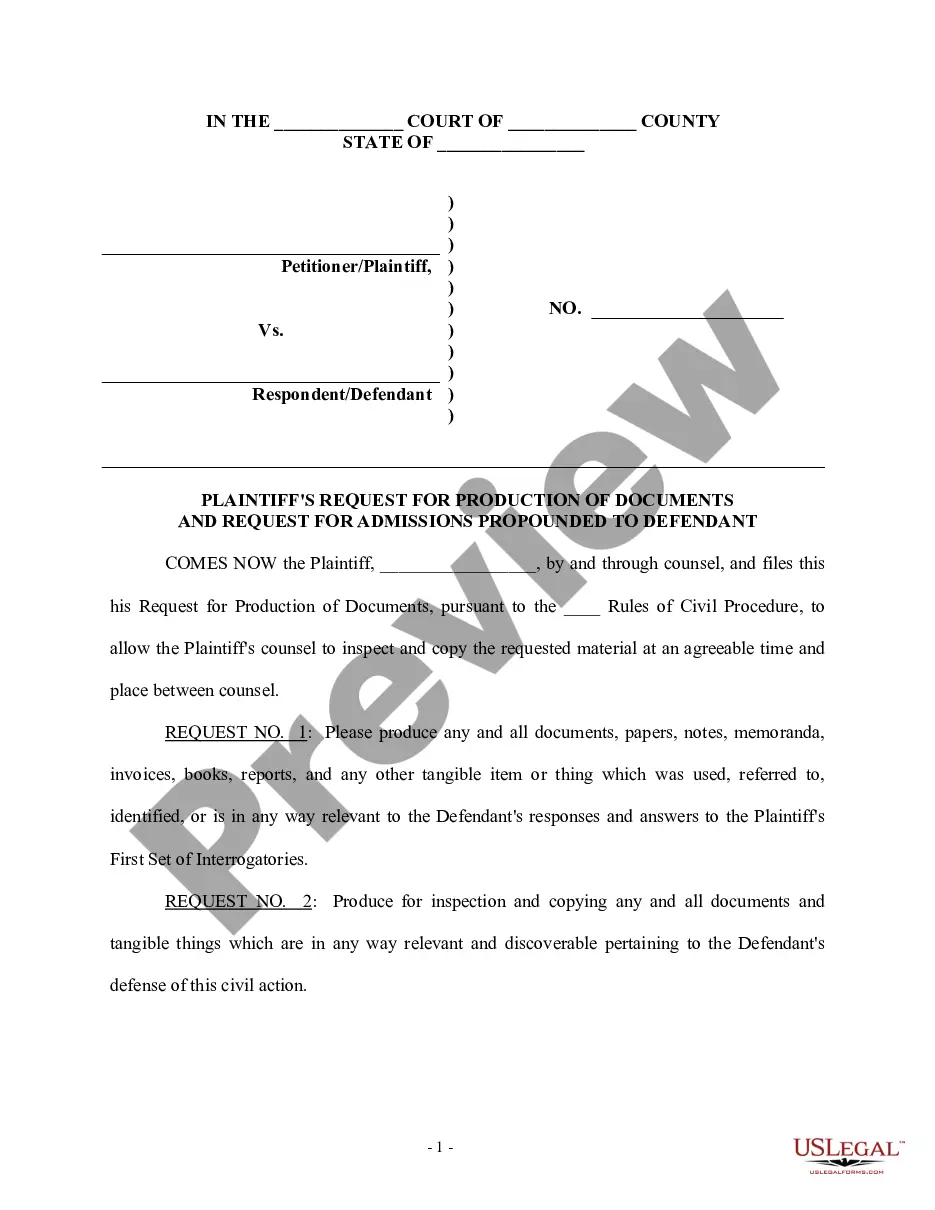
The Demand for Discovery in an Action for an Accounting is a legal document used by a plaintiff who is seeking an accounting from a former partner in a partnership where the partnership agreement does not specify such an accounting. This form allows the plaintiff to formally request documents necessary to prepare for litigation, particularly those relevant to financial records and Partnership operations, aiding in transparency and accountability during the legal process.
Key parts of this document
- Notice of demand for document production from the defendant
- Instructions for disclosing any withheld information
- Definitions of key terms relevant to the request
- Specific requests for documents related to the partnership's finances
- Clauses outlining the time frame for document provision
When to use this form
This form is useful in a situation where a partner of a law firm or any partnership seeks to obtain vital financial information from the partnership to ensure fair accounting of assets and liabilities. It is typically used when the partnership agreement does not provide a specific mechanism for requesting an accounting.
Who this form is for
- Individuals who were partners in a law firm or other partnership
- Plaintiffs who require financial transparency from a defendant partnership
- Legal professionals assisting clients in partnership disputes
Steps to complete this form
- Identify the parties involved and provide their legal names.
- Enter the date range for documents requested.
- Clearly outline the specific documents requested in the section designated for requests.
- Include definitions for terms used to avoid ambiguity.
- Follow the instructions regarding privilege claims for any withheld documents.
Notarization guidance
This form does not typically require notarization to be legally valid. However, some jurisdictions or document types may still require it. US Legal Forms provides secure online notarization powered by Notarize, available 24/7 for added convenience.
Get your form ready online
Our built-in tools help you complete, sign, share, and store your documents in one place.
Make edits, fill in missing information, and update formatting in US Legal Forms—just like you would in MS Word.
Download a copy, print it, send it by email, or mail it via USPS—whatever works best for your next step.
Sign and collect signatures with our SignNow integration. Send to multiple recipients, set reminders, and more. Go Premium to unlock E-Sign.
If this form requires notarization, complete it online through a secure video call—no need to meet a notary in person or wait for an appointment.
We protect your documents and personal data by following strict security and privacy standards.

Make edits, fill in missing information, and update formatting in US Legal Forms—just like you would in MS Word.

Download a copy, print it, send it by email, or mail it via USPS—whatever works best for your next step.

Sign and collect signatures with our SignNow integration. Send to multiple recipients, set reminders, and more. Go Premium to unlock E-Sign.

If this form requires notarization, complete it online through a secure video call—no need to meet a notary in person or wait for an appointment.

We protect your documents and personal data by following strict security and privacy standards.
Avoid these common issues
- Failing to include a complete list of requested documents.
- Not specifying the timeframe for documents accurately.
- Omitting definitions for critical terms, leading to misunderstandings.
- Ignoring the instructions about supplementary responses.
Benefits of completing this form online
- Convenience of accessing the form anytime, from anywhere.
- Editable fields allow for easy customization based on specific needs.
- Access to a library of legal forms drafted by licensed attorneys.
- Reduction in errors with built-in guidance during form completion.
Looking for another form?

Form popularity
FAQ
Discovery is the process through which defendants find out about the prosecution's case. For example, through standard discovery procedure, they can: get copies of the arresting officers' reports and statements made by prosecution witnesses, and. examine evidence that the prosecution proposes to introduce at trial.
Discovery is conducted by sending written requests in a proscribed form to the opposing party specifically listing the type of discovery sought, the manner in which it will be obtained, and the time for complying with the request. Check your state and local rules for the required form of these requests.
Discovery consists of four key actions: interrogatories, requests for production, requests for admission and depositions.
Your neighbor's attorney has filed a Demand for Discovery. This means the State must Answer the Demand and provide (copies of or access to) any and all evidence in the possession of the State to the attorney for the Defendant.
California written discovery generally consists of four methods: Request for Production of Documents, Form Interrogatories, Special Interrogatories, and Requests for Admissions.
Have a strategy. Adjust the scope of your requests to the questions at issue. Send clear requests. Always consider how your client would be prepared to respond to similar requests. Make your objections clear and specific.
Requests for Admissions involves one party asking the opposing to admit, deny, or prove the validity of certain facts or documents. This portion of the discovery saves time during the trial and allows the party to trust the facts or documents in question.
Here are some of the things lawyers often ask for in discovery: anything a witness or party saw, heard, or did in connection with the dispute. anything anyone said at a particular time and place (for example, in a business meeting related to the dispute or after a car accident that turned into a lawsuit)
That disclosure is accomplished through a methodical process called "discovery." Discovery takes three basic forms: written discovery, document production and depositions. See 's Stages of a Personal Injury Case section for related articles and resources.