MHA Request for Short Sale
What is this form?
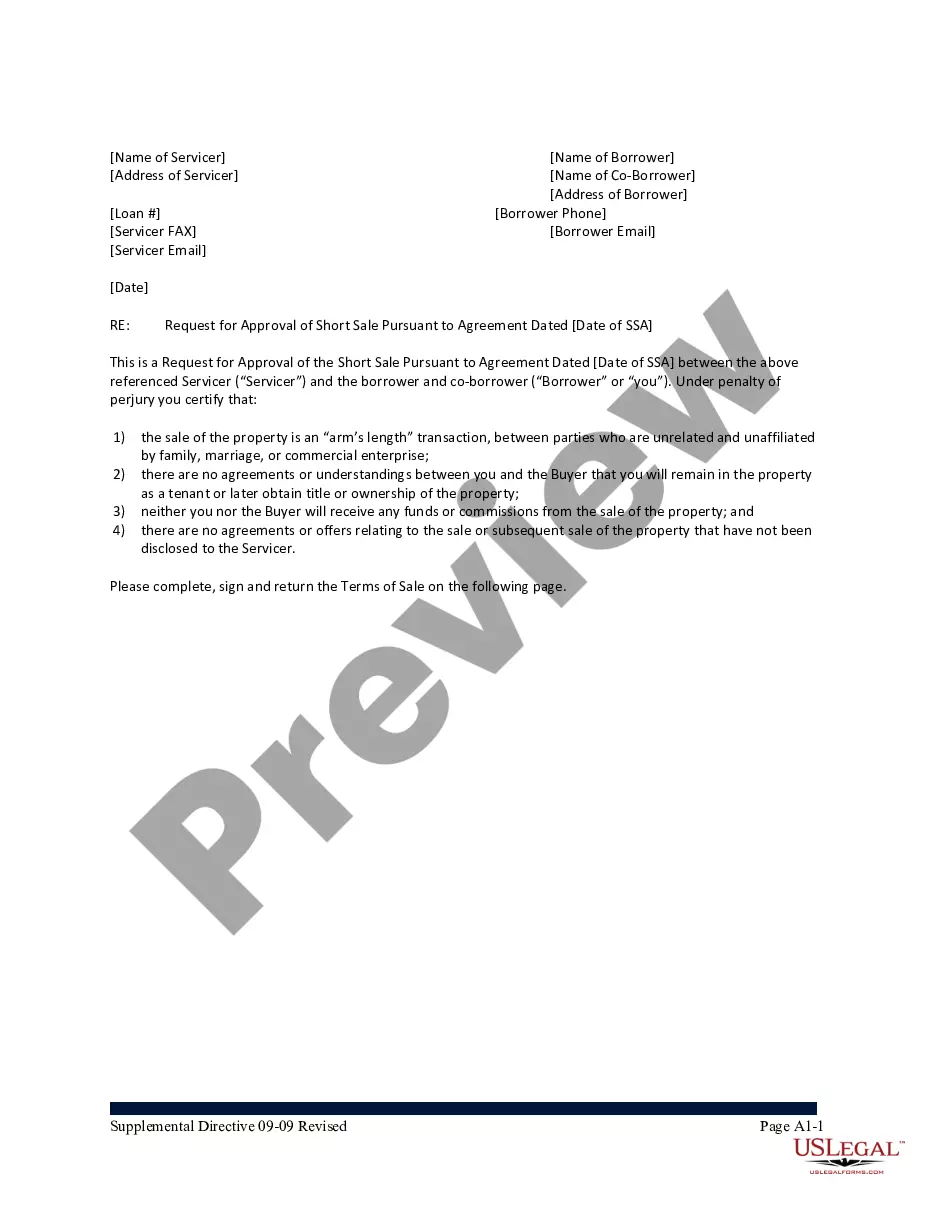
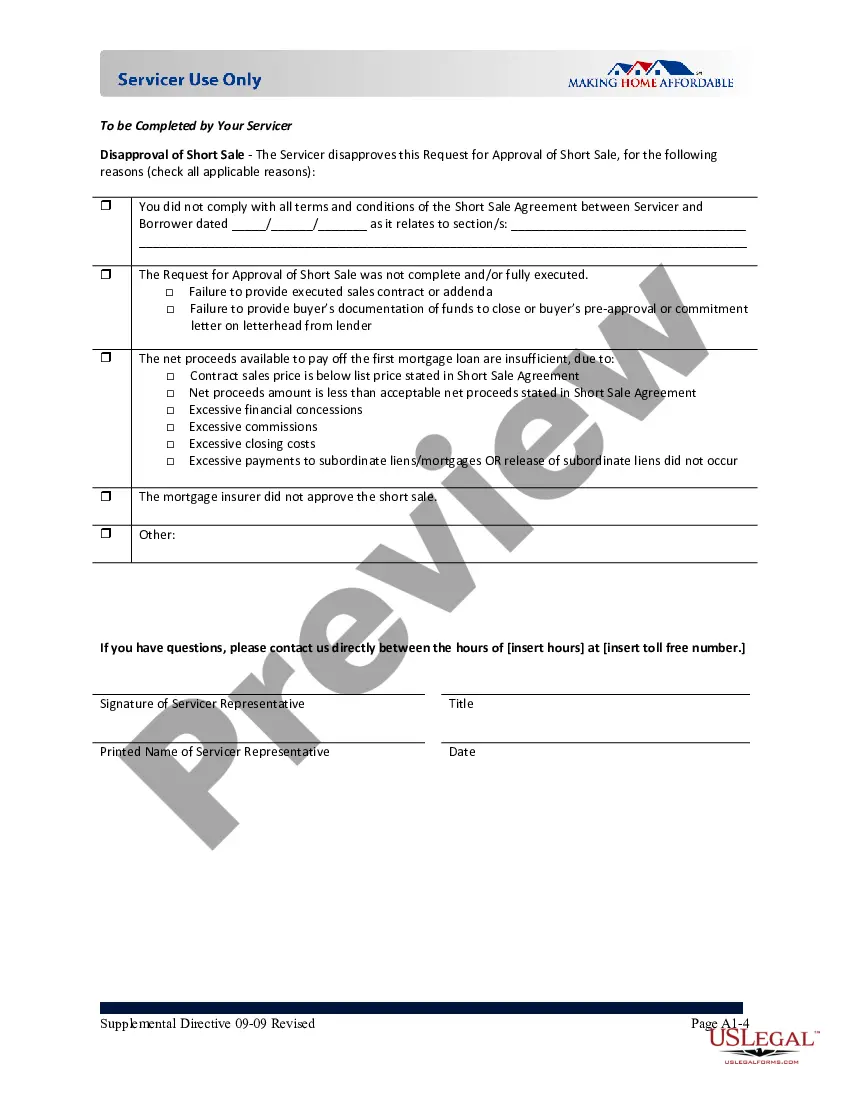
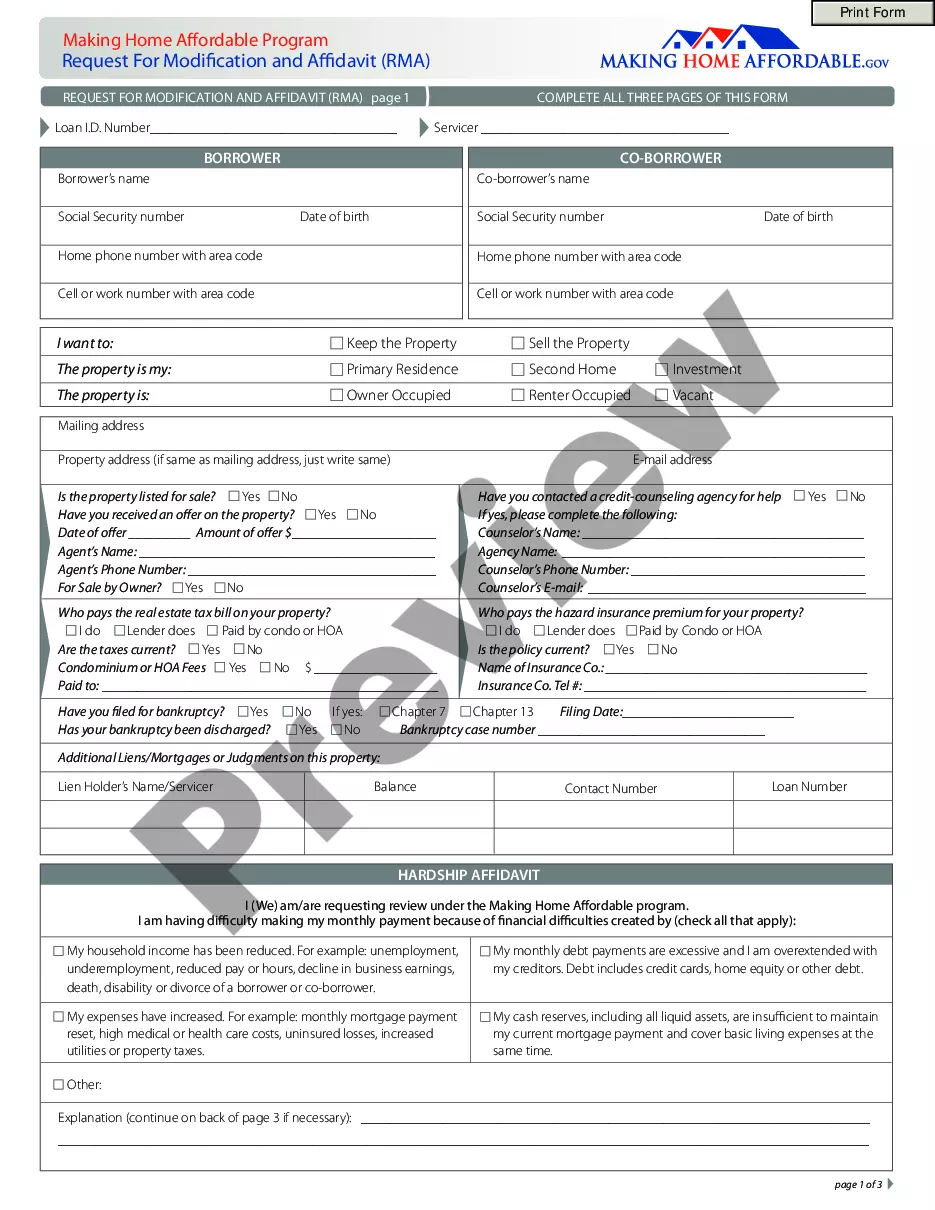
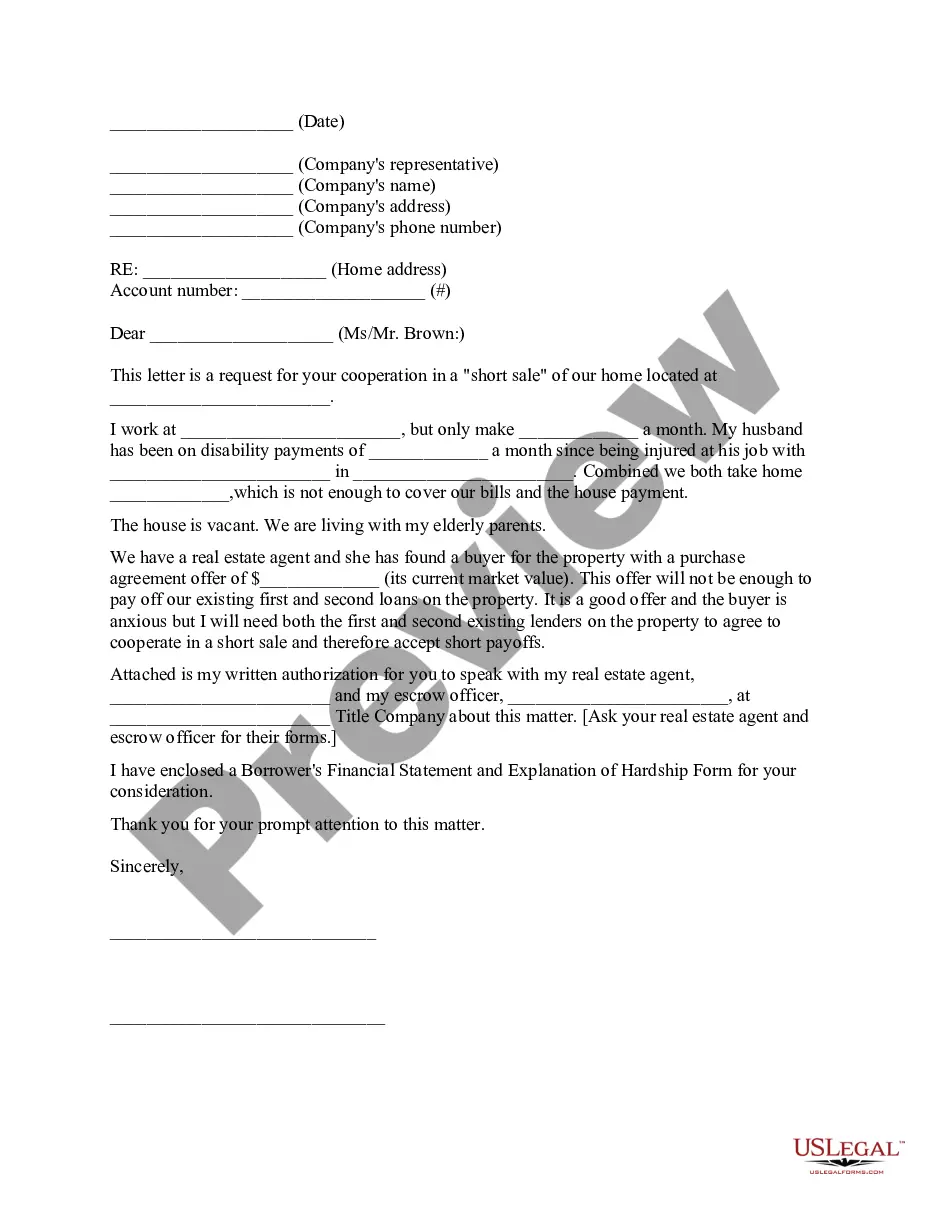
The MHA Request for Short Sale is a legal document used by homeowners or borrowers to obtain approval from their lender for a short sale, which is a sale of their property for less than the amount owed on the mortgage. This form is part of the Making Home Affordable Program and is specifically designed to outline the necessary information and certifications required for lenders to evaluate the homeownerâs request for a short sale.
Key parts of this document
- Name and address of the borrower and co-borrower.
- Loan details and contact information for the borrower.
- Request for approval along with the date of the short sale agreement.
- Certification of an arms-length transaction with no undisclosed agreements.
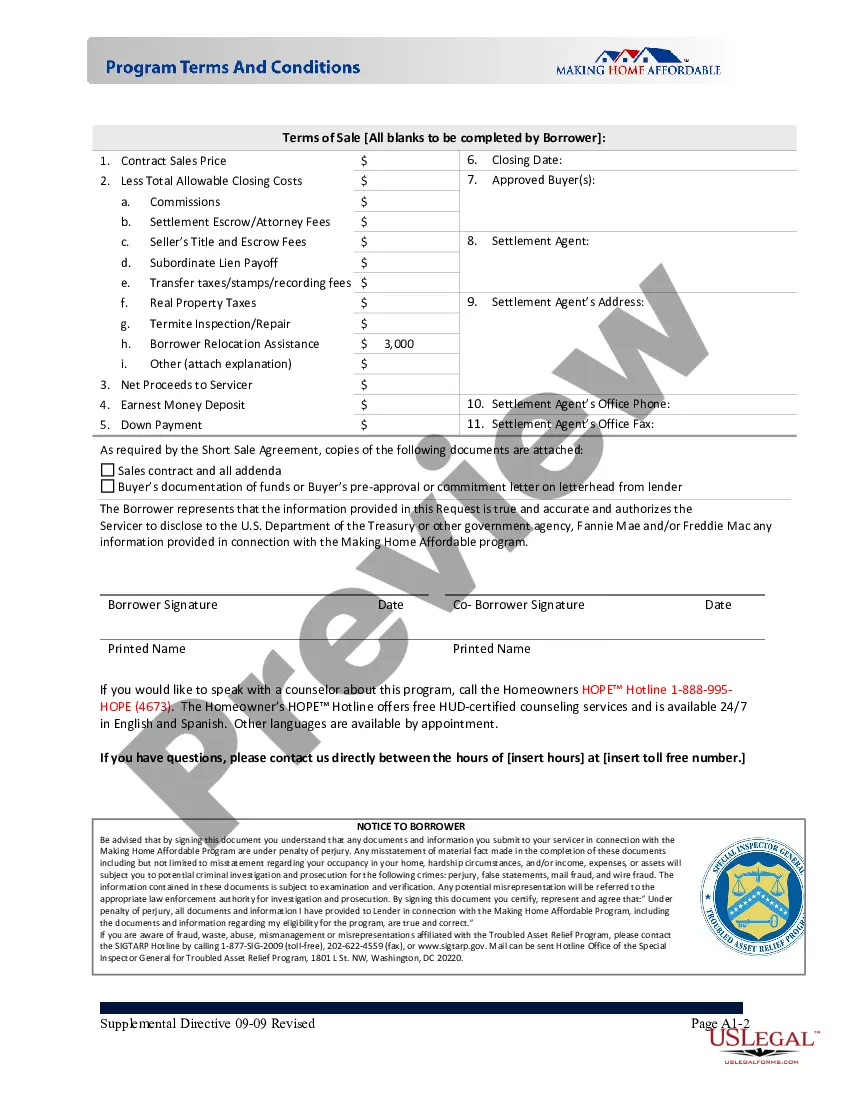
- Authorization for the lender to disclose information to relevant government agencies.
When to use this document
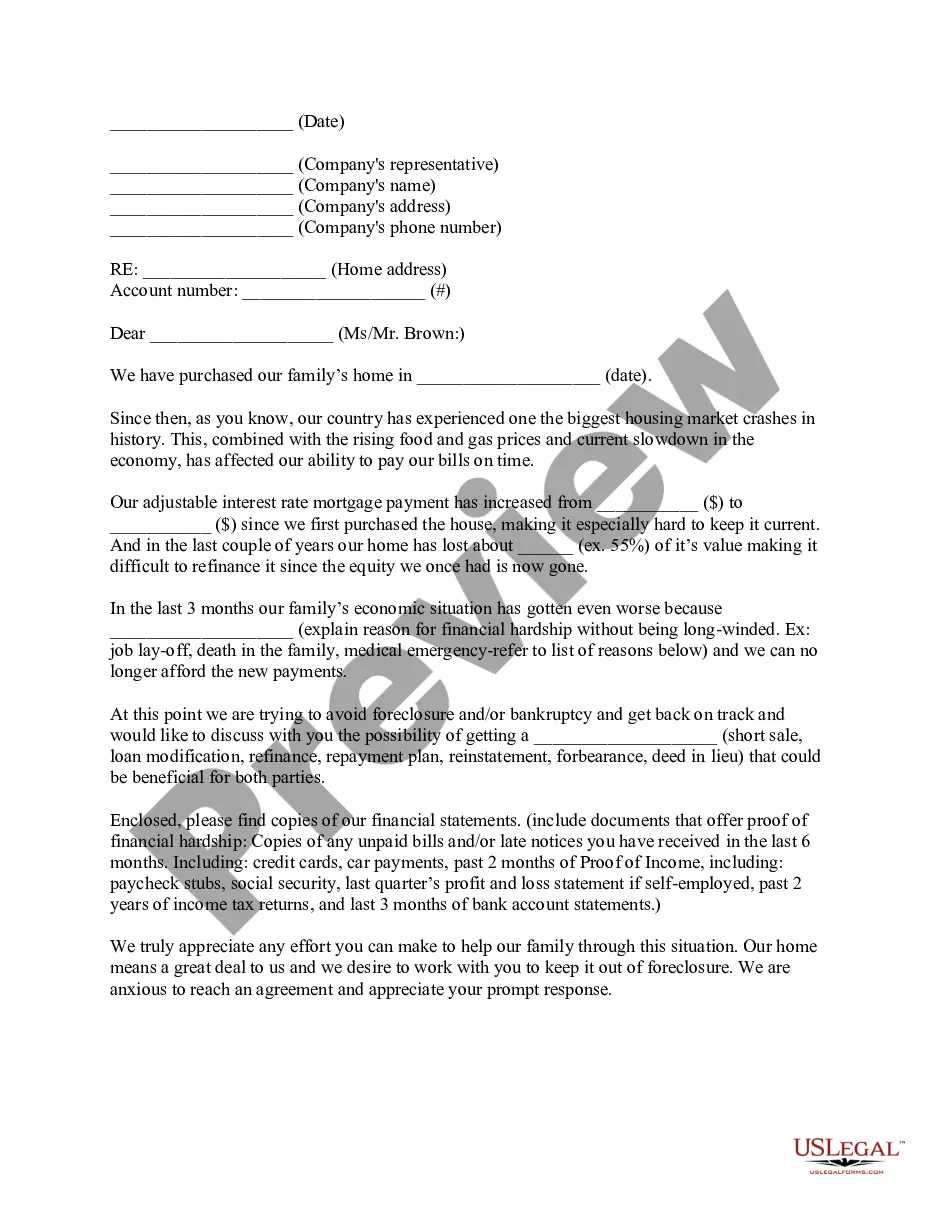
This form should be used when a homeowner is facing financial difficulties and needs to sell their property for less than their mortgage balance. It is particularly relevant in situations where the homeowner cannot continue making mortgage payments and wants to avoid foreclosure by negotiating a short sale with their lender.
Who can use this document
- Homeowners who are struggling to make mortgage payments.
- Borrowers seeking to sell their home for less than the mortgage balance.
- Individuals participating in the Making Home Affordable Program.
- Co-borrowers involved in the mortgage agreement.
Steps to complete this form
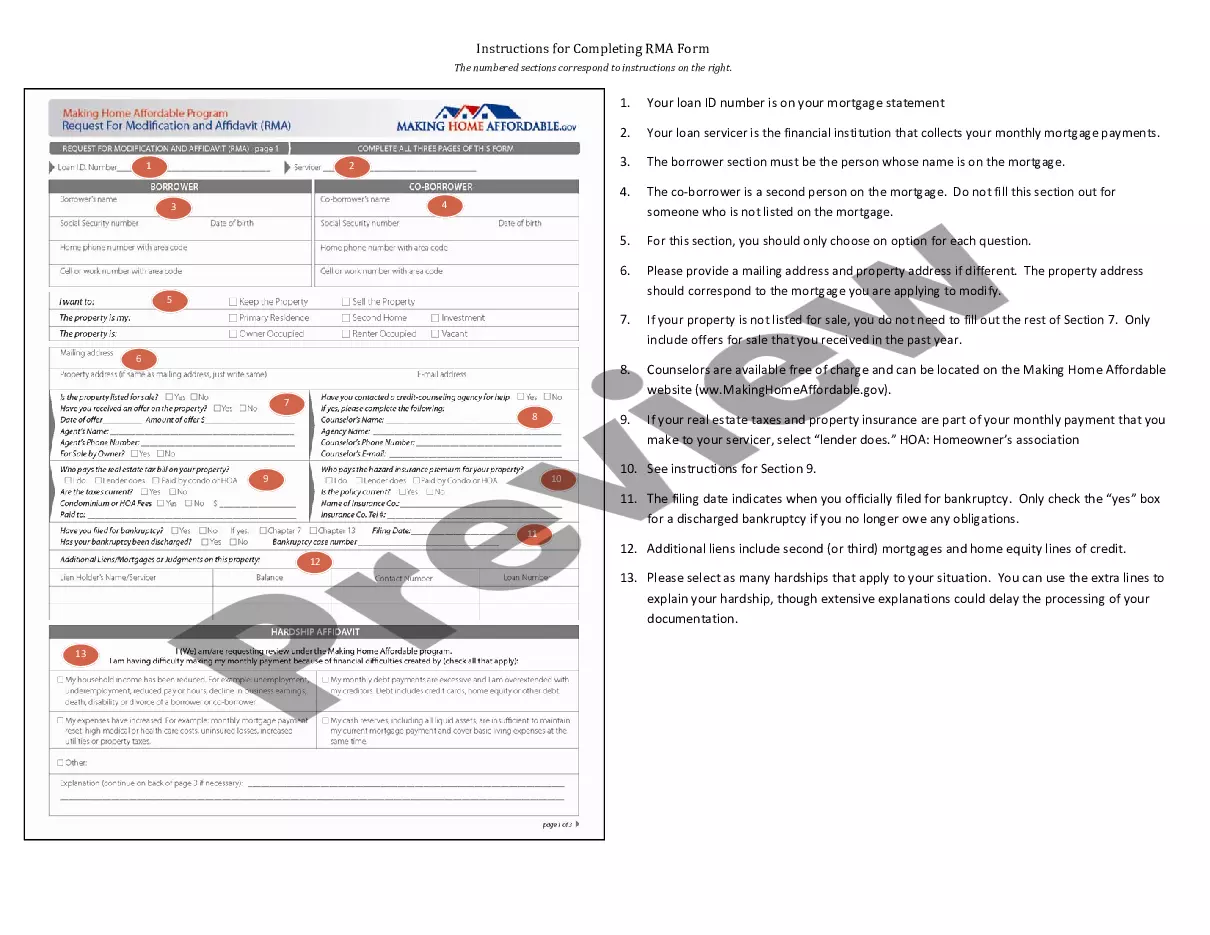
- Identify the parties involved in the transaction, including the servicer, borrower, and co-borrower.
- Enter the property address and loan details accurately.
- Fill in your contact information, including phone number and email address.
- Certify the transaction as an arms-length transaction by providing the necessary declarations.
- Sign and date the form before submitting it to your lender for consideration.
Is notarization required?
This form does not typically require notarization unless specified by local law. However, always verify your state's requirements to ensure compliance.
Get your form ready online
Our built-in tools help you complete, sign, share, and store your documents in one place.
Make edits, fill in missing information, and update formatting in US Legal Forms—just like you would in MS Word.
Download a copy, print it, send it by email, or mail it via USPS—whatever works best for your next step.
Sign and collect signatures with our SignNow integration. Send to multiple recipients, set reminders, and more. Go Premium to unlock E-Sign.
If this form requires notarization, complete it online through a secure video call—no need to meet a notary in person or wait for an appointment.
We protect your documents and personal data by following strict security and privacy standards.

Make edits, fill in missing information, and update formatting in US Legal Forms—just like you would in MS Word.

Download a copy, print it, send it by email, or mail it via USPS—whatever works best for your next step.

Sign and collect signatures with our SignNow integration. Send to multiple recipients, set reminders, and more. Go Premium to unlock E-Sign.

If this form requires notarization, complete it online through a secure video call—no need to meet a notary in person or wait for an appointment.

We protect your documents and personal data by following strict security and privacy standards.
Common mistakes to avoid
- Failing to provide accurate borrower information, such as names and addresses.
- Not completing required certification sections, which can lead to rejection.
- Submitting the form without proper signatures or dates.
- Omitting critical loan details that the lender needs for processing.
Why use this form online
- Convenience of filling out and submitting the form electronically.
- Editability allows for accurate completion without the hassle of hand-writing.
- Reliable legal templates drafted by licensed attorneys ensure compliance with laws.
Legal use & context
- The form is used to legally request a short sale and must be completed accurately to avoid potential legal issues.
- Any misrepresentation of facts can lead to criminal charges including perjury or fraud.
- The approval or disapproval of the short sale will be documented by the lender, which can affect credit ratings.
Summary of main points
- Utilize the MHA Request for Short Sale to secure lender approval for selling a property at a loss.
- Ensure all parts of the form are completed accurately to avoid penalties.
- Consider local laws regarding notarization and additional requirements.
Looking for another form?
Form popularity
FAQ
The Home Affordable Foreclosure Alternatives (HAFA) Program provides additional options to avoid costly foreclosures and offers incentives to borrowers, servicers and investors who utilize a short sale or deed-in-lieu (DIL) to avoid foreclosures.
Timing also differs: Short sales can take up to one year to close, while foreclosures generally move along much faster because lenders are intent on recovering the money they're owed. Furthermore, a short sale is far less damaging to your credit score than foreclosure.
Understanding the Short Sale / Deed-in-Lieu guidelines and application process. The HAFA program expired in December 2016 and is no longer available.HAFA provides protection and money to eligible borrowers who decide to do a Short Sale or a Deed-in-Lieu of Foreclosure.
The Home Affordable Foreclosure Alternatives (HAFA) Program provides additional options to avoid costly foreclosures and offers incentives to borrowers, servicers and investors who utilize a short sale or deed-in-lieu (DIL) to avoid foreclosures.
HAMP works by encouraging participating mortgage servicers to modify mortgages so struggling homeowners can have lower monthly payments and avoid foreclosure. It has specific eligibility requirements for homeowners and includes strict guidelines for servicers.
Step 1: Contact the lender's Loss Mitigation Department. Step 2: Completing the Short Sale Package. Step 3: Formulating the Hardship Letter. Step 4: Obtain Lender Approval to Sell. Step 5: Selling the Home.
Get a Property Valuation Analysis. Get a Hardship Letter. Contact the Lender for a Short Sale Application. Prepare the Sales Contract. Assemble the Short Sale Package Together.
Why Banks Would Prefer a Short Sale Over ForeclosureBanks are run like a business because they are a business looking to earn a profit. If it costs more to foreclose over agreeing to a short sale, the bank is very likely to favor the short sale.
A short sale is an alternative to foreclosure. A short sale prevents you from having to go through foreclosure and eviction. A short sale does make a smudge on your credit report but is much less traumatic to your credit than a foreclosure.