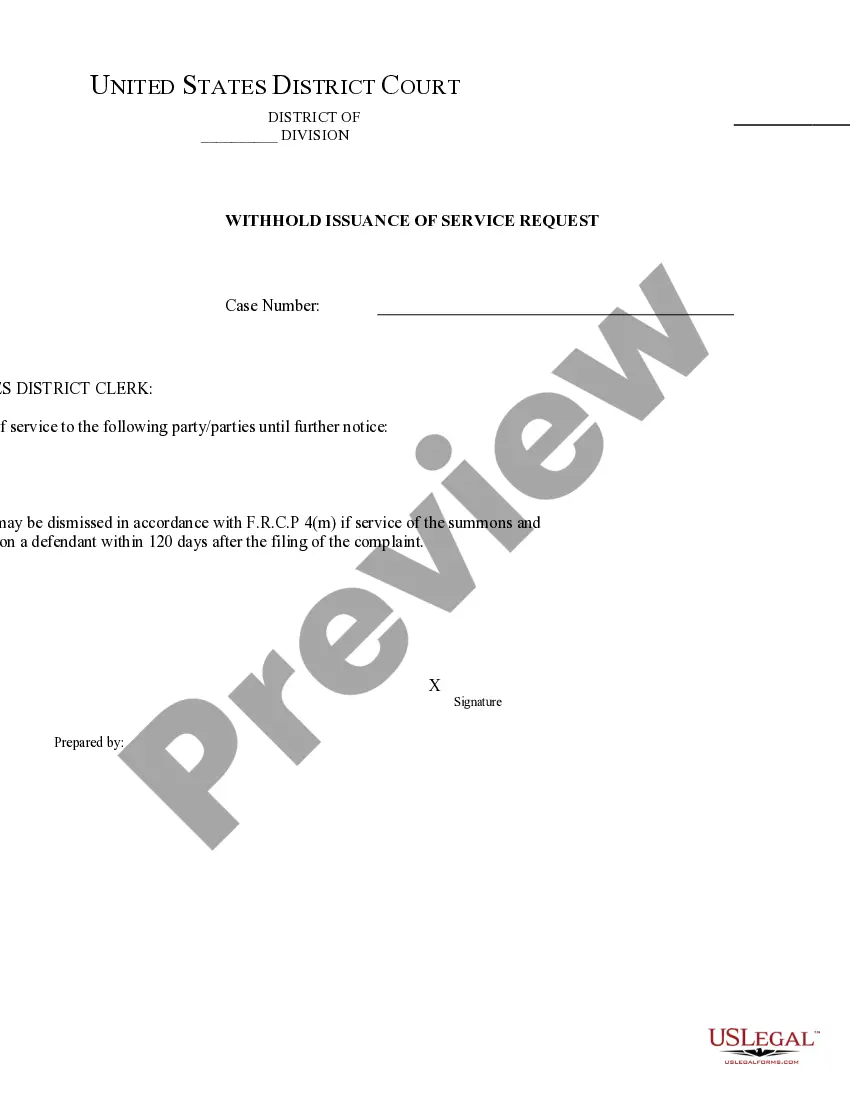
Withhold Issuance of Service of Process Request
What is this form?
The Withhold Issuance of Service of Process Request is a legal document used in federal court proceedings. This form allows a party involved in a lawsuit to request that the court delay issuing a summons for the service of process. By using this form, plaintiffs can manage procedural aspects of their case, particularly when they need more time to prepare or are waiting for specific circumstances before proceeding with service.
Form components explained
- Case number: A space to enter the assigned case number for easy identification.
- Request to withhold service: A statement requesting the clerk to delay issuing service to the specified parties.
- Understanding of dismissal risks: An acknowledgment that failure to serve the summons within a specific time frame may lead to case dismissal.
- Signature: A signature field for the requestor to validate the request.
When to use this document
This form is necessary in situations where you have filed a lawsuit but are not ready to serve the defendants immediately. For example, you might be waiting for more information about the parties involved or for legal advice before proceeding to serve. This request can help prevent your case from being dismissed due to delays in service of process.
Who should use this form
- Individuals or entities filing a lawsuit in federal court.
- Plaintiffs who need additional time before serving defendants.
- Legal representatives or attorneys acting on behalf of plaintiffs in federal cases.
Instructions for completing this form
- Enter the case number in the designated space.
- Specify the parties for whom the service is being withheld.
- Review the acknowledgment about potential case dismissal due to delay in service.
- Provide your signature to validate the request.
Does this document require notarization?
Notarization is generally not required for this form. However, certain states or situations might demand it. You can complete notarization online through US Legal Forms, powered by Notarize, using a verified video call available anytime.
Get your form ready online
Our built-in tools help you complete, sign, share, and store your documents in one place.
Make edits, fill in missing information, and update formatting in US Legal Forms—just like you would in MS Word.
Download a copy, print it, send it by email, or mail it via USPS—whatever works best for your next step.
Sign and collect signatures with our SignNow integration. Send to multiple recipients, set reminders, and more. Go Premium to unlock E-Sign.
If this form requires notarization, complete it online through a secure video call—no need to meet a notary in person or wait for an appointment.
We protect your documents and personal data by following strict security and privacy standards.

Make edits, fill in missing information, and update formatting in US Legal Forms—just like you would in MS Word.

Download a copy, print it, send it by email, or mail it via USPS—whatever works best for your next step.

Sign and collect signatures with our SignNow integration. Send to multiple recipients, set reminders, and more. Go Premium to unlock E-Sign.

If this form requires notarization, complete it online through a secure video call—no need to meet a notary in person or wait for an appointment.

We protect your documents and personal data by following strict security and privacy standards.
Common mistakes to avoid
- Failing to enter the correct case number can lead to confusion and delays.
- Not specifying all parties for whom service is being withheld.
- Overlooking the acknowledgment about dismissal timelines.
Advantages of online completion
- Immediate access to a legally vetted template prepared by licensed attorneys.
- Convenient download and print options, allowing for quick completion.
- Easy editability, which lets you tailor the form to your specific needs without hassle.
Legal use & context
- This form is recognized by federal courts for the purpose of managing service of process timelines.
- It helps maintain the integrity of a case while allowing for procedural flexibility.
Quick recap
- The Withhold Issuance of Service of Process Request is vital for managing service timelines in federal court cases.
- Understanding the implications of delayed service is crucial for plaintiffs.
- Accurate completion of the form helps avoid common pitfalls and potential case dismissal.
Looking for another form?







Form popularity
FAQ
Generally, process servers make up to three attempts (morning, afternoon, & evening).
You cannot serve your own papers. But, in some cases your friend or co-worker could serve your papers, as long as they are not part of the case and 18 years or older.Improper service can cause case delays. You can even risk your case being dismissed.
Generally, process servers make at least three attempts to serve somebody.
If you absolutely cannot get the person served the regular way, you need to file a motion with the court to allow you to publish in the city or county of the last known residence of the person you are trying to serve. It will cost a little and you might need a lawyer to get you through this part.
Process servers will call you, but they won't threaten you over the phone. A process server is always paid by the party hiring them to deliver legal documents. Whether it's a divorce, child support, or debt collection case, the party being served will never pay the server directly.
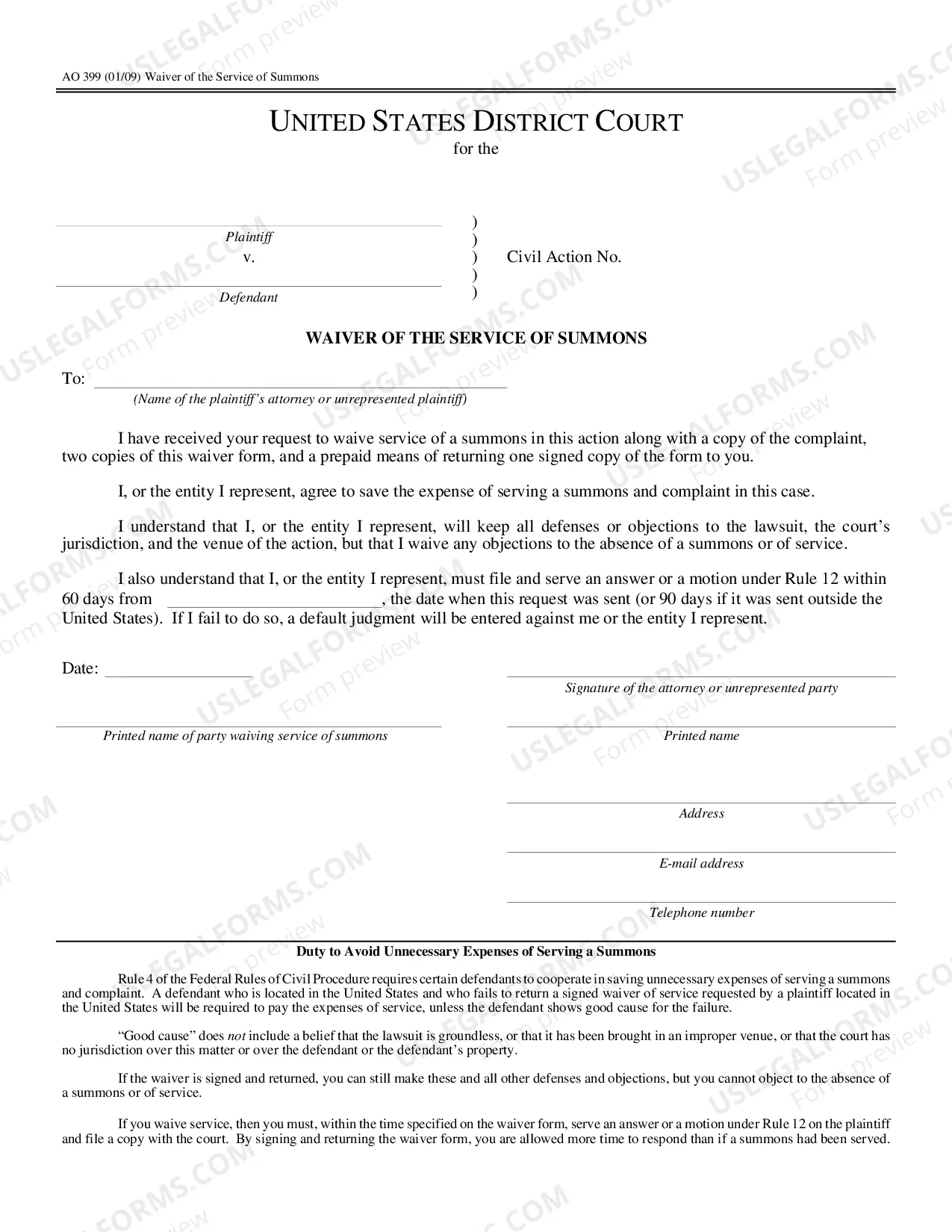
A waiver of service or summons means that a party voluntarily enters a lawsuit without requiring the opposing party to serve them with a summons and petition.Most people do not want to be served by a sheriff's deputy or special process server and so elect to sign a waiver of service.
A process server can attempt to serve someone at any time of the day or night except on Sundays in Texas.If the process server is unable to serve you, then he can file a Rule 106 Affidavit for Substituted Service with the clerk. A motion is filed and if the judge signs the order, you are still served.
Generally, process servers make at least three attempts to serve somebody. These attempts are normally made at different times of day and on different days to maximize our chance of serving the papers.
A Simple Answer to "What Happens if a Process Server Can't Serve You?" The simple answer to your question is that the court continues without you. Evidence is brought forth without a rebuttal or defense from you and a judgment is issued.