Software License Agreement for Use of Software to Create Access and Retrieval Software
What is this form?
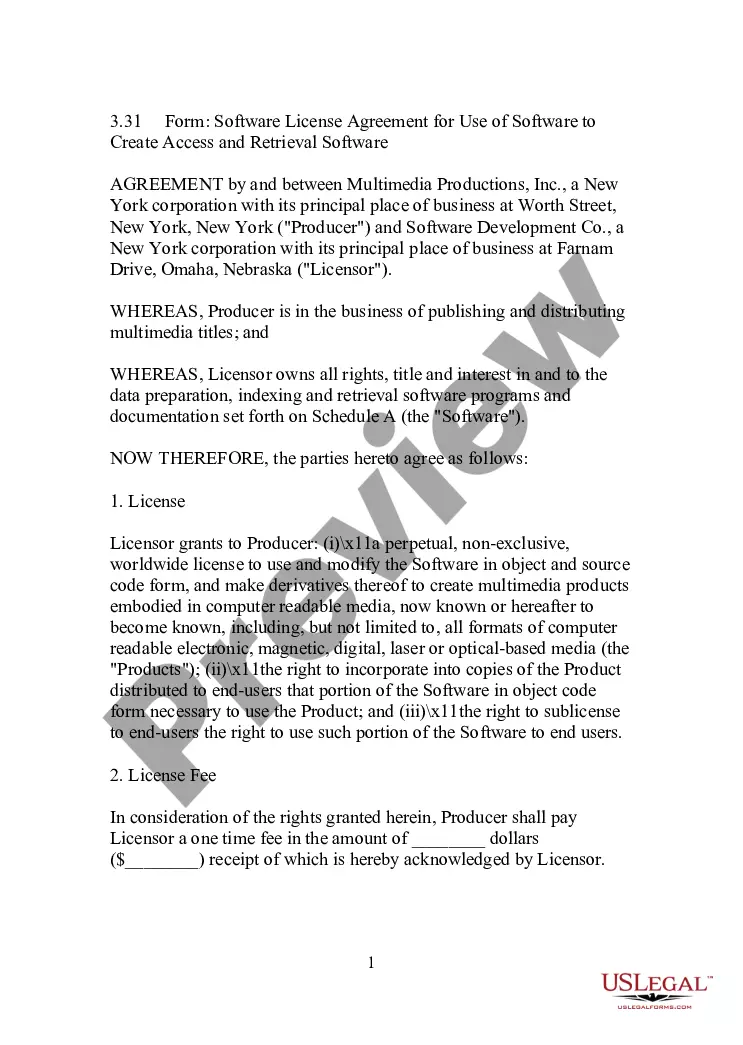
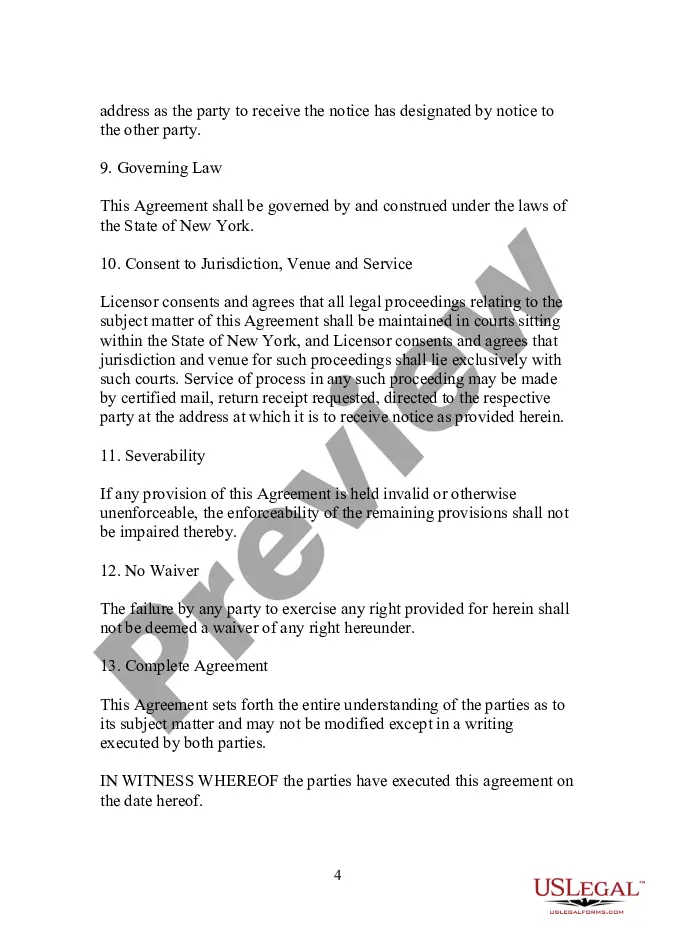
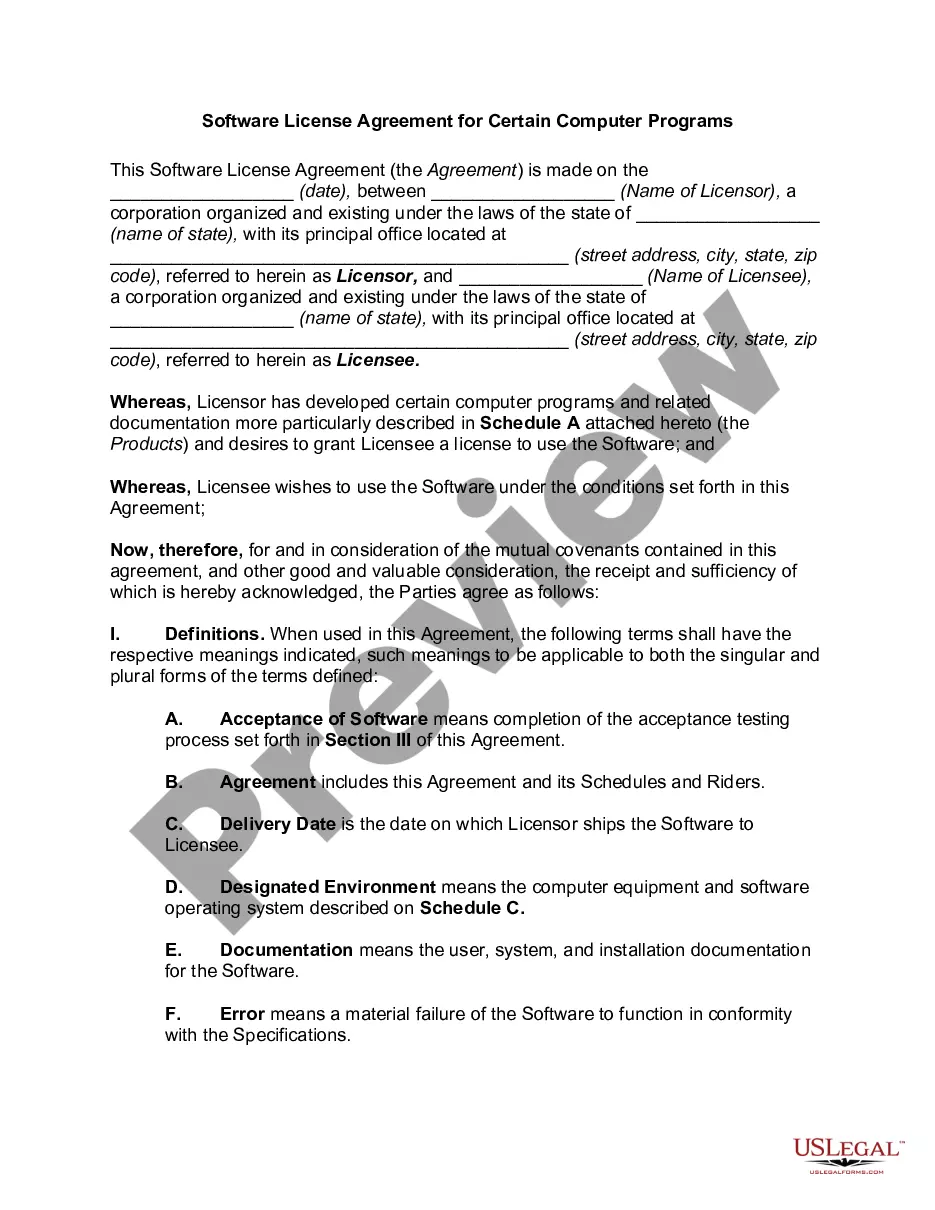
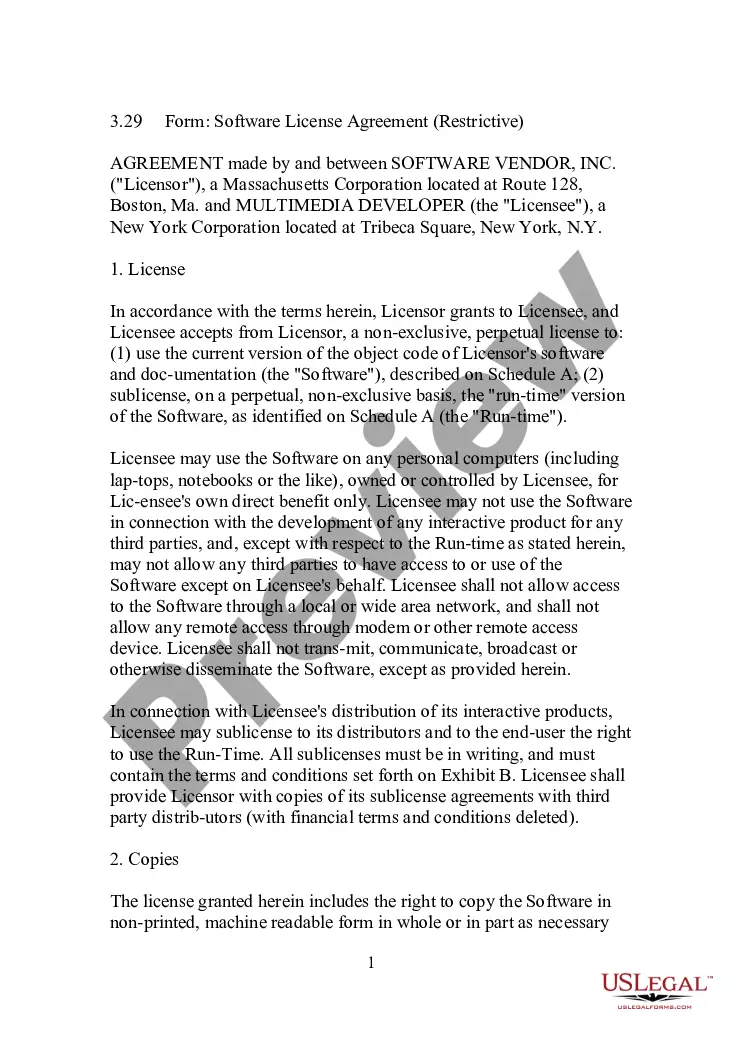
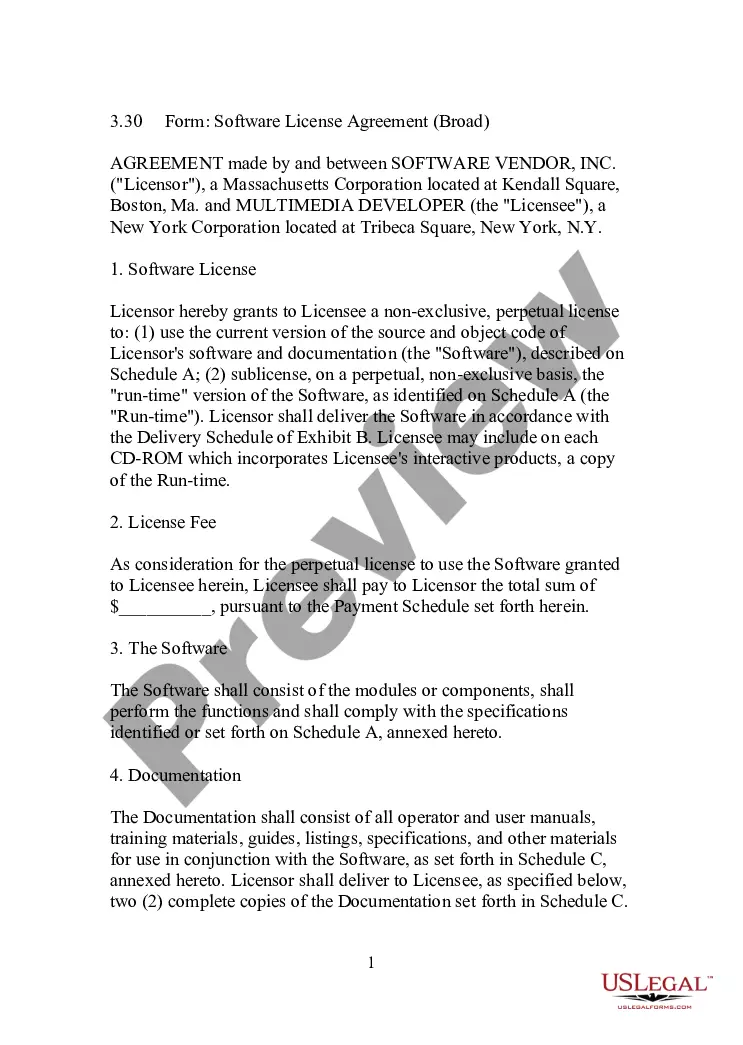
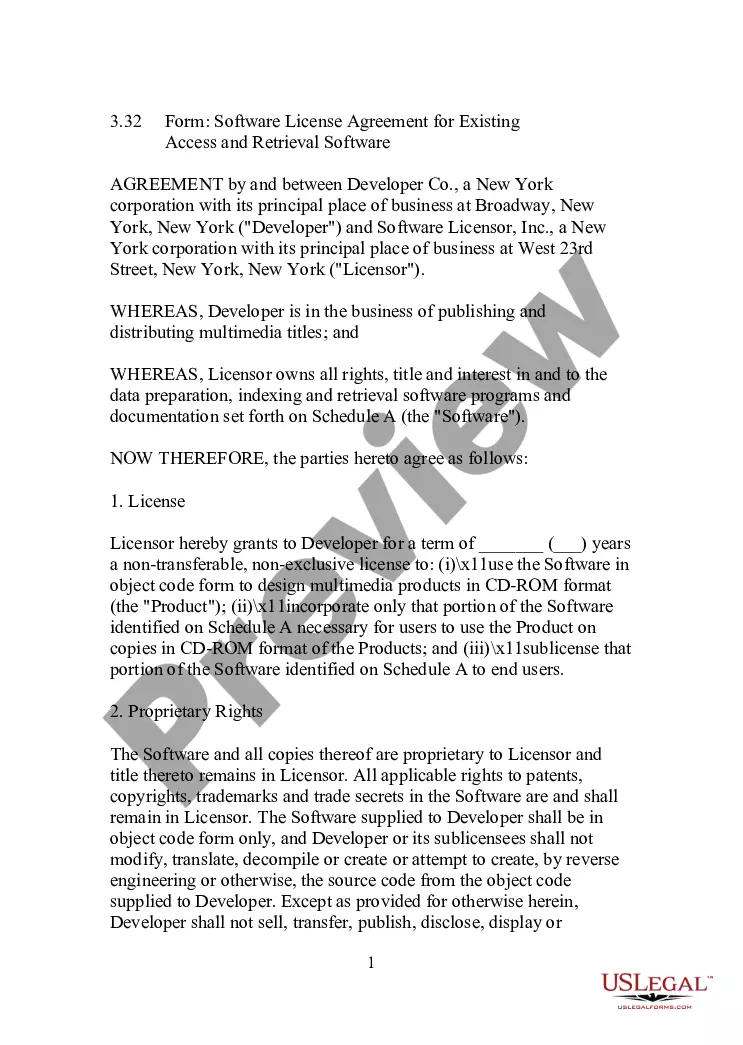
The Software License Agreement for Use of Software to Create Access and Retrieval Software is a crucial legal document used in business settings. It defines the terms under which one party (the Producer) is granted permission by another party (the Licensor) to use and modify specific software. This agreement is essential for ensuring that both parties understand their rights and obligations regarding the intellectual property involved, distinct from other forms that may only cover basic licensing terms.
Key components of this form
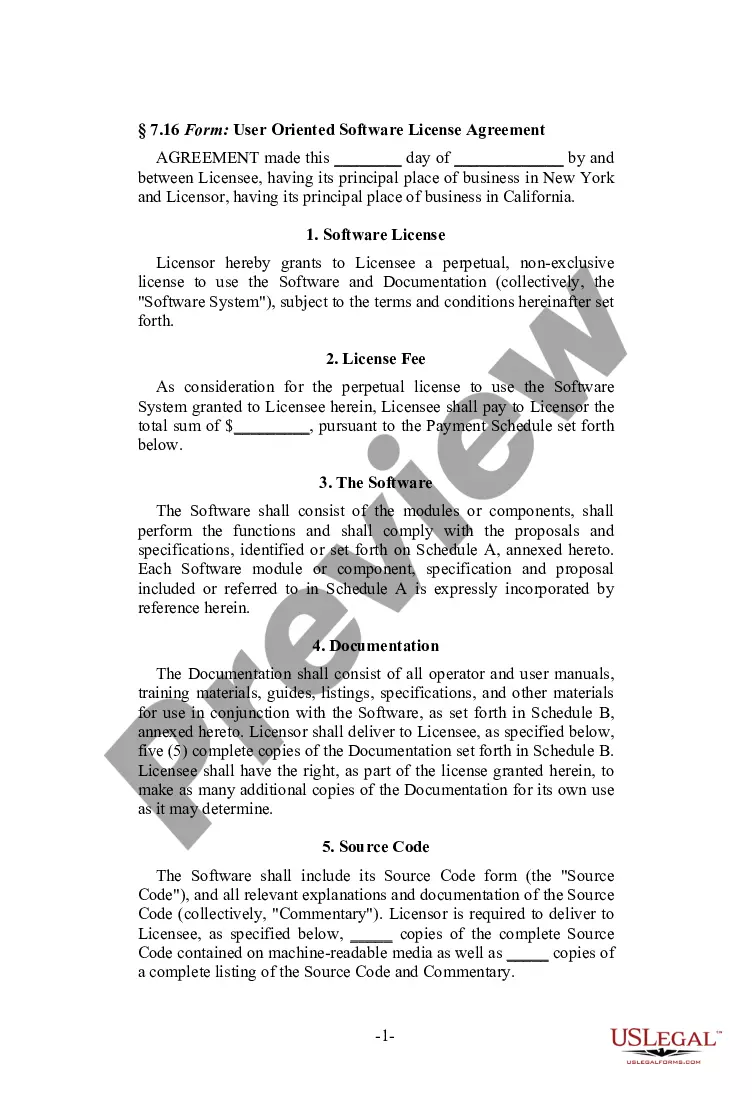
- License Grant: Details the scope of the license, including rights to use, modify, and sublicense the software.
- License Fee: States the one-time fee that the Producer must pay to the Licensor in exchange for the rights granted.
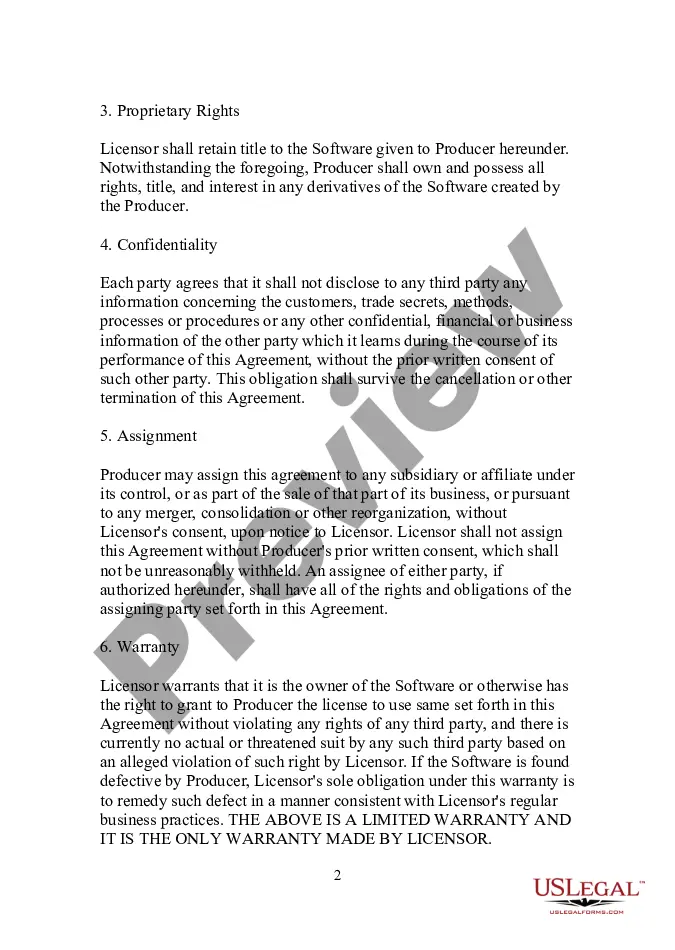
- Proprietary Rights: Clarifies ownership of the original software and any derivative works created by the Producer.
- Confidentiality Clause: Establishes obligations to protect sensitive information shared between the parties.
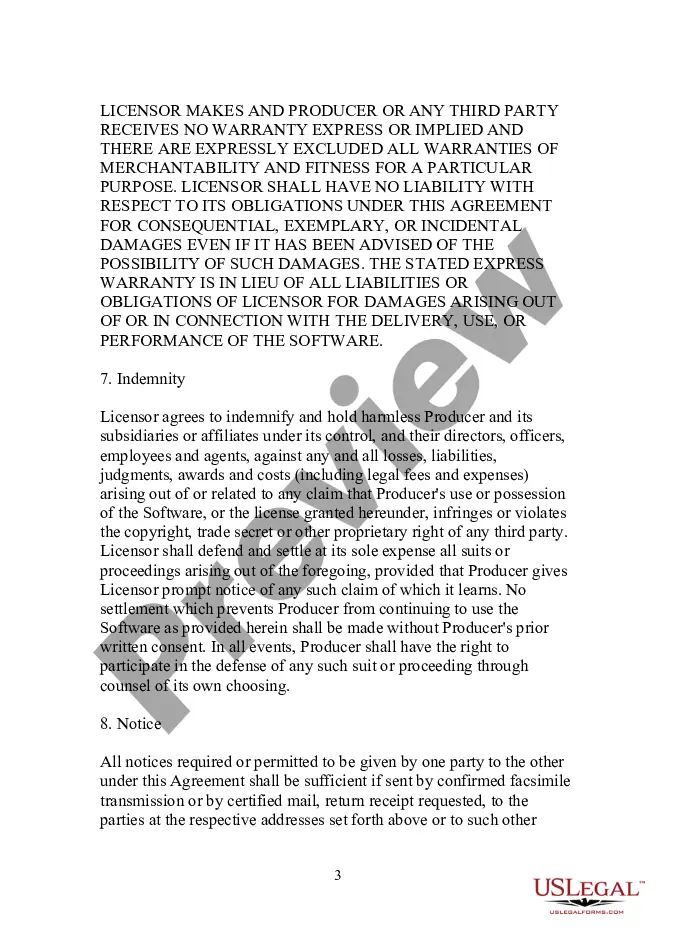
- Indemnity Provisions: Outlines the responsibilities of the Licensor to protect the Producer from certain legal claims related to software use.
Common use cases
This agreement should be used when a business intends to license software that will be utilized to develop access and retrieval systems. If your company is producing multimedia products that rely on specific software tools, this form helps to legally secure your usage rights and protect against potential disputes over intellectual property. Typical scenarios include collaborations between software developers and content publishers, where clear terms regarding software use are essential.
Who should use this form
- Software developers looking to grant a license for their proprietary tools.
- Businesses engaged in creating multimedia products that depend on third-party software.
- Companies seeking to formalize the use of software through legal agreements to avoid potential disputes.
How to prepare this document
- Identify the parties involved: Clearly state the full legal names and addresses of the Producer and Licensor.
- Specify the software: List the software's details that are being licensed as per Schedule A.
- Determine the license parameters: Fill in the one-time fee amount for the agreed-upon license.
- Address confidentiality terms: Review and customize the confidentiality obligations to suit your business context.
- Obtain signatures: Ensure that both parties sign and date the agreement to finalize it legally.
Does this form need to be notarized?
This form does not typically require notarization unless specified by local law. It is advisable to consult with a legal professional for specific requirements in your jurisdiction.
Get your form ready online
Our built-in tools help you complete, sign, share, and store your documents in one place.
Make edits, fill in missing information, and update formatting in US Legal Forms—just like you would in MS Word.
Download a copy, print it, send it by email, or mail it via USPS—whatever works best for your next step.
Sign and collect signatures with our SignNow integration. Send to multiple recipients, set reminders, and more. Go Premium to unlock E-Sign.
If this form requires notarization, complete it online through a secure video call—no need to meet a notary in person or wait for an appointment.
We protect your documents and personal data by following strict security and privacy standards.

Make edits, fill in missing information, and update formatting in US Legal Forms—just like you would in MS Word.

Download a copy, print it, send it by email, or mail it via USPS—whatever works best for your next step.

Sign and collect signatures with our SignNow integration. Send to multiple recipients, set reminders, and more. Go Premium to unlock E-Sign.

If this form requires notarization, complete it online through a secure video call—no need to meet a notary in person or wait for an appointment.

We protect your documents and personal data by following strict security and privacy standards.
Typical mistakes to avoid
- Failing to specify the software accurately in the agreement.
- Not outlining the full scope of the license granted, leading to misunderstandings.
- Overlooking the need for signatures and dates, which are essential for a valid contract.
Advantages of online completion
- Convenience: Access and download the form at any time from the comfort of your office.
- Editability: Easily customize the document to fit the specific needs of your agreement.
- Reliability: Obtain a legally vetted form drafted by licensed attorneys, ensuring legal compliance.
Legal use & context
- This agreement is legally enforceable under New York state law, provided all parties adhere to its terms.
- It protects both the Licensor's proprietary rights and the Producer's usage interests.
- Failure to comply with the agreement's terms may lead to legal disputes and potential damages.
Quick recap
- The Software License Agreement is crucial for defining usage rights in software development.
- Both parties should thoroughly review and understand their rights and obligations.
- Customization of the agreement is essential to reflect specific business needs and legal requirements.
Looking for another form?
Form popularity
FAQ
What is a Licensing Agreement? A licensing agreement is a contract between two parties (the licensor and licensee) in which the licensor grants the licensee the right to use the brand name, trademark, patented technology, or ability to produce and sell goods owned by the licensor.
A software license agreement gives a licensee a non-exclusive, non-transferable right to use software. A software license agreement defines how that software can be used and what happens in the event of breach.
Setting up Your Licensing Agreement. Granting the License. Limiting Your Liability. Adding Boilerplate Clauses. Finalizing the Licensing Agreement.
Public domain. This is the most permissive type of software license. Permissive. LGPL. Copyleft. Proprietary.
Software licenses can generally be fit into the following categories: proprietary licenses, free software license, open source licenses. The features that distinguish them are significant in terms of the effect they have on the end-user's rights.
Download a template for a licensing agreement. Choose your role as the licensor or licensee. Define the license(s) in the agreement. Decide whether the license is exclusive or not. Settle the matter of fees and payment schedule. Add a renewal date and rules.
A software license agreement typically has broad-form confidentiality provisions that also provide that certain items fall into the bucket of one or the other party (e.g., the software for a licensor, certain data for a licensee, etc.).
Public domain. This is the most permissive type of software license. Permissive. Permissive licenses are also known as Apache style or BSD style. They contain minimal requirements about how the software can be modified or redistributed. LGPL. Copyleft. Proprietary.