License Agreement regarding the merchandising of technologies for purifying water
What is this form?
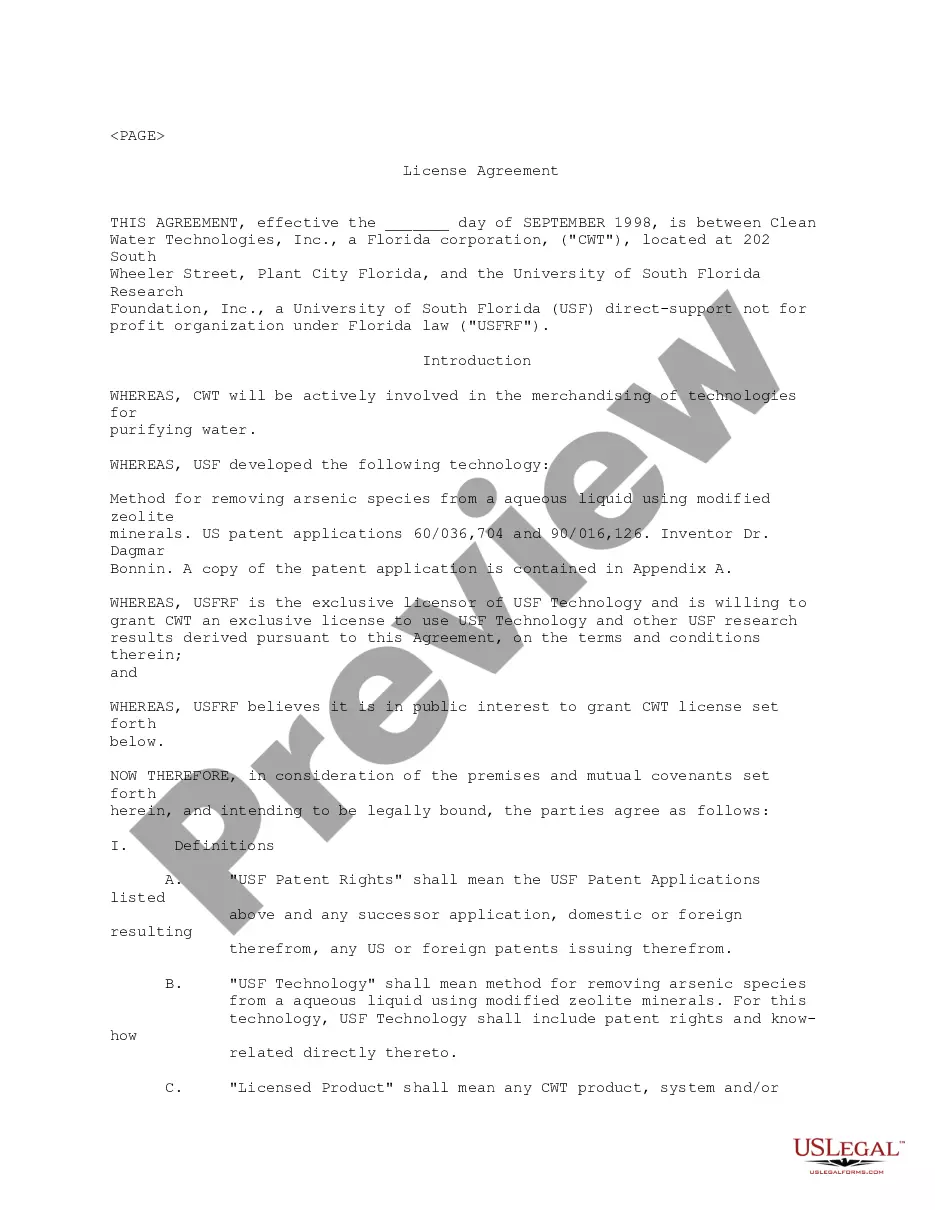
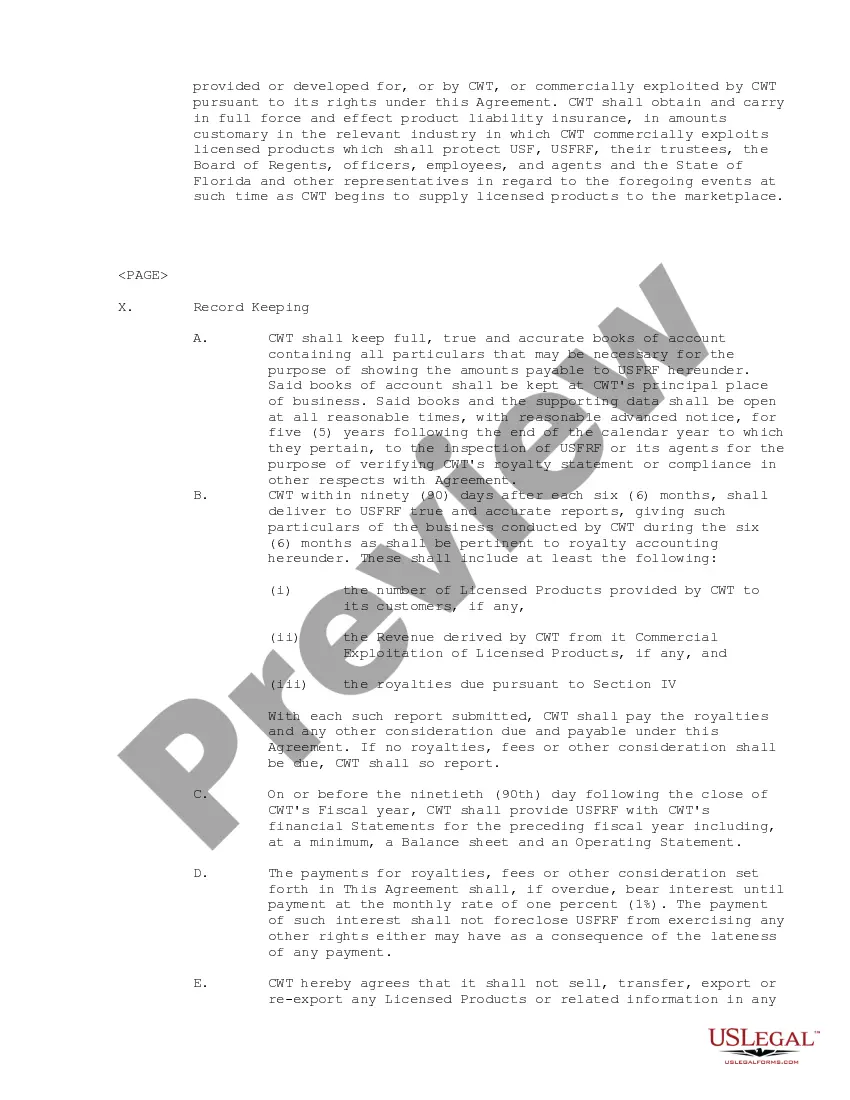
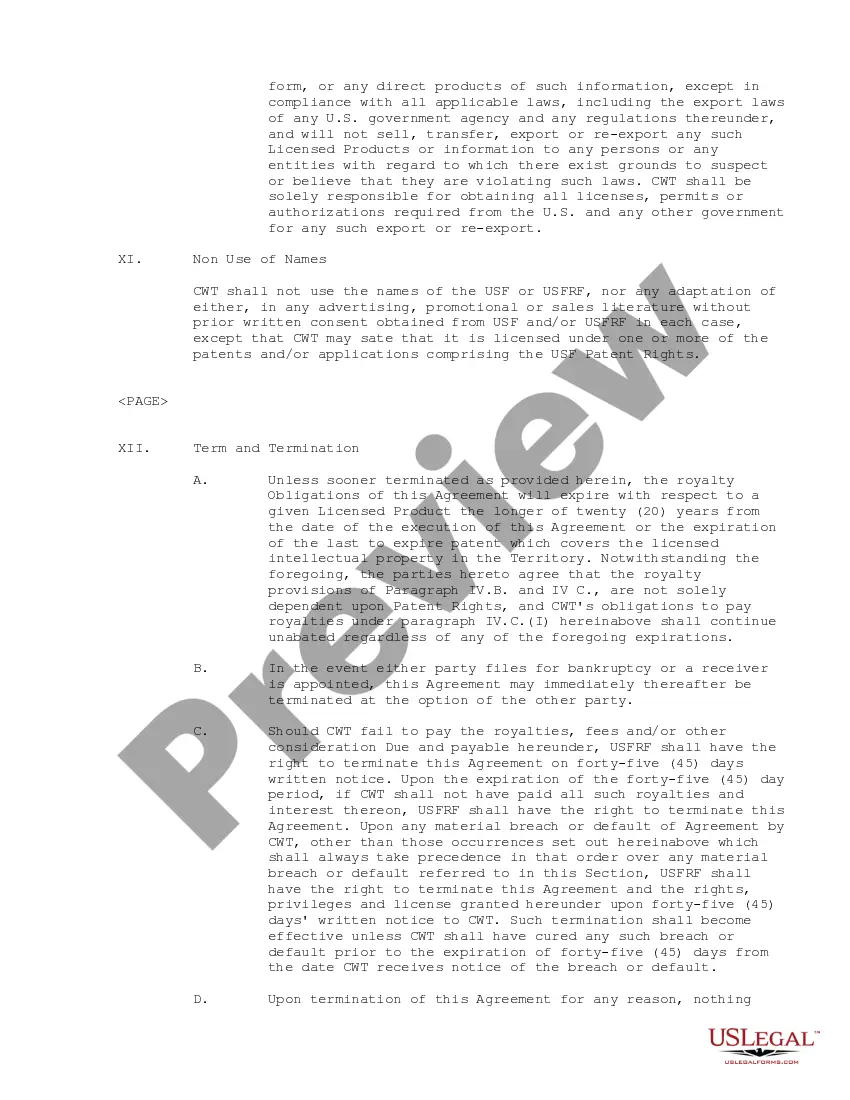
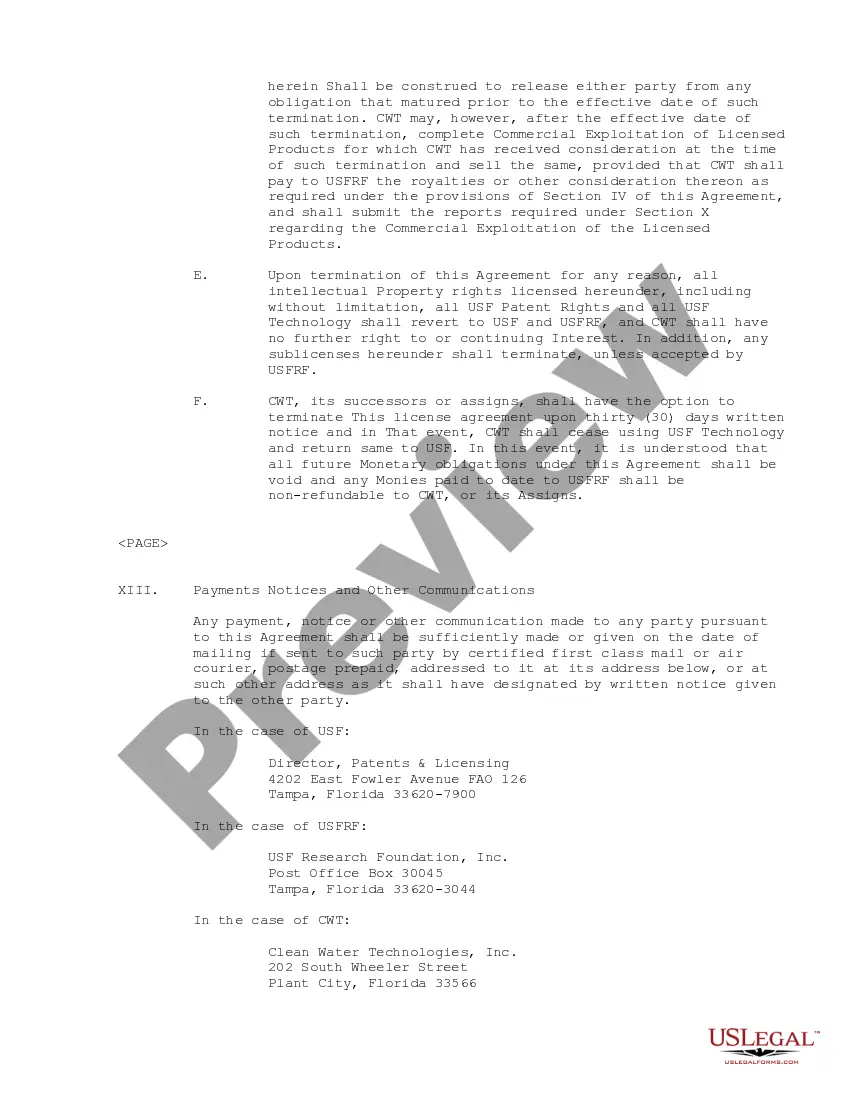
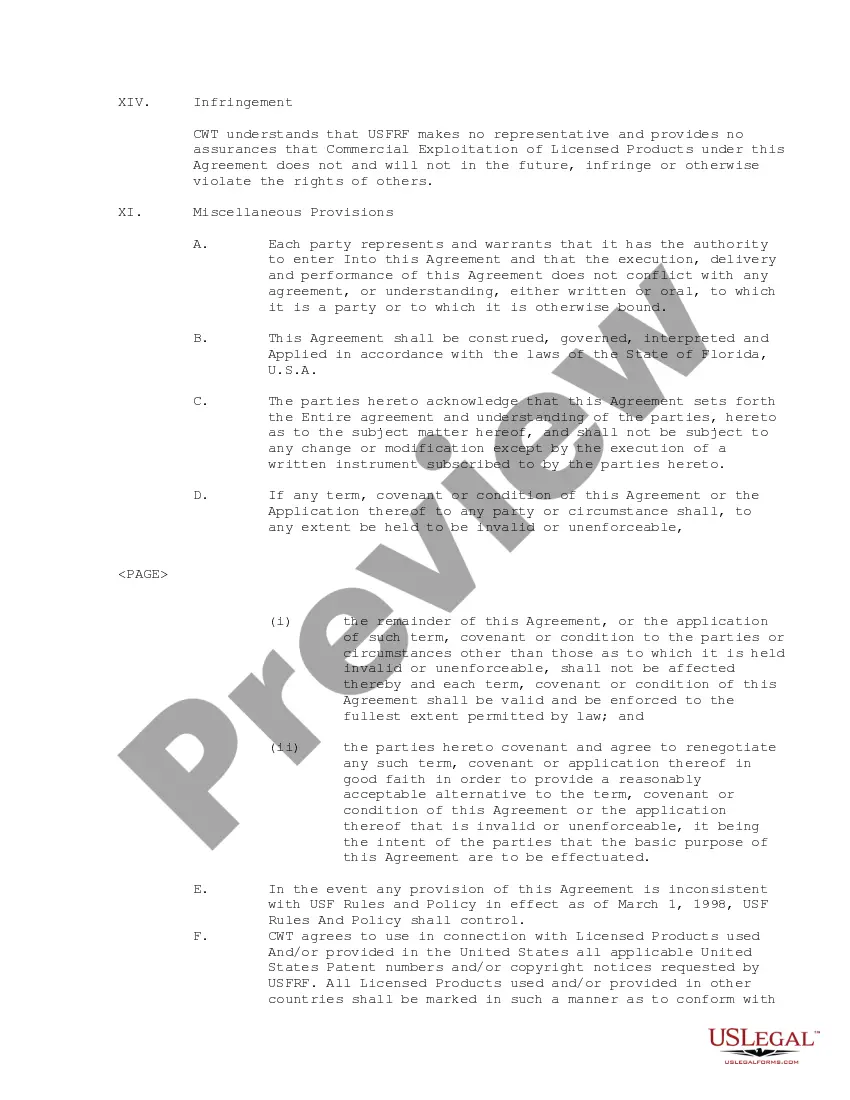
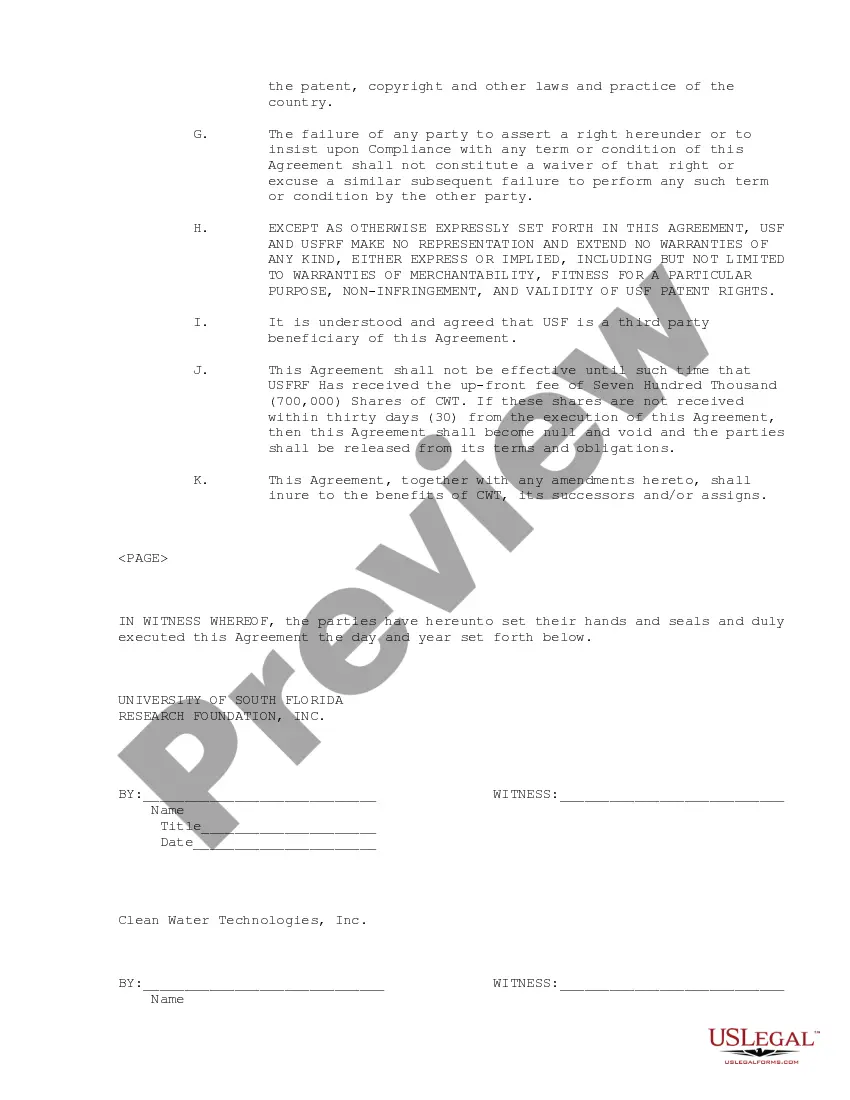
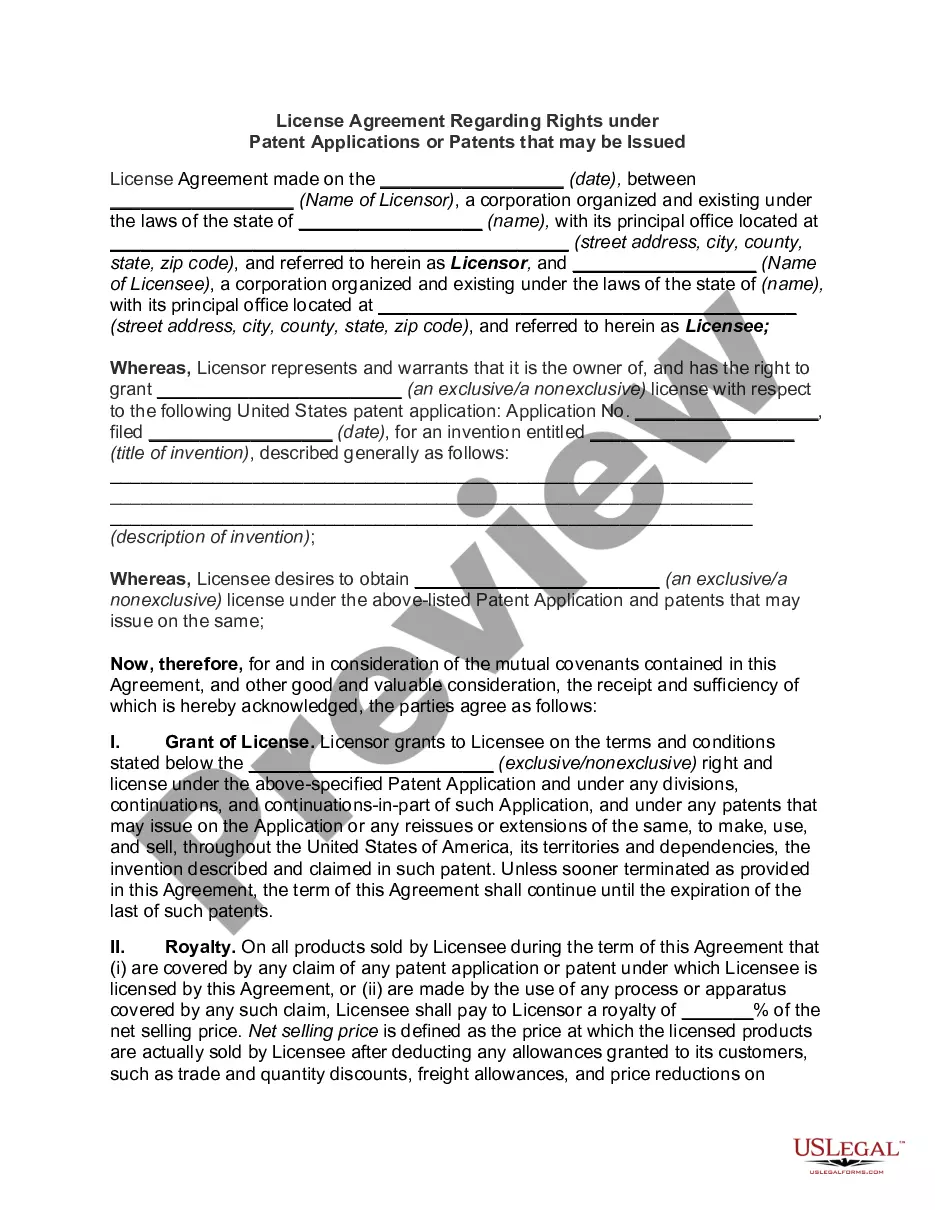
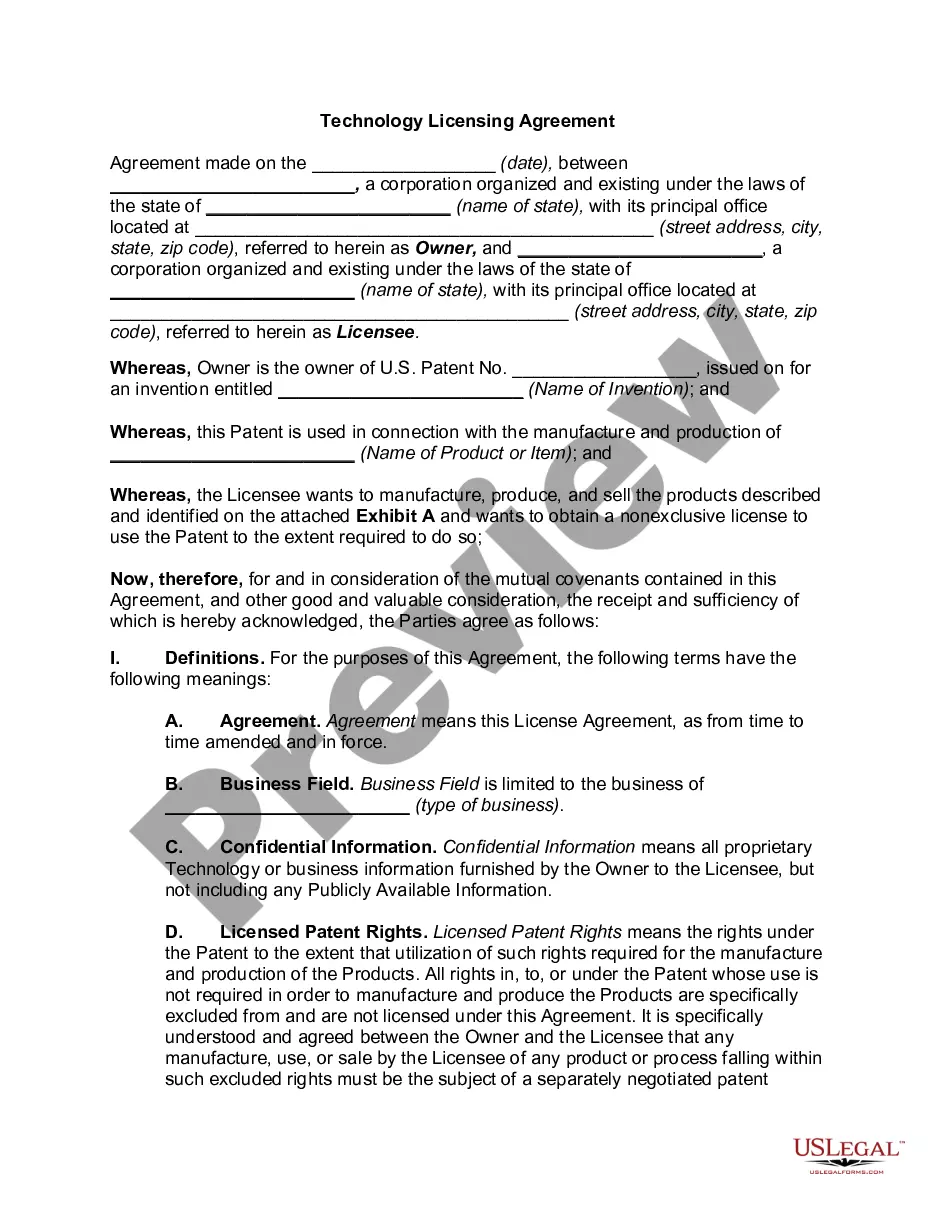
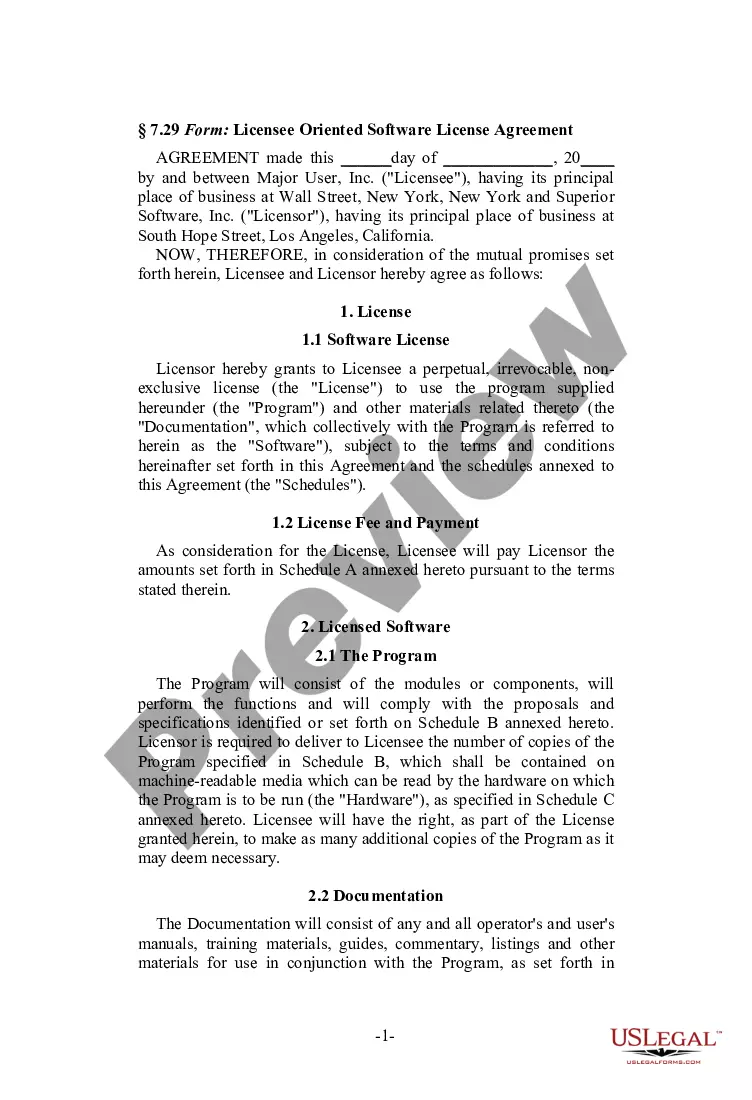
The License Agreement regarding the merchandising of technologies for purifying water is a legal document that outlines the terms under which Clean Water Technologies, Inc. is granted an exclusive license to use specific patented technology developed by the University of South Florida. This form differs from other licensing agreements by focusing specifically on water purification technologies, namely a method for removing arsenic from aqueous liquids. This agreement is essential for protecting intellectual property while allowing commercial exploitation of the licensed technology.
Main sections of this form
- Definitions of key terms related to the licensed technology and products.
- Grant of exclusive rights and license for commercial exploitation in a specified territory.
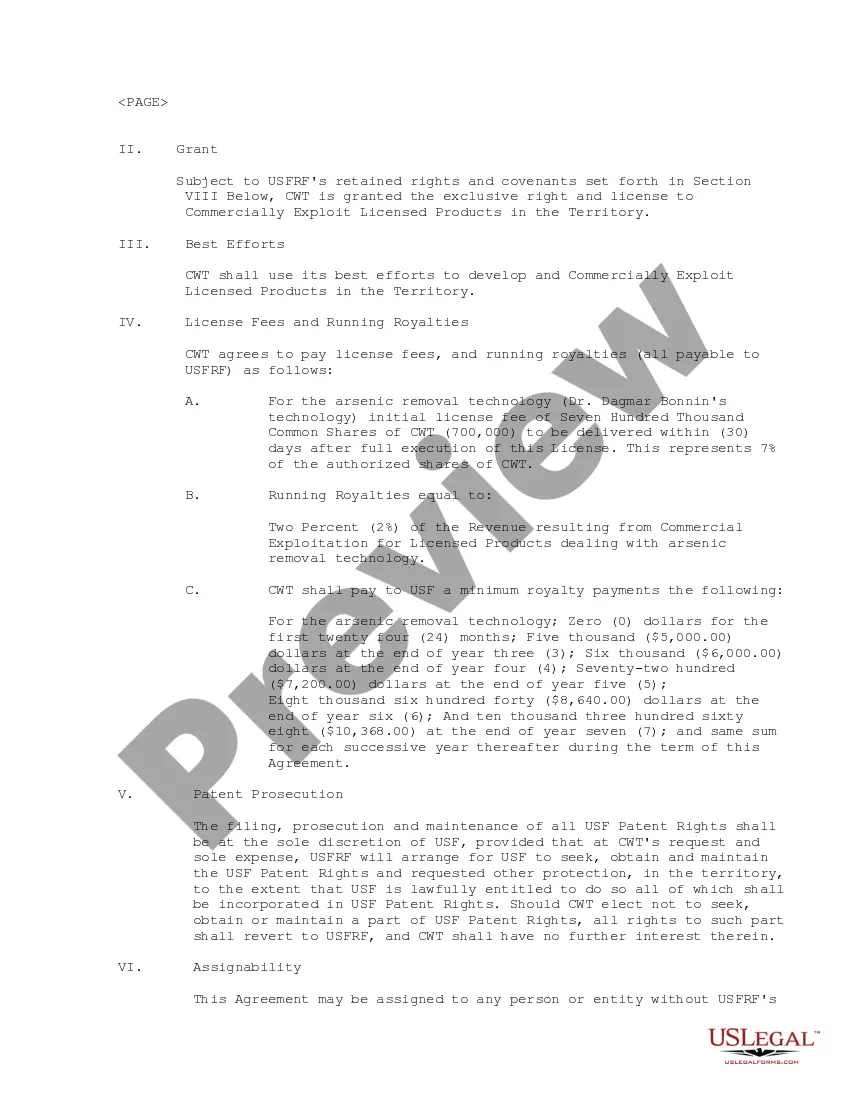
- Details on license fees and royalty structures, including minimum payments and percentage of revenue.
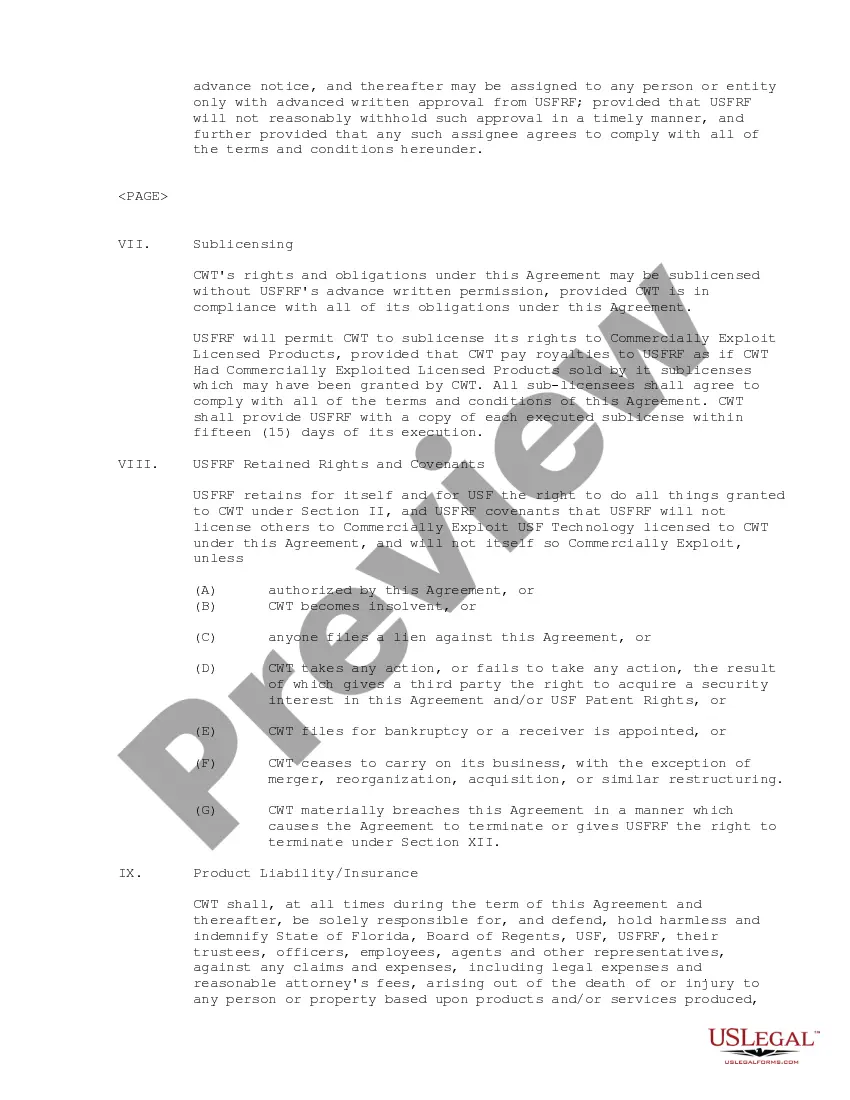
- Obligations of both parties regarding patent prosecution and product liability insurance.
- Conditions for termination of the agreement and reversion of intellectual property rights.

When to use this document
This License Agreement should be used when a company or entity seeks to commercialize a patented technology for water purification. It is particularly relevant for businesses that intend to develop or market products utilizing specific patented methods, like the removal of arsenic from water, ensuring that all legal and financial obligations are clearly established between the parties involved.
Who needs this form
- Companies specializing in environmental technologies or water purification products.
- Research institutions or universities that own patented technologies and seek commercialization partners.
- Legal advisors managing licensing agreements for clients in the technology and environmental sectors.
Steps to complete this form
- Identify the parties involved, including their full legal names and addresses.
- Specify the effective date of the agreement and defined terms, including any specific legal definitions needed.
- Detail the grant of rights, including any territories where the license applies.
- Outline the financial obligations, including initial license fees and ongoing royalties based on revenue.
- Include clauses related to patent prosecution responsibilities and how disputes will be handled.
Notarization guidance
In most cases, this form does not require notarization. However, some jurisdictions or signing circumstances might. US Legal Forms offers online notarization powered by Notarize, accessible 24/7 for a quick, remote process.
Get your form ready online
Our built-in tools help you complete, sign, share, and store your documents in one place.
Make edits, fill in missing information, and update formatting in US Legal Forms—just like you would in MS Word.
Download a copy, print it, send it by email, or mail it via USPS—whatever works best for your next step.
Sign and collect signatures with our SignNow integration. Send to multiple recipients, set reminders, and more. Go Premium to unlock E-Sign.
If this form requires notarization, complete it online through a secure video call—no need to meet a notary in person or wait for an appointment.
We protect your documents and personal data by following strict security and privacy standards.

Make edits, fill in missing information, and update formatting in US Legal Forms—just like you would in MS Word.

Download a copy, print it, send it by email, or mail it via USPS—whatever works best for your next step.

Sign and collect signatures with our SignNow integration. Send to multiple recipients, set reminders, and more. Go Premium to unlock E-Sign.

If this form requires notarization, complete it online through a secure video call—no need to meet a notary in person or wait for an appointment.

We protect your documents and personal data by following strict security and privacy standards.
Common mistakes
- Failing to correctly define key terms, which can lead to disputes later.
- Not specifying the territory of commercialization, potentially causing confusion.
- Neglecting to detail the payment structure, which can lead to payment disputes between parties.
- Overlooking clauses regarding product liability insurance, leaving one party unprotected.
Why complete this form online
- Convenient access to customizable legal templates that are easy to download and edit.
- Reliable forms drafted by licensed attorneys, ensuring legal compliance and clarity.
- Fast processing without the need for in-person consultations, saving time and effort.
Legal use & context
- This agreement establishes legally binding obligations for both parties in terms of technology transfer.
- It protects the rights of the inventor and licensor while providing a structured framework for commercialization.
Quick recap
- A License Agreement for technologies like water purification is essential for formalizing commercialization efforts.
- Both parties must understand their rights and obligations clearly to avoid disputes.
- The form should be tailored to comply with Florida state laws if applicable.
Looking for another form?
Form popularity
FAQ
Under the terms of a merchandise license, the owner of the image or text (the licensor) is usually paid an advance and a royalty based on a percentage of income from sales. The company selling the merchandise (the licensee) must meet certain obligations including payments, quality control and enforcement of rights.
It's creativity and productivity on your own terms! Having this type of freedom and flexibility in your life is worth more than money to many of you. And you may not become a millionaire, but you can easily earn $50,000, $100,000, or even $200,000 per year from licensing your ideas when you play it smart.
Invent an original product. Research your market. Do a patent search. Consider filing a provisional patent application. File a patent application. Search for licensees. Sign a licensing agreement. Collect royalties.
Royalty rates vary per industry, but a good rule of thumb is between 2-3% on the low end, and 7-10% on the high end. I have licensed consumer products for as low as 3% and as high as 7%, with 5% being the most common and a generally fair number. But 5% of what?
It means you cannot buy the licensed fabric, create your own products, and then sell them for profit (commercial use). If it says individual use only, then you cannot even give them away for free.
The only way to legally sell items with a trademark that you do not own is to obtain a license from the trademark owner. Trademarks are valuable property rights and are vigorously protected by their owners in most cases -- even against a small, localized business.
A product (or merchandise) license allows licensees to leverage popular IP to create branded products, usually for a specific period of time. Once the rights have been secured, the licensee manufactures product using the licensed IP, and in return pays the licensor a royalty for its use.
Determine if permission is needed. Identify the owner. Identify the rights needed. Contact the owner and negotiate whether payment is required. Get your permission agreement in writing.
A product (or merchandise) license allows licensees to leverage popular IP to create branded products, usually for a specific period of time. Once the rights have been secured, the licensee manufactures product using the licensed IP, and in return pays the licensor a royalty for its use.