Long Term Compensation Plan of Pulte Corp.
What this document covers
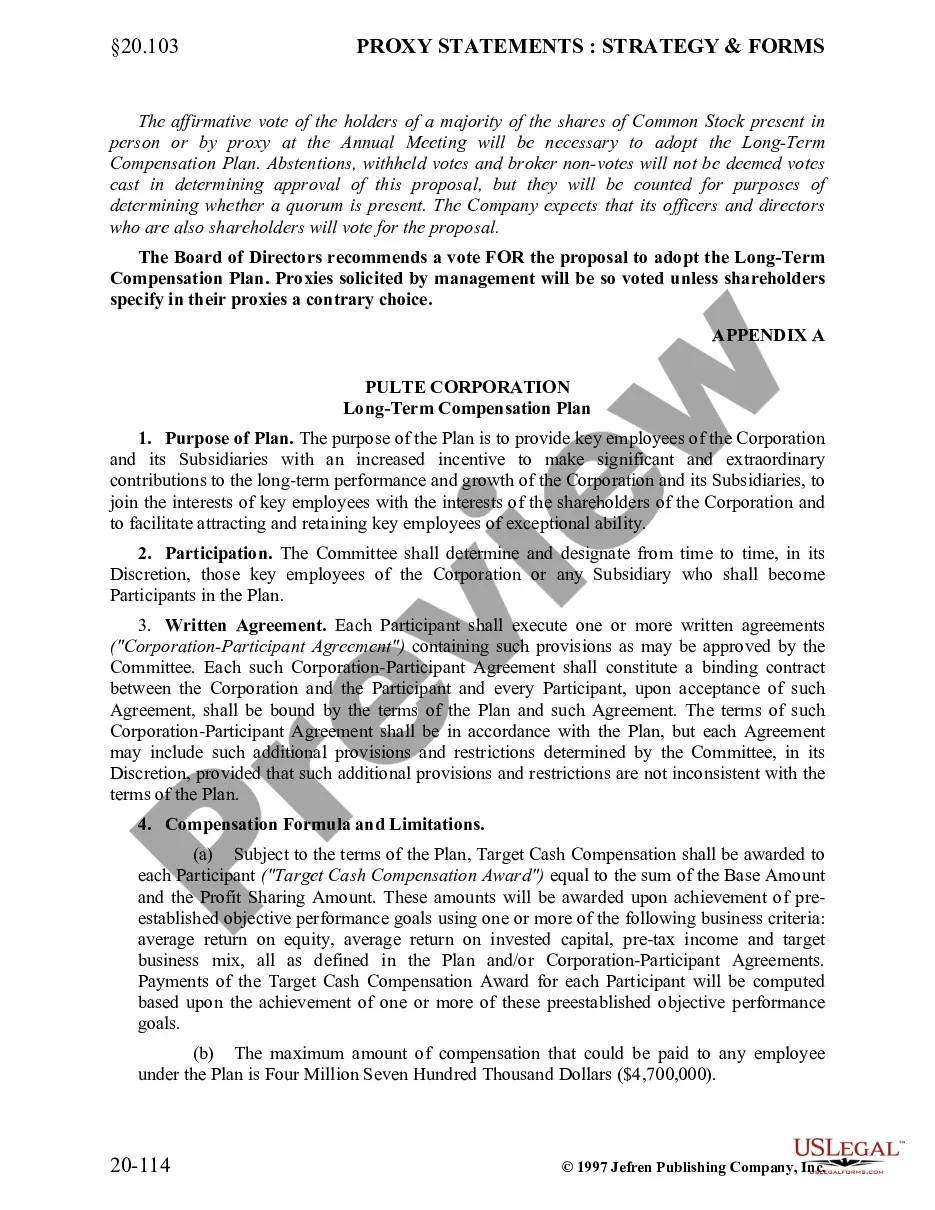
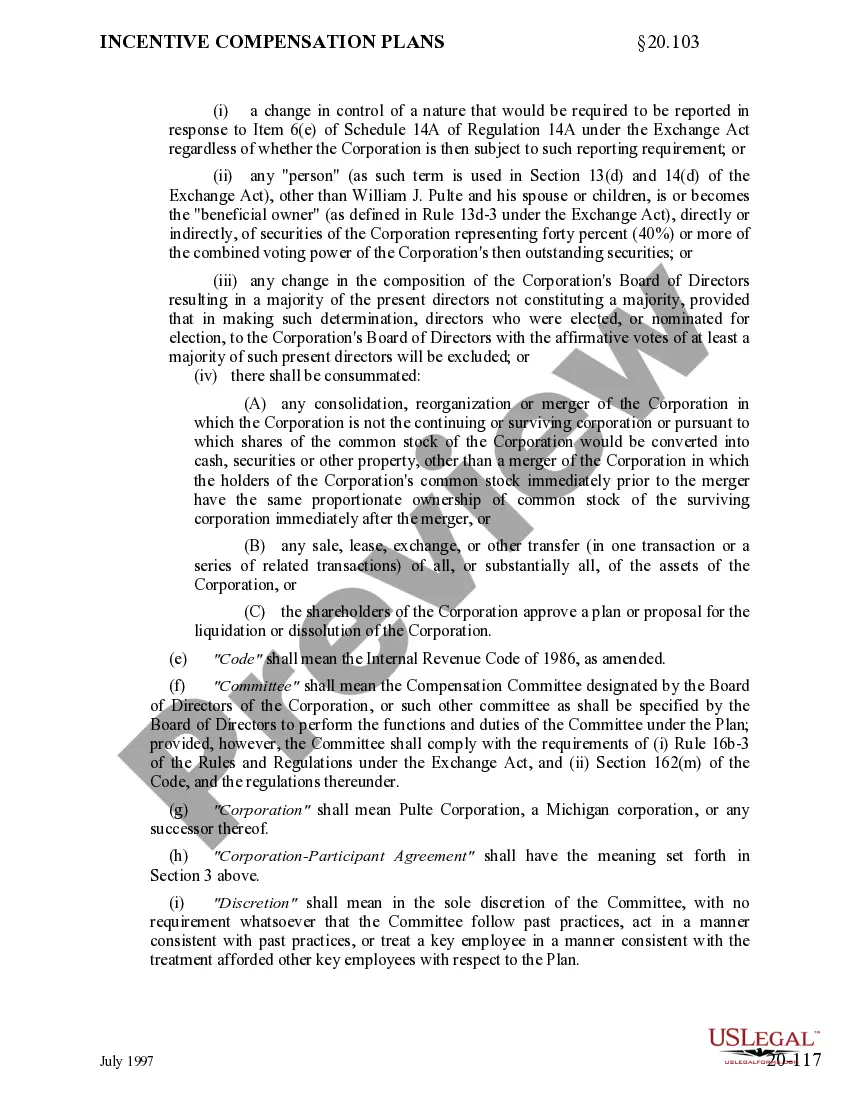
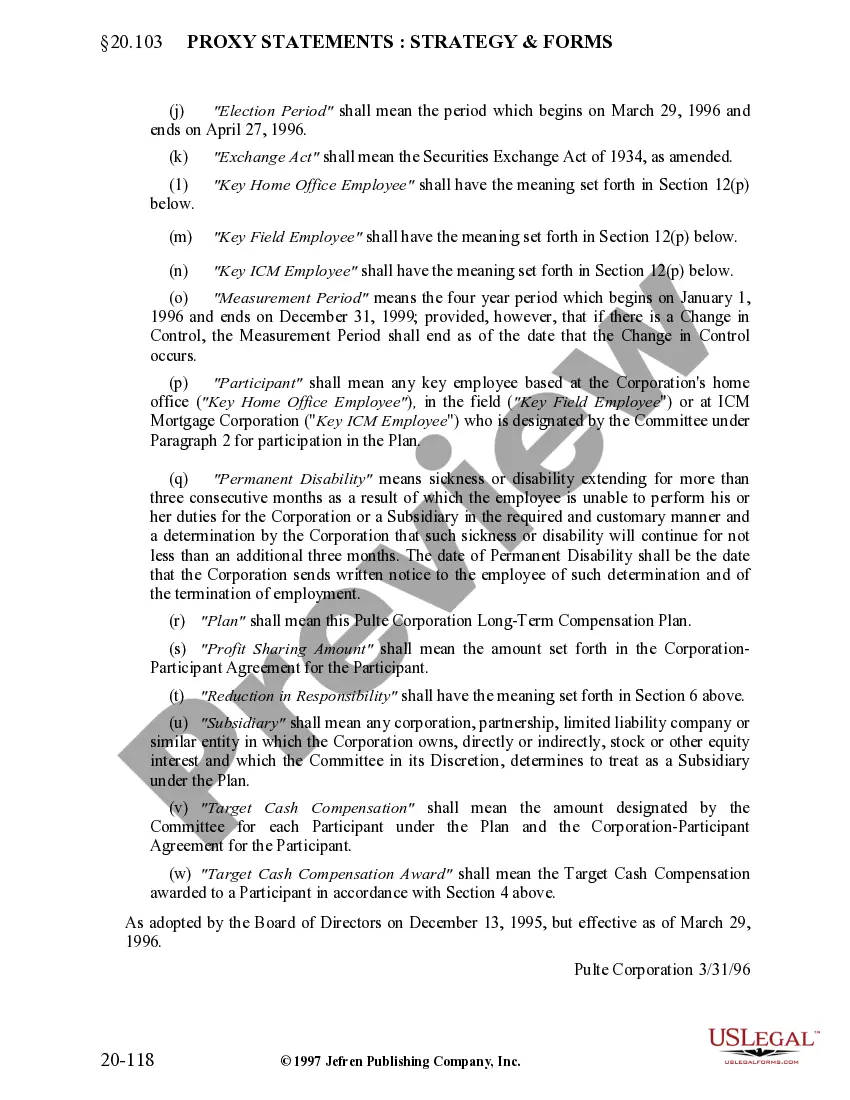
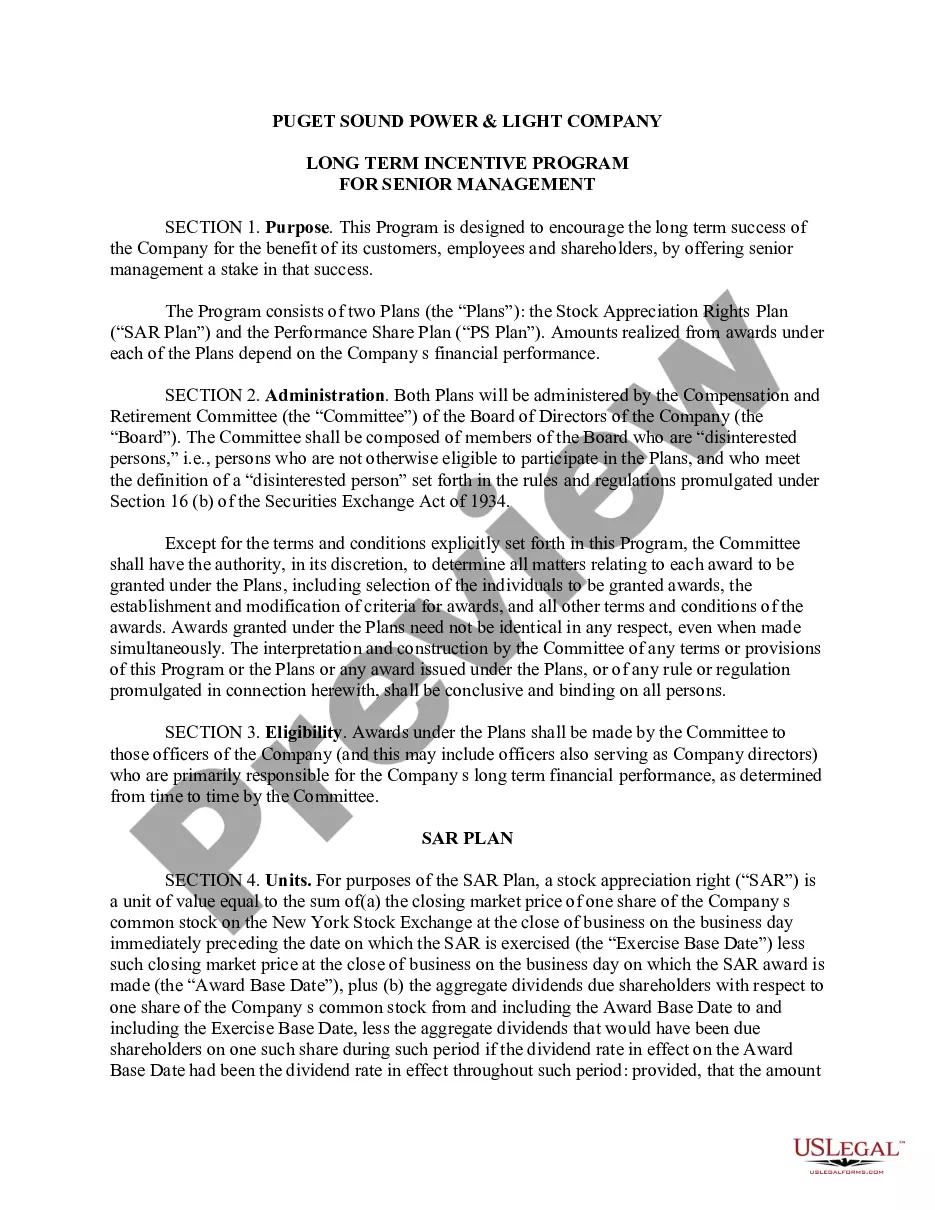
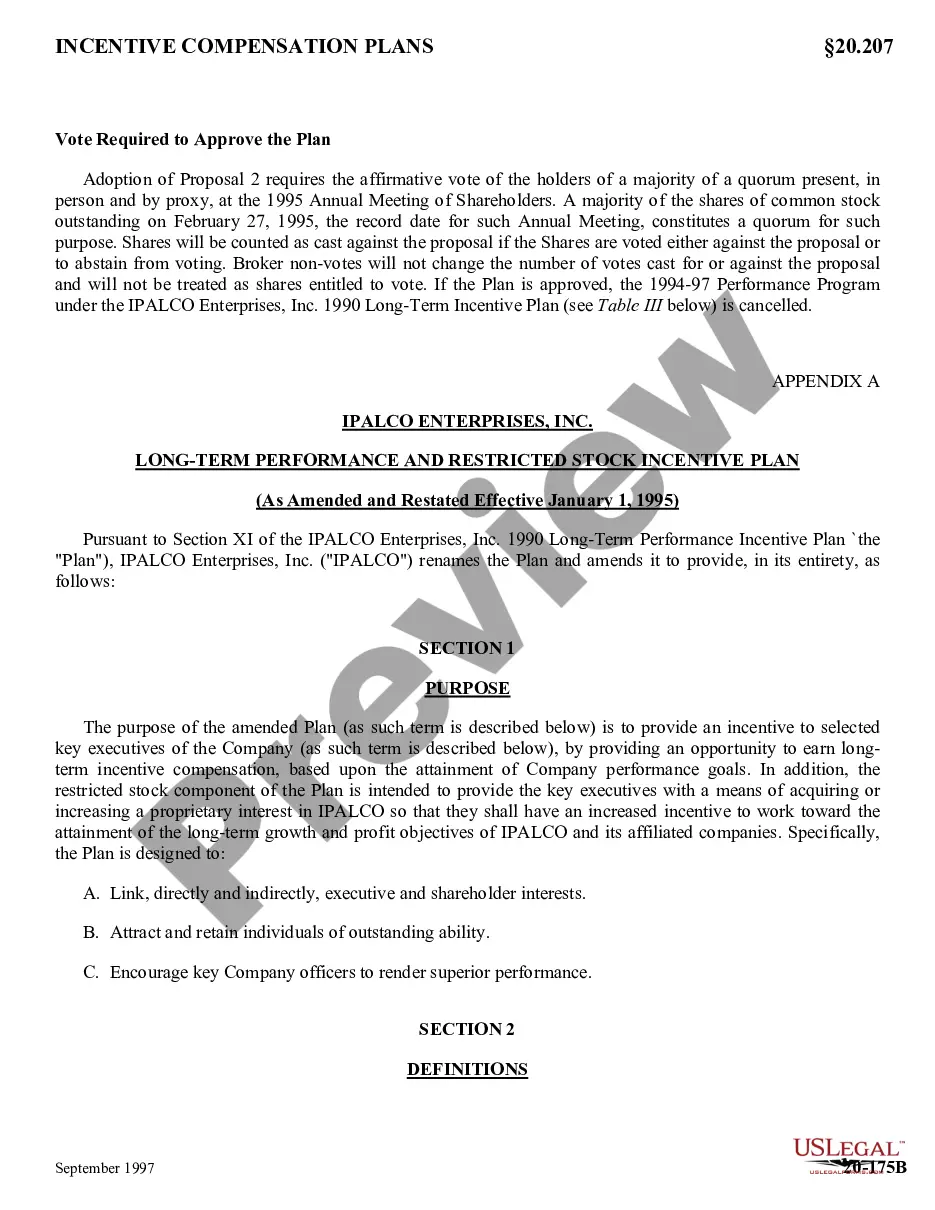
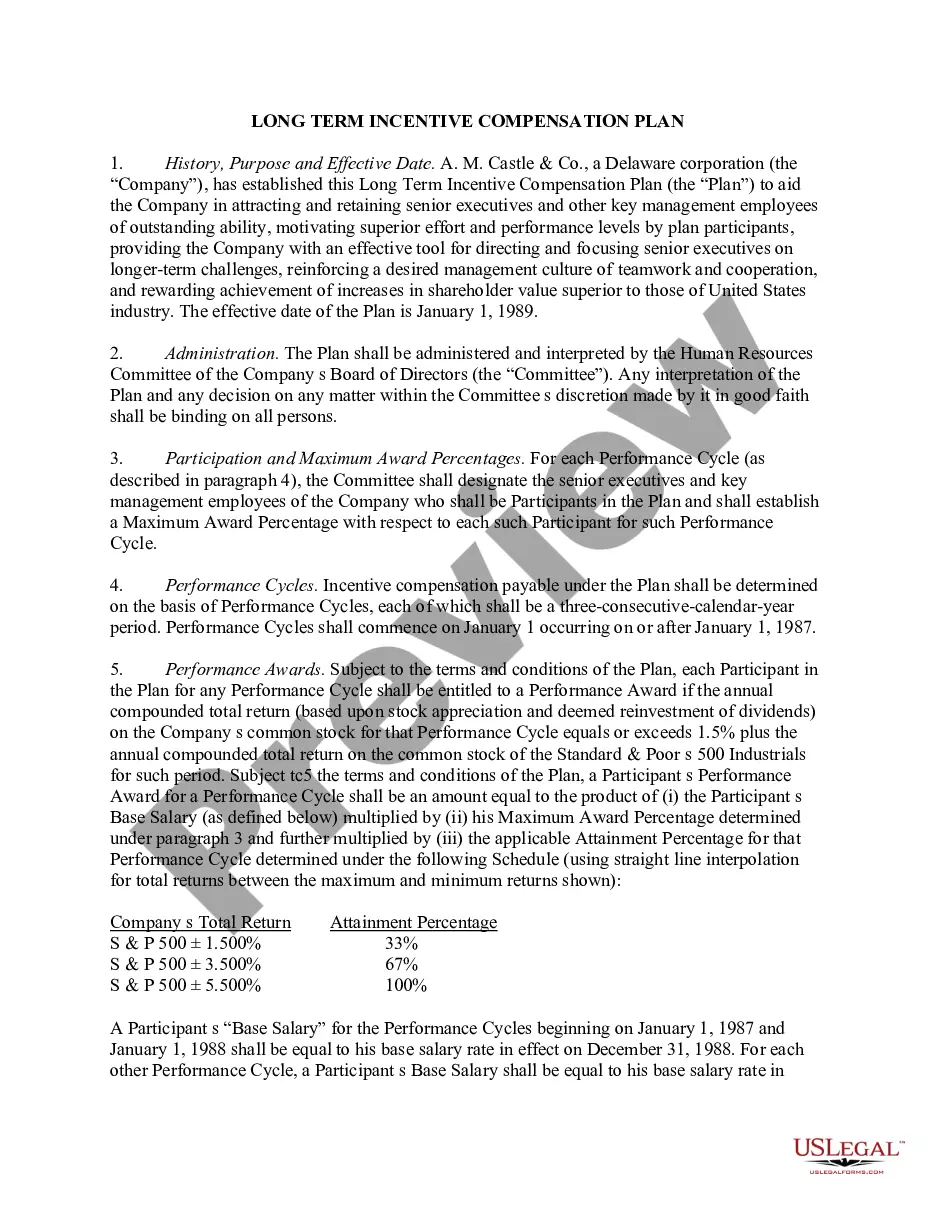
The Long-Term Compensation Plan of Pulte Corp. is designed to incentivize key employees by providing substantial cash compensation based on their performance against pre-established business criteria. The form outlines the eligibility requirements, compensation formulas, and conditions under which key employees can participate, differentiating it from other compensation and incentive programs by its focus on long-term performance metrics and shareholder alignment.
Main sections of this form
- Purpose of the Plan: Encourages key employees to contribute to the long-term performance of the corporation.
- Participation: Designation of eligible key employees by the Compensation Committee.
- Compensation Formula: Target cash compensation based on specific performance goals.
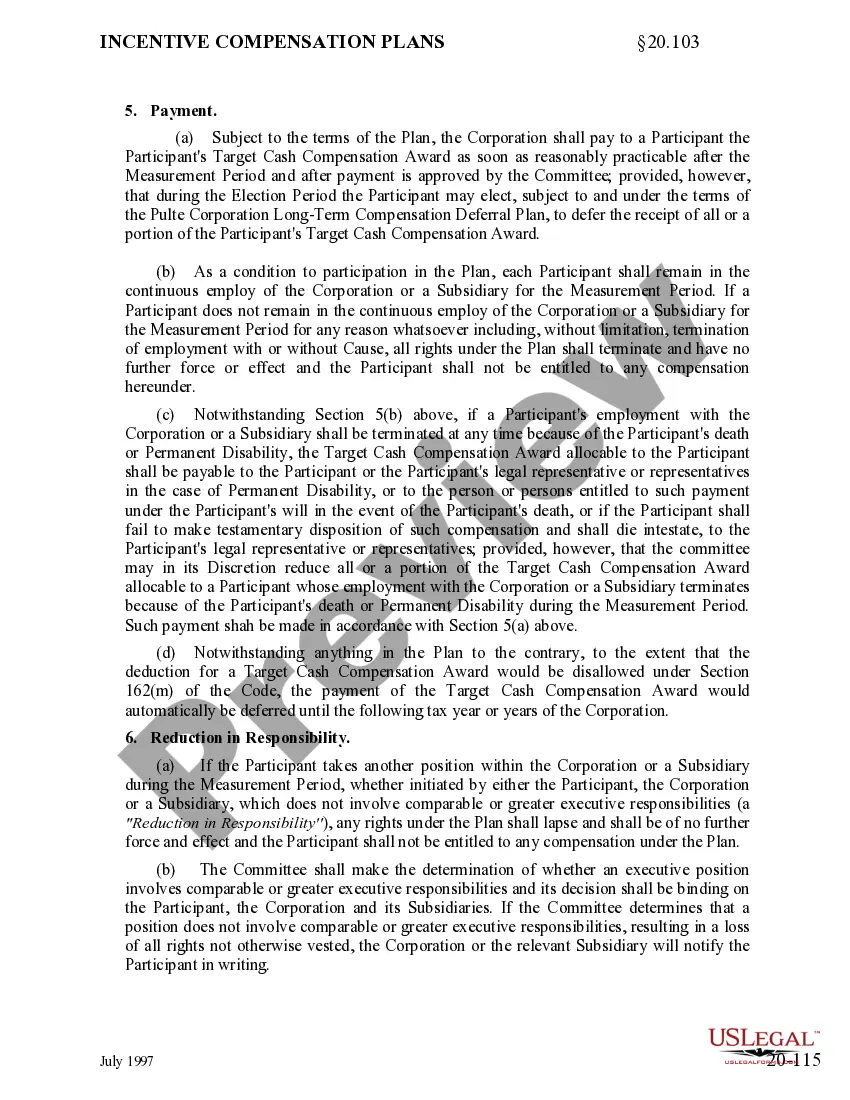
- Payment Conditions: Details on when and how compensation awards are paid to participants.
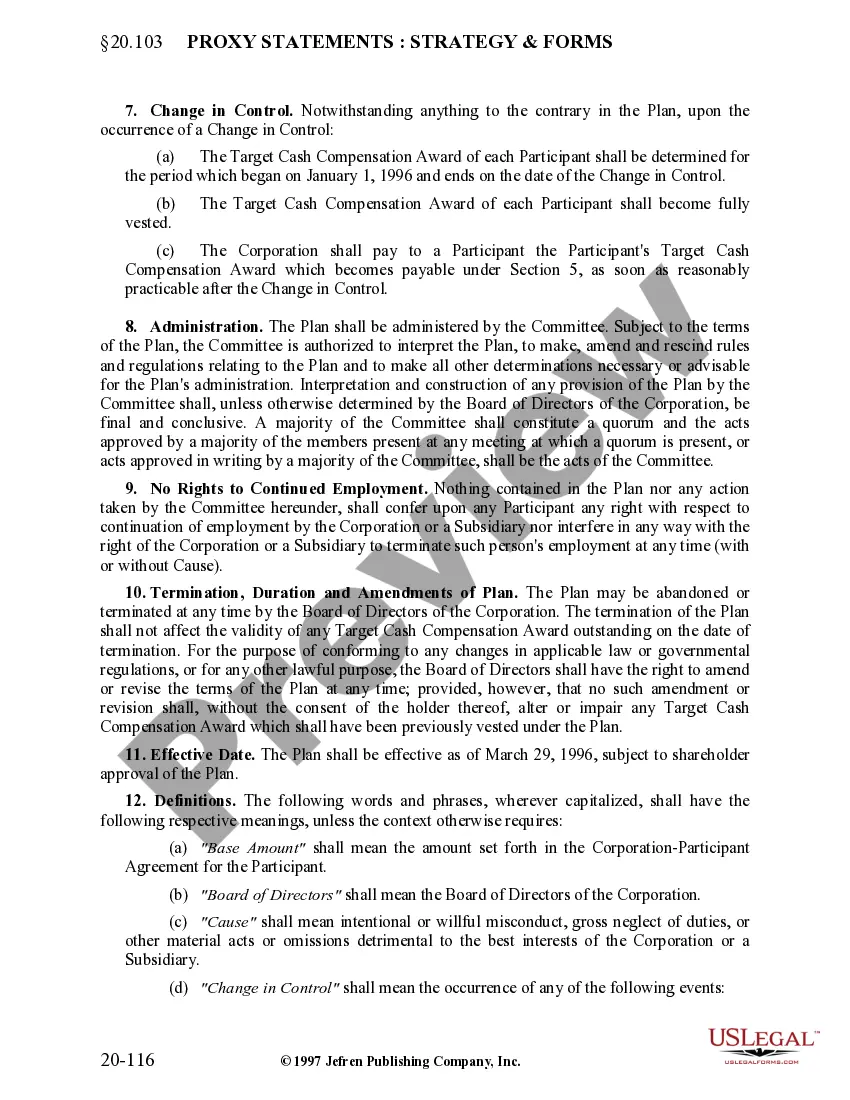
- Change in Control: Provisions governing how compensation is affected by significant corporate changes.
- Administration: Outlines the authority and responsibilities of the Compensation Committee.
Situations where this form applies
This form is essential when Pulte Corp. intends to implement or modify a long-term compensation plan for its key employees. It is used during the planning stages to establish guidelines for performance-based compensation and ensures that all eligible employees understand the criteria and benefits of the program. It is also relevant during shareholder voting to adopt or renew the compensation plan.
Who this form is for
- Key employees of Pulte Corp. and its Subsidiaries who are eligible for participation.
- Members of the Compensation Committee overseeing the implementation of the plan.
- Corporate board members involved in shareholder meetings and approvals.
Instructions for completing this form
- Identify the key employees who will participate in the plan.
- Determine and set the target cash compensation based on pre-established performance goals.
- Draft and execute Corporation-Participant Agreements for each participant.
- Review and approve compensation awards during the specified measurement periods.
- Document any changes in control or employment status impacting compensation eligibility.
Does this form need to be notarized?
In most cases, this form does not require notarization. However, some jurisdictions or signing circumstances might. US Legal Forms offers online notarization powered by Notarize, accessible 24/7 for a quick, remote process.
Get your form ready online
Our built-in tools help you complete, sign, share, and store your documents in one place.
Make edits, fill in missing information, and update formatting in US Legal Forms—just like you would in MS Word.
Download a copy, print it, send it by email, or mail it via USPS—whatever works best for your next step.
Sign and collect signatures with our SignNow integration. Send to multiple recipients, set reminders, and more. Go Premium to unlock E-Sign.
If this form requires notarization, complete it online through a secure video call—no need to meet a notary in person or wait for an appointment.
We protect your documents and personal data by following strict security and privacy standards.

Make edits, fill in missing information, and update formatting in US Legal Forms—just like you would in MS Word.

Download a copy, print it, send it by email, or mail it via USPS—whatever works best for your next step.

Sign and collect signatures with our SignNow integration. Send to multiple recipients, set reminders, and more. Go Premium to unlock E-Sign.

If this form requires notarization, complete it online through a secure video call—no need to meet a notary in person or wait for an appointment.

We protect your documents and personal data by following strict security and privacy standards.
Typical mistakes to avoid
- Failing to clearly define performance goals, leading to confusion among participants.
- Neglecting to update participant agreements according to changes in the plan.
- Overlooking the impact of employment termination on compensation eligibility.
Benefits of completing this form online
- Convenient access to legal forms that can be downloaded and completed online.
- Editable templates that allow customization to fit specific compensation plans.
- Reliable legal backing from templates drafted by licensed attorneys.
Legal use & context
- The plan must comply with applicable corporate governance laws and regulations.
- It is important to ensure that all provisions are clearly communicated to participating employees.
- Compensation awarded is subject to approval by the Compensation Committee based on documented performance metrics.
Looking for another form?
Form popularity
FAQ
Training and experience; Duties and responsibilities; Time and effort devoted to the business; Dividend history; Payments to nonshareholder employees; Timing and manner of paying bonuses to key people;
Some types of compensation must be deducted as other expenses, such as fees paid to an employment agency for recruiting employees. Director's fees, even if they are paid officers or other employees of the corporation, are not treated as compensation, but are deducted as other expenses.
Unreasonable compensation is a level of compensation for owner-managers that does not meet the requirements of IRC 162(a) for reasonable compensation.Compensation over the maximum leads to the IRS changing wages to a constructive dividend, an action that creates higher corporate taxes plus interest and penalties.
The IRS requires S Corp shareholder-employees to pay themselves a reasonable employee salary, which means at least what other businesses pay for similar services. And if the IRS finds out that you tried to evade payroll taxes by disguising employee salary as corporate distributions, bad things can happen.
ACC is funded primarily by income from its investments. It also receives funding from the government, and from levies collected from everyone who works and owns a business in New Zealand.
ACC is funded from multiple sources - including businesses, petrol revenues and wages. Funds from each source are spent on injuries relevant to where they occurred. If you're injured in a motor vehicle accident, your ACC claim is paid for by funds sourced from motorists, such as vehicle registration and petrol levies.
Distributions, Dividends and Other Compensation as Wages. Courts have found shareholder-employees are subject to employment taxes even when shareholders take distributions, dividends or other forms of compensation instead of wages.
An S corporation is a special form of corporation, named after the relevant section of the Internal Revenue Code. It is taxed on a pass-through basis, meaning it doesn't pay taxes in its own right. In principle, an S corporation can have no employees.
When corporate officers perform services for the corporation, and receive or are entitled to receive payments, their compensation is generally considered wages. Subchapter S corporations should treat payments for services to officers as wages and not as distributions of cash and property or loans to shareholders.