Stock Appreciation Right Plan of Helene Curtis Industries, Inc.
About this form
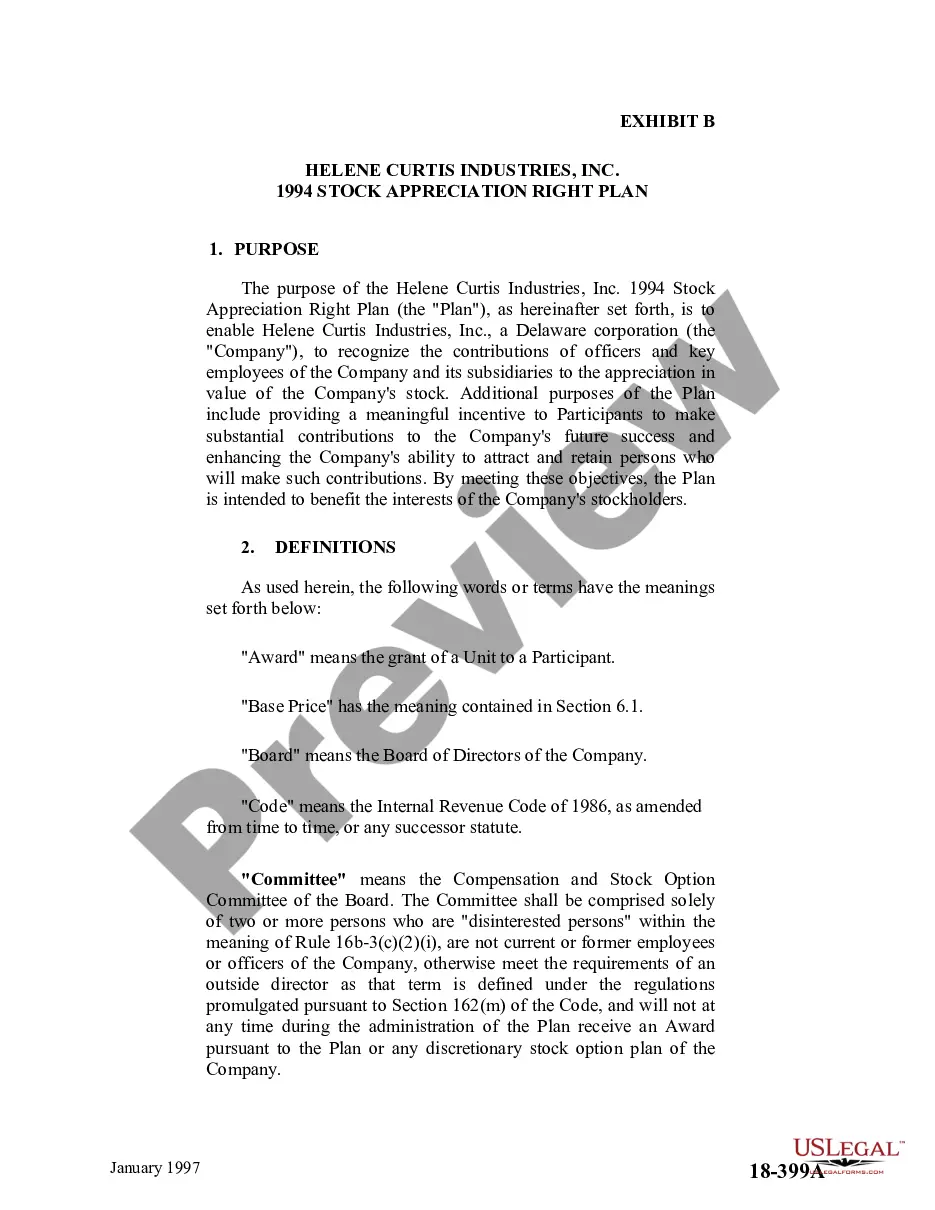
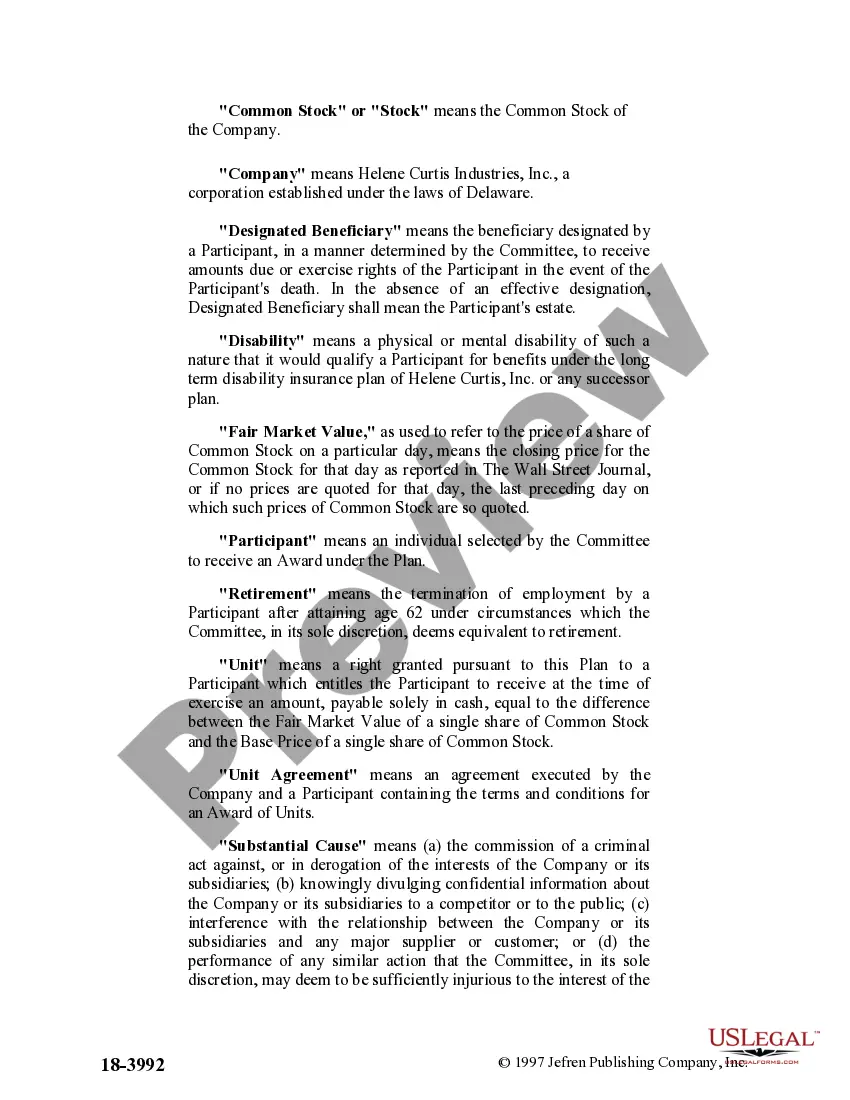
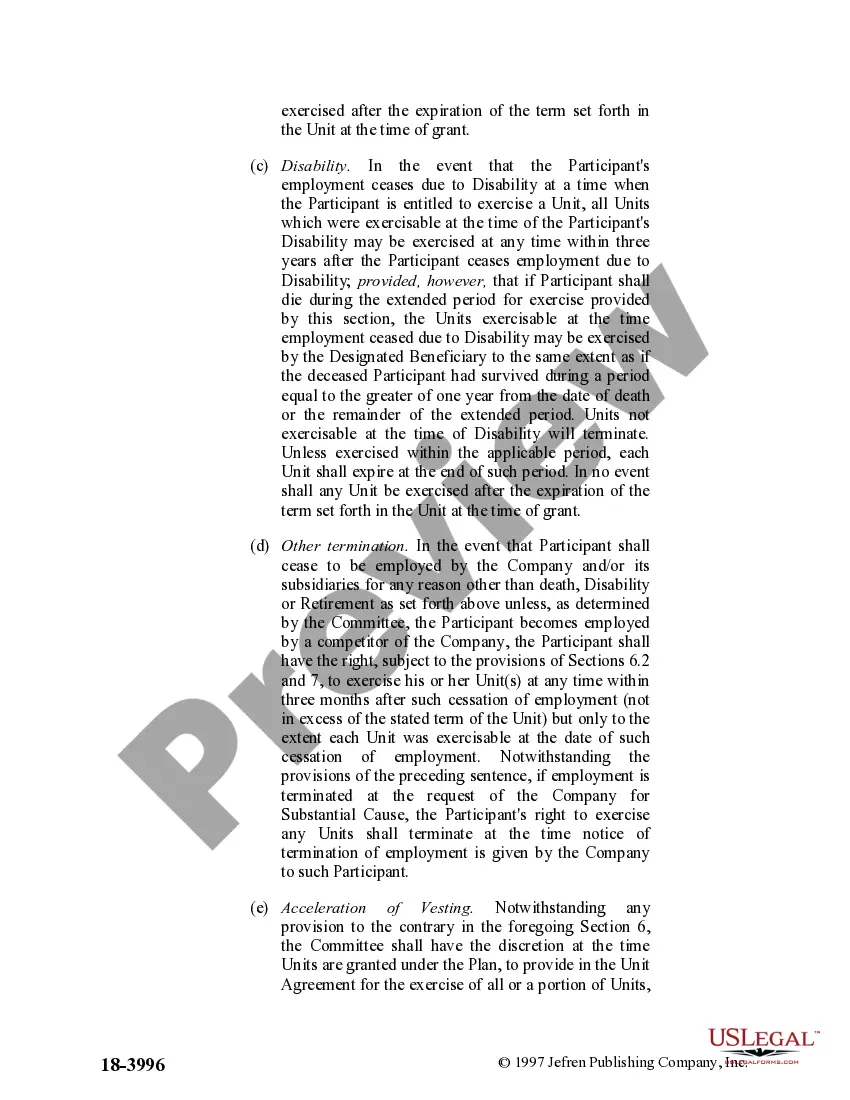
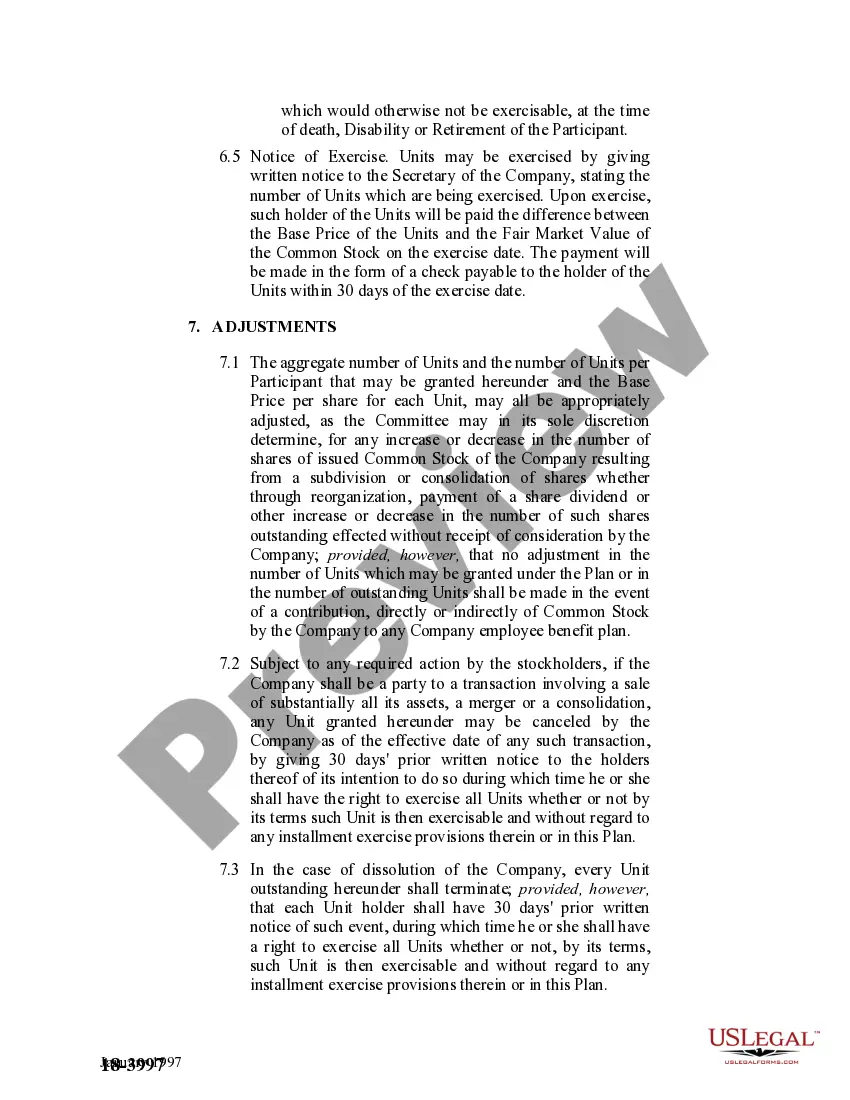
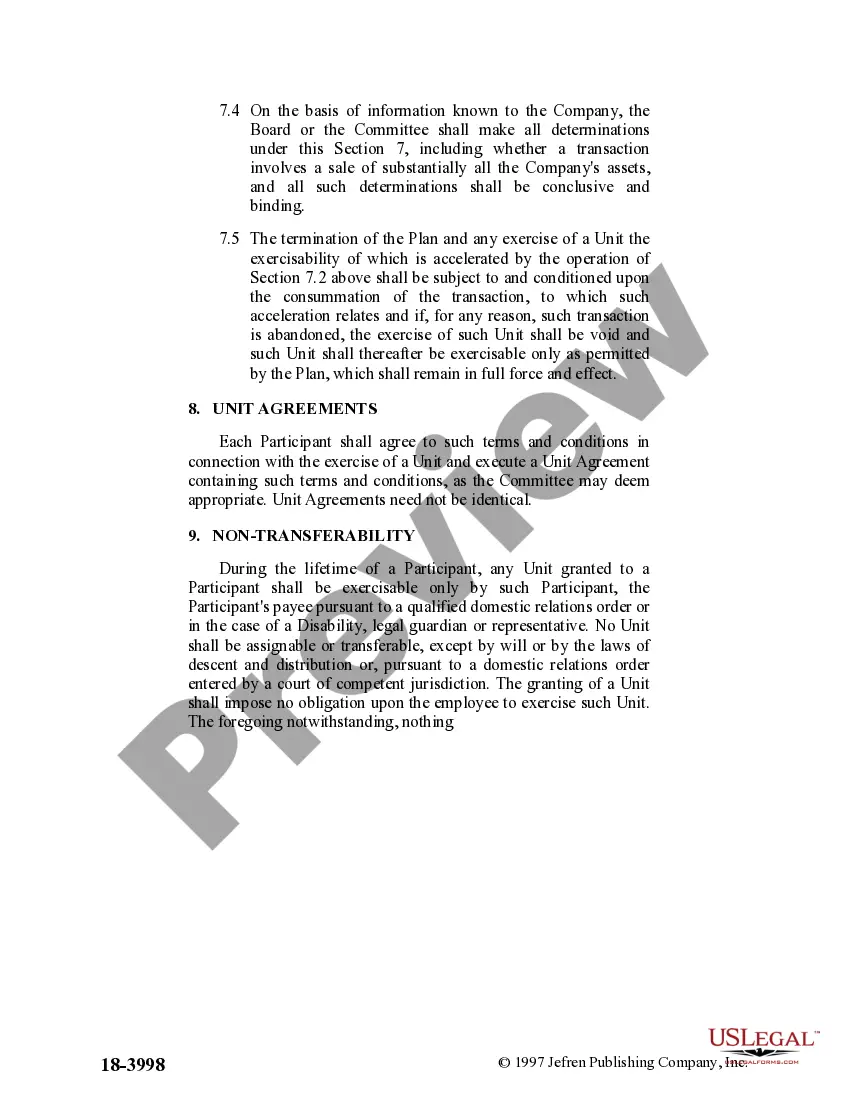
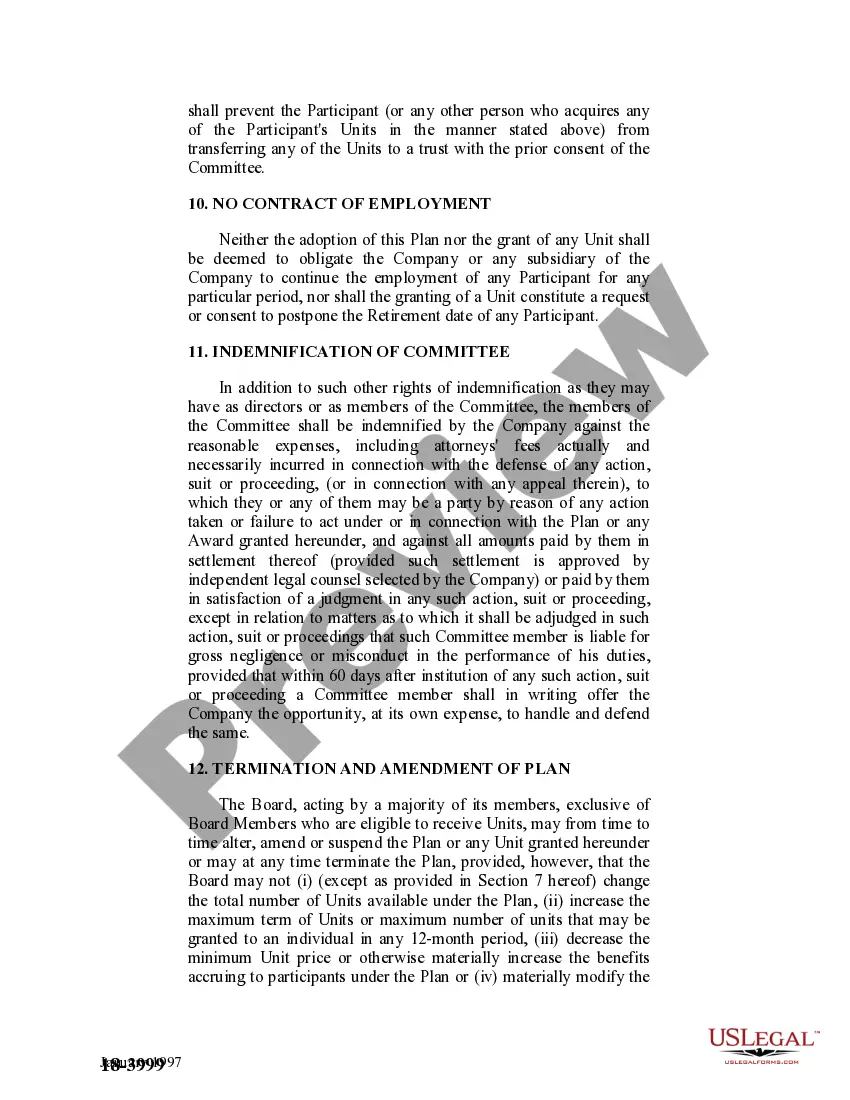
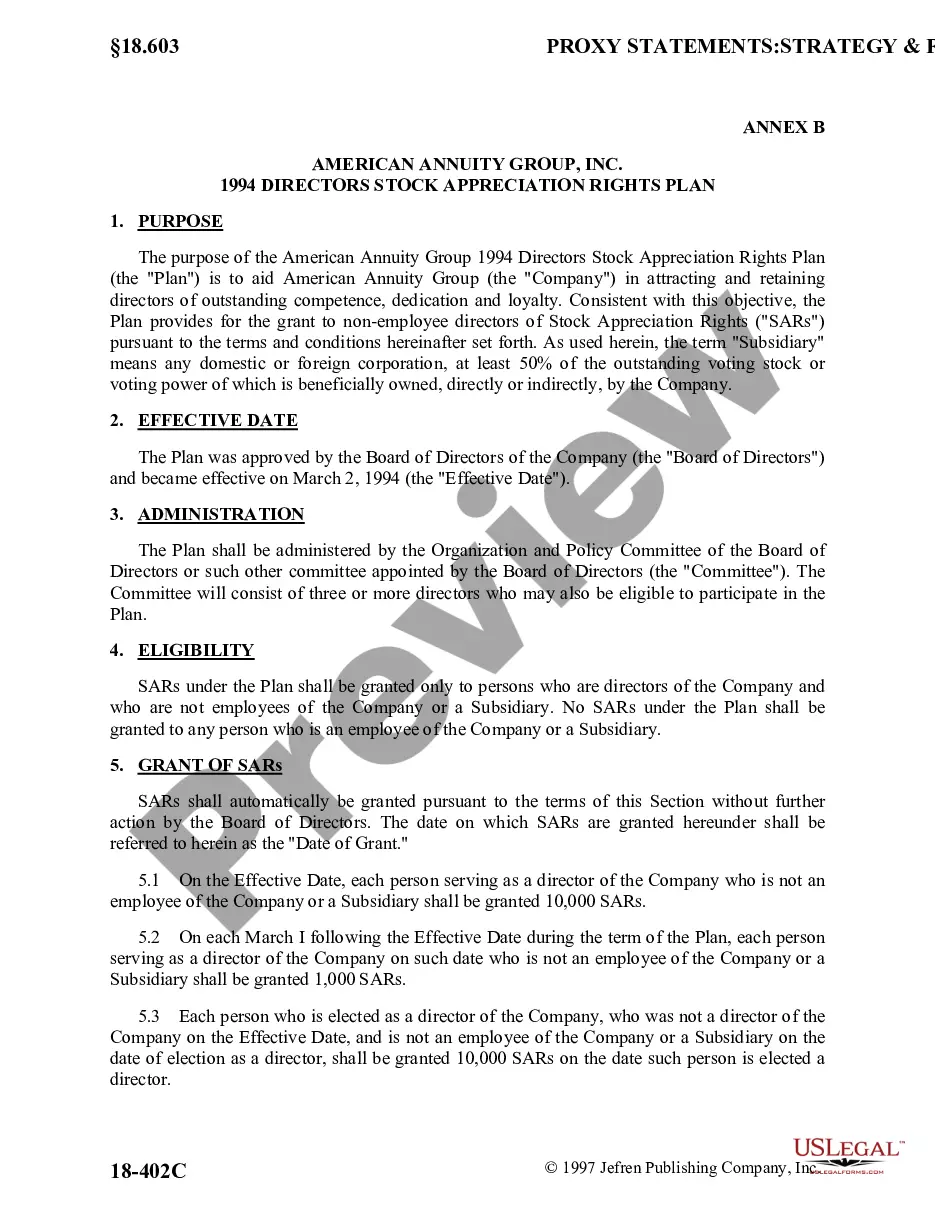
The Stock Appreciation Right Plan of Helene Curtis Industries, Inc. is a legal document designed to grant stock appreciation rights (SARs) to employees of Helene Curtis Industries, Inc. This plan allows employees to benefit from the increase in the company's stock value without having to purchase shares. Participants receive cash equal to the difference between the fair market value of the company's stock at the time of exercising the right and the base price determined at the grant date.
What’s included in this form
- Purpose: Recognizes contributions of key employees and incentivizes their efforts.
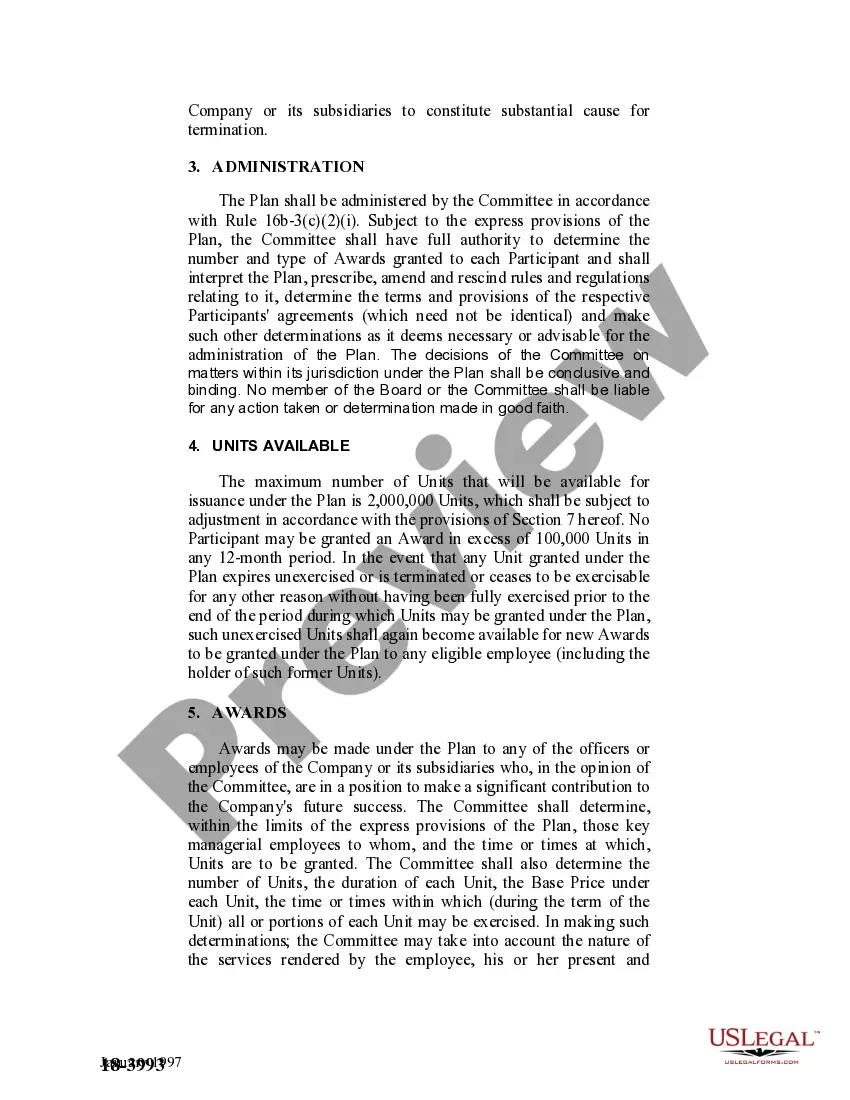
- Awards: Details on the issuance of stock appreciation rights, granting up to 2,000,000 units.
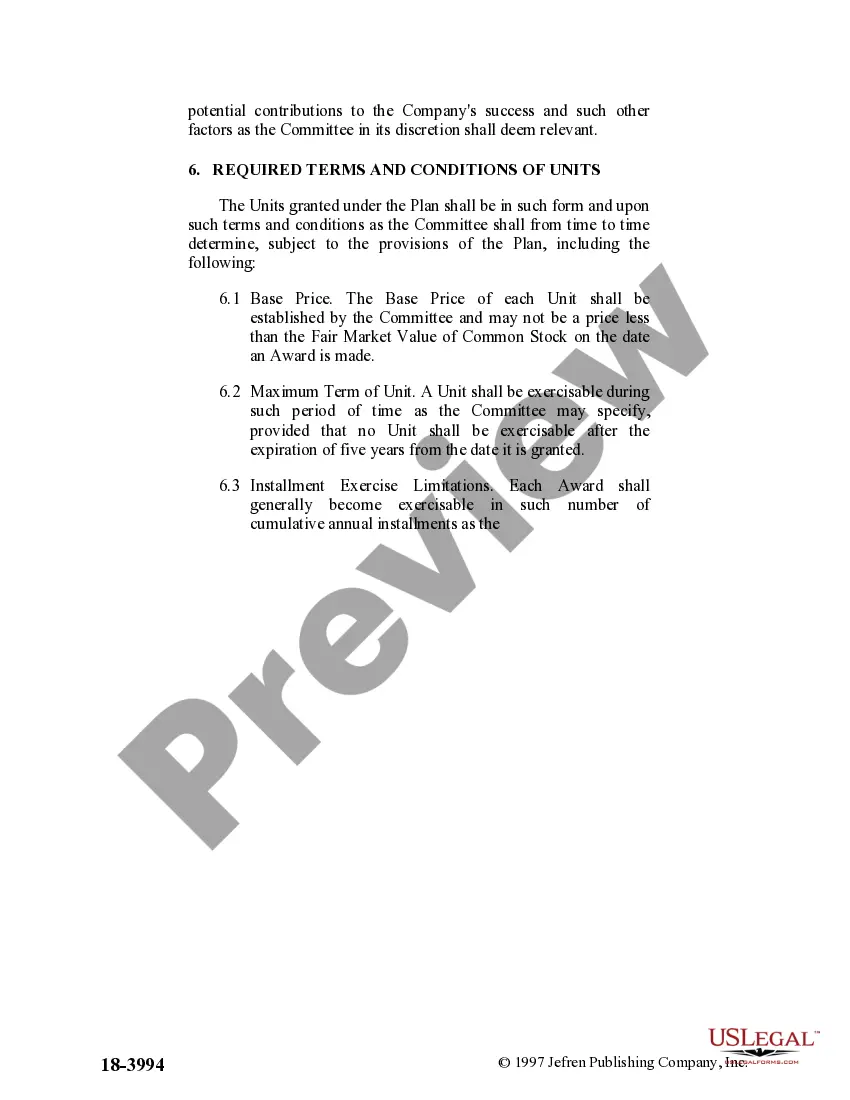
- Base Price: The price cannot be less than the fair market value at grant time.
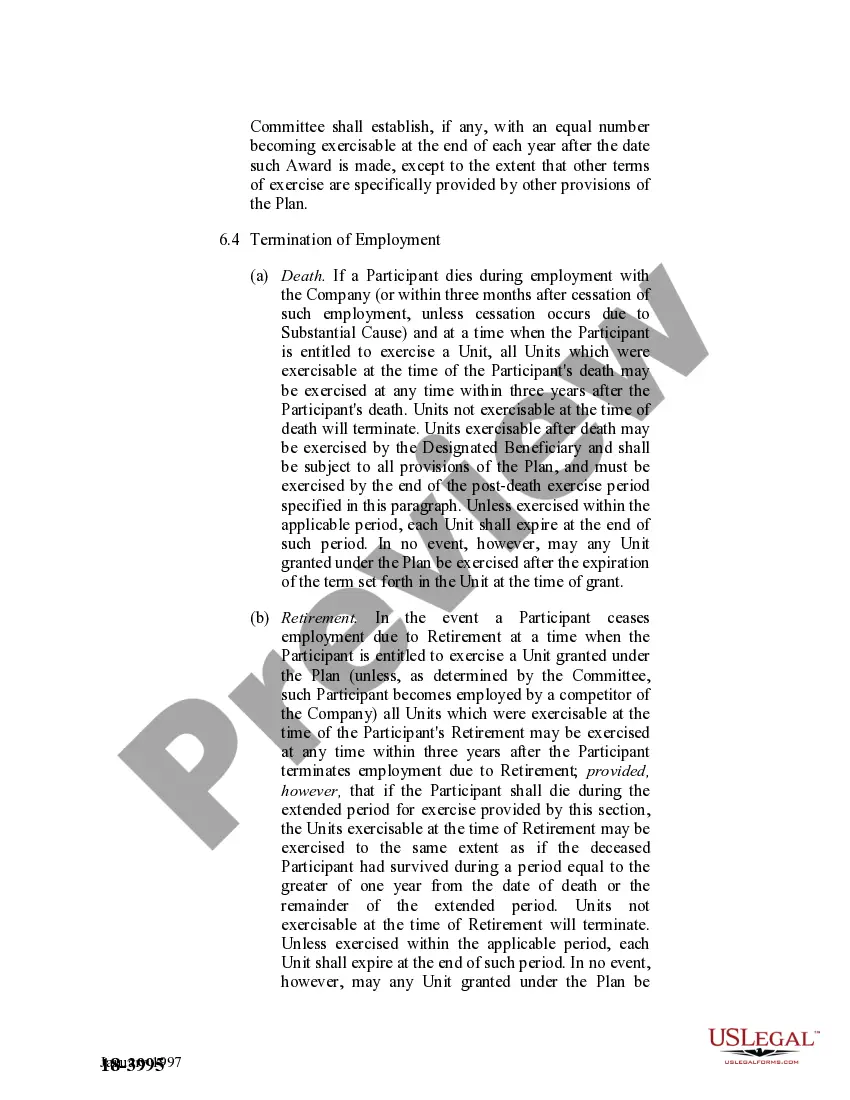
- Terms of Exercise: Conditions under which rights can be exercised, including timing and limits.
- Administration: Managed by a committee responsible for determining eligibility and awards.
- Adjustments: Provisions for adjustments to the number of units and terms based on stock changes.




Common use cases
This form should be used by Helene Curtis Industries, Inc. when establishing or administering stock appreciation rights for employees. It typically applies in scenarios such as incentivizing key personnel or rewarding significant contributions to the company's growth and profitability. Employers should consider this form during annual performance reviews or during employee retention efforts.
Who this form is for
- Executives and officers of Helene Curtis Industries, Inc.
- Key employees who have the potential to influence the company's success.
- The Committee managing the Stock Appreciation Rights Plan.
- Human Resources staff responsible for employee incentive programs.
Completing this form step by step
- Identify the participants eligible for stock appreciation rights.
- Determine the number of units to be granted to each participant.
- Establish the base price for each unit based on current fair market value.
- Communicate the terms and conditions of the rights to the participants.
- Ensure proper administration and compliance with company guidelines.
Is notarization required?
This form does not typically require notarization unless specified by local law.
Get your form ready online
Our built-in tools help you complete, sign, share, and store your documents in one place.
Make edits, fill in missing information, and update formatting in US Legal Forms—just like you would in MS Word.
Download a copy, print it, send it by email, or mail it via USPS—whatever works best for your next step.
Sign and collect signatures with our SignNow integration. Send to multiple recipients, set reminders, and more. Go Premium to unlock E-Sign.
If this form requires notarization, complete it online through a secure video call—no need to meet a notary in person or wait for an appointment.
We protect your documents and personal data by following strict security and privacy standards.

Make edits, fill in missing information, and update formatting in US Legal Forms—just like you would in MS Word.

Download a copy, print it, send it by email, or mail it via USPS—whatever works best for your next step.

Sign and collect signatures with our SignNow integration. Send to multiple recipients, set reminders, and more. Go Premium to unlock E-Sign.

If this form requires notarization, complete it online through a secure video call—no need to meet a notary in person or wait for an appointment.

We protect your documents and personal data by following strict security and privacy standards.
Common mistakes to avoid
- Failing to properly document the fair market value at the grant date.
- Not informing participants about the terms of the stock appreciation rights.
- Neglecting to adjust the plan in case of corporate changes like mergers or stock splits.
Benefits of completing this form online
- Convenience of accessing the form anytime and anywhere.
- Easy editability to customize based on company needs.
- Reliable legal templates drafted by licensed attorneys.
Legal use & context
- The Stock Appreciation Rights Plan is governed by the laws of Delaware.
- Proper administration is crucial to ensure compliance with internal revenue regulations.
- Failure to comply may affect the tax treatment of the stock rights granted.
Key takeaways
- The plan serves as an effective incentive tool for employee retention.
- Understanding the terms and administration of the plan is essential for both the company and employees.
- Regular review and updates to the plan may be needed to comply with changing regulations.
Looking for another form?



Form popularity
FAQ
Stock options give employees the right to buy a number of shares at a price fixed at grant for a defined number of years into the future.Stock appreciation rights (SARs) provide the right to the increase in the value of a designated number of shares, paid in cash or shares.
In many cases, you can calculate the stock price appreciation simply by subtracting the current price of the stock from the original price of the stock. For example, if you bought a stock for $100 a year ago and now it is worth $120, subtract $100 from $120 to find the stock price has appreciated by $20.
Stock appreciation rights are a type of incentive plan based on your stock's value. Employees receive a bonus in cash or equivalent number of shares based on how much the stock value increases over a set period of time - usually from the date of granting the right up until the right is exercised.
Stock Appreciation Rights Are Not Securities. Claim that exercise of cash appreciation of Stock Appreciation Rights involved insider trading and securities fraud rejected for lack of evidence of fraud and because the Rights are not securities. Riverwood granted its senior executives stock appreciation rights (SARs).
In accounting for such stock appreciation right (SAR) agreements, the company should accrue a liability and recognize expense over the term of service. At the end of this service period, the liability will be settled with cash or stock or both.
There are no federal income tax consequences when you are granted stock appreciation rights. However, at exercise you must recognize compensation income on the fair market value of the amount received at vesting. An employer is generally obligated to withhold taxes.
Stock appreciation rights (SARs) are a type of employee compensation linked to the company's stock price during a predetermined period.However, employees do not have to pay the exercise price with SARs. Instead, they receive the sum of the increase in stock or cash.
There are no federal income tax consequences when you are granted stock appreciation rights. However, at exercise you must recognize compensation income on the fair market value of the amount received at vesting. An employer is generally obligated to withhold taxes.