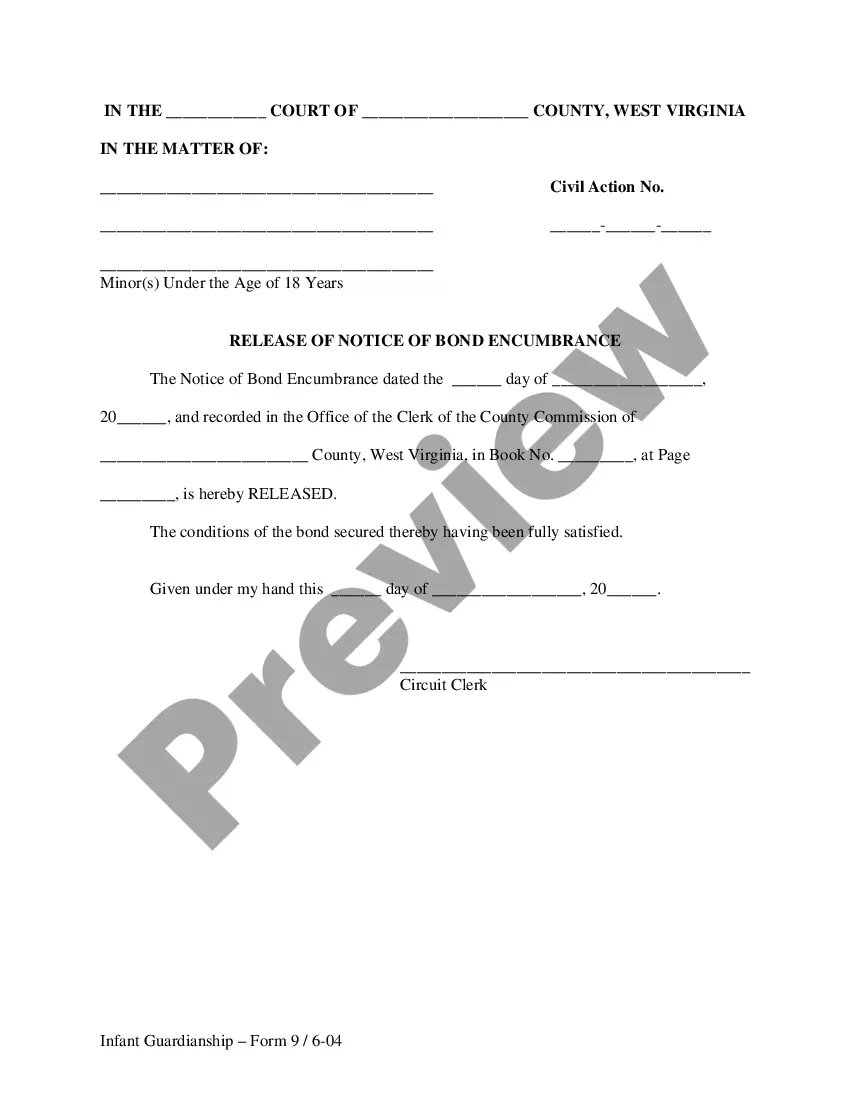
Ratification and Approval of Indemnity Agreements
About this form
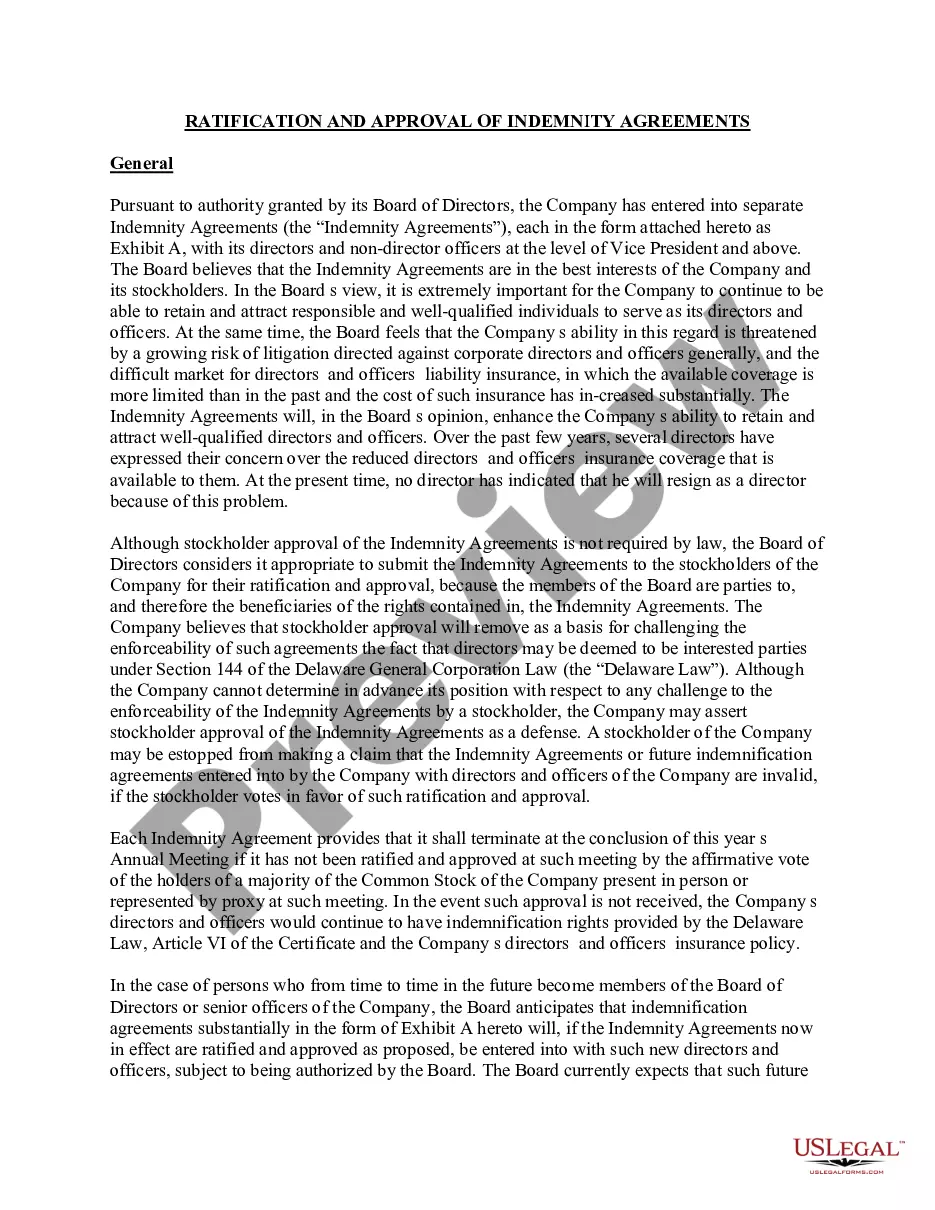
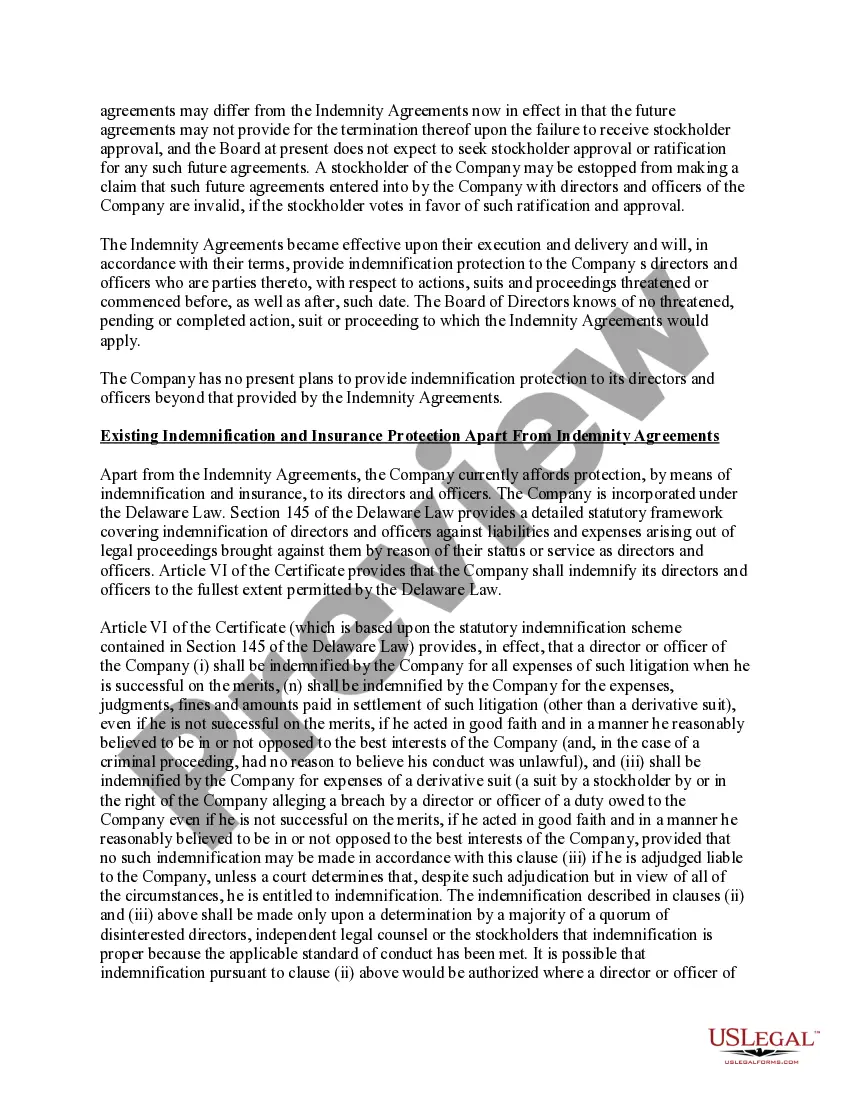
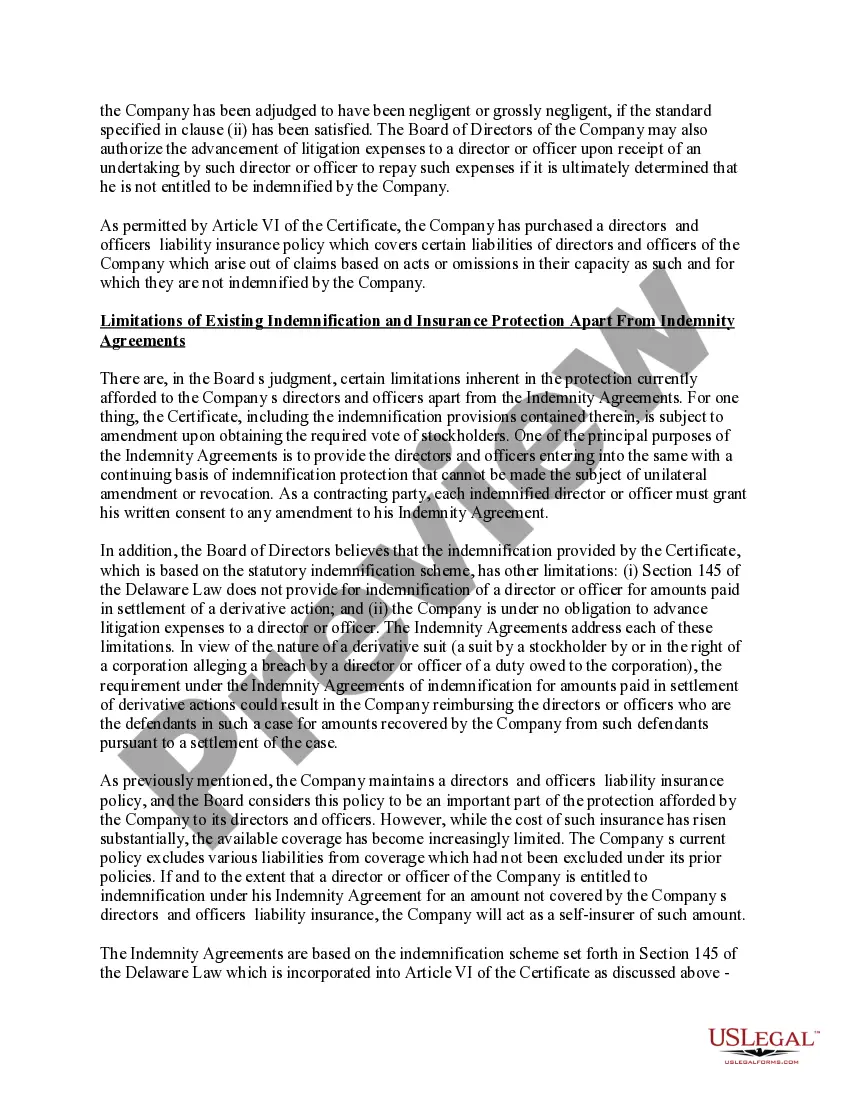
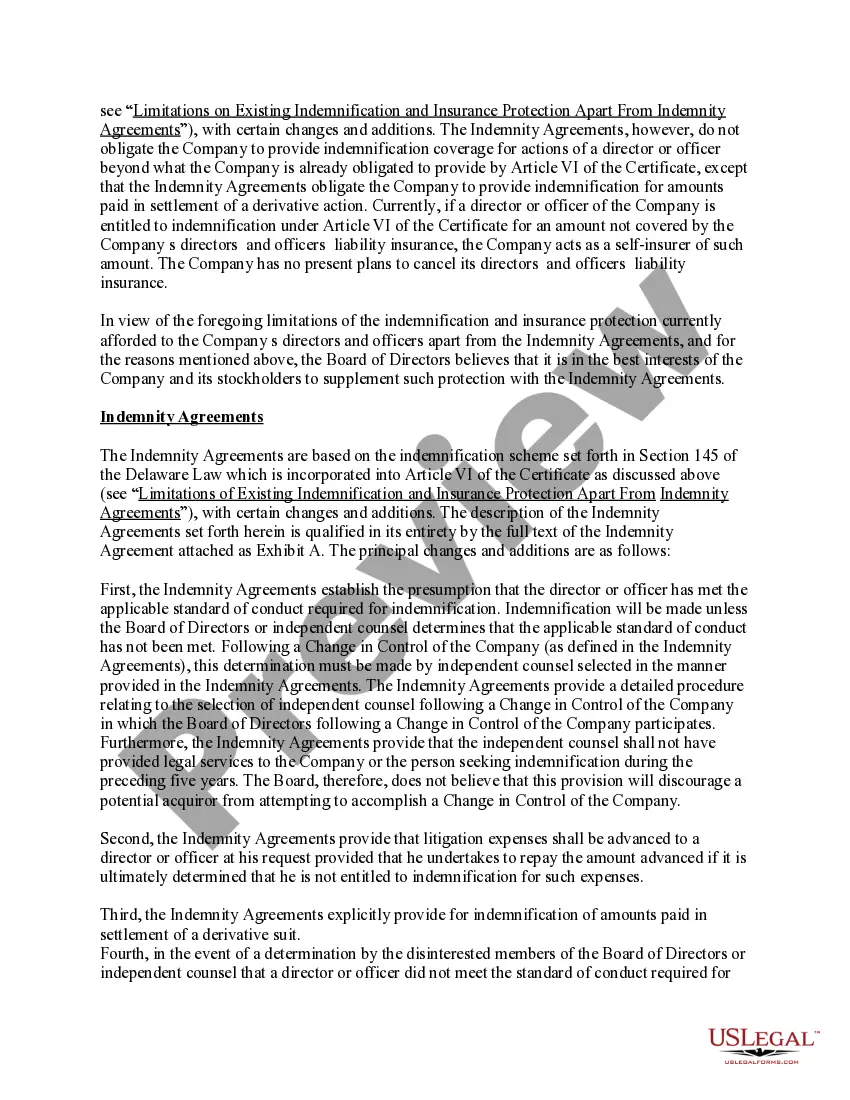
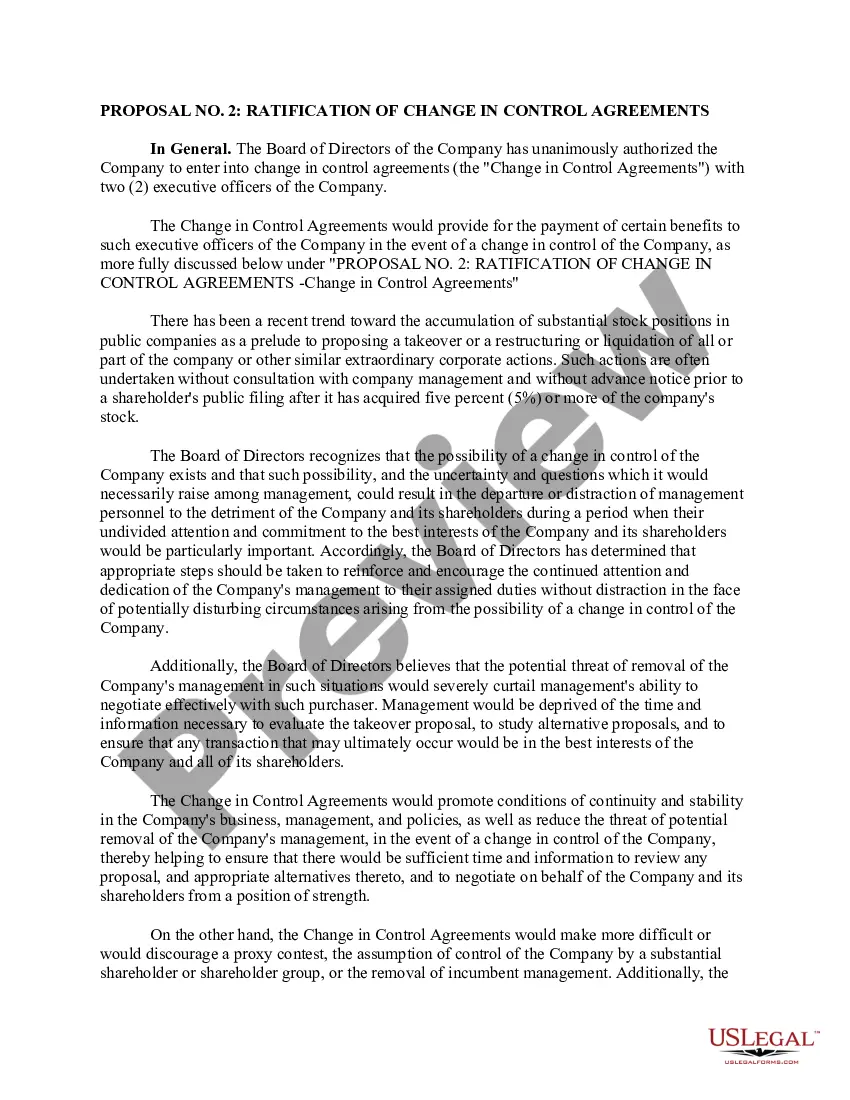
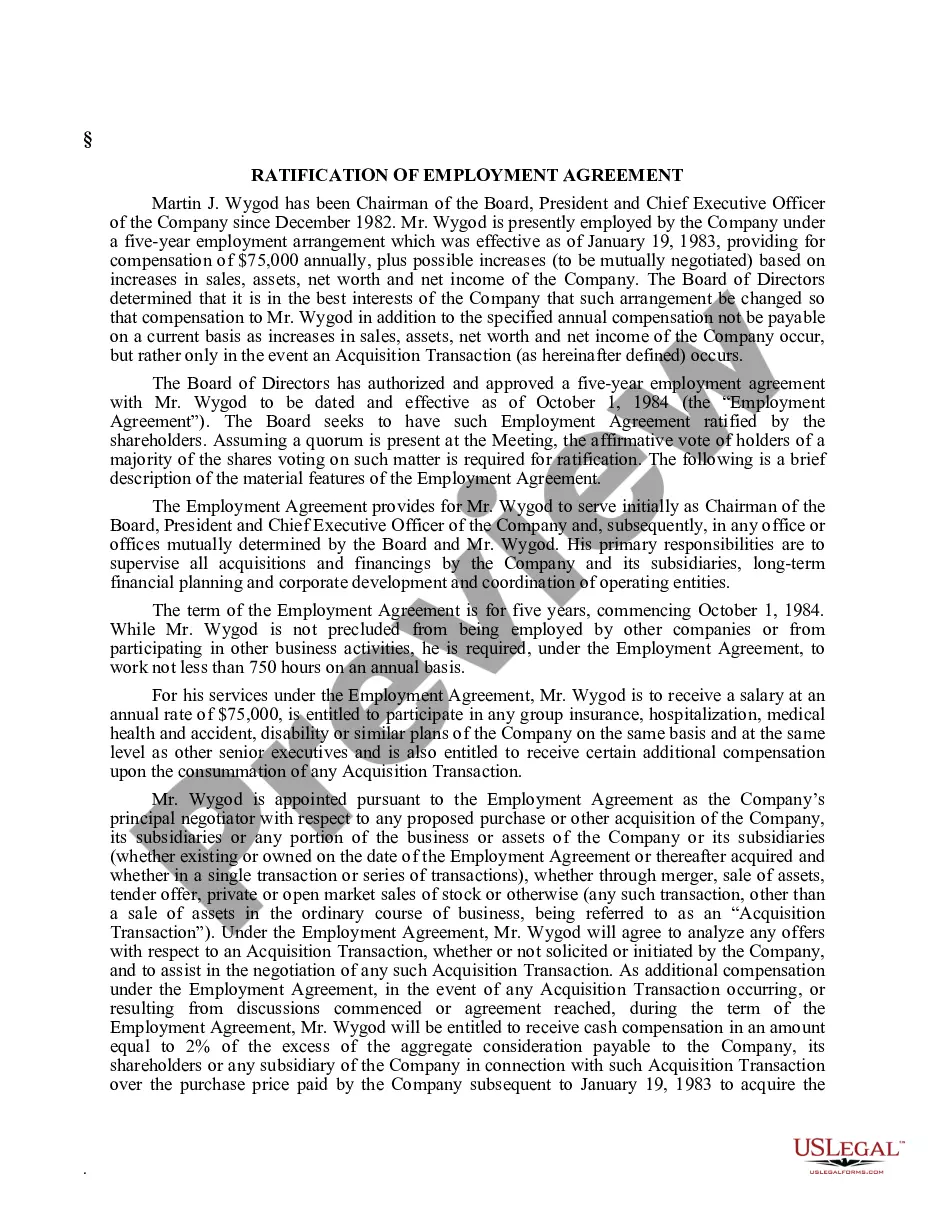
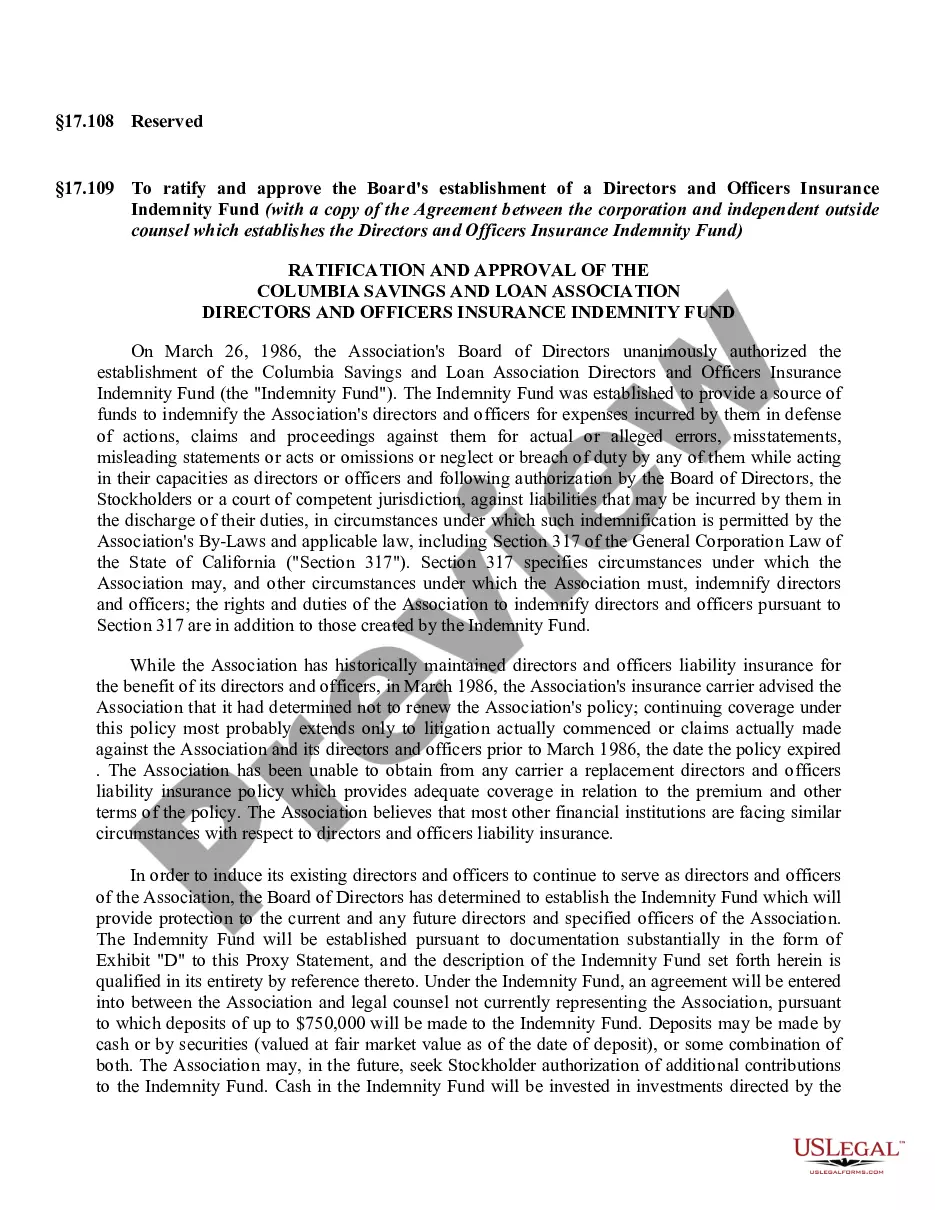
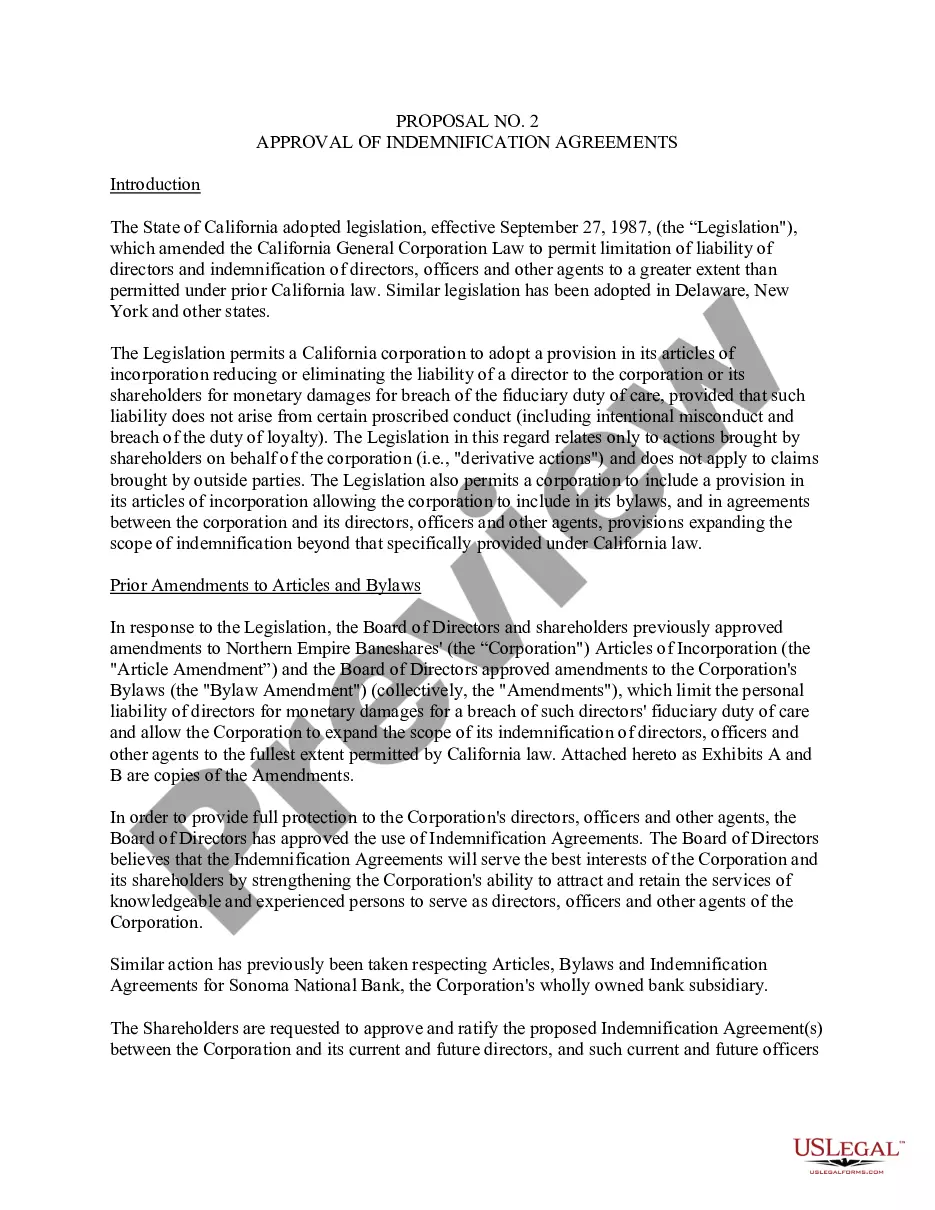
The Ratification and Approval of Indemnity Agreements is a legal form used in corporate governance. This form allows a company to formally approve indemnity agreements that provide protection to its directors and officers against potential legal liabilities. Understanding and implementing this form can enhance the company's ability to attract qualified individuals to leadership positions, making it distinct from other corporate resolutions or agreements focused solely on director duties or corporate operations.
Form components explained
- Details about the indemnity agreements and their terms.
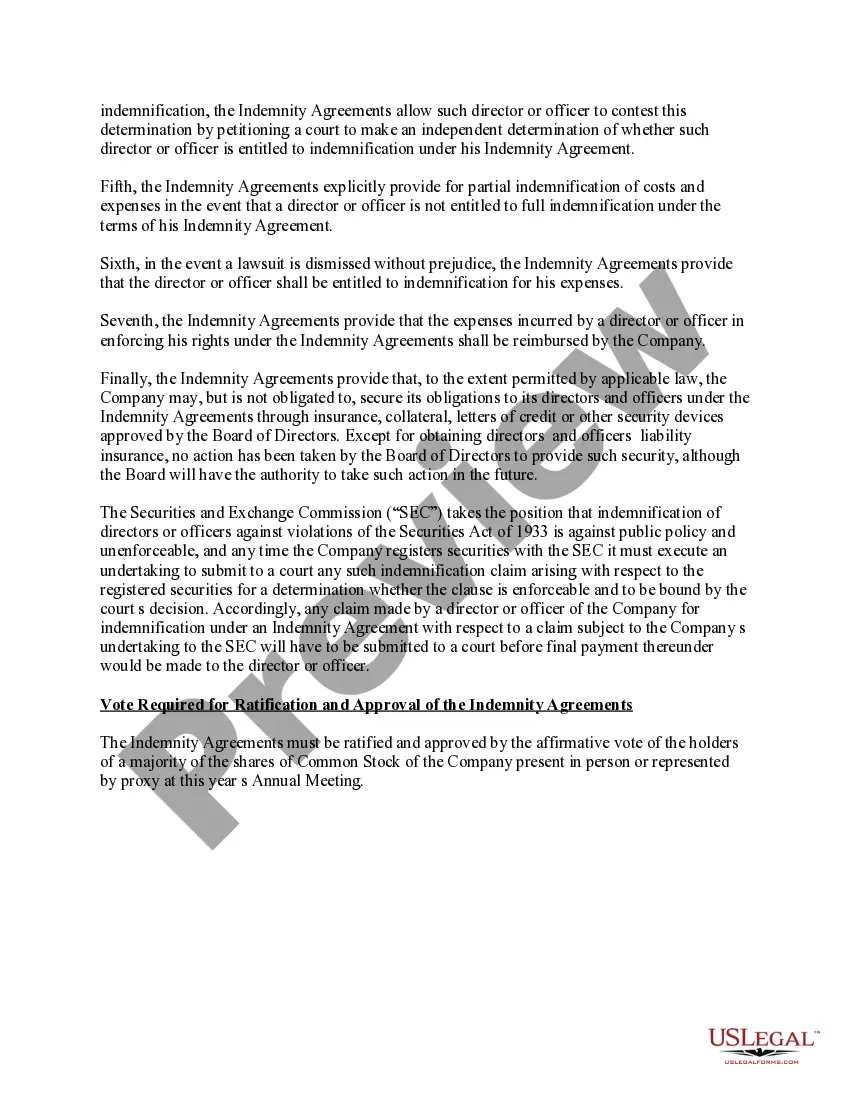
- Provisions for the mandatory ratification process by shareholders.
- Conditions under which indemnification will occur, including actions taken and standards of conduct.
- Specifications on the termination of indemnity agreements in relation to annual meetings.
- Clarification on the protection against challenges to the enforceability of agreements.
When this form is needed
This form should be utilized when a company seeks to ratify indemnity agreements that protect its directors and officers from legal liabilities arising from their service. It is particularly important to use this form prior to annual meetings to ensure that shareholders approve the indemnity agreements, thereby strengthening the defense against future challenges to their validity.
Who should use this form
This form is intended for:
- Corporate boards of directors overseeing indemnity agreements.
- Corporate officers requiring legal protection for their management decisions.
- Shareholders who need to understand and vote on the ratification of these agreements.
- Legal counsel advising companies on corporate governance matters.
How to complete this form
- Identify the company and ensure the board of directors has authorized the indemnity agreements.
- Attach the indemnity agreements as an exhibit to the ratification form.
- Specify the date and the annual meeting at which the agreements will be ratified.
- Ensure that a majority of stockholders vote in favor of the approval at the meeting.
- Record the voting results and file the ratification documentation appropriately.
Notarization requirements for this form
This form does not typically require notarization to be legally valid. However, some jurisdictions or document types may still require it. US Legal Forms provides secure online notarization powered by Notarize, available 24/7 for added convenience.
Get your form ready online
Our built-in tools help you complete, sign, share, and store your documents in one place.
Make edits, fill in missing information, and update formatting in US Legal Forms—just like you would in MS Word.
Download a copy, print it, send it by email, or mail it via USPS—whatever works best for your next step.
Sign and collect signatures with our SignNow integration. Send to multiple recipients, set reminders, and more. Go Premium to unlock E-Sign.
If this form requires notarization, complete it online through a secure video call—no need to meet a notary in person or wait for an appointment.
We protect your documents and personal data by following strict security and privacy standards.

Make edits, fill in missing information, and update formatting in US Legal Forms—just like you would in MS Word.

Download a copy, print it, send it by email, or mail it via USPS—whatever works best for your next step.

Sign and collect signatures with our SignNow integration. Send to multiple recipients, set reminders, and more. Go Premium to unlock E-Sign.

If this form requires notarization, complete it online through a secure video call—no need to meet a notary in person or wait for an appointment.

We protect your documents and personal data by following strict security and privacy standards.
Avoid these common issues
- Failing to properly attach the indemnity agreements as required.
- Not ensuring a majority vote from shareholders at the annual meeting.
- Overlooking specific state requirements for corporate indemnification.
- Neglecting to document the approval process and outcomes effectively.
Why use this form online
- Convenient and quick access to legally sound indemnity agreement templates.
- Editable online forms that can be customized to fit specific corporate needs.
- Assurance of compliance with applicable legal standards and state-specific requirements.
- Secure storage options for completed forms providing an easy retrieval process.
Legal use & context
- The form is enforceable under Delaware corporate law and ensures that board members have legal protections.
- Helps prevent challenges to the validity of indemnity agreements by requiring shareholder approval.
- Establishes a clear guideline for indemnification, promoting transparency and accountability in corporate governance.
Summary of main points
- The Ratification and Approval of Indemnity Agreements form is key for corporate governance and legal protection.
- The form must be approved by stockholders to safeguard against potential liabilities.
- Detailed attention to compliance with Delaware law is essential for the validity of these agreements.
Looking for another form?
Form popularity
FAQ
This preview shows page 1 - 3 out of 4 pages. (a) Express (oral or written) (b) Tacit (implied as from conduct implying a WAIVER). Tacit Ratification (a) A minor bought land, but sold the same, after reaching 21 years of age, to a 3rd person.
The traditional constitutional amendment process is described in Article V of the Constitution. Congress must pass a proposed amendment by a two-thirds majority vote in both the Senate and the House of Representatives and send it to the states for ratification by a vote of the state legislatures.
In the context of the United States government, ratification is used in two senses. First, there is the ratification of constitutional amendments. Second, there is the ratification of foreign treaties.
When the term indemnity is used in the legal sense, it may also refer to an exemption from liability for damages. Indemnity is a contractual agreement between two parties. In this arrangement, one party agrees to pay for potential losses or damages caused by another party.
Ratification is a principal's approval of an act of its agent that lacked the authority to bind the principal legally. Ratification defines the international act in which a state indicates its consent to be bound to a treaty if the parties intended to show their consent by such an act.
The Senate ratified the treaty. To ratify is to approve and give formal consent to something. When all the delegates sign a constitution, this is an example of a situation where they ratify the constitution.
Ratification: approval of agreement by the state After approval has been granted under a state's own internal procedures, it will notify the other parties that they consent to be bound by the treaty. This is called ratification.
Look over the agreement and make sure you understand the terms and conditions. If you ratify one part of the contract, you have to ratify the entire agreement. Make an express or implied declaration that you accept the terms. Continue honoring the terms of the contract as normal.