Option to Purchase Common Stock
What is this form?
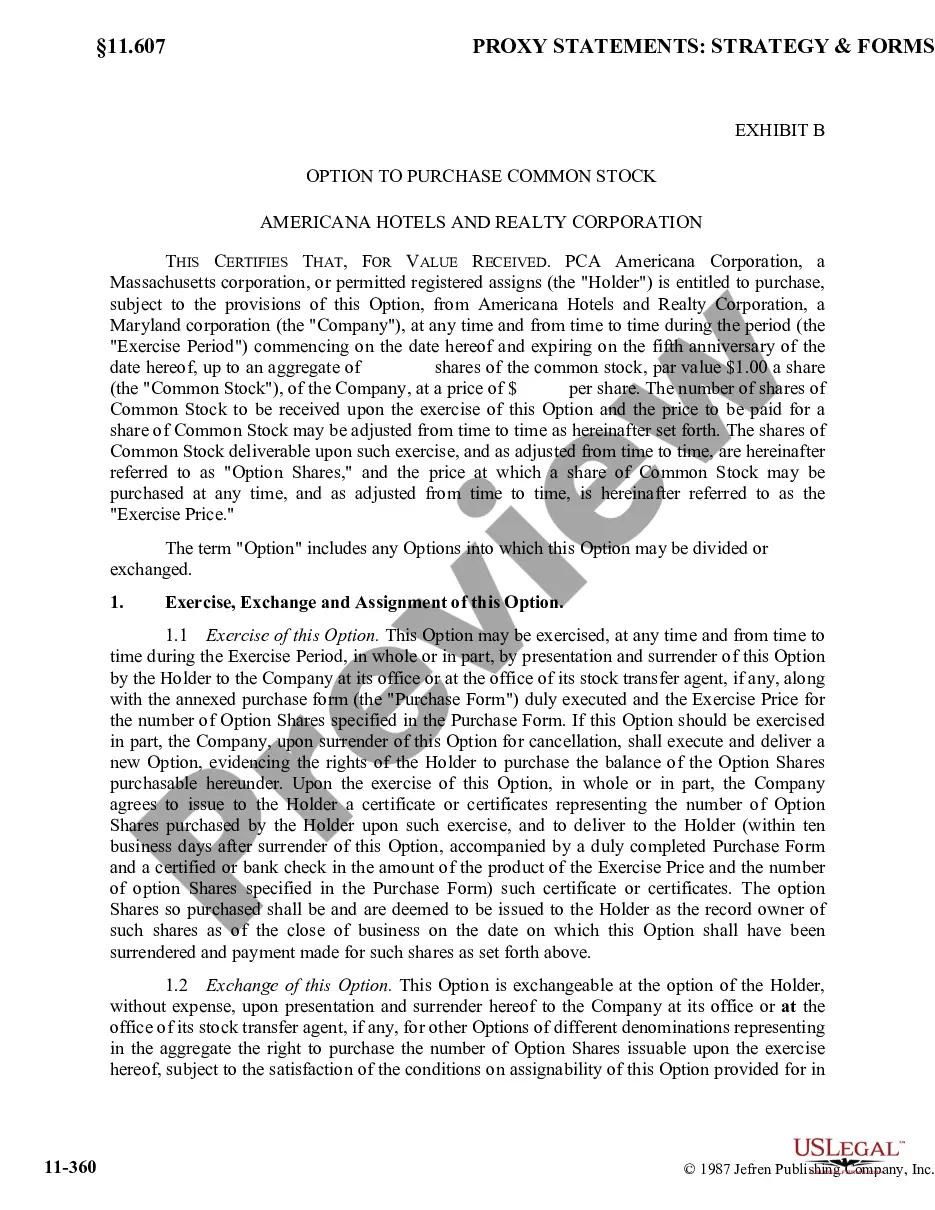
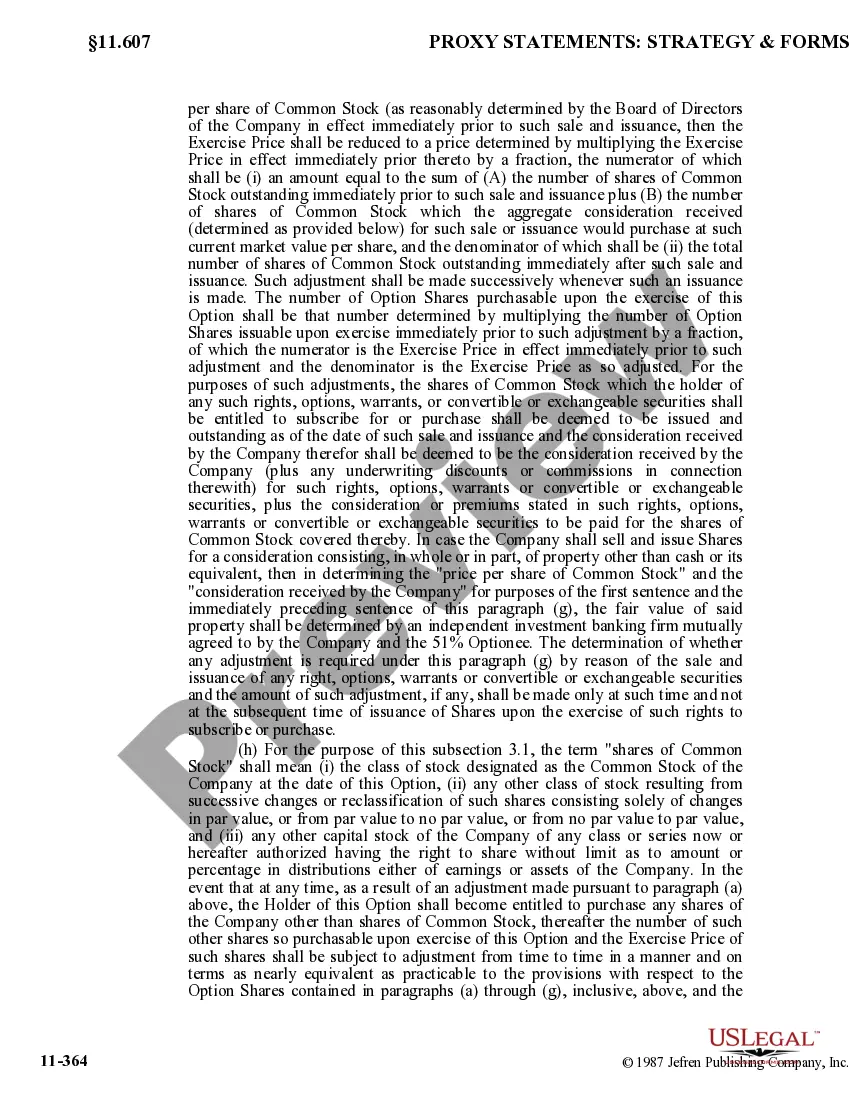
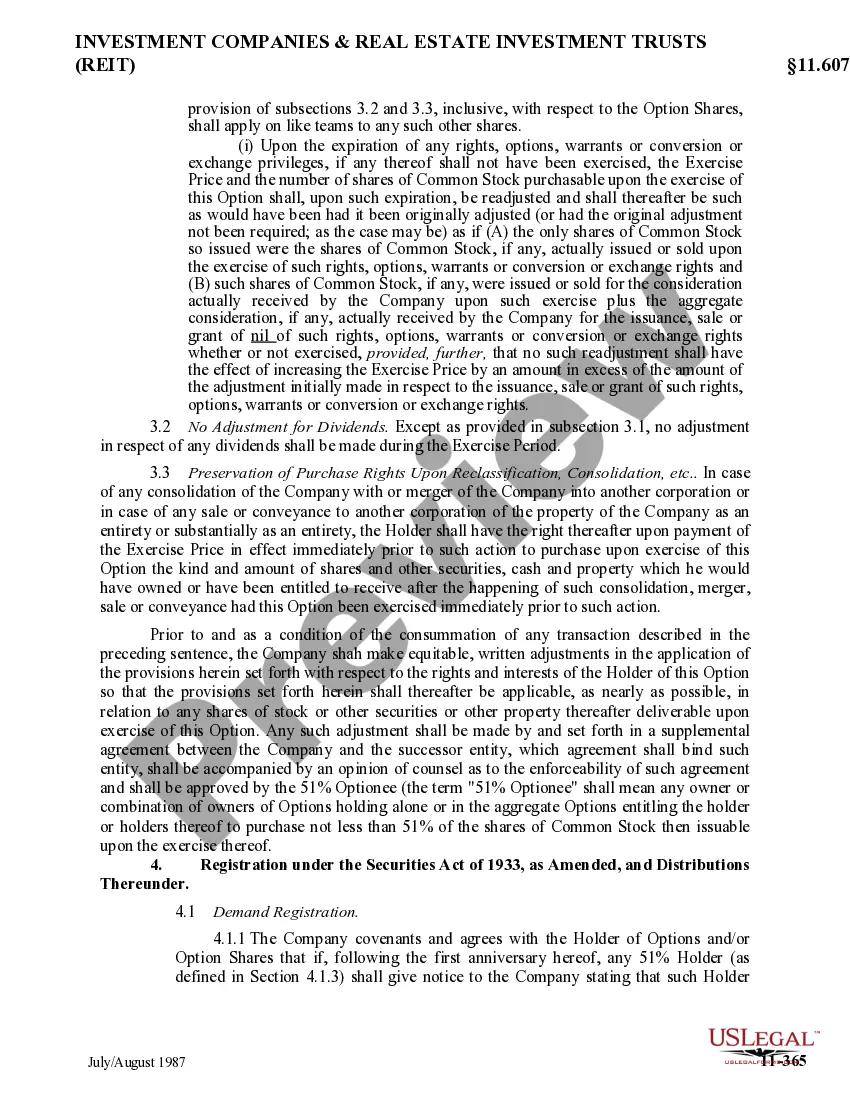
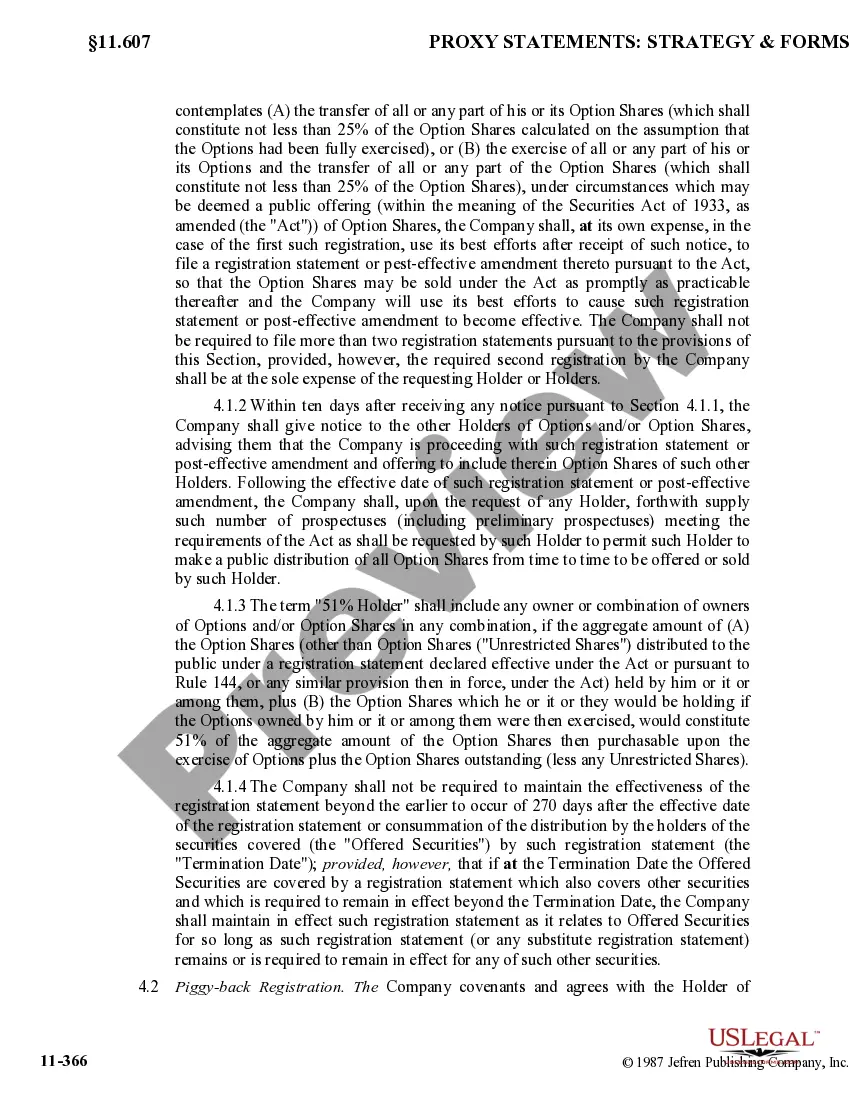
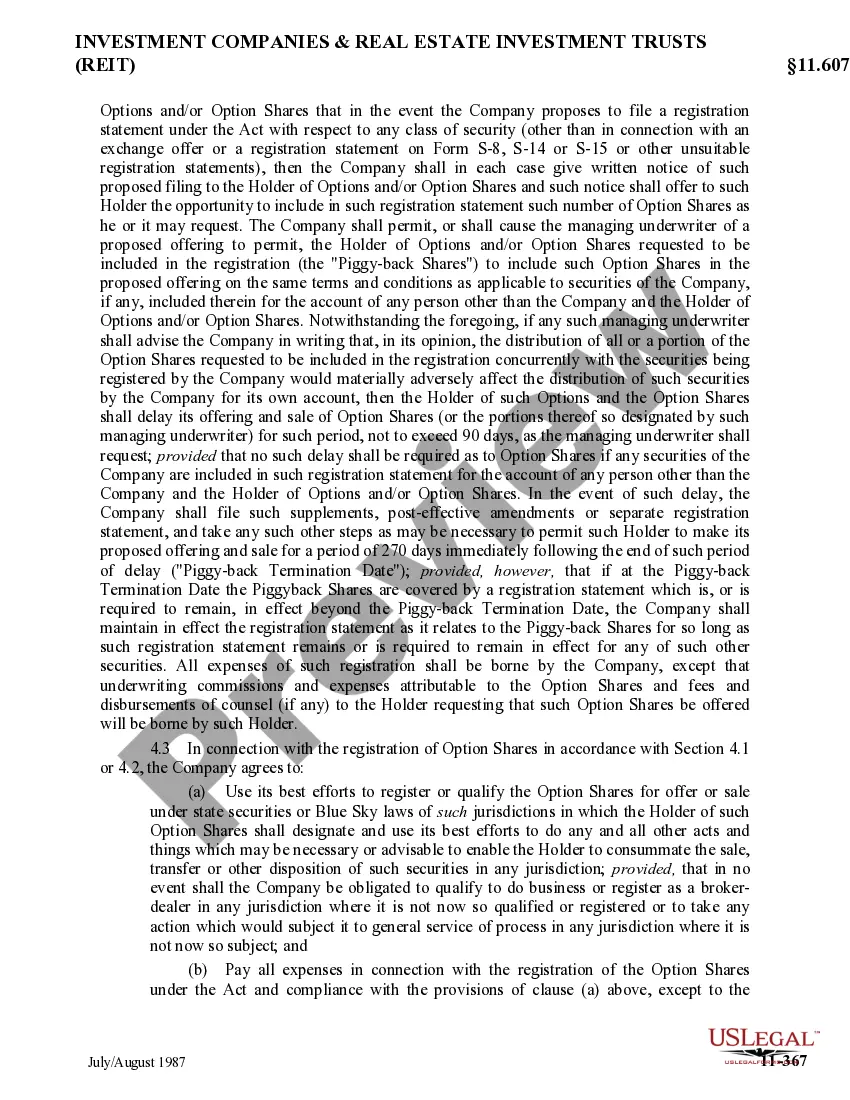
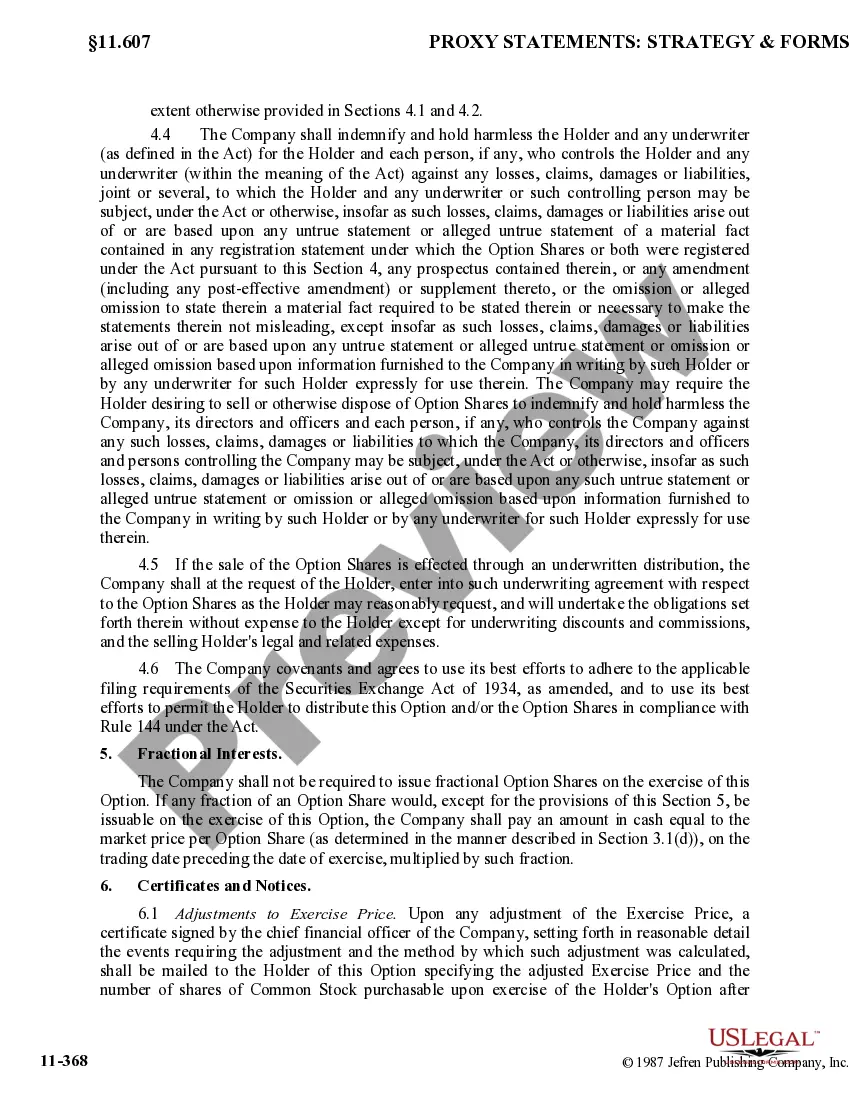
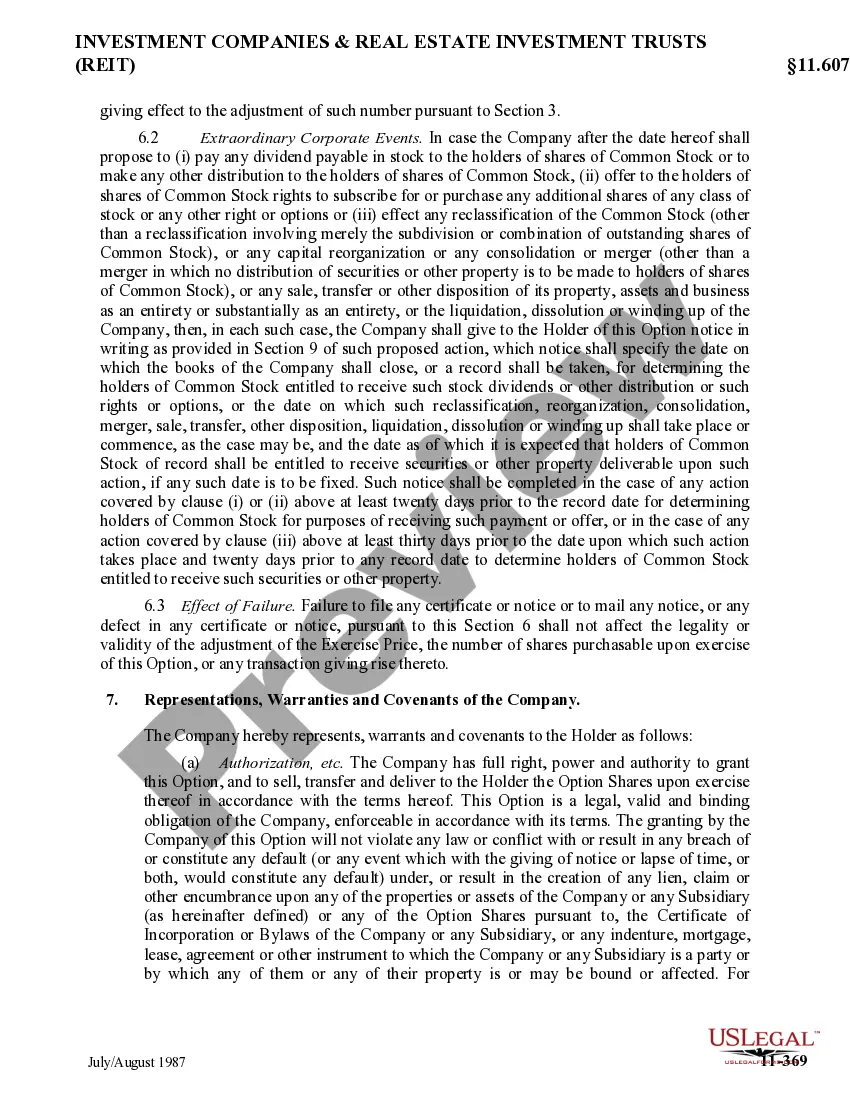
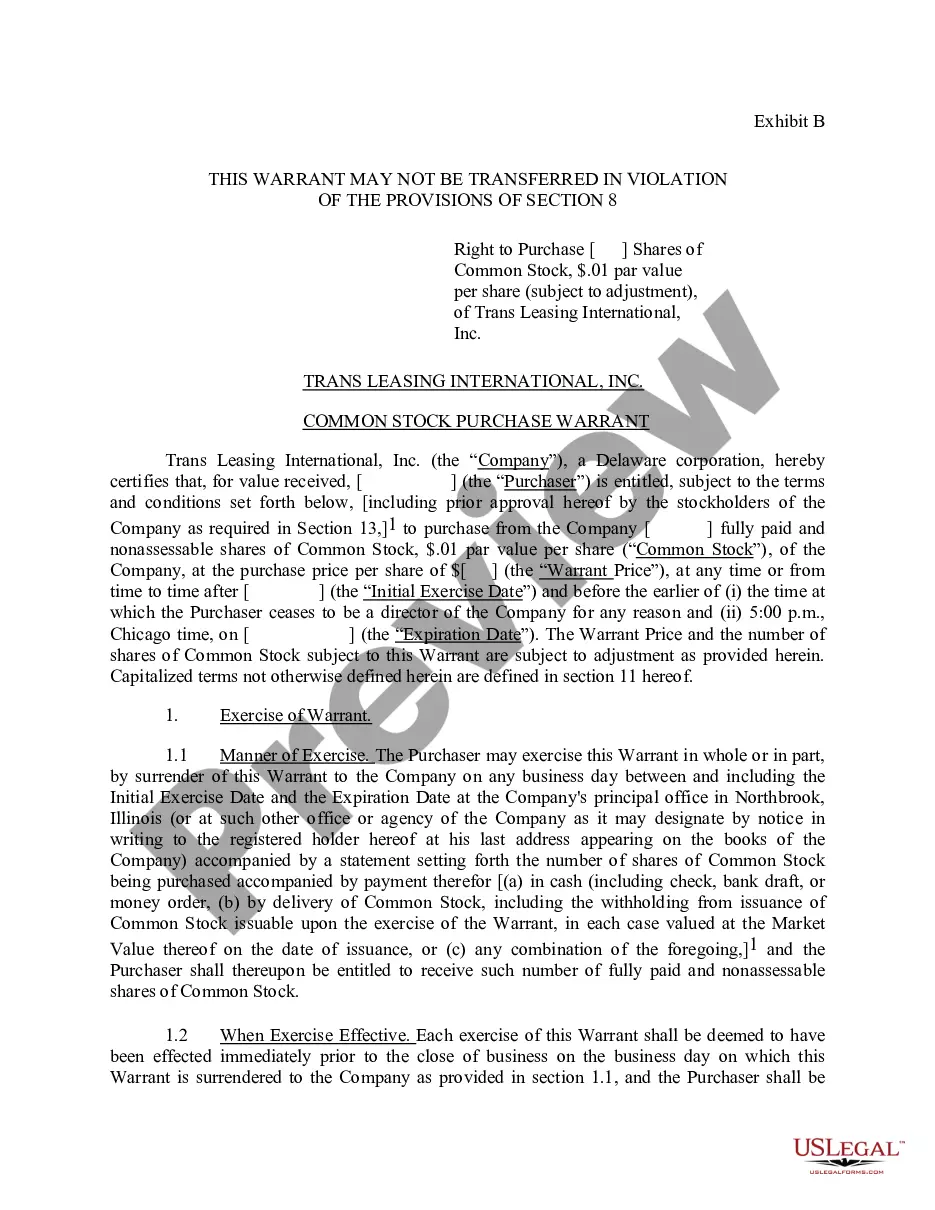
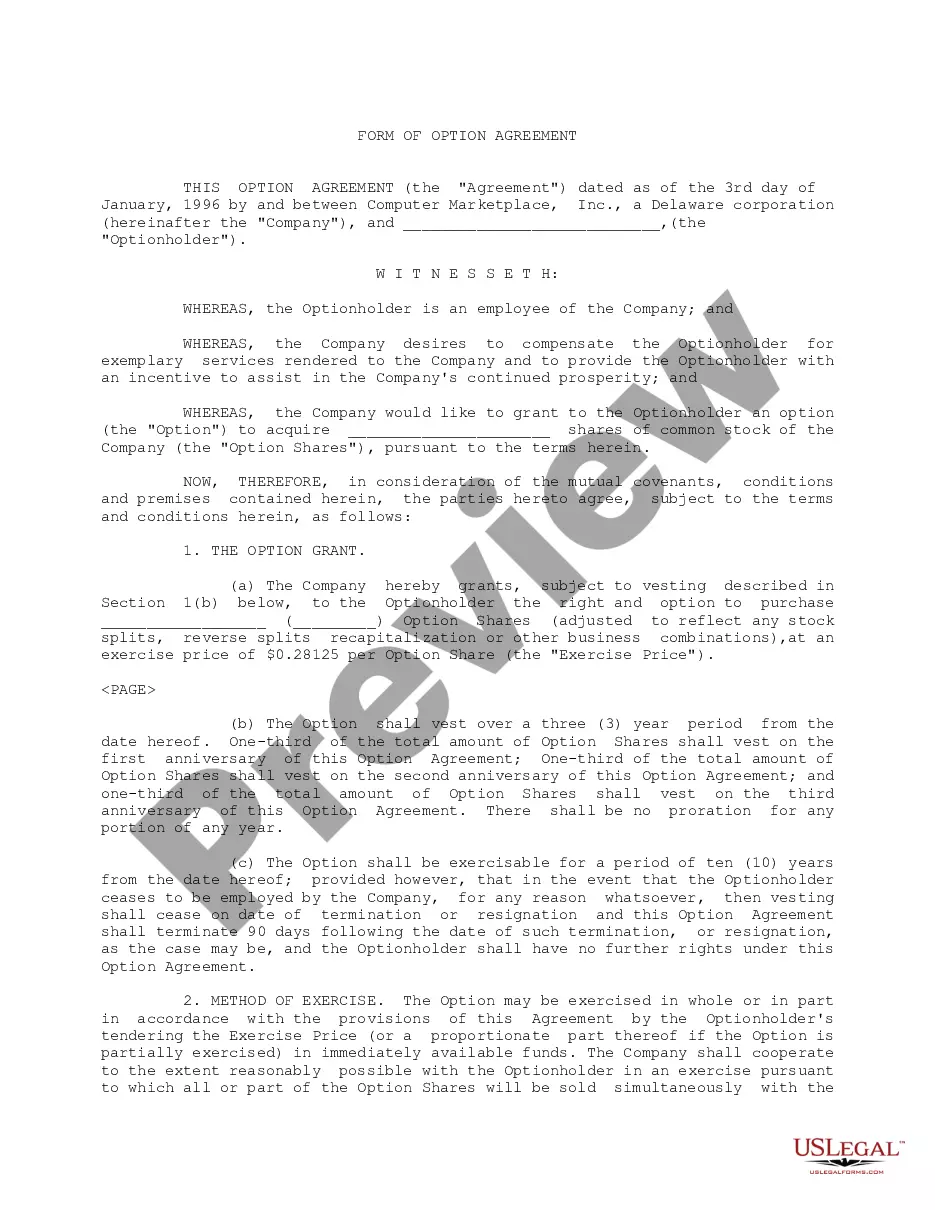
The Option to Purchase Common Stock form is a legal document that grants an individual or entity the right to purchase shares of common stock at a predetermined price within a specific timeframe. This stock option can be issued to investment advisers and their employees, enabling them to buy stock in a Real Estate Investment Trust (REIT). It serves as a key tool for organizations to incentivize and reward key personnel while allowing stockholders to benefit from potential stock appreciation.
Form components explained
- Identification of the company granting the option and the holder of the option.
- Details on the number of shares available for purchase and the exercise price.
- Terms for exercising the option, including the exercise period and payment procedures.
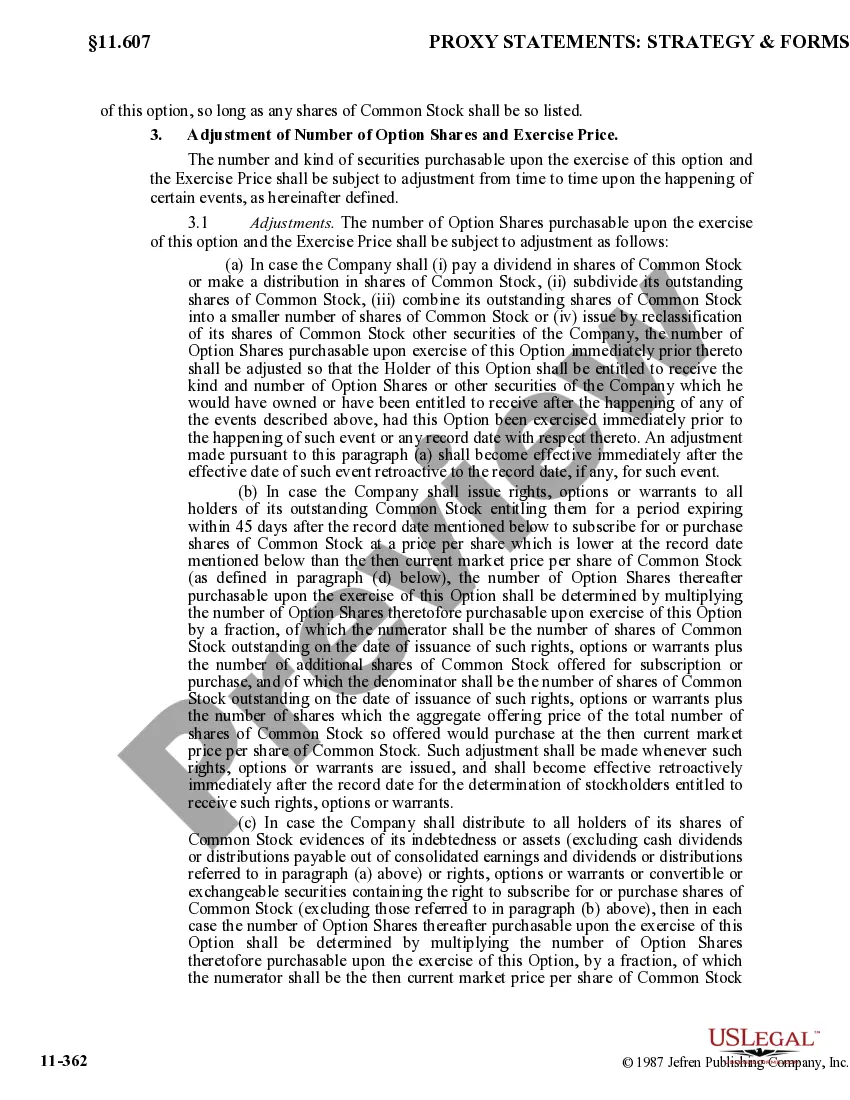
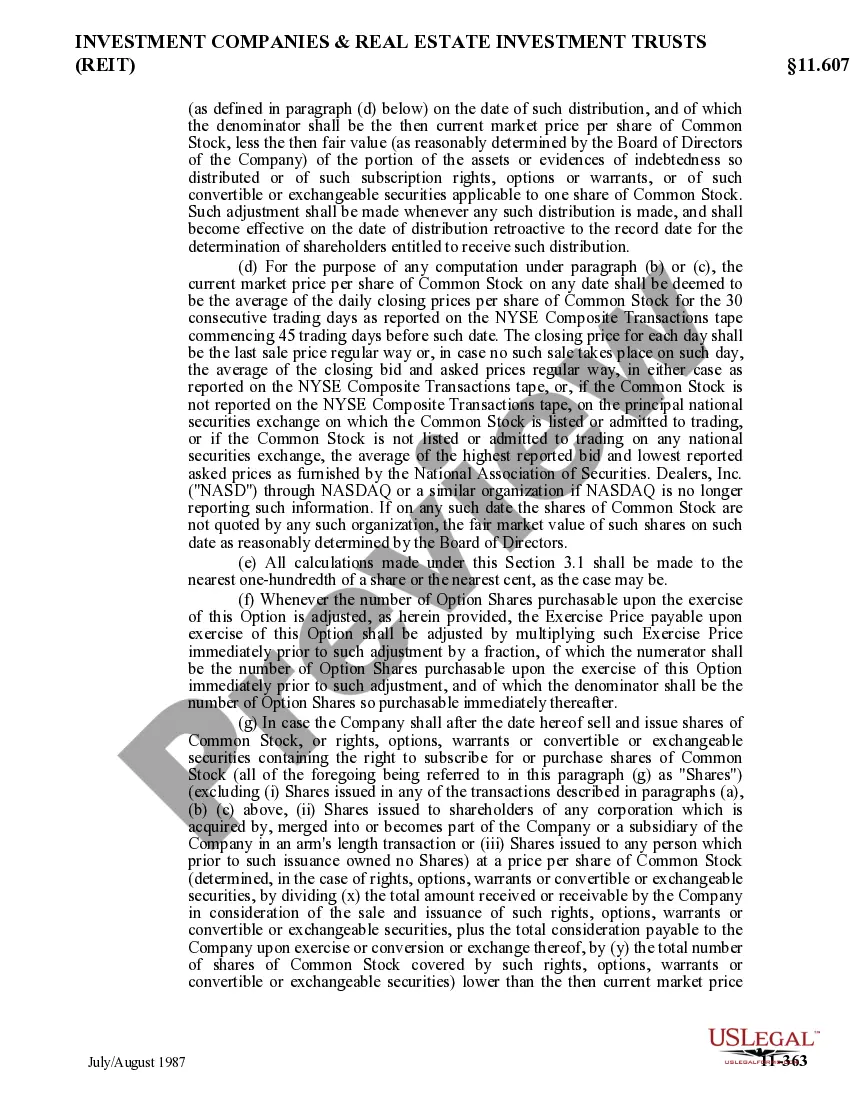
- Provisions regarding adjustments of shares and exercise price due to stock splits or other corporate actions.
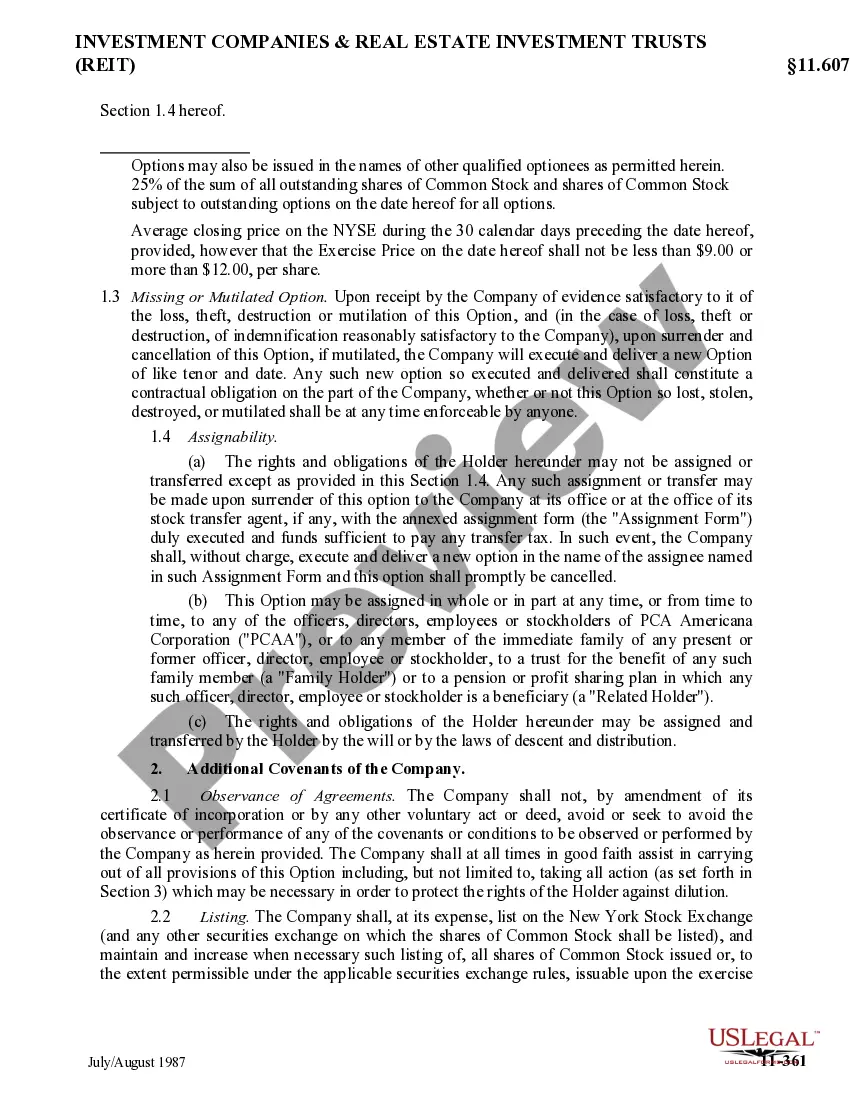
- Assignability conditions and restrictions on transferring the option.
- Requirements for registration of shares when the option is exercised.

When to use this document
This form should be used when a company wishes to offer stock options to its advisers, employees, directors, or officers as part of their compensation package. It is especially relevant in scenarios where a company wants to incentivize performance, align interests with shareholders, or retain key talent. Using this option can also facilitate future investment opportunities for the holder as the company grows.
Who this form is for
- Companies looking to grant stock options to their employees or executives.
- Investment advisers seeking to offer incentives for performance and retention.
- Directors and officers of a company who are being rewarded with stock options.
- Individuals or entities wanting to understand their rights and obligations related to stock options.
Instructions for completing this form
- Identify the parties involved: the company and the holder of the option.
- Specify the number of shares available for purchase and the exercise price per share.
- Include the relevant exercise period within which the option can be exercised.
- Ensure the conditions for adjusting the number of shares and exercise price are accurately stated.
- Provide spaces for signatures of the authorized representatives from both the company and the holder.
Is notarization required?
This form does not typically require notarization unless specified by local law. It is advisable to verify local regulations to ensure all legal requirements are met.
Get your form ready online
Our built-in tools help you complete, sign, share, and store your documents in one place.
Make edits, fill in missing information, and update formatting in US Legal Forms—just like you would in MS Word.
Download a copy, print it, send it by email, or mail it via USPS—whatever works best for your next step.
Sign and collect signatures with our SignNow integration. Send to multiple recipients, set reminders, and more. Go Premium to unlock E-Sign.
If this form requires notarization, complete it online through a secure video call—no need to meet a notary in person or wait for an appointment.
We protect your documents and personal data by following strict security and privacy standards.

Make edits, fill in missing information, and update formatting in US Legal Forms—just like you would in MS Word.

Download a copy, print it, send it by email, or mail it via USPS—whatever works best for your next step.

Sign and collect signatures with our SignNow integration. Send to multiple recipients, set reminders, and more. Go Premium to unlock E-Sign.

If this form requires notarization, complete it online through a secure video call—no need to meet a notary in person or wait for an appointment.

We protect your documents and personal data by following strict security and privacy standards.
Typical mistakes to avoid
- Failing to specify the exact number of shares or their associated exercise price.
- Not including the correct exercise period, leading to confusion about when the option can be exercised.
- Neglecting to address potential adjustments to the number of shares or exercise price.
Why complete this form online
- Convenience of filling out the form at your own pace without the need for in-person meetings.
- Editability allows users to make necessary changes before finalizing the document.
- Access to templates drafted by licensed attorneys ensures reliability and compliance with current laws.
Understanding the legal context:
- This form is legally binding and must comply with the terms set in corporate governance rules.
- Proper execution ensures that both the company and holder are protected in their transactions.
- Rights associated with the options may vary based on state and federal regulations.
What to keep in mind
- The Option to Purchase Common Stock form is essential for granting stock options to employees and advisers.
- Ensuring accurate details regarding shares, prices, and periods is crucial for enforceability.
- Consult a legal expert when necessary to navigate state-specific requirements and avoid common pitfalls.
Looking for another form?




Form popularity
FAQ
A stock option is the right to buy a specific number of shares of company stock at a pre-set price, known as the exercise or strike price, for a fixed period of time, usually following a predetermined waiting period, called the vesting period. Most vesting periods span follow three to five years, with a certain
A stock option gives an investor the right, but not the obligation, to buy or sell a stock at an agreed upon price and date. There are two types of options: puts, which is a bet that a stock will fall, or calls, which is a bet that a stock will rise.
Investment Risk Beyond the risk of giving up your money, buying shares in your private company means you're taking a risk as an investor, and you need to make sure the risk is worth it. Yes, every investment comes with risk built in, but not all investment risks are created equal.meaning you'll lose all your money.
You Could Make a Lot of Money with Stock Options (But There's No Guarantee) Think of a start-up company that gives you 100,000 company stock options with a strike price of $1 per share. At issue, they probably won't be worth much.If that happened, the value of the stock options would go from nothing to $9,900,000.
A stock option is a financial instrument which gives its holder the right but no the obligation to buy an underlying asset (common stock of the company) at a predefined price called the strike price, at a given time (whenever after the vesting period).
If you have been given the opportunity to purchase stock options, you may want to take advantage of them if you can afford to do so. But you should not go into debt to purchase stock options.Some stock options are given as tax-free, and you will only pay a capital gains tax when you sell them.
These plans can be great investments if used correctly. Purchasing stock at a discount is certainly a valuable tool for accumulating wealth, but comes with investment risks you should consider. An ESPP plan with a 15% discount effectively yields an immediate 17.6% return on investment.
A stock option gives an employee the ability to buy shares of company stock at a certain price, within a certain period of time.Employees who exercise their options and sell their shares when the company's stock is trading significantly higher than the grant price have the potential to make a lot of money.
Options can be less risky for investors because they require less financial commitment than equities, and they can also be less risky due to their relative imperviousness to the potentially catastrophic effects of gap openings. Options are the most dependable form of hedge, and this also makes them safer than stocks.