Checklist of Questions to Ask Potential Witnesses
About this form
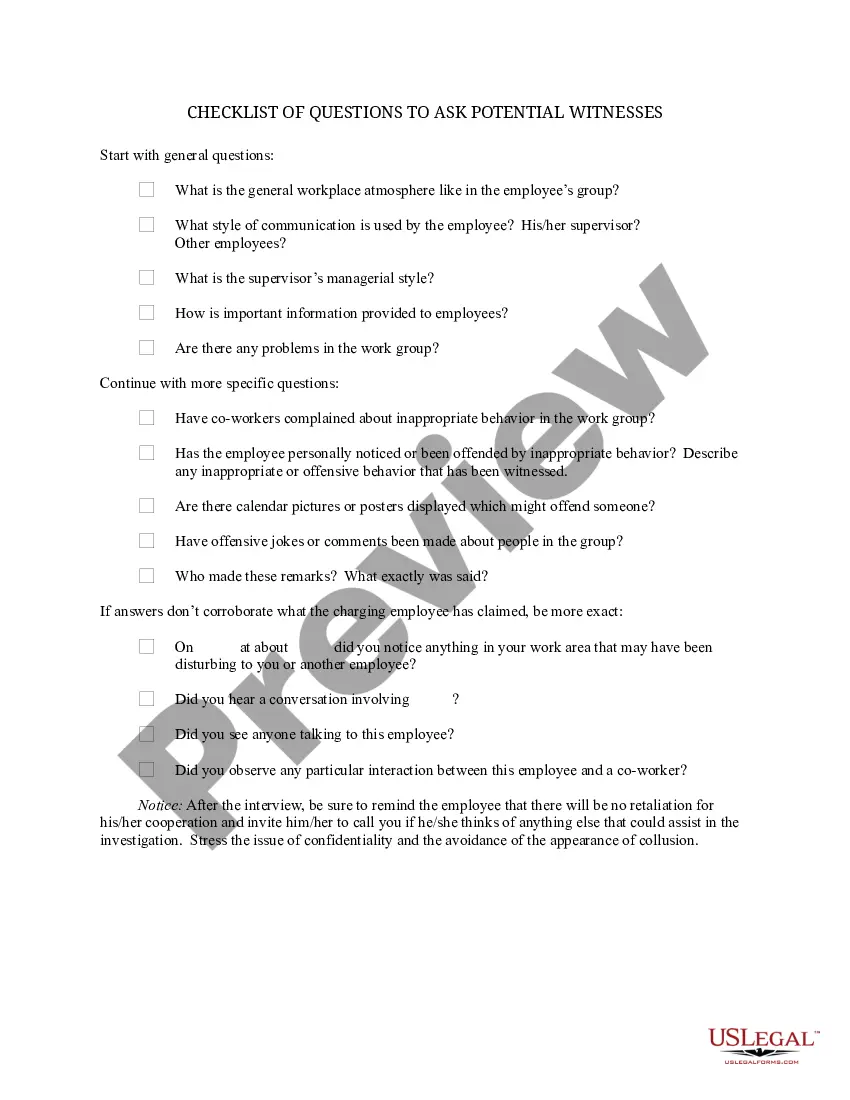
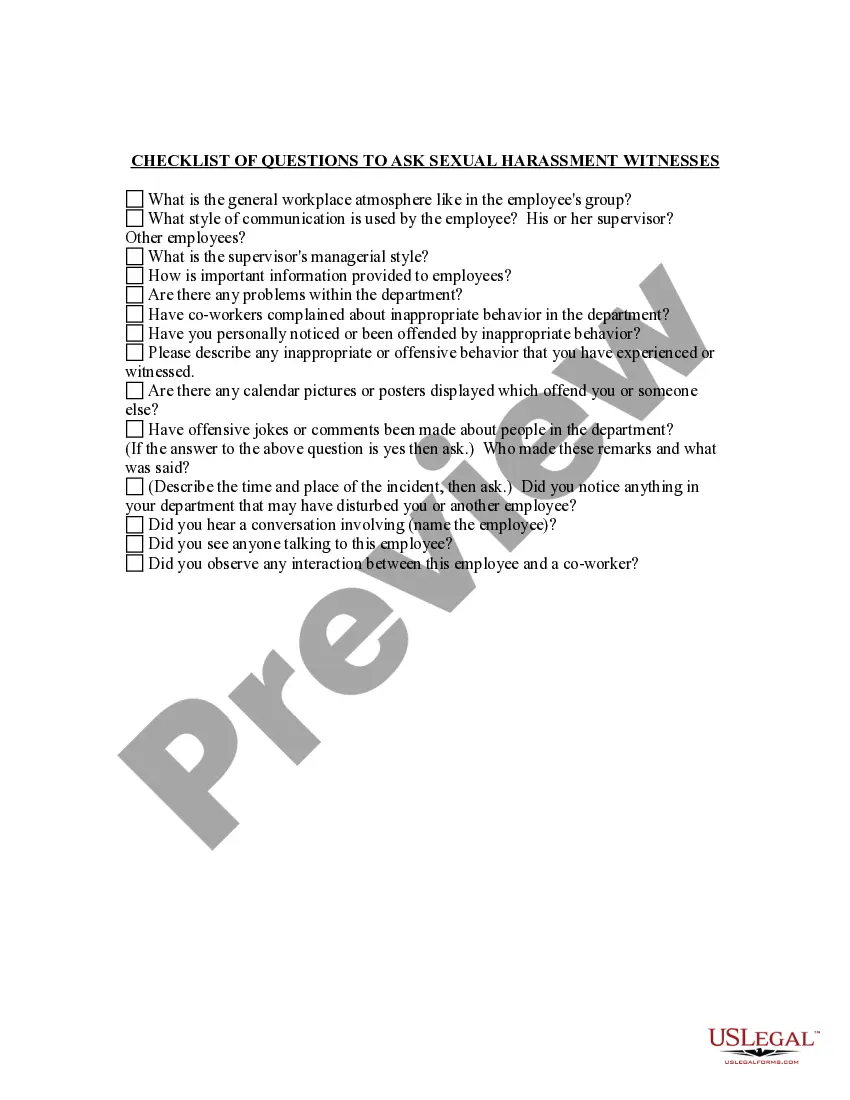
The checklist of questions to ask potential witnesses is a crucial tool designed to assist those conducting investigations into allegations of sexual harassment. This checklist enables investigators to focus on the pertinent details related to the case, ensuring that they gather comprehensive and relevant information from witnesses. It streamlines the process of inquiry and helps differentiate it from other forms of witness statements by providing specific, targeted questions aimed at uncovering the context of the situation effectively.
What’s included in this form
- General workplace atmosphere assessment
- Style of communication used by supervisors and employees
- Supervisory managerial style information
- Provisions for discussing inappropriate behavior
- Record of any uncomfortable or offensive incidents witnessed
- Confidentiality reminder for witnesses following interviews
Common use cases
This form is utilized by employers or investigators during inquiries into sexual harassment allegations. It is particularly important when there are claims made by an employee about inappropriate conduct in the workplace, ensuring that all relevant witnesses can respond appropriately and that their testimonies are collected in a structured manner.
Who this form is for
- Human resource professionals conducting investigations
- Management personnel seeking to address workplace complaints
- Legal representatives involved in sexual harassment claims
- Employees acting in an advocacy or support role for their peers
Completing this form step by step
- Start with general questions about the work environment to gauge the context of potential harassment.
- Ask specific questions about communication styles between employees and supervisors.
- Inquire about any observed inappropriate behaviors and details regarding those incidents.
- Document any offensive materials or comments made in the workplace.
- Provide reassurance about confidentiality to encourage honest responses from witnesses.
Does this form need to be notarized?
Notarization is not commonly needed for this form. However, certain documents or local rules may make it necessary. Our notarization service, powered by Notarize, allows you to finalize it securely online anytime, day or night.
Get your form ready online
Our built-in tools help you complete, sign, share, and store your documents in one place.
Make edits, fill in missing information, and update formatting in US Legal Forms—just like you would in MS Word.
Download a copy, print it, send it by email, or mail it via USPS—whatever works best for your next step.
Sign and collect signatures with our SignNow integration. Send to multiple recipients, set reminders, and more. Go Premium to unlock E-Sign.
If this form requires notarization, complete it online through a secure video call—no need to meet a notary in person or wait for an appointment.
We protect your documents and personal data by following strict security and privacy standards.

Make edits, fill in missing information, and update formatting in US Legal Forms—just like you would in MS Word.

Download a copy, print it, send it by email, or mail it via USPS—whatever works best for your next step.

Sign and collect signatures with our SignNow integration. Send to multiple recipients, set reminders, and more. Go Premium to unlock E-Sign.

If this form requires notarization, complete it online through a secure video call—no need to meet a notary in person or wait for an appointment.

We protect your documents and personal data by following strict security and privacy standards.
Common mistakes to avoid
- Failing to ask follow-up questions based on initial responses.
- Neglecting to document witness statements accurately.
- Not maintaining confidentiality, which could discourage honest reporting.
Advantages of online completion
- Easy access and download from any location, enhancing convenience.
- Editable fields allow for personalized adaptations to fit specific situations.
- Structured format ensures thoroughness in witness interviews.
Legal use & context
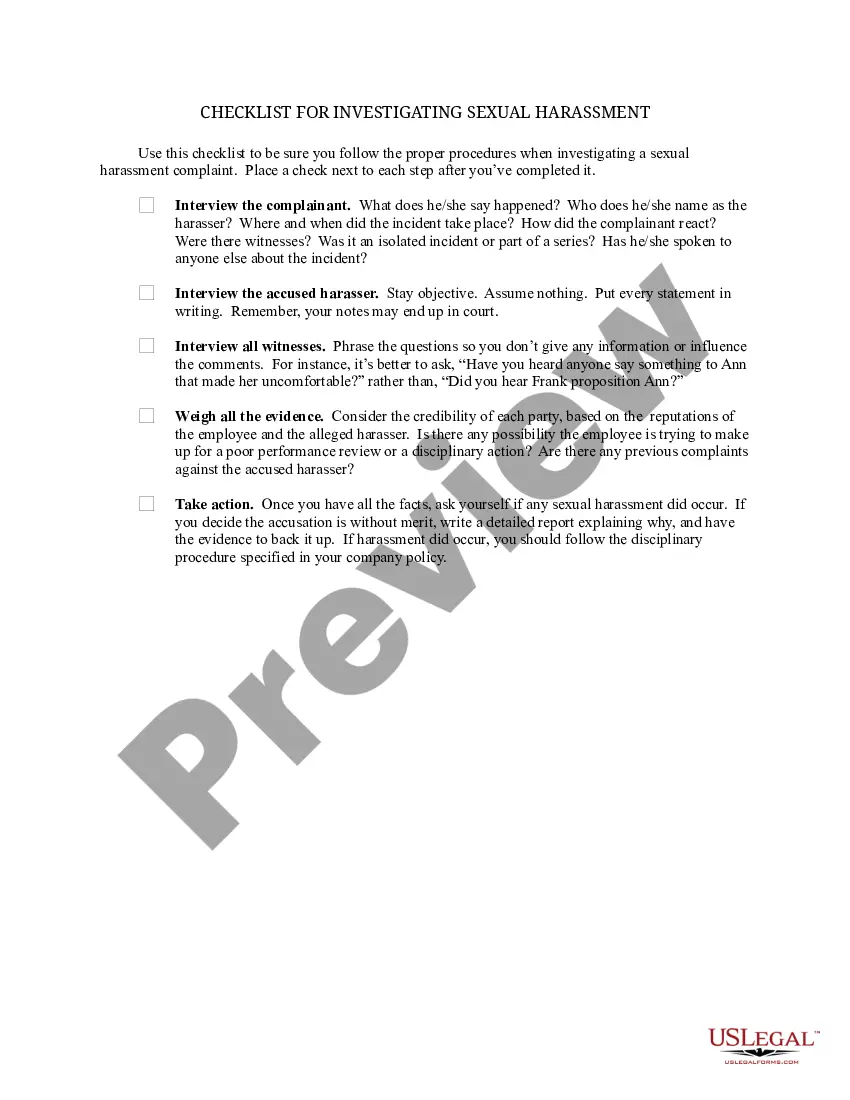
- This checklist is designed for use in sexual harassment investigations, providing a legal framework for witness statements.
- While useful, findings based on this checklist may need to be corroborated by additional evidence in formal legal proceedings.
Summary of main points
- This form aids in the structured collection of witness statements concerning sexual harassment claims.
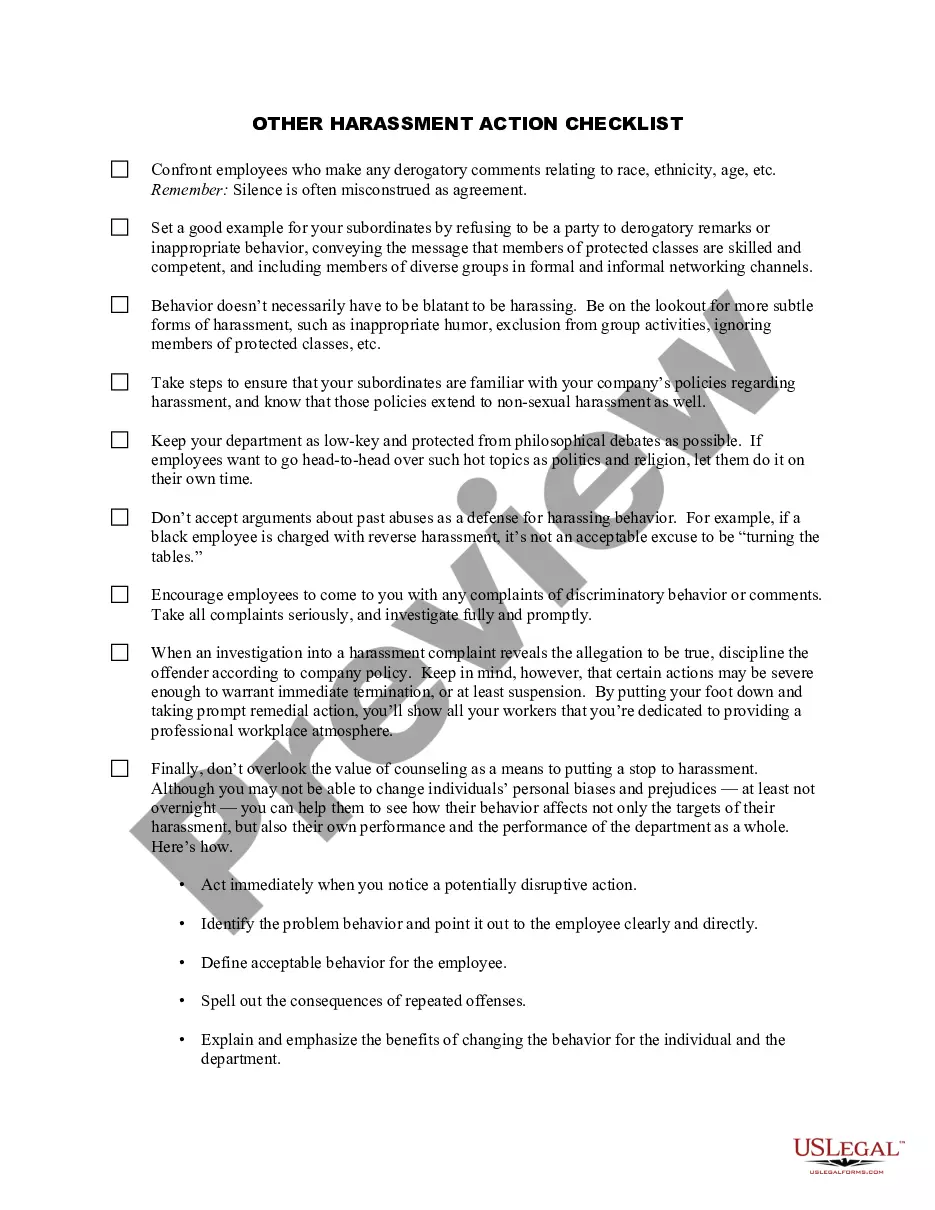
- It's important for all involved parties to understand their rights and the process of reporting and documenting harassment.
- Confidentiality and non-retaliation assurances should always be emphasized during the interview process.
Looking for another form?
Form popularity
FAQ
Did you see what she was wearing? Did he have a weapon? Was the gun loaded? What kind of car was the thief driving? I will need to get a statement from you. How long ago did this happen? If you think of anything else, please notify us.
A lay witness the most common type is a person who watched certain events and describes what they saw. An expert witness is a specialist someone who is educated in a certain area. A character witness is someone who knew the victim, the defendant, or other people involved in the case.
What did you witness? What was the date, time and duration of the incident or behavior you witnessed? Where did it happen? Who was involved? What did each person do and say? Did anyone else see it happen? What did you do after witnessing the incident or behavior?
You can start questioning your witnesses, one at a time, by asking them their name and asking them some background information, like how they know the parties in the case. You will then have to get into asking questions about the event they witnessed or any other issue they are there to testify about.
A competent witness is one who has the sufficient mental capacity to perceive, remember, and narrate the incident he or she has observed. A competent witness must also be able to understand and appreciate the nature and obligation of an oath.A witness is generally presumed by the court to be competent.
Be prepared. Allow adequate time for the interview, to be conducted in an appropriate environment. Bring the pertinent files with you and use them. Organize the interview questions. Ask short, simple, concise questions. Listen intently watch the witness. Insist on complete, responsive answers. Press for detail.
He must, with understanding, take the oath or a substitute. Evid. He must have personal knowledge about the subject of his testimony. He must remember what he perceived. He must be able to communicate what he perceived.
Child witnesses As per Section 118 of the Evidence Act, any person is competent to be a witness unless the Court thinks that he cannot answer the questions being put to him. Furthermore, a child can be easily framed to answer the questions. The factor of age is a reasonable restriction on this.
There is no mandatory requirement that the witness have to testify his good standing in the community, reputation for trustworthiness and reliableness, honesty and uprightness in order that his testimony may be believed and accepted by the trial court.