Investigating Sexual Harassment Checklist - Workplace
Understanding this form
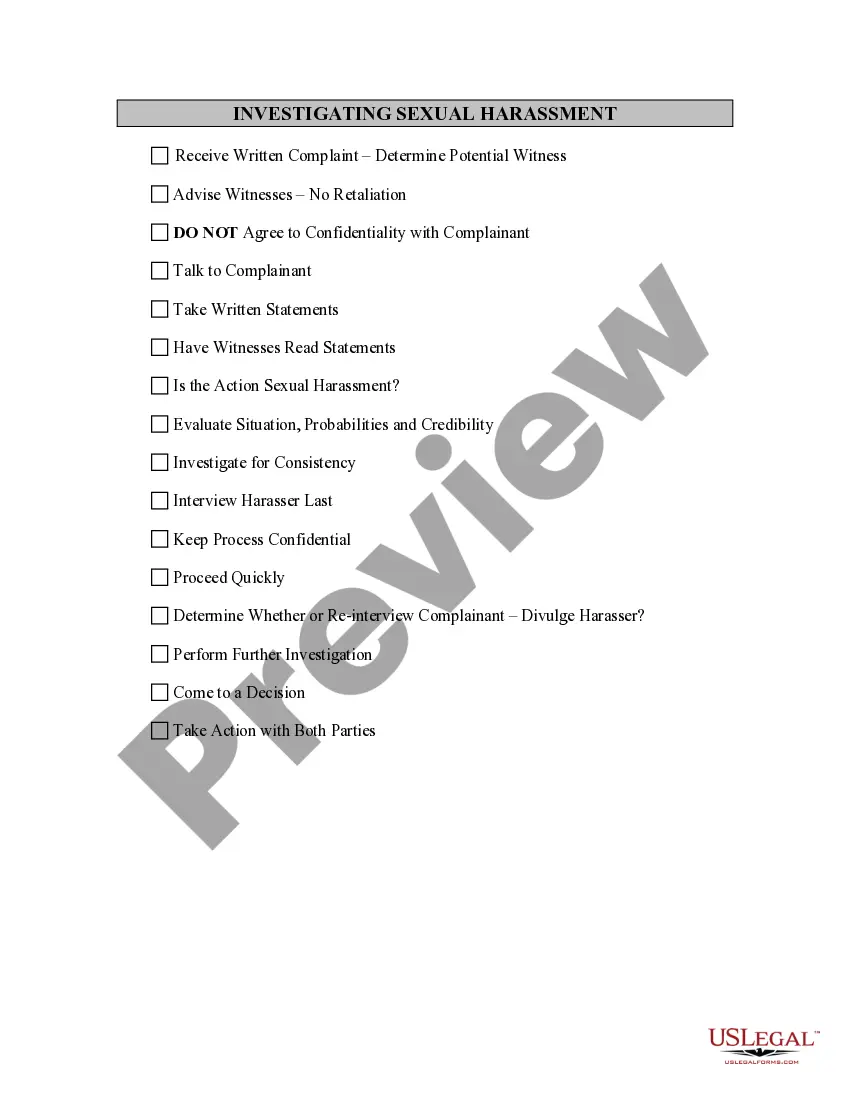
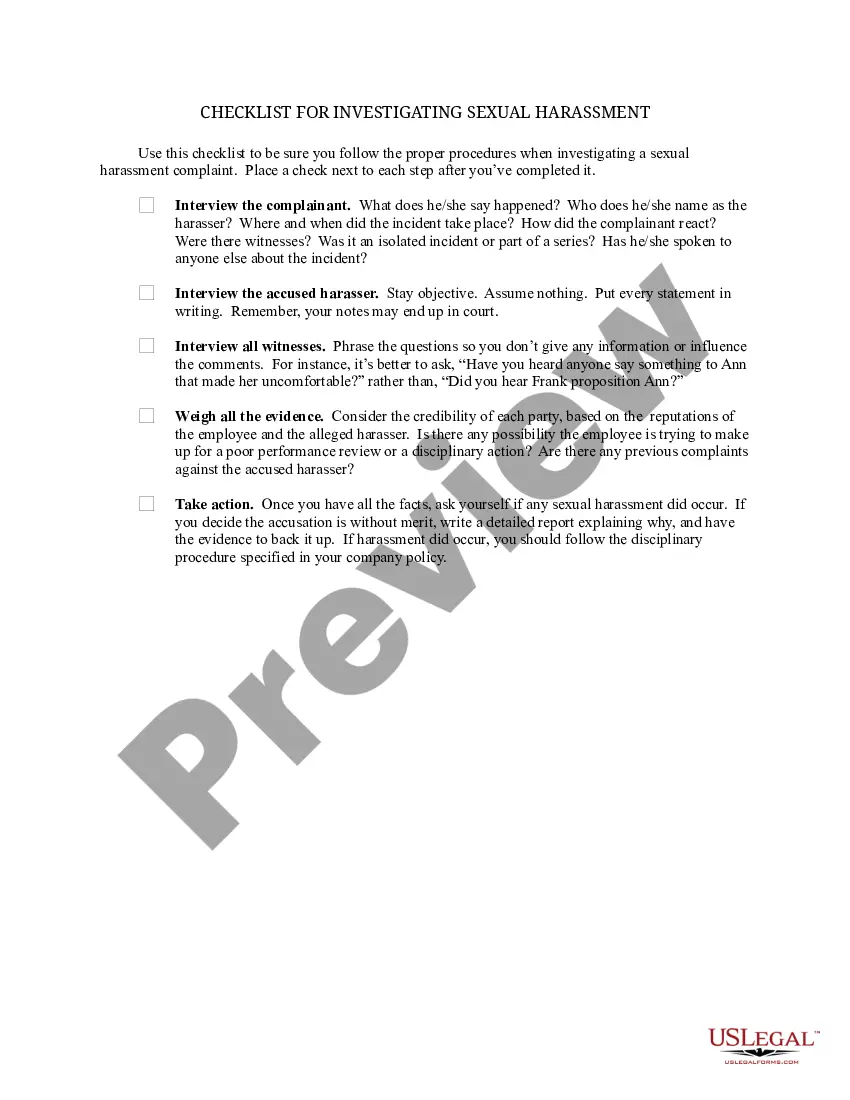
The Investigating Sexual Harassment Checklist for the workplace is a comprehensive tool designed to assist employers in handling sexual harassment complaints effectively. This form differs from similar documents by providing a detailed step-by-step approach to ensure thorough investigations and protect all parties involved. It is essential for maintaining a safe work environment and upholding legal standards in workplace conduct.
Main sections of this form
- Receive written complaint
- Determine potential witnesses
- Advise witnesses and ensure no retaliation
- Conduct interviews and gather written statements
- Evaluate the situation for credibility and consistency
- Take appropriate action based on findings
When this form is needed
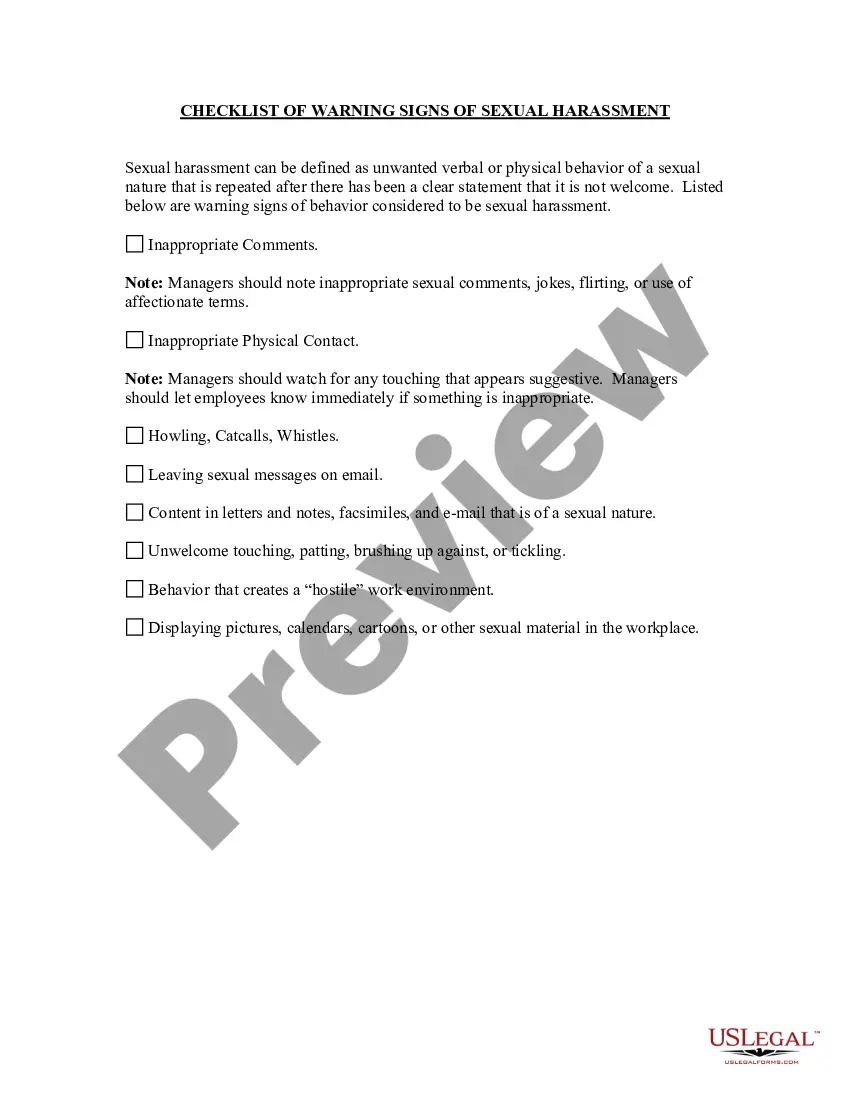
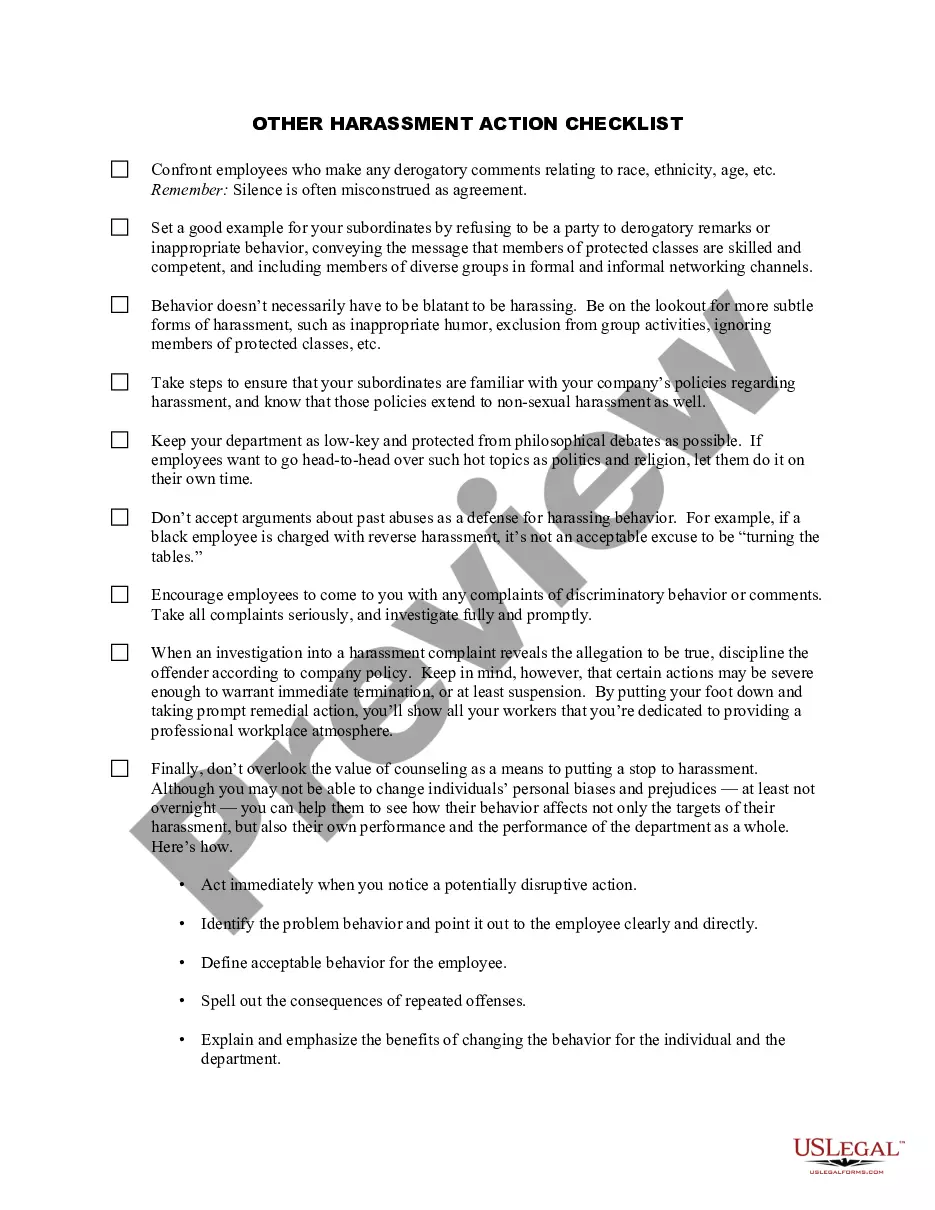
This checklist should be used when an employee reports an incident of sexual harassment in the workplace. It is essential during the investigative process to ensure that all necessary steps are taken to address the complaint promptly and legally. Employers of all sizes can utilize this checklist to navigate the complexities of workplace investigations and foster a respectful work environment.
Who this form is for
This form is intended for:
- Employers and HR professionals managing workplace complaints
- Supervisors responsible for investigating claims
- Employees involved in the harassment investigation process
Instructions for completing this form
- Receive and document the written complaint.
- Identify and list potential witnesses.
- Conduct interviews with witnesses and the complainant.
- Evaluate the provided statements for consistency.
- Reach a decision based on the gathered evidence.
- Implement actions to resolve the situation and communicate with both parties.
Notarization guidance
This form does not typically require notarization to be legally valid. However, some jurisdictions or document types may still require it. US Legal Forms provides secure online notarization powered by Notarize, available 24/7 for added convenience.
Get your form ready online
Our built-in tools help you complete, sign, share, and store your documents in one place.
Make edits, fill in missing information, and update formatting in US Legal Forms—just like you would in MS Word.
Download a copy, print it, send it by email, or mail it via USPS—whatever works best for your next step.
Sign and collect signatures with our SignNow integration. Send to multiple recipients, set reminders, and more. Go Premium to unlock E-Sign.
If this form requires notarization, complete it online through a secure video call—no need to meet a notary in person or wait for an appointment.
We protect your documents and personal data by following strict security and privacy standards.

Make edits, fill in missing information, and update formatting in US Legal Forms—just like you would in MS Word.

Download a copy, print it, send it by email, or mail it via USPS—whatever works best for your next step.

Sign and collect signatures with our SignNow integration. Send to multiple recipients, set reminders, and more. Go Premium to unlock E-Sign.

If this form requires notarization, complete it online through a secure video call—no need to meet a notary in person or wait for an appointment.

We protect your documents and personal data by following strict security and privacy standards.
Common mistakes to avoid
- Failing to document each step of the investigation.
- Talking to the accused before interviewing witnesses.
- Overlooking the importance of confidentiality throughout the process.
- Delaying the investigation, which could worsen the situation.
Benefits of using this form online
- Convenience of downloading and using immediately.
- Editability allows for adjustments based on specific cases.
- Reliable templates drafted by licensed attorneys.
Legal use & context
- This checklist provides a framework that aligns with legal requirements for addressing harassment claims.
- Following this form can help mitigate potential legal issues for employers.
- Used correctly, it supports a safer workplace environment and can protect organizations from liability.
Looking for another form?

Form popularity
FAQ
What happened? What was the date, time and duration of the incident or behavior? How many times did this happen? Where did it happen? How did it happen? Did anyone else see it happen? Who? Was there physical contact? What did you do in response to the incident or behavior?
If you feel like you've been a victim of workplace harassment, you can file a claim with the Equal Employment Opportunity Commission (EEOC). Before you file the claim, educate yourself to ensure that the incident actually counts as harassment. For various reasons, people make many false claims of harassment.
Take all complaints seriously. Launch a prompt investigation. Protect confidentiality to the extent possible. Create an investigation file. Take steps to prevent retaliation. Prepare to interview appropriate parties. Interview the complainant. Interview witnesses.
1. Talk to the Person Directly. Once the first incident of sexual harassment occurs, be very clear in letting the person know the behavior is unwelcome and ask them to stop. If the behavior continues after that, tell them that you plan to file a report with Human Resources.
Know your Rights. Knowing what Title VII states is important, but understanding your company's policy and procedures regarding sexual harassment is key. Tell the Harasser to Stop. Document, Document, Document. Follow company procedures. Involve Government Agencies. Advocate for stronger protections.
Any employee who believes he or she has been the target of sexual harassment is encouraged to inform the offending person orally or in writing that such conduct is unwelcome and offensive and must stop.
The investigator should start with the complainant and focus on limiting and clarifying the specific allegations. Next, they will go over the details of each alleged incident, asking what was said and by whom, who witnessed what, under what circumstances did the events occur, and what documents, if any, were exchanged.
Who committed the alleged behavior?What happened?When did this occur?Where did this happen?Did you let the accused know that you were upset by this?Who else may have seen or heard this as a witness?Have you reported or discussed this with anyone?10 Employee Investigation Questions & Best Practices - HR Acuity\nwww.hracuity.com > blog > best-practices-questions-for-complainants-in-a-...
1Decide whether to investigate.2Take immediate action, if necessary.3Choose an investigator.4Plan the investigation.5Conduct interviews.6Gather documents and other evidence.7Evaluate the evidence.8Take action.Ten Steps to a Successful Workplace Investigation Nolo\nwww.nolo.com > investigate-workplace-complaint-29475