Insurers Rehabilitation and Liquidation Model Act
Understanding this form
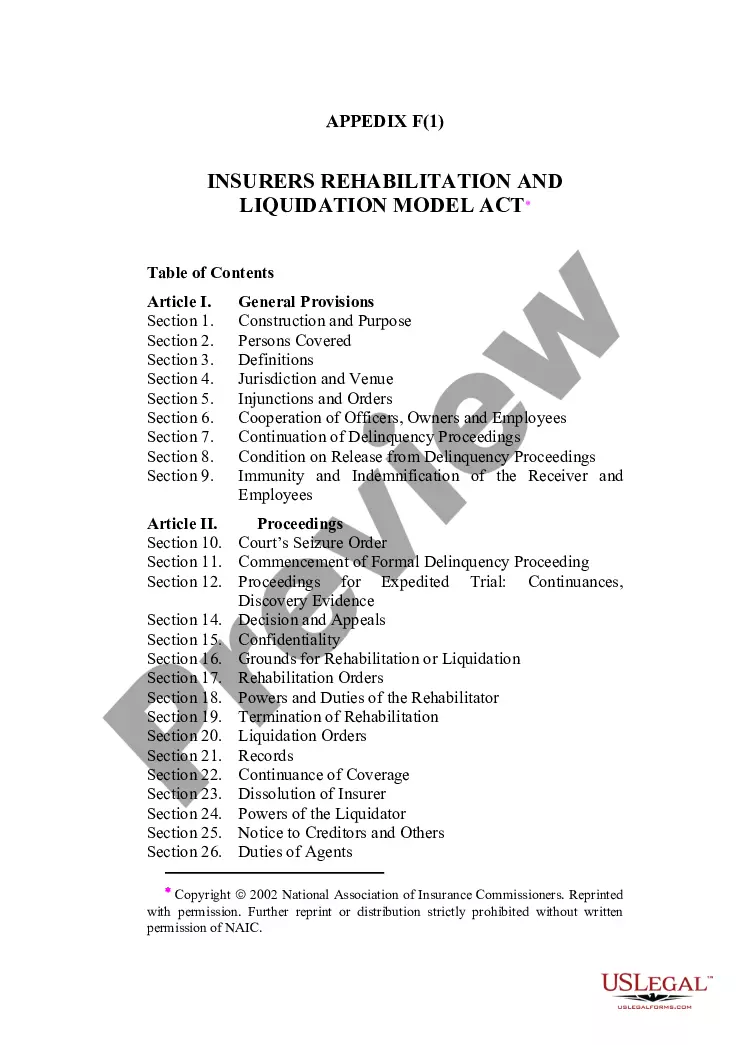
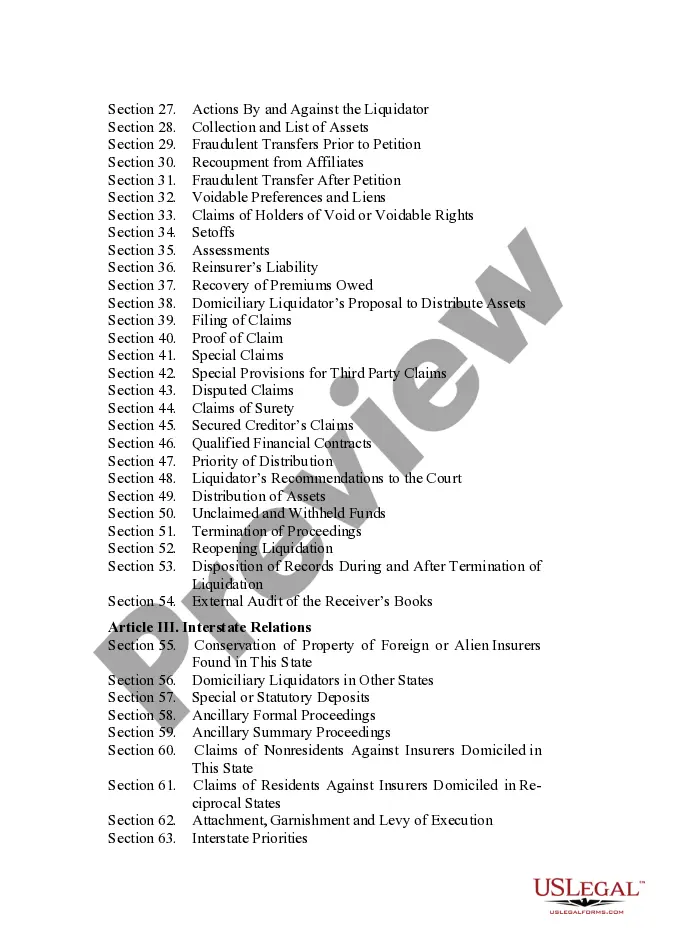
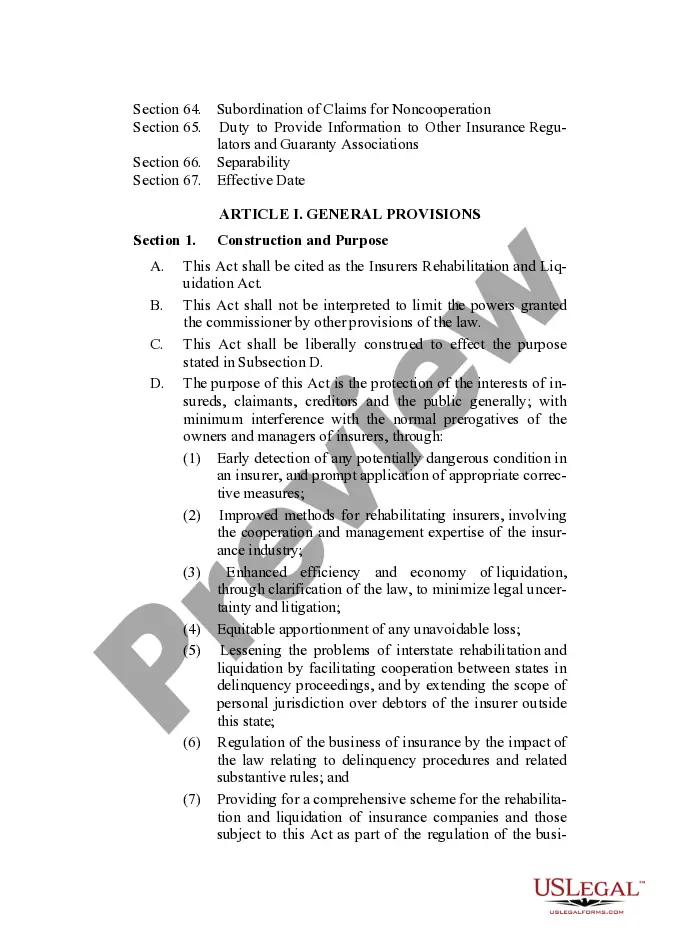
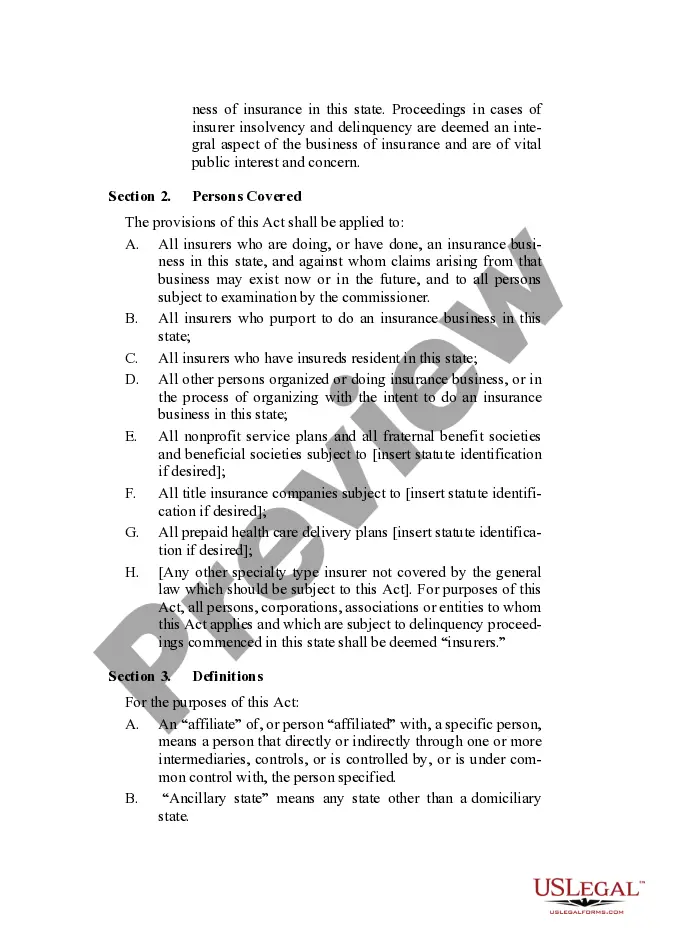
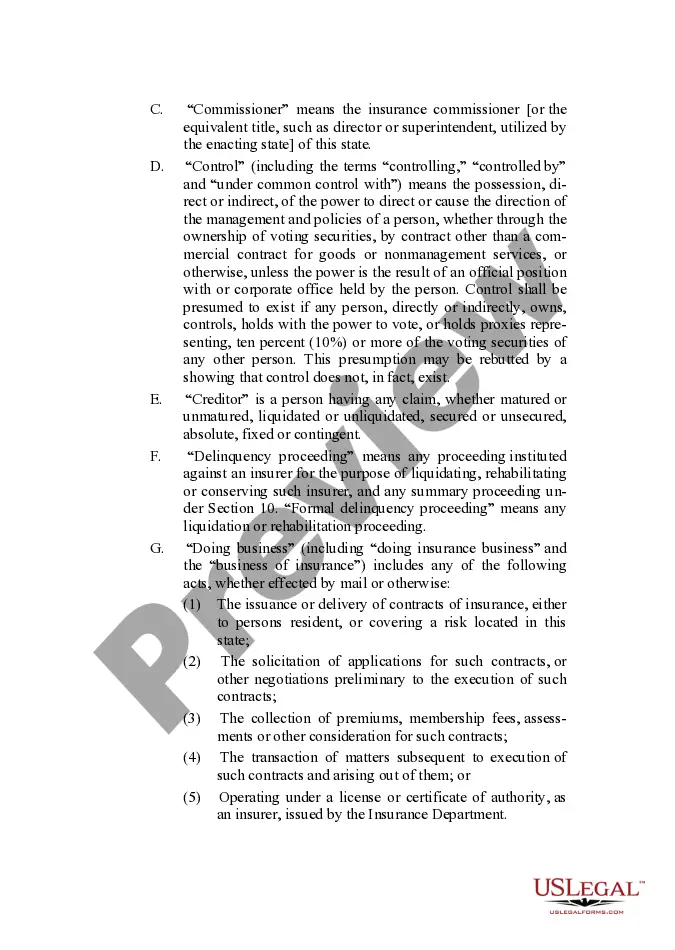
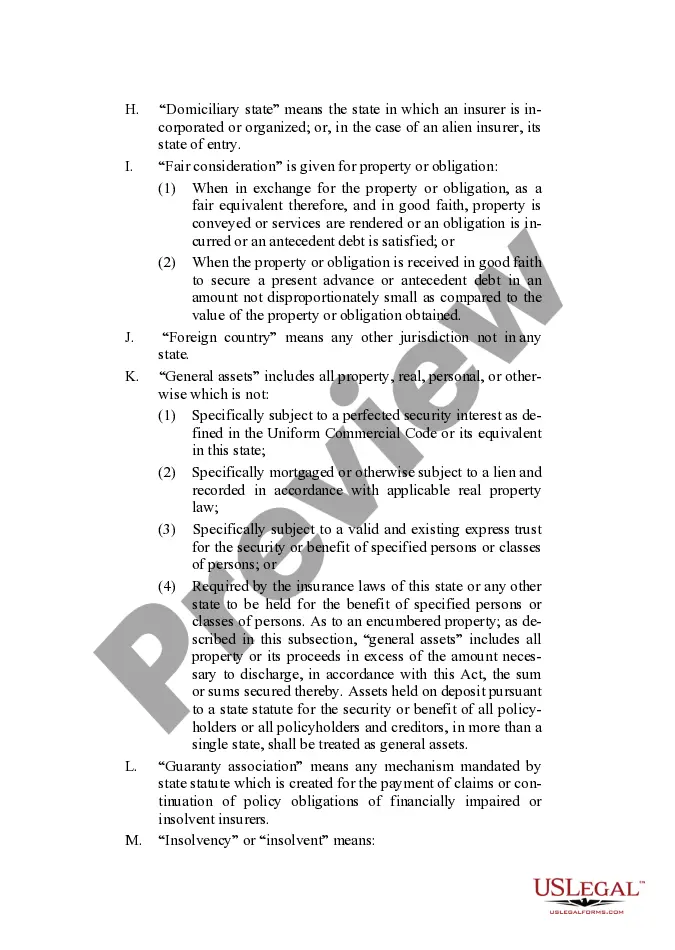
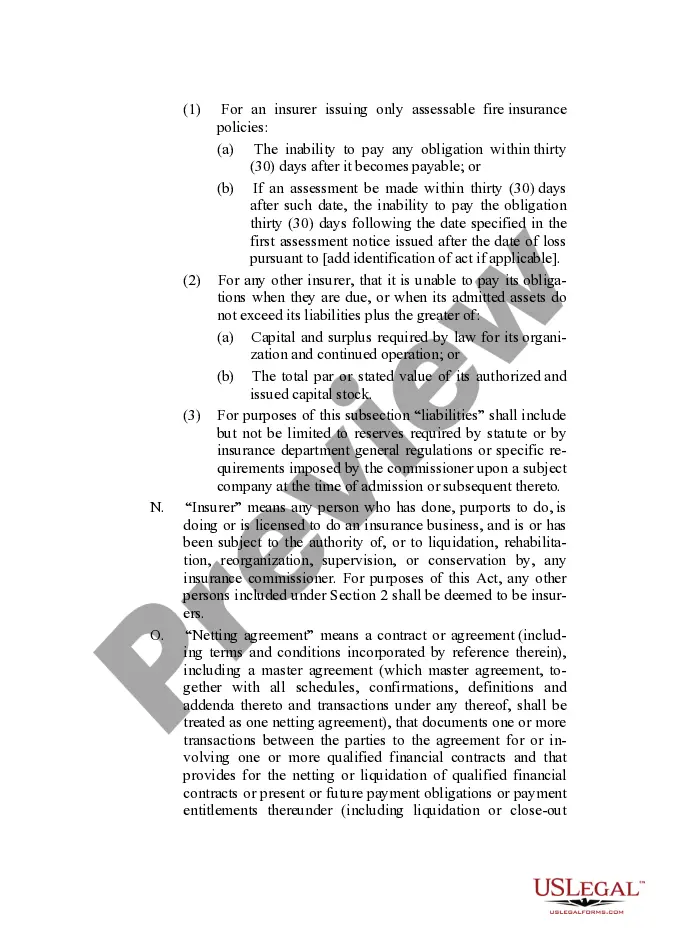
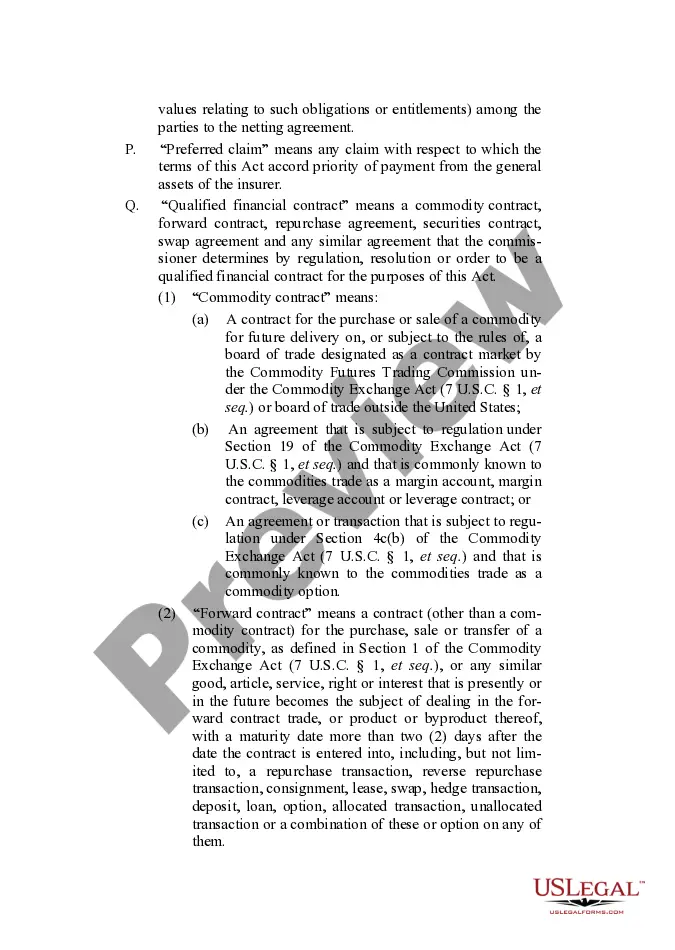
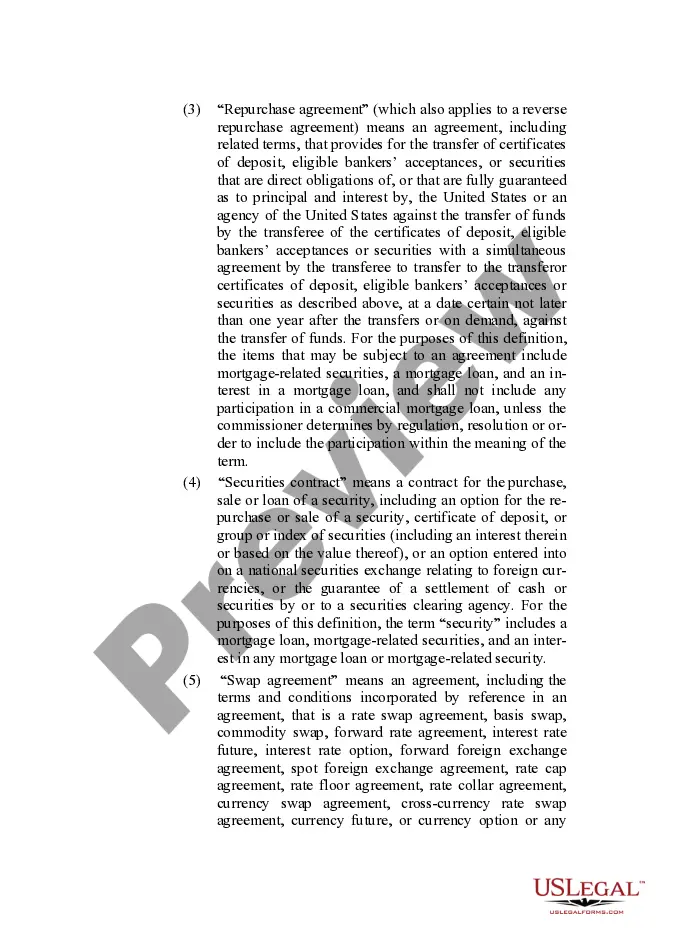
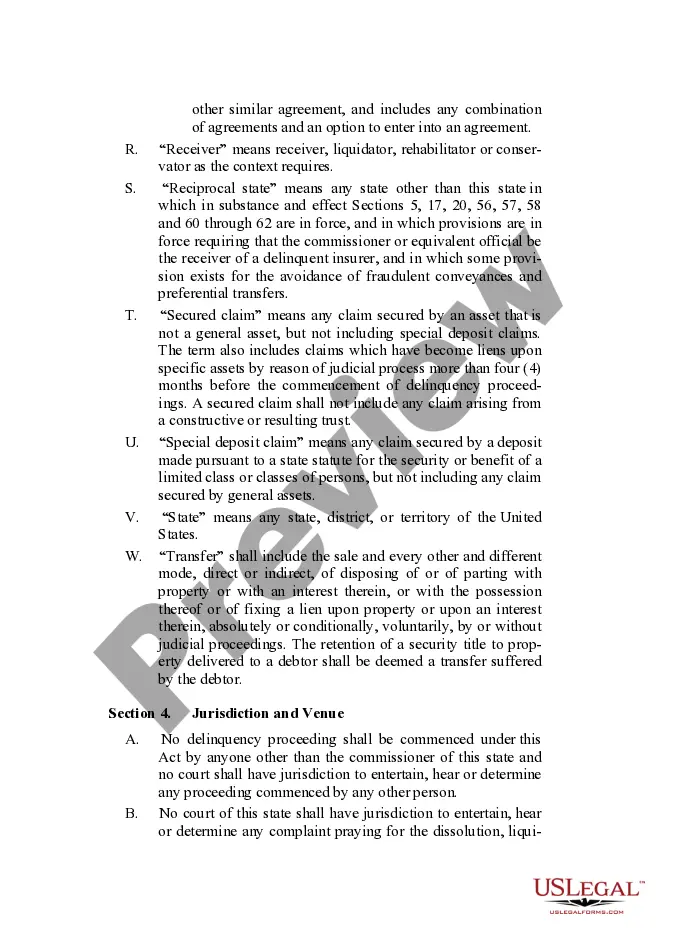
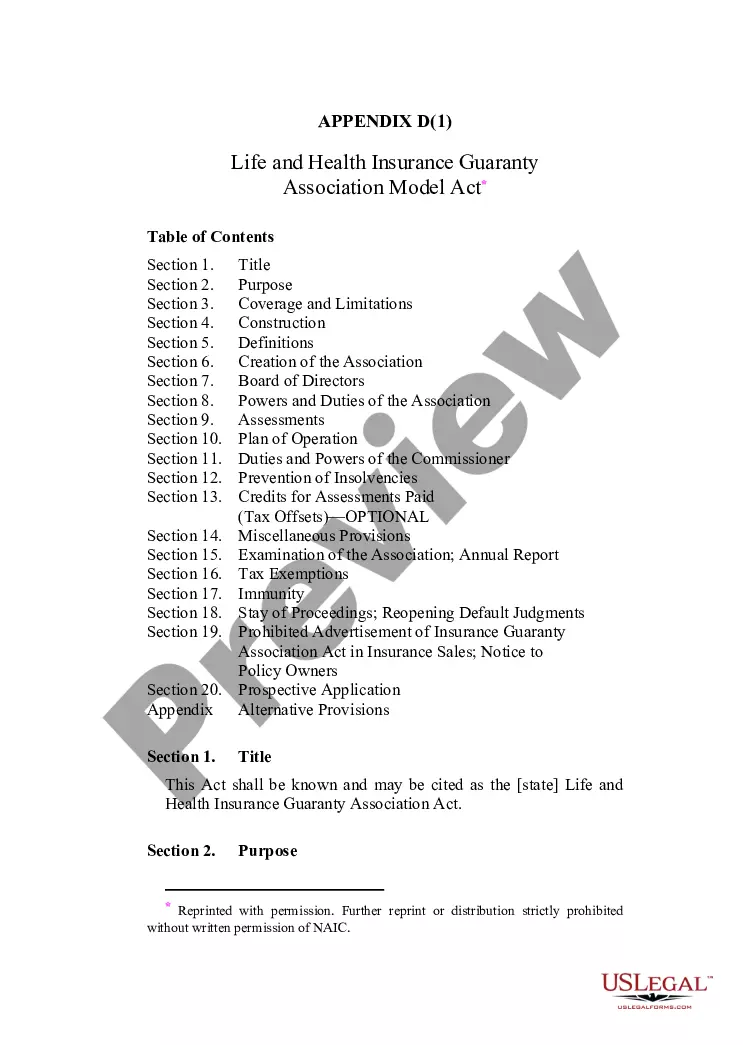
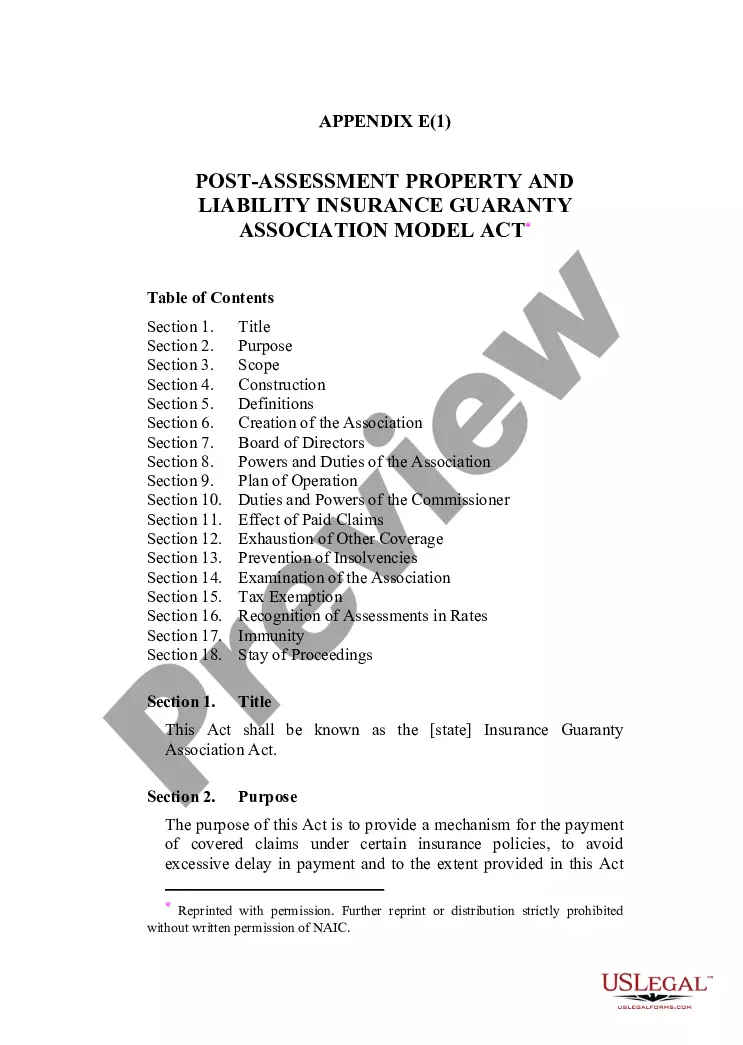
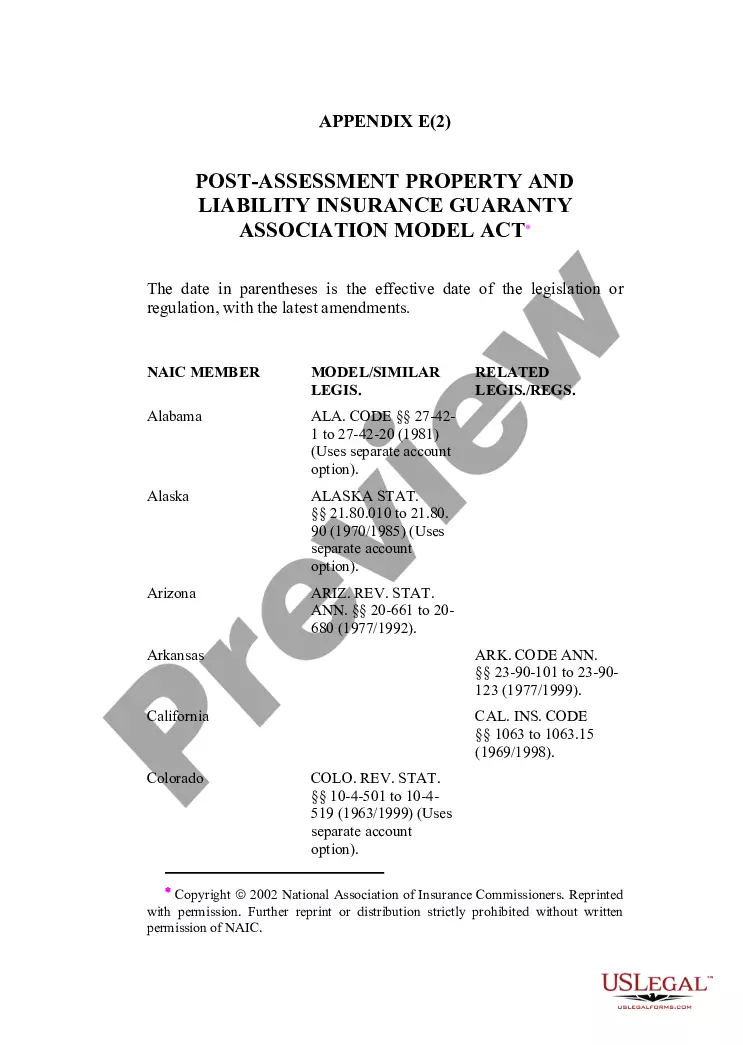
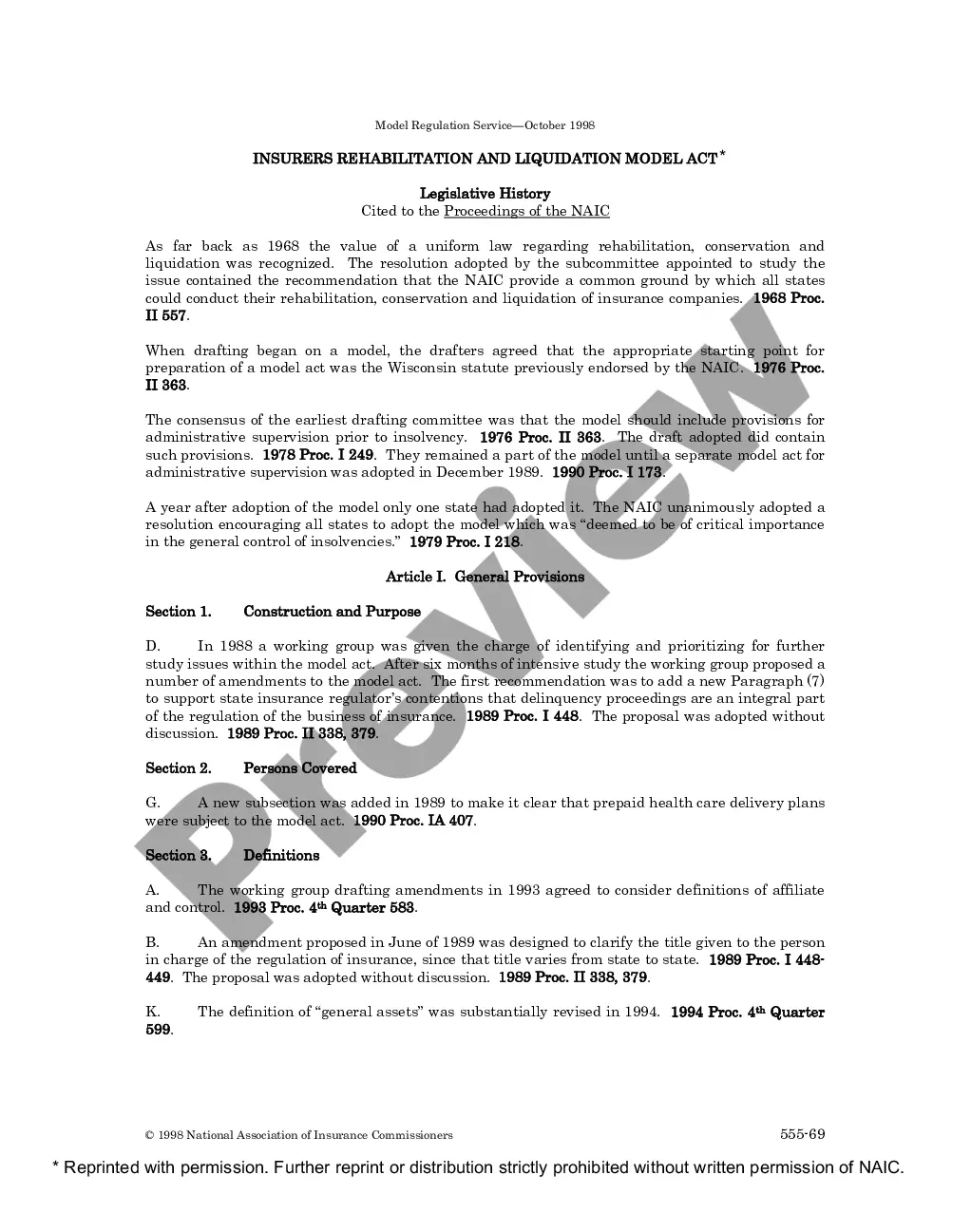
The Insurers Rehabilitation and Liquidation Model Act provides a framework for addressing the financial instability of insurance companies. This model act outlines procedures for both the rehabilitation and liquidation of insurers, ensuring the protection of policyholders, creditors, and the public while balancing the interests of the insurer's management. Unlike other administrative forms, this act specifically addresses actions taken when insurers are deemed insolvent or in danger of failing financially.
Form components explained
- General provisions: Defines the purpose and scope of the act, including jurisdiction and definitions relevant to insurance rehabilitation and liquidation processes.
- Rehabilitation procedures: Details the steps for rehabilitating an insurer, including the appointment of a rehabilitator and their powers.
- Liquidation orders: Outlines the procedures for liquidating an insurer, including asset distribution and claims processing.
- Immunity of the receiver: Establishes legal protections for the receiver and their staff during proceedings.
- Claims filing and distribution: Specifies how claims are filed, evaluated, and prioritized during the liquidation process.


Common use cases
This form is required when an insurance company is facing insolvency and needs to undergo rehabilitation or liquidation. It is pertinent in situations where an insurer cannot meet its financial obligations, hence prompting regulatory intervention to protect stakeholders.
Who needs this form
- Insurance regulators and commissioners responsible for overseeing troubled insurers.
- Attorney or legal representatives of insurance companies undergoing financial instability.
- Stakeholders, including policyholders and creditors of the insurer, who may be affected by the insurer's financial status.
Completing this form step by step
- Identify the insurer in need of rehabilitation or liquidation and provide relevant financial details.
- Detail the statutory grounds for initiating the proceedings, including any insolvency claims.
- Specify the names of any individuals proposed for appointment as rehabilitators or liquidators.
- Prepare a thorough list of all known creditors and policyholders to ensure their interests are represented.
- Submit the completed form to the appropriate court for review and approval.
Notarization requirements for this form
This form does not typically require notarization unless specified by local law. Users are encouraged to consult state regulations to determine if notarization is necessary for their specific proceedings.
Get your form ready online
Our built-in tools help you complete, sign, share, and store your documents in one place.
Make edits, fill in missing information, and update formatting in US Legal Forms—just like you would in MS Word.
Download a copy, print it, send it by email, or mail it via USPS—whatever works best for your next step.
Sign and collect signatures with our SignNow integration. Send to multiple recipients, set reminders, and more. Go Premium to unlock E-Sign.
If this form requires notarization, complete it online through a secure video call—no need to meet a notary in person or wait for an appointment.
We protect your documents and personal data by following strict security and privacy standards.

Make edits, fill in missing information, and update formatting in US Legal Forms—just like you would in MS Word.

Download a copy, print it, send it by email, or mail it via USPS—whatever works best for your next step.

Sign and collect signatures with our SignNow integration. Send to multiple recipients, set reminders, and more. Go Premium to unlock E-Sign.

If this form requires notarization, complete it online through a secure video call—no need to meet a notary in person or wait for an appointment.

We protect your documents and personal data by following strict security and privacy standards.
Common mistakes to avoid
- Failing to properly identify all parties involved in the proceedings, including creditors and policyholders.
- Neglecting to provide accurate and comprehensive financial details concerning the insurer's obligations and assets.
- Submitting the form without verifying compliance with jurisdiction-specific regulations that may affect the proceedings.
Why use this form online
- Convenance of accessing and completing the form at any time without the need to visit a physical location.
- Editable formats allow for easy updates and revisions before final submission.
- Reliable storage and access to completed forms ensure proper record-keeping.
Looking for another form?




Form popularity
FAQ
When a company enters a period of financial difficulty and is unable to meet its obligations, the insurance commissioner in the company's home state initiates a processdictated by the laws of the statewhereby efforts are made to help the company regain its financial footing. This period is known as rehabilitation.
If an insurance company is declared insolvent, the state guaranty association and guaranty fund swing into action. The association will transfer the insurer's policies to another insurance company or continue providing coverage itself for policyholders.
An insurer is prohibited from retroactively denying, adjusting, or seeking a refund of a paid claim for health care expenses submitted by a health care provider after one year from the date the initial claim was paid or after the same period of time that the provider is required to submit claims for payment pursuant to
"Liquidation" is the process whereby the Commissioner, upon a Superior Court's order, terminates an insurance company's insurance business by canceling all insurance policies and by not issuing any new or renewal policies.
The NAIC considers an insurer insolvent if a state insurance commissioner has taken legal action to place the insurer into liquidation, rehabilitation, or conservatorship. In most states, when an insurer is placed into receivership, the state commissioner of insurance is appointed its statutory receiver.
Insurance companies cannot be wound up voluntarily.A court can later place the company into administration if it can't meet its obligations. This is when organisations like the Financial Services Compensation Scheme can get involved to help you.
When a company enters a period of financial difficulty and is unable to meet its obligations, the insurance commissioner in the company's home state initiates a processdictated by the laws of the statewhereby efforts are made to help the company regain its financial footing. This period is known as rehabilitation.
An order of rehabilitation appoints the regulator as rehabilitator and directs the rehabilitator to take control of the insurer's assets and administer them under general court supervision.The rehabilitator usually has the power to act as necessary or appropriate to reform and revitalize the insurer.
"Liquidation" is the process whereby the Commissioner, upon a Superior Court's order, terminates an insurance company's insurance business by canceling all insurance policies and by not issuing any new or renewal policies.