Confidentiality Agreement for a potential Investor, Partner or Consultant Company
About this form
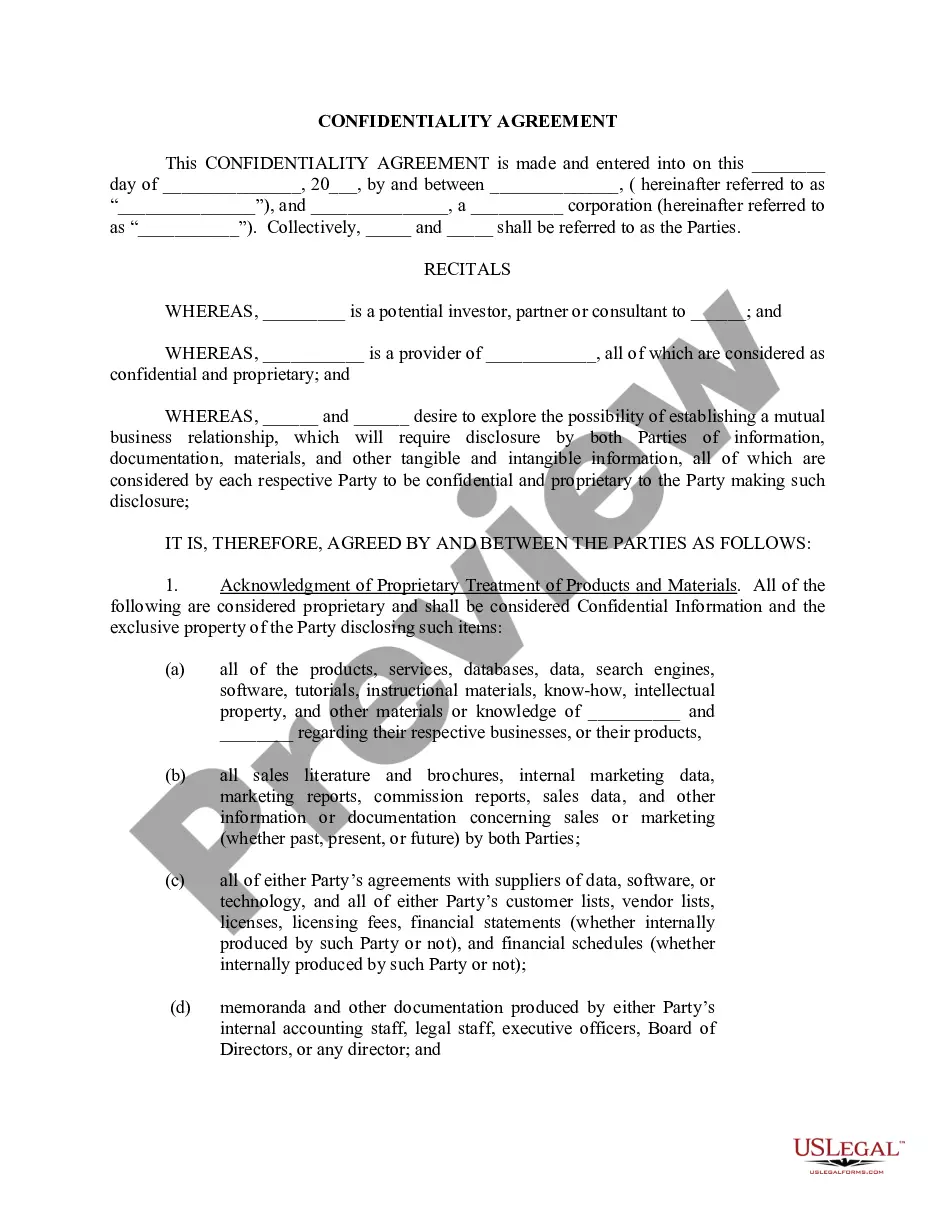
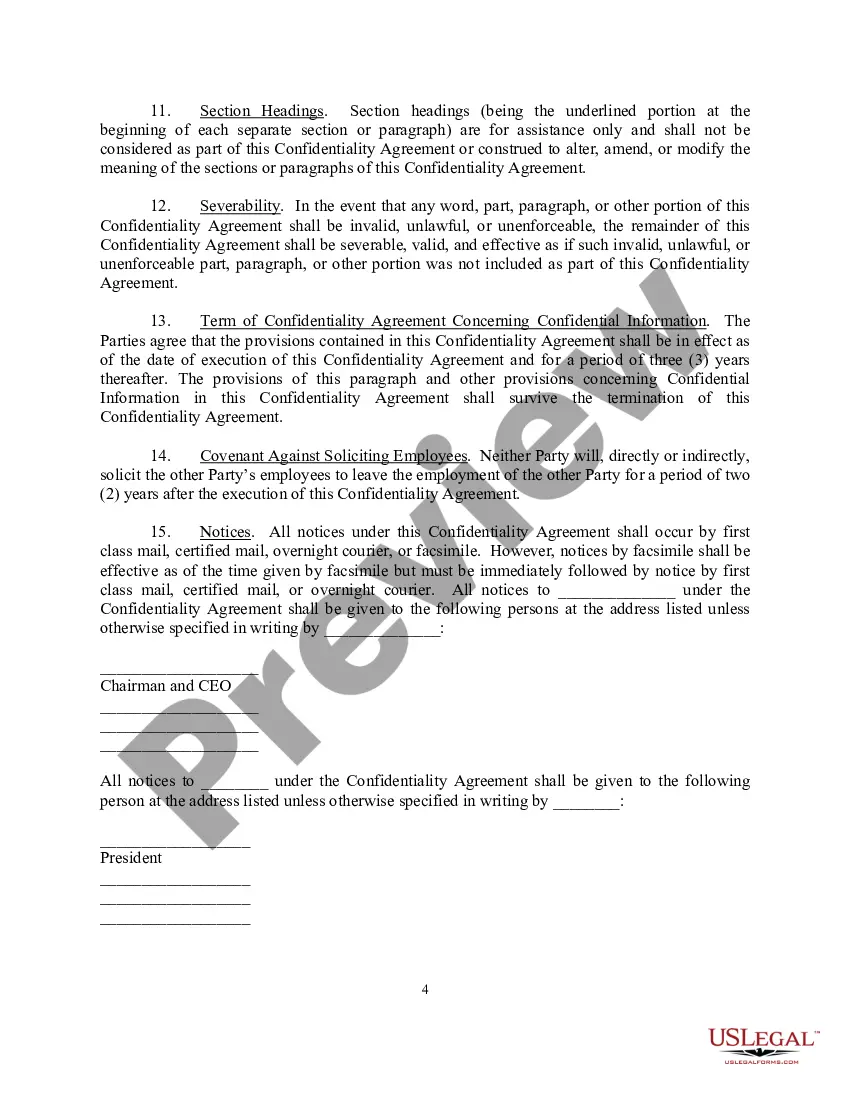
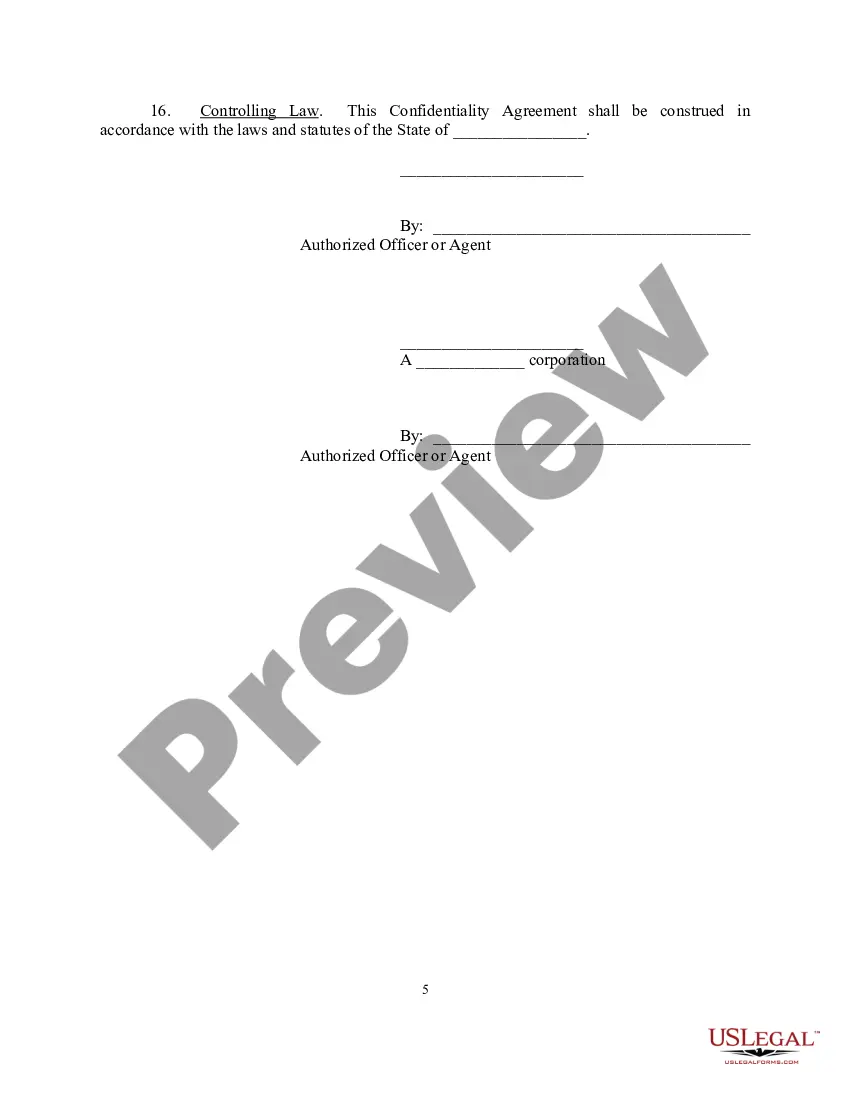
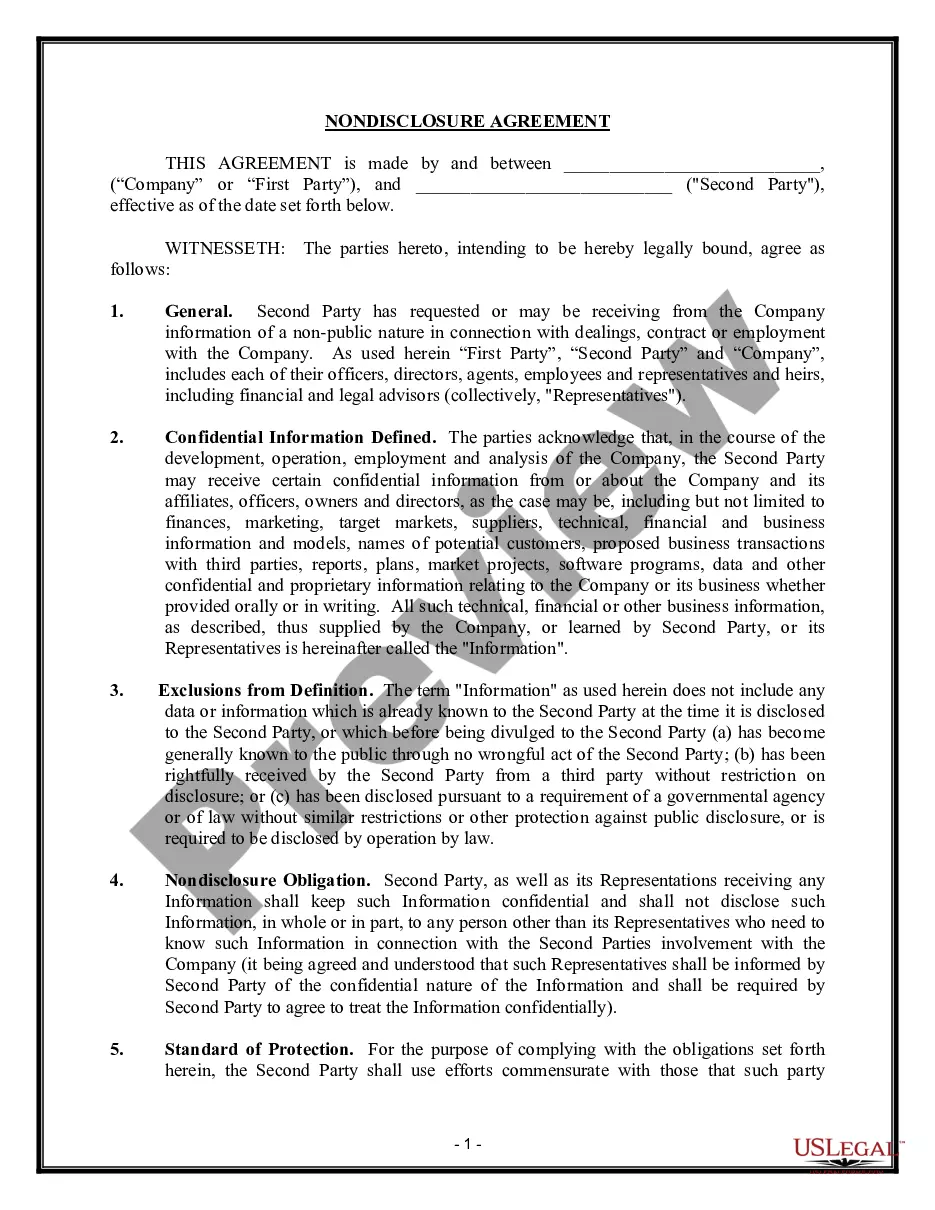
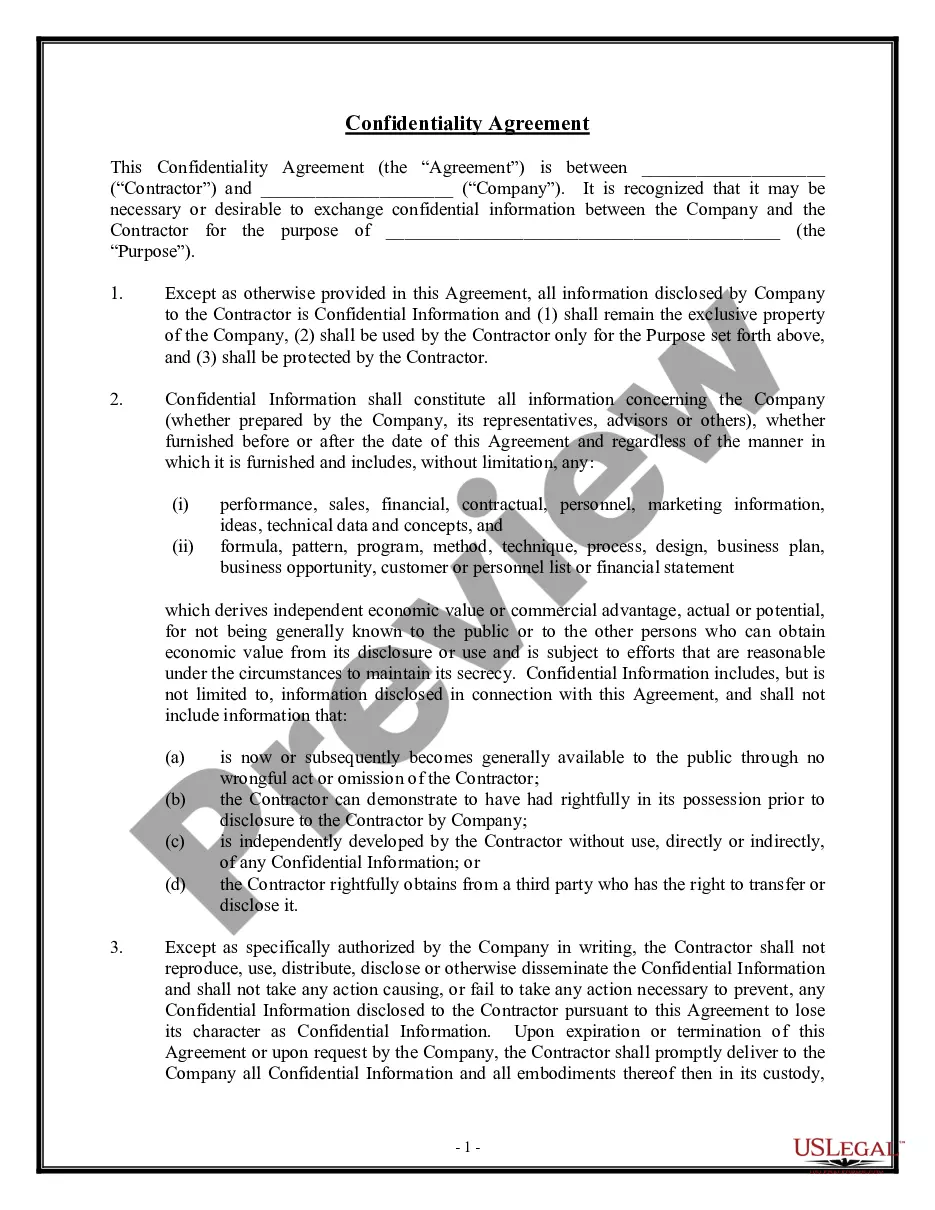
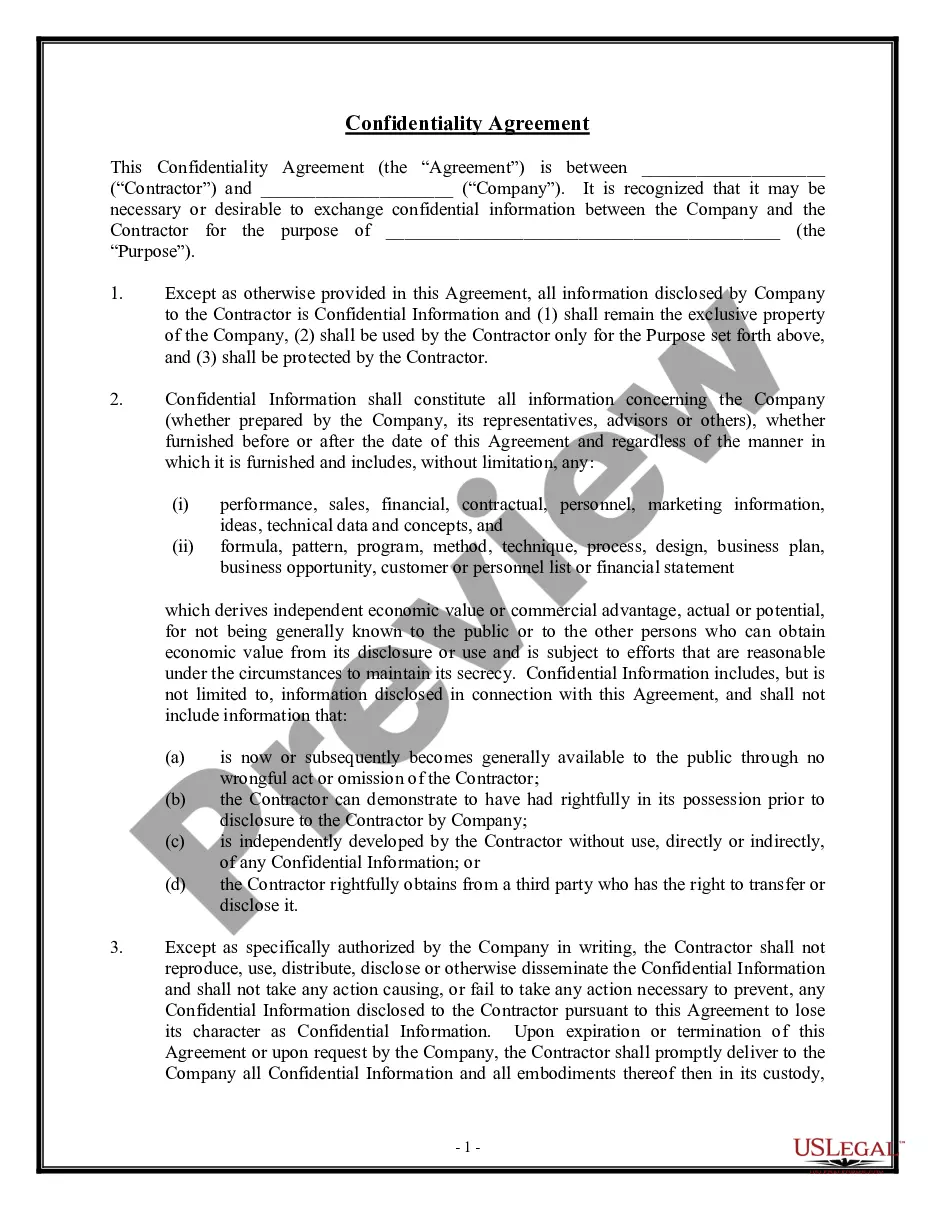
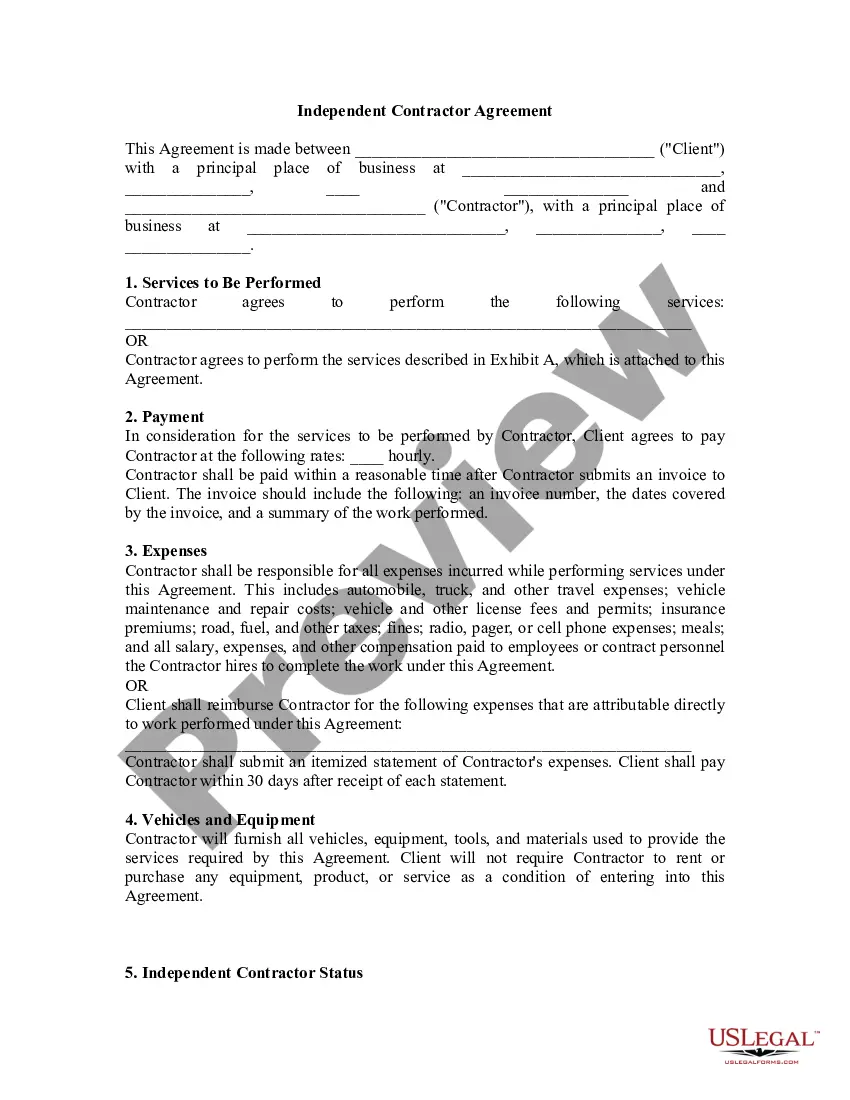
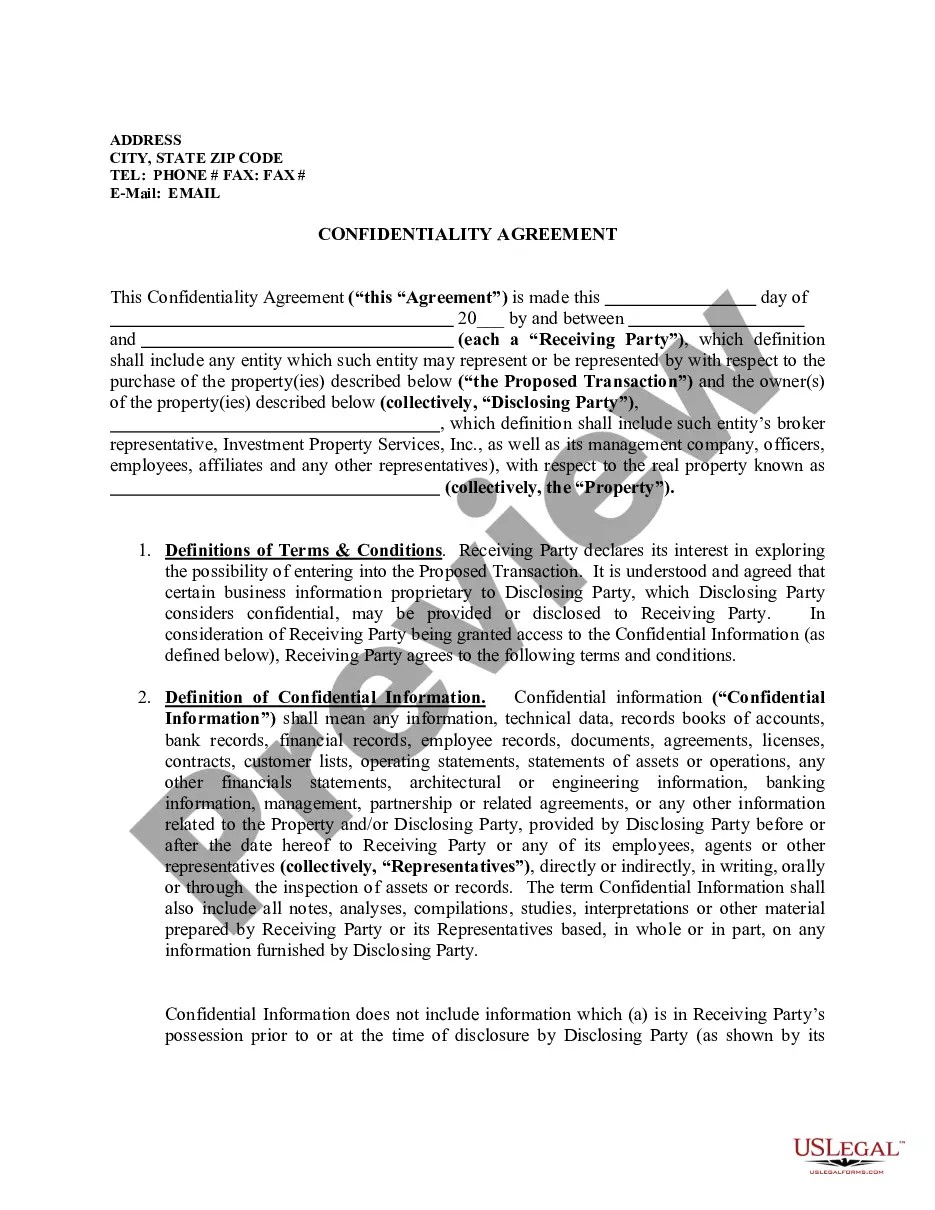
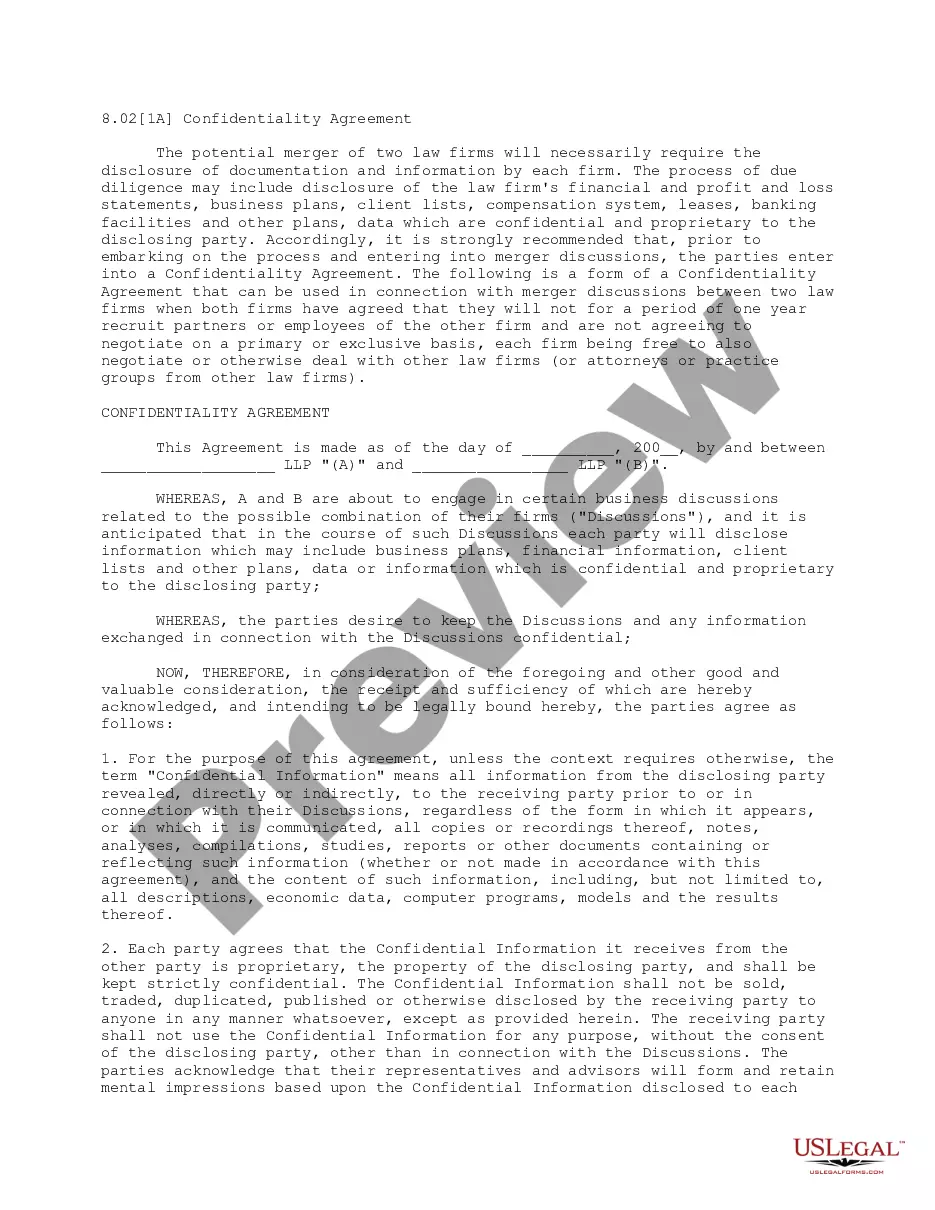
The Confidentiality Agreement for a potential Investor, Partner or Consultant Company is a legal document designed to protect sensitive information shared between a company and its potential business associates. This form establishes a mutual understanding that all shared information is confidential and prohibits disclosure to third parties or competitors. Unlike general non-disclosure agreements, this form is specifically tailored for engagements involving potential investors, partners, or consultants, ensuring robust protection during exploratory business discussions.
Key components of this form
- Acknowledgment of proprietary treatment for products and materials.
- Exclusions from confidential information definition.
- Obligation to maintain confidentiality by both parties.
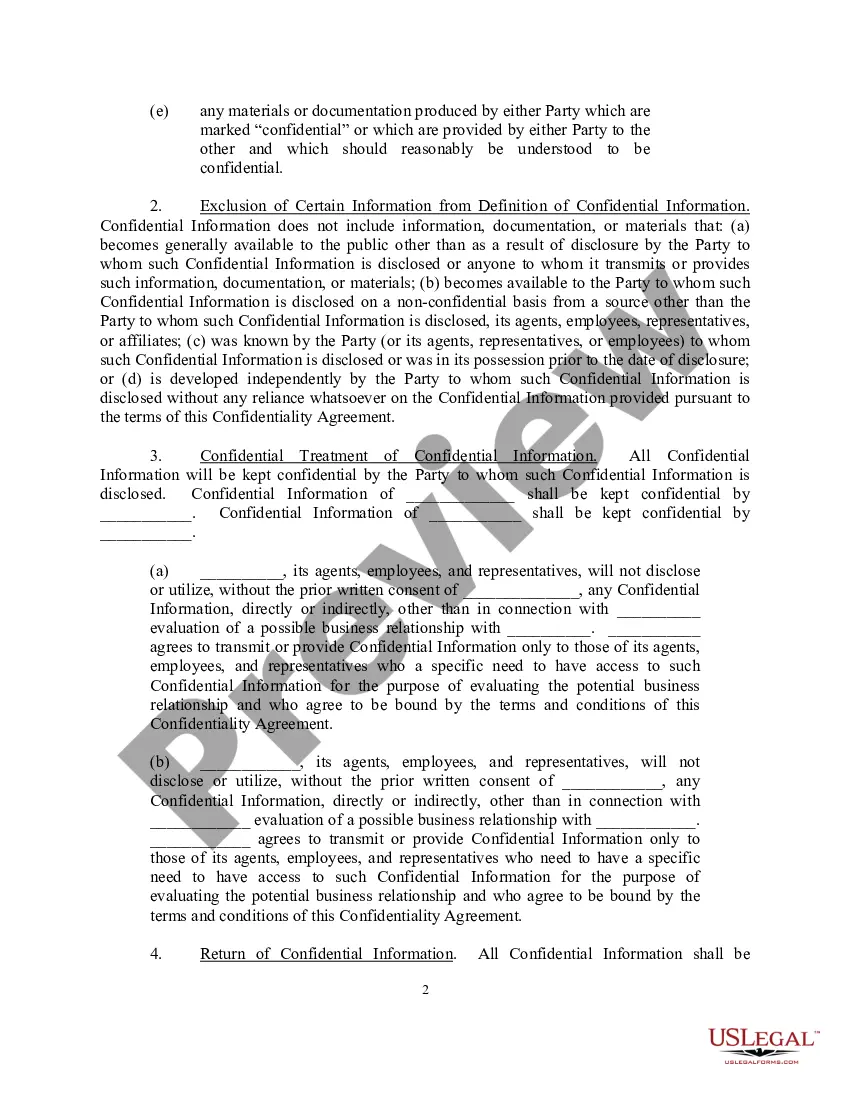
- Return of confidential information upon request.
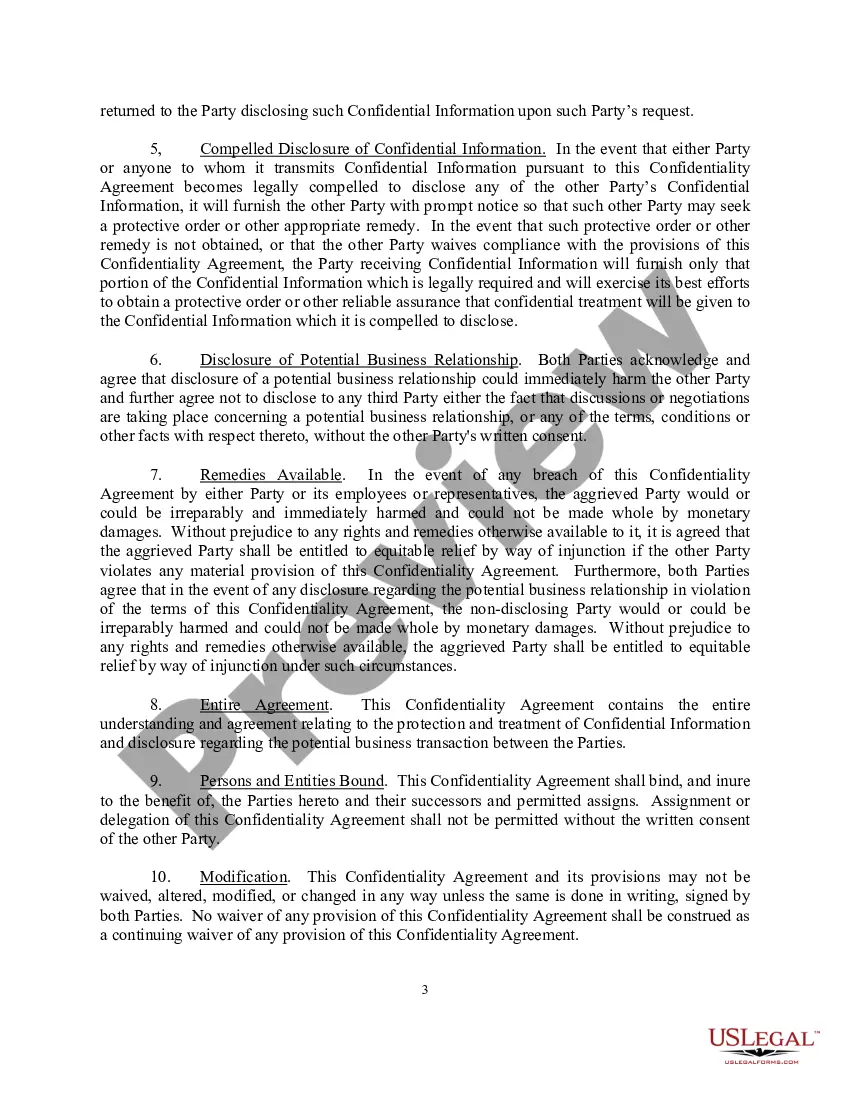
- Procedures for compelled legal disclosure.
- Non-solicitation clause regarding employees.
When this form is needed
This confidentiality agreement should be used when a company is considering entering into discussions with potential investors, partners, or consultants who will have access to sensitive business information. It is essential in scenarios such as mergers, investments, or collaborative projects where proprietary business knowledge needs protection while assessing mutual business interests.
Who should use this form
- Business owners seeking investment or partnership opportunities.
- Consultants entering into discussions with companies or businesses.
- Companies in the early stages of negotiation with potential partners.
How to complete this form
- Identify the contracting parties and enter their names and addresses.
- Specify the nature of the confidential information to be shared.
- Include the effective date of the agreement.
- Ensure all parties sign and date the document to make it legally binding.
- Discuss and clarify terms regarding employee solicitation if applicable.
Notarization guidance
In most cases, this form does not require notarization. However, some jurisdictions or signing circumstances might. US Legal Forms offers online notarization powered by Notarize, accessible 24/7 for a quick, remote process.
Get your form ready online
Our built-in tools help you complete, sign, share, and store your documents in one place.
Make edits, fill in missing information, and update formatting in US Legal Forms—just like you would in MS Word.
Download a copy, print it, send it by email, or mail it via USPS—whatever works best for your next step.
Sign and collect signatures with our SignNow integration. Send to multiple recipients, set reminders, and more. Go Premium to unlock E-Sign.
If this form requires notarization, complete it online through a secure video call—no need to meet a notary in person or wait for an appointment.
We protect your documents and personal data by following strict security and privacy standards.

Make edits, fill in missing information, and update formatting in US Legal Forms—just like you would in MS Word.

Download a copy, print it, send it by email, or mail it via USPS—whatever works best for your next step.

Sign and collect signatures with our SignNow integration. Send to multiple recipients, set reminders, and more. Go Premium to unlock E-Sign.

If this form requires notarization, complete it online through a secure video call—no need to meet a notary in person or wait for an appointment.

We protect your documents and personal data by following strict security and privacy standards.
Mistakes to watch out for
- Failing to clearly define what constitutes confidential information.
- Not specifying the duration of the confidentiality obligations.
- Neglecting to have all parties sign the agreement.
- Using vague language that could lead to misinterpretation of terms.
Benefits of using this form online
- Immediate access to a professionally drafted legal document.
- Easy customization to meet specific business needs.
- Convenient download and storage options for personal records.
- Compliance with standard legal requirements.
Legal use & context
- Enforceability: Signed confidentiality agreements generally stand up in court unless proven otherwise.
- Limitations: The agreement must be reasonable in scope and duration to be enforceable.
Main things to remember
- This agreement is essential for protecting sensitive information during potential business negotiations.
- Be clear and specific when defining confidential information and obligations.
- Consult a legal professional to tailor the agreement to state requirements.
Looking for another form?
Form popularity
FAQ
Identification of the parties. Definition of what is deemed to be confidential. The scope of the confidentiality obligation by the receiving party. The exclusions from confidential treatment. The term of the agreement.
2. Clearly label all confidential information as confidential. This means writing confidential on documents or any folder you keep them in. If you are sending an email, make sure the title clearly identifies it as confidential.
Identify each party in the first section of the form. The NDA form will start by declaring it to be an agreement and identifying who the agreement is between. Whoever is disclosing the information to be protected is the "disclosing party"; write his or her name on this space.
What is a confidentiality statement? A confidentiality agreement is exactly what it sounds like. In simple terms, it is a document stating that the person you disclose your business plan to will not disclose any of its contents to anyone outside of the agreement.
Simply defined, a confidentiality statement for documents is a legally binding document stating that two parties won't profit from or share confidential information.
Depending on the complexity of what you need protected and the number of parties involved, the cost of having an NDA drafted can vary significantly. When you hire a lawyer in the Priori network, drafting an NDA typically costs anywhere from $175-$1,500.
Here's some breach of confidentiality examples you could find yourself facing: Saving sensitive information on an unsecure computer that leaves the data accessible to others. Sharing employees' personal data, like payroll details, bank details, home addresses and medical records.
Identify each party in the first section of the form. The NDA form will start by declaring it to be an agreement and identifying who the agreement is between. Whoever is disclosing the information to be protected is the "disclosing party"; write his or her name on this space.
Set the date of the agreement. Describe the two parties, sometimes called the Disclosing Party and the Receiving Party.7feff Include names and identification, so there can be no misunderstanding about who signed the agreement.