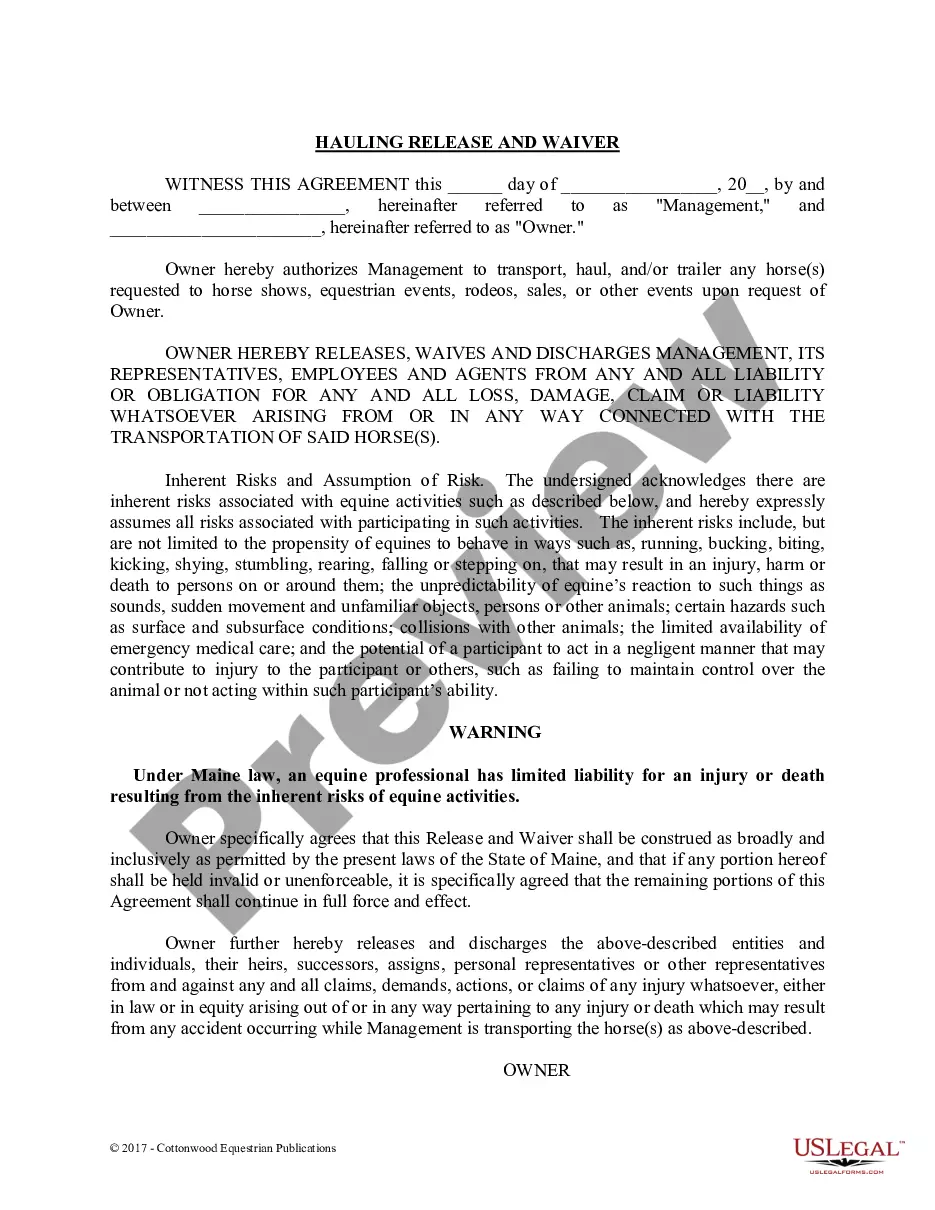
Sample Written Warning Letter
What this document covers
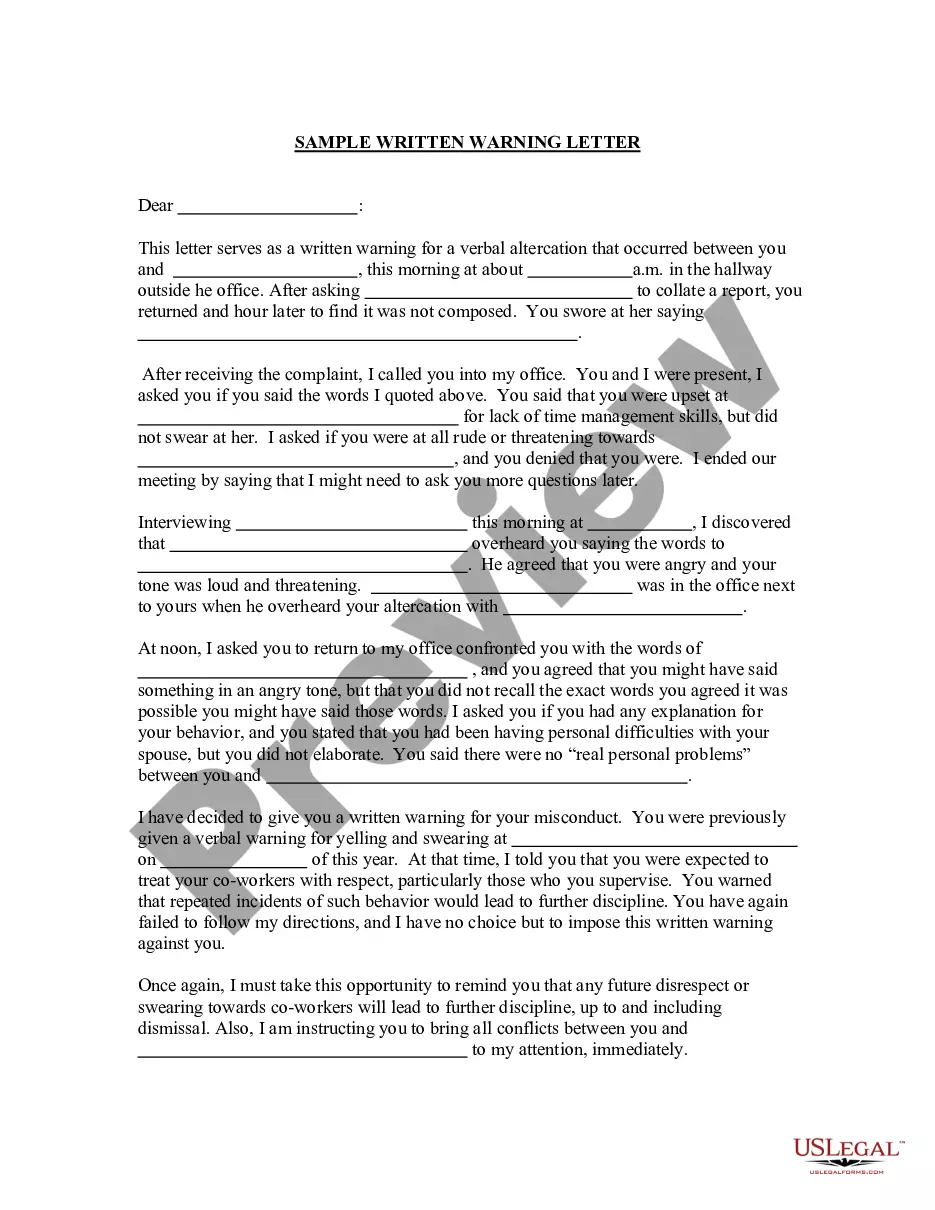
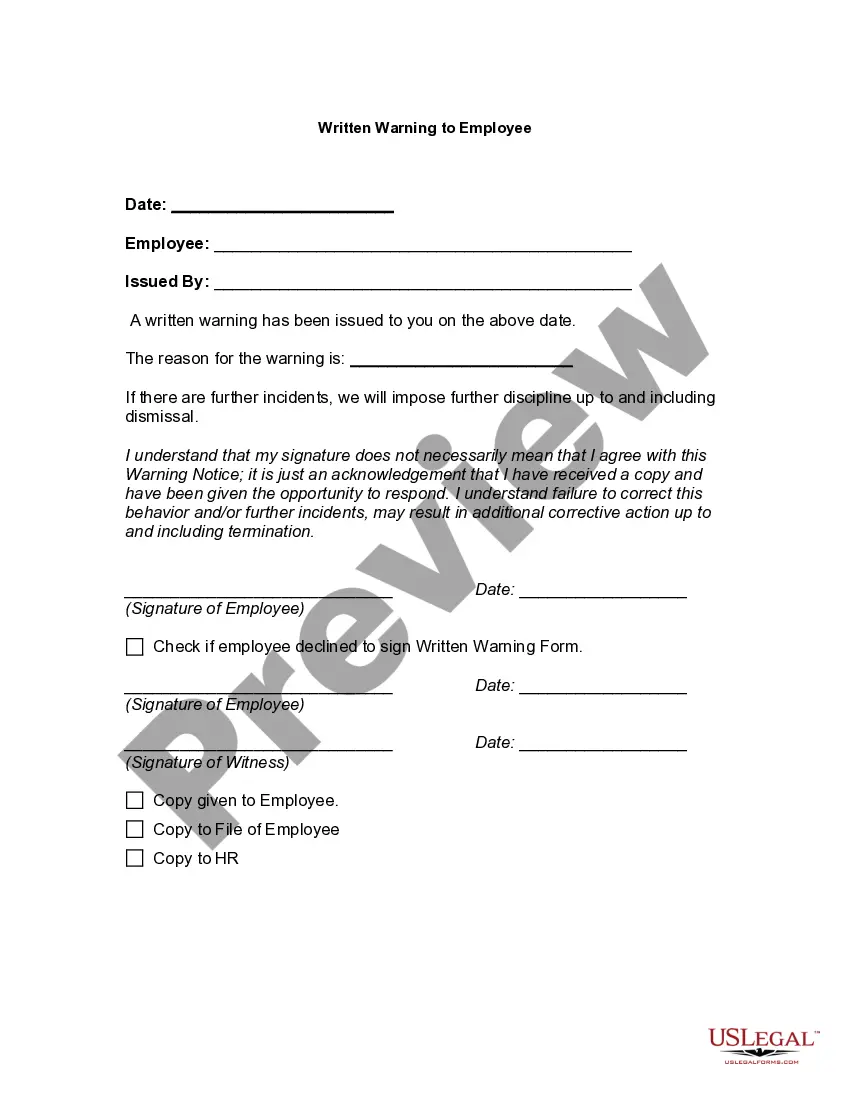
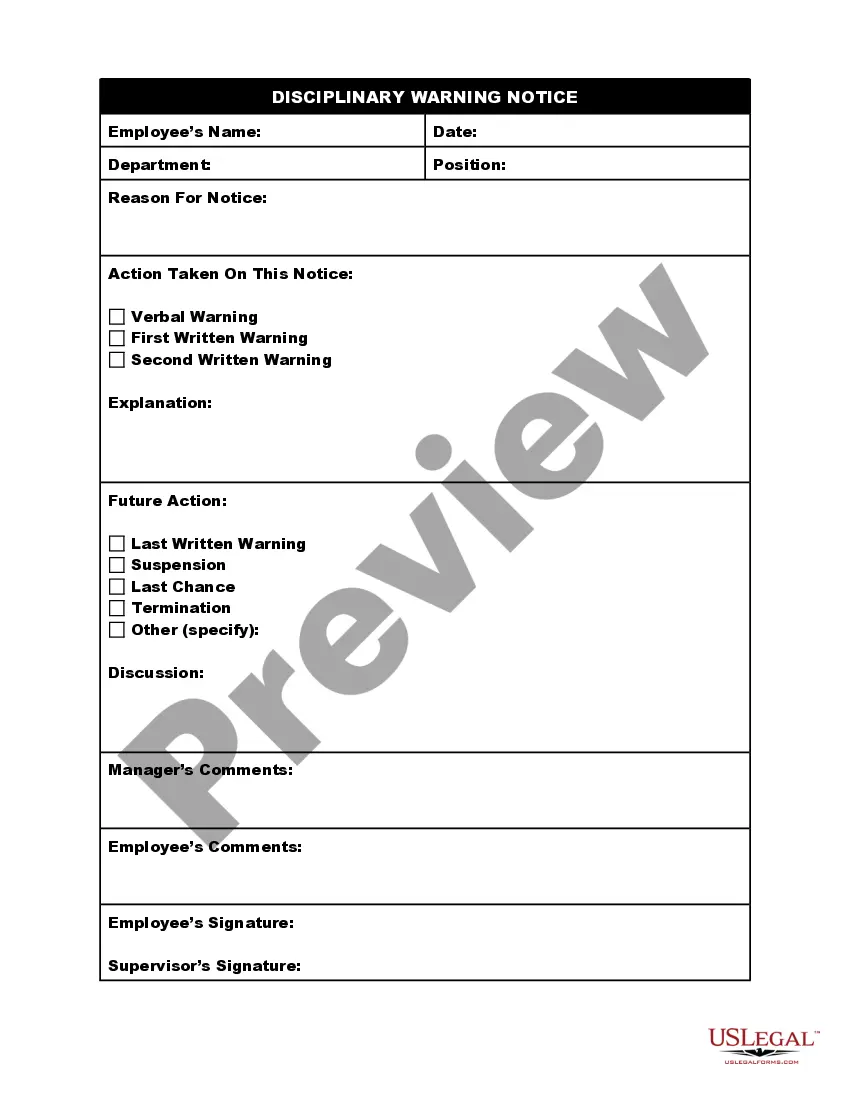
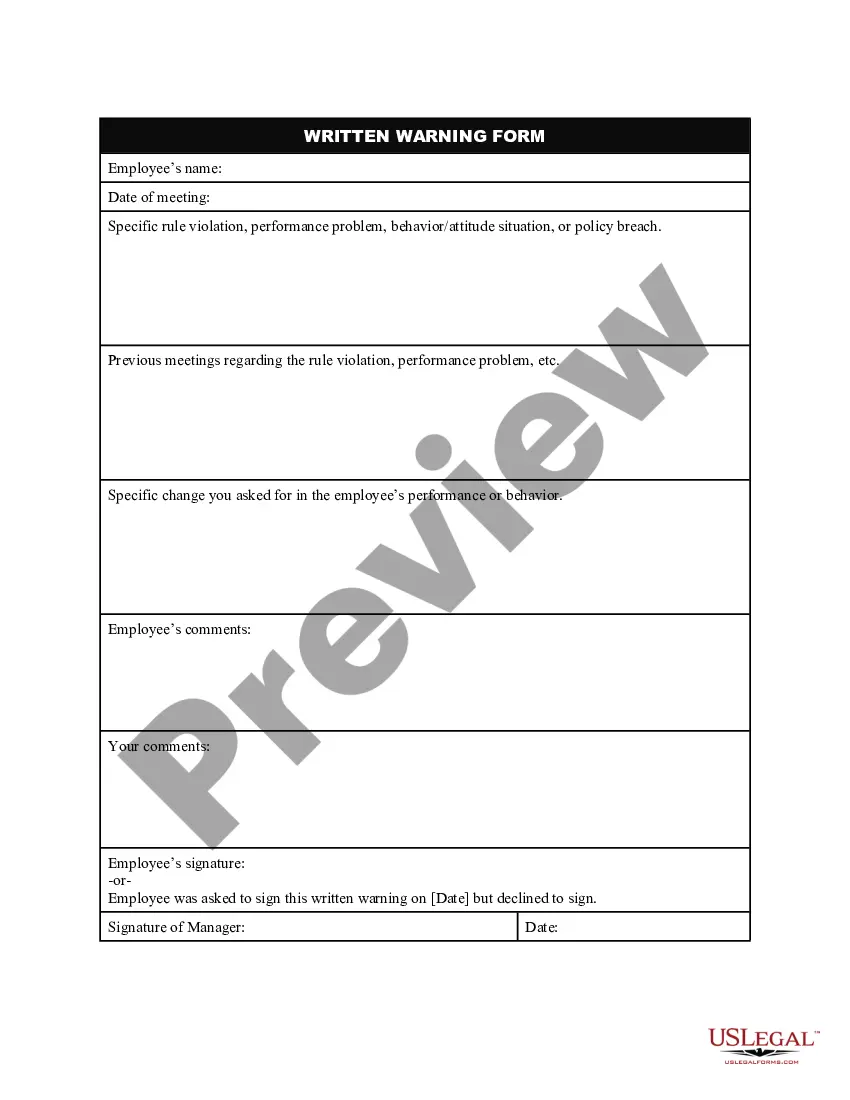
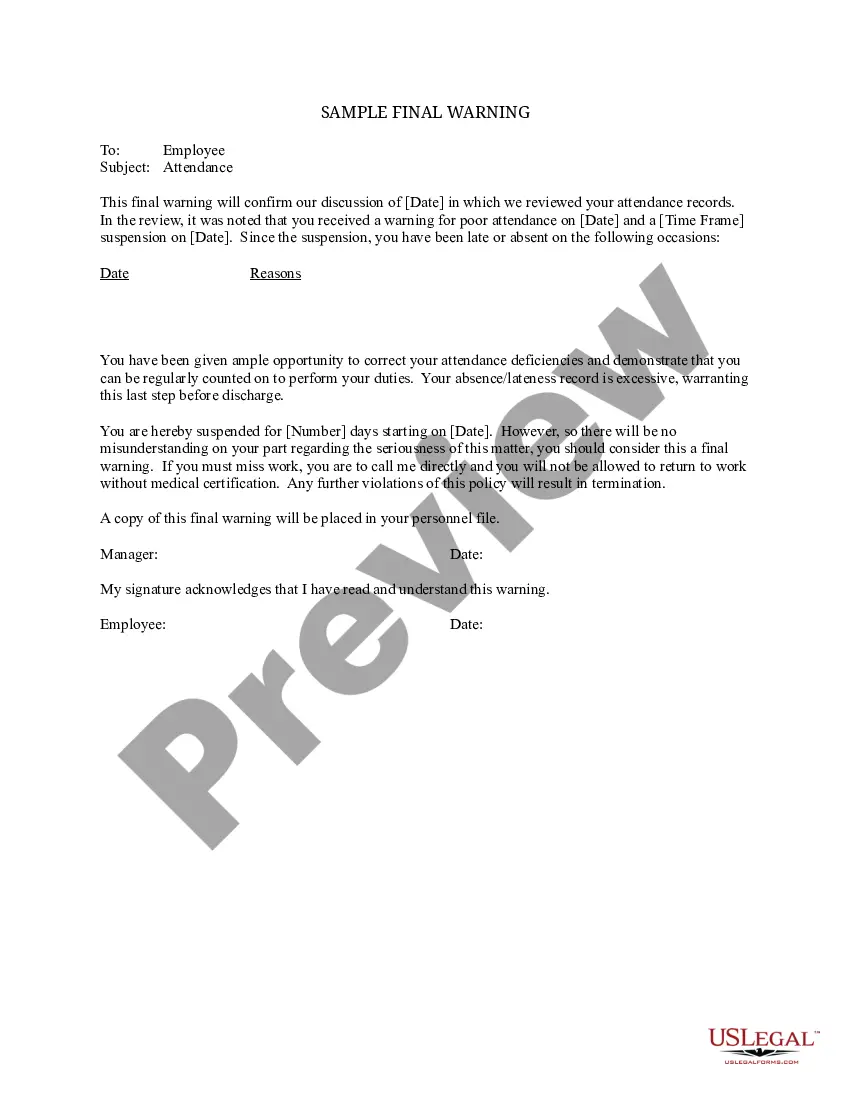
The Sample Written Warning Letter is a formal document used by employers to address specific behavioral issues or performance problems of employees. This letter serves a dual purpose: it notifies the employee of their misconduct and outlines the consequences of failing to improve. Unlike other disciplinary documents, the written warning provides a clear record of the issue and the steps the employee must take to correct their behavior, making it a crucial tool for effective workplace communication and management.
Main sections of this form
- Date of the written warning
- Employee's name
- Details of the misconduct or performance issue
- Consequences of future violations, including potential dismissal
- Instructions for the employee to address the issue
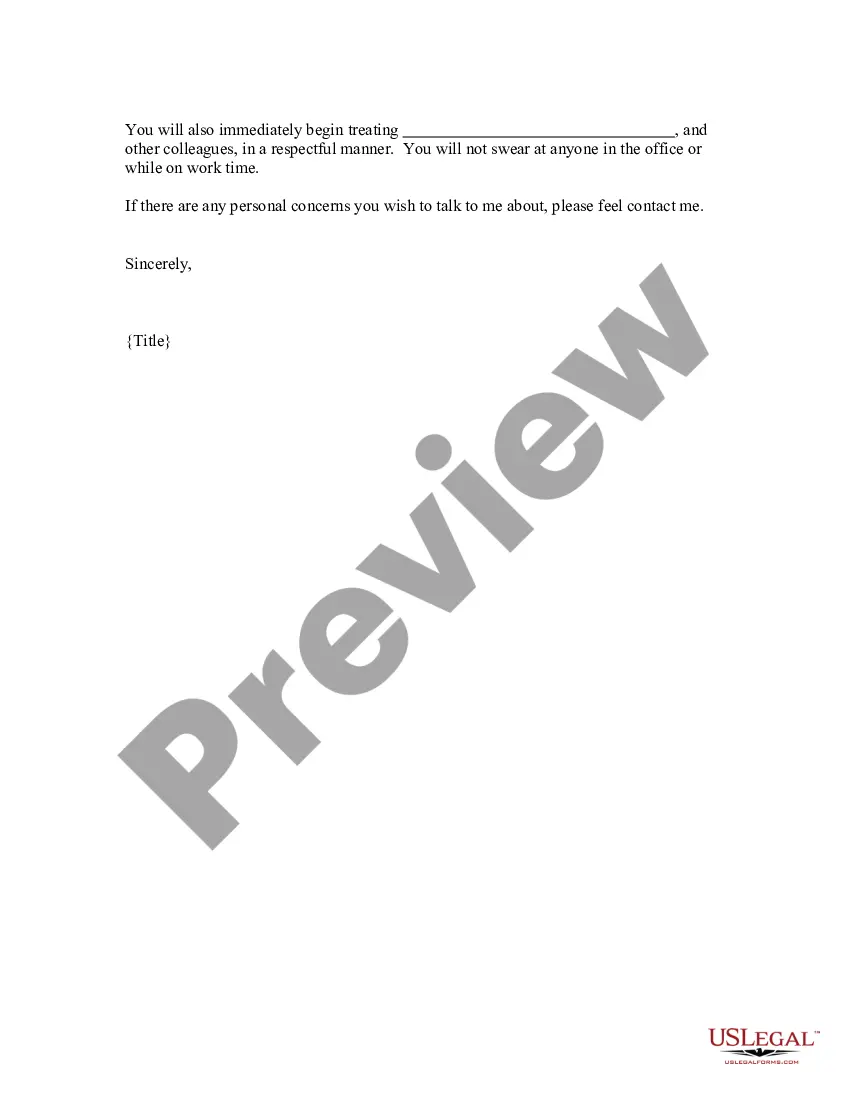
- Signature line for the employer
Situations where this form applies
This form should be used when an employer needs to formally address specific instances of inappropriate behavior, such as disrespectful language or conflicts among coworkers. It is an important step in the disciplinary process and can serve as a precursor to more severe consequences if an employee does not improve. It is also beneficial in maintaining proper documentation of employee performance issues for potential future reference.
Who this form is for
- Employers looking to formally reprimand an employee
- Human Resources professionals managing employee relations
- Managers or supervisors addressing behavioral issues within their team
- Business owners wanting to ensure proper documentation of employee performance
Steps to complete this form
- Fill in the date of issue at the top of the letter.
- Enter the employee's full name to personalize the document.
- Clearly outline the specific misconduct or performance issue noticed.
- State the potential consequences of ongoing violations, including dismissal.
- Provide instructions for the employee on how to address the issue.
- Sign and date the letter as the employer or supervisor.
Is notarization required?
This form does not typically require notarization to be legally valid. However, some jurisdictions or document types may still require it. US Legal Forms provides secure online notarization powered by Notarize, available 24/7 for added convenience.
Get your form ready online
Our built-in tools help you complete, sign, share, and store your documents in one place.
Make edits, fill in missing information, and update formatting in US Legal Forms—just like you would in MS Word.
Download a copy, print it, send it by email, or mail it via USPS—whatever works best for your next step.
Sign and collect signatures with our SignNow integration. Send to multiple recipients, set reminders, and more. Go Premium to unlock E-Sign.
If this form requires notarization, complete it online through a secure video call—no need to meet a notary in person or wait for an appointment.
We protect your documents and personal data by following strict security and privacy standards.

Make edits, fill in missing information, and update formatting in US Legal Forms—just like you would in MS Word.

Download a copy, print it, send it by email, or mail it via USPS—whatever works best for your next step.

Sign and collect signatures with our SignNow integration. Send to multiple recipients, set reminders, and more. Go Premium to unlock E-Sign.

If this form requires notarization, complete it online through a secure video call—no need to meet a notary in person or wait for an appointment.

We protect your documents and personal data by following strict security and privacy standards.
Common mistakes to avoid
- Failing to document specific instances of misconduct adequately.
- Not including a clear plan for improvement.
- Neglecting to keep a copy of the warning letter for records.
- Using vague language that does not specify the behavior that must change.
Advantages of online completion
- Convenience of accessing the form anytime and anywhere.
- Editability allows customizing the letter to suit specific situations.
- Reliability in ensuring a legally sound and professionally drafted document.
Key takeaways
- The Sample Written Warning Letter is essential for formalizing disciplinary actions.
- This document helps protect the employer by providing a record of employee conduct.
- Clear communication about expectations can lead to improved employee performance.
Looking for another form?
Form popularity
FAQ
Step 1: Identify and consider the problem. Clearly identify the performance or conduct issue. Step 2: Meet with the employee. Generally, meeting with the employee is important for: Step 3: Create your letter of warning. Step 4: Provide the employee with the letter of warning.
Does an employer have to give a verbal warning before a written warning? There are no written rules about how employers must give out warnings. While, typically, an employer will give you one verbal warning before giving you a written warning, they may dismiss the verbal warning if your misconduct is severe enough.
Document verbal warnings first. Track all verbal warnings and disciplinary measures in writing at the time they are given. Determine tone. Consult with manager. Formalities. State company policy. Describe what happened. State expectations. Outline consequences.
When writing the warning you should endeavour to be as specific as possible. Specify the issue in detail, including dates, people involved, and the nature of the offence. Also, include details of what will happen if the employee's behaviour doesn't alter their behaviour.
Identify the problem. Meet with the employee and clarify the issue. Create your warning letter and include all the performance issues you've considered. Give the employee the warning notice and make sure you receive a signature to confirm receipt.
In cases of serious misconduct or poor performance, the employer does not have to give a first written warning and can instead go straight to a final written warning. For example, where the employee's actions have, or could, cause serious harm to the business.The employer should make this clear to the employee.
Document verbal warnings first. Track all verbal warnings and disciplinary measures in writing at the time they are given. Determine tone. Determine your reasons for writing the warning. Consult with manager. Formalities. State company policy. Describe what happened. State expectations. Outline consequences.
Salutation: You should follow a formal salutation such as 'Dear Mr. Ali'. Opening paragraph: Get straight to the point of the warning letter. List the problem clearly and meticulously, as well as the reason for issuing the letter.
Confirm the decision in writing. Explain the nature of the misconduct. Set out the improvement required. Point out the possible consequences of a failure to improve. Specify the length of the warning. Confirm the right of appeal. Keep a record of the warning.