Notification of Equal Opportunity Employment to Employment Candidate Provider
About this form
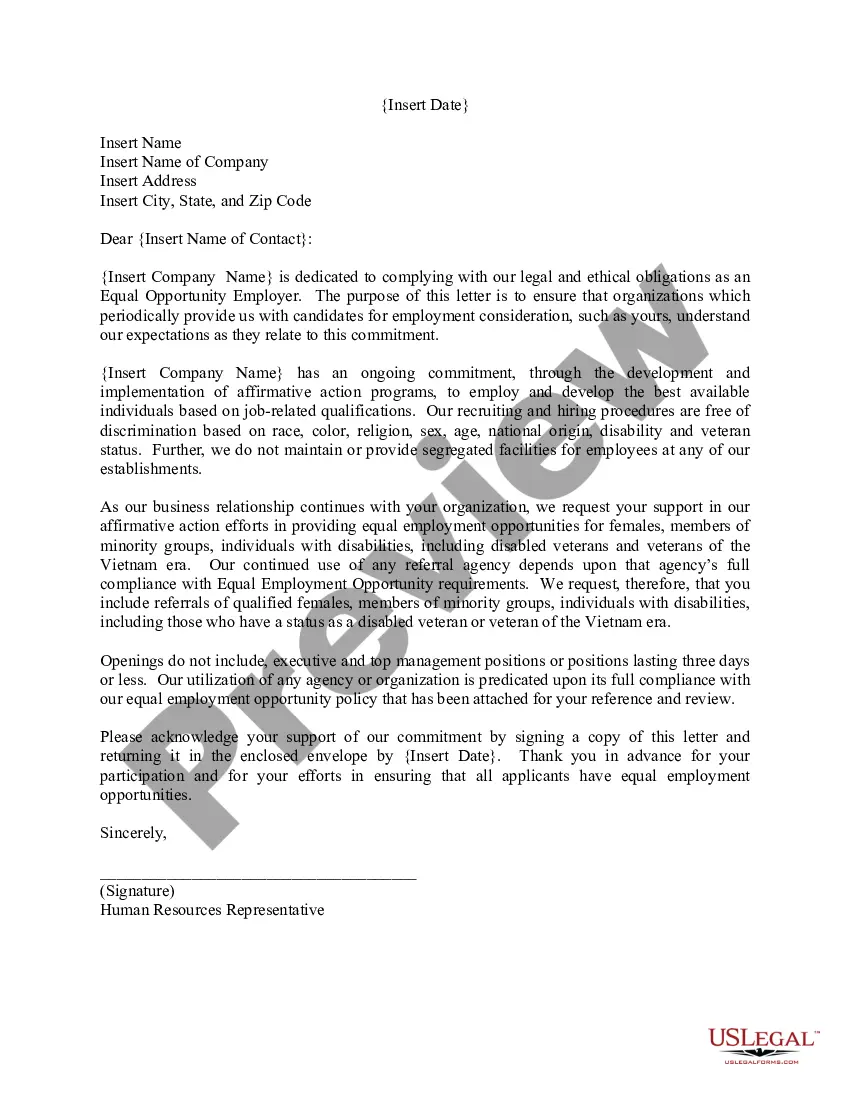
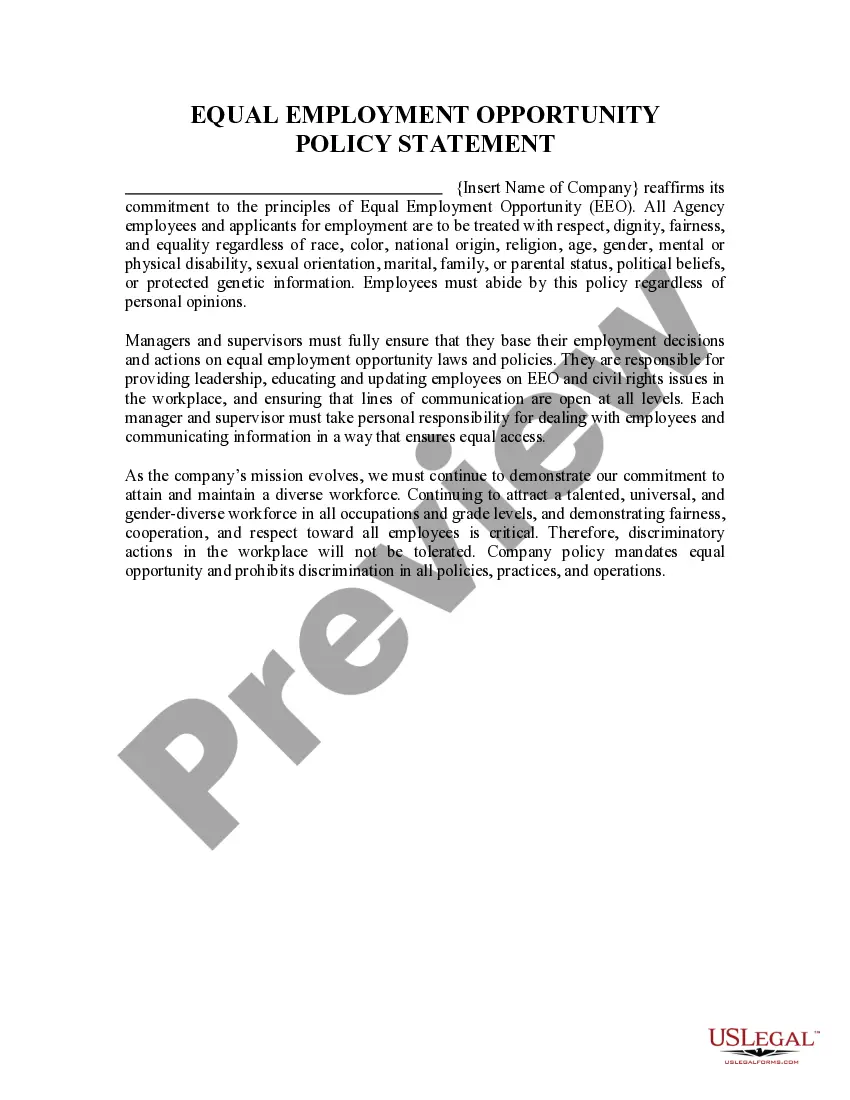
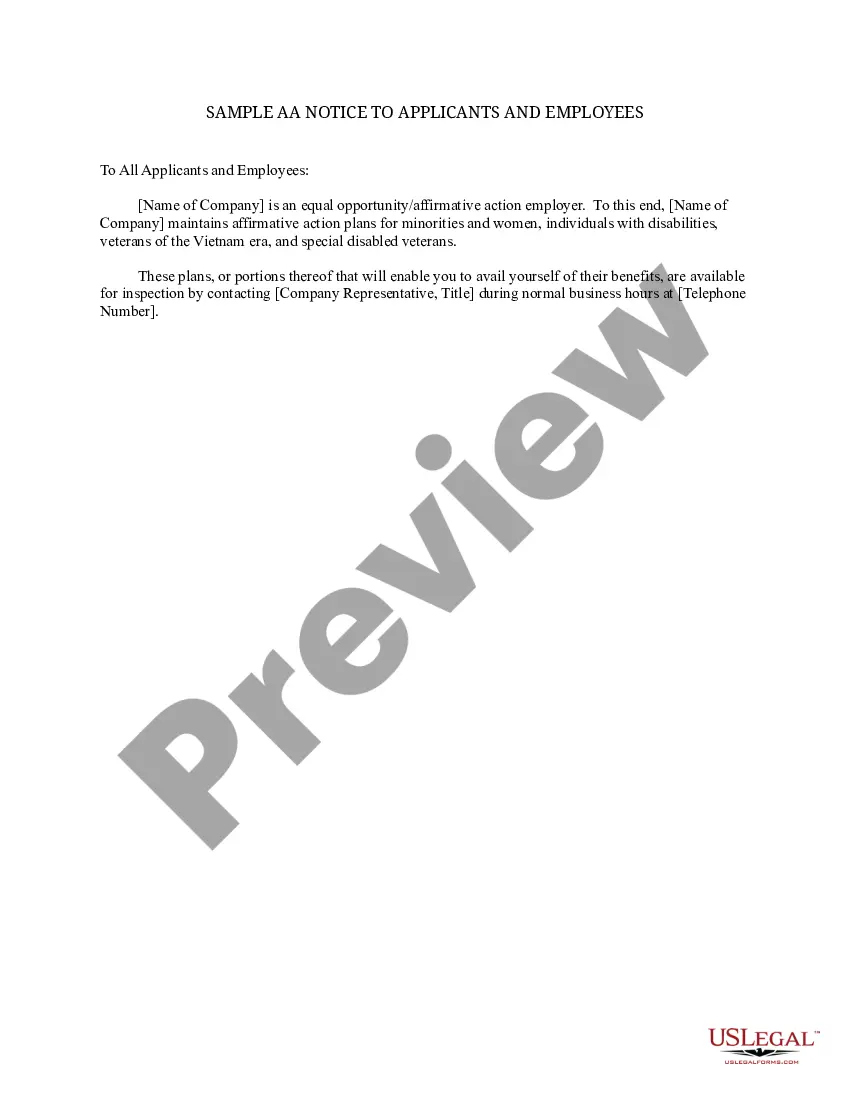
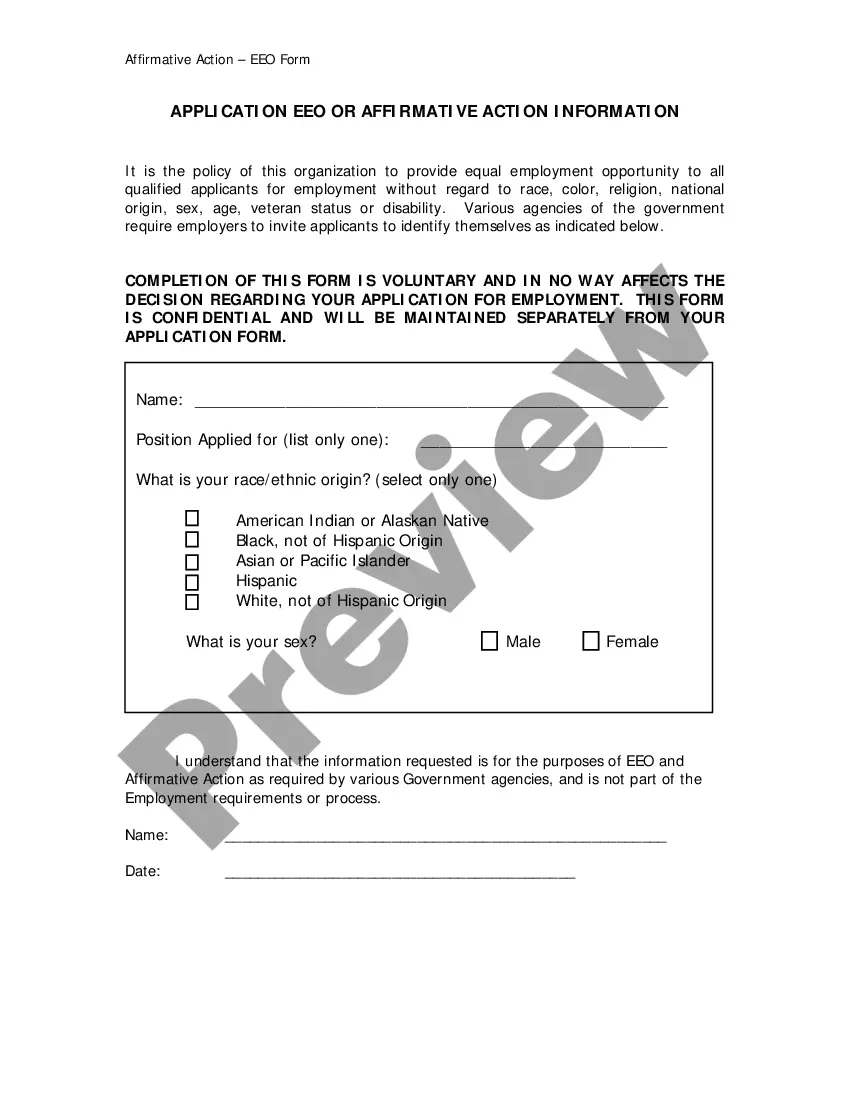
The Notification of Equal Opportunity Employment to Employment Candidate Provider is a formal letter used by companies to ensure that employment agencies are committed to equal opportunity standards when referring candidates. This form highlights the company's dedication to non-discrimination and asks the employment agency to adhere to these principles, setting it apart from general employment contracts or agreements.
Key parts of this document
- Date of the letter.
- Name and address of the company and its contact person.
- Statement of commitment to Equal Opportunity Employment standards.
- Request for compliance from the employment agency.
- Signature space for the agencyâs acknowledgment.
- Deadline for return of the signed letter.
Common use cases
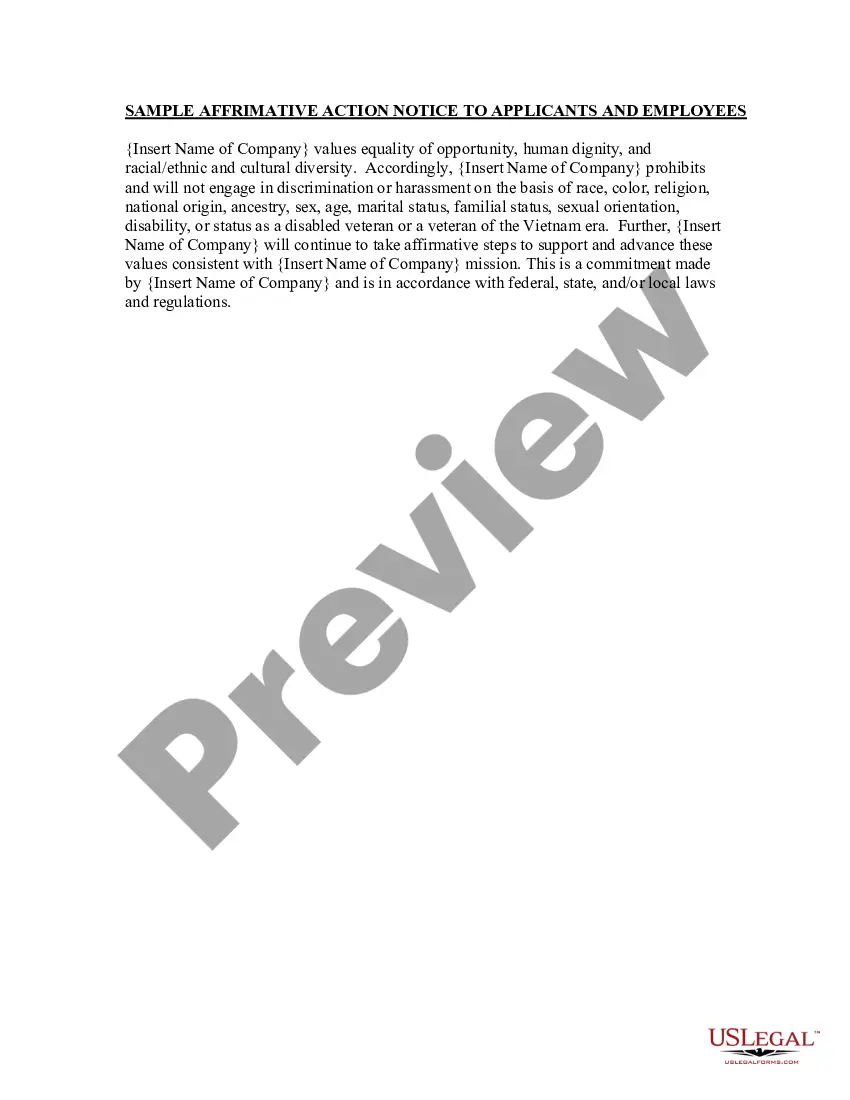
This form is used when a company engages an employment agency to find candidates for job openings and wants to ensure that the agency adheres to equal employment opportunity principles. It is particularly important in environments that prioritize diversity and inclusion, or where legal compliance with equal opportunity laws is necessary.
Who can use this document
- Human resources representatives in companies.
- Businesses that regularly work with employment agencies.
- Organizations committed to promoting diversity and equal opportunity in hiring practices.
How to prepare this document
- Insert the date at the top of the letter.
- Fill in the name, address, city, and state of the company.
- Address the letter to the appropriate contact person at the employment agency.
- Clearly state the company's commitment to equal opportunity standards.
- Request a signed acknowledgment from the agency by providing a mailing envelope and deadline.
- Sign the letter before sending it to the agency.
Notarization requirements for this form
Notarization is not commonly needed for this form. However, certain documents or local rules may make it necessary. Our notarization service, powered by Notarize, allows you to finalize it securely online anytime, day or night.
Get your form ready online
Our built-in tools help you complete, sign, share, and store your documents in one place.
Make edits, fill in missing information, and update formatting in US Legal Forms—just like you would in MS Word.
Download a copy, print it, send it by email, or mail it via USPS—whatever works best for your next step.
Sign and collect signatures with our SignNow integration. Send to multiple recipients, set reminders, and more. Go Premium to unlock E-Sign.
If this form requires notarization, complete it online through a secure video call—no need to meet a notary in person or wait for an appointment.
We protect your documents and personal data by following strict security and privacy standards.

Make edits, fill in missing information, and update formatting in US Legal Forms—just like you would in MS Word.

Download a copy, print it, send it by email, or mail it via USPS—whatever works best for your next step.

Sign and collect signatures with our SignNow integration. Send to multiple recipients, set reminders, and more. Go Premium to unlock E-Sign.

If this form requires notarization, complete it online through a secure video call—no need to meet a notary in person or wait for an appointment.

We protect your documents and personal data by following strict security and privacy standards.
Common mistakes
- Forgetting to include the date when sending the letter.
- Not providing clear contact information for follow-up.
- Neglecting to mention the deadline for acknowledgment.
- Using vague language that does not clearly communicate expectations.
Benefits of completing this form online
- Convenience of downloading and completing the form at any time.
- Ability to easily edit and customize the template to fit specific needs.
- Access to attorney-drafted content that ensures legal compliance.
Legal use & context
- The form establishes a written agreement between the company and the employment agency.
- It helps mitigate the risk of non-compliance with equal opportunity laws.
- Using this form supports transparent communication about hiring practices.
Quick recap
- The form establishes a commitment to equal opportunity hiring practices.
- It ensures that employment agencies understand and agree to these commitments.
- It is vital for maintaining compliance with equal employment opportunity laws.
Looking for another form?


Form popularity
FAQ
These laws protect employees and job applicants against employment discrimination when it involves: Unfair treatment because of race, color, religion, sex (including pregnancy, gender identity, and sexual orientation), national origin, age (40 or older), disability or genetic information.
Be specific. Make sure that your statement emphasizes workplace diversity. Mention which employment practices your EOE statement applies to. State that you make hiring decisions based on merit. Link to your EEO policy. Facebook. Apple. Tesla.
To comply with EEO requirements, you must treat all people fairly regardless of national origin, race, religion, color, sex (including pregnancy and sexual orientation), disability or genetic information.
Discrimination including both direct and indirect discrimination. Sexual harassment. Unlawful adverse action. Victimisation.
Under the laws enforced by EEOC, it is illegal to discriminate against someone (applicant or employee) because of that person's race, color, religion, sex (including gender identity, sexual orientation, and pregnancy), national origin, age (40 or older), disability or genetic information.
Employers who have at least 100 employees and federal contractors who have at least 50 employees are required to complete and submit an EEO-1 Report (a government form that requests information about employees' job categories, ethnicity, race, and gender) to EEOC and the U.S. Department of Labor every year.
Be specific. Make sure that your statement emphasizes workplace diversity. Mention which employment practices your EOE statement applies to. State that you make hiring decisions based on merit. Link to your EEO policy. Facebook. Apple. Tesla.
Race / color. National origin / ethnicity. Religion. Age. Sex / gender / sexual orientation. Physical or mental disability.
Make fair employment decisions. Grant reasonable accommodations. Craft unbiased policies. Stop workplace harassment. Provide equal pay. Respond to discrimination complaints. Display discrimination laws. Keep employment records.