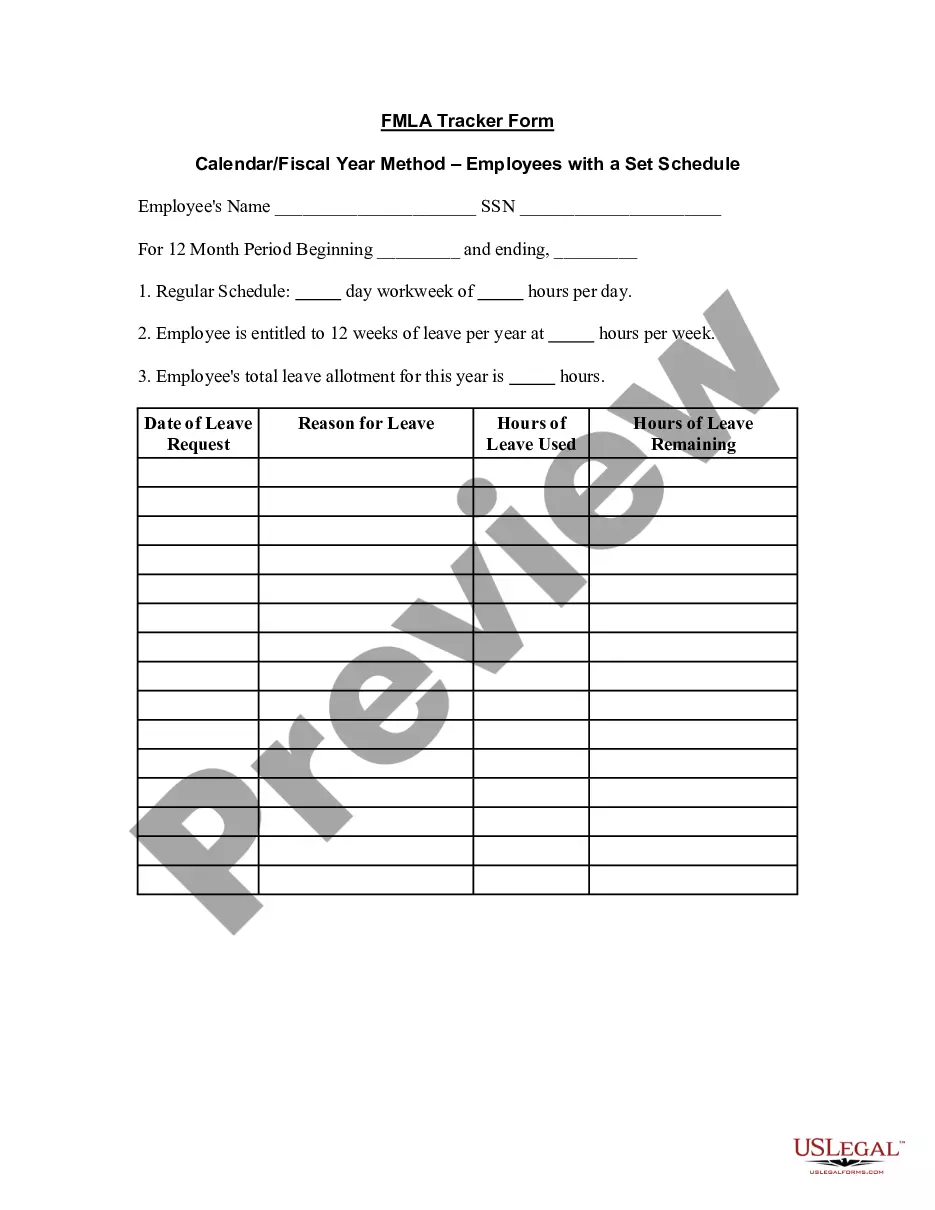
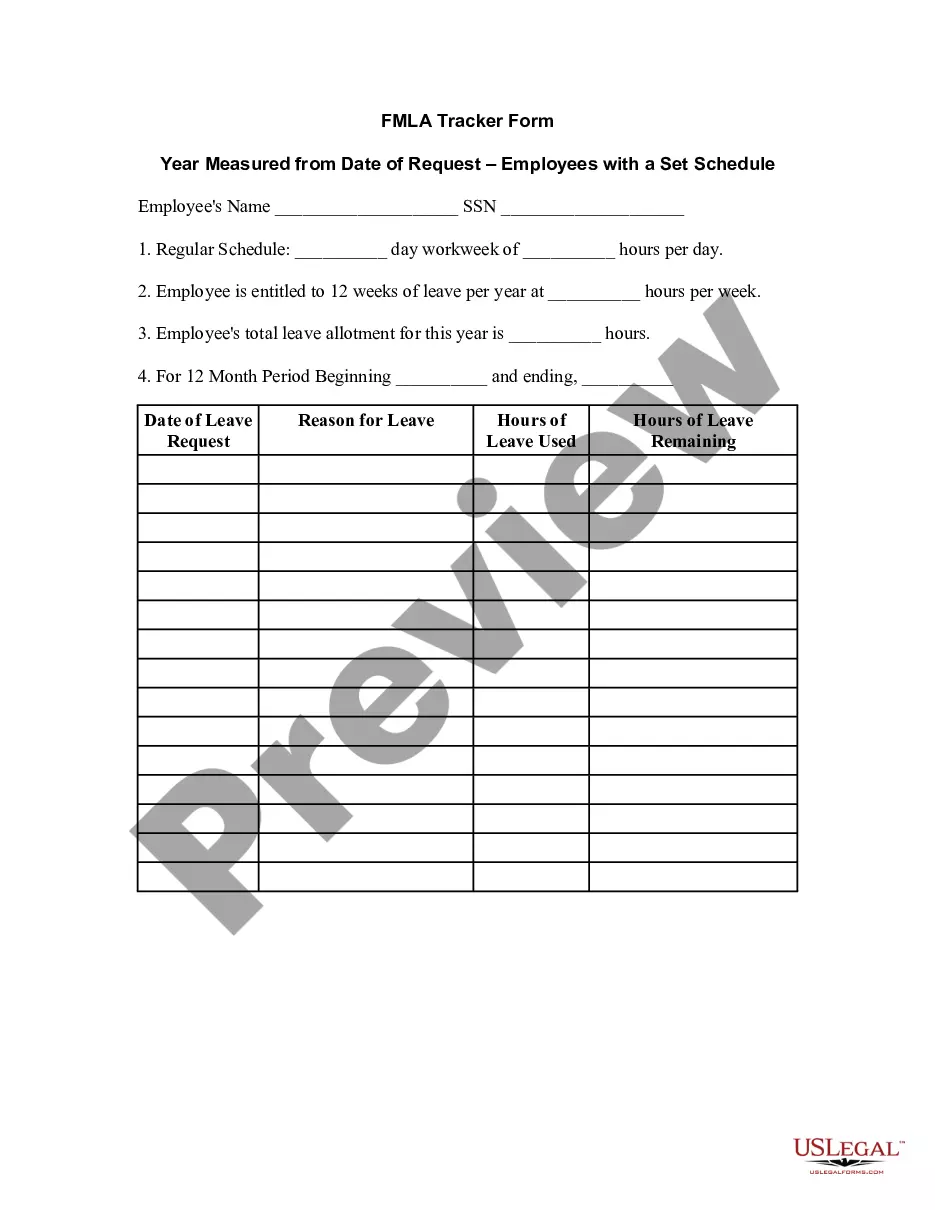
FMLA Tracker Form - Calendar - Fiscal Year Method - Employees with Set Schedule
About this form
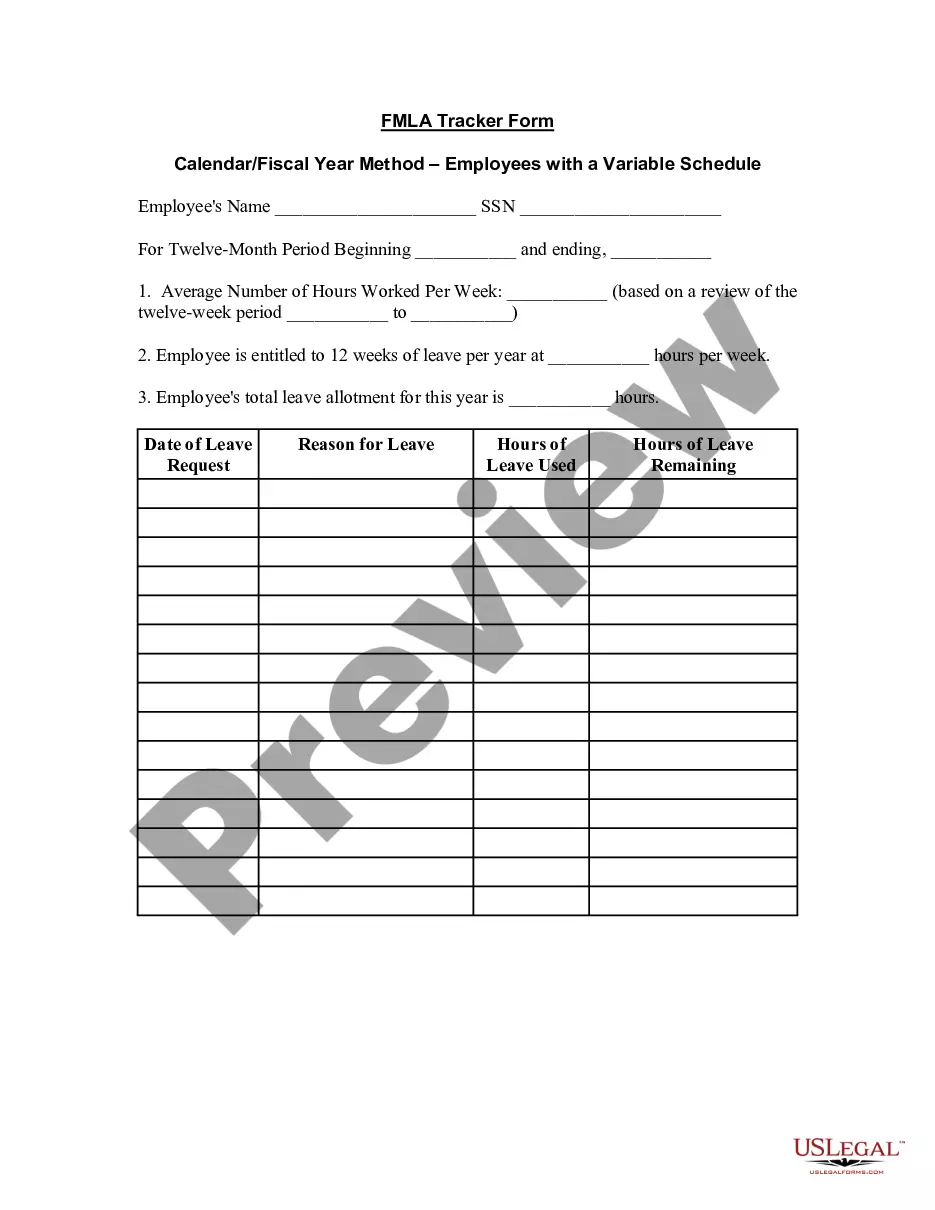
The FMLA Tracker Form - Calendar - Fiscal Year Method - Employees with Set Schedule is designed to help employers track Family and Medical Leave Act (FMLA) leave for employees who have a consistent work schedule. This form is essential for monitoring FMLA leave usage and ensuring compliance with federal regulations. It differs from other leave tracking forms by specifically catering to employees with set hours, making it easier to calculate available leave based on a twelve-month period.
What’s included in this form
- Employee's name and Social Security Number (SSN)
- Start and end dates of the designated twelve-month period
- Regular work schedule details, including days and hours worked
- Calculation of total FMLA hours available
- Space to note FMLA leave request dates and reasons
- Tracking leave used during the twelve-month period
Common use cases
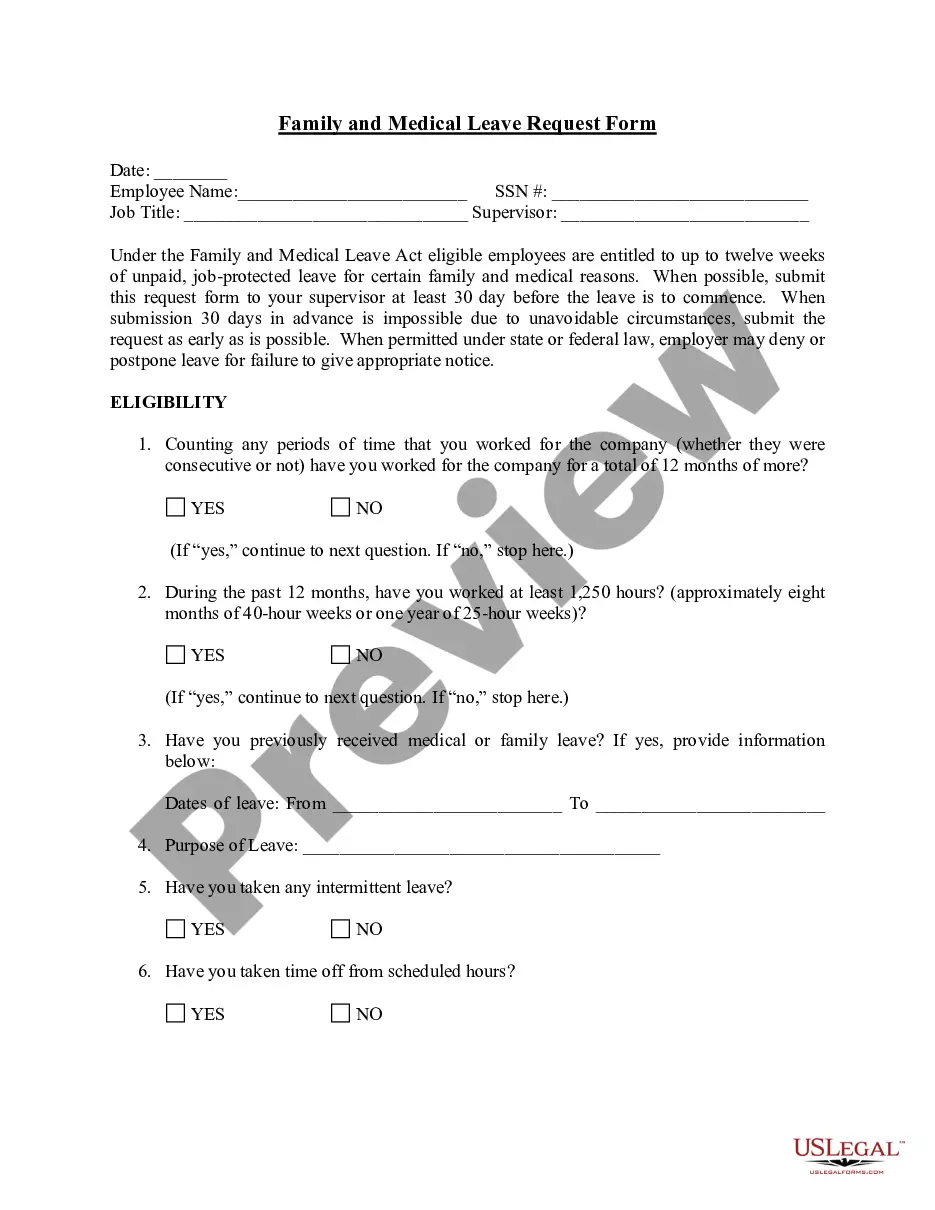
Use the FMLA Tracker Form when you need to track FMLA leave for employees who work a consistent schedule. This form is particularly useful when calculating leave usage based on a calendar year, fiscal year, or another specified twelve-month period. It helps ensure accurate record-keeping for compliance and facilitates managing leave requests efficiently.
Intended users of this form
- Employers with FMLA eligible employees who work set schedules
- HR professionals needing to manage employee leave effectively
- Managers responsible for tracking employee attendance and leave
How to prepare this document
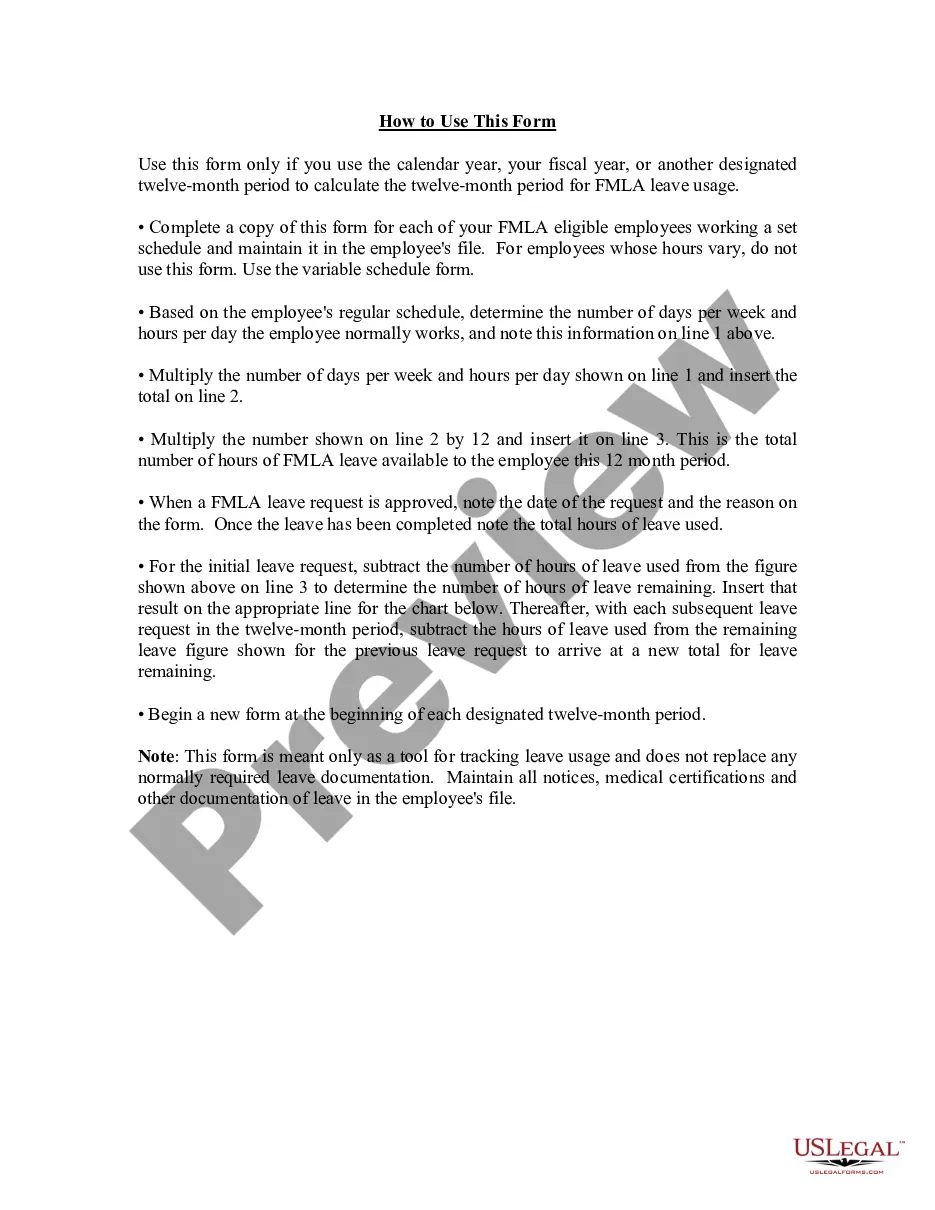
- Enter the employee's name and SSN at the top of the form.
- Specify the twelve-month period for tracking FMLA leave.
- Fill out the employee's regular work schedule, including days per week and hours per day.
- Calculate the total hours of FMLA leave available by multiplying weekly hours by twelve.
- Document any approved FMLA leave requests and record hours used after the leave is completed.
- Start a new form for each designated twelve-month period.
Does this form need to be notarized?
Notarization is generally not required for this form. However, certain states or situations might demand it. You can complete notarization online through US Legal Forms, powered by Notarize, using a verified video call available anytime.
Get your form ready online
Our built-in tools help you complete, sign, share, and store your documents in one place.
Make edits, fill in missing information, and update formatting in US Legal Forms—just like you would in MS Word.
Download a copy, print it, send it by email, or mail it via USPS—whatever works best for your next step.
Sign and collect signatures with our SignNow integration. Send to multiple recipients, set reminders, and more. Go Premium to unlock E-Sign.
If this form requires notarization, complete it online through a secure video call—no need to meet a notary in person or wait for an appointment.
We protect your documents and personal data by following strict security and privacy standards.

Make edits, fill in missing information, and update formatting in US Legal Forms—just like you would in MS Word.

Download a copy, print it, send it by email, or mail it via USPS—whatever works best for your next step.

Sign and collect signatures with our SignNow integration. Send to multiple recipients, set reminders, and more. Go Premium to unlock E-Sign.

If this form requires notarization, complete it online through a secure video call—no need to meet a notary in person or wait for an appointment.

We protect your documents and personal data by following strict security and privacy standards.
Common mistakes to avoid
- Using this form for employees with variable schedules instead of the appropriate variable schedule form.
- Failing to keep the form updated with recent leave requests and used hours.
- Neglecting to file notices and medical certifications with the employee's record.
Why use this form online
- Immediate access and download of the form for quick use.
- Editability to tailor the form to specific employee needs and conditions.
- Ensures reliable tracking to maintain compliance with FMLA regulations.
Legal use & context
- This form aids in maintaining proper records for FMLA compliance.
- Employers can ensure legal adherence while managing employee leave.
Key takeaways
- The FMLA Tracker Form is essential for tracking leave for employees with fixed schedules.
- Complete the form for each eligible employee and maintain accurate records.
- Stay compliant with FMLA regulations by documenting leave requests and hours used.
Looking for another form?
Form popularity
FAQ
For example, 12 weeks of FMLA for an employee who works five-day workweeks equals 60 days. If an employee normally works 40 hours per week with occasional exceptions, that's 480 hours of FMLA leave.
The FMLA gives employers four ways to count the 12-month period (also called the "leave year") for FMLA purposes. Employers may use the calendar year.Some employers use a third method called "counting forward." In this system, the 12-month period officially begins on the first day an employee takes FMLA leave.
A. Under the regulations, an employer should request medical certification, in most cases, at the time an employee gives notice of the need for leave or within five business days. If the leave is unforeseen, the employer should request medical certification within five days after the leave begins.
The DOL provides a model Designation Notice (Form WH-382) that can be used to notify the employee whether his or her FMLA request has been approved or denied.
The amount of FMLA leave taken is divided by the number of hours the employee would have worked if the employee had not taken leave of any kind (including FMLA leave) to determine the proportion of the FMLA workweek used.
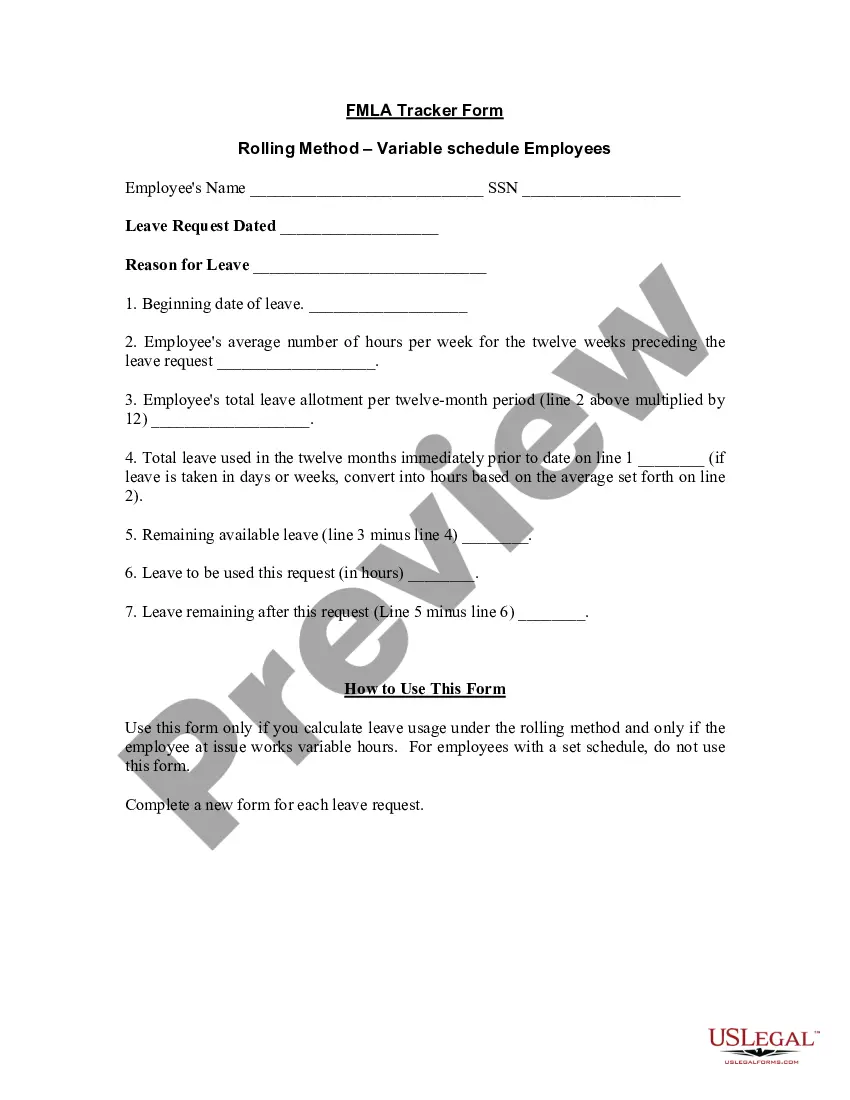
Calendar year. Another fixed 12-month period (business year, etc.) The 12 months measured forward from when an employee first takes leave, or. A rolling 12-month period measured backward from the date an employee uses any FMLA leave.
Federal Department of Labor regulations require an employee be incapacitated for three full consecutive days before the employee's "serious health condition" invokes the protection of the FMLA leave.
Under the ''rolling'' 12-month period, each time an employee takes FMLA leave, the remaining leave entitlement would be the balance of the 12 weeks which has not been used during the immediately preceding 12 months. Example 1: Michael requests three weeks of FMLA leave to begin on July 31st.