Massachusetts Certificate of Formation for Domestic Limited Liability Company LLC
About this form
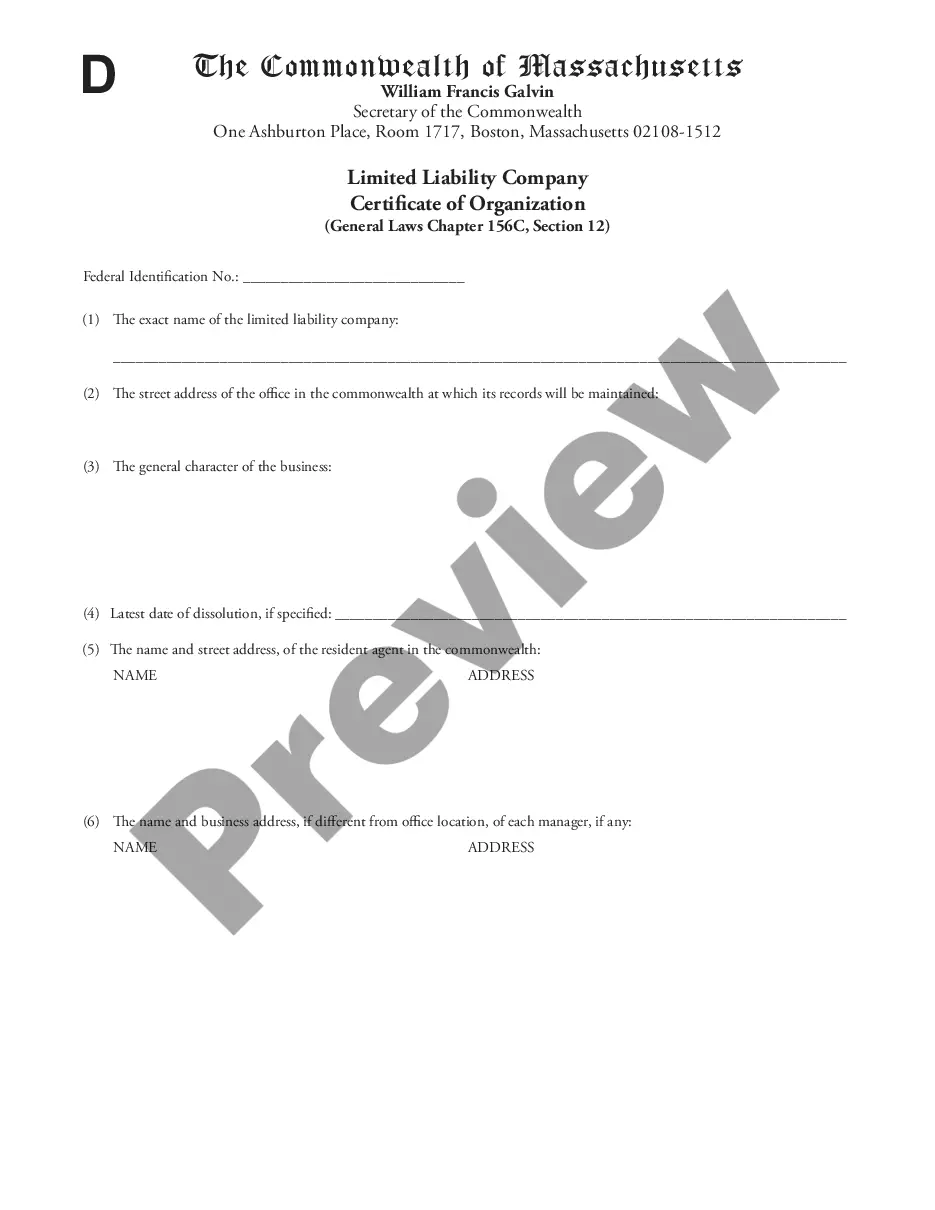
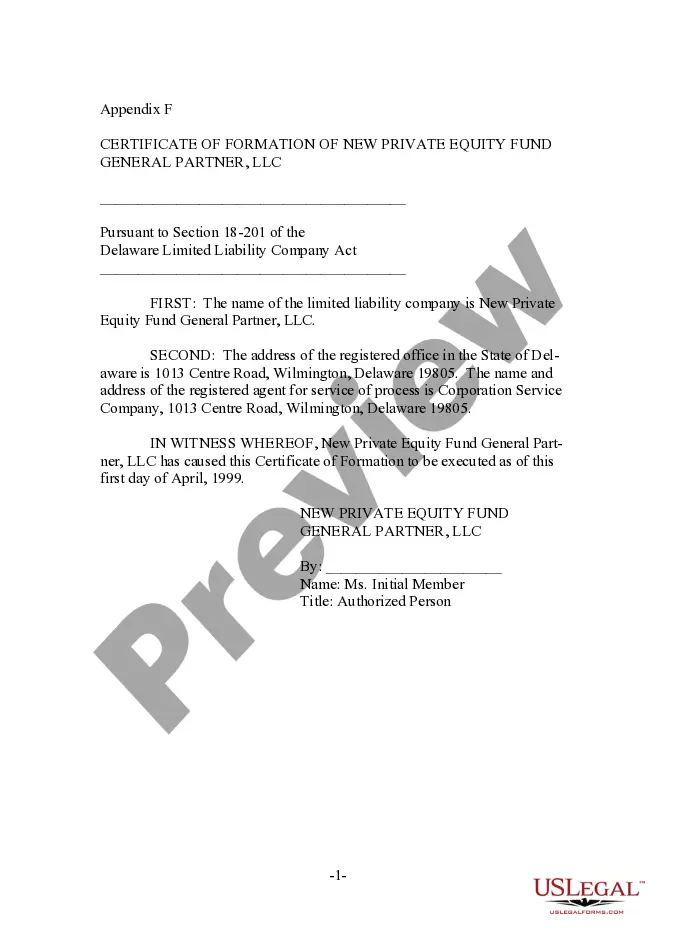
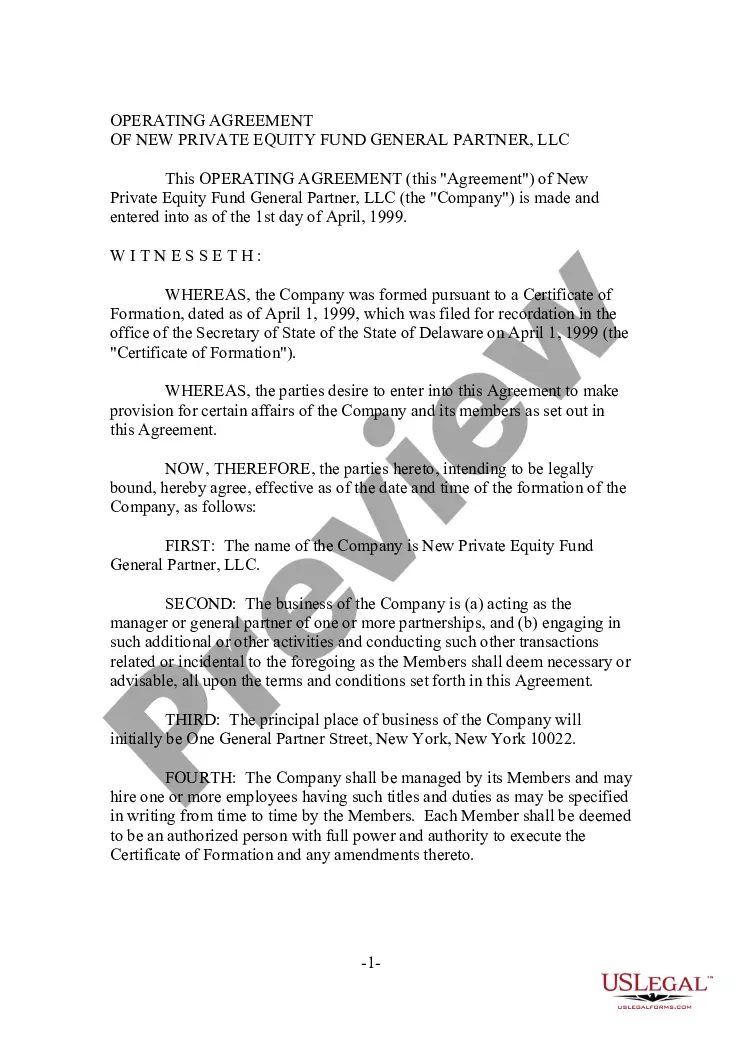
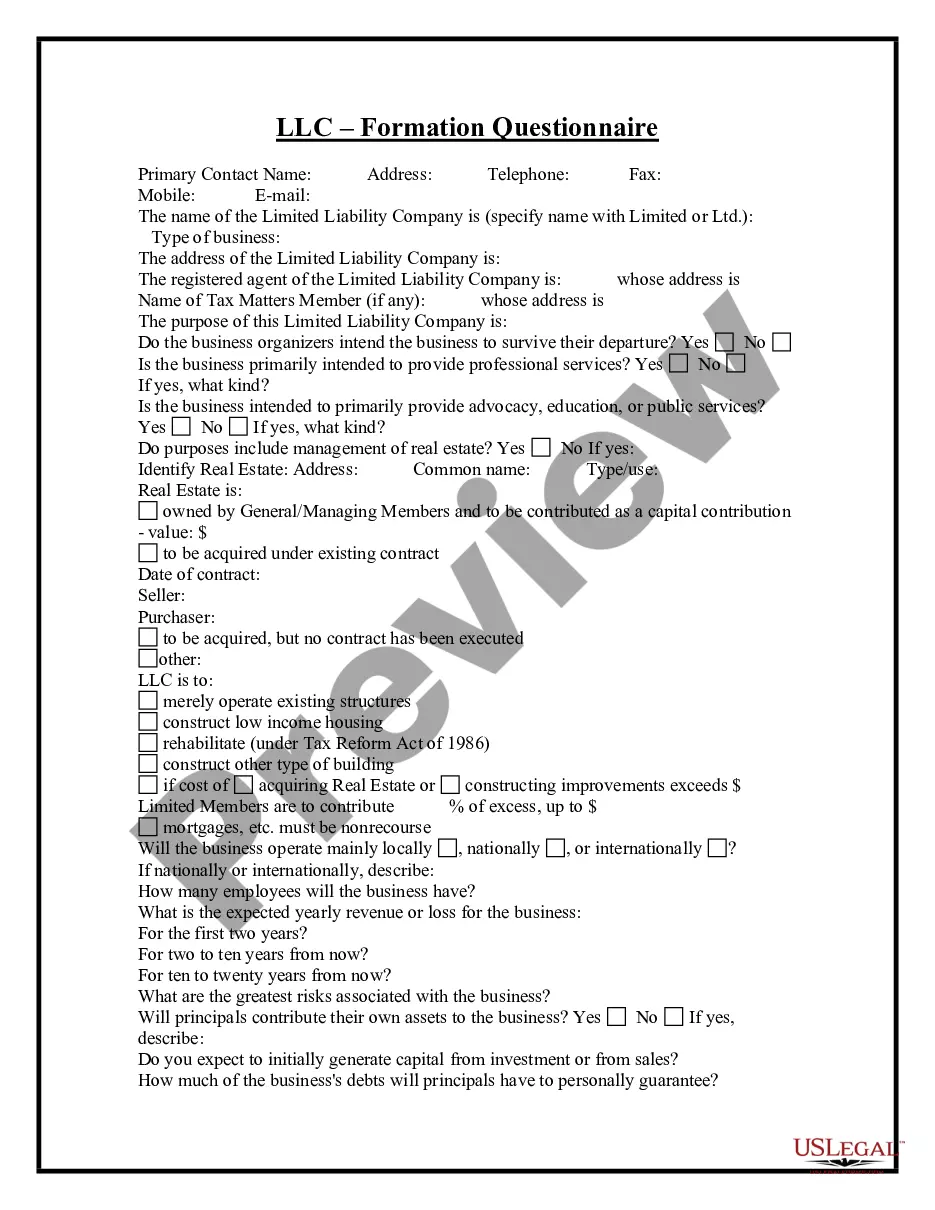
The Massachusetts Certificate of Formation for Domestic Limited Liability Company (LLC) is a legal document used to officially create a limited liability company in Massachusetts. This form outlines essential information about the LLC, such as its name, purpose, and management structure. Unlike other business formation documents, this certificate specifically aligns with Massachusetts state laws and requirements for LLCs.
What’s included in this form
- The exact name of the LLC.
- The street address for maintaining records in Massachusetts.
- The general nature of the business the LLC will conduct.
- The resident agent's name and address in the Commonwealth.
- Information about managers or additional authorized individuals.
- Consent from the resident agent.
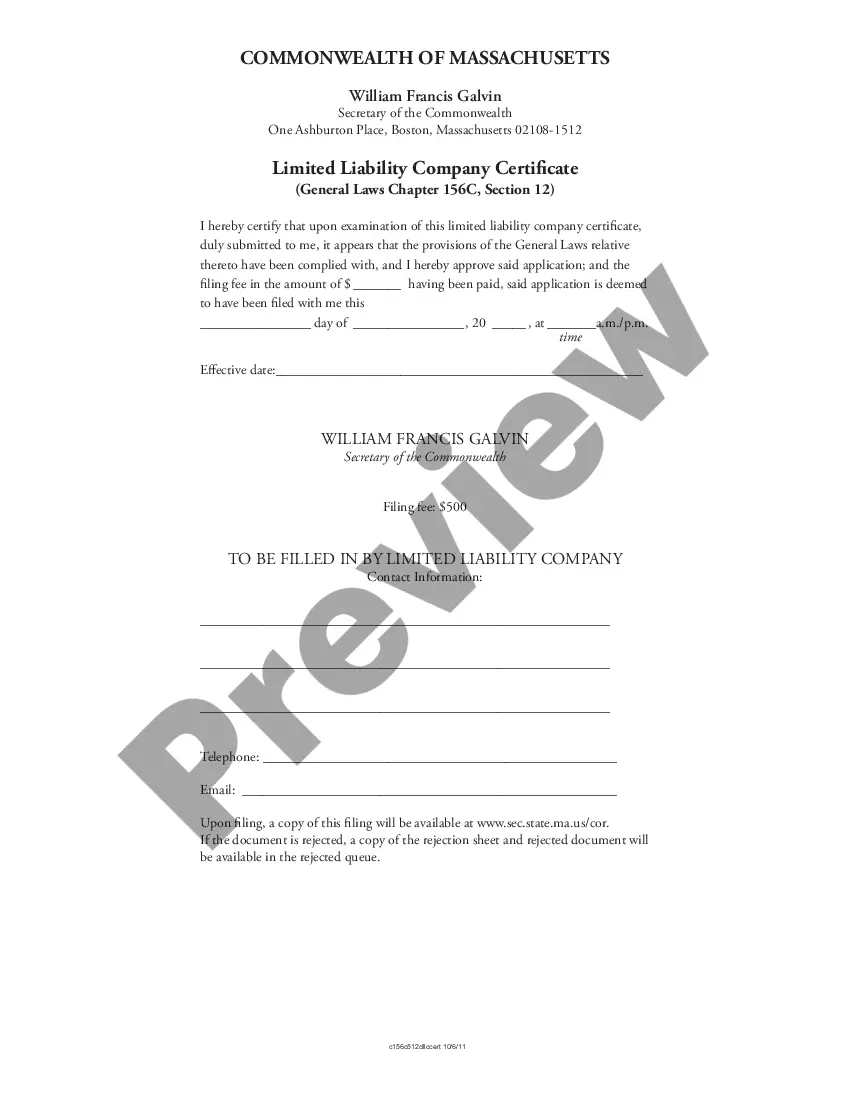
- Filing fee details and the Secretary of the Commonwealth's certification.

When to use this document
This form should be used when you wish to establish a new domestic limited liability company in Massachusetts. You will need to file this certificate with the appropriate state agency to legally register your LLC. This is essential for anyone starting a business that seeks liability protection under the law, ensuring that personal assets are safeguarded from business debts.
Who should use this form
- Entrepreneurs planning to start a new limited liability company in Massachusetts.
- Business owners seeking liability protection for their personal assets.
- Individuals or entities wanting to formalize their partnership as an LLC.
- Those who need a compliant business structure for tax or operational benefits.
Steps to complete this form
- Identify the exact name of your LLC and ensure it complies with Massachusetts naming requirements.
- Provide the primary address for the LLC's records, which must be a physical street address in Massachusetts.
- Describe the general business activities the LLC will conduct.
- List the resident agent's name and their address to receive official correspondence.
- Include details of the managers or individuals authorized to operate the LLC.
- Obtain consent from the resident agent and ensure all information is accurate before submission.
Notarization guidance
This form does not typically require notarization unless specified by local law. Ensure all information is accurate and properly signed by the resident agent and authorized signatory before submission.
Get your form ready online
Our built-in tools help you complete, sign, share, and store your documents in one place.
Make edits, fill in missing information, and update formatting in US Legal Forms—just like you would in MS Word.
Download a copy, print it, send it by email, or mail it via USPS—whatever works best for your next step.
Sign and collect signatures with our SignNow integration. Send to multiple recipients, set reminders, and more. Go Premium to unlock E-Sign.
If this form requires notarization, complete it online through a secure video call—no need to meet a notary in person or wait for an appointment.
We protect your documents and personal data by following strict security and privacy standards.

Make edits, fill in missing information, and update formatting in US Legal Forms—just like you would in MS Word.

Download a copy, print it, send it by email, or mail it via USPS—whatever works best for your next step.

Sign and collect signatures with our SignNow integration. Send to multiple recipients, set reminders, and more. Go Premium to unlock E-Sign.

If this form requires notarization, complete it online through a secure video call—no need to meet a notary in person or wait for an appointment.

We protect your documents and personal data by following strict security and privacy standards.
Common mistakes to avoid
- Failing to include the correct name of the LLC.
- Not providing an accurate street address for records.
- Omitting the required consent from the resident agent.
- Submitting the form without the proper filing fee.
Advantages of online completion
- Convenient access to up-to-date forms tailored for Massachusetts regulations.
- Editable templates allow customization to meet specific business needs.
- Quick and reliable filing process ensures compliance with state laws.
Looking for another form?
Form popularity
FAQ
The costs to start an LLC in Massachusetts are significant. LLCs pay a $500 formation fee and $500 annual report fee. Most corporations pay only $275 to get started then $125 per year. Massachusetts registered agent and resident agent are synonymous.
The costs to start an LLC in Massachusetts are significant. LLCs pay a $500 formation fee and $500 annual report fee. Most corporations pay only $275 to get started then $125 per year. Massachusetts registered agent and resident agent are synonymous.
LLCs are formed by filing articles of organization with the secretary of state's office.Depending on the state, the filing fee varies, and the articles of organization may be referred to as a different name, like the certificate of formation.
Business Name. Your LLC must have a name that is unique and is not the same or confusingly similar to another business. Registered Agent. Operating Agreement. Articles of Organization. Business Licenses and Permits. Statement of Information Form. Tax Forms.
Choose a name for your LLC. File Articles of Organization. Choose a registered agent. Decide on member vs. manager management. Create an LLC operating agreement. Comply with other tax and regulatory requirements. File annual reports. Out of state LLC registration.
An LLC operating agreement is a legal document that outlines the ownership structure and member roles of an LLC. Although most states don't officially require you to have an operating agreement, it's still a good idea to create one when forming an LLC.
How long does it take to form an LLC in Massachusetts? Filing the Articles of Organization can take 4 hours online post-payment, or 4 to 5 business days by mail. Expedited filings are also available.
Choose a Name for Your LLC. Appoint a Registered Agent. File a Certificate of Organization. Prepare an Operating Agreement. Comply With Other Tax and Regulatory Requirements. File Annual Reports.
To customize your small business. To protect real estate assets. To shield intellectual property. To raise seed capital for your business. To plan your estate. To do a short-term project. To segregate assets. To minimize your tax burden.